




Abstract
Background:
Each year, there are approximately 35 trach-dependent children (TDC) discharged from Seattle Children's Hospital. They receive nursing support at home or at a skilled nursing facility. These patients are at increased risk for mortality and/or morbidity due to unanticipated airway events (UAEs) associated with the tracheostomy tube obstruction or decannulation. We developed a comprehensive program in order to improve the safety for TDC outside of the hospital. The goal was to identify common risk factors for UAEs and prevent mortalities.
Methods:
Using a retrospective chart review, we tracked total number of outpatient UAEs that led to death in our TDC population between 2003 and 2013. We included TDC with/without mechanical ventilation and excluded those with cause of death determined from underlying disease process or guardian decision for withdrawal of support. We performed a root-cause analysis to determine variables that may have predisposed patients to outpatient death or UAEs. A multidisciplinary group comprised of hospital and community providers developed the Trach Safe program in 2014. Key components included: 1) a comprehensive pre-discharge airway evaluation; 2) an emergency airway management course for home and school nurses, and 3) a system for standardized reporting of home adverse events.
Results:
Our chart review revealed: 17 of 41 deaths (41%) were identified as preventable, 53% of patients died within the first year from initial trach discharge, 76% were ventilator-dependent, 71% had a known upper airway obstruction, and 47% were at home without a skilled nurse. Suspected causes of death included: 1) decannulation/obstruction; 2) ventilator disconnect; or 3) parent sleeping/missed alarms. Accidental trach-related deaths ranged between 1-4/year prior to implementation of Trach Safe. Following the Trach Safe program, there have been zero trach-related deaths over a four-year period (see Figure).
Conclusions:
Based on our findings, the Seattle Children's Trach Safe program is preventing trach-related deaths. We will continue to monitor outcomes and partner with our care community of trach dependent patients and their families to develop this model of safety.
Trach Related Deaths Over 15 Year Span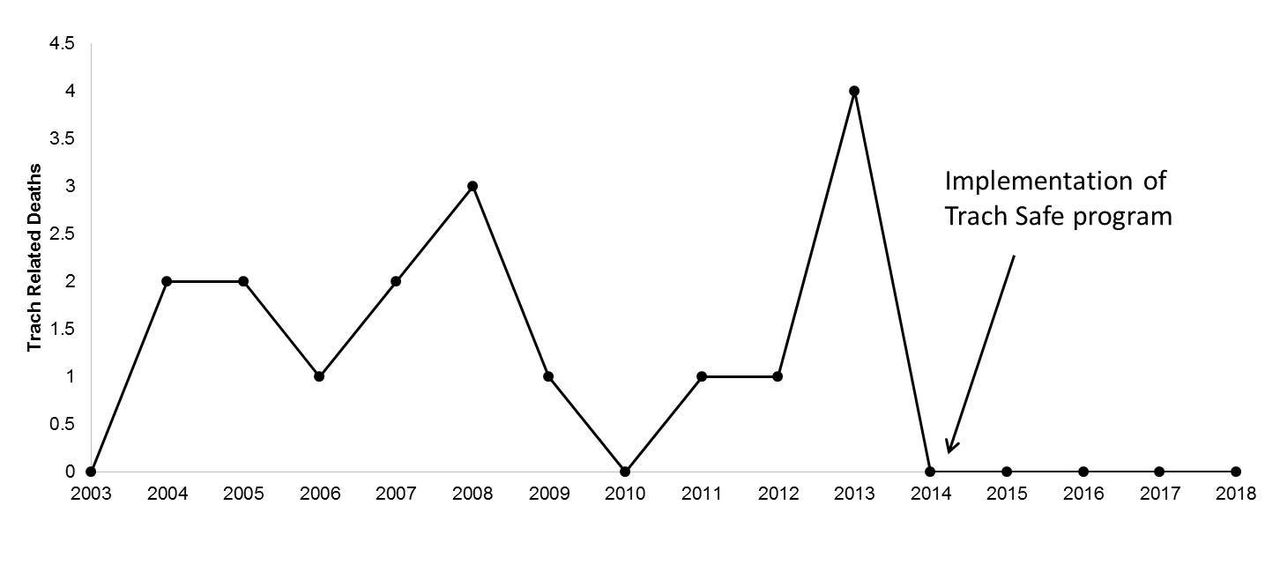
Get full access to this article
View all access options for this article.