




Abstract
Background:
Retention of airway secretions is a common clinical problem. Although multiple secretion clearance adjuncts claim beneficial results, limited studies have been conducted to show the physical movement of secretions within the airway. Studying secretion movement within the airways may contribute to the evaluation of airway clearance devices.
Methods:
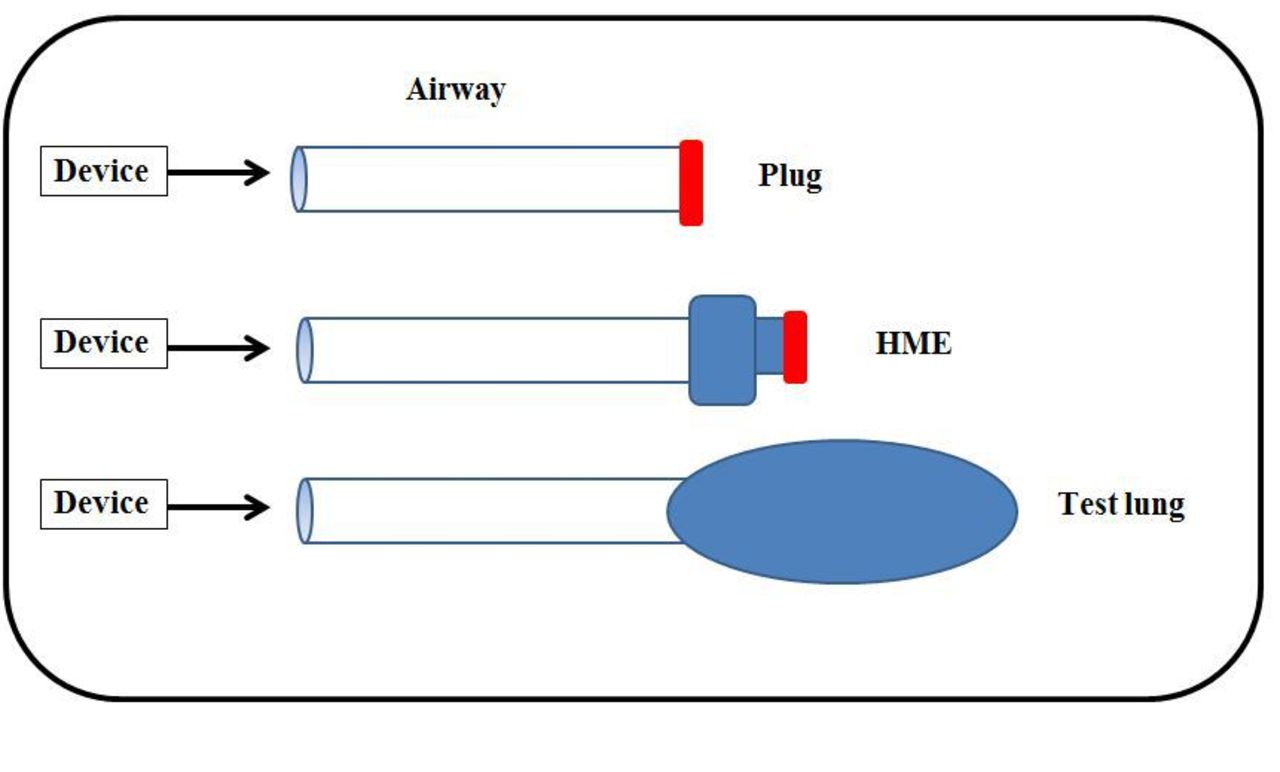
Bench models were constructed to determine an ideal environment for the assessment of secretion mobilization. The models included an adult 3D printed tracheal model with multiple airways and had the ability to isolate lung zones, as well as single airway models that ranged in lumen size from 7.5 mm to 2 cm. The distal airway volume of the models was manipulated to represent three different environments: a terminal point at the end of the airway (no volume), a distal volume that was non-compliant (bacteria filter), and a distal volume that was compliant (test lung). Two devices were used; the Percussionaire Impulsator and the Hill-Rom MetaNeb. The devices were operated under manufacture recommendations for use with an intubated patient.
Results:
Movement was defined as any oscillations or actual proximal movement of secretions. The single airway model demonstrated movement of secretions when distal volume was non-compliant. No movement of secretions was observed in the airways that had a terminal end or distal volume that was compliant. The multiple airway model demonstrated secretion movement in the zones that were absent of collateral flow, while the secretions in zones with collateral flow showed limited movement.
Conclusions:
Regional lung compliance, as well as collateral flow to adjacent lung units, may affect the ability to effectively mobilize secretions while utilizing airway clearance devices. Bench testing of two airway clearance modalities demonstrated limited but inconclusive results. The addition of distal volume with greater compliance reduced observed secretion movement. These models were not physiologically accurate, which may have played a role in the limited results seen. This testing demonstrated the difficulty in assessing and measuring the performance of secretion mobilization devices in a bench model. These results can inform future studies utilizing percussive/oscillatory flow devices and the effects on retained secretions in various lung environments.
Disclosures:
RD discloses a financial relationship with Percussionaire. Percussionaire had no involvement in the study.
Get full access to this article
View all access options for this article.