




Abstract
Background:
Inhaled nitric oxide (INO) provides pulmonary vasodilation. Airway edema and post-extubation stridor may be managed with inhaled heliox. Pediatric patients with pulmonary hypertension may experience post-extubation airway edema, but the simultaneous use of INO and heliox has not been previously studied. We aim to evaluate the impact of concurrent heliox use on INO delivery.
Methods:
A Vapotherm heliox unit and low flow INO cartridge were used in conjunction with a Mallinckrodt INO Max Delivery System (INO Max). The Vapotherm unit was set at 6 L/min, 37 degrees Celsius and FIO2 0.21. The INO Max system was set with a dose of 20 ppm. A Michigan Instruments Test Lung equipped with PneuView 3.2 software was utilized with an infant head attached and INO sampling line was utilized before the intermediate infant cannula interfaced the head. A second INO Max Delivery system was set up in-between the head and test lung to measure INO levels to the lungs. This bench analysis was repeated again after blocking the oral opening of the Michigan infant head to simulate a chinstrap. A Maquet Servo-i Ventilator was set up to simulate a spontaneously breathing 10 kg patient. The INO was set and allowed to stabilize for 2 min before obtaining measured values pertaining to gas delivery.
Results:
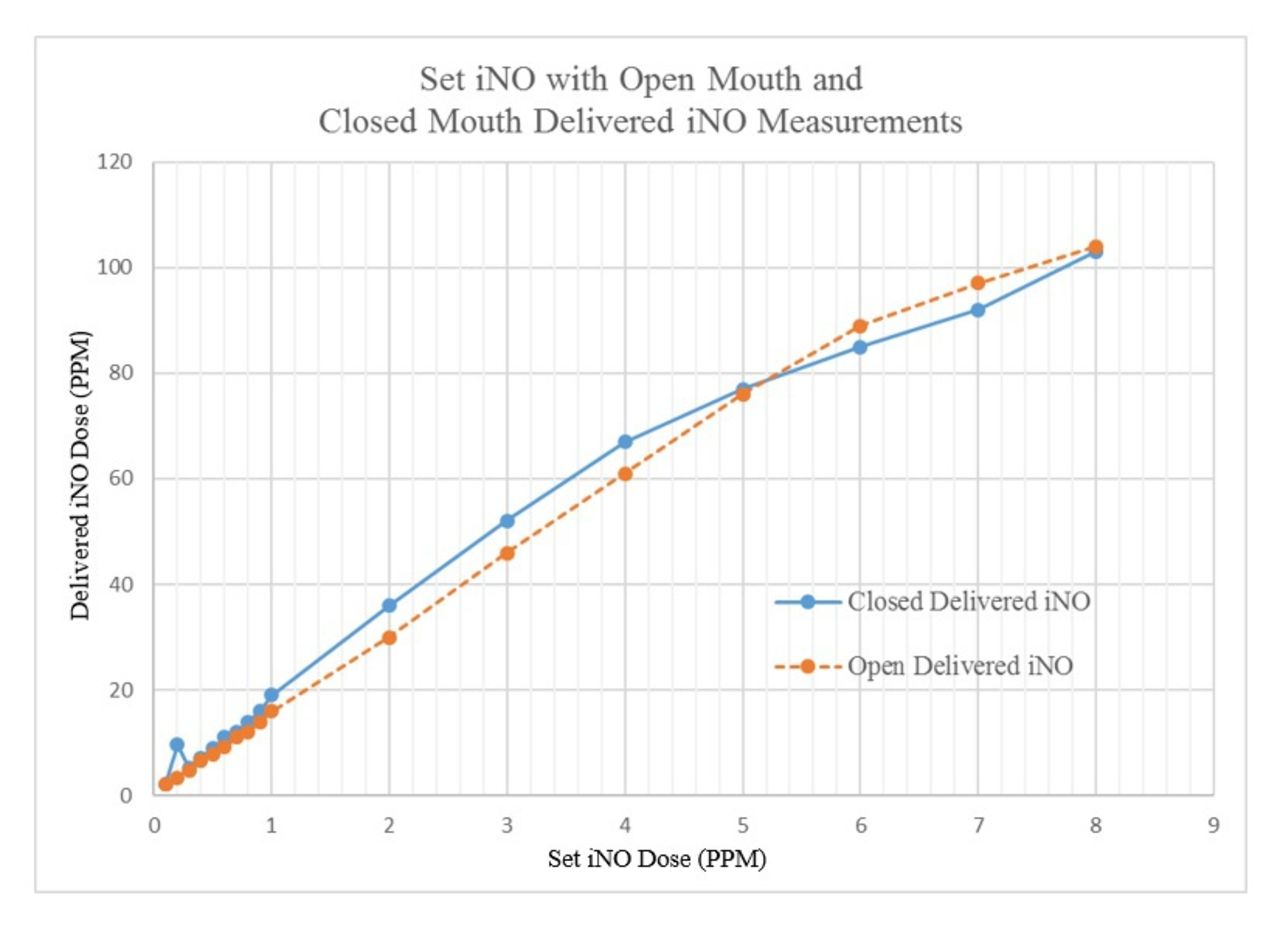
See the attached graph for detailed for correlation of delivered and set INO doses. INO delivery was stopped by the machine, with an audible alarm, due to high INO readings at set values greater than 8 ppm in both scenarios. With both open and closed mouth simulations, r=0.932 with P<0.01. The measured dose pre and post airway differed less than 1% in both simulations.
Conclusions:
Delivery of heliox and INO simultaneously can occur. The measurement from the sample line must be used to titrate the delivered dose instead of the INO Max dose setting. If this were used in a clinical setting, the INO alarms must be set tightly to alert the end user of any delivery discrepancies. More studies must be performed on this topic before clinical use is recommended.
Get full access to this article
View all access options for this article.