




Abstract
Background:
A quality improvement project to increase the percentage of respiratory therapy protocol (RTP) orders on non-ICU patients receiving scheduled therapy should increase the percentage of patients receiving protocol orders. For the purposes of this project, we established a goal to have 85% of all patients with scheduled respiratory therapy orders to also have a RTP order. Our current RTP order set encompasses oxygen therapy, bronchodilator, bronchopulmonary hygiene, and hyperinflation protocols.
Methods:
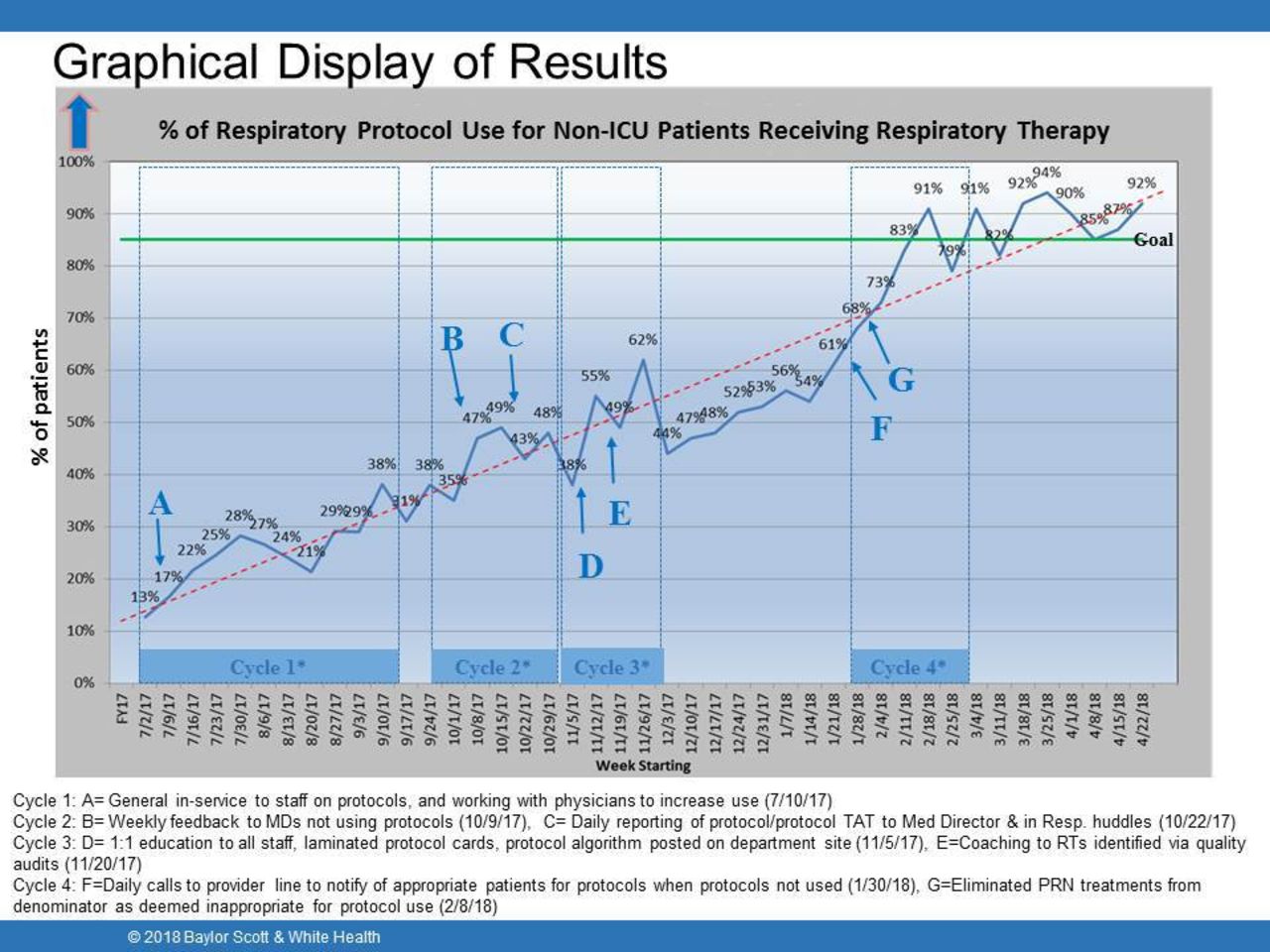
We analyzed our data to determine our pre-intervention protocol percentage usage on non-Intensive Care patients. Using an Issue Prioritization Matrix, input was collected from Respiratory (RT) staff and physicians to ascertain the root causes of low percentage use findings. After prioritization, a series of PDCA cycles were implemented in succession to address our findings. Cycle 1: Increase RT staff awareness of the protocols, correct use of the algorithms, and encourage suggestion of the RTP order set to physicians at bedside. A series of educational in-services were provided to the staff by the department's educator to cover these topics (7/10/17). Cycle 2: Provide weekly feedback to MDs when RTP not ordered yet condition appropriate. Provide feedback to staff regarding RTP use and turnaround times (defined as order to first assessment) in daily huddles (10/22/17). Cycle 3: Additional staff education on RTP usage, including providing additional methods of viewing RTP algorithms (11/5/17). One on one coaching for RT staff identified through quality audits to need additional training on correct RTP usage. Continued weekly feedback to providers regarding protocol usage percentage (11/20/17). Cycle 4: Daily phone calls to providers to notify them of patients without protocol orders that meet criteria (1/30/18). Eliminated PRN (as needed) treatments from denominator as deemed inappropriate for RTP use (2/8/18). Cycles noted in Table.
Results:
Our pre-intervention (July 2016-June 2017) data indicated a 5% RTP order compliance. Throughout our PDCA cycles from July 2017 to April 2018, compliance steadily increased from 5% to 91%. Our goal of 85% compliance was first attained on February 18th, 2018 and has only dipped below goal on 2 occasions (79% and 82%).
Conclusions:
By implementing a systematic approach to educate and engage providers and staff on the available RT protocol order set, vast improvements in protocol utilization were achieved.
Get full access to this article
View all access options for this article.