



Abstract
Background:
By reviewing the therapies with patients, we discovered difficulties in operating equipment, replacing parts, and even knowing what company supplied their devices. We also found compliance and adherence were significant challenges for many reasons. Talking and advising over these issues, our patients have become more independent and better acquainted with their diagnosis. Patients have also learned to keep in contact with the clinic and inform us of any equipment issues, rather than putting therapies to a halt.
Methods:
To determine the current use and knowledge regarding therapies our clinic began calling patients the day before their visit to ask if they would bring in their equipment. Documentation consisted of the number of checks and tracking the types of adjustments made in settings, technique, and supplies. Our clinic started keeping track of our equipment checks through a spreadsheet at the beginning of 2018.
Results:
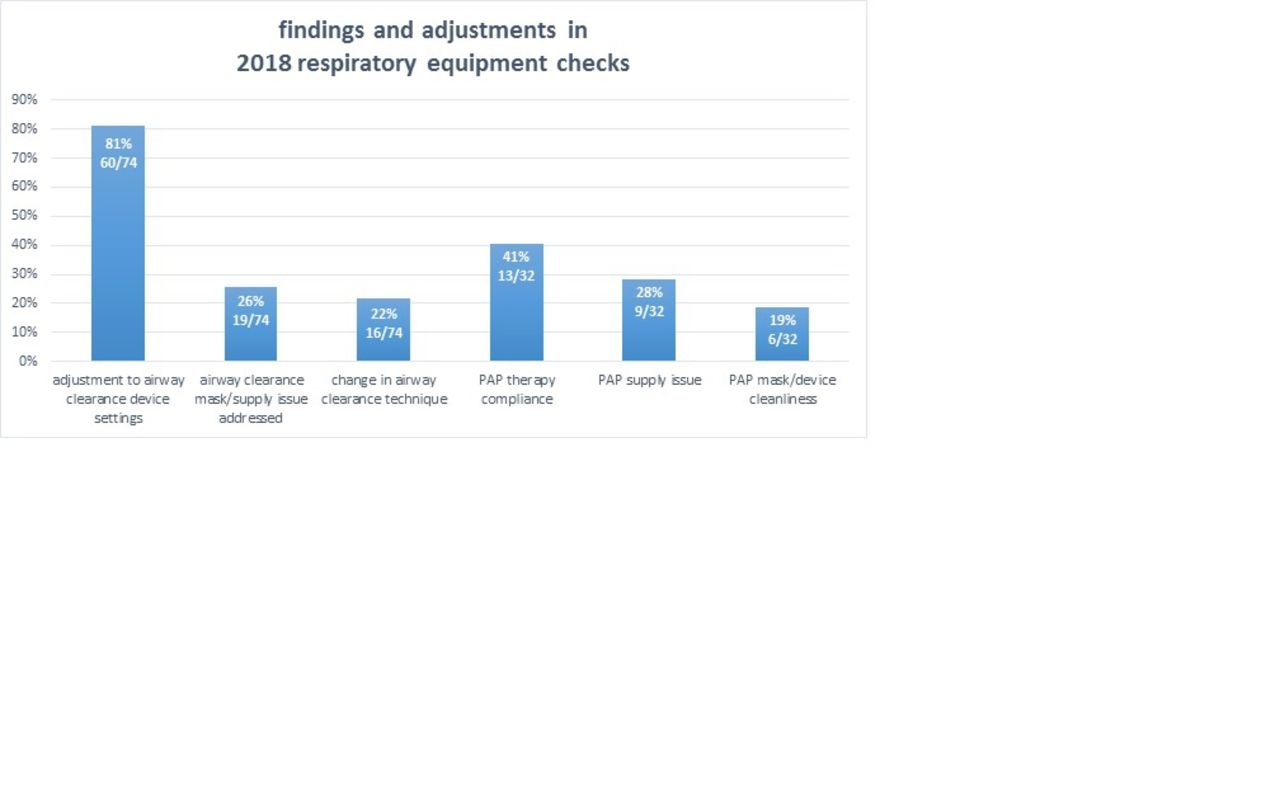
Through the end of May 2018, we completed 74-airway clearance and 32 BPAP/CPAP checks. Six of the airway clearance reviews were a re-check of equipment already brought in. Topics discussed included frequency of treatments, demonstration of therapy and were supplies re-filled. Some of the major issues discovered were poor technique, broken or defective parts, supplies never replaced, and incorrectly sized masks or garments. We found supply issues with both PAP therapy and neuromuscular patients' airway clearance devices with 28% and 26% of those checked, respectively. We were able to adjust settings on cough assist and vest devices for 81% of equipment checks. These adjustments were typically an increase in pressures to make therapy more effective.
Conclusions:
A few patients required changes in inspiration and expiration time or a decrease in pressure for comfort. With our CPAP/BPAP patients, these checks revealed that fewer than half of those assessed were compliant with their therapy using insurance guidelines. We will continue with our respiratory equipment check program indefinitely. We found the patient, caregiver, and clinic all benefited from these visits with a respiratory therapist. Device comfort, effectiveness, and communication with clinical staff improved. Patients and caregivers know that we will be periodically evaluating the use of their particular equipment and are partners in ensuring it is used to its fullest potential. That way they feel empowered in all aspects of their therapy and can answer their question "am I doing this right"?
Get full access to this article
View all access options for this article.