




Abstract
Background:
Caffeine is an established treatment for neonates in the prevention and treatment of apnea of prematurity. A recent investigation demonstrated a reduction in ventilator days in neonates who receive early caffeine administration. Caffeine is known to stimulate breathing and increase sensitivity to carbon dioxide in non-ventilated infants possibly reducing the need for invasive ventilation. We sought to identify the respiratory effects of caffeine during ventilation in mechanically ventilated premature neonates.
Methods:
Data files of neonates < 32 weeks gestational age enrolled in clinical trials at the Neonatal Research Institute at Sharp Mary Birch Hospital for Women and Newborns were searched to identify infants who received pressure controlled mechanical ventilation and caffeine in the first 72 h of life. Mother and infant demographics and ventilator downloads were prospectively collected. Infants with major congenital anomalies were excluded from the primary studies. The ventilator internal clocks were synchronized with the electronic medical record (EMR) and routinely checked. Caffeine administration times were collected from the EMR. The peak inspiratory pressure and corresponding exhaled tidal volume of a mechanical breath every 5 min was converted to mL/kg using birth weight. The infants' spontaneous breathing frequency and FIO2 was collected at the same time point. All the breaths in the hour prior to caffeine administration were compared to all the breaths at each time point of 1-4 h after caffeine administration was completed and analyzed with a paired students t- test with significance set at P<0.05. Parents of the infants gave consent for the primary trial. The Sharp Institutional Review Board approved the primary trials and the secondary data analysis.
Results:
Sixty-seven infants with ventilator data and caffeine within the first 72 h of life were included. The mean gestational age was 27 ± 2 weeks with birth weight of 1,059 ± 360 grams. Caffeine infusion started at 5.10 ± 8.65 h of life. A total of 2,493 breaths were analyzed (Figure 1).
Conclusions:
There was an increase in spontaneous breathing frequency and a decrease in tidal volumes, peak inspiratory pressure, and delivered oxygen after caffeine administration.
Disclosures:
None.
Figure 1. Respiratory parameters one-hour pre caffeine infusion compared to each hour after. *p <0.05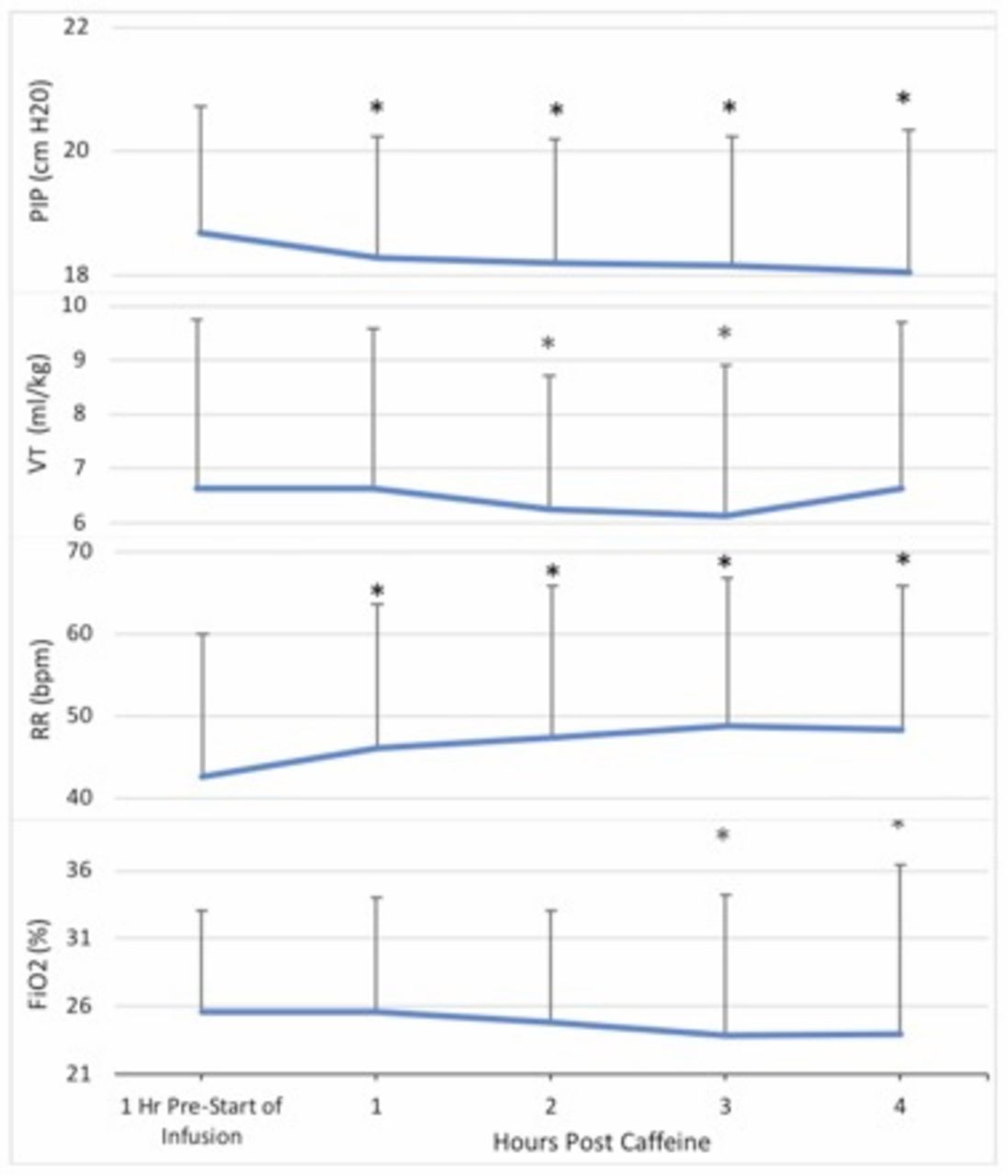
Get full access to this article
View all access options for this article.