




Abstract
Background:
It has been described that individuals with hyperreactive airways disease and/or airway inflammation have higher concentrations of exhaled nitric oxide (ENO) than healthy individuals. The American Thoracic Society (ATS) and the European Respiratory Society (ERS) have published guidelines on test performance. The guideline states that ENO be performed before spirometry because spirometric maneuvers have been shown to transiently reduce exhaled NO levels. This recommendation is based on limited evidence and in particular cites an article where they observed the ENO response in 10 health subjects. The cited study measured ENO 15 min before and after an FVC maneuver was performed. However the small number of subjects and the fact all the subjects were normal healthy volunteers limits the study's ability to predict test behavior in patients.
Methods:
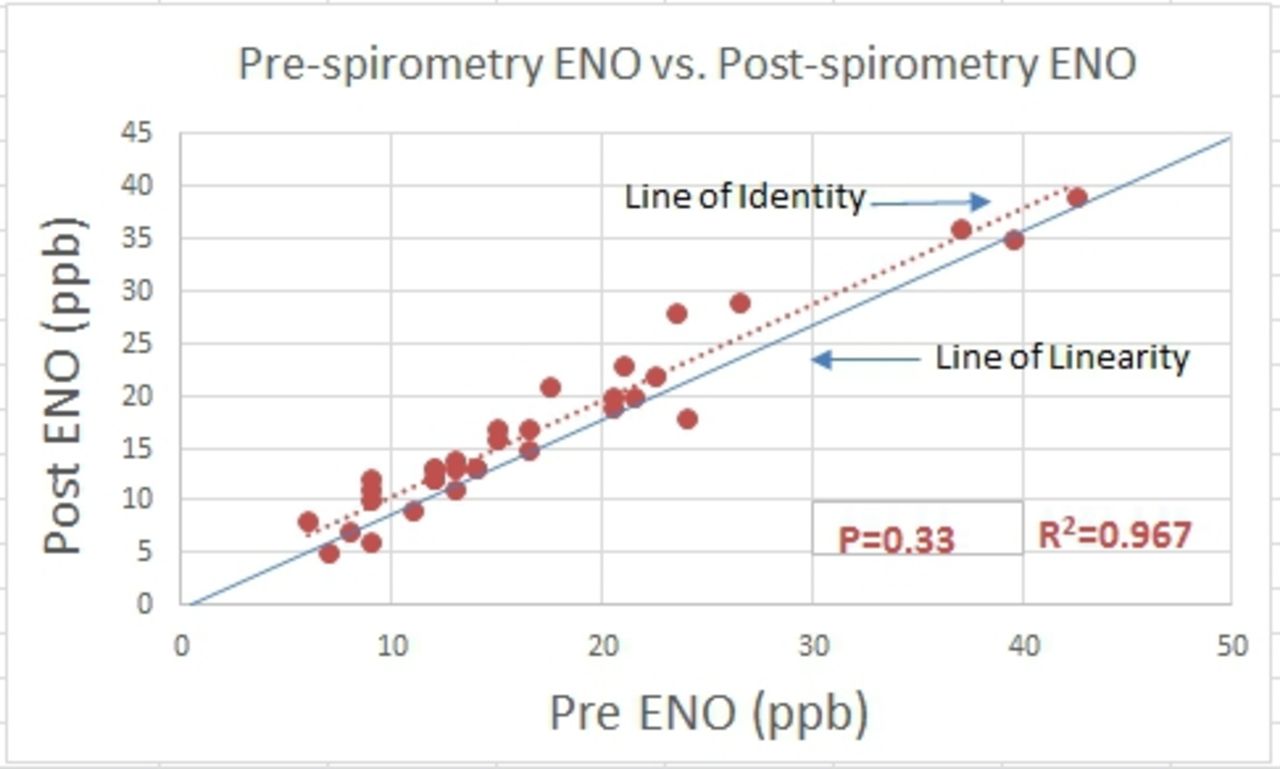
In our study we performed a clinically ordered ENO test in 33 patients after IRB consent was obtained. The subjects performed an ENO according to standard laboratory procedures before and 15 min after spirometry. Our goal is to further define the effect of spirometry on the ENO result and determine appropriate pre-test sequence. Question: Does performing spirometry before performing an exhaled nitric oxide (ENO) test decrease the results of an ENO? Hypothesis: Performing spirometry before completing an Exhaled Nitric Oxide (ENO) test will decrease the results of an ENO.
Conclusions:
In the patients we tested there is no statistical difference between the ENO results obtained before or after spirometry.
Get full access to this article
View all access options for this article.