




Abstract
Background:
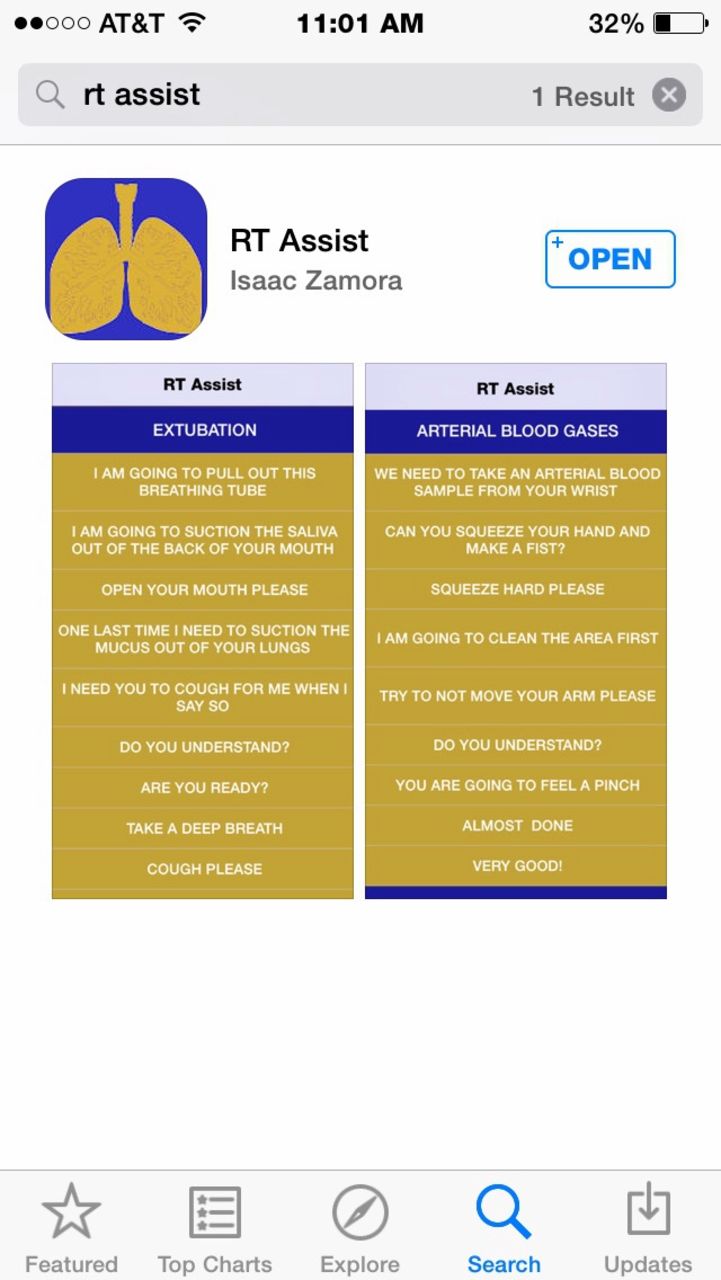
UC San Diego serves a community which is 35% Latino/Hispanic, many of whom do not speak English. It is critical that our staff be able to effectively communicate with these patients. Finding no respiratory care specific translation tool, we decided to create a point of care translation tool to help respiratory therapists better communicate with their Spanish speaking patients and their families. Since the majority of the clinicians in our facility own a smartphone, we opted to create a mobile application that could function throughout the hospital without a WiFi signal.
Methods:
Development of 'RT Assist' was guided by our bilingual staff respiratory therapists, ICU nurses, a critical care pulmonologist and community members. Our focus was specific to translating the terms that respiratory therapists use in the clinical setting. Common questions, instructions and phrases used were identified by respiratory therapist and each of those phrases translated. We enlisted the use of an expert in smartphone applications to develop the tool with the characteristics and specifications defined by our team. We organized our app into independent sections, based on the type of encounter that was expected. For example, we have a dedicated section to communicate with intubated patients, especially guiding spontaneous breathing trials. Other sections guide patients through medication administration, arterial blood gases, chest physiotherapy or incentive spirometry. Lastly, we have included phrases that allow clinicians to assess pain, neurological status and the comfort level of their Spanish-speaking patients.
Results:
This application was published and made available free of charge to staff, as well as the online community in late 2013. Staff are currently using the application in the clinical setting. When the user clicks on a phrase or command written in English, the app will then replay that exact phrase in Spanish through the external speaker that is standard on modern smartphones. We have strong feedback and praise from multiple reviewers. The initial response has been significant, with downloads approaching 1,000.
Conclusions:
Mobile applications are rapidly evolving and helping to shape the future of healthcare. By embracing technology, and using it to our advantage, we can help improve patient outcomes. Keeping this in mind, we have released Android and iPhone platforms.
Disclosures:
None.
Get full access to this article
View all access options for this article.