




Abstract
Background:
Diaphragm function loss was very common in the intensive care unit (ICU) and could predict the success of weaning. However, whether diaphragm thickness loss during mechanical ventilation (MV) measured by computer tomography (CT) scans could predict the rate of re-intubation remains unclear.
Methods:
A retrospective study was performed on patients received MV in the ICU of West China Hospital, Sichuan University. Diaphragm thickness of each patient on the CT scans within 48 h after MV and 24 h before weaning were measured by at least two independent investigators. The primary outcome was the rate of re-intubation, and the second outcomes included the hospital mortality and length of ICU stay (ICU LOS) after extubation.
Results:
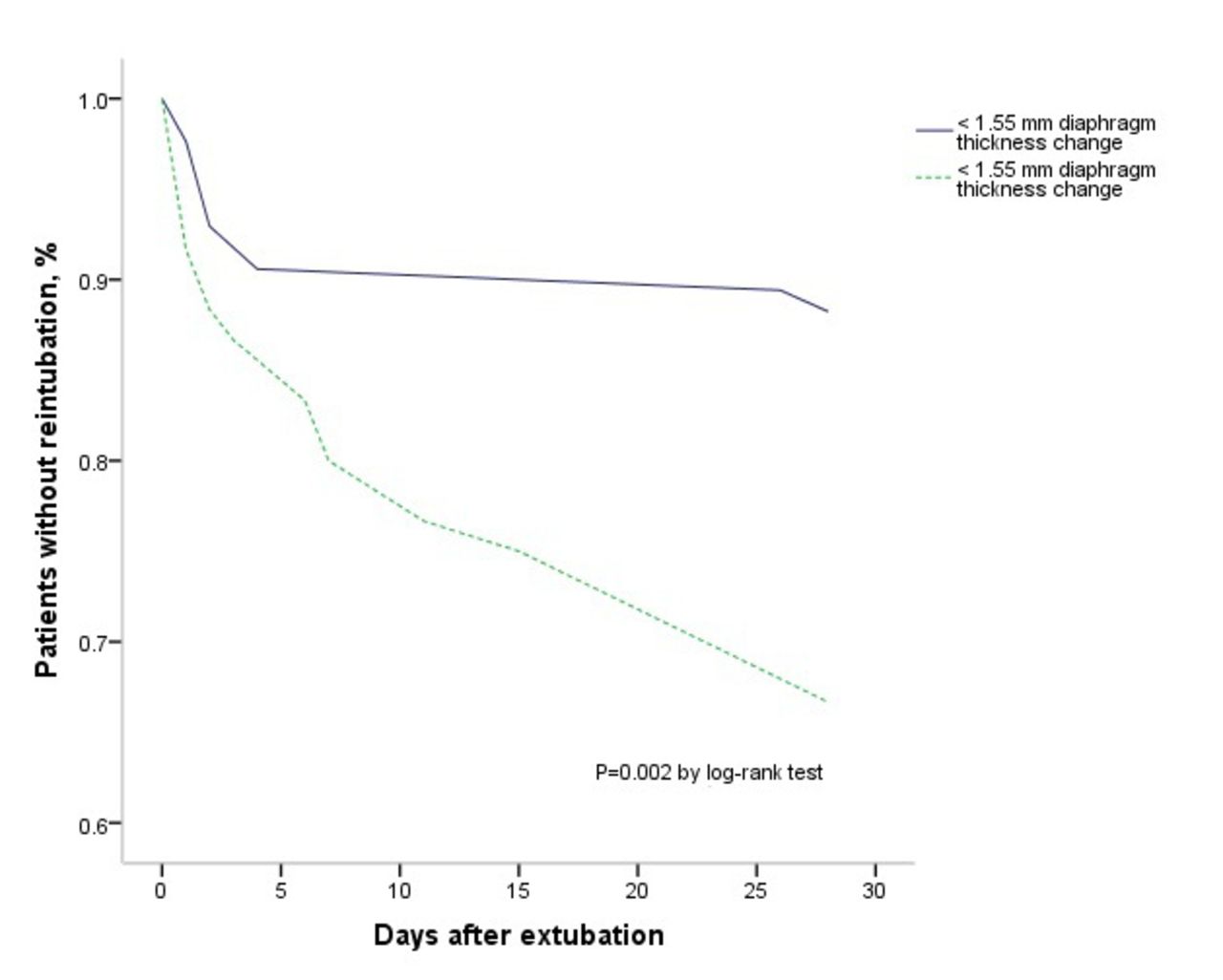
A total of 145 patients were included in the analysis. According to the Receiver Operating Characteristic curve, all the patients were divided into two groups (less or more than 1.55mm diaphragm thickness loss in re-intubation). As a result, less loss of diaphragm thickness was a protective factor of the rate of re-intubation (33% vs. 12%; adjusted odds ratio [aOR] 0.23; 95% confidence interval [CI] 0.10-0.56; P<0.01) and hospital mortality (18% vs. 4%; aOR 0.11; 95%CI 0.03-0.45; P<0.01). But no significant difference was found in the ICU LOS after extubation between the two groups.
Conclusions:
Less diaphragm thickness loss was related to lower rate of re-intubation and hospital mortality.
Get full access to this article
View all access options for this article.