




Abstract
Background:
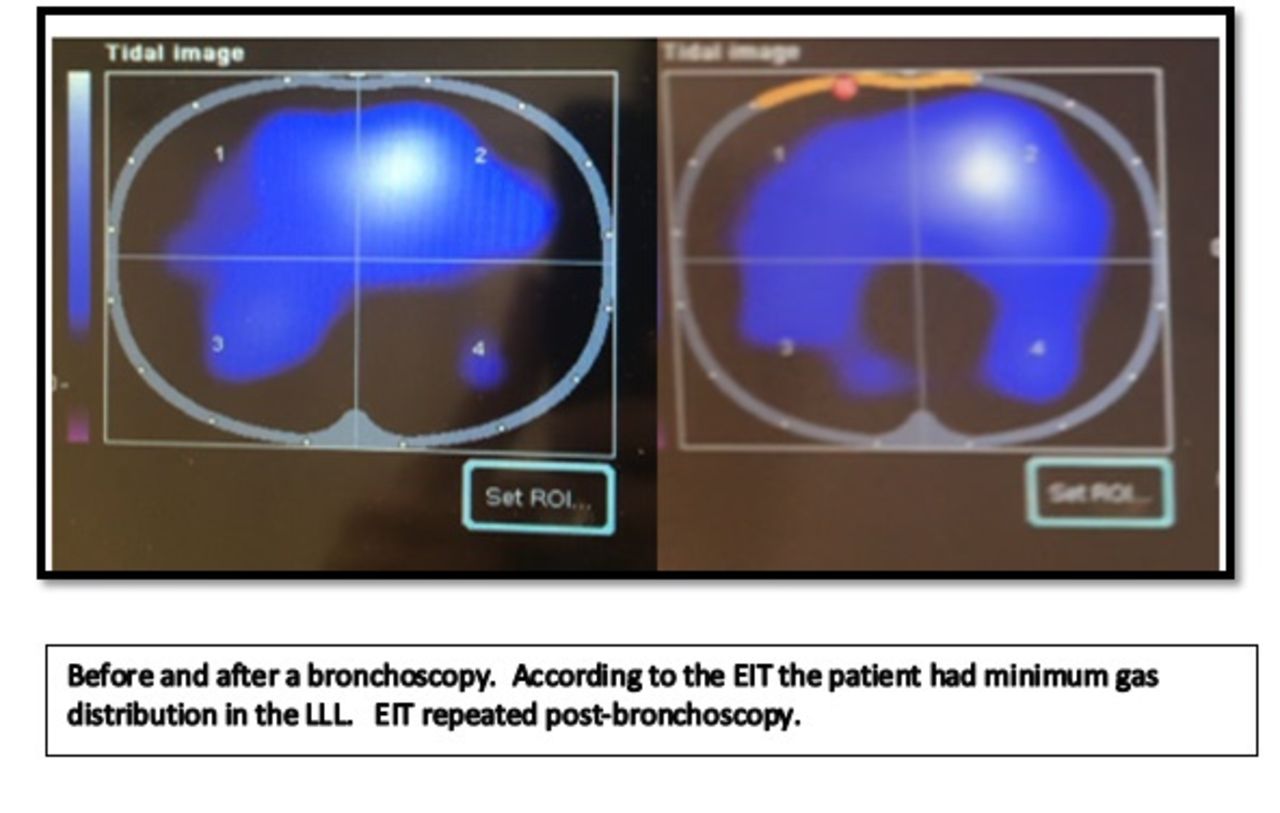
In today's medicine, patients must be exposed to radiation in the form of a chest radiograph (CXR) to determine lung volume or distribution of ventilation. With advanced technology, Electrical Impedance Tomography (EIT) has been used in a wide spectrum in medicine ranging from gastric emptying, brain function and breast imaging to lung function. EIT technology provides a non-invasive and radiation-free medical imaging. Additionally, EIT offers regional information of changes in ventilation and gas exchange, which could help with gaining information on the regional distribution of ventilation without exposing the patient to a CXR. We proposed an observational study to collect data comparing gas/volume distribution in EIT versus CXR in ICU patients on either Pressure Support (PSV), Continuous Positive Airway Pressure (CPAP) or Proportional Pressure Support (PPS).
Methods:
This is an observational study, approved by the University of Maryland, Institutional Review Board (IRB), using the PulmoVista 500 EIT device by Draeger Medical (Lubeck, Germany). The patients enrolled in this study were ICU patients requiring mechanical ventilation with recent CXRs for comparison. EIT information of the distribution of ventilation was reviewed in the lung quadrants, and lung regions were compared to the information provided by CXR.
Results:
18 patients consented to the observational use of EIT. Data demonstrate 75% of the EIT results correlated with the CXR displaying lack of gas exchange or over-distention. We hypothesized EIT would reflect a more accurate description of ventilation distribution at that particular time versus the CXR that was a snapshot in time completed several hours earlier.
Conclusions:
This study suggested the EIT device may be as accurate as a CXR in the distribution of ventilation.
Get full access to this article
View all access options for this article.