




Abstract
Background:
Exercise induced asthma (EIA) is a common health concern among active individuals. The prevalence of bronchoconstriction during physical activity is significantly higher in college athletes. The EPR-3 Asthma guidelines emphasize the importance of asthma education and protocols to help manage and control asthma symptoms. The specific aim of this study was to evaluate the knowledge of National Collegiate Athletic Association (NCAA) athletic trainers and athletes on the methods of diagnosis, education, and management of asthma based on the EPR-3 guidelines.
Methods:
Institutional IRB approval was obtained. A survey was developed using the key components of EPR-3 on the diagnosis, education, and management of severe asthma symptoms. The two surveys (one for athletic trainers and one for college athletes) were almost identical so that the responses could be compared within each college. Fourteen NCAA colleges (Divisions I-III) gave permission for this online survey. Electronic surveys were sent to the athletic trainers and athletes of all sports programs at each college. The survey results were compared by individual questions using the frequency count method.
Results:
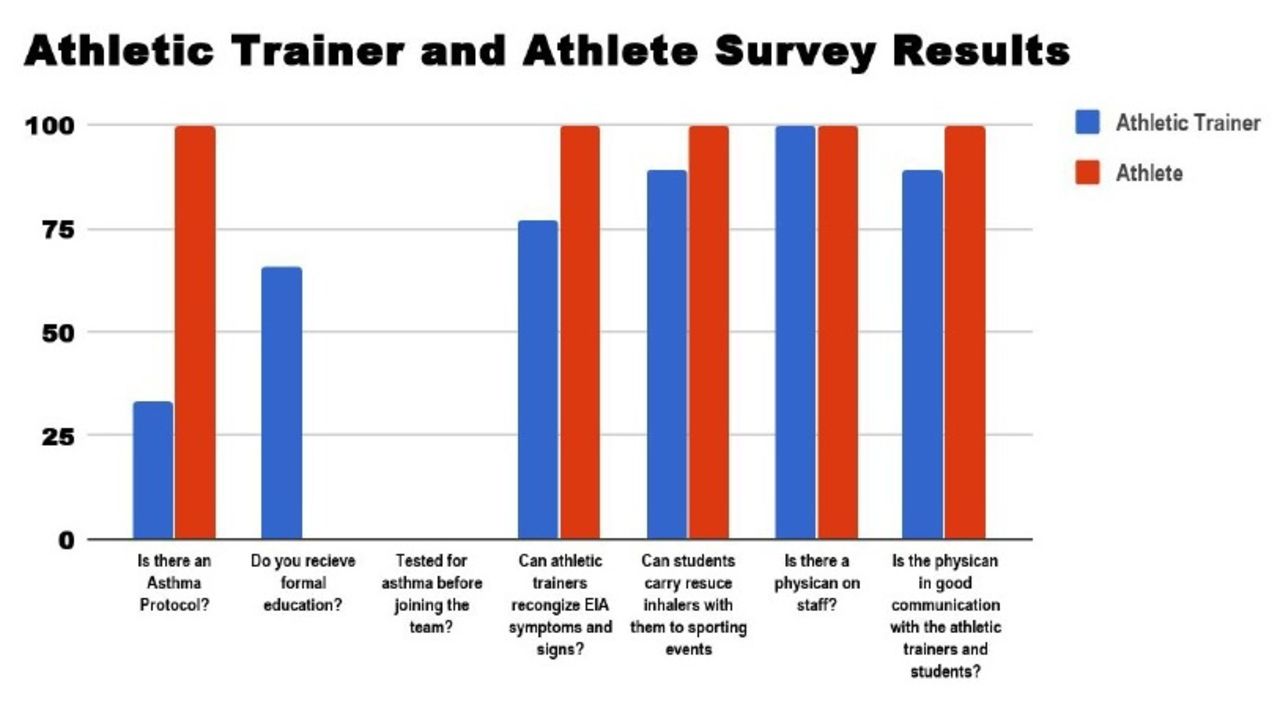
After 2 separate attempts to solicit survey returns (one original and one reminder), a total of 11 surveys (10 athletic trainers and 1 athlete) were received. The key results are shown in the Figure and they include: (1) 70% of athletic trainers reported that the college did not have an asthma management protocol, (2) 35% of the athletic trainers did not have formal education in the management of asthma, (3) As reported by all survey respondents, college athletes were not tested for EIA before joining the team, (4) 25% of athletic trainers could not recognize the signs and symptoms of EIA.
Conclusions:
Screening for EIA before joining the team should be a protocol for the identification and management of unexpected asthma symptoms among college athletes. Asthma education should be in place for each athletic department for trainers and athletes. The low survey return rate is a limitation of this study.
Get full access to this article
View all access options for this article.