




Abstract
Background:
In the last decade, healthcare has changed dramatically resulting in both challenges and opportunities for respiratory therapists (RTs). While some changes have been positive, RTs working in healthcare face long shifts and a stressful work environment. Many RTs have expressed a desire to leave the profession or change careers. Educational programs and managers must work together to recruit and retain qualified individuals within the profession. The purpose of this study was to determine career satisfaction of RTs as well as identify positive and negative aspects of the profession. Information gained from this study may help RT managers attract and retain highly skilled professionals.
Methods:
RTs from a metropolitan area were invited to complete a web-based survey via word of mouth, social media, and advertisements. Institutional Review Board approval was obtained. Referral sampling was used with an email invitation going to hospital managers and educators, who were then asked to send the web link to their staff. The instrument contained 28 items including demographic data, as well as 13 Likert-type items regarding career satisfaction. Participants identified (through open-ended questions) both positive and negative aspects of the profession as well as suggested interventions, which might improve the work environment.
Results:
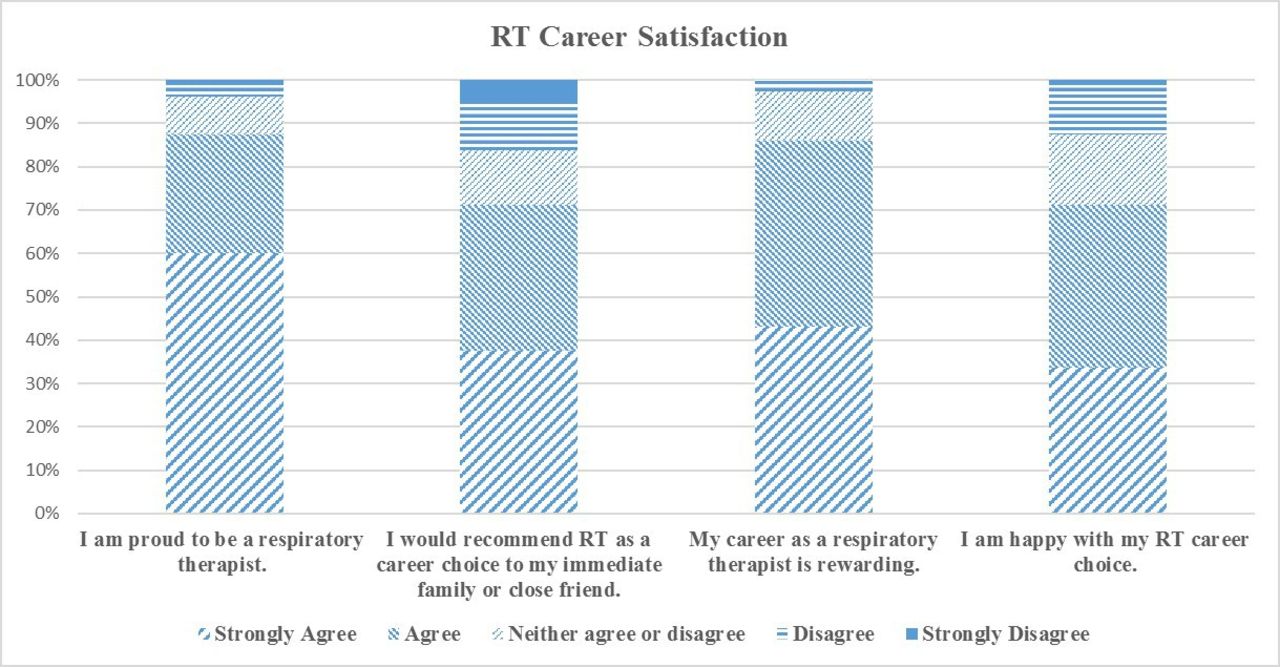
Eighty-three RTs completed the survey. Approximately one-third of participants had less than five years' experience and another one-third had over 20 years' experience. The majority of participants were female RRTs, who entered the profession with an associate's degree. While few participants earned a specialty credential, 23% of participants had a graduate degree. Over 40% of the participants plan to retire or change careers within the next 10 years. Entry-level, mid-career, and experienced professionals felt similar regarding RT being a rewarding career and their willingness to recommend the profession to others. Data related to RTs' satisfaction with the profession are expressed in the graph below.
Conclusions:
While the sample size was small and drawn from one geographic area, the information gained from this study provides insight into RTs' view of the profession. While only 33% of the sample had practiced for more than 20 years, over 40% plan to retire or change careers. Managers, educators, and leaders of the profession must look for ways to retain skilled RTs within the workforce.
Get full access to this article
View all access options for this article.