




Abstract
Background:
Learning how to provide PPV is the foundation of neonatal resuscitation. Variable inflation pressures may lead to ventilation-perfusion mismatch, hypoxemia, poor alveolar recruitment, air leak, alveolar cellular destruction, and volutrauma. Currently manual ventilation of the newborn is accomplished by use of a flow-inflating resuscitation bag at our facility. The purpose of this study is to evaluate the accuracy of maintaining consistent airway pressures with the use of a flow-inflating resuscitation bag.
Methods:
The study population comprised of 30 critical care professionals (eg, RNs, RCPs, and physicians) who actively participate in high risk delivery and demonstrate competence of newborn resuscitation with current NRP certification. Individuals were instructed to ventilate an intubated, newborn lung model, for a 2 minute duration with targeted ventilation pressures of 25/5 cm H2O at a rate of 40-60 breaths per minute. This exercise was completed a second time targeting ventilation pressures of 30/5 cm H2O. Ventilation pressures were recorded and documented for each participant's manual inflation in both trials.
Results:
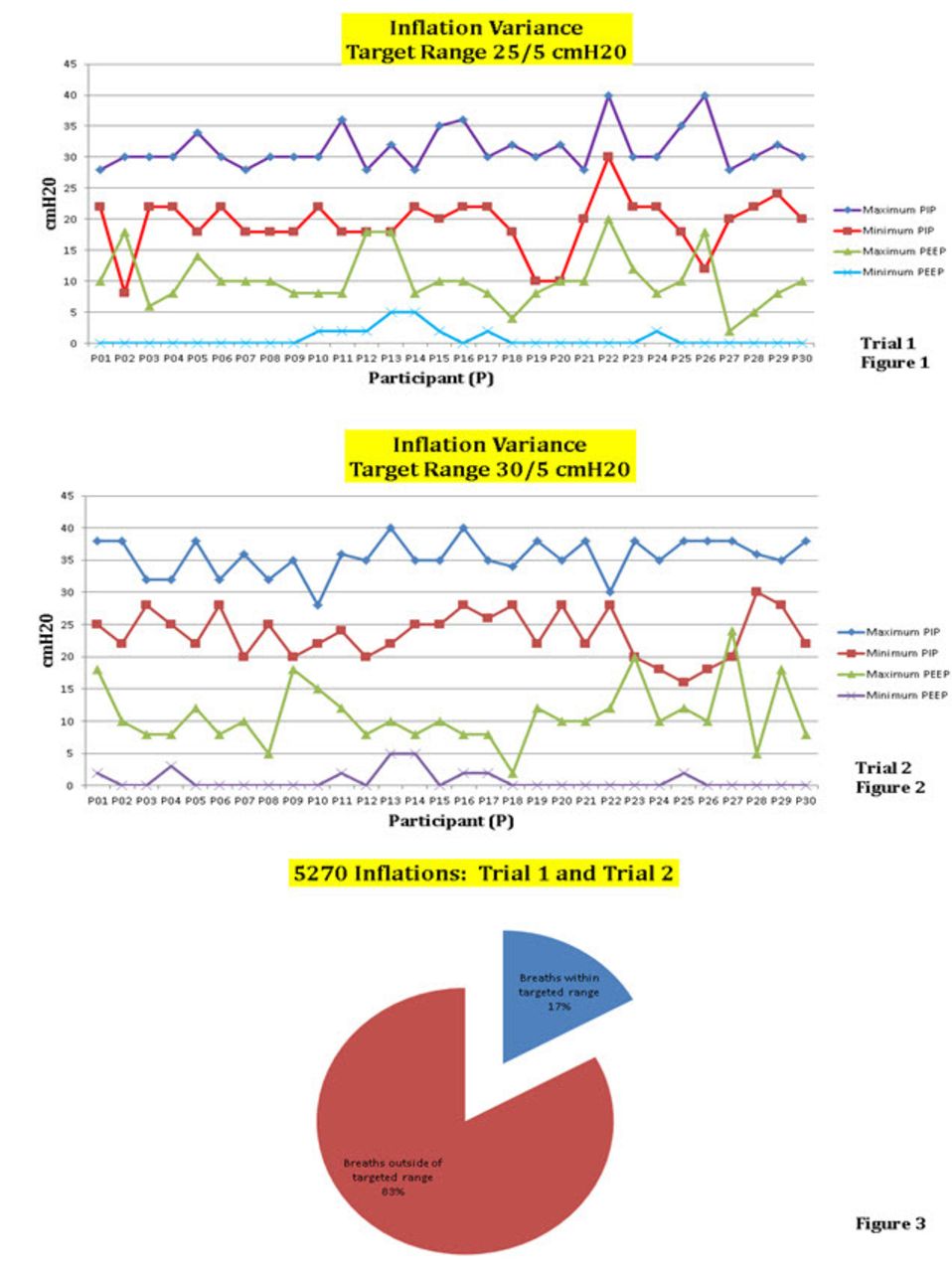
There were significant variations in delivered pressures by manual inflation when using a flow-inflating resuscitation bag. Results revealed excessive PEEP delivered as high as 20 cm H2O in trial 1 and 24 cm H2O in trial 2. Maintaining PEEP with manual ventilation was difficult with levels of 0 cm H2O frequently recorded in both trials. Results also showed inconsistent PIP delivery. Excessive PIPs of 40 cm H2O were recorded in both studies. A minimum PIP inflation of 8 cm H2O was recorded in trial 1 and a minimum PIP of 16 cm H2O was noted in trial 2. 5,270 inflations were measured in both trials.83% of the inflations delivered by the healthcare team fell outside of the targeted range. Only 17% of the resuscitation breaths were within the projected parameters (see Figure).
Conclusions:
It is difficult to maintain consistent airway pressures when ventilating a newborn with a flow-inflating resuscitation bag. Because the need for ventilation assistance cannot always be predicted, teams need to be prepared to provide lifesaving interventions quickly and effectively. Therefore, it is critical to adopt a resuscitation device that can be used universally by the healthcare team that can offer both precision and ease in use.
Get full access to this article
View all access options for this article.