




Abstract
Background:
The incidence of stridor following extubation ranges from 2-16%. 1 Some risk factors associated with stridor include non-iatragenic sources (eg, inhalation injury, penetrating trauma, infection) direct injury related to clinical interventions (eg, difficult/traumatic intubation, prolonged mechanical ventilation), and indirect (statistically associated) ones such as acute brain injury, female gender and obesity. We inquired whether risk factors identified in our subjects were consistent with those reported in the medical literature.
Methods:
In 2010 systematic screening of all mechanically-ventilated patients for stridor risk began following a sentinel event instigating a policy change and quality improvement initiative. As part of this initiative a database was developed to gather information regarding the characteristics of those who developed stridor. Risk factors were assessed both according to prevalence and as duration of intubation increased (< 2, 2-5 and 6+ d).
Results:
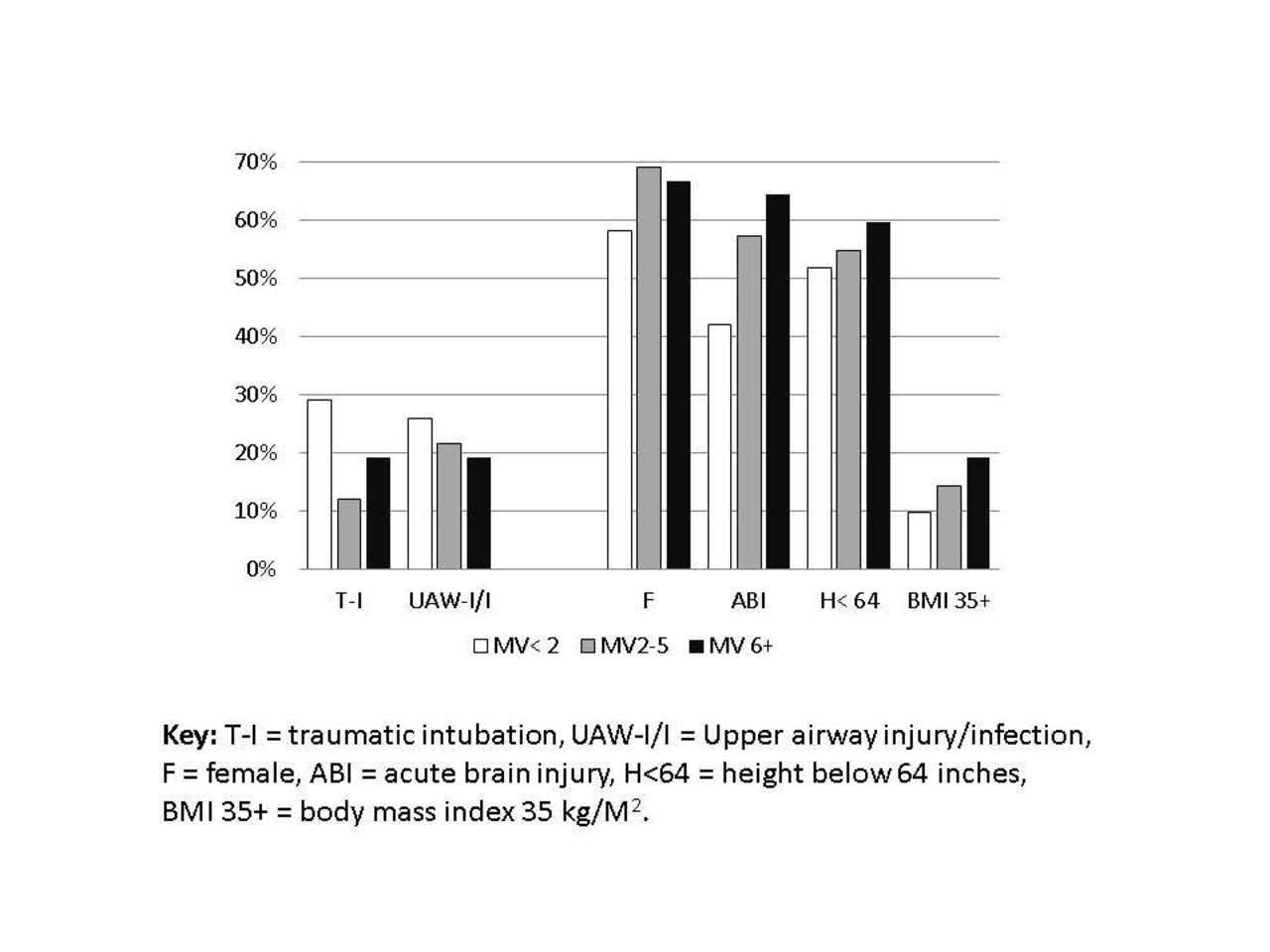
Between May 2010 and February 2018 we identified 115 stridor incidences out of 7,420 consecutive subjects (1.4% incidence). Eight subjects had 2 incidences each with a median [IQR] of 8.5 [5, 9] days between incidences. The most salient features were age > 50 y (69%), female (65%), height < 64 inches (56%), acute brain injury (56%), intubation > 6 d (37%), upper airway trauma/infection (22%), traumatic intubation (19%). When analyzed by duration of intubation, direct injury mechanisms tended to decrease with increasing intubation duration, whereas indirect factors tended to increase (Fig). Prevalence of age > 50 y did not increase in a consistent manner with duration of intubation (65%, 74%, 67% respectively).
Conclusions:
The most prominent risk factors for developing post-extubation stridor appear to be factors not associated with direct trauma to the larynx or subglottic tissues. This suggests that while subjects with direct injury should be evaluated for stridor risk prior to extubation at any time point, the risk of stridor from direct injury appears higher when extubation occurs within a few days of intubation. In contrast, with the exception of age, indirect factors appear to become more prominent as intubation duration increases.
1. Jaber S, Chanques G, Matecki S, et al. Post-extubation stridor in intensive care unit patients. Risk factors, evaluation and importance of the cuff-leak test. Intensive Care Med 2003; 29 69-74.
Get full access to this article
View all access options for this article.