




Abstract
Background:
Clinical instructors play a crucial role in shaping the future of healthcare by training students on site to deliver patient-centered team based care. Respiratory care clinical instructors play an integral part in preparing respiratory care students to be effective practitioners given that almost 50% of the respiratory care curriculum is conducted in the clinical environment under the supervision of clinical instructors. Professional competence, interpersonal relationships, personality characteristics and teaching ability are all qualities that clinical instructors should possess in order to provide students with quality clinical education experiences. This study aimed to explore and compare respiratory care faculty and students' perceptions of the most important characteristics of an effective clinical instructor.
Methods:
A letter of solicitation which housed the link to an online questionnaire was sent to all respiratory care program directors in the US via email. Program directors' emails were secured from the Commission on Accreditation for Respiratory Care (CoARC) website which provides an alphabetical listing of all accredited respiratory care education programs. The clinical instructor's effectiveness questionnaire was used to collect the data (Tang et al 2005). The questionnaire categories are clinical instructor's professional competence, interpersonal relationships, personality characteristics, and teaching ability. Institutional Review Board IRB approval was obtained.
Results:
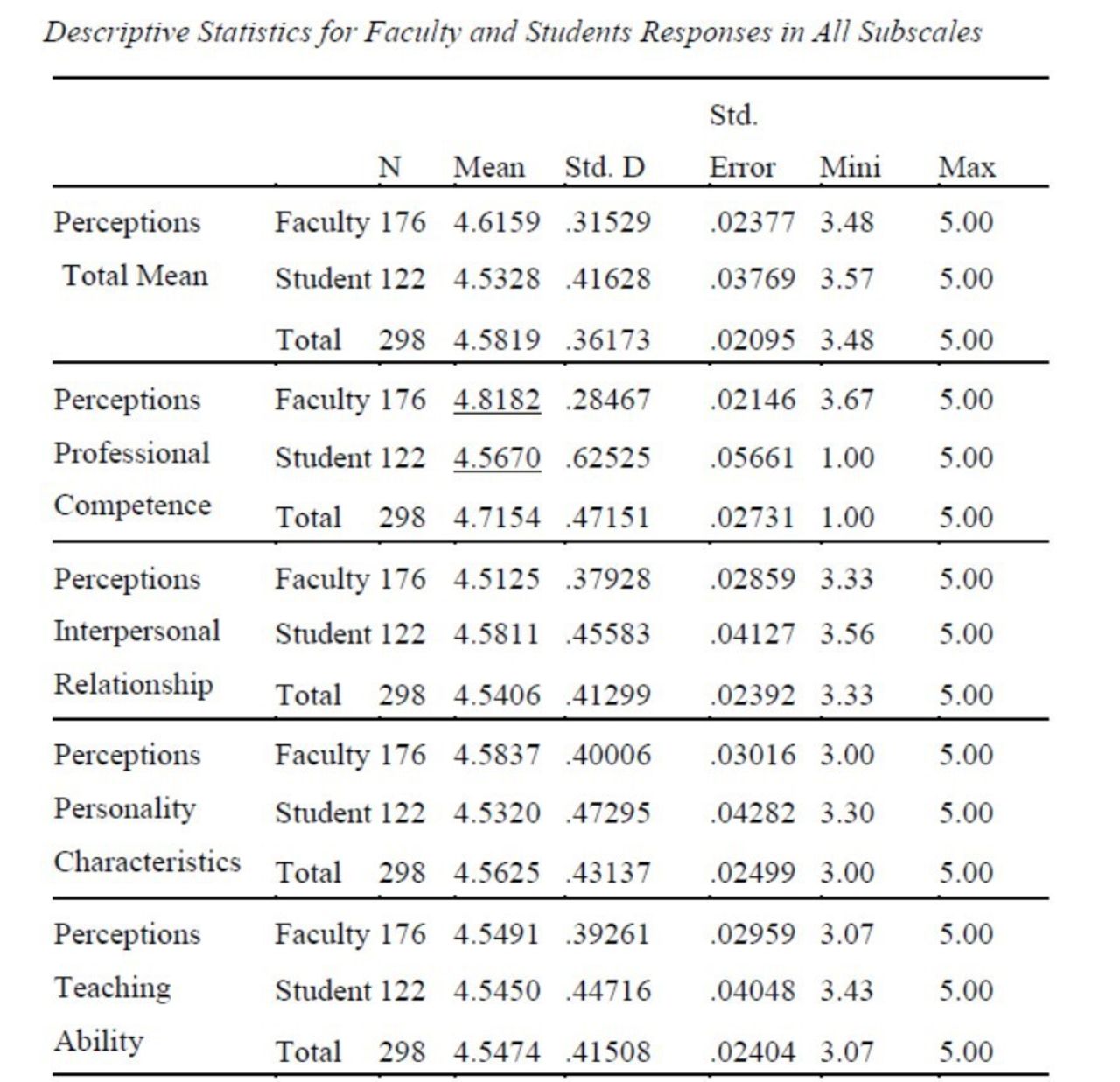
176 faculty and 122 students completed the questionnaire. Respiratory care faculty scored the highest mean in the professional competency category µ= (4.81) and the lowest mean in the interpersonal relationship category µ = 4.51, while respiratory care students scored the highest mean in the interpersonal relationship category µ = (4.58) and the lowest in the personality characteristics category µ = (4.53). A Mann Whitney U test revealed significant differences between respiratory care faculty and students in the professional competence (P=.001) and interpersonal relationship (P= .01) categories .
Conclusions:
Besides being professionally competent, clinical instructors should be able to supports students as they seek to overcome stressors that might arise in the clinical education portion of their curriculum. Clinical instructors must understand their role as mentors and develop a positive interpersonal relationship with students.
Get full access to this article
View all access options for this article.