




Abstract
Background:
To assess the benefits of telemonitoring (TM) on decreasing exacerbations and emergency room visits with COPD, it is important to evaluate the factors that impact acceptance and successful adherence to TM. The objective of this study was to conduct a systematic review of TM studies with COPD, to evaluate the (1) acceptance, adherence, and dropout rates, and (2) identify the reasons for dropout.
Methods:
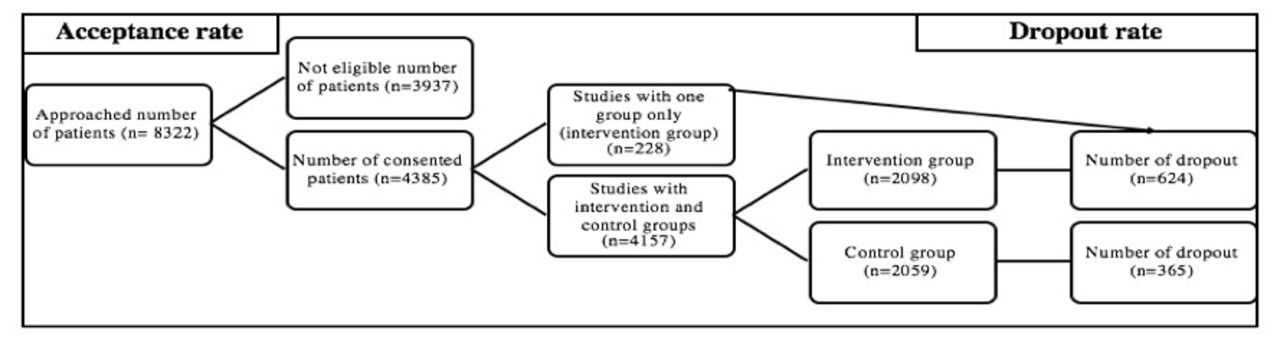
Included studies were randomized control trials and observational single arm pre-post trials that evaluated TM with COPD. A systematic search was performed in CINAHL, MEDLINE (Ovid), Cochrane library, and Embase databases. The Preferred Reporting Items for Systematic review and Meta-Analysis (PRISMA) guidelines was used to guide the selection process. Two independent reviewers retrieved titles, abstracts, and full texts, and completed data extractions. Acceptance rate refers to the number of participants who consented to enroll in TM studies over the number approached. Adherence rate refers to the total participants who completed TM over the number who started TM. Dropout rate refers to the number of participants who dropped out over the number who consented. All rates were calculated as percentages.
Results:
Among 1,460 abstracts identified, 90 articles underwent full-text review and 33 articles were eligible and included. Twenty-seven were randomized controlled trials, and six were pre-post studies. Acceptance rate for all included studies was an average of 52% and ranged from 6% to 100%. The average adherence rate was 77% and ranged from 41% to 100%. The average dropout rate was 22% and ranged from 2% to 58%. Across the 33 studies, 369 participants reported reasons for dropout. TM related reasons for dropouts included technical difficulties (33%), complicated TM system (31%), and time constraints (9%). Patient-related reasons included hospitalization (37%), deceased (18%), lack of interest to continue (12%), and moved from study location (3%).
Conclusions:
The acceptance, adherence, and dropout rates of TM were variable. Most reasons for dropout were related to patient or TM features. The current review suggests optimizing the design of TM studies by considering patient-related and TM-related reasons to increase the acceptance and decrease the dropout rate in the future research. The next step will be to evaluate significant predictors of adherence and dropout rates in included studies.
Get full access to this article
View all access options for this article.