




Abstract
BACKGROUND:
Throughout history, the world has faced numerous health challenges and outbreaks, but through the dedication of medical professionals, solutions have been found. Despite this, the emergence of the coronavirus (COVID-19) has presented a new and dangerous threat. Nevertheless, with unwavering commitment, health experts have triumphantly discovered a remedy.
OBJECTIVES:
The study aimed to examine how religious workers worldwide could contribute positively to ensuring the fair distribution of COVID-19 vaccines, addressing vaccine hesitancy, encouraging people to get vaccinated, and preventing vaccine nationalism.
METHOD:
Our study employed a refined qualitative content analysis methodology to categorize factual information and pave the way for subsequent policymakers. We meticulously curetted the most trustworthy secondary data sources and utilized them to analyze the study.
RESULTS:
The content analysis reveals that religious workers played an active role in the global coronavirus vaccination drive by working towards better vaccine distribution, encouraging people to get vaccinated and countering hesitation and nationalism.
CONCLUSION:
In light of the discoveries, it would be prudent for policymakers to engage religious workers in advancing the cause of public health, regardless of whether the health matters are localized, national, or global in scale. This strategy has the potential to be both alluring and convincing.
Introduction
The global outbreak of the coronavirus (COVID-19) has resulted in a perilous and challenging situation, claiming the lives of millions. Uncertainty loomed over the world as there was no clear indication of when or how the virus could be eliminated. Nevertheless, amidst this crisis, healthcare experts worked tirelessly to develop vaccines to safeguard people from the deadly disease. In late November of 2020, several prominent pharmaceutical companies released preliminary results from extensive immunization studies, showcasing the efficacy of their products for an overwhelming majority of participants. These developments are sure to inspire confidence and hope in the fight against the ongoing global health crisis. In early December, pharmaceutical companies were seeking federal and regulatory permissions, and various local and national authorities began discussing vaccine acquisition, storage, and deployment [1]. COVID-19 has made 2020/2021 challenging for everyone [2]. However, 58 vaccinations against COVID-19 have been produced and are currently being deployed with remarkable success [3]. Some vaccinations were found to be more than 90% effective against COVID-19 in clinical studies [4].
Once a vaccine is available, the responsibility falls on the provider to take into account factors like vaccine hesitancy and supply chain issues. They should also ensure that there are fair methods for educating, distributing, administering, and monitoring the vaccine [5]. It has also come to the forefront that people in almost every corner of the world have reservations about becoming immunized. In fact, prior to the COVID-19 outbreak, the World Health Organization (WHO) listed vaccination reluctance as one of the most important global health threats [6, 7]. In terms of health care and religious attributes, a German study concluded that if cultural and religious characteristics are included in clinical practice as part of diversity management, health care can be delivered to meet the needs of the patients [8].
The discovery of a COVID-19 vaccine was a remarkable achievement for medical experts and has greatly contributed to public health. However, this discovery has presented a number of challenges such as vaccine distribution, mass mobilization, denial and hesitancy, and nationalism. To overcome these obstacles and ensure that the COVID-19 vaccine is accessible and distributed worldwide, health policy implementers have established various approaches. They have launched an online and offline international campaign for COVID-19 and joined forces with numerous social and professional organizations to promote vaccination awareness. In addition, religious-based organizations and faith workers have been recognized as a significant force in the dissemination of vaccines globally. In the realm of public consciousness, the impact of religious figures has been demonstrated in a recent study which revealed a noteworthy and constructive correlation between messaging from religious leaders and a heightened inclination towards receiving vaccinations [9]. It is essential to highlight the positive impact of religious workers and faith-based organizations, given the significant number of believers worldwide. This research underscores the crucial role of these individuals in promoting the COVID-19 vaccine. We examine strategies for global distribution, how religion can aid in public mobilization, and the potential for religious workers to dispel vaccine hesitancy. Additionally, we explore how these workers can promote equitable distribution without resorting to nationalism. Overall, our study emphasizes the importance of incorporating faith-based perspectives in vaccine promotion efforts.
Research methodology
Research design and theoretical framework
It is with great elegance and persuasion that we present this qualitative study, which delves into the crucial role of various religious groups and faith workers in the worldwide immunization campaign against COVID-19. Our study aims to provide an accurate depiction of the issues surrounding COVID-19 vaccination through the use of a trusted and time-tested technique of inductive content analysis [10]. In situations where the phenomenon being studied lacks established research and grounded theories, or is inherently complex and fragmented, this design is often deemed appropriate [10, 11]. However, given the study’s goal and the subsequently identified relationships between categories and subcategories [10], certain findings can be interpreted in terms of resource mobilization theory, which emerged in the 1970s as a new generation of scholars sought to comprehend the emergence, significance, and consequences of the 1960s social movements [12–14]. The theory of resource mobilization highlights the crucial role of available resources in the establishment of a social movement. This theory posits that individuals who hold grievances in society can leverage necessary resources to address their concerns. These resources can include financial means, labor, social standing, expertise, media exposure, and political support from influential figures [14–16]. Other results of the study can be interpreted from the perspective of deprivation theory, for example, some social movements are born when certain people or certain groups of people in a society feel that they are deprived of a specific good, service, or resource [14, 17]. Thus, using a conventional approach to content analysis, relevant concepts and theories are addressed in the discussion section of the study [10].
Data collection
The sample of this study comprised a plethora of publicly accessible, well-documented resources, such as research reports, news articles, webinars, online publications, strategic plans, policy papers, conference sessions, blogs, newsrooms, press releases, and organizational explainers. This diverse range of sources ensured a comprehensive and thorough investigation. Documents contained text (words) and images that were recorded without the researcher’s assistance [18]. Additionally, Atkinson and Coffey [19] refer to documents as “social facts” created, exchanged, and used in socially defined ways. “Documents of all kinds help the researcher discover meaning, gain understanding, and discover insights related to a research question” [20]. The data for this study were collected from multiple written sources and publicly accessible archives, such as online news reports, official press releases, published press articles, survey reports, written seminar sessions, and articles on university websites (Table 1). This comprehensive methodology meant that a wide range of information was analyzed, yielding robust and trustworthy results.
Types of data sources, publication information, and access links
Types of data sources, publication information, and access links
Table 1 presents a concise overview of various sources of data and information publications, categorized by their respective sources. With the introduction of the COVID-19 vaccine, a comprehensive analysis of English patterns has been carried out, with a particular focus on the crucial role played by faith workers in the worldwide immunization initiative. In addition, we have utilized globally recognized and reputable sources and archives accessible via the internet.
The search for information sources involved the use of refined keywords relating to the involvement of religious workers in the global vaccination campaign against COVID-19. The study delved deep into the participation of religious groups in vaccine distribution, and how they were instrumental in persuading individuals to overcome vaccine hesitancy. Additionally, the research focused on the role of religious workers in combating vaccine nationalism. The outcome of the study was based on a thorough analysis of written sources produced during the worldwide immunization campaign.
Data inclusion and exclusion criteria
The study only utilized reliable and credible sources, including publicly available news and online sources, to gather data. Any textual sources that did not illustrate the active involvement of religious workers in the COVID-19 immunization program were disregarded. Additionally, any material that pointed to specific groups causing vaccine hesitancy or promoting nationalism was excluded. Only information directly related to the effective role of religions in the global COVID-19 immunization campaign was considered. The published and publicly available data was meticulously examined to ensure the unbiased selection of resources that demonstrated the successful commitment of global religious workers to the worldwide COVID-19 vaccination campaign.
Upon conducting a comprehensive keyword search, our analysis uncovered a total of 69 sources. Through a diligent screening process, 12 sources were deemed unfit for our study, while 25 were eliminated due to their ineligibility. This has ultimately resulted in a refined selection of 32 sources that are now being utilized for our current research. For a more detailed breakdown of the included and excluded components (see Table 2).
Exclusion and inclusion of documents in the study
Exclusion and inclusion of documents in the study
A qualitative study is an inductive method that involves traditional content analysis of written reports, articles, press releases, news, and conference sessions [21]. Conventional content analysis is a research method that involves the subjective interpretation of textual data content through a systematic categorization process of coding and identifying themes or patterns. Content analysis can be applied in all types of written texts, regardless of how research data is acquired [10, 11]. Additionally, this type of analysis significantly contributes to a deeper understanding of human perceptions and experiences [10, 11]. Thus, this study analyzed written, publicly available, and authoritative data sources to determine which materials should be selected to answer the question of how religious workers around the world participated in the global COVID-19 vaccination campaign. As a result, following the procedures suggested by Elo [11], codes, subcategories, generic categories, and major categories were identified separately and inductively by the authors. This triangulation approach was designed to decrease the impact that happens when various researchers obtain different conclusions from distinct data sets [21]. According to Elo [11], at least two people must independently and separately evaluate and code the data. In accordance with the study’s aims and the analytical framework, inductive thematic saturation of the data model was used, with a focus on identifying codes/themes [22].
The dataset has been divided into two distinct categories; Table 3 lists the four primary codes. The study includes data codes that explore the mobilization efforts of faith workers for vaccine distribution and public engagement for COVID-19 vaccination in the first category. The second category highlights data codes that demonstrate the commitment of religious workers towards overcoming vaccination hesitancy and nationalism. These codes have been creatively arranged into themes, thoroughly examined, and verified to accurately reflect the coding snippets. The data and themes have been double-checked to ensure their proper encoding and relevance. Finally, after naming each theme, an analysis has been written, leading to the emergence of a few key themes (Fig. 1).
Data codes, descriptions of codes, and groups
Data codes, descriptions of codes, and groups
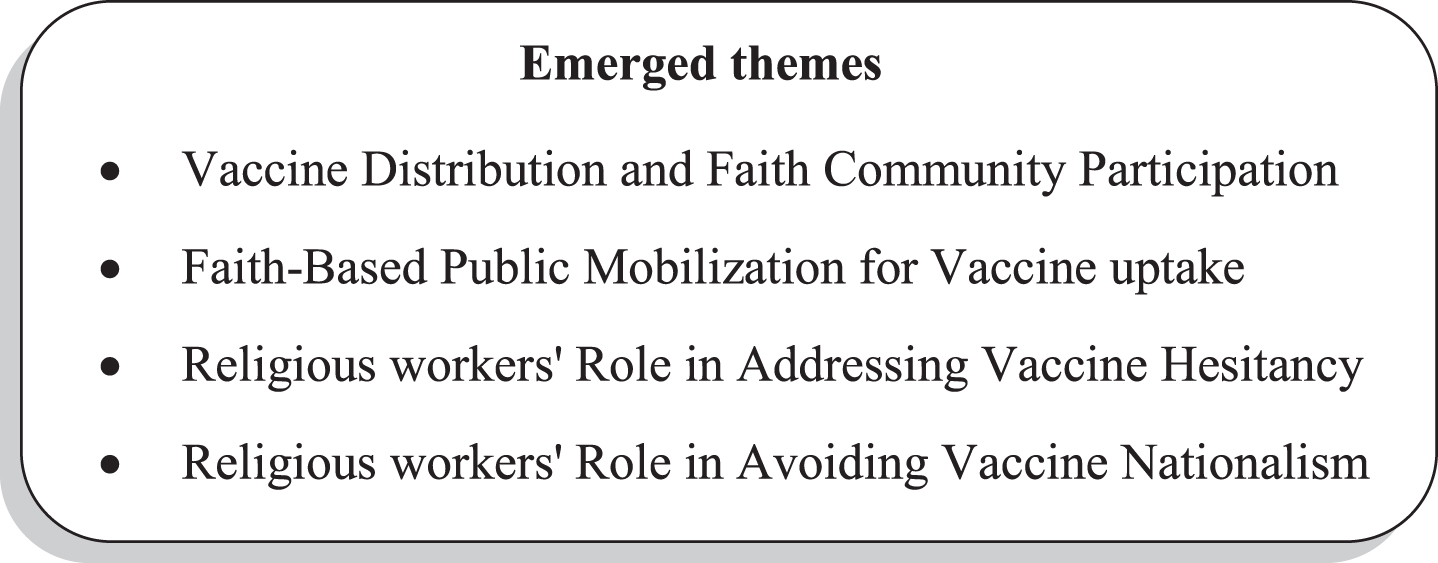
Themes developed through the analysis of documented evidence.
A thorough examination of thirty-three written sources focused on the discovery of COVID-19 vaccines worldwide was conducted. The significance of the COVID-19 vaccination campaign captured the attention of the global media at the time. Trustworthy sources shed light on challenges faced by the immunization program, including vaccine distribution equality, mass mobilization, hesitancy, and nationalism. The authors searched for documentation indicating the involvement of religious workers in the global campaign from November 2020 to September 2021. The collected data was categorized into four themes and two workers. Figure 1 depicts the four primary concepts explored. The study emphasizes the significant contribution made by religious workers in the global immunization campaign through remarks and anecdotes sourced from selected materials.
Through the classification of final themes, we have uncovered multiple perspectives from religious workers that emphasize the importance of global immunization equality and efforts to make vaccines accessible to vulnerable communities. Our analysis of religious community stories has shown the mobilization of faith communities in promoting the benefits of COVID-19 immunization. Additionally, our examination of written materials in the third and fourth themes highlights the involvement of faith workers in overcoming vaccine skepticism and promoting a global perspective over nationalism. To learn more about our classification process (Table 4).
The process of data categorization towards final codes
The central query of the investigation was placed in the primary classification, as evidenced by Table 4. The data was partitioned into two extensive groupings: the expression of the faith community about equitable vaccine distribution and the dedication of religious workers to raising public awareness of vaccination’s advantages, as well as their efforts to combat vaccine hesitation.
The categorization of the dataset’s subcategories has been organized into four groups, including religious workers advocating for equal vaccine distribution, raising awareness about the benefits of vaccination, mobilizing efforts to overcome hesitation, and promoting the avoidance of nationalism. This has led to the recovery of the primary codes relating to vaccine dispersion, mobilization, hesitation, and nationalism. The following section delves into a detailed examination of the narrative data extract and provides examples for each code (Figs. 2–5).
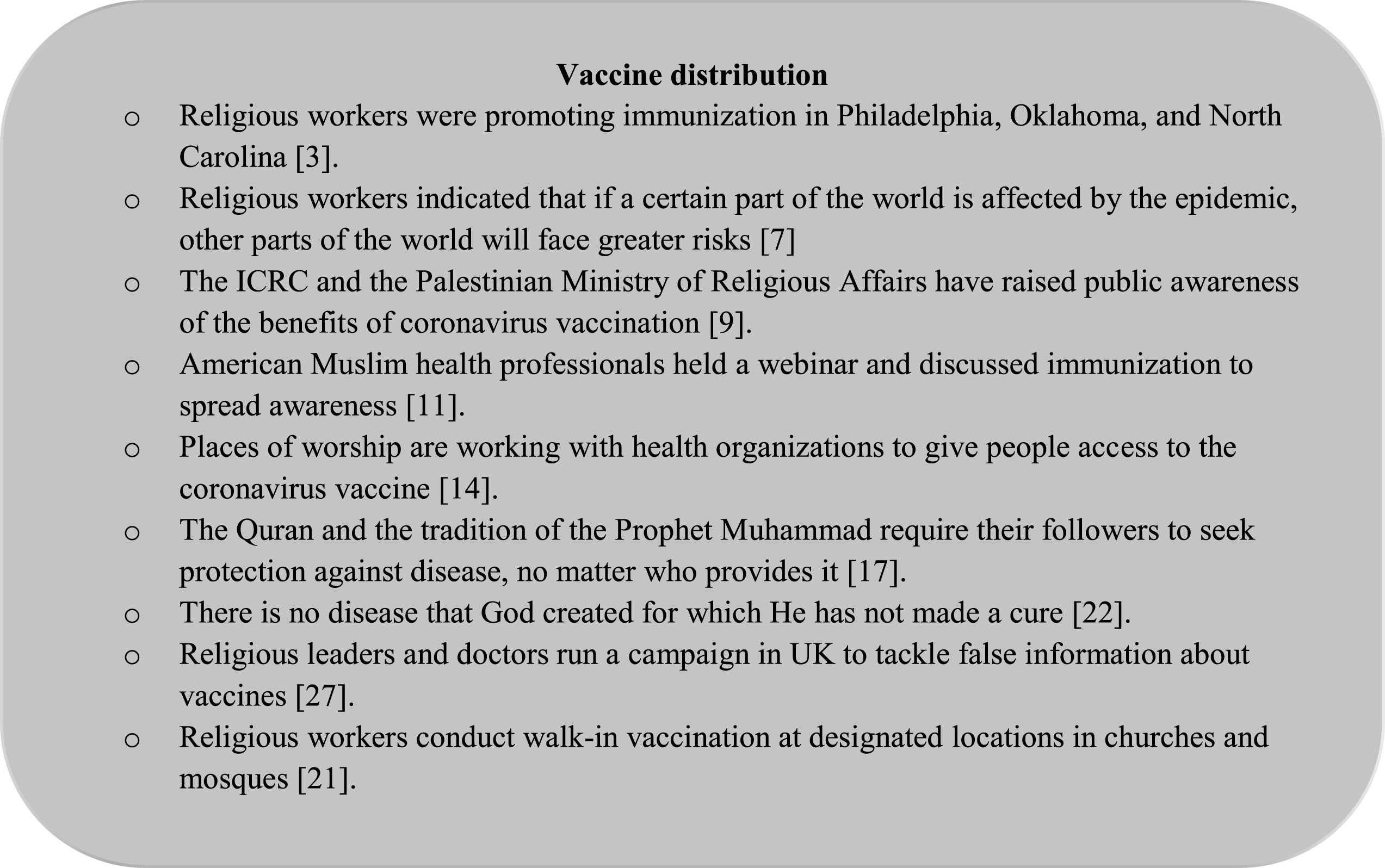
Data extracts supporting vaccine distribution.
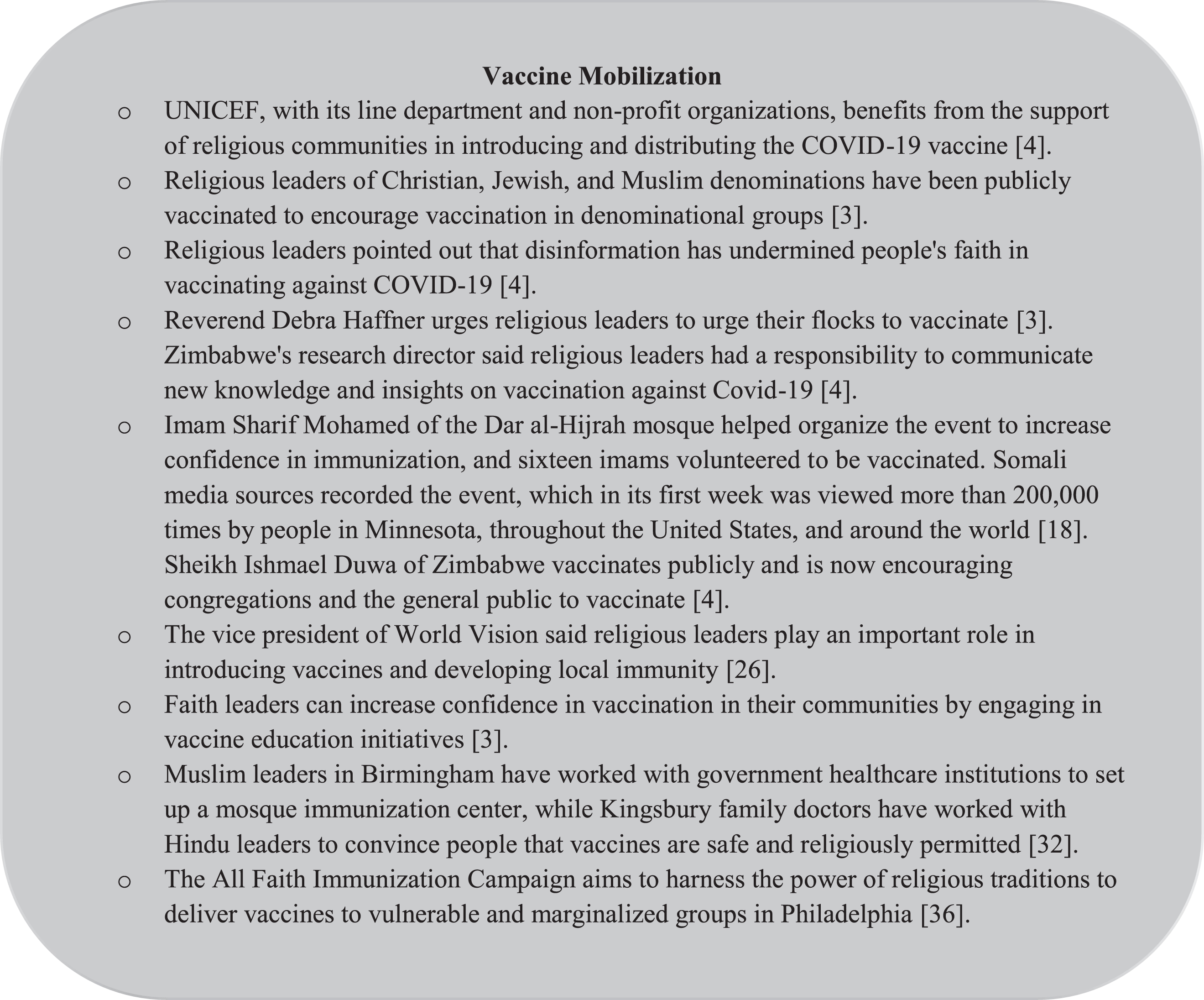
Data extracts and exemplars of vaccine mobilization.
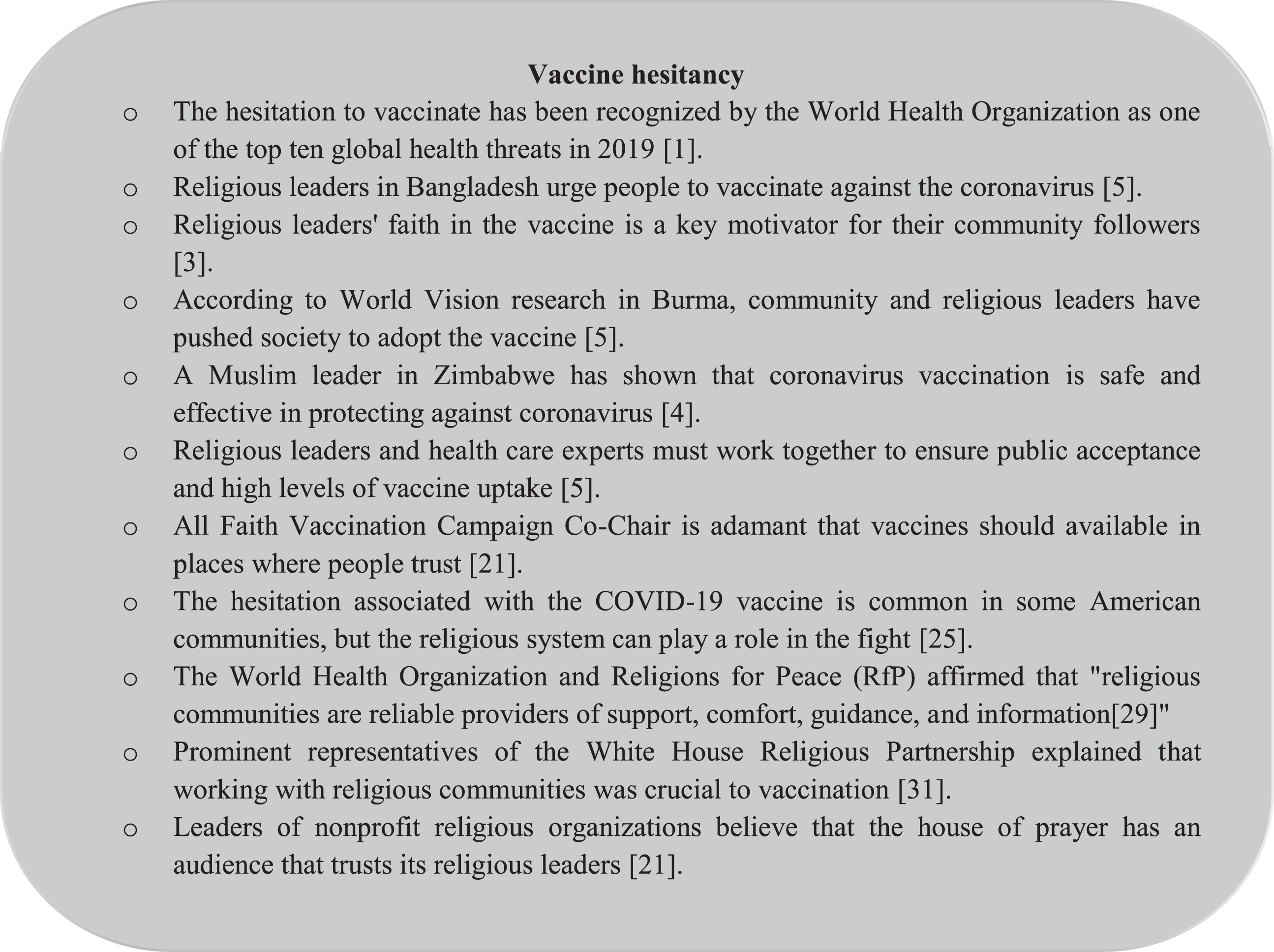
Data extract and exemplar of vaccine hesitation in various workers.
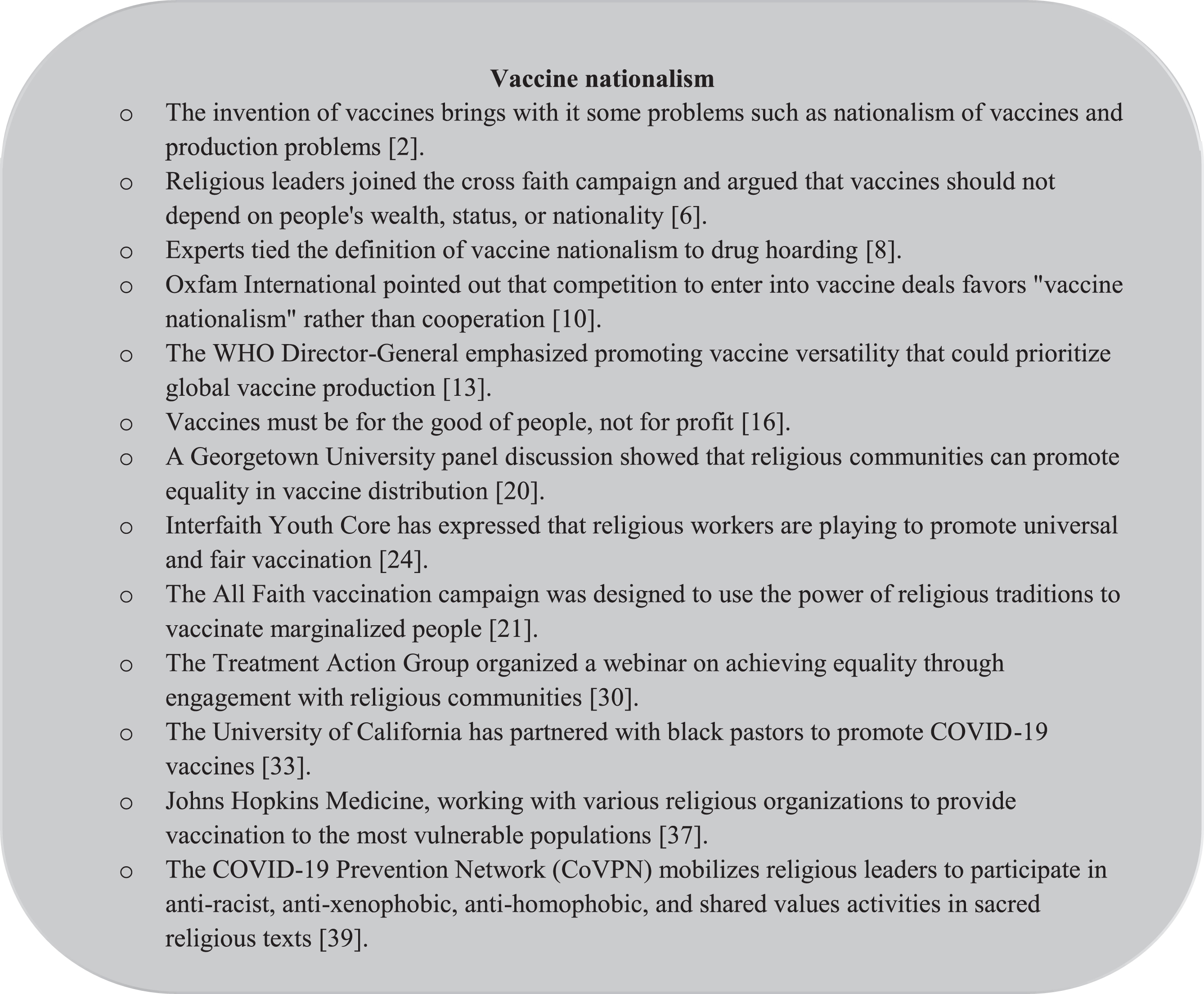
Data extracts and exemplars of vaccine nationalism in various workers.
This segment showcases the unearthing of developing ideas and delineates documented evidence, fortified by pertinent contemporary literature, thereby making a compelling case.
Participation of faith workers in vaccine distribution
Despite the widespread adoption of vaccination, the world confronts significant obstacles that were unforeseen by international authorities and healthcare professionals. These challenges are amplified by the sheer volume of vaccines required and the intricacies associated with global supply chains. Nevertheless, our research has unearthed compelling evidence of religious personnel playing a pivotal role in facilitating the rapid and equitable distribution of COVID-19 vaccines worldwide. Figure 2 features numerous quotes and data points that support this conclusion.
As presented in Fig. 2, religious workers have been diligently working to promote the widespread distribution of the COVID-19 vaccine. Despite the imperative need for vaccination clinics, accessibility to these clinics remains an obstacle for many individuals:
Health officials and institutions have worked with religious workers in places like Philadelphia, Oklahoma, and North Carolina to promote and expand access to vaccination. Health institutions bring people closer to vaccination through religious houses, which promotes confidence in the vaccine as people can get it in a trusted place [23].
The presented evidence indisputably highlights the fact that individuals are more inclined to embrace vaccination when certain conditions are met, and when trust is placed in reputable providers. It is therefore clear that, despite the prevalence of misleading information in our society, prayer halls and religious personnel are the most reliable sources of guidance for those who hold strong beliefs. Similarly, a recent study has indicated that actors and religious organizations have a vital influence on the public health of black, Asian, and other ethnic workers [24]:
Faith leaders call on authorities and pharmaceutical companies to produce and distribute enough vaccines to vaccinate the entire world population against COVID-19. Religious workers urge governments to spend additional doses, saying that “if one area of the globe is affected by the epidemic, other parts of the world will be at increased risk” [25].
The steadfast efforts of religious leaders to advocate for a universal vaccine in a timely manner is a testament to their dedication to ensuring the safety of all individuals. Research has shown that they are also proponents of a fair and impartial allocation of vaccination doses. It is clear that religious workers play a crucial role in promoting widespread immunization against COVID-19 on a global scale. Similarly, a past study has revealed that religious workers play an essential role in health promotion, particularly in vulnerable communities [26]:
The International Committee of the Red Cross, the Palestinian Ministry of Religious Affairs, and the Gaza Ministry of Health has joined forces to enhance public awareness about the advantages of the coronavirus vaccine. A radio campaign, billboards, video, and social media will be used to promote and reassure people in Gaza that vaccines are safe to use and will help prevent the spread of COVID-19 [27] . In fact, faith workers, religious leaders have a tremendous impact on vaccine availability, accessibility, and acceptability [23] . American Muslim health professionals hosted a webinar with Anthony Fauci and Muslim medical staff to discuss immunization and responses to common concerns [28].
The ICRC has worked together with the Palestinian Ministry of Religious Affairs and the Ministry of Health to promote COVID-19 vaccines by enlisting the support of religious workers. This partnership could help to implement national and international vaccination policies. Religious workers have been found to have significant influence over vaccination campaigns, and collaborating with health experts may be an effective way to address public health issues related to vaccines.
Similarly, examples of religious workers and health professionals collaborating to enhance public health can be found in contemporary scholarship. For example, the findings of a study in which 32 faith leaders were interviewed about their interests and preferences for health partnerships with an academic center revealed that participants were willing to collaborate to develop fair, balanced, and trust-based relationships in order to meet the health needs of their congregations [29]:
More places of worship are collaborating with health organizations to provide people access to the COVID-19 vaccination [30] . In the case of Islam, the traditions of the Quran and the Prophet Muhammad oblige its followers to seek protection from disease, regardless of who provides it [31] . Likewise, the hadith or the traditions of the Prophet Muhammad (PBUH) written in Ibn-Majah: “There is no disease which God created for which He has not made a cure, known to some people and unknown to others, except death.” While Abu Dawud related that bin Abi Waqas reported, “Once I got very sick and the Messenger of Allah (PBUH) came to visit me. He put his hand in the center of my chest until I felt his chill in my heart.” He said, “You have heart disease. Go to Harith bin Kaladah (tribe) of Haneef because he is a physician.” This was said by the Prophet, knowing full well that Harith was not a Muslim [32].
The narrative data revealed that when faced with a widespread health issue, it is imperative to refrain from engaging in any form of racism and instead follow the guidance and treatment prescribed by medical professionals. Although some may argue that during a public health crisis, authorities and religious leaders should work together to disseminate factual information, it can also be argued that promoting religious traditions among believers can be beneficial in such situations. Ultimately, the collaboration between authorities and faith workers can help combat the crisis effectively. In terms of religious traditions’ health advantages, the study discovered that different religious traditions had similar health results but differed in spiritual, religious, and personality components [33]:
In the UK, the Department of Digitization, Culture, Media and Sports has launched a campaign to tackle false information about vaccines being spread to ethnic minority workers by sharing a toolkit for sharing via WhatsApp and Facebook social workers as well as Twitter, YouTube, and Instagram. The campaign is run by trustworthy members of the community, such as religious leaders, doctors, and others, who give basic recommendations in short videos on how to detect misinformation and what to do to prevent it from spreading. To uphold the trust in vaccination, it is imperative that every individual comprehends their distinctive challenges, past encounters, spiritual or political beliefs, and economic status [34]. Lorina Marshall-Black, chairman of the Independent Blue Cross Foundation and sponsor of the All Faith Vaccination Campaign, stated that the campaign has at least 30 specialized venues in various churches, mosques and medical institutions in the city, where residents can visit vaccination by appointment or walk-in [35].
Based on the aforementioned information, the United Kingdom has enlisted the support of digital, cultural, media, sports, and religious influencers to combat the spread of misinformation about vaccinations. The Independent Blue Cross Foundation has collaborated with several religious institutions and medical facilities to facilitate access to vaccines for local residents. This serves as evidence that government agencies alone are insufficient in addressing vaccine misinformation and require the cooperation of religious workers to effectively assist the public.
Faith-based public mobilization for vaccine uptake
It is widely recognized that mass mobilization and faith are intertwined. Our recent research has uncovered a multitude of written evidences and narrative data that reveal the dedication of religious leaders to mobilizing the public in the fight against the COVID-19 pandemic (Fig. 3).
The findings are meticulously assessed by delving into relevant literature and presenting a comprehensive representation of the viewpoints of various stakeholders, including department heads, social workers, and religious organizations. This information is illustrated in Fig. 3, providing compelling evidence for our argument:
UNICEF and the Ministry of Health and Child Care (MOHCC), in collaboration with the Apostolic Women Empowerment Trust (AWET), sponsored a meeting with interfaith religious leaders from across the country to organize support for the introduction and rollout of the COVID-19 vaccine [36] . More than two dozen religious leaders of Christian, Jewish, and Muslim faiths were vaccinated in public to encourage immunization within faith-based workers [23] . Religious leaders of various religious backgrounds, including Christian, Islamic, and traditional African religions, expressing concern that the dissemination of unfiltered information and disinformation has undermined people’s faith in being vaccinated against COVID-19 [36] . “I think religious leaders should urge their flocks to vaccinate, and I have indeed been vaccinated to convey a message to the public,” said Reverend Debra Haffner [23].
Based on the facts stated above, UNICEF and other international organizations collaborate with religious leaders of many religions to encourage vaccination deployment in order to inspire people. Similarly, another source reported that religious leaders of Christianity, Judaism, and Islam have all been publically vaccinated in order to mobilize religious workers. Religious leaders from diverse faiths and traditional African religions have expressed concern that misinformation is undermining immunization efforts.
According to documents, a religious leader received a vaccine in public to encourage others to do the same. The leader emphasized that if religious leaders start with themselves, it will set an example for others to follow and contribute to public health initiatives like the COVID-19 vaccination campaign. Therefore, religious workers can become influential in promoting community health if they take the initiative. Given the urgency, Islam, for example, is a political system that can empower the masses to mobilize [37]. Similarly, according to another study, putting Faith to Work has emerged as a promising method for developing the capacity of faith-based communities [38].
The collaboration between religious workers and health authorities and institutions has resulted in a significant boost in vaccine availability. Some notable examples of this partnership are:
Ronald Nare, director of research, innovation, and program development at Zimbabwe, said religious leaders had a responsibility to impart new knowledge and insights about COVID-19 vaccinations. “We need to motivate religious workers to take active steps to improve the health of the children, families, and workers they serve” [36] . The event, co-hosted by officials from the community clinic and the Somali community in Minnesota, is one example of successful collaboration. Older imams from across the state have flocked to the Community-University Health Care Center (CUHCC) to get the COVID-19 immunization. Dar al-Hijrah Mosque’s Imam Sharif Mohamed helped organize the event to increase vaccination confidence in the Somali community. Imam Sharif and other Somali spiritual leaders saw the need to encourage and push for higher COVID-19 vaccination and set out a good example. Sixteen imams volunteered to be vaccinated. Somali media sources recorded the event, which in the first week was viewed more than 200,000 times by people in Minnesota, throughout the United States, and around the world [39].
The presented data has led the Zimbabwe research project chair to propose that religious leaders should play a critical role in organizing vaccination efforts. This is supported by the success of Imam Sharif Mohammed of the Dar al-Hijrah Mosque in Minnesota, who played a pivotal role in motivating the Somali community to get vaccinated. The event involved 16 imams and was widely viewed by people worldwide. This indicates that in times of crisis, people often turn to their spiritual leaders for guidance and follow their lead. Thus, religious workers of various faiths can serve as essential social mobilization networks in public health. Similarly, research has revealed that religious leaders play a major role in civil society and contribute significantly to civic and political dialogue [40]:
Sheikh Ishmael Duwa, President of the Supreme Council of Zimbabwe, claimed that he was the first Islamic leader in Zimbabwe to vaccinate himself publicly and is now encouraging congregations and the general public to vaccinate [36] . Margaret Schuler, vice president of international programs for World Vision, said religious leaders play an important role in introducing immunization, improving the health care system, and developing local resilience. They are trusted partners who work closely with workers to involve them in the process and ensure complete acceptance of vaccines [41] . Faith leaders may increase vaccination trust in their workers by being vaccinated in public and engaging in vaccine education initiatives [23].
Based on the aforementioned evidence, a Muslim spiritual leader in Zimbabwe is publicly advocating for vaccinations and encouraging both congregants and the wider community to follow suit. Written testimony suggests that the vice president of World Vision has recognized the influential role that religious workers can play in the successful implementation of vaccination programs, as they are respected allies who collaborate closely with medical professionals to promote widespread vaccination adherence. A study found that community stakeholders, such as traditional leaders, opinion group leaders, chiefs, and religious leaders, can assist in mobilizing community members [42]. Drawing upon the data elucidated above and contemporary literature, it is discerned that religions possess the potential to serve as a crucial catalyst in mobilizing the populace during exigent public health situations:
In Birmingham, the Al-Abbas Islamic Center in Balsall Heath worked with local National Health Services (NHS) leaders to set up a mosque vaccination center, and GPs worked with Shree Swaminarayan Mandir leaders in Kingsbury to send a clear message to Hindu and wider South Asian workers they say the vaccine is safe and religiously permitted. Government ministries and senior clinicians work extensively with religious and community groups across the country, including through regular roundtable meetings with ministers and faith workers, to provide guidance on how to help their workers benefit from the COVID-19 immunization program, UK Government Policy Paper [43] . Byrd, Forum Philly President and CEO, and Black Clergy of Philadelphia launched the All Faith Vaccination Campaign in partnership with nearly 50 entities and organizations from different spiritual traditions, healthcare institutions, and the City of Philadelphia. It seeks to use the power of religious traditions to provide vaccination to vulnerable and marginalized populations across Philadelphia, and to achieve fair access to vaccination in black and brown workers [44].
Muslim leaders in Birmingham worked alongside government health institutions to establish a mosque immunization center, while Kingsbury GPs partnered with Hindu leaders to promote the safety and religious permissibility of vaccines. In the United Kingdom, government ministries and top doctors collaborate closely with religious workers to offer guidance on the COVID-19 immunization campaign. The All Faith Immunization Campaign in Philadelphia utilizes religious traditions to reach out to vulnerable communities and ensure equitable access to vaccination for black and brown employees. Collaboration among religious groups, community organizations, health institutions, and government officials is essential to address major public health issues and set a precedent for future problem-solving efforts. A study conducted in Nigeria showed that religious leaders have significant influence over their followers and can shape their attitudes, views, and behavior. These leaders and their organizations provide spiritual guidance and can also impact health behavior, particularly for the poorest and most vulnerable workers, even in areas where government services are not accessible [45]. In light of the preceding information, we strongly advise that governmental and policymaking bodies collaborate with religious institutions and leaders to rally individuals towards the COVID-19 vaccination effort. This partnership will not only efficiently disseminate crucial information, but also foster a sense of community and trust in the vaccination process.
Religious workers’ role in addressing vaccine hesitancy
Vaccine hesitancy refers to delaying or refusing vaccines even when they are accessible. This reluctance can be influenced by various factors such as complacency, convenience, and confidence, and can vary depending on the vaccine, location, and time [46]. Through our research, we have delved into the role of religious workers in immunization and have uncovered various perspectives on vaccine reluctance. Our findings, as depicted in Fig. 4, provide illuminating insights into the issue of vaccine apprehension.
Figure 4 showcases the admirable endeavours of religious workers in different areas to alleviate people’s doubts about the efficacy of the COVID-19 vaccine. It is worth noting that women (21% compared to men’s 15%), younger individuals (28% of those aged 25–34 compared to 14% of those aged 55–64), and those with lower educational attainment (24% of high school secondary graduates compared to 13% of university graduates) exhibit a greater reluctance to receive the vaccine [47]:
The WHO listed vaccination hesitancy among the top 10 global health threats in 2019 [48] . A relief agency conducted research in rural Bangladeshi villages and found that 100% of those intending to get vaccinated agreed with the statement, “Most of my community and religious leaders would like me to get vaccinated against COVID-19.” Only 38% of those who plan to decline the vaccine (known as “no acceptors”) agreed with this statement. Vaccine acceptors were also 7.1 times more likely (than non-acceptors) to say they would receive the vaccine if suggested by a healthcare professional [49] . In color religious workers, where hesitations about vaccination are usually rooted in a distrust of health systems, the belief that religious leaders believe in the vaccine is a huge motivator for them to do the same [23].
The evidence presented above indicates that vaccine hesitancy is not a new issue, and the WHO has acknowledged its prevalence. Additionally, data suggests that religious leaders have significant influence over their followers’ beliefs and actions, making them trustworthy figures. Therefore, involving them in national disease management plans can help build public trust in science and faith. Recent studies have also demonstrated that collaborating with religious workers can enhance the public’s trust in scientists, promote evidence-based policies, and encourage diversity and fairness in STEM fields (science, technology, engineering, and mathematics) [50].
On the other hand, the study found that black people were more likely claimed that they “did not trust vaccines” compared to whites (29.2% and 5.7%), and people from Pakistan and Bangladesh often mentioned concerns about vaccine side effects (35.4% and 8.6%) [47]. Vaccination sites outside of traditional healthcare settings, such as places of worship and workplaces, can provide levels of familiarity and enable them to reach populations that do not trust the government or medical institutions [51]. It has been suggested that visiting places of worship and workplaces may be a more effective approach to addressing vaccine hesitancy than traditional health centers. This practice can be especially beneficial in the implementation of the COVID-19 vaccination programs in underprivileged regions and countries. Therefore, it is imperative for health policymakers and global leaders to develop a plan to reach remote and marginalized communities in order to accelerate the progress of the COVID-19 vaccine:
World Vision carried out a study in Myanmar and found that the variables influencing COVID-19 vaccine uptake in the workers there were comparable in several ways: Accepters were 3.7 times more likely to indicate that there was a high probability of receiving the vaccine if recommended by a health care professional for them, and it was more likely that they felt that most of their community and religious leaders would like them to receive the vaccine (100 percent of acceptors versus 80 percent of non-recipients) [49].
The data gathered has shown that people turn to health experts and religious figures when faced with complex health problems. From this, we can infer that including religious workers in public confidence-building efforts is crucial to enhancing public health. This highlights the importance of collaboration between health and religious sectors:
Sheikh Ishmael Duwa, Chairman of the Supreme Council of Zimbabwe, stated “I am sharing my vaccination experiences with Muslims and the general public of Zimbabwe, to illustrate that these vaccinations are safe and that taking them is a way in which we can protect our children, families, and workers from this epidemic” [36] . According to the findings of the World Vision study, the support of religious leaders and healthcare professionals is critical to community acceptance, providing correct health information, and ensuring high levels of vaccine uptake [49] . The Reverend Clarence Moore stated: “I have appeared on television several times in favor of the effectiveness and necessity of receiving the vaccine, and I have made mine and my wife’s immunizations fairly public” [23] . Dr. William King, the co-chair of the All Faith Vaccination Campaign, said the goal is not only to bring vaccination sites closer to workers of color but also to make the vaccine available in places where people trust, with people they trust. It can be family doctors, community centers, or worship houses [35] . A new study of Public Religion Research Institute (PRRI) has revealed that hesitancy with the COVID-19 vaccine is still common in some US communities, but the belief system could be a key factor in the fight. It has revealed that among Americans who attend some form of faith services at least a few times a year, 44% of those who are “reluctant” to the COVID-19 vaccine say that a strong path of faith has been able to influence their decisions. While 14% of people who are “resistant” to the vaccine say the same. Of all those polled, regardless of religious affiliation, 26% of Americans “hesitant” and 8% of “resistant” Americans reported that faith-based vaccination campaigns and public health drives would make them more possible to get the vaccines [52].
Evidence suggests that the leader of the Muslim community in Zimbabwe has openly shared his positive vaccination experience and reassured the public, especially the Muslim community, that the vaccine is safe and necessary in the fight against COVID-19. The World Vision studies show that religious leaders and health experts can play a crucial role in promoting vaccine acceptance. In contrast, a Christian leader has publicly spoken out against vaccinations. The All Faith Co-Chair aims to make immunization locations more accessible to people of color and in trusted places like religious facilities. A recent study by the PRRI found that some Americans are still hesitant to receive the vaccine, but their religious beliefs may play a role. Among those who attend religious services, 44% of those who are hesitant cited their faith as a factor. Similarly, a recent study discovered that increasing the trust of community faith-based organizations (CFBOs) can help respond to large-scale disasters by improving the success of more committed operations that involve CFBOs in emergency preparedness and health department operations [53]:
The Director-General of the World Health Organization met with senior leaders of Religions for Peace (RfP) for a high-level dialogue focused on the importance of multi-faith cooperation in responding to the pandemic, in particular, the role played by faith leaders and organizations in COVID-19 vaccine introduction. He stressed the willingness to formalize WHO’s collaboration with the religious community both in terms of COVID-19 response and the greater Health for All goal. He stated that “faith workers are trustworthy sources of support, comfort, direction, and information”, that they championed justice and fairness, and that they offered health care in many areas [54] . Melissa Rogers, executive director of the White House Faith-Based Partnership and Neighborhood Partnership Office, explained that working with faith workers is critical to immunization as many people feel more comfortable getting their vaccination house of worship and religious leaders are the most trusted leaders in their workers [55] . Reverend Rubén Ortiz is director of the National Program of Esperanza, a non-profit religious organization dedicated to strengthening Hispanic American workers through education, economic development, and advocacy. He believes that a place of worship has an audience that trusts it and builds it over the years and years reflected at the community level [35].
The collaboration between the WHO and Religions for Peace has established the significance of multi-faith cooperation in response to the pandemic. The evidence confirms that religious workers provide reliable support, comfort, guidance, and information. High-ranking officials at the White House Religious Partnership have emphasized the importance of working with faith workers for successful vaccination efforts, as prayer houses and religious leaders are trusted by their communities. Nonprofit religious leaders believe that the house of prayer has long-term trust and influence within the community. Therefore, establishing vaccination distribution points at religious sites can effectively attract people and combat vaccine hesitancy. These findings demonstrate the benefits of utilizing religious organizations and leaders in the global fight against the pandemic. A notable study uncovered the significant influence of religion on individuals’ attachment to their surroundings, and effectively presented its conceptualization [56].
The role of religious workers in preventing vaccine nationalism
Vaccine nationalism is neither ethically acceptable nor the long-term self-interest of wealthy nations. Vaccine nationalism violates fundamental human rights [57]. With regards to the involvement of religious workers in the vaccine campaign, insightful data has surfaced on the topic of vaccine nationalism. This section delves into how religious workers utilize their influence to combat nationalism. The pivotal data utilized in this analysis is illustrated in Fig. 5.
Vaccine nationalism threatens to turn the triumph of science to give the world COVID-19 vaccines a tragedy. The success of several initiatives, many of them funded by taxpayers, aimed at rapidly developing and testing several safe and effective vaccines has been spectacular. The public promise of COVID-19 vaccines was to reduce the underlying racial, ethnic and geographic inequalities that COVID-19 has both exposed and enhanced [58]:
Only a year after the discovery of the new coronavirus, the first vaccinations against it were distributed. However, production problems, vaccination nationalism, and new viral strains pose problems [59] . Nearly 150 religious’ leaders, including imams in the UK and Sweden, joined a cross-faith campaign urging an end to vaccine nationalism and a collective effort to immunize the world against COVID-19. They urged that the access of people to lifesaving COVID-19 vaccines cannot be dependent on people’s wealth, status or nationality. Additionally they indicated that as religious leaders, we join our voices to the call for vaccines that are made available to all people as a global common good [60] . Secret deals and stockpiling of future drugs in a context where vaccines are widely expected to be lacking is commonly referred to as “vaccine nationalism” [61] . According to Oxfam International, high-income countries have already reserved 51% of the doses of many promising vaccine candidates, although they only make up 13% of the world’s population [62] . The present strategy, which is cloaked in secrecy, competition, and a scramble to fund and execute vaccine deals, has fostered “vaccine nationalism” rather than collaboration [63].
The information presented above demonstrates that the discovery of vaccines brings with it various issues, such as vaccination nationalism and production issues. Other evidence reveals that religious leaders supported the cross campaign, insisting that people’s access to life-saving COVID-19 vaccines should not be based on their money, status, or nationality. The data connected the definition of vaccine nationalism to clandestine transactions and potential drug hoarding. According to Oxfam International, high-income countries had already secured 51% of the dosages. Secret, competitive negotiations for vaccination deals promote “vaccine nationalism”.
Early competitive procurement of vaccines by the United States and purchases by other resource-rich nations led to the widespread assumption that each country would be solely responsible for its own population. Such vaccine nationalism perpetuates a long history of powerful nations providing vaccines and drugs at the expense of less wealthy nations; it is short-sighted, ineffective, and deadly [64]. “Vaccine nationalism” is further evidence that efforts to strengthen health cooperation –and the science that informs it –have produced more rhetoric than political roots in countries and the international community [65]. The nationalist approach to vaccination, adopted by some countries to gain preferential access to emerging COVID-19 vaccines, poses a threat to the fair and equitable distribution of potential vaccines worldwide [66]:
Tedros Adhanom Ghebreyesus, WHO Director-General, has often stressed the need to ensure equitable access to and distribution of vaccines. Vaccine nationalism must give way to vaccine multilateralism that prioritizes global vaccine production, the elimination of export barriers, COVAX expansion, and the sharing of excess vaccines [67] . Vaccine nationalism is a self-destructive act of financial and economic self-harm in which powerful countries receive vaccines and treatment at the expense of less wealthy countries. Vaccines must be for the good of people, not for profit [68] . During the COVID-19 pandemic at Georgetown University, leaders from government, academia, and the non-governmental sector discussed the interconnectedness of religion and diplomacy. The discussion launched the 2021 Strategic Note on Religion and Diplomacy by the Transatlantic Policy Network on Religion and Diplomacy (TPNRD). The panel stressed the ethical need to promote fairness in the distribution of COVID-19 vaccines. According to the panel, religious workers can promote equality in vaccination distribution, by citing earlier examples of political cooperation between religious leaders and academics [69] . Four national religious leaders joined the IFYC (Interfaith Youth Core) to address the key role that religious workers play in promoting universal and fair vaccination against the COVID-19 pandemic [70] . Byrd and Black Clergy of Philadelphia launched the All Faith Vaccination Campaign in collaboration with approximately 50 entities and organizations from many religious traditions, healthcare institutions, and the City of Philadelphia. It aims to harness the power of religious traditions to give vaccinations to the high-risk and disadvantaged people across Philadelphia, and achieving equal access to vaccines in black and brown workers [35].
The aforementioned evidence confirms the importance of prioritizing global vaccine production, eliminating export barriers, and expanding COVAX, as stressed by the WHO Director General. It has been pointed out that vaccine nationalism is counterproductive, and that vaccines should be distributed for the benefit of all, rather than for profit. A Georgetown University panel discussion demonstrated the potential for religious workers to promote equity in vaccine distribution, citing past instances of collaboration between religious leaders and scholars. The Interfaith Youth Core has also expressed their commitment to promoting universal and fair access to COVID-19 vaccinations. Furthermore, the Philadelphia clergy have launched the All Faith vaccination campaign, harnessing the power of religious traditions to vaccinate high-risk and underserved populations throughout the city.
The previous literature has revealed the drawbacks of vaccination nationalism. For example, WHO authorities have expressed concern about “vaccine nationalism,” which could increase the risk of additional COVID-19 mutation [71]. Stockpiling of vaccines by countries with high availability causes a significant increase in the frequency of infections in countries with low availability, the extent of which depends on the strength and duration of natural and vaccination protection. The race for vaccinations has exacerbated the tendency to hoard, especially among wealthy nations, which is expressed academically as vaccine nationalism. Vaccine nationalism is detrimental to global efforts to combat the pandemic [72]:
To ensure that vaccination equality is at the forefront of interaction with religious workers, the Treatment Action Group hosted a webinar on ensuring vaccination equality at the forefront of engagement with religious workers [73] . With the goal of building trust and equality, a California university has partnered with black pastors to promote COVID-19 vaccines [74] . Johns Hopkins Medicine runs comprehensive immunization clinics in Baltimore and Washington, working with various religious and homeless advocacy organizations to fairly provide COVID-19 vaccines to the most vulnerable populations [75] . The National Institute of Allergy and Infectious Diseases (NIAID) has established the COVID-19 Prevention Network (CoVPN). Their religious initiative aims to address the impact of COVID-19 on religious workers by mobilizing religious leaders across the country to provide leadership and support in implementing COVID-19 / CoVPN education and awareness-raising activities. These activities include anti-racist, anti-xenophobic, anti-homophobic and Good Practices of Participation principles, as well as shared values in sacred religious texts [76].
It has been found that various reputable organizations, such as the Treatment Action Group, University of California, Johns Hopkins Medicine, and the COVID-19 Prevention Network, are collaborating with religious and advocacy groups to ensure that COVID-19 vaccines are distributed fairly and equitably to those who are most vulnerable. These partnerships involve engaging with religious workers, black preachers, and other leaders to promote education, awareness-raising, and anti-discriminatory messages that are rooted in shared values found in sacred texts. These efforts are essential in ensuring that everyone has access to life-saving vaccines, regardless of their background or beliefs.
The previous study has demonstrated that vaccine nationalism is based on the premise of two identical Frances, one with and one without the ability to create vaccines. The worldwide death toll will rise by 20% if a producing country vaccinates its whole population before exporting to another [77]. Current vaccine shipments, however, are far from what is needed, and under what has become known as “vaccine nationalism,” richer countries have committed billions of dollars to advance purchase agreements that grant themselves preferential access. The inequalities in distribution resulting from this nationalist response undermine the interest of all countries in rapid and widespread vaccination [78]. The situation where countries are pressing for first access to vaccine supplies and potentially to pool key resources for vaccine production is commonly referred to as “vaccine nationalism” [79].
Conclusion
Research suggests that religious workers are actively promoting the rapid and equitable distribution of COVID-19 vaccines. They are serving as the primary source of mobilization for vaccination campaigns worldwide, and can help to implement national and international policies. Collaboration between health experts and religious workers can be an effective strategy for dispelling vaccine myths and promoting public health. The Independent Blue Cross Foundation is working with churches, mosques, and medical institutions to facilitate vaccination efforts. Government departments cannot combat the spread of vaccine misinformation without the cooperation of religious workers. If religious leaders take the initiative, they can become key drivers for COVID-19 immunization campaigns and other public health initiatives. The researchers concluded that religious workers from various faiths can play a crucial role in promoting public health and achieving full vaccine acceptance by working closely with their followers.
In certain areas, government entities and leading medical professionals have collaborated with religious leaders to provide guidance on how to promote the COVID-19 vaccination program among their constituents. These findings indicate that religious workers play a crucial role in encouraging vaccination across various community organizations, government institutions, and health experts. When faced with significant public health crises, both religious groups and other organizations must work together to address the challenges. Such collaboration sets a precedent for handling future health crises. It has been proposed that including religious workers in national disease control initiatives can enhance public trust in both science and religion.
To enhance public health, it is crucial for religious workers to take an active role in campaigns to build trust in the COVID-19 vaccine. Evidence points to the fact that the Muslim community is keen on ensuring the vaccine’s safety and efficacy, while Christian faith institutions have successfully promoted vaccination among black workers. Setting up vaccine distribution centers at religious sites and involving religious workers in the campaign can help dispel vaccine reluctance, as people tend to trust such sites and leaders. It is essential to ensure that people’s access to the vaccine is not dependent on their wealth, status, or nationality. Vaccine nationalism, which prioritizes deals over cooperation, is a counterproductive approach that must be avoided. Religious workers can play a vital role in promoting vaccine equality and distribution for the benefit of all.
This study offered a crucial guide for health authorities, emphasizing the importance of vaccine distribution, public mobilization, overcoming hesitancy, and avoiding nationalism. The research focused on the efficacy of religious workers in the worldwide COVID-19 immunization campaign. It reinforced the notion that religious institutions, like all other institutions, play a pivotal role in national public health initiatives. Going forward, scholars should emphasize the governments and policymakers’ efforts to involve and encourage religious leaders, as their support and endorsement of COVID-19 vaccinations may persuade their followers to follow suit.
It is essential to consider the limitations of this study. Our data was meticulously gathered from reliable and written sources. However, it is worth noting that we did not collect any audio or video data. As a result, incorporating such content may result in different outcomes. Additionally, it is important to recognize that the data sources we utilized were predominantly from Western media outlets, with Eastern media sources scarcely referenced. As the subject matter has centered on novel occurrences, there exists a dearth of quantitative data, thus the majority of the paper comprises anecdotal or qualitative data.
Author contributions
LN and MM created the research framework and maintained consistency across all topics. LC helped with proofreading and provided references. RR and SS acquired and structured the study’s literature, as well as edited and prepared the text.
Ethical approval
Not applicable.
Informed consent
Not applicable.
Conflict of interest
There are no conflicts of interest or copyright violations in this research and it does not encourage conflicts between people or religions.
Footnotes
Acknowledgments
We acknowledge these researchers and organizations for their invaluable contributions to meticulously crafted written narratives that provided us with insightful and reliable secondary data sources. Their commitment to providing accurate information has greatly aided our research.
Funding
Not applicable.