




Abstract
Background:
The high rate of unemployment among individuals with vision impairment remains a pressing issue, even with the implementation of disability laws and coordinated effort to foster inclusive workplace. Employment integration challenges persist for people with vision impairment due to inaccessible job markets and workplaces.
Objective:
To create new knowledge from previous studies related to employment among people with vision impairment and to understand what has been explored and identify the gaps in employment integration.
Method:
A comprehensive search of six databases was conducted utilizing both index terms and keywords. The title and abstract of identified studies were screened, followed by a full-text screening using pre-set criteria. Only available peer-reviewed studies with a focus on employment and vision impairment were included, irrespective of location and publication year.
Result:
Of 2264 studies screened, only 43 studies were eligible for review and data extraction. Using thematic analysis, 8 key themes emerged: social support, disability rights and service systems, transition strategies and challenges, career, employment integration, employment environment, adaptive potential, and employment sustainability. These studies considered the perspectives of people living with vision impairment, rehabilitation practice, and employers. Identified gaps include transition strategies, workplace participation, the perception of colleagues, and work evolution.
Conclusion:
The primary focus of studies was on the individual factors that impact workplace integration; work environment impact was not explored in depth. The need to examine the readiness of the work environment is also importance because environmental factors can be modified according to the functional needs of people with vision impairment.
Keywords
Introduction
We live a world designed for the majority –sighted individuals; hence people with vision impairment (PVI) experiences unjust circumstances, ranging from stigma, poverty, discrimination, and marginalization in education and employment, all of which have negative effects on health and quality of life. Inaccessible environments further affect impairment by creating barriers to participation and inclusion [1]. There is a growing population of PVI (meaning low vision or blindness), many of whom have acquired this impairment at different stages across their life-span [2]. Employment rates among PVI hover around 26-39%, whereas this rate is estimated between 64-84% for the sighted population [3]. The COVID -19 pandemic negatively impacted the employment rate of PVI, causing a change in the type and quality of employment [4]. PVI can perform jobs, if given the right environment for productivity. However, some have categorized themselves as unable to work because they lack the required skills needed to compensate for their impairments [5]. Creating an inclusive workforce with the blind and partially sighted has significant influence on their health and likewise offers socio-economic advantages [6].
Employment and vision impairment
An analysis of the full-time employment rate of PVI across three developed countries, Australia, Canada and New Zealand was 24%, 28% and 32% respectively, with that of the sighted population almost double [3, 7]. Employment gives a framework to one’s life, defines adulthood and social standing, provides the opportunity to acquire an identity and become a valuable member of a workforce. While unemployment has been associated with social, emotional, and psychological adverse effects and general low quality of life [8]. For PVI, employment is significant as having a disability comes with an experience of isolation [9] and having employment offers a chance to break this isolation. It is therefore not surprising that employment is an imperative aspect to socially including persons with vision impairment, and several employment policies and programs target inclusion in the labor market [8]. However, even now, at a time of labor shortages, it remains difficult for people living with a vision impairment to integrate into the job market. Shaw and Gold [10] developed an assessment tool -T. A. P. E measure, to effectively assess the readiness of a person with vision impairment for employment. This tool, when administered, helps PVI and their vocational rehabilitation professionals identify skills, their level of labor market competitiveness and preparedness for employment, such that those who are not fully ready are able to identify core areas of development to prepare for employment [11]. While PVI are being prepared for employment, the preparedness of the employment environment is unknown. Therefore, it is time to take a fresh look at the approaches that have been studied when it comes to vision impairment and employment, and to identify gaps that need to be filled to overcome remaining barriers. Here, we present the findings of the scoping review that answers the question ‘What themes have been studied in the context of vision impairment and employment?
Methods
The scoping review approach is an assessment of the extent of available research literature [12], to summarize the variety of evidence to communicate the extent and scope of a field [13]. This scoping review aims to summarize knowledge from the preexisting research in employment for PVI. We followed the steps charted by Arksey and O’Malley [14], which necessitated the identification of the research question, identification of the relevant studies, study selection based on a set of inclusion criteria, charting of data, and conclusion by collating, summarizing, and reporting the findings.
Identification of research question
The research question was established through the collaborative efforts of the authors as part of a larger reflection on a project on employment and vision impairment in Canada, funded by Accessibility Standards Canada. These discussions were informed by the perspectives of persons with lived experience, researchers, trainees, and research professionals, and resulted in the question: ‘What themes have been studied in the context of vision impairment and employment?’. The Population/Concept/Context framework [13] guided the development of our search strategy, which was accomplished in collaboration with two librarians from the Health Science library. For this study, persons with vision impairment were defined as individuals living with subjectively reported or behaviorally measured sight disabilities (i.e., low vision or blindness), irrespective of the time of onset or severity. Employment was defined as having paid work, either part- or full-time. Preparedness was considered as a state of readiness for employment and employment environment as the people, the place, and the policy of an organization. The spatial context for this study was a global perspective.
Identifying relevant studies
A broad exploration of six electronic databases (Medline, CINAHL, Embase, Web of Science, PsycINFO, Global Health,) was conducted utilizing a search strategy (See appendix A for an example of the PubMed database). The search was performed on the 1st of February 2022, a second search was performed on the 7th of October in Google scholar and using the Research Rabbit platform to identify any recent or relevant studies. The search was completed without limitations on publication date, location, or language. The index terms and keywords specific to each database were searched individually and combined with AND in accordance with the search strategy to retrieve data from the scientific databases (People/employees with vision loss AND preparedness/work standard, AND employment environment). The initial studies were screened to ascertain that appropriate report was generated with the established inclusion criteria (see Table 1).
Inclusion and exclusion criteria
Inclusion and exclusion criteria
The retrieved studies spanned from 1806 to 2022 and were imported into EndNote (Clarivate Analytics, PA, USA), and thereafter transferred to Covidence software (‘Veritas Health Innovation, Melbourne, Australia’), a screening software for reviews, which automatically removed duplicates. The selection of studies was completed in two stages, beginning with the title and abstract screening, whereby each abstract was viewed by two of seven members of the research team. Thereafter, a full-text screening was done independently by the first author. The research group members have experience with conducting scoping reviews [15, 16] and met to deliberate over the uncertainty related to study selection. Inclusion and exclusion criteria (see Table 1) were established. Studies on other forms of disability and employment, non-peer-reviewed journal articles, articles published in a language other than English, and those with no available full-text access were omitted during the review. Any discrepancies in the two-stage selection process were addressed by the senior author. A representation of the study selection process is depicted in Fig. 1.
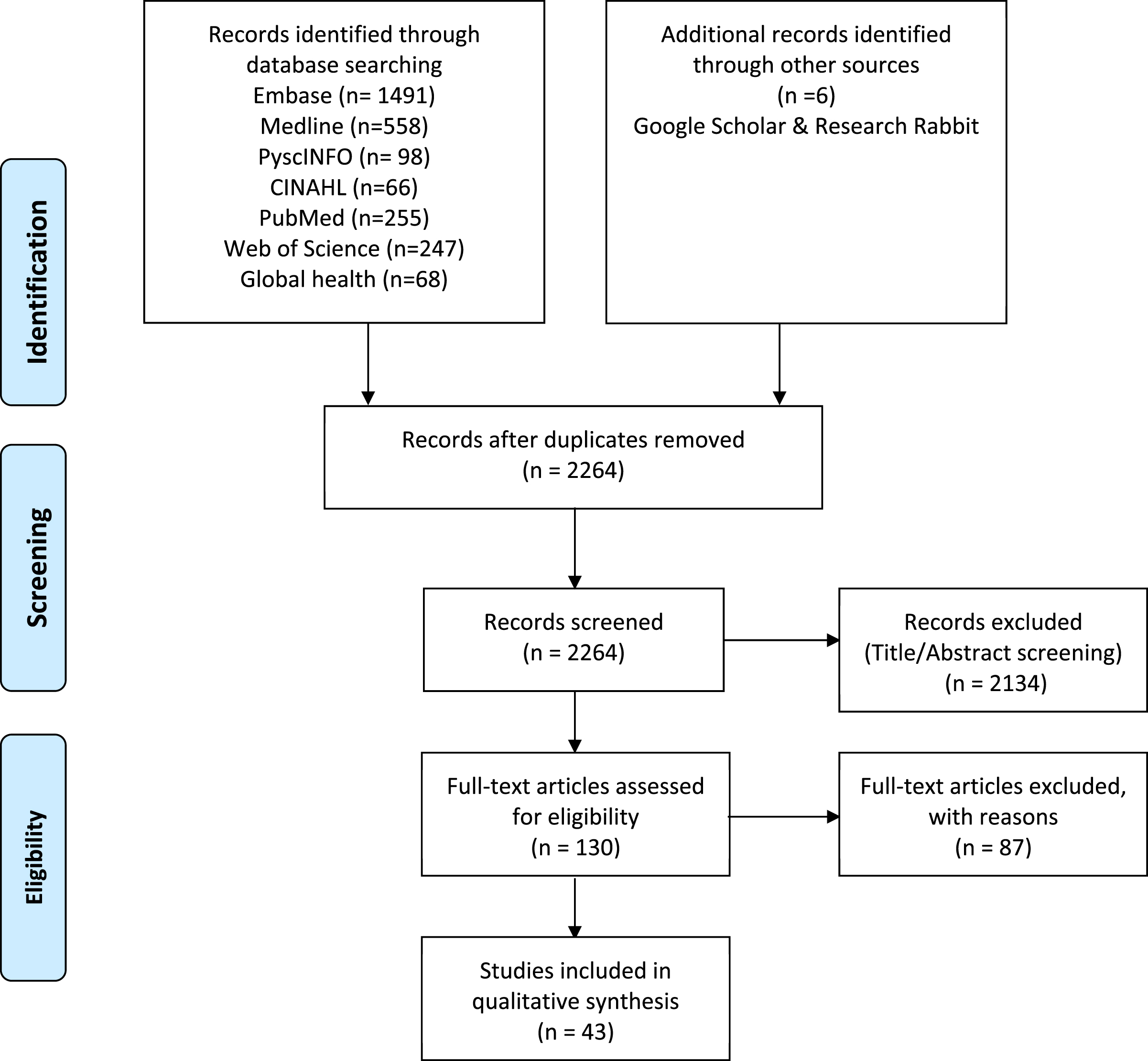
PRISMA flow diagram of included and excluded studies.
The team developed a data extraction spreadsheet to include study details, such as journal type, the publication year, study location, design, methodology, population, the study scope, findings, and recommendations. Using a qualitative approach, data emerging from the main findings, interest, conclusion, and studies’ recommendations are presented in the results section to answer the study objectives.
Data synthesis and reporting
Following data charting, qualitative content analysis was conducted by using the guidelines outlined by Colquhoun et al. [13] and Sandelowski [17]. Findings were synthesized from the content of text data through a methodical process of coding and recognizing patterns [18]. Themes emerged inductively from repeated patterns in the qualitative data set [19]. At first, each study was analyzed at the individual level, then compared across broad themes to represent the reoccurring patterns.
Results
Study characteristics
The 43 selected studies were published between 1974 and 2022. The majority of the studies originated in the United States (n = 29); others were from Canada (n = 3), and the Netherlands (n = 2), as well as individual studies from Greece, Sweden, Australia, New Zealand, Israel, Japan, Turkey, Norway, and India, in addition to one collaboration of 11 European countries. During thematic analysis, the following reoccurring themes emerged: social support, disability rights and system, transition strategies and challenges, career, employment integration, employer’s hiring behavior, workplace, adaptive potential (post disability), and employment sustainability/retention (see Fig. 2). These themes summarize the influencing contributors to employment success in the context of vision loss, either at birth (congenital vision loss) or at a later age (acquired vision loss) that have been studied to date. They are discussed from the perspective of PVI, their employment environment, as well as within vocational rehabilitation, and are presented here to portray the potential steps leading to employment integration success from pre-employment, process of training, employment seeking, actual employment and post-employment; however, this order is not necessarily associated with all individuals nor sequential but within a general context.
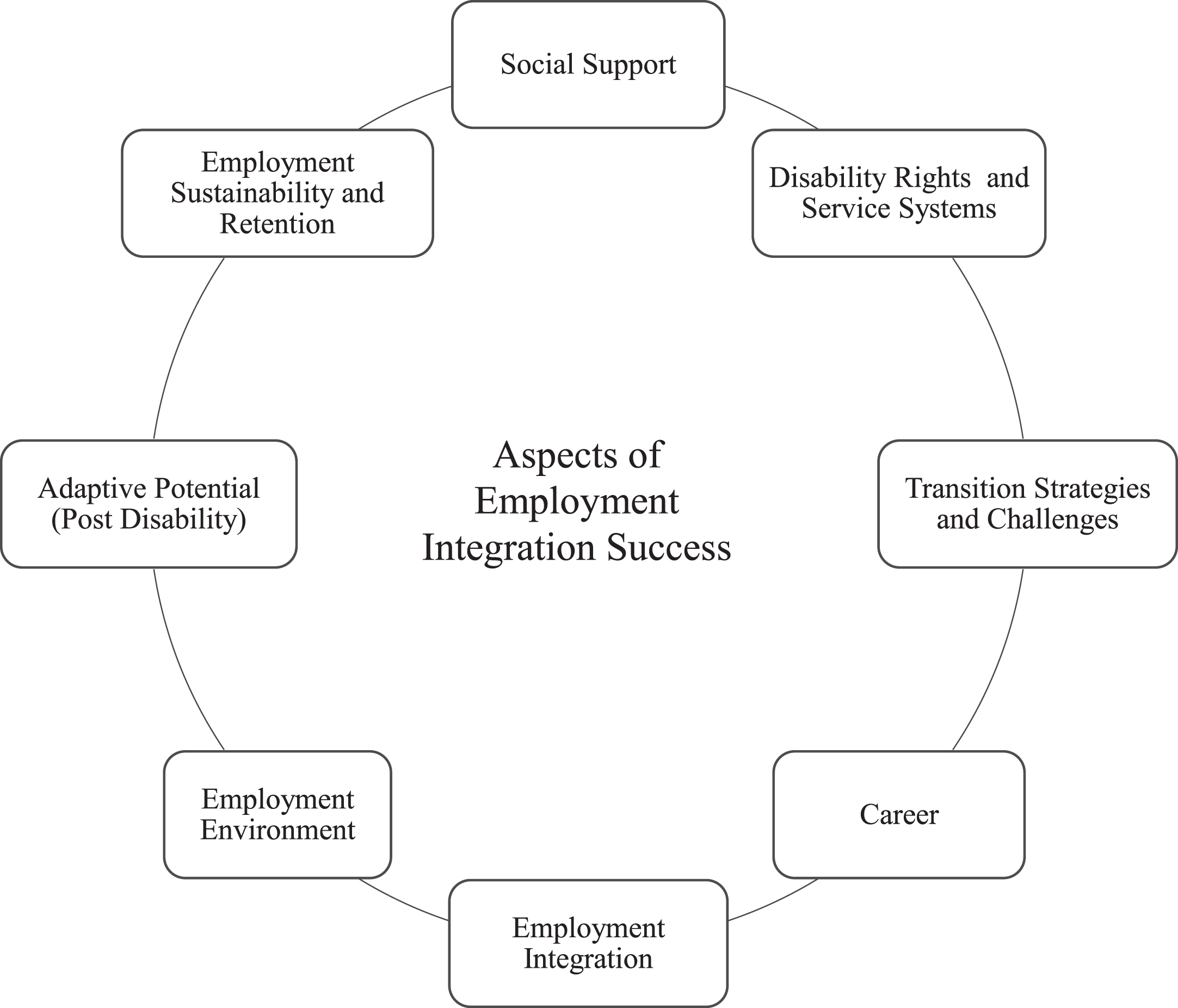
Aspects of employment integration success among people with vision impairment.
This relates to how a person receives various supportive action from people within their social circle, which in turn boost their overall functioning and potentially protect them from adverse consequences [20]. According to Papakonstantinou and Papadopoulos [21], social support is a type of assistance that individuals receive or expect from those who meet them. Social support can be explained under four categories: (1) esteem support, (2) informational support, (3) instrumental support, and (4) companionship [21, 22]. In most studies, social support is discussed broadly in the context of family, friends, community, rehabilitation professionals [10, 23], educational institutes, and/or the employment environment [23]. While social support was mentioned frequently, six studies emphasized the role of social support in employment integration [11, 23–27]. These studies refer to the prosocial behaviors that people get from their household and community to enhance social functioning and employment integration. Individuals with vision impairment usually originate from a sighted family [26]; Thus, social isolation can be experienced early on, having a negative effect on all aspects of the life. However, social skill development can also begin at an early age, depending on the level of social support received. This skill, if enhanced early, becomes very useful for employment success [28]. Hence, social support is a critical determinant for character building, confidence, esteem, doggedness, and a great source of motivation [10, 26], explaining the ease with which some people with vision loss sustain quality employment without vocational rehabilitation or an employment integration program.
Role models contribute to social support by offering career counseling and sharing lived experiences that speaks to the distinct needs of a PVI in the job market (e.g., disability disclosure, accommodation needs, or self-advocacy). Improving effectiveness is especially critical for a PVI. Hence, having and working closely with a mentor with visual impairment in a similar field, can provide the essential support to overcoming employment barriers [26, 29].
Esteem support is reported in the context of family support, support from teachers and colleagues at schools, employers, and work colleagues, as well as from the community and role models. This support often takes the form of appraisal, encouragement, and equal treatment with the sighted individual. An absence of this support due to a lack of concern, or discrimination will often result in self-isolation, reduced motivation, and poor-quality relationships with others. Esteem support can help create and shape an individual’s identity and personality and is not restricted to any phase of life. Most studies indicated that esteem support may drive other levels of support. Poor family support [25], social discomfort and cynicism with an impact on social engagement, discrimination, hostile workplace [30], and social isolation [26, 31] are some of the barriers affecting successful employment of a person with vision impairment. In comparison, sound support systems from family, friends, society, and the employment environment are vital facilitators of employment success [10, 23].
Instrumental support defines the availability of practical help to ease individual challenges. This support can take the form of tangible aids and services, encompassing the support offered at educational and rehabilitation institutes and in the employment environment [11, 32]. It is manifested in the academic integration of PVI among the sighted community to facilitate communication, collaboration, and transition into the work environment with sighted peers [33]. Special education for PVI should not be perceived as restrictive or detrimental to employment integration. Instrumental support in a rehabilitation center is evident in the development of employment integration programs targeted at helping PVI prepare and develop tangible employment skills. These abilities range from orientation and mobility skills, resume creation, job application, assistive and adaptive devices, to communication skills [11, 32]. The provision of assistive and adaptive devices is a means of creating an accessible and inclusive work environment for effective productivity [34].
Informational support refers to the guidance intended to solve problems by sharing valuable information, advice, and suggestions. Informational support for a person with vision impairment is the information received from parents, friends, rehabilitation professionals, role models, and even the employment environment. Such information could include details about specific services [29], legislation [35], job openings, career advice, or answers to specific questions [36]. Information support is associated with good relationships [21] and is hindered by social isolation [33]. Social isolation, in turn, has an impact on the quality of information, individual career choices [33], transition process across the different stages of life [26], employment, and even employment productivity [36, 37].
Companionship support comprises of the close connections developed within the family, among peers, and engaging in recreational activities. Social support transcends family setting and forms a crucial part of transitioning for PVI across the life span. Hence, the successful employment integration of PVI greatly depends on support, thereby driving inclusion and preventing social isolation, especially when provided early. While special education could be an advantage, it can also be detrimental, as this type of segregation socially isolates the sighted population from PVI, thus leading to social awkwardness and difficulty bridging the social gap [26].
Disability rights and service systems
In the USA, the implementation of the Americans with Disabilities Act (ADA) (1990) encourages employment for PVI, given that they can accomplish their duties with the necessary accommodation. Therefore, no one can be discriminated against solely based on their disability. This policy is in line with Canada’s Employment Equity Act (1995) and Accessible Canada Act (2019) which seek to achieve workplace equity and improve employment opportunities by encouraging the establishment of working conditions that are free of barriers for PVI. Despite the implementation of these laws, there seems to be negligence and challenges associated with their implementation on the part of the employers. To achieve the goal of the ADA and similar disability rights, effective strategies need to be in place to ease work-related conflict resolution.
According to Blanck and Folberg [38], eye care providers, need to be fully aware of the employment legislation act, considering their professional role in eye care. They play a role as mediators between employers, insurance companies, government agencies, and their policies. Hence, eye care providers’ awareness of this legislation and their readiness to apply it accurately to all parties involved is needed. The judgment of an eye care professional who is knowledgeable about disability legislations will help keep many qualified PVI at work and thus significantly address the unemployment rate.
Disability rights and privileges vary across countries and territories. The conventional method of hiring persons with disabilities has generally revolved around sheltered employment, despite the track record of poor work conditions and inadequate salaries. This approach has limited individuals who could potentially secure employment in the open job market, with the assumption that they are unqualified for such jobs. Countries, such as Australia, the United States, Canada, and the United Kingdom, have transitioned away from sheltered employment to ‘supported employment’ with strategies aimed at providing employment opportunities within mainstream businesses. The North American approach, in the United States and Canada, requires that employers accommodate the known limitations of an employee with disability. These accommodations might involve modifying the physical layout of workspaces, adapting equipment usage, restructuring job roles, adjusting work schedules and training, and offering aids or personal assistance. Conversely, the European approach mandates that employers ensure their entire workplaces are accessible to all individuals, including those with disabilities [39].
These benefit discrepancies [40] could account for the differences in the priority given to the employment of PVI. In addition, the approved reimbursement of disability benefits to PVI, though advantageous, was also recognized as a hindrance to employment in specific circumstances. Some PVI have instead become overly dependent on this benefit and would rather not search for a job. There is also the concern of losing these benefits with acquiring a particular level of employment [41]. Furthermore, there is the speculation that PVI are not fully aware of their rights and privileges, especially as adjustments to the laws are made. The lack of accessible information was identified as a core reason for this ignorance; hence these laws must be made available in an accessible format as they become revised.
Disability systems. Vocational rehabilitation is a support service tasked with preparing PVI for the workplace by helping them develop strategies and adaptive skills to overcome integration barriers. It operates through the development of employment integration programs or services [11] in collaboration with staffing agencies [32, 42]. The members of the interdisciplinary team (e.g., eye care providers, low vision therapists, vocational rehabilitation professionals, job placement organizations, and accommodation networks) must be knowledgeable about federal and state regulations guiding workplace discrimination, in addition to available assistive device programs and their eligibility criteria [43]. The study by Farnsworth [42] emphasized the need for rehabilitation services to work more closely with staffing agencies, rather than making them an option, and with the employer, to facilitate more employment opportunities.
Luft et al. [26] reported a shortage of trained professionals with expertise in blindness and deafness, which significantly impacts the employment integration and skills acquisition for skilled personnel with vision impairment. To further facilitate effective rehabilitation service, vocational rehabilitation professionals should create a structure or curriculum within their service that enables the transferability of skillsets into employment for productivity and safety [44, 45]. While vocational rehabilitation services and programs could be instrumental for skill acquisition, they are not compulsory for all PVI, especially those who have developed the requisite skillsets [33]. Hence, the goal of rehabilitation services ought to be clearly defined and personalized to the individual, to facilitate return to work (either old or new); or develop self-employment and independence [46].
Transition strategies and challenges
Life advancement occurs in phases that transition into each other; there is a time for education and a time to work, allowing an individual to implement their academic knowledge in the work environment. PVI often experience significant transition barriers compared to sighted individuals. From the perspective of PVI, the development of social skills, support systems, academic competence, assistive technology, and self-advocacy were major factors identified to aid the transition to employment. Social isolation, communication difficulties, limited access to information, collaboration challenges between educational institutes and vocational rehabilitation organizations, and difficulty establishing a career after high school were significant limitations to effective transitioning [24, 42].
From the perspective of the employment environment, discrimination in the hiring process and poor work culture and policy were significant barriers to employment integration [27]. Beyond the education and skill acquisition for PVI, systems need to be in place to facilitate and sustain employment. Interdisciplinary transition services structured by a student-centered plan, with transition specialists in both special education and rehabilitation, can ensure that deserving students are able to pursue rewarding, productive lives beyond the classroom [26]. According to Zhou et al. [47] computer training is a fundamental element in the employment readiness of transition-age youths with vision loss especially since we live in a highly computerized society.
Career
Employees who want to advance in a particular field need to have a thorough understanding of typical career paths for the field [48]. In this review, career for PVI in the context of employment is discussed regarding career choice, and career readiness/ exposure.
Career Choice is often a significant challenge for PVI because of preconceived ideas often associated by the sighted community with PVI. While careers are abundant, the societal restriction is a major influence, posing more significant limitations than the presence of vision loss. While a person with vision impairment is capable of various tasks and professional careers, s/he is often trained to fill stereotype opportunities like typists or tele-marketing [33, 40].
Career Readiness/Exposure describes the influencing factors for a career and the preparedness of PVI for that chosen career path. Active engagement in job shadowing, visiting job fairs, career exploration, job exposure, and early career planning are facilitators to a rewarding career beyond mere discussion of career choices [36]. Role models who have excelled in a career path often prepare PVI to embrace professional careers. However, lack of motivation and reliance on disability benefits can impede the quest for a rewarding career and preparedness [41]. PVI should be exposed to career education from childhood irrespective of the presence of vision loss and should be encouraged on the feasibility of their career interests [41].
Employment integration
This theme explores the role of, and effort required by, all involved parties, and how they affect employment outcomes.
Personal factors. The employment process begins with the individual, and their personality plays a crucial role in employment success [40]. Much like persons living without disabilities, PVI who had the opportunity to develop and demonstrate organization and communication skills, self-determination, good personal grooming, advocacy skills, and networking ability were more successful in their employment journey [24, 33].
Labour market competitiveness. Employers search for skilled people to take up specific job roles. Much like for sighted individuals, the competitiveness of a person with vision loss depends on their age, level of independence (e.g., mobility), academic training, personal traits, self-advocacy, vocational rehabilitation skills, spoken and written language abilities, prior work experience [23, 33] and computer competence [47]. While previous work experience is a critical factor in labor market competitiveness, most people with vision loss are rarely presented with such opportunity [49]. According to Mcdonnall et al., [41] PVI could leverage summer internship programs, club activities, and even volunteering to compensate for this lag. Furthermore, the level of vision impairment, the use of mobility aids, and the presence of other chronic conditions are significant hindrances to the employment of PVI [31]. Job readiness for PVI is a measure of physical (e.g., physical capacity), psychological (e.g., personal acceptance of their limitations), as well as occupational (e.g., skill sets), and placement readiness (e.g., participation in job application) [46].
Job seeking: A positive attitude and persistence are integral traits to attain employment success, considering the barriers associated with accessing the labor market [40, 50]. Lack of prior work experience [23, 50], lack of proactiveness in a job application [32, 40], and a visually unappealing resume are some of the challenges during application [51]. From the system perspective, variation in the available job choice, employment legislation across countries and regions [23, 40], and employer hiring behavior are significant hindrances that are often overlooked [21, 52].
Job application: On the one hand, most employers have a negative attitude towards employing PVI despite existing legislation encouraging their employment [26]. Employer attitudes towards PVI can be influenced by their employees’ and clients’ base perceptions of working with a person with vision impairment [21]. On the other hand, employers have also pointed at receiving fewer job applications from this population [27]. Hence some employers are willing to consider qualified job candidates with disabilities, but it remains unclear whether they will hire those who reach them, and those who appear most ready to be productive [32]. A personal relationship with a person with vision impairment influences employers to consider the inclusion of PVI [27]. In addition, age and educational level influence the employer’s hiring behavior, whereby younger and more educated employers appear to have a positive attitude toward PVI but were not influenced by gender [21]. In general, while it may be important to educate the employers of the ability and competence of PVI [27], employers must also be willing to give this population an opportunity to prove themselves [28].
Task performance: Upon attaining a job, PVI are mandated with the responsibility of completing the duties for which they were employed. Job productivity was facilitated by the participation in an employment integration program [11], as well as the provision of assistive devices, and other necessary accommodations [37, 53] and safety [45]. Although accommodation affects the level of productivity of PVI, this population works differently. Therefore, productivity needs to be differently defined for this population, with a different measure of performance put in place. Lack of productivity was often associated with poor flexibility regarding job tasks and little opportunity to develop new skills [37].
Employment agencies: The role of employment and staffing agencies is often neglected in the employment integration of PVI [26, 27]. Staffing agencies can work with vocational rehabilitation and, in collaboration with the employers and their organization, identify a qualified employee that meets workplace requirements and demands, to maximize employment opportunities [42, 54].
Employment environment
These themes discuss the impact of the employment environment- which involves the people, the place, and the policy, on employment success [8, 56].
Accessibility and inclusiveness of the workplace remain significant concerns for PVI. Specifically, mobility and physical accessibility [28], web accessibility, and accessibility of digital and text materials were considerable barriers, both before and during employment, because the lack of accessibility, by definition, restricts access to information [36]. This accessibility challenge often excluded PVI from available employment opportunities and affects skill acquisition, settlement into the work environment and effective productivity at the workplace [47)]. Although the change and implementation of policy encourages the need to make the workplace accessible by providing necessary accommodation, this does not always translate into reality [37]. From the perspective of the employers and their environment, the safety concern for employees with vision impairment remains an employment limitation [45]. Employers often associate an inclusive workplace with unfavorable interference with business operations and costs. In addition, employers have expressed concern that assistive devices need vary among individuals, and the cost and training implications have negatively impacted employers’ hiring behavior [21].
Work policy: Organization size, culture, and policy influence employers’ hiring behavior. Larger organizations are more likely to have employment policies considering PVI, but the employer’s attitude does not appear to vary with the business type or entity [21]. Collaboration by developing a good relationship with vocational rehabilitation service providers before the hiring process can influence the employer’s hiring behavior [27], whereby fostering a relationship with agencies and organizations to improve community awareness of the needs and potential of PVI encourage environmental changes.
Adaptive potential
For individuals with vision impairments acquired during adulthood, employment challenges often begin after having worked as a sighted individual; hence the challenge becomes a return to work [11]. The effect of rehabilitation, the variety of task competence and experience in the previous job(s), the duration of employment, high level of independence, and leadership ability are facilitating factors to return to work [37]; however, from the employer’s perspective, organization’s size (medium to large scale) favors reintegration of PVI, and the type of workplace (public over private) influences the return to work in the case of acquired vision impairment. Hence employment re-integration differs from the employment integration for those with no job experience.
Employment sustainability and retention
Employment sustainability and retention are dependent on the level of job satisfaction. Unfair workplace practices, and unfavorable employment treatment of PVI may prevent employment retention [43]. Rehabilitation practice often ends when employment is obtained, with no follow-up to ensure the effectiveness of the rehabilitation service. Rehabilitation experts need to offer personalized services to people with impairments throughout the complete employment journey, beyond the rehabilitation phase. Declining job retention was identified as an important type of workplace discrimination. Employees’ beliefs and aspiration can affect their behavior in varied ways when combined within the environmental setting of the workplace [43].
Employment sustainability can only be achieved when everyone recognizes their individual role and efficiently contributes their part in unison. Teachers of the visually impaired have a responsibility to prepare youths for primary and advanced education, a determinant to success in the workforce. Orientation and mobility professionals specialize in teaching independent travel skills, while vision rehabilitation therapists, low vision therapists, and occupational therapists teaches skills for daily living, all to ensure a level of independence. Assistive technology specialists also play a crucial role in training people with vision impairments for the workplace. This is particularly significant as the demand for digital skills is steadily rising across various job sectors, with jobs requiring advanced digital skills typically offering higher salaries [57].
Discussion
This scoping review synthesized the current knowledge about, and identified potential gaps in, the employment integration of PVI to guide further research and prevent the repeated cycle of actions with unfavorable outcomes. The synthesized themes depict the research scope covered in vision impairment and employment, including Social Support, Disability rights and service systems, Transition strategies and challenges, Career, Employment Integration, Employment Environment, Adaptive Potential, and Employment sustainability and retention.
Much emphasis has been placed on the role of social support in all its forms. Research [38] has shown that social support is required of eye care professionals, starting at the point of diagnosis of vision impairment, and extends across periods of searching for, gaining and sustaining employment [58]. The need for support translates into the implementation of disability rights and the establishment of rehabilitation services to ensure that PVI gain equal opportunity and are not discriminated against. Specialized and inclusive education also became best practice; however, our research findings shows that these efforts do not easily translate into a range of career choices and an inclusive workplace. There are still limited career options open to include PVI, and accessibility challenges persist even in organizations that identify as inclusive.
This study also identified that, even though PVI, employees and employment environments contribute to employment success, the focus on the specific roles and contributions the employment environment makes towards this success seems minimal. Employers are unfamiliar with the abilities of PVI, and they have no experience with how these individuals carry out job task [59]. Many employers lack the knowledge of what inclusion entails and are ineffective in their collaboration with vocational rehabilitation professionals and eye care professionals.
Service delivery implications
Employment success, and the resulting improvement in the quality of life of PVI, involves all professionals who encounter this population. Beyond diagnosis, our findings also reveal that eye health specialists need to be fully cognizant of the disability and employment laws, the capacity PVI possess in relation to workplace demand and accommodation plans, establish good liaison with vocational and rehabilitation professionals, all to facilitate workplace integration. In addition, professionals are encouraged to ensure that the privileges of PVI are always upheld. Collaboration for early intervention, transitioning, and employment success was identified as crucial rather than an option for an effective system that facilitate collaboration from the point of diagnosis and across all levels employment integration. Our synthesis has identified the tremendous role vocational rehabilitation plays in helping PVI gain independence, integrate them into the workplace, and provide expertise to employer on workplace integration. However, the restriction of services aimed to increase employment preparedness of PVI remains a significant gap, consideration of the changing nature of job and the employment environment preparedness is not a common practice.
Implication for employment environment
Workplace culture has encouraged the inclusion of people with disability. However, PVI seem not to benefit enough from this trend [63]. This review indicates that successful inclusion of PVI involves a clear understanding of how PVI behave, socialize, live, and access their environment. Embracing diversity in the workplace thus implies a need to understand and differentiate the specific needs of PVI, among other types of disability needs and accommodate them. Equity can also be achieved when there is fairness and willingness to provide the necessary support and favorable accommodation policy, as discussed earlier, to give equal opportunity to people with vision loss. Organizations can also increase accessibility when they make their workplace design, assistive devices, and recruitment processes accessible for PVI. Without this support and effective policy, an organization cannot claim to be inclusive, diverse, equitable, and accessible [8, 65].
Limitations
The scoping review was intended to cover a global perspective, but the available data were exclusively from countries that are considered part of the Global North, with developing countries not being represented. Therefore, it is likely that the information provided in this study does not entirely reflect the global reality, and more representative of the Global North. The exclusion of non-peer review publications, systematic reviews, non-English publications, as well as those with no available full text could have resulted in omitting additional details specific to the practice in countries that are not represented.
Conclusion
The high jobless rate among PVI has been a challenge before and after the implementation of various disability laws. While the goal of such legislation is to ensure that equal opportunity exists, this is often not achieved in the employment reality. From the themes described above, it is evident that employment success for PVI requires a wholistic approach. The employment environment plays a critical role in sustainable employment integration success. Hence, beyond identifying the limitation the employment environment possesses, an evidence-based solution is required to address the high rate of unemployment among this population with visual loss. Therefore, a directional shift to the employment environment is the next logical step to attain an equilibrium of effort in creating an accessible and inclusive workplace. A level of proactiveness and preparedness is a must to attain employment success. It is crucial to know the level of employment environment preparedness in welcoming a person with vision impairment into an organization. Having and sustaining employment will reward and compensate for this investment, and lead to better quality of life for PVI. In addition, this approach will offer great economic benefit and address current increasing shortages in the labor force.
Ethical consideration
Not applicable.
Informed consent
Not applicable.
Footnotes
Acknowledgments
We acknowledge the support of the two health science librarians (Patrice Dupont and Thien Sa Hoang) from the Université de Montréal, in the creating the search strategy. Special thanks Joshua Simmonds, Jana Martin, Atul Jaiswal, and Zakia Hammouni, for their support in screening the identified studies, and to Shirley Dumassais, Michaela Knot and Ralf Peter Holzhey for their contribution to the success of this study.
Conflict of interest
The authors declare that they have no conflict of interest.
Funding
This study was funded by a Mitacs Accelerate fellowship (IT25811) in partnership with the Canadian National Institute for the Blind (CNIB). Ogedengbe was supported by a Bourse d’exemption and a Bourses Audace et innovation –Ben Marc Diendéré from the Université de Montréal, and a Bourses étudiantes du Centre de recherche interdisciplinaire en réadaptation du Montréal métropolitain 2022 Student Award.
