




Abstract
BACKGROUND:
Work itself and occupational health and safety (OHS) have evolved through industrial revolutions and will also continue to evolve in the future.
OBJECTIVE:
The aim of this qualitative literature review was to examine how the scientific discussion on new and emerging risks (NERs) related to OHS has evolved in recent decades in developed and newly industrialized countries.
METHODS:
A search of the Scopus database yielded 34 articles published before 2000 and from 2020 onwards.
RESULTS:
A review of the articles identified NERs themes related to changes in work patterns, changing workforce and growth in some sectors, climate change, new materials or increased use of materials, new technology and technological development, and viruses. In both article collection periods, possible adverse OHS effects discussed included musculoskeletal disorders, exposure to toxic agents, chemical compounds and hazardous materials, increased stress, increased likelihood of errors and accidents, psychosocial problems, mental fatigue, and increases in work-related illnesses and accidents.
CONCLUSIONS:
The articles published during both periods discussed similar themes. The main differences were regarding specific time-related cases, such as climate change and COVID-19. Based on the findings of this review, points to consider in OHS management and future studies are discussed.
Introduction
Human work has evolved parallel with the general trends on industrialization [1, 2]. During the first and second industrial revolutions (from circa 1760 to 1870 and from the late 1800s to the early 1900s), technological development led to mechanized, yet labor-intensive factories and in the beginning in the latter half of the 20th century, the third industrial revolution led to breakthroughs in information and communication technologies (ICT) [3–5]. Now, in the first part of the 21st century, we are witnessing a shift towards the fourth industrial revolution that is characterized with the introduction of digitalized new technologies [1, 7]. Simultaneously with the technological development, globally experienced changes in demographic structures [8], climate change and related willingness for a shift towards the use of renewable energy sources [9], and the growth of the work arrangements related to the different forms of work [10, 11] have affected how we see and discuss the working life. It is of utmost importance to understand that above revolutions will not stop, but they will continue in the future [6, 12]. Regarding occupational health and safety (OHS), it is expected that the future brings both development and challenges [11, 14].
While working life has evolved, so has the understanding of OHS [15, 16]. Monotonous work, accident-proneness, and working conditions were addressed in studies in the early to mid-1900s [17]. After the mid-1900s, the complexity of accidents was the focus of research and it was understood that human errors were not the causes of accidents [18]. In the late 1900s, theories and models emphasized organizational aspects in accident prevention [19]. Since 2000, according to Swuste et al. [20], there has been, however, relatively little progress in OHS and OHS management models. In a sense our OHS management thinking has not been fully able to transform itself along the general shift from the third industrial revolution to the fourth revolution [21]. To make use of the new technologies development has brought along, we should understand how they make it possible to exclude humans from dangerous places, ease human work and provide new possibilities to monitor workplace conditions and employees’ health [22, 23]. Technological development is, however, accompanied by new and emerging risks (NERs). In the literature these have been associated for instance to the hazardous nature of maintenance work [22], increased psychosocial risks, stress, and mental fatigue [22, 23], risks in interactions between humans and robots [23], and occupational accidents [22, 23].
The aim of our study is to identify and analyze OHS NERs, as presented in the scientific literature before 2000 and from 2020 onwards. Especial interest is paid to those publications discussing NERs in the contexts of developed and newly industrialized countries [24, 25]. Within our temporal comparison approach, we aim to bring new insights to the discussion by Hoffmann et al. [17] and Swuste et al. [20] who have expressed their concerns of the general OHS development having slowed since 2000. Because NERs are time-dependent, in the analysis of current NERs, only the last two years are considered. The following research questions are addressed: What similarities and differences in the OHS NERs are identified in the research literature published before 2000 and from 2020 onwards? What kinds of OHS management suggestions related to the identified NERs have been proposed?
The term emerging risks refers to new and increasing risks. New risks were previously unknown and were caused by new processes, technologies, workplace types, and social and organizational changes. Known issues can be new risks due to new scientific knowledge and changes in social and public perceptions. Risks increase when the number of hazards leading to risk or the probability of exposure to increase and health effects worsen [26, 27].
Materials and methods
The phases of this qualitative literature review study are illustrated in Fig. 1. Searches of the cross-disciplinary international research literature database Scopus [28] were conducted on November 1, 2021 and March 29, 2022. Appendix A presents the search strategy and results for publications published before 2000 (search A), and from 2020 onwards (search B). The text fields sought included the titles, abstracts, and keywords of publications. This was a type of a non-interventional study for which an ethical review is not required as per the guidelines outlined by the Finnish National Board on Research Integrity.
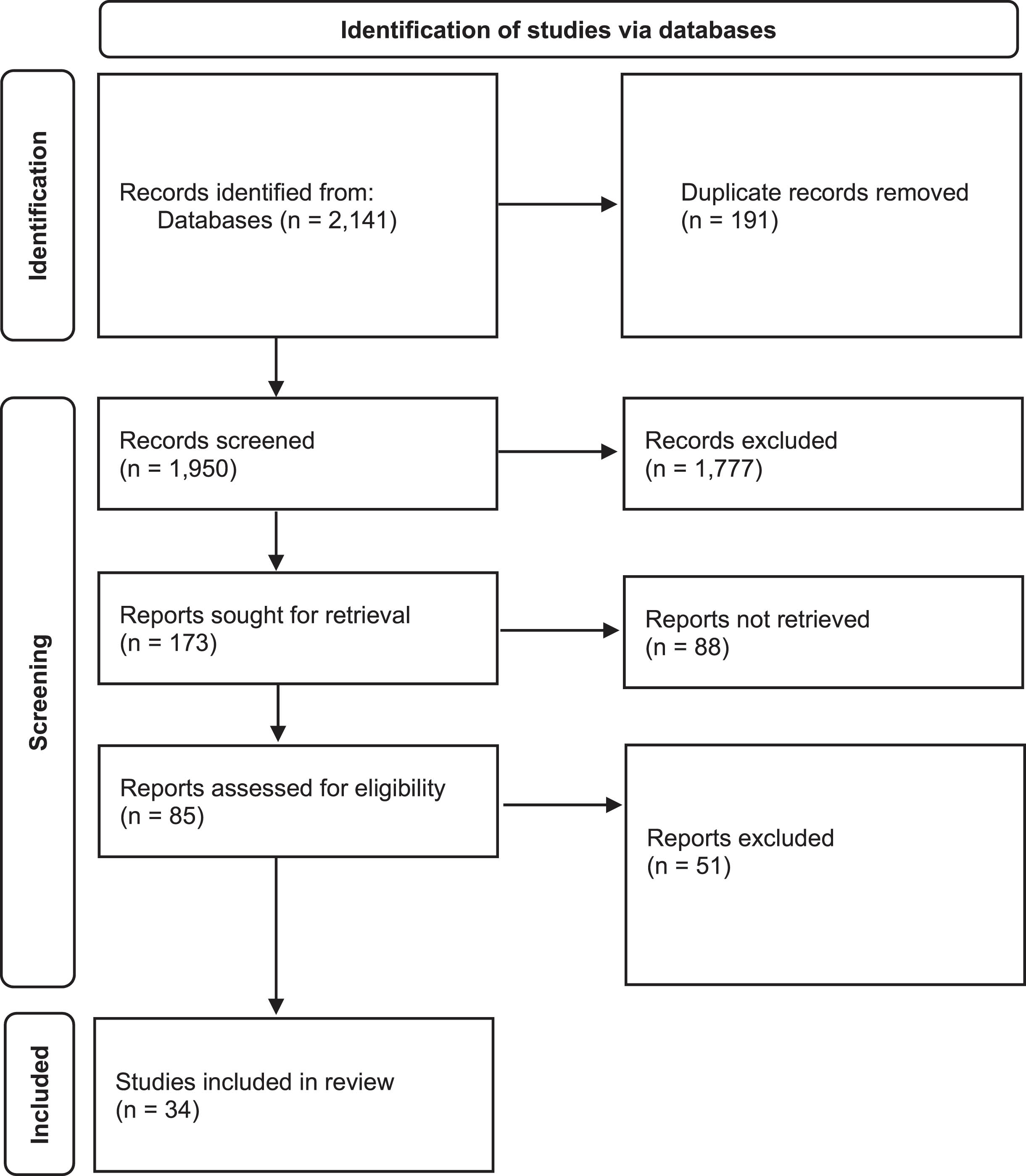
Phases of the qualitative literature review (adapted from [32]).
After removing duplicates, 1,950 articles remained. The remaining articles were screened based on their titles, abstracts, and keywords. After screening, 173 articles (110 from search A, 63 from search B) were selected for close inspection, of which 85 were retrieved (30 from search A, 55 from search B). Through assessing and determining the eligibility of the full texts of the 85 articles, the following inclusion criteria were set: Types of studies: Qualitative, quantitative, mixed methods studies, literature reviews, and overviews. Articles published in peer-reviewed journals before 2000 and from 2020 onwards. In search A, conference proceedings were accepted to balance the availability of the articles. Types of participants: Any occupational group in developed and newly industrialized countries [24, 25] with no restrictions on field, technology, or employee position. Types of intervention: Articles describing OHS NERs in the future. Types of outcome measures: Identified OHS risks and challenges in the future.
A total of 51 articles did not meet the inclusion criteria; articles briefly mentioning the need for future studies or discussing new technologies but not focusing on OHS NERs were eliminated. A total of 31 journal articles and three conference proceedings met the inclusion criteria and were included in the analysis (see Appendix B). One author of this study extracted data from the included articles. The extracted data included the main findings, results, and conclusions, i.e., identified NERs. No additional information was requested from the authors of the included articles.
The articles were analyzed qualitatively within an inductive analysis approach [29]. In the first phase (open coding), each article was separately read through to identify possible NERs (see Appendix B). In the second phase, the NERs were then categorized into thematic groups. All in all, the following seven categories were formed: changes in work patterns, changing workforce, growth in certain sectors, climate change, new materials or increased use of materials, new technology and technological development, and viruses.
In the following part of the analysis, the identified NERs from searches A and B were qualitatively compared to examine whether there were certain similarities or differences between those discussed before 2000 or after 2020 [30]. A Word Cloud analysis [31] was applied to the abstracts using ATLAS.ti 22 for an overview comparison. The default settings were used and unnecessary words, such as “may,” “can,” and “need,” were excluded manually from that analysis part. A word threshold of three was obtained. Finally, the identified NERs from search A and B were compared theme by theme. The qualitative results are presented narratively in the Results -section.
NERs before 2000 and from 2020 onwards
Figures 2 and 3 show the distribution of terms in searches A and B, respectively, based on their frequency of use in the abstracts. The most frequent words in search A were as follows: exposure (n = 20), coal (n = 15), plants (n = 13), waste (n = 13), and cancer (n = 12). In the articles published before 2000, the sectors receiving attention included coal production, waste recycling, and information services. Technology was often seen as affecting the physical and mental well-being of employees (e.g. [33, 34]) and causing new demands [35]. The three most frequently identified new and emerging OHS risks and challenges were related to changes in work patterns, growth in certain sectors, and new technology and technical development. Technology development was linked to exposure to toxic components (e.g. [34, 36]), need to develop ergonomics [37] and new demands for competence, work ability, and learning [35].
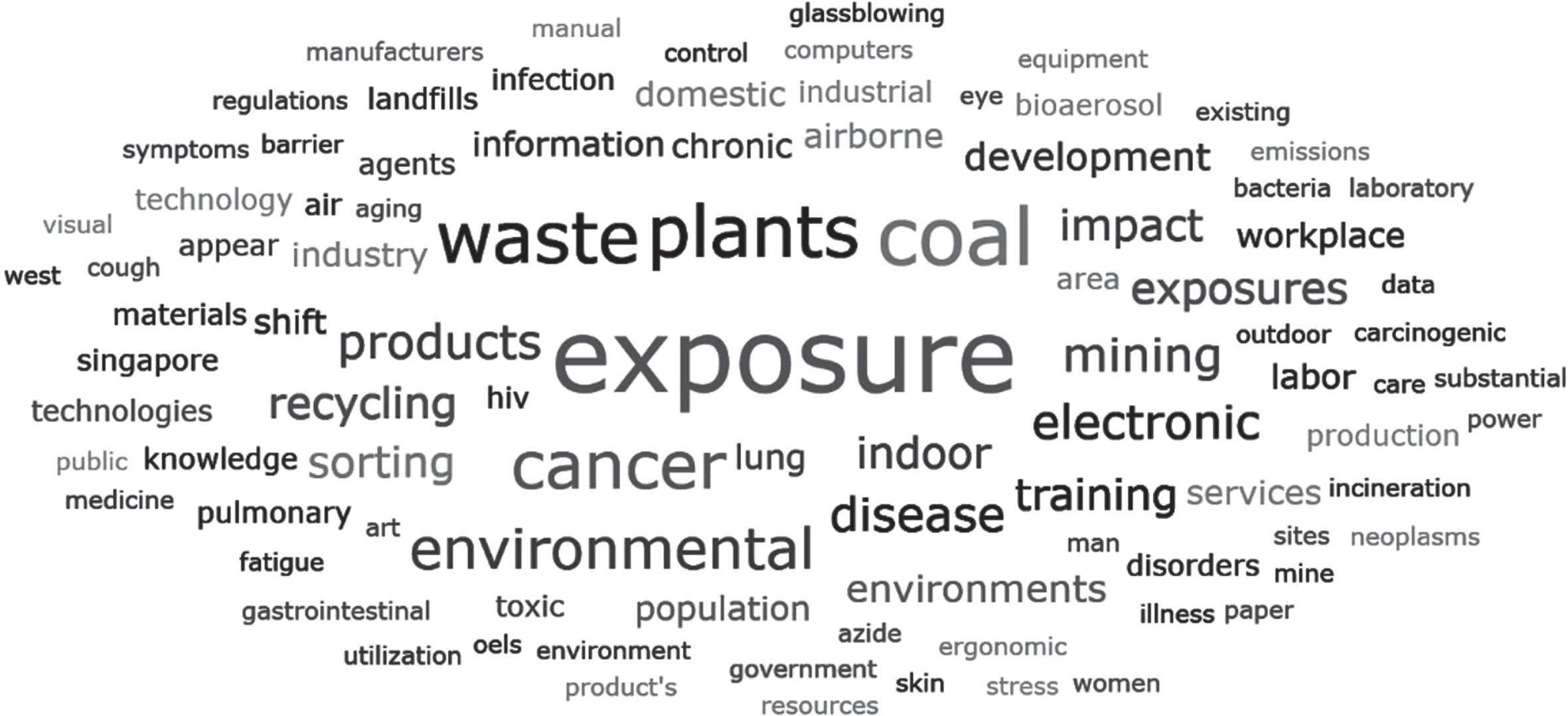
Distribution of terms found in search A based on their frequency of use in the articles’ abstracts.
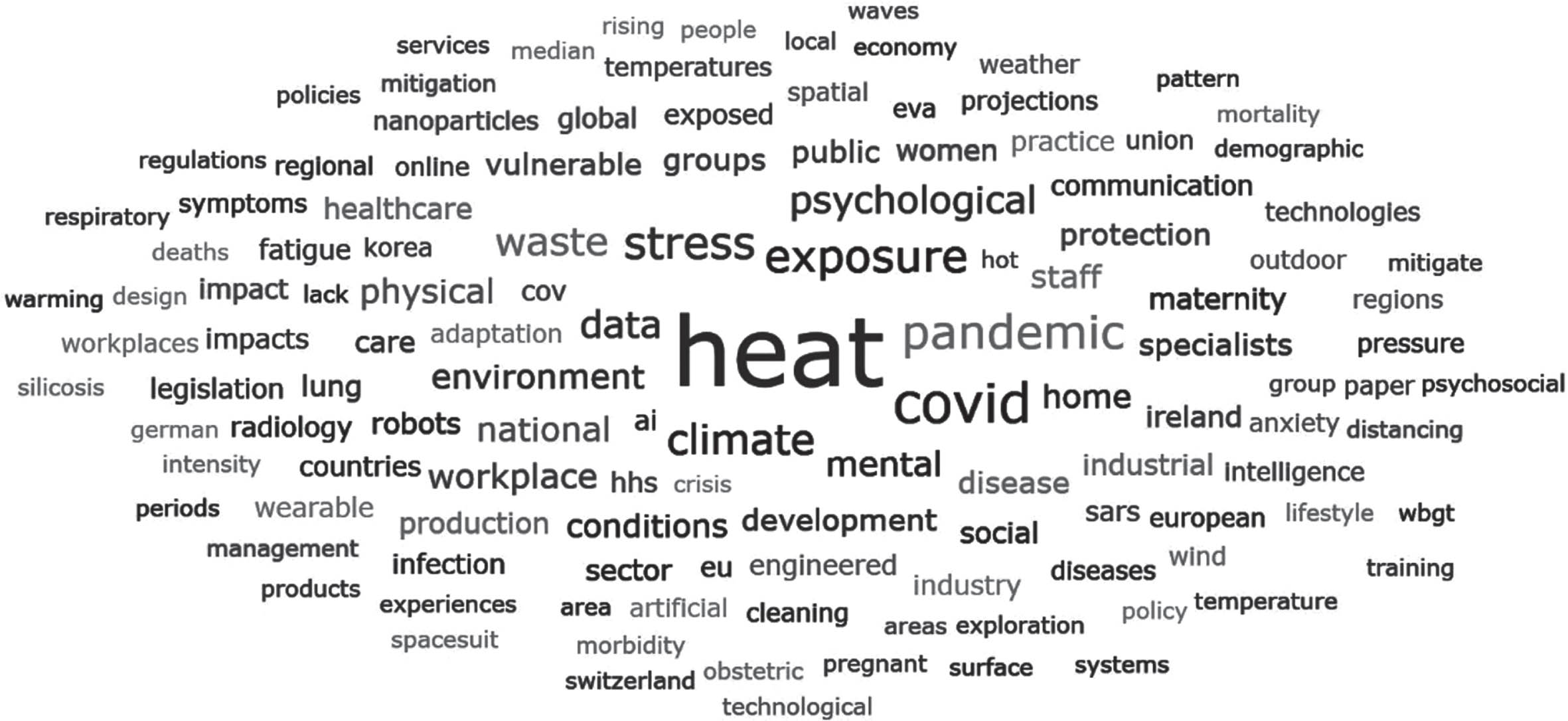
Distribution of terms found in search B based on their frequency of use in the articles’ abstracts.
In search B, the most frequent words were as follows: heat (n = 44), covid (n = 20), pandemic (n = 16), exposure (n = 15), and stress (n = 15). Some words denoted factors that influenced and contributed to OHS, some were OHS effects, and some referred to the sector under study. In the articles published from 2020 onwards, for example, social and health care, outdoor work, and manufacturing received attention. Technological development and COVID-19 pandemic were the most frequently mentioned as affecting the physical and mental well-being of employees (e.g. [38, 39]) and causing new demands for employees [40, 41]. The three most frequently identified new and emerging OHS risks and challenges were related to climate change, new technology and technical development, and viruses (COVID-19), followed by changes in work patterns and growth in certain sectors. Development was linked to exposure to harmful substances [38, 42], human–machine interactions [41], robotization, and AI [43].
Table 1 shows the main NERs themes in the articles published before 2000 and from 2020 onwards. One article could have discussed multiple NERs and themes. The main differences between searches A and B were related to global topical themes, such as climate change, but also to topical point of discussion at that time, like human immunodeficiency virus (HIV) or the COVID-19 pandemic. Changes in work patterns, changing workforce, and growth in certain sectors were the main themes in 13 articles published before 2000 and in 8 articles published from 2020 onwards. New materials or increased use of materials and new technology and technological development were the main themes in nine articles published before 2000 and in 10 articles published from 2020 onwards. Similar possible OHS effects included, for example, musculoskeletal disorders [37, 45], exposure to toxic agents, chemical compounds, and hazardous materials [41, 46–49], increased stress [35, 50], increased likelihood of errors or accidents [33, 50], and psychosocial problems [44, 51].
Main NERs themes in articles before 2000 and from 2020 onwards, as well as the number of articles in which they were mentioned
Table 1. Main NERs themes in articles before 2000 and from 2020 onwards, as well as the number of articles in which they were mentioned
Changes in work patterns in search A included shiftwork [33, 52] and changes in the nature of work in the information services [37], while in search B working from home [44] and integrating Industry 4.0 in production environment [41] were discussed. In both searches, generic mentions of changing work environment, demands, organizational forms or patterns of work were mentioned [34, 51]. Härmä and Ilmarinen [52] (search A) and Hauke et al. [45] (search B) examined the aging workforce, while Swanson et al. [46] (search A) discussed women who entered work life. Musculoskeletal disorders [37, 45] (searches A and B), exposure to toxic agents or unknown particles [41, 53] (searches A and B), psychosocial problems [44, 51] (searches A and B), mental fatigue [41] (search A) and possible increases in work-related illnesses and accidents [33] (search A) were found, among others, as possible safety and health effects related to changes in work patterns.
Growth in certain sectors included coal industry [33, 36] and office work [51, 54] which were mentioned in articles published before 2000, while growth in the healthcare sector [48] and wind farm sector [42] were mentioned in articles published from 2020 onwards. Increases in the service sector [48, 51] and waste recycling [49, 55] were found during both data collection periods in this current review study. The articles mentioned discussed NERs related to these developments; the growth of a certain sector is not a NER itself but rather bringing NERs alongside. Increases in these sectors were predicted to cause OHS challenges, such as those caused by new technology [33, 54] and potentially dangerous agents [42, 55] (searches A and B).
Increased use of chemical compounds [47, 48] and new materials [34, 56] were found in both data collection periods and, for example, unknown health risks [47], fully evaluated risks [34, 56], and re-emerging diseases [48] were discussed. Bridbord et al. [33] and Guidotti [36] discussed new technology and technological developments in the coal industry (search A). They focused on exposure to toxic components, dust, and ergonomics issues, among others. In addition to the coal industry, Brooks et al. [54] focused on electronic products in the information revolution, Rantanen [35] and Thibodeau et al. [37] focused on ICT (search A), Belobrajdic et al. [57] focused on space technology, Jarota [43] focused on robotization and AI, Naidu [38] focused on nanotechnology, and Svertoka [50] focused on wearable technology (search B). There were also general references to the digitalization [45, 49] (search B) and technological developments in new and old industries [34, 42] (searches A and B). Related to new materials or increased use of materials and new technology and technological development, there was a large number of possible OHS effects, including but not limited to increased stress [35, 50] (searches A and B), increased likelihood of errors or accidents [43, 50] (search B), exposure to hazardous materials [49] (search B), MSDs [37] (search A), and generic influences on physical and mental well-being [34, 45] (searches A and B).
Related to viruses, in search B, the COVID-19 pandemic was identified as bringing multiple new changes and challenges to OHS. It accelerated remote work [39, 58], had combined the effects of heat [59], forced changes in roles and protocols [39, 60], reduced workforces, and caused changes in work loads [40, 61]. Healthcare employees experienced issues in obtaining adequate PPEs [58, 61], and they encountered insufficient communication and management [58]. Such changes and challenges caused anxiety [40, 58] and stress [39, 58], and they negatively affected overall physical and mental health [60, 61]. In search A, HIV was discussed in one article [62].
Climate change, mainly heat-related challenges, was studied by Bitencourt et al. [63], Ebi et al. [64], Kim and Lee [65] and Paterson and Godsmark [66] (search B). In addition, Bose-O’Reilly et al. [59] discussed the combined challenges of heat threat and COVID-19, and Madsen et al. [49] focused on waste sorting and collection and mentioned that global warming was one factor in the possible increase in exposure to biological agents by waste collection employees (search B). It was expected that heat and heat-related issues would increase and directly or indirectly cause concentration lapses, increases in accidents, loss of productivity, increases in the risk of hyperthermia and cardiovascular failure or collapse, vector-borne diseases, and increased vulnerability to heat-related diseases [59, 66].
In both data collection periods, there were similar recommendations concerning the need to develop OHS management. Regarding legislation development, Bridbord et al. [33] pointed out that the enacted Federal Mine Safety and Health Act provided impetus for increased control over hazards in coal mining (search A). Naidu [38] suggested that regulatory bodies should implement a strict, explicit checklist in the fields of nanomedicine and nanotoxicology (search B). Jarota [43] identified the need to expand EU legislation to include robotics and AI in the work environment (search B). Regarding policies, formulating policy within the national plan [36] (search A), adopting a “health and climate change in all policies” approach and developing a heat-health plan [66] (search B), adaptation policy related to work capacity [65] (search B), and a review of public policies [63] (search B) were recommended.
Bridbord et al. [33] pointed out that necessary and technically feasible and available control measures need to be implemented in coal production (search A). Adem et al. [41] suggested that eye fatigue should be reduced by increased employee breaks, and job rotation approaches should be applied to prevent disorders caused by static working positions (search B). Thibodeau and Melamut [37] emphasized that ergonomics should be considered in designing workstations and work areas, while training would further decrease ergonomic problems (search A). Rantanen [35] recommended some key measures to control psychological stress: better organization of work, prevention of unreasonable time pressure, provision of technical help in technology breakdown or other disturbances, improving the competence of employees, and improving the ergonomics of the work site (search A). Procedures were also recommended for communicating with AI [43] (search B). The effects of COVID-19 revealed that workplaces need to have better preparedness [58], such as risk response plans and workplace-specific plans [60] (search B).
Selikoff [56] recognized that identifying and evaluating the carcinogenicity of new and recently introduced materials is difficult because of their long-term effects, such as asbestos-induced cancers, which indicates a need to develop identification and evaluation techniques (search A). Similarly, Naidu [38] pointed out that identifying the exposure sources and pathways of ENPs in work settings, studying their mechanisms, and measuring their concentrations are crucial in order to minimize their damaging effects (search B). Poulsen et al. [55] suggested conducting analytical epidemiological studies and surveillance programs to clarify the links between exposure and OHS problems and to establish exposure limits (search A).
Guidotti [36] called for a major research effort to assess the potential OHS risks of coal processing technologies (search A). Härmä and Ilmarinen [52] recognized new research areas, such as age-specific shift scheduling and worktime models, information ergonomics, visual fatigue, and psychophysiological factors related to new information-intense tasks (search A). Karanikas et al. [42] found a need for further research on all life cycle stages of wind energy production (search B). Hauke et al. [45] noted that research is required to increase physical activity in sedentary workplaces and data security (search B). Adem et al. [41] suggested that psychological pressure in the workplace needs further investigation (search B).
Other measures included training and the development of health professionals to deliver optimal occupational health care [51] (search A). Similarly, Guidotti [36] saw the need for more trained professionals to guide development and provide epidemiologic and environmental analyses and for medical and health professionals to be involved in planning processes (search A). Training was also needed in coal production [33] (search A) and AI [43] (search B). Wegman and Fine [34] pointed out that OHS experts, managers, engineers, and government officials all need training to identify and implement solutions to emerging problems (search A).
Discussion
The results of this study show that the articles discussed similar themes in both time periods. Multiple sectors, such as coal industry [33, 36], office work [51, 54], service sector [48, 51] and waste recycling [49, 55] were discussed. Possible OHS effects included, but were not limited to, musculoskeletal disorders [37, 45], exposure to toxic agents, chemical compounds, and hazardous materials [41, 46–49], increased stress [35, 50], increased likelihood of errors or accidents [43, 50] and psychosocial problems [44, 51].
The results indicate that changes in work have been a topic of discussion for a long time, and that differences are due to specific time-related cases, like climate change and COVID-19 now and like for instance HIV in the past. This makes one wonder whether and how research on NERs evolves, or does it eventually rotate in a cycle over time? Although the overlapping themes found in this study were to a certain extent similar, workplaces have still become more complex, which has led to challenges in managing OHS. As we are expecting the technological development to continue along with other relevant megatrends, like climate change, it is of utmost importance to consider how OHS can keep pace with the development. Taking a historical development perspective on the development of humans and human work, de Winter and Hancock [67] argued that the complexity of new technologies has exceeded human evolution during the last centuries. Accordingly, the cognitive demands for humans have diversified, as the need for supervisory control has introduced a new set of demands that humans are not biologically naturally able to perform. We propose as a topic for future research to consider this development from the OHS NERs perspective.
In the future, we are expecting to see how a fifth industrial revolution complements the fourth industrial revolution with a more sustainable, resilient, and human-centric approach as outlined in the research literature [6, 12] and by influencers like the European Union [68]. From the employees’ viewpoint this development should be considered positive in principle; technology is expected to be adapted to the needs of employees instead of the need for them to continuously adapt to new technology [68]. That might, however, introduce new NERs to be considered from the OHS management perspective. To promote human-centricity in this context, we suggest paying more attention to the design-oriented principles of human factors and ergonomics (HF/E) and consider how to apply those in use in practice. As outlined in its’ globally agreed definition, HF/E aims to understand the interactions among humans and other elements of a system, and to optimize human well-being and overall system performance [69–72]. We argue for the flexibility of HF/E in this regard. HF/E is holistically interested in all kinds of hazards for human health and safety, and it allows considering the system performance from an individual centric micro-level to complex macro-level entities. It has been even proposed how HF/E could—in principle—help to understand and meet the most complex human-nature challenges of a time, like climate change [73, 74]. Concerning the desired and expected human-centric future world of work, we see a great potential for HF/E as a design-oriented discipline to enable identifying new NERs and on designing sustainable solutions to mitigate or remove them [75]. In this regard, we recommend focusing on the theory on balanced work systems that is in core of HF/E. Accordingly, balanced work system thinking can be used for identifying and understanding human-related success factors, challenges, discomfort, and load factors as conditions that affect both performance and risk for accidents (e.g., [70, 77]).
The work system model, that considers human interactions with their work tasks, tools and technologies and work environments, allows a systematic categorization of OHS risks and challenges based on their origins. As an example, related to NERs, we have seen how COVID-19 increased home office work (change in work environment), which in turn accelerated digitalization (how work is done), that in turn introduced new negative effects on the individual, such as stress and reduction in job satisfaction. Likewise, we are expecting to see how the climate change initiates new hazards for OHS for instance through extreme weather conditions, increased UV ration and pollution levels and by introducing new infectious diseases [78, 79]. The integration of AI applications and tools in workplaces (changes in work tools and tasks) exacerbates psychosocial OHS risks, as it may lead to increased monitoring and tracking (organizational changes). However, it should be noted that it is not only the technology that creates risks but also deficiencies in the implementation phase. Further studies are needed to see how the work system theory suits, for example, categorizing the NERs and developing suitable OHS management methods.
This study supports the view that changes in work are constant and that there are some issues irrespective of time that should be considered from the OHS management perspective. When considering OHS management and practices, how much importance should be placed on new matters, such as computers [37] or robots [41], itself? Instead, how much focus should be placed on, for example, methods of HF/E, resilience and change management [80, 81] to answer the challenges and to successfully manage OHS when facing changes? HF/E places the focus on human [69] and resilient organizations have the “ability to absorb and adapt in a changing environment” [82] which are required features in the fifth industrial revolution [68]. In addition to the authors’ previous suggestions [14], how to best utilize HF/E frameworks, organizational resilience, and change management in OHS when facing NERs should be studied.
Although this qualitative literature review adhered the principles of a systematic review with a pre-defined search strategy and inclusion criteria [83], some sources for potential biases may be identified. The article selection process introduced a potential bias. The search resulted in 1,950 articles, but only a small portion (2%) was included in the final analysis. This does not mean that OHS was not studied in the excluded articles, but that their focus was on the present, and there was little research on future scenarios. Not all interested articles from search A could have been analyzed because they were not available anymore, possibly because of the publication year. Wider searches, including terms such as “hazard,” could have resulted in greater number of relevant articles. Because the cross-disciplinary database Scopus was the only database, some articles may have fallen outside the analysis. Furthermore, the researcher’s interpretations may have affected the article selection and analysis.
The risk of bias increased because many of the journal articles included were literature reviews or overviews with little information about their methodological choices and study processes. Moreover, only 10 of 34 articles were based on empirical data, as shown in Appendix B. Braun and Tsiatis [53] had 47 respondents and 42 participants, Swanson and Burns [46] had 5,714 cases and 1,972 control cases, Adem et al. [41] used the Hesitant Fuzzy Analytic Hierarchy Process with two experts, Bitencourt et al. [63] used projections, Crotty et al. [40] had 38 participants, Ekpanyaskul and Padungtod [44] had 869 respondents, Hauke et al. [45] had 398 participants, Kim and Lee [65] used projections, Magruder et al. [60] had 531 participants, and Willis et al. [58] had 6,679 responses. The limited amount of empirical material may have decreased the reliability of the results of this review study. Moreover, because this review study was conducted in English, relevant articles, such as those published in German, French, Spanish, Japanese, and the Nordic language, were not searched or included.
Conclusions
This review study found that articles published before 2000 and from 2020 onwards shared many similarities concerning the new and emerging OHS risks and challenges. However, it seems that in the current literature, OHS was to a certain extent been considered more as a part of wider entities, such as climate change and COVID-19, while in the literature published before 2000 it was considered slightly more limited. Changes in work patterns, changing workforces and growth in certain sectors, new materials or increased use of materials, and new technology and technological development were the main themes in multiple articles. In the articles published before 2000, technology was seen as affecting the physical and mental well-being of employees and causing new demands. Technology development was linked to exposure to toxic components, ergonomics, and new demands for competence, work ability, and learning. In the articles published from 2020 onwards, technology, and COVID-19 were mentioned the most frequently as having affected the physical and mental well-being of employees and causing new demands. Development was tied not only to exposure to harmful substances but also to human–machine interactions, robotization, and AI. In both periods, possible OHS effects included musculoskeletal disorders, exposure to toxic agents, chemical compounds, hazardous materials, increased stress, increased likelihood of errors or accidents, psychosocial problems, mental fatigue, and increases in work-related illnesses and accidents. In order to prevent the negative OHS effects, it is necessary to recognize the NERs and manage them. The OHS management suggestions included, for example, policy and legislation changes, control measures, ergonomic improvements, training and more research. Because the future of work and OHS risks are global concerns, this review study may provide an incentive for future research on new and emerging OHS risks.
The authors have no acknowledgments.
The authors declare that they have no conflict of interest.
The authors report no funding.
Ethical approval and informed consent – not applicable.