




Abstract
BACKGROUND:
Few ergonomics studies have explored the work required to implement territorialized public policies.
OBJECTIVE:
To identify key challenges for ergonomists who analyse and support intermediation work taking place in the design and implementation of a Territorial Food Project or TFP (a public policy device).
METHODS:
We adapted a framework developed in the field of political sociology. The analysis focuses on two scales to identify key characteristics of intermediation work: the agri-urban area as delimited and targeted by the TFP; and the farm and its relationships to food systems. To capture how intermediation work articulates prescription and action, we studied first the work carried out by the actors to use a public policy device such as TFP, and second the evolving farming work systems’ connections to food systems and how they are supported by various actors.
RESULTS:
Intermediation work is spread across a wide diversity of actors. Coordination at governance level aims to allocate resources among institutional actors and to check the progress of the elaborated action plan. Coordination at operational level, which is meant to support farming work system dynamics or to implement the action plan, focuses on fostering the emergence of initiatives but seems to lack a shared vision and time availability.
CONCLUSION:
We identify two main challenges: to further develop a framework for analysing the intermediation work occurring in a multi-scale and territorial perspective; and to develop new intervention methods so that ergonomists can take part in and support such intermediation work.
Introduction
When it comes to sustainability, relocation of agri-food systems has become a public issue that can be described as a “wicked problem”, that is, a problem that does not have only one solution or one roadmap, and therefore that lacks strong social consensus [1, 2]. Addressing it consequently relies on processes that ought to be analysed within the context of specific situations of change and during collective experiments in which the various systems of interest materialize through particular organizational arrangements [3]. This involves the exploration of new governance principles and institutional arrangements to tackle this issue of serious concern to citizens in their everyday context. Yet the relocation of agri-food systems is steered by policies, laws and plans, the frameworks of which can either support or constrain the way people locally involved in these processes frame both the problem and the means to overcome it. Such laws and plans are “public policy devices”, defined by political sociologists as “devices that are both technical and social, that organize specific social relations between the State and those for whom it is intended, based on the representations and meanings it conveys” [4]. Such devices may define the conditions for their local implementation, and in some cases even their geographical scope or the appropriate administrative level responsible for implementing them. In France, this is the case of the “Territorial Food Project”, a policy device under the authority of the French Ministry of Agriculture.
To our knowledge, few ergonomics studies have explored the work of the actors (individuals, organizations) that implement a territorialized public policy and specifically its related devices. Some sociologists [5] refer to the notion of “intermediation” to explain the dynamics whereby specific public policy devices become locally coherent. This paper analyses the intermediation taking place in the design and implementation of a Territorial Food Project (TFP), to identify key challenges for ergonomists when they analyse and support intermediation work. The territory as an entity can be viewed as a spatially structured physical place which incorporates a particular history of the way this space is used, and as an area delimited by different forms of collective action and projects carried out by actors who want to bring about change locally. However, from intermediation actors’ perspective, it constitutes a problematic situation in which actions are taken to support change, with a view to addressing certain sustainability issues such as relocating food systems [6].
We first present the sociological framework (Section 2) that we used to identify key intermediation processes, along with the way in which we applied it in our case study (Section 3). We then present our results in three respects: 1) the dynamics underpinning the local situation from the perspective of the relations built among local actors to maintain agricultural lands in an area and relocate food systems (Section 4.1); 2) the farm system trajectories in the TFP area and the way they are supported to develop their involvement in the local food offer (Section 4.2); and 3) the types of activity contributing to intermediation processes needed to support such local dynamics (Section 4.3). The discussion presents the keys challenges we identify to developing an analytical framework on intermediation work, and to carrying out an ergonomic intervention in territorialized public policy projects (Section 5).
Intermediation in situations of territorialized public policies
The concept of intermediation has been studied through different lenses and by various research traditions (e.g. innovation studies, the sociology of science, the anthropology of knowledge, and organizational sociology). Scholars have mainly defined intermediation actors (individuals, organizations or institutional actors) as those working at the boundaries of organizations, and have paid close attention to their actions to facilitate relationships and the transfer of knowledge and technology between organizations [7, 8]. For example, Pittaway et al. [9] found that professional associations have a positive impact on the development of inter-organizational networks because they support or even create informal relationships. Similarly, science partners play an intermediary role within business networks because as neutral agents they generate trust between different business systems [10]. However, Steyaert et al. [3] argue that intermediation cannot be considered to play a strictly functional role. Intermediation also requires actions specifically related to the nature of the problems at hand, to support the dynamics at play between problem finding, goal setting, and resource allocation within a fast-changing world. They argue that this is particularly the case when intermediation actors have to tackle wicked problems, such as those surrounding sustainability issues.
Some ergonomists [11, 12] have conducted interdisciplinary research with agronomists and sociologists to study the local implementation of public policy frameworks (e.g. the European Union’s Water Framework Directive 1 , French Ecophyto Plan 2 ). Cerf et al. [13] and Cardona et al. [14], for example, have analysed the way intermediation actors develop new legitimacy and new instruments (as defined by Rabardel [15]) to perform their work, but have paid little attention to their activities in relation to the collective work needed to implement the plan or to support local collective actions. Robert et al. [16] carried out their research on the territory of a Regional Natural Park (RNP), an entity with regional planning and economic, social and cultural development powers that are set out by the law, yet they did not either discuss the actual activity of each RNP actor, nor the collective work and coordination among them to elaborate and implement the territorial project.
Collective work and coordination issues have nevertheless been the focus of a huge number of ergonomic studies. Scholars have recently addressed such questions to analyse the collective work in cross-cutting activities for service production [17], in inter-organizational production systems for service delivery [18], or in collectives organized around a “common” such as on-line communities [19]. Yet, to our knowledge, ergonomics has not paid attention to the collaborative work done by intermediaries around an artefact such as a public policy device whose shape has to be defined in relation to its ability to support a local collective action deemed to be faced with wicked problems. The questions are therefore: how can we account for the collaborative work among actors engaged in supporting a local collective action oriented towards a desirable future, constrained by a public policy device? How can we analyse the way they coordinate their action despite their diverse statuses and their lack of common concerns or functions, given that these actors are public institutions (Region, Conurbation Community, Municipalities, etc.), non-profit organizations, private organizations (farming businesses: farmers, processors, etc.) and citizens (inhabitants and users)?
Inspired by the theory of translation as applied to public action [20], Billaud et al. [5] developed an analytical framework to grasp the intermediation processes at work around environmental issues. From this perspective, intermediation is a threefold process of translation, institutionalization, and facilitation [21]: 1) the translation of a national public policy at local level to articulate it to territorialized collective action mechanisms; 2) the institutionalization of territorialized collective action dynamics within the public policy framework; and 3) the support and facilitation of these territorialized collective dynamics. Thus, intermediation is carried out across several levels of public policy (see Fig. 1). These processes take place in complex situations of change in which local actors have to act collectively while facing wicked problems. Therefore, local actors need to learn together how to handle the situation. Steyaert and Jiggins [18] study how facilitation supports this social learning. To equip intermediaries with a reflexive tool enabling them to identify how to handle such support, they analyse collective action through the lens of the dynamics of the initial problematic situation (e.g. in their case, how to restore water quality in a catchment area) and identify three components (see Fig. 2): 1) social interactions and their evolution (networking); 2) various forms of knowledge and values that are brought together and compared, and that evolve through the interaction between stakeholders (changes in understanding); and 3) various forms of practices that are initiated or transformed through this same interaction (changes in practices).
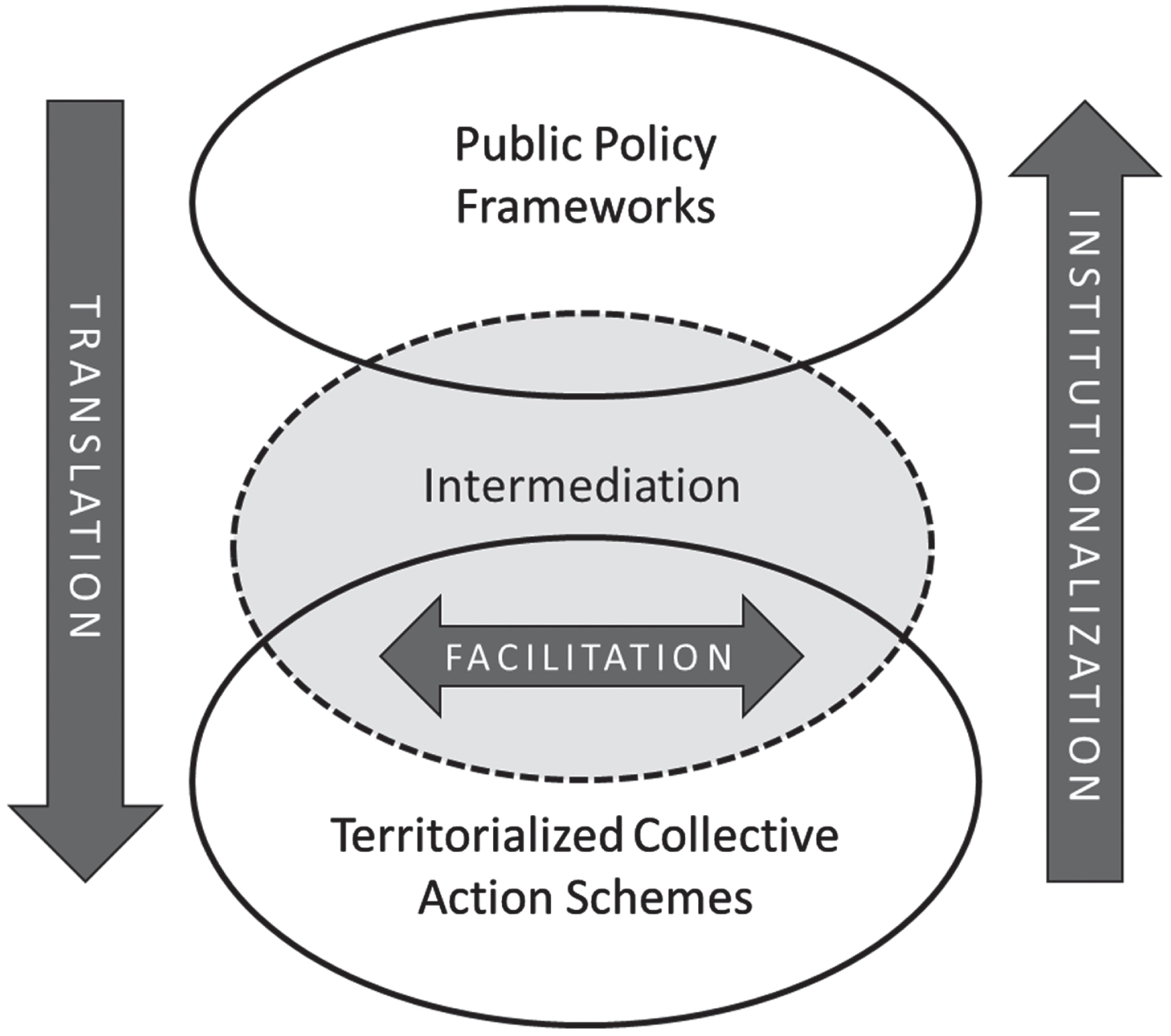
Intermediation operates between public policy frameworks and territorialized collective action mechanisms.
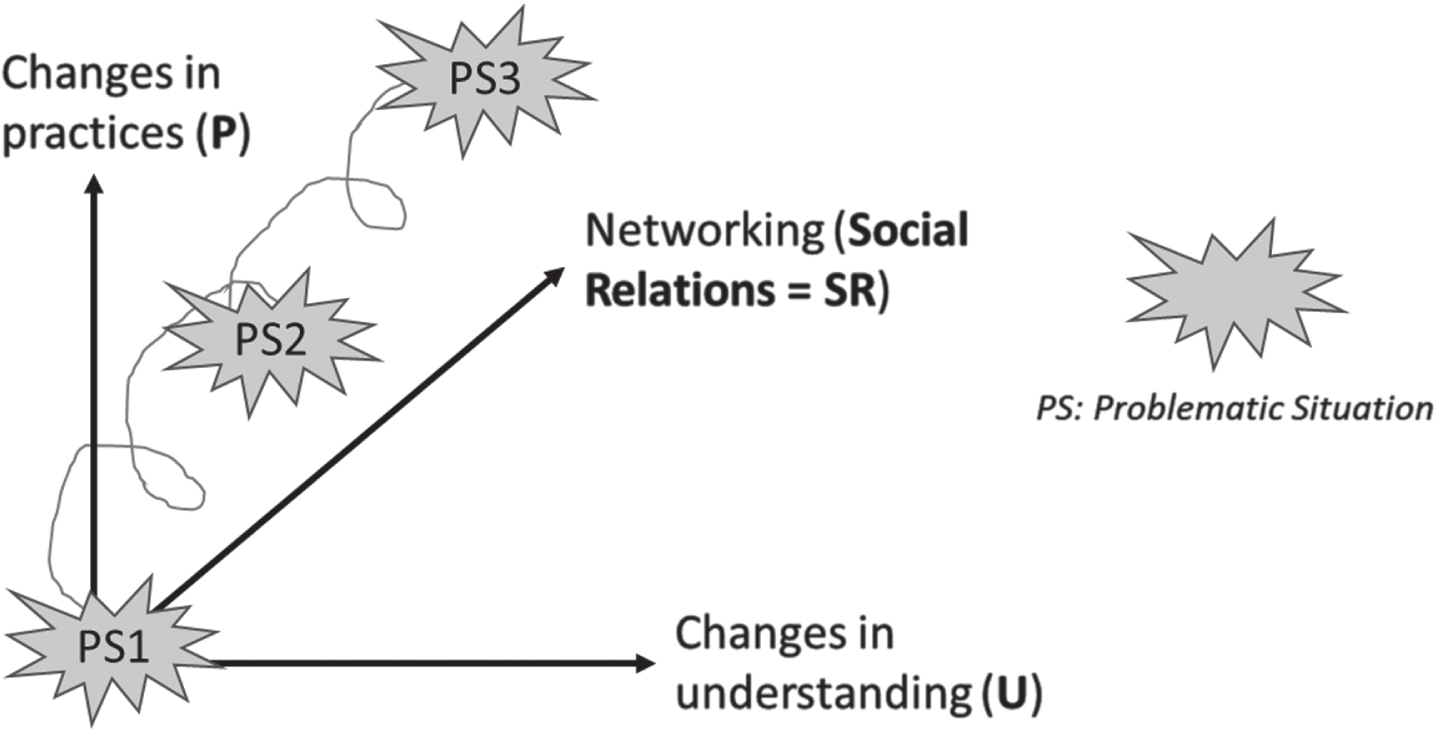
Analytical framework to explore complex situations of change (from Steyaert and Jiggins [21]).
We consider that such a framework provides a starting point to analyse the intermediation work. Although it focuses on intermediation processes rather than on work, we suggest that highlighting such processes is relevant to identify the actors who have to work together to perform them, and to then characterize collective work and coordination among them to implement a public policy device, and to support dynamics of change in work systems when these systems are reorganized to address wicked problems. This paper is a first attempt to apply such an approach to a public policy device: a Territorial Food Project. This leads us to highlight key challenges for further investigation on intermediation work performed by actors to implement territorialized public policy.
In France, a national policy initiated by the Ministry of Agriculture and Food in 2014 encourages the development of Territorial Food Projects (TFP) to support local value chains and improve access to healthy and sustainable food for all inhabitants of an area delimited by the project leaders. The Regional Directorate of Food, Agriculture and Forestry 3 (RDFAF) provides a definition based on Article L111-2-2 of France’s rural and maritime fishing code, which formalizes the territorial food policy. A TFP is thus defined as a strategic and operational framework for multi-partner initiatives to address social, environmental, economic and health challenges. It is based on a shared diagnosis of farming and food, taking stock of local production and the food needs of the area, as well as identifying the socio-economic and environmental assets and constraints of an area delimited by the project leaders. A TFP is drawn up in consultation with all the stakeholders of the area. It is formalized in a shared plan and a contract between the partners involved. The organization leading the TFP must submit an application to the RDFAF to have the project certified if it wishes to use the official label “Territorial Food Project recognized by the Ministry of Agriculture”. In addition, France’s economic Recovery Plan for 2020-2022 allocated € 80M of new funding to support TFPs, mainly intended to cover the costs of staff involved in running the project and the material investments needed to implement it.
A Territorial Food Project (TFP) in the western part of Ile-de-France
We study a TFP set up in an area where issues pertaining to urbanization and economic development intersect with issues regarding both the maintenance of agricultural activity (reduction of available farmland as a result of urbanization) and natural resource management. In 2016, a first TFP emerged in the context of territorial governance for agricultural activities that involved coordination between several inter-municipal authorities. A new TFP was certified in July 2021 by the Regional Directorate of Food, Agriculture and Forestry (RDFAF) with funding 4 for facilitation and investment initiatives. This new TFP is supported by three local agri-urban associations working to protect farmlands and by the services of three conurbation communities. It has led to the creation of two governance bodies seen as a locus of coordination between different institutions and organizations of the territory, either on a strategic level (a “COPIL” steering committee) or on an operational level (a “COTECH” technical committee). Figure 3 presents the TFP bodies and main actions. The TFP’s new action plan is driven by the goal of working together to increase the territory’s food resilience 5 , and various working groups facilitated by one member of the COTECH committee have been formed.
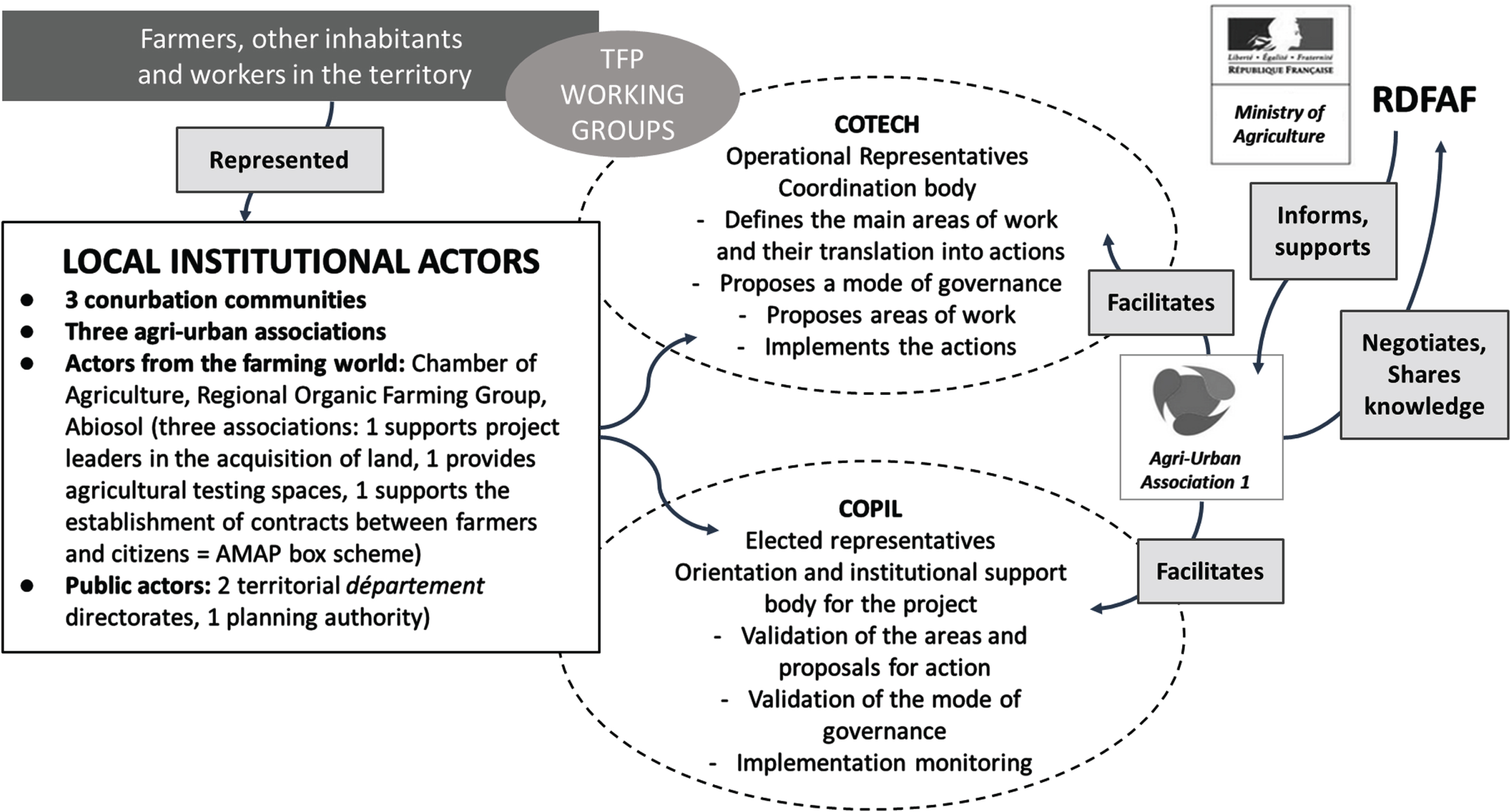
TFP bodies and actors.
To capture the three processes (translation, institutionalization and facilitation) involved in the design and implement of the TFP and in the support of the dynamics of farming work systems oriented towards providing local food to inhabitants, our approach was twofold: 1) we analysed official TFP documents (accepted project, action plan, governance framework); and 2) we carried out a series of interviews in January 2022, as part of a training course module titled “Managing and supporting change in farming systems” for agronomics engineering students (Master’s level). The 39 interviews were conducted with 45 individuals (farmers in the TFP area, intermediary actors between farmers and consumers, institutional and support actors). Although a TFP is not necessarily mainly oriented towards changes in the agricultural work systems, for this study we choose to focus on the way the TFP support changes in these systems to increase the territory’s food resilience.
Table 1 presents the profile of the interviewees, categorized according to the organization to which they belong and their “status” in the implementation of the TFP. The “Total” column shows the number of respondents, by status. As ergonomists, we took an analytical stance and, at this stage of the work, we view this first analysis as a way to start the social construction of our future contribution to the TFP dynamics.
Profile of the interviewees and status in the Territorial Food Project (TFP)
Profile of the interviewees and status in the Territorial Food Project (TFP)
The interview guide was designed with a view to conducting open interviews for the following purposes: 1) to collect information on the interviewees’ background, with a focus on a) the functioning of their organization and the missions that they fulfil, for those we will later call “institutional actors” (with various juridical status), and b) the role they have in decision making regarding the changes in their own farming work system, for those we will later call “farmers”; 2) to investigate what each individual does, the role of their organization in the relocation of food in the TFP area, and the implementation of the TFP; and 3) to inquire about the interviewees’ vision regarding the evolution of farming and food systems in the TFP area, and of their own activities and their organization’s role.
To grasp the translation and institutionalization processes at play, we analysed the written documents in order to highlight the local adaptations of the public policy framework to design the local food project (translation), and to identify the initiatives which were supported through the action plan and recognized as valuable ones by the regional administration (institutionalization). We also analysed the content of the institutional actors’ interviews that related either to their contribution to the local implementation of the public policy device or to the TFP governance bodies. We then tried to identify the activities required to design and implement the action plan, and those who carry them out, among the various actors involved in the implementation of the TFP.
To understand the facilitation processes, we analysed all the interviews and noted how each actor described the facilitation that they delivered (institutional actors) or received (farmers). Each interview was summarized to describe: 1) the professional trajectory of the interviewee and the meaning they ascribed to their action to provide local food in the TFP area; 2) the main changes which occurred in their problematic situation in relation to this issue. We then choose to describe, for some of the main changes, the critical incidents (e.g. those that impacted their way of analysing their problematic situation), and the effects on practices, social relations, and understanding of the situation. Regarding agricultural work systems and their dynamics to market locally, Fig. 4 illustrates how we choose to schematize work systems’ trajectories from a starting state (i.e. circle A and first column in Fig. 4) to a current state (i.e. circle B and first column in Fig. 4). The starting state is the most distant one in time, mentioned during the interview. The end state is the current one, according to the farmer. We also found trajectories which reflected a more complex evolution of the farm work system, that we illustrate as an intermediate state (i.e. circle A’ and first column in Fig. 4).
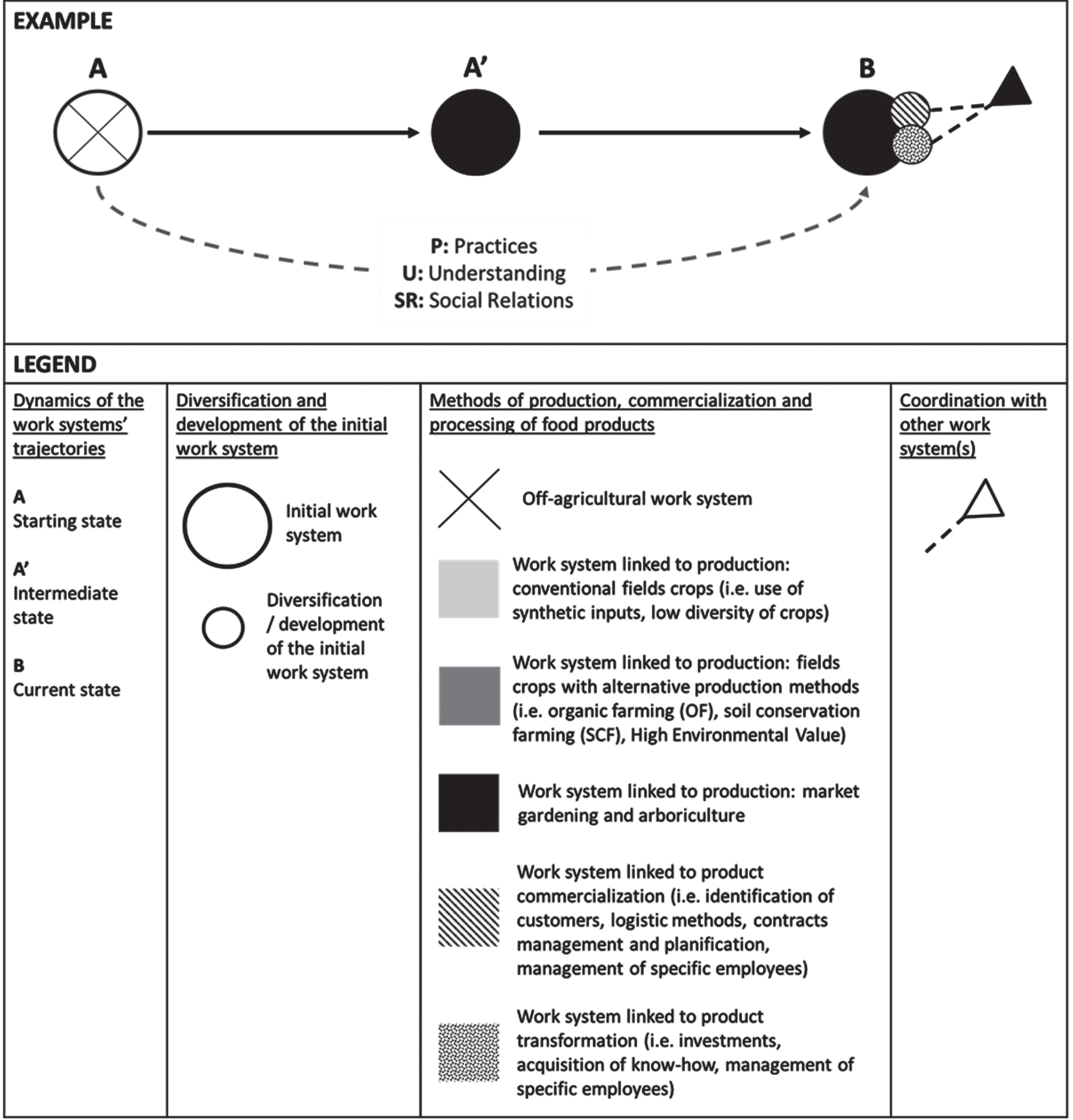
Analytical framework to analyse farmers’ trajectories and the facilitation activities involved.
Figure 4 also shows the characteristics we paid attention to in order to formalize the evolution of farm work systems from one state to another: 1) the extent to which the work systems have diversified or developed during their trajectories (second column in Fig. 4; 2) the methods of production and of local commercialization and/or of processing that we represented with different colors at each stage (third column in Fig. 4; 3) the coordination with other actors for local food systems (fourth column in Fig. 4, same colors applied). The example in Fig. 4 illustrates an off-agricultural work system (starting state) that evolved into a work system linked to market gardening and arboriculture (intermediate state), and then diversified (product commercialization and transformation) and developed coordination with other work systems also linked to market gardening and arboriculture (current state).
For each trajectory, and at a general level for all the farmers sharing the same trajectory, we also specify the changes in practices (P), understanding (U) and social relations (SR) made to achieve the transition of the work system concerned. These changes were detected in the interviews through a loose discourse analysis done by the students (e.g. non-systematic grid to guide inference from discourse to category of analysis).
Finally, to identify the activities taking place for performing the intermediation processes, we analysed those project documents that we considered as traces of the actors’ collective activity undertaken to build the project in relation to a national public policy, and as prescriptions that should orient and structure their collective action over the project period. Cross analysis of these prescriptions and the data collected during interviews enabled us to characterize the goals, means and actions that the TFP actors envisaged to structure and coordinate their collective action in the service of a common goal, i.e. to identify the main types of activity that support the processes of translation, institutionalization and facilitation.
Our results first point out the collective work required to achieve intermediation processes, which takes place within two intertwined dynamics: the governance of local policies since 2000 (4.1.); and the evolution of farming work systems’ connections to local food supply (4.2.). We then present some insights on the intermediation activities that we identified, and the way they contribute to intermediation processes (4.3).
Transformation of local governance regarding agricultural issues to design and implement the TFP
In the TFP area, urban pressure has increased since 2000, and agriculture has long been an issue to which local authorities have paid attention. Some coordination had therefore taken place long before the TFP was seen as an additional means to maintain agriculture and to develop its contribution to the territory’s food resilience.
The changing challenges regarding farming within the TFP area
In the early 2000 s, regional councillors were concerned about the rapid disappearance of farmlands in the peri-urban areas of Ile-de-France. In the TFP area, this was occurring against the backdrop of urban planning policies facilitating the establishment of private and public actors, with a view to making it an area of academic excellence and innovation in cutting-edge fields. Regional councillors, challenged by local farmers, financially supported the creation of agri-urban associations to protect farmlands in these peri-urban areas. This preservation of farmlands was soon coupled with some inhabitants’ desire to support farmers by buying local products, for instance through box schemes 6 . These agri-urban associations, with boards of administration comprised of three different colleges (farmers, local authorities, and civil society), developed a framework to collectively voice the desire of the territory’s stakeholders to maintain viable and liveable farming activity.
In daily life, however, the inhabitants of this area, which offers a more rural living environment than other areas near Paris, may not think about the use of the space in terms of farm work and food production. For example, they may not see the importance of keeping infrastructure associated with agricultural work (movement of machinery or animals, buildings, drainage or irrigation networks, etc.). They may also perceive agricultural areas primarily as leisure areas (walks, picnics) and farm work as a source of pollution (spraying of chemical products, odours). This results in new concerns about the functions of the area in order to maintain farming activity, and local associations have developed mediation activities to build spaces for interaction and dialogue.
At the same time, some farmers have also seized the opportunities afforded by the presence of inhabitant’s intent on reconnecting with the production of their food or, as consumers, on contributing to maintaining farming activity. For example, market gardeners and fruit growers have changed their work methods to sell their produce on farm or offer pick-your-own systems (Fig. 5, T1), or to sell at open-air markets. Other farmers have also chosen to process cereal or milk, for example, on farm, to sell it locally. From the late 2000 s, local associations began supporting these trends by creating networks to facilitate access to outlets. However, this networking also has its limits, for instance when it comes to supplying school canteens, given the mismatch between farmers’ expectations and resources and those of canteen managers, and the lack of a local offer for such an outlet. One operator, the COOP, has nevertheless been set up at the Ile-de-France regional level to provide a collective solution for organic farming producers, by acting as a logistics and product processing platform tailored to collective catering demand. The Regional Organic Farming Group (E2) has also supported this movement by developing a technical advisory service for collective catering, to allow for organic farming (OF) products to be integrated into their menus and kitchen work system.
In parallel, from 2013 a partnership was formed with some researchers (geographers, agronomists, soil scientists) present in the area, which has provided an opportunity to carry out studies on the agri-food metabolism 7 of the TFP area. These studies point out the still significant share of extra-territorial flows and the marginal (although increasing) place of local production. These issues are discussed in workshops conducted with representatives of the stakeholders (farmers, local authorities, associations, etc.) to build foresight scenarios of how these flows could evolve.
The introduction of the Egalim law in 2014 gave new impetus to food issues, due to the new requirements it set out for public catering managed by local authorities (50% of sustainable products, including 20% from organic farming). To meet these new requirements while also maintaining farming activity, several municipalities launched initiatives to set up new farmers on their land, with specific contracts between these farmers and the municipality. They used often advisory and support activities offered by a variety of actors from within the TFP area (e.g. E2, agri-urban associations) or outside of it (e.g. consulting firms), to resolve issues relating to land and buildings, and issues of a more technical nature (production, commercialization) or pertaining to employment.
Building and expanding the TFP
At the same time, the national policy on TFPs emerged. This framework was seen –particularly by one agri-urban association (AU1) –as an opportunity to support existing dynamics, or even to give them a new lease on life, by bringing together the associations, local authorities, farmers and inhabitants. It thus contributed to the emergence of a first TFP which involved the three conurbation communities and a second agri-urban association (AU2), funded by the RDFAF (around € 47,000 over a three-year period, 2017-2020). The funds were allocated based on an action plan drafted by the actors leading the TFP. The plan included actions both to raise awareness around “eating locally”, and to facilitate the relationship between supply and demand by setting up a digital platform. In 2021, during an assessment carried out at the end of this TFP and discussions on the value of committing again, the actors participating in the TFP indicated that they wanted to see concrete actions to support the relocation of initiatives, rather than studies to provide a more detailed diagnosis of the situation.
Between March and December 2021, the TFP entered into a second stage under the impetus of the agri-urban association 1 (AU1). It aimed to reconcile the operational expectations of the local authorities and other local institutional actors with the need to carry out the diagnosis and evaluation required to access resources allocated to the TFP by the RDFAF. The AU1 ran negotiations with the RDFAF regarding the diagnostic issues, while facilitating discussions among the actors (see Fig. 3) to define the contents of the policy framework documents provided by the RDFAF and to identify concrete courses of action to follow. During these consultation meetings, each actor brought forward initiatives contributing to the TFP’s goal, which nevertheless remained rather vague (acting together to increase the territory’s food resilience) as reaching a consensus was not easy. According to our interviewees, these discussions primarily revolved around the financial support provided to strengthen existing initiatives (e.g. funding for a processing tool to exploit cereal farms’ diversification crops) or to drive a new relocation dynamic (e.g. funding for boreholes to be sunk, to establish new market garden areas). The back and forth between the steering committee (COPIL) and the technical committee (COTECH), as well as the bodies of each institutional partner, also involved negotiating the balance between human and financial resources to allocate to the various actions planned (studies for the diagnosis required by the RDFAF, actions fostering new links between farming and food in the TFP area, and support to project leaders or local initiatives). An agreement was reached with the RDFAF to produce a diagnosis based on existing “agri-food metabolism” data and to expand it to the whole area of this second TFP, along with aggregated data collected by various actors (including scientists, consulting firms, interns, etc.) throughout the implementation of this second TFP. A list of fundable projects, whether led by farmers, associations, or local authorities, was drawn up. At the same time, the governance and coordination spaces of this new TFP were discussed, with a twofold challenge: the appropriation of this second TFP by the diverse institutional actors as well as the inhabitants (including farmers); and the distribution of the tasks among the TFP leaders in order to coordinate the actors and monitor the implementation of the actions and their funding through the TFP (i.e. monitoring agreements with partners and the payment of the financial resources provided by the RDFAF). The question then revolved around how such dynamics were articulated to those on farms whose trajectories were oriented towards the relocation of their outlets?
Diversity of the dynamics of change in farm work systems and of their support
Figure 5 shows that farm work systems are diversely integrated into food systems, and that they differ specifically with respect to the room they allocate to the provision of food in the TFP area. We first can acknowledge that various technical and economic orientations have prevailed in the TFP area since the 1980s: cereal cultivation, arboriculture, and open field vegetables or market gardening. The work systems associated with these forms of farming differ both in the amount of wage labour involved or the mechanization costs, and in the role of retailing or even processing of produce in these systems. Farmers can choose different farming methods: so-called conventional farming (using synthetic inputs), organic farming, soil conservation farming, farming with the “high environmental value” label, etc. The analysis of the interviews conducted with farmers reveals distinct trajectories depending on the work system, with a long history in the TFP area (Fig. 5, T2 to T6), in addition to those associated with individuals changing career paths to become farmers (Fig. 5, T1).
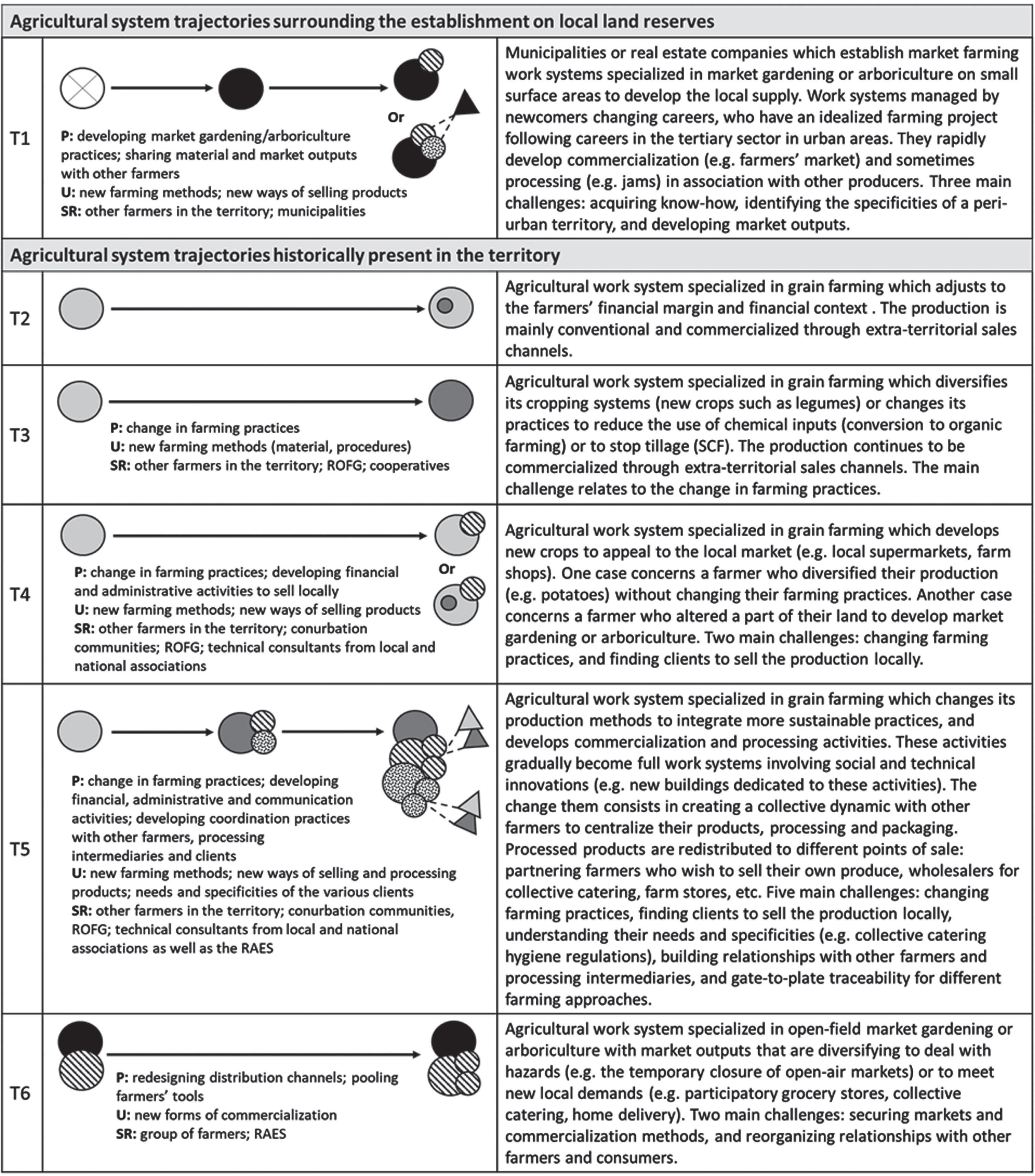
Trajectories of farm work systems in the TFP area.
Figure 5 shows various trajectories according to the evolution of farm work systems and their integration into food systems. These evolving situations unfold through the articulation of practices, understanding, and social relations, in ways that differ not only across the different trajectories, but also within a same trajectory. The example of newly established farmers changing their career illustrates the point (T1 in Fig. 5). This trend has been encouraged for several years by municipalities wishing to secure a local supply of fresh produce (fruit and vegetables) while helping to maintain farmland in their municipal area. For all these farmers, their establishment was gradual, with the discovery of the reality of farming activity, the physical hardship in these systems, and the uncertainty surrounding the capacity to reach the expected volumes of production. These realities were associated not only with the dynamics of the agroecosystem but also with the impossibility, sometimes, of setting up the necessary means for carrying out the work (due to costs as well as the weight of the urban environment and the expectations of citizens and municipal authorities). We will now briefly illustrate for three farmers of this group, how changes operate within specific arrangements of practices, understanding and systems of social relations.
The first two farmers are organic arboriculturists who have been working in the area since 2017 and 2018, respectively. One of them, before planting his fruit trees, had contacted an advisor from the regional agricultural extension service (E1, see Table 1) and a local agri-urban association (AU2) to perform soil analyses and identify the best locations for the trees. From the start of his activity, the farmer has been fighting voles (that destroy tree roots), and therefore reached out to the mayor of his town who organized a meeting with the hunting federation (the fox is a natural enemy of voles). The farmer also got in touch with the Regional Organic Farming Group (E2), which was working on the subject at national level. To date, his problem has not been solved and the farmer spends a good deal of time testing methods and tricks (e.g. disturbing voles with hens or sheep) that he learns about on Internet or by talking to other farmers experiencing the same problem. His practices and his knowledge relating to the problem are thus evolving. The second arborist planted his first trees based on what he had learnt from training courses which he had paid for himself and on his reading about permaculture. He grows many species (e.g. apple, pear, plum, cherry-plum, cherry, fig and peach) to offer variety rather than quantity, as he believes from his own experience that customers will not go out of their way to buy just one product. He was also helped by E2, which coordinated the provision of paid support by an external service provider.
Both fruit farmers want to sell their produce locally, taking advantage of their proximity to urban areas. They have teamed up with other farmers to buy a van and sell their produce at markets. For the time being, a municipality has guaranteed them a spot in town three times a week at different locations. Regarding the commercialization of their products, however, the trajectories of the two fruit farmers have not involved the same problems, nor the same needs. While the first one prefers direct sales because he cannot regularly supply markets, given the seasonality of his production, the second one has a shed for storage and plans to set up a processing workshop to produce jams and juices. On the advice of a ROFG advisor, this fruit farmer also plans to produce eggs, in collaboration with another farmer.
The third example is a market gardener and egg producer who has been working in the area since 2017, on a plot of land for which he received support from NGO2 (the national association for the preservation of farmland) to prepare his application for buying it. He was also helped by E2 and AU2 to obtain his organic farming certification, particularly when it came to administrative procedures. Today he grows organic vegetables and produces 1,500 eggs per week. After initially selling on markets, this market gardener now sells directly on farm (vegetables and half of his egg production) and sells the rest of the eggs through box schemes. For direct sales, he first turned to the municipality, which informed its inhabitants about his activity. Later, one of his customers introduced him to the box scheme system, which he joined, finding a spirit of mutual support and benevolence among producers in this network (e.g. co-delivery of products). From experience, this farmer knows that he must have a variety of vegetables to maintain the appeal of his offer. He must therefore learn to grow a range of species and varieties.
Thus, although they shared the same work system trajectory, these three farmers did not face the same problematic situation and therefore had to mobilize or build new resources to reconfigure their activity and get involved in local collective action to relocate food. In the three examples presented, the farmers benefited from the support of various agricultural advisory actors or institutional actors offering their services within the area of the TFP. They however found it difficult to secure long-term support –a point which has been also been emphasized by farmers changing their career path, who recently started farming.
We noted during the interviews with support and institutional actors that some of them had reconfigured their service offer (e.g. E1, E2) or expanded it (e.g. NGO2) to support the farmers in setting themselves up, to promote the development of organic farming and the use of organic products in canteens, and to facilitate access to new outlets (creation of a platform to connect the supply of and demand for local products). Yet the accessibility of this offer and the possible complementarities between organizations are sometimes unclear to farmers. The interviews did not enable us to grasp how the TFP contributes to fostering synergies for this support to effectively facilitate collective territorial dynamics and thus contribute to the territory’s food resilience.
To sum up, several aspects of the new TFP’s action plan are designed to improve the dissemination of information, awareness-raising, and training for all stakeholders (farmers, local authorities, inhabitants and users), and many initiatives aim to connect the actors involved in the relocation of food supply chains in the TFP area. Nevertheless, the coordination among institutional actors to engage horizontal facilitation processes to support farmers’ initiatives (whether individual or collective) in the long run still needs to be implemented.
How then do we understand the types of activity that actors perform to achieve translation, institutionalization or facilitation processes? Based on our analysis of the official TFP documents and on our understanding of the way actors describe their actions to participate to the TFP governance and to support farm systems trajectories, we have identified 12 types of activity, characterized hereafter according to their objectives (see Table 2).
Types of activities performed to design and implement the TFP
Types of activities performed to design and implement the TFP
Our data collection does not allow us to identify precisely to which process(es) –translation, institutionalization or facilitation –each type of activity contributes primarily, nor how their performance is coordinated among actors. We can nevertheless suggest some directions. First, it seems that the translation process undertaken to formalize and stabilize a contractual document with the RDFAF continues through the implementation of governance and actions. While the TFP document, and more specifically the aim assigned to the project (combined action to improve food resilience) materialize a first translation process, the ways in which the actors structure the diagnosis (activities 1 and 2), select certain investments, and favour certain coordination or action methods (numbers 3, 4, 5 and 7) also participate in the process.
Second, institutionalization processes were evidenced in the recognition given to certain initiatives driven by the desire to relocate the food supply, which is deemed to contribute de facto to the territory’s food resilience (activity 5). From our point of view, the attention paid to raising public awareness (activity 11) around such initiatives also participated in their institutionalization. Finally, facilitation is twofold. First, it supports collective action among local stakeholders to relocate food systems (activities number 3, 4, 7, 9, 10). Our interviews enable us to point out that such activities seem to be guided equally by the desire to raise awareness of local food supply and demand, and to provide financial resources for projects that increase the local supply of products likely to be consumed locally. Through such activities, the TFP actors seem to identify the relational dimension needed to support the farming systems’ trajectories in becoming more integrated into local food systems. Yet they fail to pay enough attention to the way in which they can collaborate in the long run to support changes in understandings and practices for enacting these relations. Second, facilitation is oriented towards enhancing coordination among the institutional and agri-urban actors, either to distribute tasks and resources or to establish procedures for carrying out the tasks (activity 8). The actors did not however express the need to get involved in building a shared problem statement and cognitive frame of reference to engage in their problematic situation (how to increase the territory food resilience), although this could have supported their collective action.
In this section we discuss the extent to which our study, primarily based on a sociological frame, enables us to point out some key ergonomic challenges.
First, we consider that intermediation work takes place in a situation of public action where actors design and implement a public policy device in order to support local collective action. Therefore, we suggest that the territory can be seen from an ergonomic perspective as the situation of public action. If this situation is delimited by a public policy device, how can ergonomists analyse the use of such a device? Considering the structuring effects of the TFP, a line of inquiry could be to consider it as a meta-instrument [22] which serves to organize activities in the public action situation by constituting an instrument of “management of managements”. Indeed, our analysis points two structuring effects. First, it structures intermediation work: although carried out using the preferred methods of the employer organizations, this work is regulated by the expectations the TFP generates regarding the coordination between actors to tailor and implement it locally. Second, it structures the dynamics of change in farm work systems by institutionalizing certain ways of articulating farming production and local supply chains. From this perspective, considering the contractual documents and the action plan as proxy respectively for the frame of reference and the set of tasks might not be sufficient to grasp the dynamics of the situation of public action. There is moreover a challenge to identify the (formal and informal) loci where actors discuss how to establish this “management of managements”.
Second, although our study enables us to identify a first set of activities which contribute to the effective unfolding of translation, institutionalization and facilitation processes, there is a need to analyse how such processes are intertwined in the governance of the TFP and in the support of local collective action through the performance of those activities. We also point out that the action of institutional actors is mainly oriented towards supporting (financially or through networking) the emergence of local projects, and more investigation is needed to clarify how this is carried out and assessed by the institutional actors in relation to the expected change (e.g. increasing the territorial food resilience). Moreover, we describe the TFP’s implementation as distributed or even fragmented among a wide range of actors and organizations. The data collected highlight possible tensions between the respective projects and actions in relation to intermediation processes, and point to a lack of coordination among the institutional actors, whether with regard to sharing their understandings of the problematic situation (i.e. the changes required to increase the territory’s food resilience) or to co-ordinating their practices to support change in work systems in the medium and long term. These actors did not always agree on the way to frame the issues at stake in the situation of public action and to define the transformative goal of fostering the territory’s food resilience. This raises the question of how and whether intermediation work supports the collective framing of the issue of developing territorial food resilience together in the long run. Our data did not enable us to identify momentum and spaces devoted to addressing the long-term issue of the articulation of local initiatives –whether individual or collective –supporting a collective project geared towards increasing territorial food resilience. Thus, an ergonomic analysis would have to better understand the conditions required for the TFP to operate as a “meta-instrument” for collective activity, distributed among a range of heterogeneous actors whose aim is to increase the territory’s food resilience.
Although we observe a heterogeneous set of types of activity, which the actors agreed to perform, we also acknowledge that the TFP articulates several organizational scales, and within and between these scales a form of hybridization occurs between community-type social relations and more hierarchical work relations. The collective dimension of intermediation work thus appears to combine these two forms of relationship. As such, understanding the way in which this collective activity is structured and unfolds constitutes a fruitful line of research in itself, to better identify the object and framework of ergonomists’ intervention in a situation of public action. Several areas need to be explored, particularly the coordination –cognitive, temporal and operational –between the actors of the TFP and the organization of decision-making within the TFP, which relates in part to the way in which its governance is structured.
Third, two directions for an ergonomic intervention can be identified to support those involved in the design and implementation of the TFP: 1) building a common understanding of the problematic situation; and 2) coordinating between intermediation actors at TFP level and supporting the reconfiguration of work in farming systems.
The first direction would revolve around equipping intermediation actors to set up a collective process that enables them to move beyond a project management approach and lean towards a “weak structuring” of the shared nature of the project –to spare each actor’s sensitivities. The idea would be to achieve “sound structuring” requiring the collective formulation of the problematic situation and some shared “ends in view”. The TFP would then truly be a meta-instrument designed to serve as a resource for intermediation work in support of territorial food resilience. In view of our initial results, reflecting on, defining, clarifying and formalizing what “a territorial food resilience or what a sustainable territorial food system producing quality food accessible to all” means for the collective might be useful, although actors are mainly interested in concrete actions. For ergonomists, this could involve both co-constructing spaces in which the formulation of this presumably shared goal can be examined and detailed, and informing these spaces with their expertise (for instance on what makes a work system sustainable or resilient, and what fosters or hinders certain food or farming practices).
The second area of an ergonomic intervention involves providing tools to explore how the coordination required for the translation, institutionalization and facilitation processes could be effective. In this regard, we suggest drawing inspiration from the method of crosscutting reflexive simulation [23] based on the analysis of categories of situations in which cognitive coordination is potentially problematic for the success of intermediation processes. Complementing this approach, we could also draw on the method of constructive co-analysis of practices [24] to foster the emergence of a crosscutting collective. In our case, the challenge would be not so much to help the emergence of a crosscutting collective, as a collective was built several years ago, but to support its renewal in an evolving context. This opens up space to invent a singular organization of the TFP’s governance so that it is not structured solely according to the normative expectations of the national public policy, but can also be used to effectively monitor a collective action. In other words, ergonomic intervention could aim to foster the conditions for the exploration of a new organizational model intended not only to enable cognitive and operational coordination at the level of the TFP governance, but also to support local collective action at agri-food systems level. As we have seen, as farming work systems become more complex when involved in local food systems, the ergonomist might provide some understanding on how to support transformations in farming systems seeking to relocate their outlets in order to ensure sustainable work for those who operate in such systems. Ergonomics studies on supporting farmers’ transitions [for example 26] have highlighted the importance of equipping farmers with tools to reflect on and investigate their work situations, and thus to enable them, as they go along, to negotiate the transformations of their work system and to build sustainable work. Seppänen [26] also have emphasized the need to identify learning challenges faced by farmers in their ever-changing world to address sustainability issues. In our case, as various actors (individuals and collectives) intervene with farmers while the latter express a lack of sustained support in the long run, ergonomists might open discussion spaces on the forms of coordination enabling both cognitive and operative synchronization between the agents who support farmers in changing their work system. Such spaces would have to be negotiated with the diverse institutional actors involved (looking at various questions such as: Which farming work systems should be chosen? Which problems of coordination among institutional actors involved in supporting the relocation of food systems should be prioritized?). Discussions would have a dual purpose: 1) to bring to light the issues associated with the reconfiguration of the farmer’s activity and how they are addressed; and 2) to highlight the institutional actors’ perspectives on the dynamics at play, and to favour the collective exploration of the conditions of successful actions supporting farmers who change their system to develop local outlets.
Conflict of interest
The authors report no potential conflict of interest.
Footnotes
Acknowledgments
This paper benefitted from the work carried out by AgroParisTech students (DA PISTv) during their on-site field work in January 2022. English has been revised by L. Libbrecht.
Funding
This study was supported by national funding from the French National Research Agency, project ANR-21-CE03-0015-03.
Ethical approval
Not applicable.
Informed consent
All participants provided informed consent for contributing to the research presented in this article.

Funds were allocated formally in December 2021, and available in April 2022.
Defined as a capacity to withstand shocks.
Box schemes are a partnership between a group of consumers and one or more farmers, based on a system of distributing “baskets” made up of farm products.