




Abstract
BACKGROUND:
Ever since the start of the coronavirus disease 2019 (COVID-19) pandemic, students have been spending an increasingly longer time staring at electrical devices to take online courses.
OBJECTIVE:
This study aimed to investigate the effect of the virtual class environment on eye and musculoskeletal problems in university students during the COVID-19 pandemic.
METHODS:
A total of 365 university students were enrolled in this study. They completed an online survey to examine the effects of online learning on eye and musculoskeletal health during the COVID-19 pandemic. The questionnaires consisted of four sections: demographic and general information, environmental and work factors, device-related factors, and visual display terminal syndrome (VDTS).
RESULTS:
Participants have been taking online classes of 14.5 hours per week during the COVID-19 pandemic. They reported the mean daily usage of digital devices of 4.8±2.2 hours before the pandemic but this increased to 8.1±2.9 during the pandemic. Eye fatigue and neck, shoulder, and back pain have also been reported. The mean VDTS score was significantly influenced by gender, obesity, daily exercise, regular breaks, wear of blue light-blocking glasses, daily hours of electronic device use, and illumination of room.
CONCLUSION:
The results of this study showed that university students taking online classes suffered more from VDTS, especially in eye fatigue and neck, lower back, and shoulder pain during COVID-19 pandemic than prior. This study suggests that it is necessary to take breaks in online classes and regularly provide appropriate eye exercise and physical activity to prevent VDTS.
Introduction
The coronavirus disease 2019 (COVID-19) pandemic has changed many aspects of daily life, including physical activity, work, business, and travel. Education has also been changed by the COVID-19 era [1, 2]. Online learning was accelerated by the necessity for social distancing due to the pandemic, and almost all universities in South Korea have applied this change [3]. Online learning has several advantages, such as accessibility of time and place, affordability, and flexibility. However, there are some disadvantages, such as inability to focus on screens, technology issues, an increased sense of isolation, and poor screen time management [4].
Online learning has most students using digital media, such as computers, laptops, desktops, smartphones, and e-books, to participate in online classes [5]. The changed learning environment led to rising daily exposure to digital devices, an increased span of time spent sitting down, and an accompanying rise in common health problems; prominent among them are ophthalmologic complaints, musculoskeletal disorders, and psychosocial risks [2, 6, 7]. One of the common sequelae of improper posture caused by long-term exposure to small video media is visual display terminal syndrome (VDTS), a musculoskeletal disease [7, 8]. But it is not solely a musculoskeletal disease. The most common symptoms due to prolonged use of digital devices are neck or shoulder pain, headache, and dry eyes [9, 10]. In addition, the use of digital devices for more than five hours a day was associated with experiencing computer vision syndrome, such as eye fatigue [10, 11]. One study reported that digital device usage time per day among high school students in Thailand increased to 10.53 hours during the COVID-19 era compared to 6.13 hours before COVID-19 [12]. In another study, more hours/day of smartphone use was associated with an increased risk of neck, shoulder, upper back, arm, and wrist/hand discomfort in the users [13].
VDTS is a condition that disrupts attention, academic performance, efficiency, and time management [8]. VDTS also affects student productivity, reduces physical activity, and increases visual and musculoskeletal problems during adulthood [7]. This is important in the context of the increased acceptance of online activities in the post COVID-19 era. Online learning is expected to expand in future educational environments as well. Therefore, the number of students with these symptoms is expected to increase, and VDTS is considered to be an emerging public health problem [14].
Many factors, such as posture, room illumination, the use of screen filters, screen brightness, distance from the screen, and increased hours of online class attendance contribute to symptom severity [14, 15]. However, overall knowledge of VDTS is lacking during the COVID-19 pandemic. The ophthalmologic and musculoskeletal symptoms related to the excessive use of digital devices due to increased online class duration have been extensively discussed, but previous studies have not properly been conducted [14, 15]. This study aimed to determine the prevalence of VDTS and its associated risk factors with individual, environmental, and device-related parameters among university students during the COVID-19 pandemic.
Methods
The study was a cross-sectional online survey designed to examine the eye and musculoskeletal health for university students. The calculation basis of the study participants was based on the contents calculated using the G*Power sample counting program. The calculated results determined a total of 210 participants that were the significance level α= .05, power 95.01, effect size 0.5, critical t = 1.9714, and two-tailed test. 365 university students participated in this study, and the effect size was 0.38 and the power was 95.01. The participants were those who fully understood the study’s purpose and methodology throughout the informed consent form and voluntarily participated in this study. We collected data using on online-survey, and then we analyzed the collected data according to our purpose.
Participants
A total of 365 university students were included in this study. The eligibility criteria were as follows: they were university students who (1) were aged≥18 years, (2) are taking online learning, (3) residing in South Korea as a Korean citizen at the time of the research, (4) have not participated in a study similar to this study within the last 6 months, (5) are active by signing up for a social network system (SNS) that can receive online survey, and (6) have heard the procedure and purpose of this study and voluntarily agreed to participate, (7) do not have a history of neurological diseases that may affect the research results. From the 400 students, we excluded those with history of refractive surgery or ocular disease (n = 35). Table 1 shows the demographic and general characteristics of the participants.
Demographic and general characteristics of the study participants
Demographic and general characteristics of the study participants
This study used a cross-sectional online survey to examine the association between online learning and eye and musculoskeletal health during the COVID-19 pandemic. The recruitment of participants was announced through a university website and SNS. After reading the recruitment information, university students who wished to participate in the study were asked to send their e-mail addresses. Once an email list with participant names were obtained, the purpose of the study and consent form were sent out. All participants provided written informed consent before commencement of the study. After confirming voluntary participation, the study team sent participants an online survey. Participants were required to submit their email addresses in order to complete the survey in this study to prevent duplicate responses (Fig. 1).
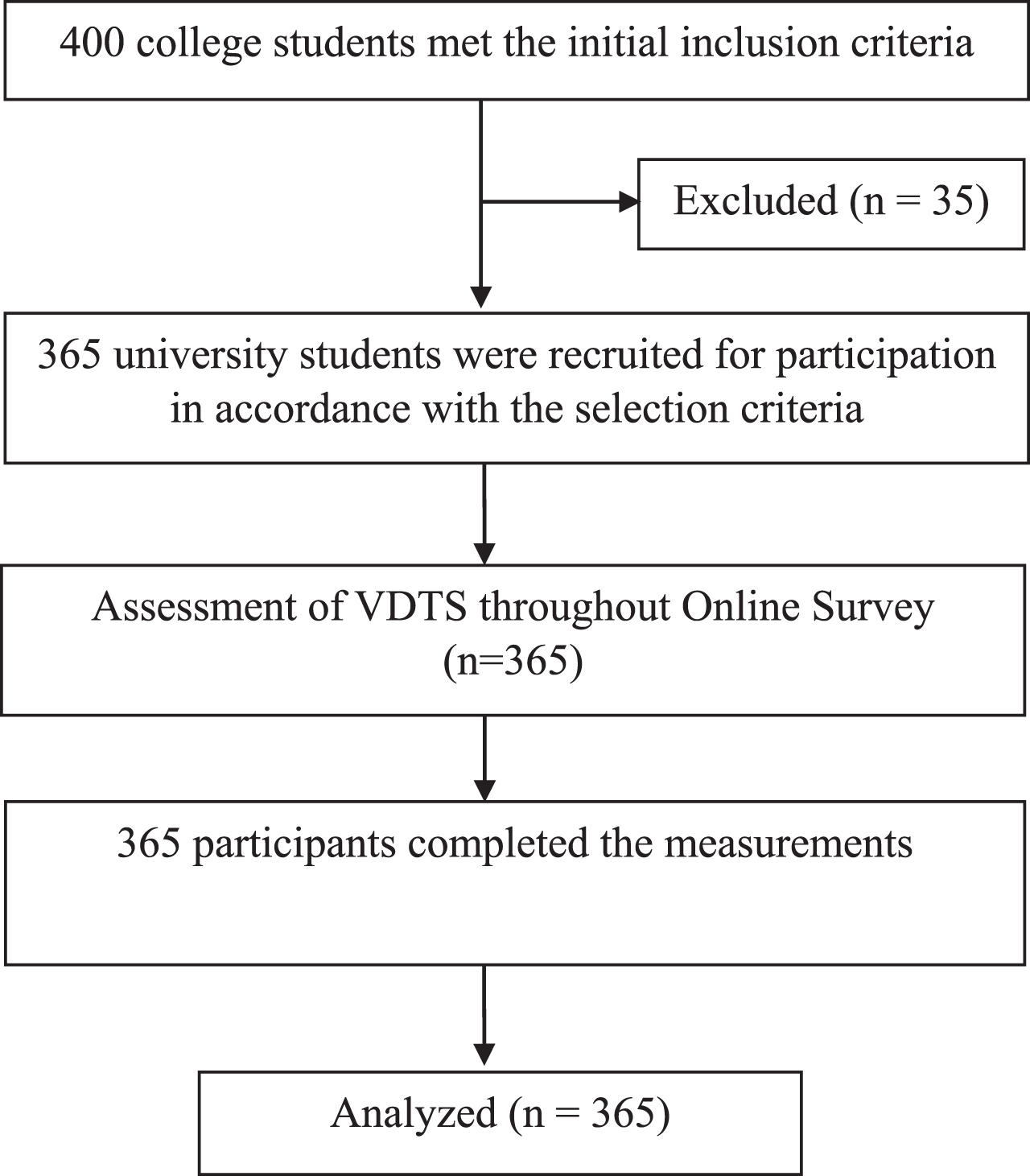
Flow diagram of the study.
The questionnaire used in this study consisted of four sections: demographic and general information (such as age, gender, obesity, regular exercise, weekly online classes’ time, smoker, contact lens wear, blue light-blocking glasses wore during online classes), environmental and work factors (such as daily usage hours of digital devices, posture, height of desk, window position, illumination and humidity of indoor, added a desk lamp), device-related factors (such as type of digital devices, viewing distance, and screen brightness), and VDTS [7]. This study used the self-reported visual display terminal syndrome questionnaire (VDTSQ), which was developed to measure VDTS. It has including 33 items. The total score of the tool is 132, and the higher the score, the more severe the VDTS [16]. The Appendix provides the questionnaire used in this study.
Data analysis
A descriptive analysis of all the study variables was made through the calculation of the mean values and standard deviation to determine the central tendency and as a measure of dispersion of all dependent variables. The dependent variables showed a normal distribution according to the Kolmogorov-Smirnov test (p > 0.05), and there was a homogeneity of variances, applying the Levine test. To describe the prevalence of VDTS, moderate prevalence and severe prevalence were calculated respectively. Moderate prevalence is defined as cases having at least moderate symptoms. These criteria were defined according to expert opinion, due to lack of previously defined classifications [17]. We also described the severe prevalence of VDTS as having more than severe symptom for each item.
The independent t-test or one-way ANOVA was used to verify the existence of significant differences among associated factors such as demographic and general information, environment and work, and device-related factors, in the context of on VDTS. A binary logistic regression analysis was performed on the items with a few prevalent symptoms with ‘severity of symptom’ as the dichotomous dependent variable (0 = less than moderate symptom; 1 = severe symptom) and associated factors adjusting confounding factors to reliably predict eye and musculoskeletal symptoms among university students. The associated factors were adjusted for obesity (body mass index), smoker, use of contact lenses, use of blue light-blocking glasses, daily regular exercise, height of desk, window position and screen brightness. The SPSS program, the version 25 statistical package (IBM Inc. Co., NY, USA) was used for the statistical analysis and the statistical meaning was established at a value of p < 0.05 for all of the statistical tests.
Results
Demographic and general information
A total of 365 university students were analyzed. Their demographic characteristics and general information are summarized in Table 1. The average age of the students was 21.1±2.5 years, and 211 of them were female. University students attended an average of 14.5 hours out of a required 17 hours online classes per week during the COVID-19 pandemic. In online classes, 231(63.3%) students used laptops, 127 (34.8%) students used personal computers, and the rest used tablets. None of the students used a smartphone as the main device when taking classes. A total of 131 (35.9%) students viewed the monitor at a short distance of 40 cm or less. There were 326 (89.3%) students maintaining proper room humidity (40% ∼60%), 32 (8.8%) students in a dry environment (<40%), and 7 (1.9%) students in a humid environment (>60%). Above all, prior to the COVID-19 pandemic, the students reported the mean daily usage of digital devices of 4.8±2.2 hours, which increased to 8.1±2.9 during the pandemic. Of the students, 16.4%, 50.1%, and 33.4% used digital devices for respective totals of 0–5 h, 6–9 h, and more than 10 h per day during the COVID-19 pandemic. Before the pandemic, the percentages were 69.8%, 26.3%, and 3.8%, respectively (Fig. 2).
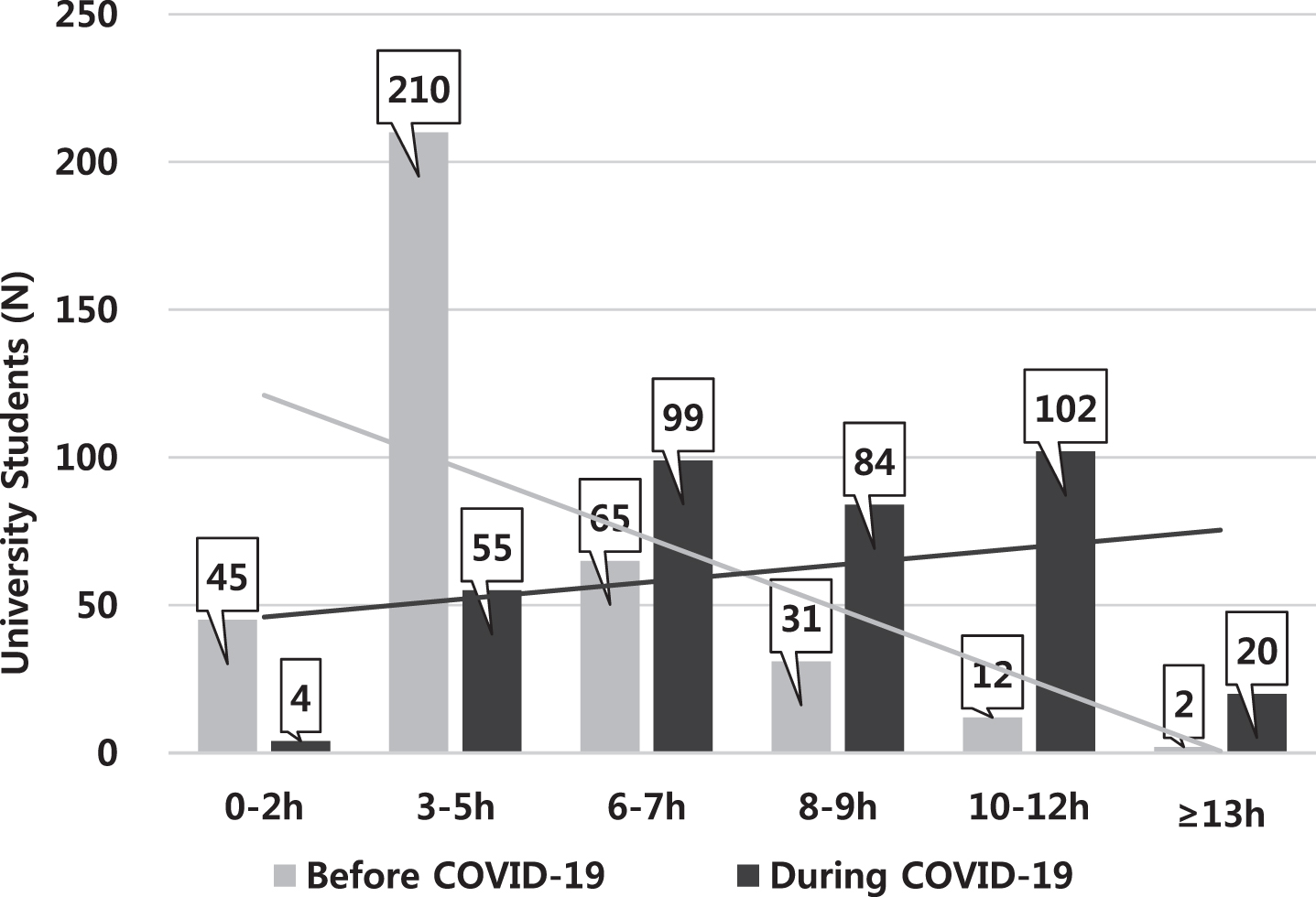
Daily usage of digital devices before and during the COVID-19 pandemic (hours/day).
Table 2 shows the prevalence of eye, musculoskeletal, psychological, general health, and skin symptoms among the students. Regarding eye problems, the most commonly reported complaint was eye fatigue (70.7% for more than moderate and 29.9% for more than severe), followed by eye strain (36.7% and 13.7%), ocular pain (31.0% and 14.8%) and itching (29.6% and 10.4%). There was a high prevalence of musculoskeletal problems, most commonly in the neck (71.0% and 37.8%), lower back (67.1% and 37.5%), shoulder (53.4% and 25.8%) and back (50.4% and 21.9%), in descending order. In psychological symptoms, the most commonly reported response was wandering of the mind (41.1% and 16.7%), followed by getting distracted (26.6% and 12.3%), and memory disturbance (25.2% and 9.9%). Of all students, 12.9% had headache and 7.9% had skin problems, such as acne.
Prevalence of VDTS among university students during COVID-19 pandemic
Prevalence of VDTS among university students during COVID-19 pandemic
Tables 3 to 5 shows the VDTS score with eye, musculoskeletal, psychological, general health, skin, and total scores according to individual, environment, work, and device-related factors. The total VDTS score was significantly influenced by sex, obesity, daily regular exercise, regular breaks during electronic device use, wearing blue light-blocking glasses, daily hours of electronic device use, illumination of room, humidity of room, type of electronic devices, and viewing distance (p < 0.05) (Tables 3–5).
Comparison of VDTS score according to demographic and general information among university students during COVID-19 pandemic
Comparison of VDTS score according to demographic and general information among university students during COVID-19 pandemic
*p < 0.05; **p < 0.01.
Comparison of VDTS score according to environment and work factors among university students during COVID-19 pandemic
*p < 0.05; **p < 0.01.
Comparison of VDTS score according to device-related factors among university students during COVID-19 pandemic
*p < 0.05; **p < 0.01.
In particular, the using daily electronic device for more than 6 hours (p = 0.027), dark (p = 0.011) and dry rooms (p = 0.001), and short viewing distance (p = 0.019) were significantly affected with exacerbated eye symptoms. In contrast, when regular breaks (p = 0.001) were taken and blue light-blocking glasses were worn, eye symptoms were less common and less severe. Students reported a higher musculoskeletal symptom score if they used the electronic device for a long time (p < 0.001), or if they did not exercise daily (p = 0.022). Their musculoskeletal symptom score was higher when laptops and tablets, rather than personal computers (p = 0.001), were used. General health symptoms showed associations with risk factors similar to those of total VDTS, and skin problems had high scores in students working in dry rooms (Tables 3–5).
The results of the binary logistic regression analysis for all students using the dichotomous variable ‘presence of severe symptom’ as the dependent factor and other independent variables are shown in Table 6. The overall model was shown to be statistically significant. The results indicated that female sex (OR: 2.01), being in a dark room (OR: 4.89), and being in a dry room (OR: 2.39) were associated with a significantly increased risk of developing eye fatigue (Table 6). In contrast, regular breaks (OR: 0.41) a long viewing distance to monitor (OR: 0.58) both significantly decreased risk of eye fatigue. For overall musculoskeletal system function, female sex and a greater amount of hours/day digital devices use per day increased symptom risk. The use of digital devices for more than 10 hours per day increased the risk of developing neck (OR: 2.60), lower back (OR: 3.97) and shoulder pain (OR: 3.11). Additionally, laptop use was associated with a higher prevalence of musculoskeletal symptoms, albeit at lower severities (OR: 2.28).
Results of binary logistic regression of severe VDTS among university students
Results of binary logistic regression of severe VDTS among university students
Adjusted for obesity, smoker, use of contact lenses, use of blue-light blocking glasses, daily regular exercise, height of desk, window position, and screen brightness; *p < 0.05; **p < 0.01.
This study examined the subjective symptoms of VDTS and their association with related factors among university students taking online school classes during the COVID-19 era. The results of this study confirmed that, during the COVID-19 era, students who spent more time using digital devices reported more eye and musculoskeletal symptoms. Eye fatigue was the most prevalent symptom. A majority of students also answered that they had severe neck and lower back pain. Similarly, more students reported increased daily digital device use during the COVID era as compared to that in the pre-COVID era.
These results are consistent with data from the literature, where one study reports that the daily duration of use of electronic devices increased by an average duration of 3.1 h during the COVID-19 lockdown for adults in Spain [18]. It showed a significant increase compared to the average daily use of all digital devices combined over the past 10 years from 3.6 hours/day in 2011, 5.5 hours/day in 2015, 6.3 hours/day in 2018, and 7.8 hours/day in 2020 to 8.0 hours/day in 2021 in the United States. Several studies have reported that, among people who constantly use computers, the prevalence of eye fatigue was 46.3% in India, 31.9% in Italy, 68.5% in Mexico, and 64.5% in Australia [8, 19, 20]. VDTS development requires performance of a prolonged near-vision task, but the symptoms associated with its use, such as blurring, dryness, and eye fatigue, are significantly more common when compared to those of similar tasks that do not require the use of VDT [7]. Another study among 99 university students who were taking online classes during the COVID-19 pandemic found that 34.7% of students had severe dry eye symptoms, whereas our questionnaire of eye-related VDTS consisted of individual symptoms of dry eye, such as itching, burning, blurry vision, redness, and watering [14]. In addition, a few studies in office workers and students-surveyed post-COVID-19 also reported an increase in musculoskeletal problems. In a recent study conducted in a computer workplace, university employees reported shoulders (37%), lower back (34%), and neck (29%) as the regions most affected by musculoskeletal problems [21]. In another study of university students and teachers during lockdown, neck (51.3%) and low back pain (33.4%) were the most common symptoms [22].
Psychological problems, general health, and skin problems had low scores compared to the eyes and musculoskeletal system. Nonetheless, 16.7% of students answered that they had wandering the minds and 12.9% answered that they had severe headaches. A previous study among office workers over a three-year period also reported that the mental symptom score was significantly higher in the group with more than 5 hours of daily VDT use than in the other groups [23]. Focusing on the digital screen for a long time causes eye fatigue, which, in turn causes headaches [24]. In our study, headache prevalence was lower than the 45.7% reported by Ranasinghe et al. in computer office workers. This may be because many of our students (62.5%) are taking regular breaks. It also may be due to the fact that the usual length of our online classes is 25 minutes, which is short compared to the amount of time office workers spend on their computers [25].
The most significant risk factors, according to the results of the binary logistic regression analysis adjusted for confounding factors, for the development of eye fatigue were female sex, lack of regular breaks, short viewing distance from the monitor, and using VDT in a dark, dry indoor room. Conclusions from the literature support this finding, as many studies have reported a significant association between female sex and the prevalence of eye symptoms upon prolonged digital device use [26, 27]. Results similar to ours were reported by a study conducted on university students, which revealed that time of use, distance from the screen, and room illumination were significantly associated with computer vision syndromes, such as burning, redness, blurred vision, and dry eye [25]. Studies have shown that shorter viewing distance is associated with an increased occurrence of eye symptoms [28, 29].
An important finding in our study is that regular breaks during online classes can reduce eye fatigue, even after adjusting for confounding factors. Ranasinghe reported that daily computer usage (hours) was significantly associated with the occurrence of eye symptoms [25]. Our results are different from those of Ranasinghe, who studied without controlling for regular breaks during the use of digital devices. Also, the implication of this study in evaluating students taking online classes at home for COVID-19 pandemic is that low indoor humidity is an important factor in increasing eye fatigue. This result is in close agreement with those of numerous studies. In a cross-sectional study of 3,335 employees in Japan, low indoor humidity was found to be correlated with eye irritation [29]. For intensive computer work, low relative humidity (<40%) and high temperature can increase the evaporative disruption of the precorneal tear film, producing hyperosmolarity and ocular discomfort [7]. Wolkoff et al. suggested that the workplace, thermal conditions, and work schedules should be planned in such a way as to help maintain a normal eye blink frequency to minimize alterations in the pre-corneal tear film [30]. These results emphasize the urgent need for guidelines to reduce eye symptoms in the learning environment of students engaged in online classes. Illumination, viewing distance, regular breaks, and indoor humidity are essential elements of a learning environment.
Musculoskeletal problems have been continuously studied in the fields of occupational and environmental health [23]. Prolonged periods of sitting, uncomfortable posture, mouse use, more hours/day of touch screen device use, and female sex have been linked to musculoskeletal problems [7, 31]. The results of the present study correspond with those of earlier studies that reported that the long-term use of digital devices can affect musculoskeletal symptoms. Recently, in a cross-sectional study of 1884 Singaporean adolescents, Toh et al. reported that different types of devices had different effects on musculoskeletal pain [31]. Smartphones are more likely to cause musculoskeletal discomfort in the neck, shoulders, lower back, arms, and wrist/hands than tablets [32]. Additionally, Parihar et al. reported that prolonged time in static posture while using digital tools, without proper training in proper posture upon the use of digital tools, was associated with several musculoskeletal disorders [7]. However, these variables were not included in our analysis because there were no students using smartphones or lying down to take online classes, although our results did show that musculoskeletal pain had a higher association with the use of digital devices for more than 10 hours daily in laptops as compared to personal computers.
Although the association between computers use and VDTS is common in workplaces such as offices, it is likely associated with various potential health problems, not only for students, but also for children, in the COVID-19 era. Many workers have adopted a form of remote working from home, and all students had to attend online classes there [25]. VDTS is expected to continue to significantly reduced work productivity as well as quality of life. Shahwan et al. reported that appropriate strategies, work practices, and preventive measures are required to eliminate occupational hazards associated with computer workstations [21]. The early identification of occupational health problems would be helpful in identifying and reducing work-related risk factors and providing early interventions when needed.
The study has many strengths, but weaknesses include not quantifying “taking a break” and other limitations. First, the cross-sectional study design precludes determination of the temporal relationship between visual display terminal-related subjective symptoms and the use of digital devices. Second, the study did not include physician examinations and the symptoms reported were self-reported. Third, the study population is not truly representative of the general population; hence, the results cannot be accurately generalized to populations outside the university student demographic.
Conclusions
University students taking online classes during the COVID-19 pandemic reported VDTS symptoms, consisting of eye fatigue, neck, lower back, and shoulder pain. Female sex, lack of regular breaks, short viewing distances, dark and dry indoor study areas were associated with severe eye fatigue in university students. The factors associated with severe musculoskeletal pain were female sex and higher daily computer use. Additionally, using a laptop (rather than a personal computer) and not taking regular breaks were related to greater lower back pain prevalence. Future studies involving other specific workers like translators, online teachers, designers, etc., are recommended. Interventions for a proper learning environment, including implementation of indoor illumination, humidity, distance from the monitor, and regular breaks are needed for reducing the morbidity of VDTS in online education.
Footnotes
Ethical considerations
The study was approved by the Baekseok University Institutional Review Board (Permit No. BUIRB-202102-HR-042).
Informed consent
This study obtained consent from all participants on the basis that the published responses would be anonymous. This study was conducted in accordance with the Declaration of Helsinki.
Reporting guidelines
This study complies with the strengthening of the reporting of observational studies in epidemiology (STOROBE) statement.
Acknowledgments
Not applicable.
Conflict of interest
The authors declare that they have no conflicts of interest.
Funding
The authors report no funding.
Appendix: The questionnaire of this study (except VDTS questionnaire)
1. What gender are you?
2. What is your age?
3. Which grade are you in?
4. How many hours per week do you take classes in COVID-19 pandemic?
5. How many hours of online classes do you take per week during COVID-19 pandemic?
6. What is your obesity level (based on body mass index kg/m2)?
① underweight (18.5) ② healthy weight (18.5∼<23) ③ overweight (23∼<25) ④ obesity (25∼<30) ⑤ high obesity (≥30)
7. Do you exercise regularly? ① Yes ②No
8. Do you take a break during online classes regularly? ① Yes ② No
9. Are you smoker? ① Yes ② No
10. Do you wear contact lenses? ① Yes ② No
11. Do you wear blue-light blocking glasses? ① Yes ② No
12. How many hours of daily usage digital devices before COVID-19 era?
13. How many hours of daily usage digital devices during COVID-19 era?
14. Which body posture do you take during online classes? ① sitting ② lying
15. What is your desk height? ① low ② proper ③ high
16. Which side is the window from your desk? To the front to the posterior to the later
17. How bright is the lighting in the room while taking online classes?
① bright ② moderate ③ dark
18. While taking online classes, do you use extra stand lights on your desk?
① Yes ② No
19. How humid was the room during the online classes?
① dry (<40%) ② proper (40% ∼60%) ③ humid (>60%)
20. Which type of digital devices during online classes?
① personal computer ② laptop ③ tablet
21 What is your distance from your monitor (PC, tablet, or laptop) when taking one of your online classes? ① <40cm ② ≥40cm
22. How bright is the screen on the display during online classes?
① bright ② a little dark
23. Do you adjust the screen brightness of the display while taking online classes?
① Yes ② No