




Abstract
BACKGROUND:
Refugees involuntarily arrive to Canada to escape unfavourable conditions in their home country. Employment is an important marker of integration and a foundational determinant of health yet; little is known about the employment integration experiences of refugees as a distinct group of workers in Canada.
OBJECTIVE:
This scoping review was completed to explore the employment experience and outcomes of refugees in Canada and to identify gaps in the literature.
METHODS:
Three databases were searched for peer-reviewed articles published in English over a 25-year period, 1993 to 2018, for research on refugees and employment in the Canadian context. The research team reviewed all articles, including abstract screening, full text review and data extraction; consensus on inclusion was reached for all articles. Relevant articles were synthesized for overarching themes.
RESULTS:
The search strategy identified 2,723 unique articles of which 16 were included in the final sample. There was a mix of quantitative, qualitative and mixed-methods studies which reported on employment rates of refugees, the quality of jobs secured, gendered differences in employment experience and differential impacts of under/unemployment on health and well-being.
CONCLUSION:
The findings suggest that refugees in Canada do not secure jobs that are in line with their previous skills and experience leading to downward occupational mobility and poorer health with refugee women experiencing these outcomes more acutely. Research in this area with long-term outcomes and contextualized experiences is needed, as well as studies that include equity considerations such as racialization and gender.
Introduction
Refugees in Canada comprise an important facet of Canada’s humanitarian landscape. Compared with other immigrant groups who may chose to leave their country for positive reasons, refugees are not emigrating for economic reasons but rather to seek protection from a war-torn country and from fear of persecution. To date, Canada has welcomed and resettled over 1 million refugees with an influx of roughly 30,000 per year [1]. Refugees arrive primarily through three resettlement programs in Canada and are provided guaranteed income supports for the first year to cover start-up costs such as food, shelter and basic necessities [2]. After one year, refugees are expected to become self-sufficient which involves seeking out and finding work. Yet, this process has consistently been found to be challenging for any immigrant group but especially refugees. For example, across Canada’s western provinces, the unemployment rate for refugees ranged from a low of 5.5% in Alberta to nearly 30% in Saskatchewan [3]. These figures are higher compared to other immigrant categories and, in some cases, significantly greater when compared to the unemployment rate of Canadian-born workers (7.1% over the same time period) [4].
Several reasons have been offered for refugee’s employment-related challenges such as discounting of foreign credentials, lack of proficiency in English or French, lack of work experience in the country of arrival, and discrimination [5–9]. These challenges persist irrespective of refugee’s education and skill level forcing them to take on lower skilled and precarious jobs characterized by limited benefits, poorer working conditions, and low wages [10]. Longitudinal earnings data, for instance, show that refugees earned on average $22k CA in employment income two years’ post-arrival in 2014, which was twice as low as skilled immigrants, and with earnings only marginally increasing over time [11]. Estimates further suggest that the financial burden associated with the underutilization of immigrants and refugees’ skills may be costing Canada $50 billion or 2.5% of GDP [12].
While there is a developing body of literature about employment integration and outcomes of immigrants, there are limited reviews focusing on refugees as a distinct group of immigrants. This is especially true in the Canadian context where the employment experience of refugees is homogenized with other immigrant categories or considered alongside different settlement issues including health, housing, and overall satisfaction with life in Canada. Further, as the federal government gears up to fill crucial labour market gaps by welcoming immigrants at a rate of 1% of the Canadian population between 2021 and 2023 (a significant portion through the Economic Mobility Pathways Project for refugees), timely information is needed on refugees’ economic adaptation. Thus, this scoping review seeks to summarize what is known about the employment experience of refugees in Canada. Through this analysis, knowledge and research gaps will be identified to inform evidence needs for future studies.
Methods
Scoping reviews are appropriate when there is limited knowledge on the topic of interest and is often used to identify the nature and range of research as well as identify critical evidence gaps. In contrast to systematic reviews, scoping reviews allow for a range of study designs, irrespective of study quality, in order to identify all relevant research. This review used a scoping review methodology as outlined by Arksey and O’Malley [13] and later refined by Levac et al. [14]. The search strategy employed an iterative process, and was guided by the primary question: “What is the current evidence base on the employment experience of refugees in Canada?”
Systematic search
A search strategy of keywords, MeSH terminology and search strings were developed by the research team and in consultation with a trained librarian with expertise in conducting systematic reviews (see Table 1 for search terms). The search strategy was applied to PubMed, PsychINFO and Scopus via the OVID interface for articles published between January 1, 1993 and December 31, 2018. In addition to these sources, manual searches were undertaken on the reference lists of prior reviews on the topic area. Briefly, the keywords for the search strategy included employment, work, resettlement AND refugee* OR immigrant* combined with the term Canad* or the names of the Canadian provinces or territories.
Literature search strategies
Literature search strategies
Relevant studies were imported to a reference manager (RefWorks) and duplicates were excluded. Studies were then assessed in two stages. First, titles and abstracts were independently reviewed by study authors against a set of inclusion and exclusion criteria. Studies were excluded if the population or subpopulation of interest did not include refugees, if the outcome did not include employment as either a primary or secondary focus of the study, or was conducted with children/youth sample (<18 years of age). Based on the language proficiency of the research team, only studies published in English were considered. Qualitative, quantitative or mixed-methods empirical research were eligible for inclusion while, reviews, commentaries and editorials were excluded.
Disagreements in this initial stage of screening were discussed by the research team to arrive at a consensus or else moved to full-text review. The study authors completed screening of eligible articles in the second phase, full-text review, using the same inclusion/exclusion criteria and, with an eye for completeness on key study elements before moving into data extraction.
Data extraction
Two research team members (N.D. and T.K.) independently extracted data, which was checked by the lead author (S.S.) and compiled into one Excel sheet. Data extracted from each article focused on the study objective, design, setting, population and sample size, main employment-related findings as stated by the study authors, and additional findings of interest. Disagreements on final extracted studies were discussed by the research team. If agreement on whether to include a study could not be reached, the lead author appraised the study against included studies to reach a resolution.
Data synthesis
Synthesis of relevant articles involved comparing and contrasting across articles for common themes around employment integration and outcomes of refugees in Canada. We further critically considered evidence gaps in this area that could inform future research.
Results
The search resulted in 2,723 unique articles following deduplication in RefWorks (Fig. 1). We excluded most of the studies (n = 2,419) in the initial screening of titles and abstracts as these studies focused exclusively on immigrant populations with no distinction by refugee status. In total, 304 articles were read in full and assessed for relevance based on the inclusion criteria. Ultimately, 16 articles met the inclusion criteria for relevance, representing studies that took place in Canada on the employment experience of refugees. Four of the articles drew on data from the Refugee Resettlement Project [15–18] and two on the settlement experiences of refugees in Alberta [19, 20]. The remaining nine studies did not draw on data from a specific refugee resettlement project and/or research group.
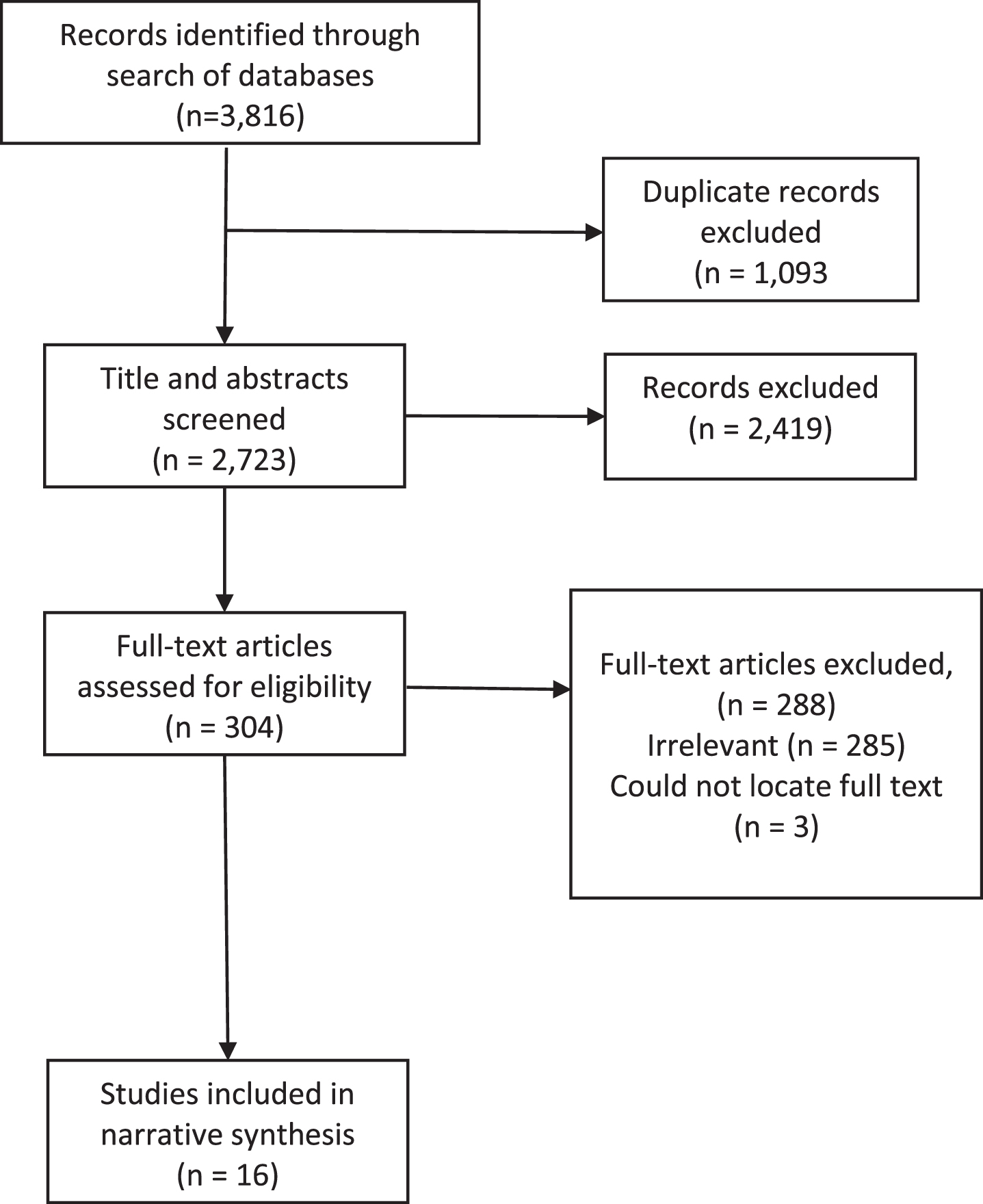
Flow diagram of article selection process.
There was an equal distribution of studies published before 2005 and studies published more recently between 2006 and 2018 (Table 2). The majority of studies used quantitative survey designs (n = 8; 50%) [15–22], while five studies employed a qualitative research design including in-depth interviews and/or focus groups [23–26] and one using participant observation (ethnographic design) [27]. Three studies were not explicitly mixed methods but did use a combination of quantitative and qualitative methods [28–30].
Description of study characteristics and employment-related outcomes
Description of study characteristics and employment-related outcomes
Employment experience and outcomes were the primary objective in eleven studies. These articles discussed the under- and unemployment rates of refugees [19, 22–25], quality of jobs available and secured [17, 23–25] as well as the bi-directional effects of employment and other common settlement issues such as mental health and language acquisition [15–17, 22]. For the remaining articles, employment was a secondary focus. Here, the main focus of studies was on integration experiences of refugees overall and included employment as one aspect of integration [23, 27–30].
Finally, the samples in half of the studies were focused on specific ethnic groups including four studies of Southeast Asian refugees [15–18] and one study each focusing on Burundian refugees [27], Ethiopian and Somalian refugees [28], Acehnese refugees [29], and Syrian refugees [30]. The remaining seven studies included a diverse range of refugees across different countries.
The following section provides details on key findings across the studies related to the employment experience of refugees in Canada.
Employment not commensurate with refugees’ skills and background
Nearly all of the included studies described trends in refugee’s employment since arrival to Canada. Employment rates varied and were as low as 30% in one study [30] and as high as 82% in another [19]. However, the positions secured were often precarious (part-time, temporary) and were not commensurate with a refugee’s educational background or work experience from their native country. Not surprisingly, common barriers to securing decent jobs were lack of language proficiency, credential recognition, Canadian work experience, and employment-related discrimination [19, 23–29] which led to unskilled positions. Four studies found that the majority of refugees were working in sales and service positions even though a significant proportion had arrived with post-secondary education and held professional occupations in their home country [19, 26]. Other studies found that some refugees had a desire to pursue further education and training [24, 29] or participate in volunteer and/or extracurricular activities [27] to mediate their labour market shortcomings. Another article contrasted refugees’ expectations of employment in Canada and found that the vast majority of refugees (84%) were disappointed with opportunities that did not align with the ‘rosy picture of Canada as a land of opportunities and equalities’ [28]. Further, across studies, unskilled jobs were commonly associated with limited earning potential which affected other aspects of integration including housing affordability [23] but also forced refugees to rely on social assistance beyond the one year of guaranteed government income supports [24, 26–28].
Opposite labour market barriers, social support networks emerged in a few studies as having a direct influence on helping refugees find a job [20, 30]. Particularly, refugees who used friends and family to find a job were likely to have a greater quality of employment [20] while another study noted that social networks in the job market elicited a form of discrimination in that refugees without these connections had fewer opportunities to find a job [24].
Gender differences in employment
A small number of included studies compared gender differences in employment outcomes of newly arrived refugees [16, 24] while other studies adjusted for the effect of gender [20, 21] and one study focused specifically on women [25]. Across these studies, a general trend emerged where employment rates for refugee women were lower than for refugee men even as length of time in Canada increased. One study attributed this to lower English language proficiency among refugee women [16] while another found that women expressed their preference to stay at home and take care of their family rather than pursue employment [24]. In the study focusing on women (to note, authors interviewed immigrant and refugee women with no distinction between the two groups), participants expressed frustration at not being able to find work and linked this unemployment to their identity as a newcomer but also their identity as a woman which is often devalued compared to a man. As well, living in a small province (New Brunswick, Canada) was further described as limiting job opportunities compared with larger metropolitan cities [25]. Conversely, one study on resettled refugees in Alberta, Canada, found the opposite trend where refugee men experienced greater downward occupational mobility when compared to refugee women. Specifically, refugee men were more likely to occupy blue-collar jobs on arrival in Canada while women were employed in upper status occupations likely as a result of higher education [19].
Employment conditions and health
Studies addressing working conditions reported differences in work-related exposures [21] and adverse associations with mental health and well-being [15, 22]. Longitudinal survey data from Canada reported that, both 2 and 4 years after arrival, refugees were more likely to be employed in occupations with greater physical demands compared with their jobs prior to arrival in Canada [21]. Using the same survey data, additional analyses found that refugees experiencing any dimension of over-qualification (on education, experience or expectation) were significantly more likely to report a decline in mental health [22]. Further, studies across The Refugee Resettlement Project, found that refugees who were chronically or newly unemployed experienced higher depression levels compared with stably employed and refugees who found jobs between each study time period [15] and, the inclusion of English language proficiency mediated probability of employment anddepression [18].
Discussion
The evidence presented in this scoping review suggests that refugees have a subpar experience with the labour market in Canada. A variety of factors, including labour market barriers (language proficiency, lack of Canadian work experience, social support), gender roles, and over-qualification were found to be associated with unemployment, low prestige occupations (e.g., precarious, low waged) as well as adverse affects on health and well-being. These findings are consistent with existing integration models used in migrant research where employment is considered an objective functional outcome that is influenced by a variety of conditions [31, 32]. However, unlike other immigrant groups, refugees may experience these challenges more acutely as their life course and transitions to foreign labour markets are chaotic and unplanned including traumatic experiences of displacement and life in refugee camps and neighbouring countries, the lengthy process to seek asylum in a different country, and long-term disruptions in education and career [32–34].
In many of the reviewed studies, refugees described the arduous transition to a new country and being grateful for the opportunity to seek protection but, disappointed in job options and opportunities for career advancement especially in the case of refugees with post-secondary education or higher. Identified strategies to mediate labour market shortcomings appear to be similar to those of other refugee populations globally such as accessing social networks [35], further training including improving language skills or volunteering [36, 37], as well as career adaptability to other avenues of income earning such as entrepreneurship [38]. The benefits of volunteering have been found to be more beneficial towards social than economic integration [39] while entrepreneurship presents the opportunity for both social and economic integration [40]. Despite these efforts, however, refugees’ disadvantage in the initial resettlement period impacted other key aspects of integration including housing and day-to-day expenses necessitating the need for income supports beyond the guaranteed one year. Research on income earning and earning trajectories over time in fact highlight that compared with economic immigrants, refugees earn roughly 10k to 15k CA less on arrival, reaching parity with other immigrant groups about five years later [41].
In our view, one of the key challenges to employment integration of refugees moves beyond these individual-level barriers to systemic inequities in service and program provision. Particularly, it is now being recognized that settlement services and programs provided to newcomers and especially refugees are focused on deskilled and feminized jobs (in the case of refugee women) rather than a focus on skilled programs geared toward labour market needs [42]. This is because refugees have historically been considered as inferior to Canadian-born counterparts and our institutional and public policies and practices have been structured in ways to limit their economic opportunities [43]. While studies in this review did not directly examine systemic inequities, the outcomes of precarious employment and low wages point to differential treatment of refugee groups. In order to provide a better understanding of refugee’s employment integration, we argue that future research should critically consider these upstream determinants and the intersection of determinants in order to inform appropriate interventions in these systems that are suited to the needs, skills, and backgrounds of refugees.
A second finding of this review revealed that the employment experiences of refugee women were more pronounced compared with their male counterparts. Particularly, refugee women described greater difficulty navigating the job search process in Canada and competing demands in and outside the home that interfered with employment. The experiences of double day, when unskilled paid employment and domestic responsibilities intersect, have been well documented in the literature broadly among immigrant groups [44–46]. It is potentially harder, however, for refugee women to take up an identity of income earner when, in their family, that role had traditionally been occupied by men. In the reviewed studies, traditional gender roles were evidenced through presence of young children in the household and poor quality of employment for women versus men as well as delaying employment till children were older while refugee men were more concerned with securing any type of job likely to maintain their breadwinner role. Apart from one study [19], the instances where refugee women arrived with a post-secondary education or prior work experience yet remained under- or unemployed point to potential unconscious biases in recruitment and onboarding of refugee women by employers. Particularly, new research suggests that employers hold gender and cultural stereotypes of refugee women as unviable in the labour market even though gender and ethnic diverse organizations outperform organizations with dissimilar workforces [47, 48]. Recommendations put forth suggest the need for unconscious bias training within organizations and alternative recruitment strategies (e.g. work placements, task-based interviews) although effectiveness of these activities remain relatively unmeasured.
Finally, only a few studies addressed the physical working environment of refugee workers and health consequences related to employment status and work conditions. Typically, health consequences may manifest over time and are harder to investigate, partially explaining the lack of studies in this area. As well, the experiences of refugees’ working conditions and occupational health are often homogenized with immigrants [49, 50] preventing us from assessing differential experiences for refugees. While two studies in this review [21, 22] did overarchingly look at immigrants’ working conditions, they stratified results by immigrant classification highlighting greater physical demands in job tasks for refugees, potentially placing them at greater risk for work-related injuries and illnesses. And, the limited research exclusively focusing on refugee employment and health found an association between under- and unemployment and mental distress, consistent with two previous reviews [51, 52]. Possible explanations for these results are varied. First, refugees may focus on ‘survival jobs’, characterized by increased precarity and hazardous work conditions [53], on arrival as a source of income which may impede upward occupational mobility and contribute to deteriorating health. Second, refugees with higher education levels than those with lower levels of education may experience a greater gap between their job outcomes and expectations contributing to feelings of frustration, resentment and lower life satisfaction [54]. Lastly, traumatic and stressful experiences pre-migration (from time spent in refugee camps and neighbouring countries, family displacement) can influence job search processes and opportunities [55], reinforcing the association between employment and mental health and well-being.
Gaps in the literature and recommendations for future research
The review evidence highlights several directions to strengthen the body of literature on employment integration and outcomes of refugees in Canada with the aim of informing appropriate employment-related programs and services. Most studies tangentially explored refugee’s employment to describe poor quality jobs that do not commensurate with pre-migration employment while social (e.g. lack of affordable childcare) and structural barriers (e.g. settlement agency programs and services) that interact to shape employment outcomes for refugees and by gender for refugee men compared to women were seldom examined. Qualitative research may be better focused to disentangle and expand on these intersections and should be considered as seen in research on employment in immigrant groups [44]. Employment as the primary outcome of interest comprised 70 percent of included studies however, half of these drew on data from the same research projects and the scope of research was somewhat dated. More up-to-date and longitudinal research is needed to understand the long-term situations of newly arriving refugees as well as comparisons between streams of refugees over time. Particularly, the review found no studies comparing the economic situations of government sponsored (GARs), privately sponsored (PSRs), blended visa office-referred (BVORs) and refugee claimants (RCs) which is surprising given that each stream receives different sources of funding and funding structures. Briefly, GARs receive one year of financial support from the federal government through the Resettlement Assistance Program, PSRs are supported entirely by private sponsoring groups (this includes community sponsors such as settlement organizations, groups of five Canadian citizens), BVORs receive joint support from the government and private sponsors, and RCs arrive to Canada without any support and are eligible to receive a work or study permit while awaiting a decision on their claim [2]. There is also a need to expand on equity considerations such that research include interview and survey data with non-English speaking participants and racialized refugee workers from cultural minorities beyond Southeast Asia or Yugoslavia. Refugees from India, Mexico, Nigeria, and Iran, for instance, are among the top 10 permanent residents admitted to Canada from non-Western countries over the past decade [56] however no studies focused on these groups. Given that language is one of the biggest barriers to job obtainment and country of origin is known to influence human capital and other resources important in the host country, these equity considerations should be adopted in research to provide contextualized experiences. Lastly, only one study [28] included service providers as participants. Service providers including settlement agency workers and employment counselors work closely with newcomer populations and possess a wealth of knowledge concerning the challenges refugees may face in securing employment and can speak to best practices that may mitigate labour market shortcomings [57, 58]. Thus, future research should consider inclusion of these knowledge providers and users either separately or in combination with refugees to better understand employment challenges and how best to overcome them.
Strengths and limitations
To the best of our knowledge, this is the first review to explore the employment experience and outcomes of refugees in the Canadian context. However, the findings from this review should be considered in light of a few limitations. First, the review employed a scoping review protocol to characterize the existing evidence on refugees’ employment rather than a systemic review protocol which would have allowed us to critically appraise the evidence base. The identification and abstraction of literature did however follow procedures identified as good practice including dual independent screeners and verification of data abstraction. Second, the selection of articles in English and inclusion criteria of peer-reviewed studies may have led us to overlook grey literature published in reports, books or websites on this topic. Third, the focus on the Canadian context may limit generalizability to other jurisdictions with different immigration systems, policies, and services to help refugees economically adapt yet, other systematic reviews on migrant working conditions across similar economic structures (e.g. Europe) have found parallel results [49, 59] suggesting some level of comparability. Lastly, the review found heterogeneity of methodology used in included studies, differences in sample size, ethnic groups of interest, and assessment of employment experience and outcomes which may limit our ability to compare and combine findings. The findings presented are hence a summary of key themes and selection of information and knowledge across the studies to draw conclusions about refugee’s employment experience in Canada.
Conclusion
There is a limited evidence based on refugee’s resettlement experiences in Canada and an even smaller focus on economic integration. This scoping review sought to fill this knowledge gap and contribute to our understanding of refugee’s employment experience including barriers and challenges to securing safe and decent work and intersections of gender and health. The scope of included studies suggests that refugees potentially occupy employment positions at the lowest echelon in the Canadian labour market contributing to low earnings, minimal opportunities for career advancement and lower perceived mental and physical health. It is possible that employment conditions improve as length of time in Canada increases, but longitudinal outcomes are seldom assessed to make a meaningful conclusion. More work should be done to assess the long-term economic outcomes of refugees as well as factors outside those identified here that intersect to disadvantage or facilitate employment integration.
Funding
The authors did not receive support from any organization for the submitted work.
Conflict of interest
The authors have no conflicts of interest to declare that are relevant to the content of this article.
Code availability
Data sharing is not applicable as no data was generated or analysed.
Author contributions
SS designed and implemented the research. All authors contributed to the analysis of peer-reviewed articles for inclusion in the review. SS drafted the manuscript and ND and TK provided critical reviews. All authors approved the final manuscript.
Ethics approval
Not applicable.
Informed consent
Not applicable.
Footnotes
Acknowledgments
The authors would like to thank the University of Waterloo librarian, Jackie Stapleton, for her support on the database searches and Julia Goyal for her contribution to title and abstract screening.