




Abstract
BACKGROUND:
Teachers have had to deal with many of the negative aspects of COVID-19 over the past year. The demands associated with the sudden requirement to teach remotely, and later having to manage hybrid (both in person and online) learning may be having adverse effects on the mental and physical health of teachers.
OBJECTIVE:
To determine whether COVID-19 continued to impact teacher stress, burnout, and well-being a year into the pandemic.
METHODS:
An online survey was sent out to 5300 teachers in public and private schools, and 703 completed the survey.
RESULTS:
Stress and burnout continue to be high for teachers, with 72% of teachers feeling very or extremely stressed, and 57% feel very or extremely burned out. Many teachers struggled to have a satisfactory work-family balance (37% never or almost never; 20% only has sometimes).
CONCLUSION:
School systems must start to deal with the mental and physical health of teachers before a large number of them leave the profession.
Introduction
When teachers first enter the profession, they express idealism and enthusiasm for their new adventure. They want to make a difference in students’ learning and development, to impact society, and to feel that their own lives have purpose. Despite this initial enthusiasm, the teaching profession struggles with retention; turnover rates have risen continually in recent decades, and those who leave usually do so in the first five years [1–3]. These high turnover rates are most commonly attributed to the high level of occupational stress found in the profession; in fact, teaching has been reported to be one of the most stressful occupations in the world, especially for young, inexperienced teachers [4].
Stress is defined as an unpleasant emotional experience linked with specific environmental triggers and associated with feelings of anxiety, frustration, tension, and anger [5]. According to the Job Demands-Resources model, stress is a response to the imbalance between occupational demands on the individual and the resources he or she has to deal with those demands [6]. In other words, when demands are high and resources are low, stress and burnout are common. The occupational demands of teachers have been investigated at length for over thirty years. Not only do teachers have the responsibility of teaching students whose needs and motivation to learn vary, but they also fill an ever-changing role that is notoriously underpaid and scrutinized by the public [7]. Further, they often report little support from administration, poor relationships with colleagues, overloaded classrooms, time pressure, inadequate resources, work overload, and role conflict [5, 8–11]. Over time, these demands lead to teacher stress and burnout, which has been linked to lower self-efficacy, lower performance, lower job satisfaction, poor physical and psychological health, and turnover [12].
Although the teaching profession was already recognized as one of the most stressful, the COVID-19 pandemic brought unprecedented challenges and created new demands and stressors. By the end of March of 2020, schools in over 137 countries were closed, affecting more than 1.5 billion students around the world [13, 14]. With the sudden closure of schools, teachers were forced to shift from traditional face-to-face teaching to online teaching with only a few days’ notice. Although pre-COVID-19 evidence suggests that online teaching is not necessarily harder than conventional teaching [15, 16], it was the abrupt shift, often with little to no training, that induced stress and required more time to prepare [17]. Many teachers made this shift while also managing their own mental and physical health, caring for vulnerable family members, and home schooling their own children [18]. Further, teachers were uncertain about how long the closures would last, given the ever-changing communications from their local and national governments.
Emerging research indicates the COVID-19 pandemic took a severe toll on teachers. Teachers were not only worried about their own physical and mental health, but that of their students, especially high-risk students [19]. Further, studies investigating the impact of COVID-19 revealed that rates of anxiety, depression, and stress for teachers were significantly higher than pre-COVID-19 rates [20]. In all, the evidence points to COVID-19 adversely affecting the well-being and satisfaction, leading to increased burnout of teachers across the world [19–27]. As a result, the turnover rate for teachers more than doubled during the pandemic [28].
The emerging evidence clearly shows that COVID-19 had an immense impact on the health and well-being of teachers. What is less clear, however, is how long these negative effects lasted. Most published studies on COVID-19’s impact on teachers are based on data collected in the first few months of the pandemic [15–19, 30]. There is less published work and data examining COVID-19’s impact further into the pandemic. It may be that the negative effects were short-term while teachers initially struggled to adjust to the shift to online learning, but these effects tapered off as teachers eventually acclimated and found a new rhythm and schedule. Alternatively, the negative effects may be longer lasting, given that the pandemic was fraught with uncertainty about its duration and caused shifts in teaching modality as students returned to school in the fall. The current study aimed to determine whether COVID-19 continued to increase teacher stress and burnout and decrease well-being a year into the pandemic.
Methods
Study design
The study was a cross-sectional online survey that was administered in the spring of 2021 (for two months: April-May). The survey was designed to obtain the perceptions about pre-COVID and during-COVID conditions for teachers in public and private schools in the Greater Cincinnati area. The survey was sent out to teachers through a link attached to an email. The protocol and survey were reviewed and approved by the University of Cincinnati’s Institutional Review Board (Protocol number: 2021-0165).
Study population
Schools were selected from large school districts (i.e., those having multiple schools at all levels), mid-size districts, and small districts (i.e., those that had only one each elementary, middle, and high school). Public and private schools were included, and both parochial and non-parochial schools were represented among the private schools.
Once the schools were selected, email addresses for 5300 teachers were obtained from online searches of the school websites. An initial email was sent to all 5300 teachers in mid-April, and a follow-up reminder email was sent 2 weeks later. In total, 703 teachers completed the survey. See Table 1 for a complete description of the demographics of the subject population: age, gender, race and ethnicity, marital status, education, and teaching experience. The majority of the respondents were female (578 or 82%), Caucasian or white (668 or 95%), married (546 or 78%), and have a master’s degree (538 or 77%). On average, teachers had 18 years of experience with 11 years at their current school. Figure 1 provides a summary of the distribution of surveys for grade level, including the last bar that shows the number of teachers who teach multiple grades. More than half the teachers (385 or 55%) taught multiple grades, which occurred mostly in the middle and high schools (94 or 24% and 257 or 67%, respectively). In general, about 80 teachers per elementary grade, 100 teachers per middle school grade, and 215 teachers per high school grade completed the survey.
Demographics of the teachers who completed the survey
Demographics of the teachers who completed the survey
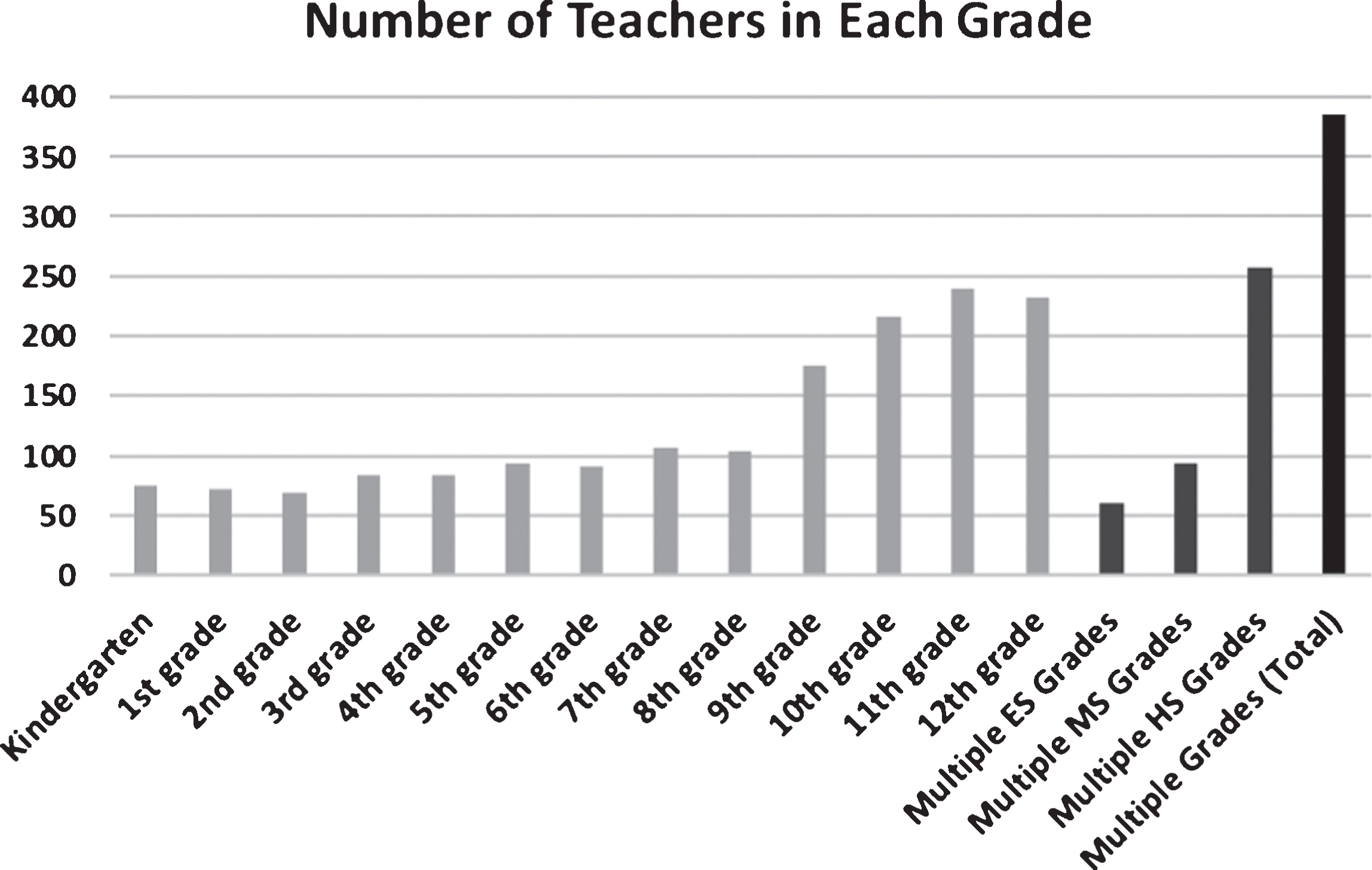
Number of teachers completing the survey in each of the grades with multiple grades representing teachers who teach across grade levels. ES: Elementary, MS: Middle school, HS: High school, Total: Number across all schools.
A survey was developed using REDCap (Research Electronic Data Capture) software (Cincinnati Children’s Hospital Medical Center, Cincinnati, OH, USA). The software allows surveys to be customized and distributed through an electronic link that keeps all data anonymous and confidential. A 50-item survey inquired about pre-COVID-19 and during-COVID-19 conditions for teachers as well as demographics (see Table 2 for a complete list of the survey items and corresponding answer options). The survey took questions from three well-established surveys inquiring about stress, burnout, and family-work balance [30–33].
Components of the survey administered by online survey to the teachers in the Greater Cincinnati area
Components of the survey administered by online survey to the teachers in the Greater Cincinnati area
Descriptive statistics were determined for each outcome variable, including averages, frequencies, and percentages. Analysis of variance (ANOVA) procedures using the SAS statistical package (Carey, NC) were used to identify whether significant differences existed between pre- and during-COVID-19 measures as well as a function of grade level (interaction between pre/post and grade level).
Results
COVID-19 had significant impact on the teaching practices where virtual meetings were non-existent (1–10% of time and less than 1–2 times per week) prior to COVID-19 and increased to be widely used (51–60% of the time and more than 8.5 times per week) (Fig. 2). The perception of time to complete prepping for class, teaching class, and grading for class were significantly different (p < 0.0001) for pre-COVID and during-COVID-19 (Fig. 3). Time to prep for class was greater during-COVID-19 (above 11 to 20 hours on average) than pre-COVID-19 (below 11 to 20 hours on average). A similar trend was found for grading (pre < during) but an opposite trend was found for time teaching (pre > during).
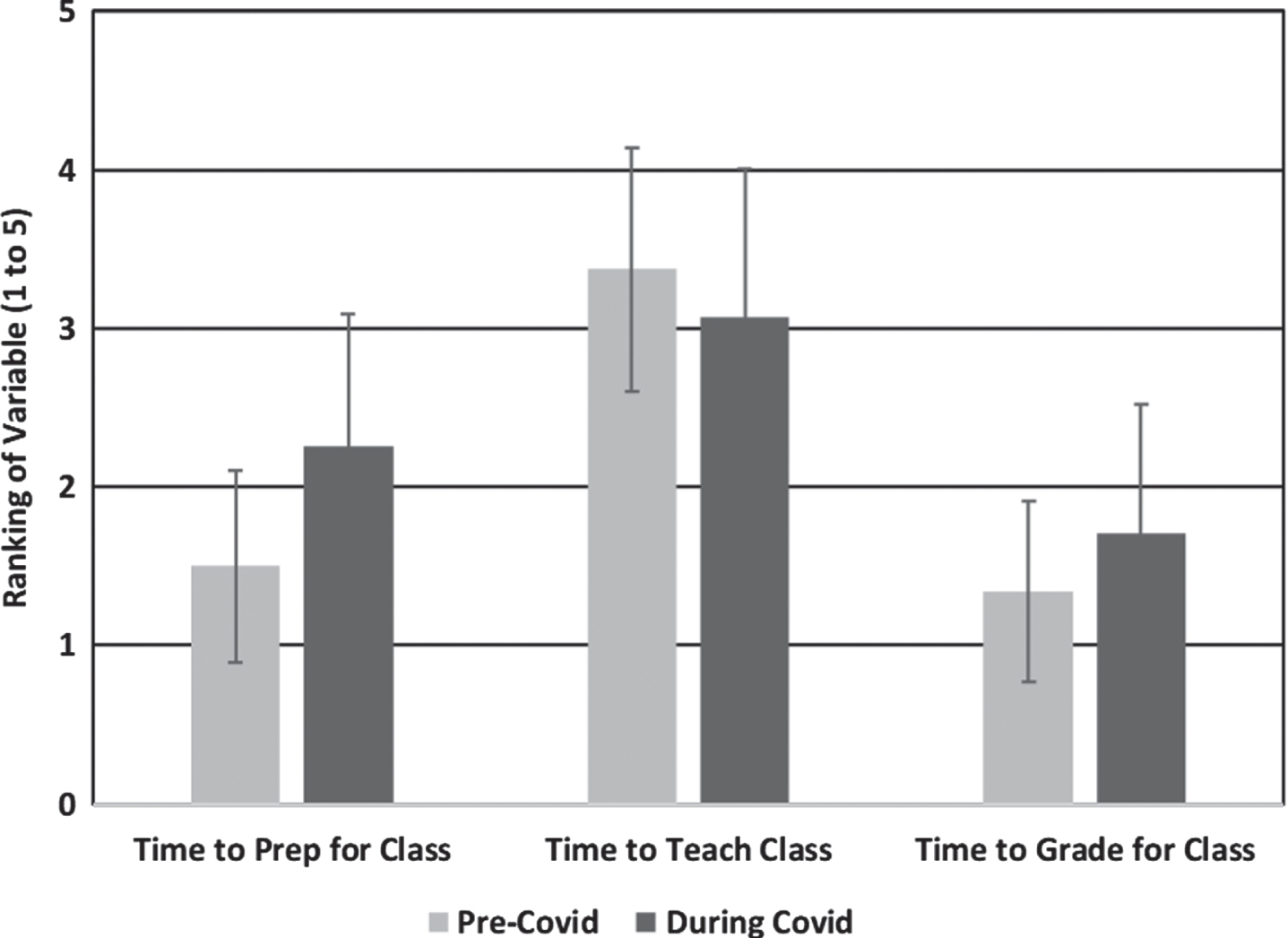
Pre- and during COVID perceptions of Time to prep for class, Time to teach class, and Time to grade for class (1: less than 10 hours, 2:11 to 20 hours, 3:21 to 30 hours, 4:31 to 40 hours, 5: more than 40 hours). All differences between pre and during are significant at p < 0.05.
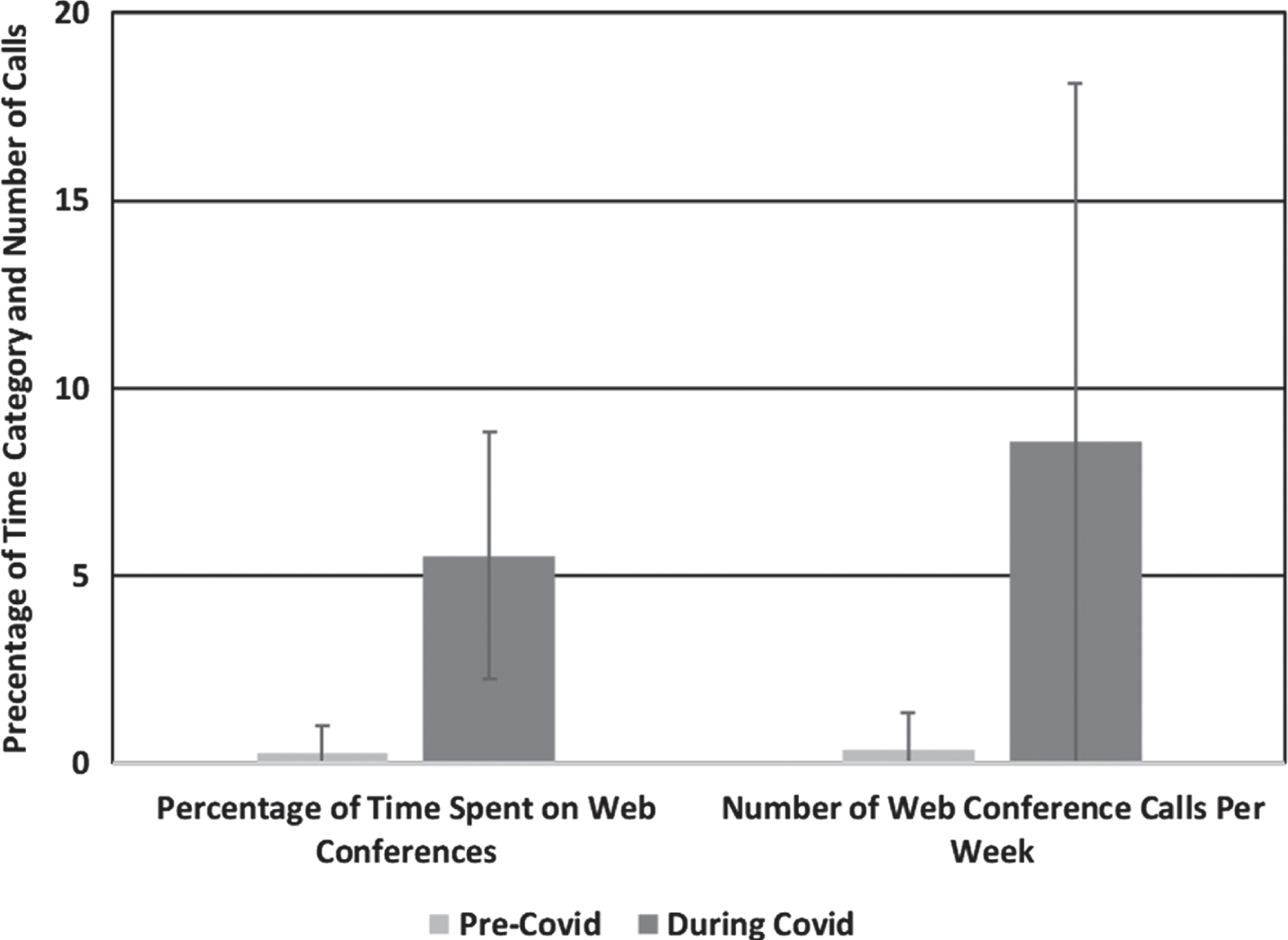
Pre- and during COVID perceptions of the percentage of time spent on web conferences (0: None, 1: 1 to 10%, 2: 11 to 20%, 3: 21 to 30%, 4: 31 to 40%, 5: 41 to 50%, 6: 51 to 60%, 7: 61 to 70%, 8: 71 to 90%, 9: 81 to 90%, 10: 91 to 100%) and number of web conference calls per week. All differences between pre and during are significant at p < 0.05.
COVID-19 appeared to have a significant impact on the stress and burnout levels of teachers as well (Fig. 4). On average, the stress and burnout levels significantly (p < 0.0001) increased during-COVID-19 where stress was rated slightly to somewhat stressed pre-COVID-19 and very stressed during-COVID-19 while burnout was rated slightly burned out pre-COVID-19 and somewhat to very burned out during-COVID-19. Teachers were also less able to manage stress and maintain a good work-family balance during-COVID-19 as compared to pre-COVID-19 levels (See Fig. 4). None of the outcome variables was found to be significantly (p > 0.05) impacted by the level of school (e.g., elementary, middle, high school) indicating the grade level taught by the teacher had no significant impact on their stress, burnout, or work-family balance.
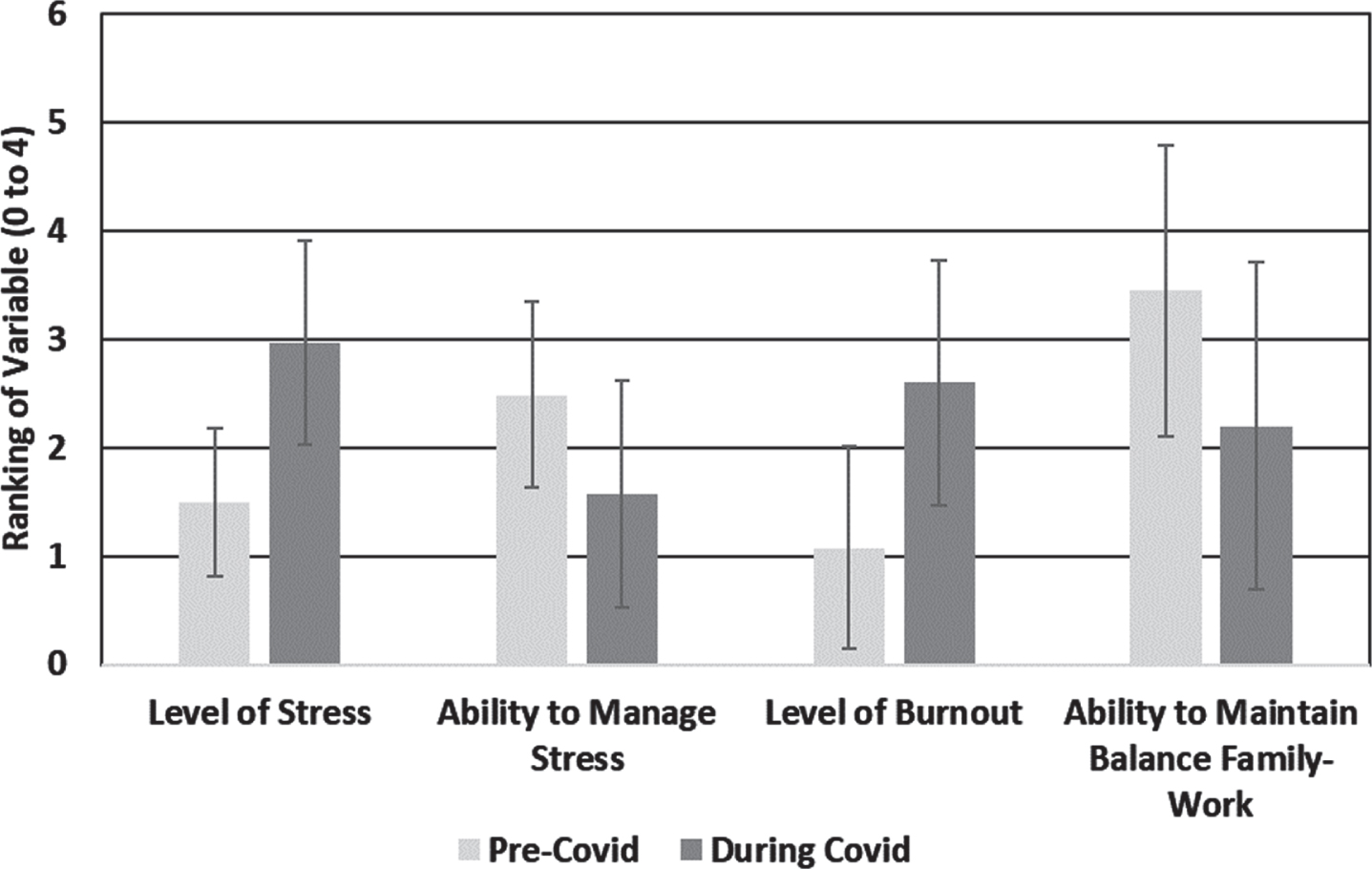
Pre- and during COVID perceptions of stress (Extremely stressed: 4, Very stressed: 3, Somewhat stressed: 2, Slightly stressed: 1, Not at all stressed: 0), Management of stress (Extremely well: 4, Very well: 3, Somewhat well: 2, Slightly well: 1, Not very well: 0), Burnout (Extremely burned out: 4, Very burned out: 3, Somewhat burned out: 2, Slightly burned out: 1, Not at all burned out: 0), Ability to maintain family-work balance (Strongly agree: 5, Moderately agree: 4, Slightly agree: 3, Slightly disagree: 2, Moderately disagree: 1, Strongly disagree: 0). All differences between pre and during are significant at p < 0.05.
During COVID-19, teachers rated the ability to meet a good work-family balance to be difficult (Table 3) with all factors rated to be slightly impacted (e.g., work keeps teacher from family, teacher is more frazzled). The perceptions of the teachers also indicated that conditions during COVID-19 adversely impacted teaching quality, patience with others, ability to focus, physical and mental health, and ability to separate work and family (See Table 3). In other words, teachers were less able to balance work and family, manage stress, and stay on top of things.
Impact of COVID-19 on teachers’ well-being
The impact of COVID-19 may have been magnified for teachers with children at home (see Table 4). About 63% of the teachers reported having at least one child at home, with an average of 1.4 kids per teacher (total of 961 kids including 256 with no children, 106 with 1 child, 213 with 2 children, 97 with 3 children and 31 with 4 or more children). The percentage of teachers who had children at home learning remotely ranged from 1% to 78% depending on the children’s age group, and the percentage of teachers with kids needing assistance ranged from 6% to 80%.
Number and percentage of own kids at home for the teachers
Teachers appear to be adversely impacted by COVID-19 and continue to be so 12 to 14 months into the pandemic. Technology played a huge role in the teaching effort where teachers went from almost no online meetings per week to teaching almost 9 times online per week. The perceived time dedicated to prepping classes and grading increased while time to teach decreased. This perception seemed to directly impact the mental and physical state of the teachers. Stress and burnout continue to be high for teachers with 72% of teachers feeling very or extremely stressed and 57% feel very or extremely burned out. These are alarming levels and appear to be higher than other studies [19, 25–27]. Burnout leads to turnover, which has more than doubled for teachers during the COVID-19 pandemic [28]. While the COVID-19 pandemic is starting to wane, and schools are returning to in person teaching, teachers still encounter ever changing health guidelines and policies contributing to stress and burnout feelings which may manifest in adverse health outcomes and future turnover. School systems will need to address these issues and develop interventions for teachers to help them cope, whether this is for the COVID-19 pandemic or a future pandemic.
Several researchers have conducted research into interventions for stress and burnout for teachers. Traditional cognitive-behavioral approaches focus on specific, manual-based treatment protocols [34] and are feasible for workplace wellness programs as they promote general health and well-being for employees [35]. More recently, researchers have found that mindfulness meditation is an effective tool as it reduces the negative effects of stress that lead to burnout [36]. Because mindfulness targets symptoms associated with stress but may not have the stigma associated with help-seeking for mental health, mindfulness is proving to be an effective stress recovery tool for teachers [29, 37]. However, school systems need to go beyond individual-level interventions to also develop organizational and individual-organizational interface (IOI) interventions that reduce the sources of teacher stress. IOI interventions often involve collaborative problem-solving and educator capacity building activities that help workers to meet or change work demands [38] whereas organizational interventions have been designed primarily to improve or support professional practice, support job redesign, and/or improve workplace support and climate [39].
The stress and demands during COVID-19 ap-peared to have significant impact on the family life of the teachers. Many teachers struggled to have a satisfactory work-family balance (37% never or almost never; 20% only has sometimes). Many of the teachers not only had to deal with online courses with their students, but also with their own children. At the time of the survey in spring 2021, 29% of the teachers had kids at home who were learning remotely and 41% who required assistance. The bottom line is that teachers have many demands on them both in school and at home, which appeared to be exacerbated by COVID-19.
One of the interesting results was the lack of significant difference between grades or even school level (elementary, middle, and high school) for the various stress, burnout, and family-work balance outcomes. The lack of significance was somewhat surprising in that our expectation was that online teaching would place different demands on the teachers at different grade levels. The results could be an indicator that although the stressors may have varied across the grade levels, the resulting stress and burnout from the stressors were the same. For example, it is more difficult to keep young students’ attention than older students’ attention. The results indicate the stress and burnout on the teachers appear to be more uniform than previously thought.
While many of the results are interesting, there are several points that need to be taken into consideration when interpreting the results. First, the survey was completed by a small portion of the teachers solicited (13%), which means it is a sample of convenience. While the study population was robust with respect to ages, grade levels and resulted from diverse school selection, there is no way to know who completed the survey (it was anonymous) and by which school districts respondents were employed. The survey was sent out to a wide variety of teachers at private and public schools of varying sizes across the Greater Cincinnati area. Second, the survey asked about the perceptions of the teachers regarding pre-COVID circumstances (retrospective). Retrospective perceptions have the potential for recall bias [40]. Third, timing of the study was late into the COVID-19 pandemic, which may have affected the assessments of stress and burnout. The results would mostly represent the cumulative effects of the COVID-19 pandemic. Alternatively, the assessments of stress and burnout are current levels and may be lower, as some teachers may have adapted to the new normal, where higher levels might have been present earlier in the pandemic as teachers adjusted to online or hybrid teaching.
Conclusion
While the results of the study relied on the perceptions of the teachers, which need to be objectively verified, there are some indications that teaching is one occupation that has been impacted by COVID-19 and the necessity to teach online. Even as we are emerging from the pandemic and getting back to normal, teachers are still struggling from stress and lack of family-work balance. As a result, teachers are potentially suffering from elevated burnout that may lead to high turnover rates in the near future. School systems must start to deal with mental and physical health of teachers before a large portion of them leave the profession.
Conflict of interest
The authors have no potential conflicts of interest to disclose.
Funding
This work was partially supported by the National Institute for Occupational Safety and Health through the Intergovernmental Personnel Act (IPA) Agreement. Partial support was also provided by the CCTST at the University of Cincinnati, which is funded by the National Institutes of Health (NIH) Clinical and Translational Science Award (CTSA) program, grant 2UL1TR001425-05A1.