




Abstract
BACKGROUND:
Telework has been widely studied by public and private organizations; however, in ergonomics, studies that focused on this topic are still sporadic.
OBJECTIVE:
Thus, this article endeavours to systematize the qualified scientific research related to ergonomics and teleworking to determine the main benefits and disadvantages and to identify the main issues addressed by authors.
METHODS:
A thorough research was conducted in the Scopus/Embase and Web of Science databases for this review. The following descriptors were used for the cataloguing of articles: “teleworking”, “telecommuting”, “telecommuters”, “home office”, “ergonomics” and “human factors”. 36 studies were selected.
RESULTS:
The study highlights four relevant questions in the scientific literature: a) where is the discussion of these themes consolidated; b) what are the main descriptors related to the discussion; c) which journals and conferences establish a scientific debate on the topic; and d) what are its main advantages and disadvantages.
CONCLUSIONS:
Results suggest that telecommuting can be a valuable tool for balancing professional and family life, which helps to improve the well-being of workers; however, several factors can influence the overall remote working experience which leads to the need for companies to adopt unique strategies reflecting their unique situation.
Introduction
Ergonomics has two general objectives: the first one refers to organizations and their performance such as efficiency, productivity and quality. The second objective is people-centred, focusing on safety, health, and comfort. Furthermore, ergonomics also emphasizes the fundamental understanding of people as well as their interactions and applications in order to improve these interactions [1, 2].
It is possible to argue that a positive change in productivity is intrinsically linked to the conditions of safety and comfort that organizations provide for their members. This conception can be associated with the development of new information and communication technologies (ICT) that contributed to bringing innovation to work organization such as teleworking, telemarketing and remote teamwork through communication using computers and mobile devices [3].
Telework, also known as remote work, is gaining popularity and becoming a common feature in the market due not only to advances in digital technology, but also the changing attitudes towards where and when work should be performed and how performance should be measured.
To clarify the discussion about the topic, telecommuting is defined as the organization and/or execution of tasks performed away from the central offices or production facilities of organizations for a certain period in pre-established work schedules. To this end, information and communication technologies (ICT) are used to establish communication between employees and to respond to the demands of the organization remotely [4–7].
Ergonomics research has not yet focused on the phenomenon of teleworking, such as the study of home office ergonomics. Thus, questions about the responsibility to ensure optimal ergonomic conditions in the home office are still not addressed [3]. However, teleworking is already identified as a significant issue for future research in ergonomics [8].
Due to the importance of such topic, public and private organizations have studied teleworking and flexible working arrangements. The empirical results from these studies show that teleworking is not only beneficial to individuals and their organizations, but to society as a whole [9].
Studies developed in the United States, India and Southeast Asia (especially in Malaysia) utilizing the National Health Interview Survey (NHIS), Cornell Musculoskeletal Discomfort Questionnaire and Rapid Upper Limb Assessment (RULA) protocols indicate that office workers can develop musculoskeletal disorders associated with age, sex and Body Mass Index, including demographic, occupational and psychosocial factors; which could compromise the quality of working life of these professionals, demanding an ergonomics oriented intervention to provide adequate comfort in their work activities. This group of workers, given the regular use of information systems that allow remote work, could potentially benefit from telework as a new socio-technical system to promote life quality at work [10–12].
The concepts of Quality of Working Life (QWL) and work-life balance are not new; a definition has already been made explicit in terms of techniques and approaches used to improve work, such as job enrichment, empowerment, self-managed teams, and work management committees [13, 14]. The expansion of QWL includes workplace resources that can affect employee productivity and satisfaction, such as compensation systems, workflows, management styles, and the physical work environment [15]. This article aims to develop systematization of qualified scientific research related to ergonomics and teleworking in order to determine the main benefits and disadvantages commonly found, as well as to identify the main issues addressed associated to productivity, performance and comfort in the execution of labour activities.
Methodology
Scopus/Embase and Web of Science were reviewed initially on March 26, 2018 and once again on November 16, 2018; no date restriction was established to the articles found during research. Table 1 presents the keywords used for the systematic review.
Descriptors utilized for database search.
Descriptors utilized for database search.
In order to ensure an in-depth research, besides the terms “teleworking” also “telecommuting”, “telecommuters” and “home office” were utilized. In relation to ergonomics, the term “human factors” was also utilized. Figure 1 clarifies the methodological path described in this research to select articles for review.
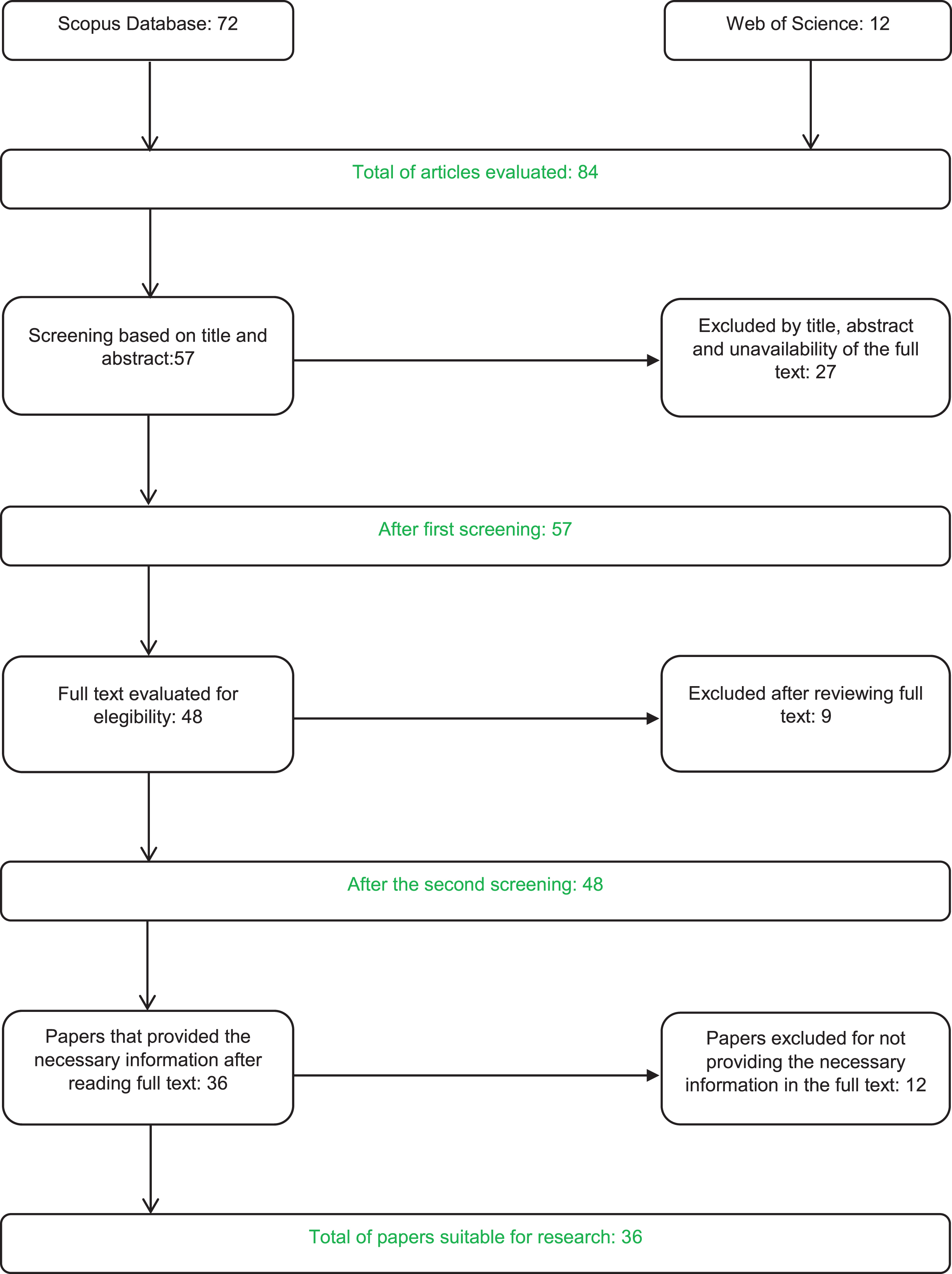
Methodological course for selection of articles.
Titles and abstracts were independently reviewed by three different researchers. For this study, the Science Direct database was not analysed because it is indexed to Scopus. Google Academics was also not considered due to the authors’ preference for peer-reviewed databases.
The present review has systematized the following indicators from the studies chosen for evaluation and which were available in the databases as a full text: authors, year of publication, periodical or conference proceedings, JCR (Journal Citation Report) and SJR (Scimago Journal Rank) of the journal or conference proceedings, summary, keywords, research methods, country in which the publication was developed, advantages and disadvantages of teleworking, in addition to providing a space for the reviewers who authored this study to make additional observations (sometimes the limitations of the studies analysed).
During the review process of the full texts, some studies were excluded because they did not meet the following indicators: (1) exposition of the advantages and disadvantages related to telework and (2) presentation of the research development location. It should be emphasized that the quality of the methodology was not a determining factor for the exclusion of studies returned by the research. At the end of the selection process, 36 scientific articles met the established requirements and were completely revised.
Throughout the evaluation of the results acquired from the keywords presented in the methodology, there was evidence that the discussion of ergonomics and telework is consolidated in the United States and Europe and a key subject of debate in prominent specialized journals that discuss engineering, psychology, and workers’ health and safety. Figure 2 shows the countries in which the work of this systematic review was published.
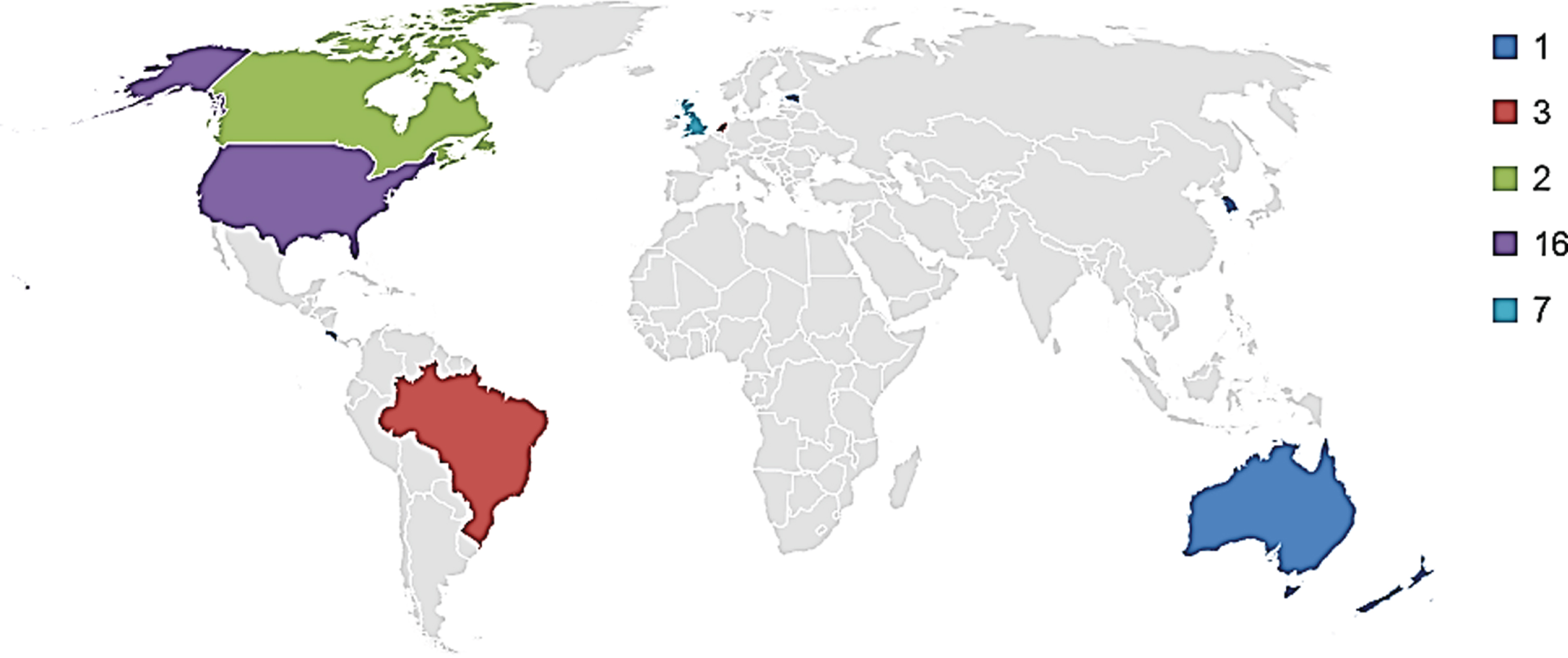
Number of publications by countries (systematized articles).
It is possible to perceive a growing interest in research related to telework in Latin American countries, especially in Brazil; given that the conceptual changes about the different ways of work organization is related not only to changes in the dynamics of work aimed at increasing productivity, but also to the need of preserving the bonds between employees and employers, especially in Brazil wherein the labour law is strictly enforced in order to discipline this relationship. In Fig. 4 it is possible to see a schematic representation of the main keywords that are related to the subjects mentioned and were identified in the databases.
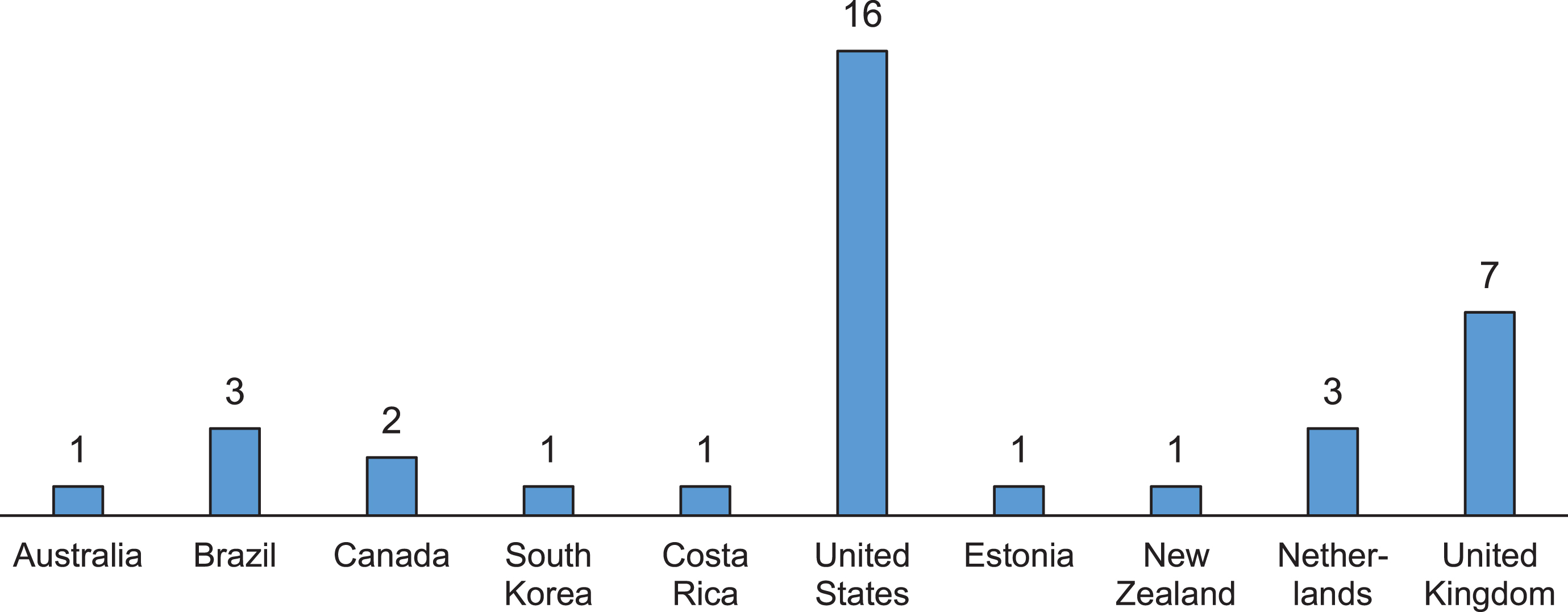
Distribution by countries of publications systematized in the review.
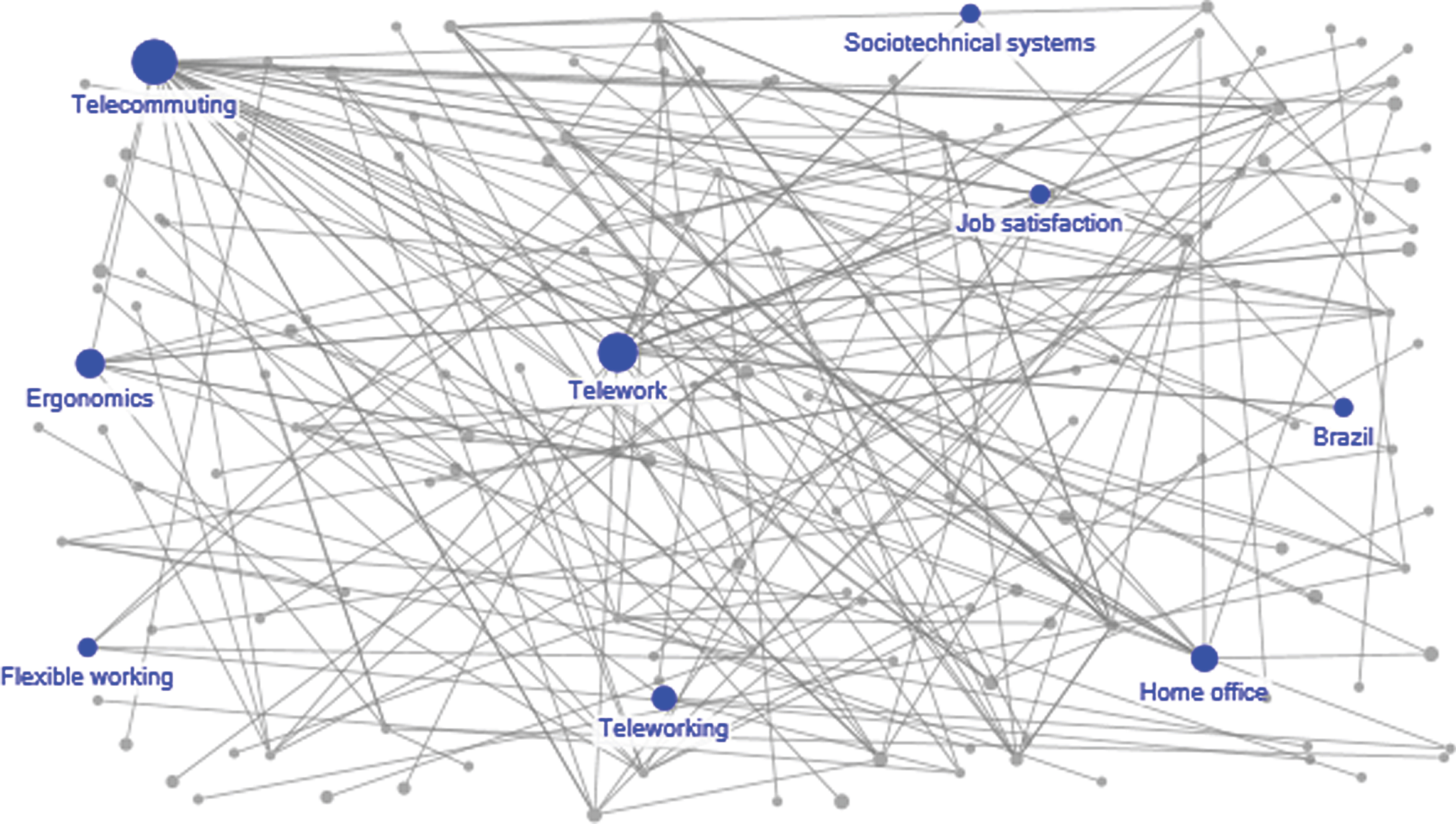
Keywords found in the database research.
The terms “telework”, “telecommuting” and “ergonomics” are the ones with the greatest number of references. To a lesser extent, studies on “job satisfaction”, “sociotechnical systems” and “flexible working” are also evidenced. As a result of this, it is possible to identify a convergence amongst specialists who study these issues on two interdependent points: a) the ever growing flexibility on labour relations imposed by the teleworking regime and b) the need of adequacy of work conditions, without alienating the worker from the perceived labour bonds.
Following such trend, conferences and qualified journals of high impact have been a breeding ground for scientific debate on the subject of the present review. Table 2 lists the journals and conferences whose articles are cited in the current work and their respective indicators. Figure 5 shows the journals that provided the evaluated works as complete texts for systematization and their respective citation frequencies in this study.
Journal Citation Report and Scimago Journal Rank on the journals referred in the present review
All the journals presented in Table 2 and Fig. 5 have a multidisciplinary scope, which reinforces the idea that there is a wide range of professionals and researchers interested in understanding telework and its implications. In Table 3, it is found a synthesis of the advantages and disadvantages identified in some of the works systematized in the present research. It could contribute to the scientific understanding of the consequences of adopting Telework, whether within the workers’ professional or personal sphere.
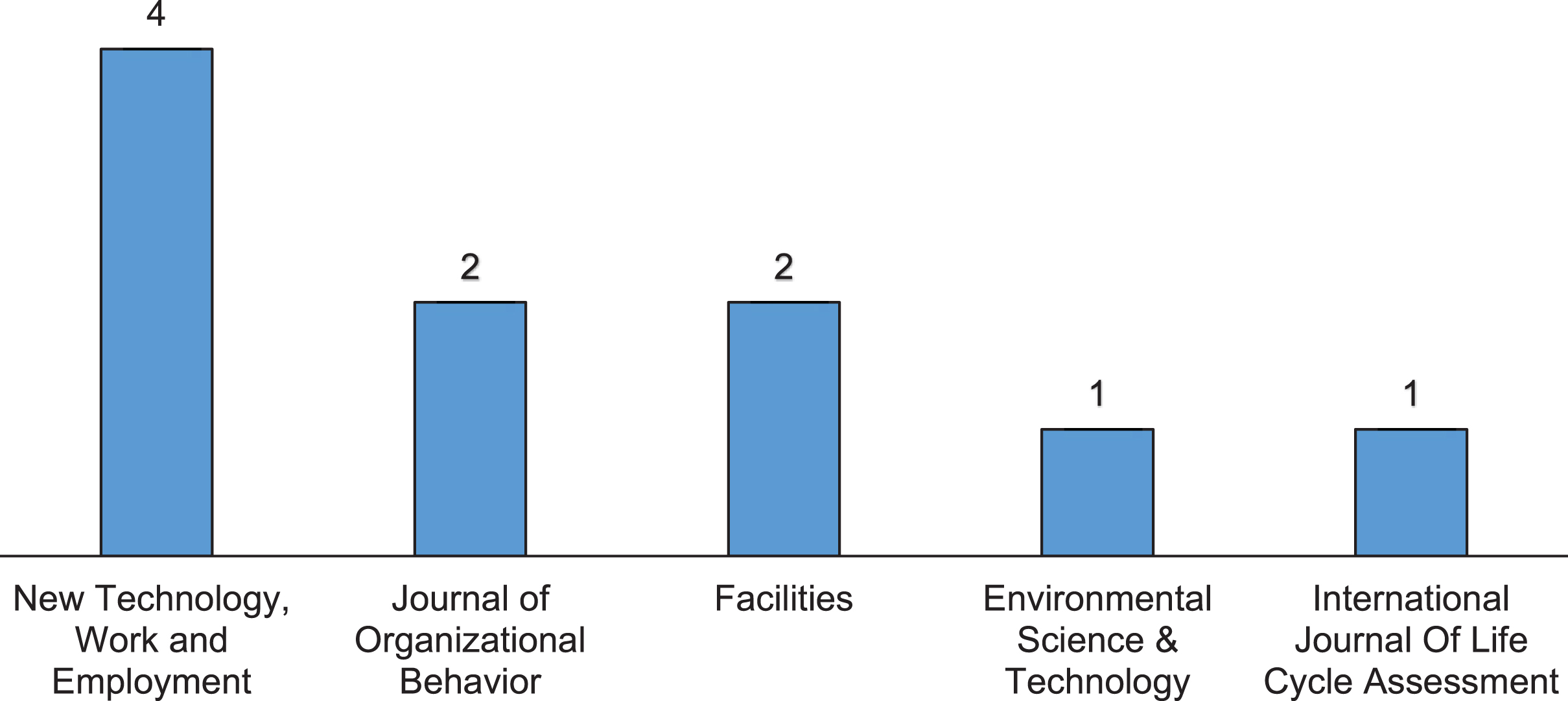
The most cited journals in the systematic review (full papers).
Advantages and disadvantages of teleworking
The discussion is centred on the use of protocols that assess the evaluation of the respondents’ perception in relation to teleworking practices in tele-service organizations. The previously reported results suggest that part-time telecommuters experience better emotional and motivational outcomes on the days that they work from home than on the days when they work in the office.
Time flexibility and reduction of displacement and air pollution correspond to 30.51% of the mentioned advantages, this last convenience, besides bringing benefits to the employee who will avoid long distances and stress in traffic, contributes to the reduction of environemnet pollution, which is part of a socially responsible management practice. Isolation and conflict between work and family life correspond to 43.10%, of the cited disadvantages, being quoted virtually by all authors; amongst the observations presented; one way to avoid their occurence is to understand the worker’s profile and the their needs, in order to be able to see if teleworking will be beneficial to the employee and, consequently, to the employer.
The teleworking situation reinforces the self-image of responsible, committed, independent and autonomous professionals/individuals; for the youngsters, it can also represent an opportunity for professional maturity. The reduction of direct supervision, as well as the supporting infrastructure provided by the organization result in more autonomy, increased responsibility and further opportunities to demonstrate performance and value.
Flexible working hours and the possibility of avoiding commuting have a positive influence on the balance between family and work life. The results of our review show that work intensified, but this is done in a more pleasant environment, which helps to increase productivity.
Notably, amongst workers with high levels of control of working time, labour requires a higher degree of concentration and may be associated with a greater need for recovery on home office days, as well as on working days. As a result of this, the beneficial effect of working at home on the need for recovery is reversed, and the days at home are no longer relaxing. An ideal level of control of working time on days at home may prove to be more effective in buffering the effect of labour demand. Overall, the articles consulted suggest that employers should consider the conditions under which the benefits of part-time telecommuting can be maximized.
Criticisms of teleworking are basically directed at the excess of working hours without considering the mental load of work, the transfer of costs, the isolation of the workers and the impact on their social life and the question of the invasion of family space by work. The discourse of entrepreneurship itself, according to the authors consulted, is able to accommodate the issues of overwork and cost transfer.
The current research present two main limitations: (1) Notwithstanding the pacific points on the scientific literature about the positive and negative aspects of teleworking, it seems that there are an almost unlimited number of factors that may change research results on this subject such as economic, social, psychological, cultural, technological and biological. Workers and organizations may react very differently to teleworking based on those factors, rendering generalizations as mere rhetorical mechanisms. For instance, the very relationship that remote workers have with their families may, to a certain extent, dictate if their remote working experience is positive or not, which is beyond the scope of any ergonomic study. (2) With the current pressures on remote work and social distancing placed by the Corona Virus pandemic, it is impossible to evaluate as of now if any likely changes will be a reflex of contingencies that should be reversed once society goes back to a normal state, or if the transformations will be deeper and, thereby, permanent; changing the very paradigms that guide our basic understanding about remote work.
The COVID-19 outbreak may be a force for permanent change on telework and overall work relations as much as other mega forces such as technological disruptions in communication and the very globalization of the economy.
Conclusions
Future research can explore the impact of telecommuting in other areas of life, including health, job satisfaction, job performance, operational cost reductions for both workers and organizations, social and ecological impact. The present study showed that telecommuting can be a valuable –yet not infallible –tool for balancing work and family life, which helps to allocate work more evenly to couples and improves their well-being. However, it is necessary more in-depth future researches on the topic, considering personal, business and social spheres.
Conflict of interest
None to report.
Footnotes
Acknowledgments
This study was financed in part by the Coordenação de Aperfeiçoamento de Pessoal de Nível Superior - Brazil (CAPES) - Finance Code 001.