




Abstract
BACKGROUND:
Physical activity (PA) holds profound implications for the holistic development of college students. However, students with chronic diseases or physical disabilities experience significantly limited PA during adaptive sports.
OBJECTIVE:
This study aims to investigate the relationship between physical activity and Functional Movement Screening (FMS) among university students who participate in the adaptive physical course.
METHODS:
36 university students (from the adaptive physical course) completed the International Physical Activity Questionnaire-Long Form (IPAQ-L). Body measurements and FMS were assessed. Correlation analysis and
RESULTS:
The results show that gender, PA, and BMI significantly influence FMS scores in students participating in adaptive physical courses. FMS score is significantly negatively correlated with BMI and significantly positively correlated with PA. The FMS score for males, as well as the scores for Trunk Stability Push-Up and Rotary Stability, are significantly higher than those for females.
CONCLUSION:
University students in adaptive physical courses can benefit from increased PA and FMS scores. Improving functional movement and enhancing physical activity are crucial for promoting overall health in this population.
Introduction
Since China’s initiation of economic reforms and opening-up policies, there has been tremendous development in higher education, with a continuous increase in the number of university students [1]. However, as the student population expands, new challenges and issues have emerged. One notable concern is the health of university students [2]. Particularly those who have chronic diseases or physical disabilities. Based on the Disability and Health Overview released by the CDC, A disability is any condition of the body or mind (impairment) that makes it more difficult for the person with the condition to do certain activities (activity limitation) and interact with the world around them (participation restrictions) [3]. In China, students of this type will collectively participate in adaptive physical education courses organized by the school to prevent further injury.
According to statistics from the China Disabled Persons’ Federation (CDPF), by the end of 2010, the total number of disabled individuals nationwide had reached 85.02 million [4]. In 2020 and 2021, the number of disabled candidates admitted to regular higher education institutions was 14,446 and 14,559, respectively, indicating a upward trend in enrollment of disabled candidates [5]. The quality of life and learning abilities of this demographic have gained widespread attention, particularly in the context of physical activities. The university stage is a crucial period in life, signifying not only academic challenges but also a pivotal moment for comprehensive development on physical, psychological, and social aspects. During this stage, establishing healthy lifestyle habits is essential for future overall well-being. Physical activity (PA), as an effective means of maintaining both physical and mental health, holds profound implications for the holistic development of college students. Extensive research has validated the numerous benefits of PA across various domains. In terms of cardiovascular health, PA has been shown to contribute to improved heart function, reduced blood pressure, and decreased risk of cardiovascular diseases [6]. Furthermore, engaging in PA has positive effects on mental health by releasing endorphins, which aid in mood improvement and alleviate symptoms of depression and anxiety [7]. Moreover, there exists a close relationship between PA and cognitive function, thereby enhancing executive function and memory performance among college students [8]. Additionally, PA plays a crucial role in stress management, assisting university students in effectively coping with academic and life pressures, enhancing their ability to face challenges [9]. Lastly, PA serves as a social platform, facilitating the establishment of friendships and the enhancement of interpersonal relationships among college students [10].
However, due to restrictions imposed by their physical health conditions, students with chronic diseases or physical disabilities experience significantly limited PA during adaptive sports. Like their healthy peers, they need to attend regular academic courses to complete their studies on schedule, resulting in increased sedentary time. Research indicates that physical inactivity is a significant independent risk factor for chronic non-communicable diseases [11]. It may also increase the risk of obesity, metabolic disorders, social isolation, reduced workforce participation, and decreased quality of life [12]. Therefore, it is necessary to conduct an investigation into the levels of PA among students participating in adaptive physical education courses.
Functional Movement is a quantitative assessment of the movement quality in a clinical context [13]. It is typically evaluated using the Functional Movement Screen (FMS). FMS, as a widely employed method for assessing individual physical function and motor abilities, is widely employed across different age groups and populations. It evaluates the status of an individual’s physical function by assessing their performance in specific movements [14]. Functional movement serves as the foundation for PA, and engaging in exercise with dysfunctional movement patterns can result in motor injuries [15]. Current research indicates a correlation between lower FMS scores and higher Body Mass Index (BMI) [16]. Additionally, FMS scores show a positive correlation with participation in exercise participation [17]. For university students participating in adaptive physical education courses, their physical functions may differ from those of physically healthy students, which may impact their performance in FMS.
In summary, this study aims to provide a more comprehensive understanding of the PA levels and FMS performance among university students in Adaptive Physical Courses, offering more effective health management and rehabilitation measures, contributing positively to the enhancement of the physical health and quality of life for these students.
Method
Participants
The recruitment process for this study took place within an Adaptive Physical Course at a university in Beijing. This course is specifically designed for two types of students. The first group includes individuals with suboptimal physical health or sports injuries, who are unable to engage in high-intensity physical activities. The second group comprises students with disabilities. Both groups are required to provide relevant certifications from Class-A Tertiary Hospitals. Prior to participation, all students were briefed about the research objectives, provided with relevant study information, and given a written informed consent form. After receiving detailed information about the research objectives and procedures, 36 students provided written informed consent, comprising 22 male (height 177.3
Procedures
Physical activity questionnaire
This study utilized the International Physical Activity Questionnaire Long Form (IPAQ-L) to evaluate the PA levels of participants [18]. To ensure participant comprehension, the questionnaire was translated into Chinese resulting in the Chinese version of the International Physical Activity Questionnaire Long Form (IPAQ-LC). The Chinese version demonstrated adequate reliability and validity in assessing overall levels of habitual PA in adults [19]. The results were classified into three categories: low, moderate, and high levels, based on the grading criteria for PA level (PA Lv) [20]. The questionnaire was completed concurrently with the collection of height and weight data.
Functional movement screen
The FMS consists of seven tests designed to evaluate an individual’s ability to perform fundamental movement patterns. These patterns reflect a combination of muscle strength, flexibility, range of motion, coordination, balance, and proprioception [14, 21]. A certified evaluator administered all tests in this study using standardized procedures, instructions, and scoring processes. Each participant completed three trials for each of the seven tests, namely the deep squat, hurdle step, in-line lunge, shoulder mobility, active straight leg raise, trunk-stability push-up, and rotary stability. These trials were conducted in accordance with the recommended guidelines [14, 21]. Scores for each test ranged from 0 to 3, with higher scores indicating better functional movement. The highest score from the three repetitions was recorded for each test, and the final total score was calculated by summing the scores from all seven tests.
Statistical analysis
The IPAQ data for each specific PA type are transformed into metabolic equivalent scores and presented in MET-minutes/week. The conversion formulas, as provided by www.ipaq.ki.se, are as follows: (1) Walking MET
The study utilized an independent sample
Results
Figure 1 shows the categorical summary information for students’ BMI levels and PA levels.
Differences in BMI, PA, FMS scores and their sub item scores between different
Differences in BMI, PA, FMS scores and their sub item scores between different
* p < 0.05.
PA levels and BMI levels between different genders.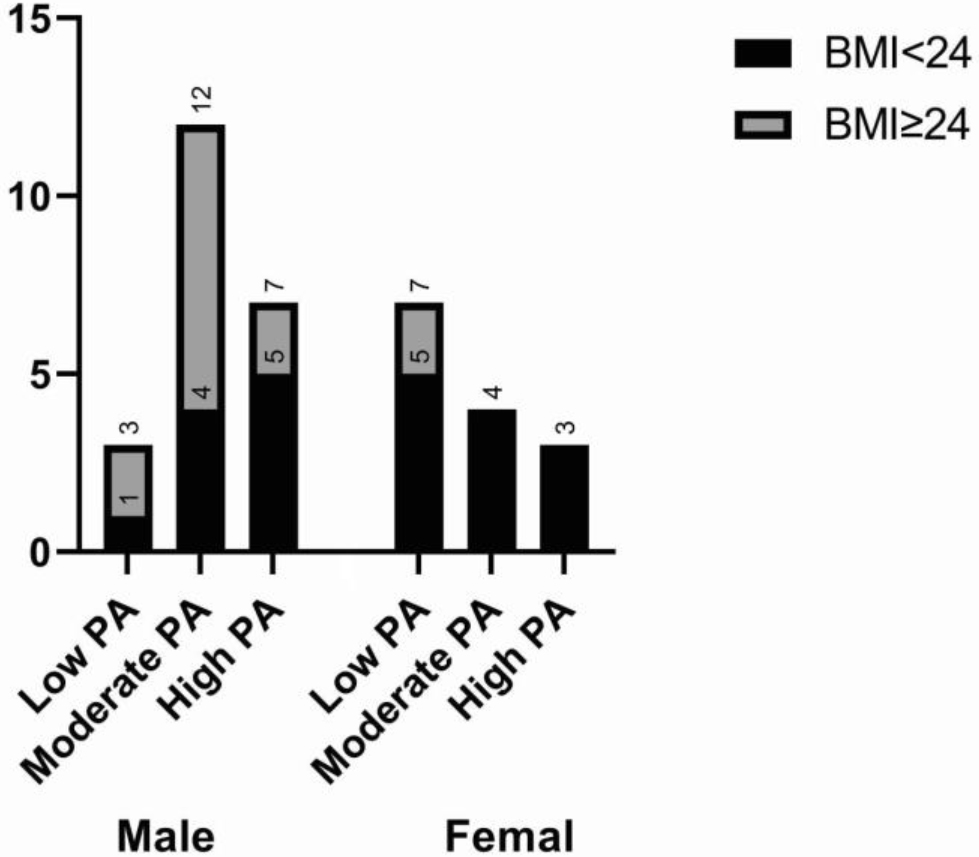
As shown in Table 1,
The results of the correlation analysis reveal a significant negative correlation between FMS scores and BMI (
Impact of gender and BMI level on FMS scores
* p< 0.05,
Scattergraph illustrating the relationship between (a) FMS score and BMI and (b) FMS score and PA.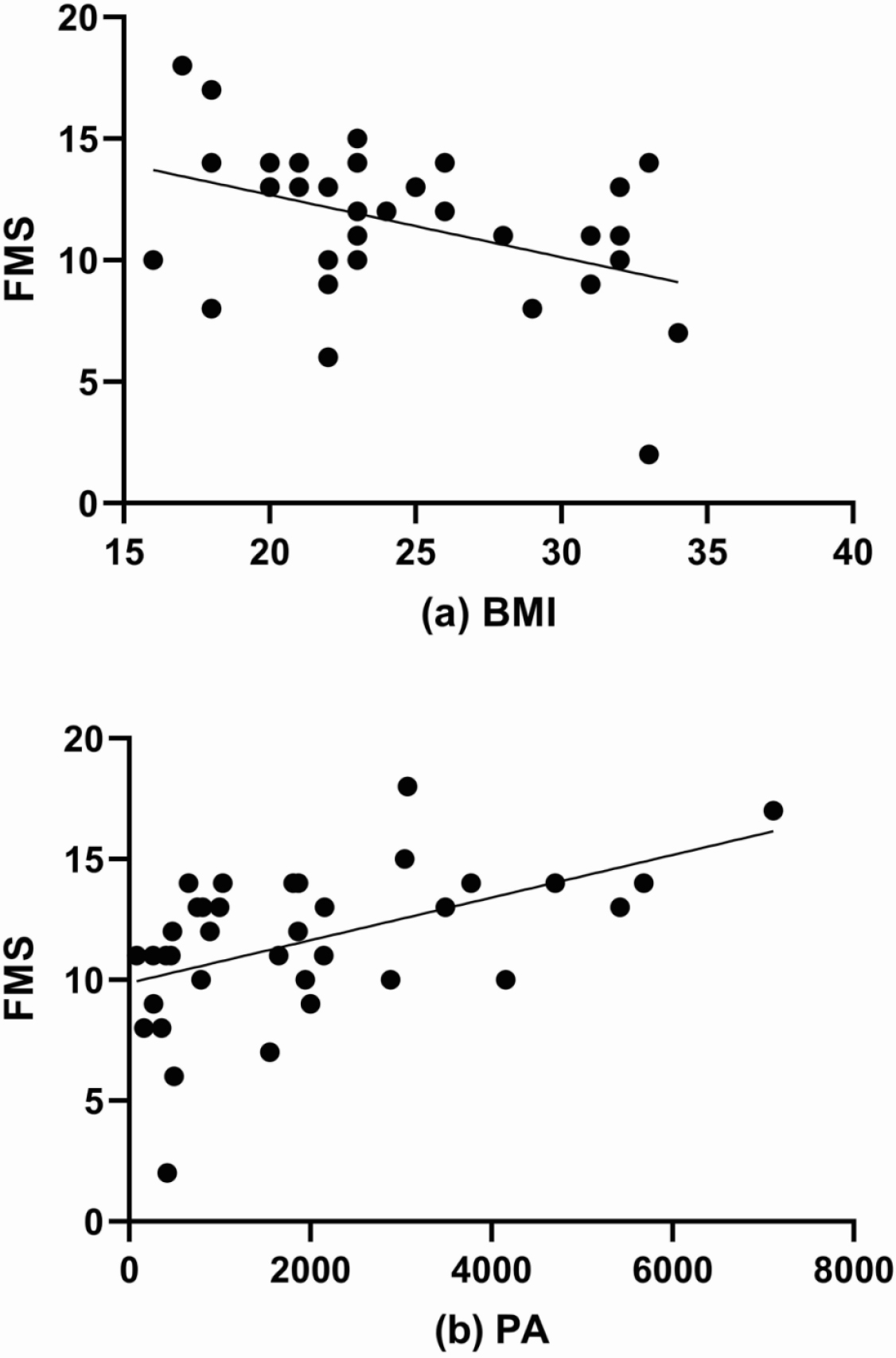
The main effects for Sex and BMI Lv on FMS scores.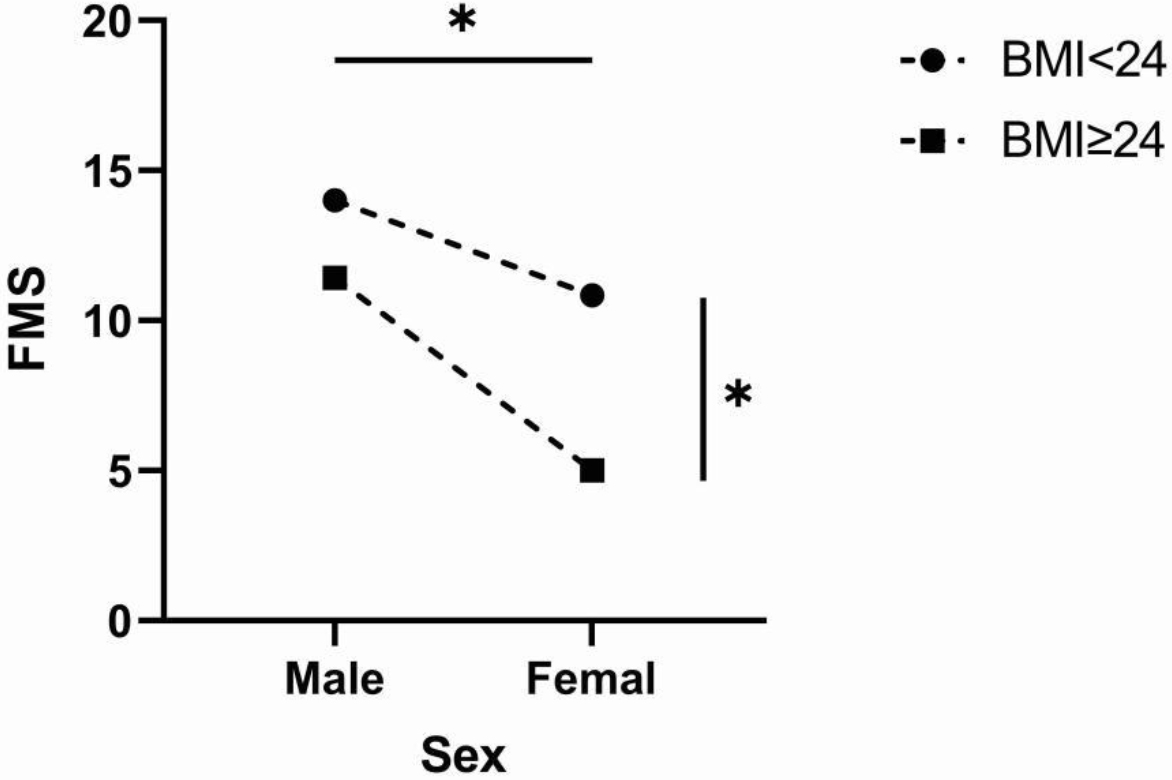
As shown in Table 2 and Fig. 3, ANOVA indicate that significant main effects for Sex (
PA has numerous benefits, including reducing the risk of obesity, illness, stress, and anxiety, as well as helping to maintain good muscle condition [23]. For individuals with impaired bodily functions, PA can mitigate the progression of disabilities, restore functionality, and enhance overall physical health22. However, PA levels tend to decline during the transition from youth to adulthood, especially when entering university, where the decrease is most pronounced. This decline in PA levels is a cause for concern and requires attention [24].
This study examines the factors that affect FMS scores in students who participate in adaptive physical education courses. The results of the research show that the rate of low PA levels among students is 27.7%, which is higher than the 10.0% rate observed among healthy Chinese university students [25] and the 22% rate observed in other international student populations [24]. The declining physical fitness of Chinese students has become a matter of widespread concern. When compared to European countries, Chinese university students participate in fewer physical activities during their leisure time [26]. Additionally, females tend to engage in lower levels of PA compared to males [27]. A higher proportion of students aged 9 to 22 engage in less than 1 hour of PA per day, the prevalence of PA less than 1 hour per day is highest among 18-year-old males and 21-year-old females, reaching 82.5% and 89.8%, respectively [28]. Students participating in adaptive physical courses tend to engage in PA less frequently than healthy students due to compromised physical health. They exhibit lower levels of self-determined motivation for participating in physical education and report less enjoyment compared to their peers [29]. Despite significant efforts to promote PA to enhance the quality of life for healthy individuals, the situation is different for those with impaired bodily functions. The World Health Organization advocates for equal opportunities for participation in sports activities. However, opportunities for involvement in adaptive physical activities and sports (APAS) remain significantly limited [30]. At the same time, training studies indicate that adolescents with chronic diseases or physical disabilities can enhance their levels of PA and overall health through intervention programs during the rehabilitation process [31]. However, the positive outcomes achieved in these programs often cannot be sustained over a long period after their completion [32]. Therefore, measures must be taken to promote their participation in physical activity and cultivate it into a long-term habit.
The average FMS score for students participating in adaptive physical courses is 11.58, which is lower than the scores for high school students (14.1), college students (14.8), and professional athletes (15.7) [33]. In previous research, researchers often designated 14 points as the ideal threshold for distinguishing higher or lower injury risk [34, 35]. The normal range for FMS scores among healthy but untrained individuals typically spans from 14.14
The FMS scores show that males (12.59
The present study demonstrates a significant positive correlation between FMS scores and PA, as well as a notable negative correlation with BMI. Previous research has shown that BMI, age, and PA significantly influence overall FMS scores. For children, since straight lunges, trunk-stability push-ups, and rotational stability tests are difficult to perform for overweight and obese children to complete, the FMS score for normal weight children reached 13.9, much higher than the FMS score for overweight or obese children [41]. Individuals aged over 50 had an average FMS score of 12.2 [42], which was notably lower than that of adolescents aged 11–17 [43] and college students [33]. Research indicates that the relationship between FMS and PA is complex. FMS scores were found to be highly correlated with moderate and high levels of PA in preschoolers [44]. However, in healthy middle-aged adults, higher FMS scores were only associated with high levels of PA [17]. Overall, numerous studies have consistently shown a negative correlation between FMS scores and BMI. However, it is important to note that further research is required to fully understand the relationship between FMS scores and PA, as this relationship has been found to vary significantly among different populations.
Limitations
Our study has several limitations to be taken into account. Firstly, the study was constrained by potential subjective biases. All PA variables were evaluated using self-reporting instruments (e.g., IPAQ). While the measurements demonstrated good internal reliability and predictive validity, and have been successfully utilized in previous research, they remain susceptible to potential reporting biases. Secondly, the study is limited by the sample size. Due to the specificity of the surveyed population, participants were recruited solely from one school. A broader recruitment of participants could introduce more variability. The third limitation is that this study did not discuss potential strategies to motivate these students to enhance their PA. The development of feasible intervention strategies and understanding their impact on FMS scores and PA will be the focus of subsequent research.
Conclusion
In conclusion, this study demonstrates that university students participating in adaptive physical courses can benefit from increased PA levels. The lower FMS scores observed in this population, along with their associations with BMI and PA, emphasize the need for interventions that encourage PA to promote overall health and facilitate a timely return to normal life. Additionally, considering the influence of gender, obesity levels, and PA on FMS scores is crucial when developing tailored approaches for this population. Further research is warranted to explore effective strategies for enhancing functional movements and promoting long-term physical well-being among university students in adaptive physical courses.
Availability of data and materials
All data generated or analyzed during this study are included in this published article.
Competing interests
None of the authors have any personal, financial, commercial, or academic conflicts of interest.
Funding
None to report.
Footnotes
Acknowledgments
None to report.