




Abstract
BACKGROUND:
Hypertension has become one of the most pathogenic diseases in the world.
OBJECTIVE:
This paper summarizes and analyzes the acupuncture point combinations and treatment principles of acupuncture for hypertension in a systematic way by means of big data mining.
METHODS:
The literature for this paper was obtained from CNKI, Wanfang, VIP, SinoMed and PubMed, Embase, Cochrane Library, Web of Science, and Ovid databases. Thedata were collected to obtain combinations of acupoints with strong associations through association rule analysis, complex networks for screening to obtain core acupoint nuclei, and cluster analysis to derive treatment principles.
RESULTS:
A total of 127 acupuncture prescriptions involving 66 acupoints were included in this study. Tai-chong (LR3), Qu-chi (LI11), Zu-san-li (ST36), Feng-chi (GB20), and He-gu (LI4) were the most commonly used acupoints. The large intestine meridian was the preferred meridian, and most of the extremity acupoints, especially the lower extremities, were selected clinically. The association rule reveals that Qu-chi (LI11) and Zu-san-li (ST36) are the dominant combination acupoints. 3 core association points obtained after complex network analysis, the 1st association, Bai-hui (DU20), Tai-xi (KI3), Gan-shu (BL18), Shen-shu (BL23); The 2nd association, Qu-chi (LI11), He-gu (LI4), San-yin-jiao (SP6), Zu-san-li (ST36), Feng-chi (GB20), Tai-chong (LR3); The 3rd association, Qi-hai (RN6), Guan-yuan (RN4), Zhong-wan (RN12), Zhao-hai (KI6), Tai-yang (EX-HN5), Lie-que (LU7), Yang-ling-quan (GB34), Xing-jian (LR2), Yin-ling-quan (SP9). Cluster analysis yielded the treatment principles of nourishing Yin and submerging Yang, pacifying the liver and submerging Yang, tonifying Qi and Blood, and calming the mind and restoring the pulse, improving clinical outcomes.
CONCLUSION:
By means of big data mining, we can provide reference for acupuncture point grouping and selection for clinical acupuncture treatment of hypertension.
Introduction
Hypertension is a disease in which the blood pressure in the arteries of the body circulation rises, causing great harm to the heart, kidneys, brain and other organs [1] and is even a major cause of death [2]. Smoking, diet, emotions, and environment are the main influencing factors for elevated blood pressure. Systolic blood pressure
Acupuncture is popular all over the world because it has the advantages of low side effects, low cost and easy operation [9, 10]. Modern research has shown that acupuncture has a multi-target, multi-path, synergistic therapeutic effect, so it is widely used in the treatment of various diseases, including the control of blood pressure levels, in the hope of avoiding medication or supplementing medication [11]. The current protocol of acupuncture for hypertension is not systematically standardized, so it leads to unsatisfactory blood pressure control. Therefore, this paper will use the method of big data mining analysis (including descriptive analysis, association rule report and cluster analysis) to scientifically derive the grouping and acupuncture point rules for acupuncture for hypertension.
Materials and methods
Data source
The CNKI, Wanfang, VIP, SinoMed and PubMed, Embase, Cochrane Library, Web of Science and Ovid databases were searched. The clinical research literature on acupuncture for hypertension published from the time of library construction was searched until November 2022. There was no language restriction.
Search method
Fuzzy matching was used to search for the Chinese subject terms (“acupuncture” or “acupuncture therapy” or “body acupuncture”) and (“hypertension” or “hypertension”) and (“clinical study” or “randomized controlled clinical study” or “clinical controlled study”). The English search terms (“Acupuncture” or “Pharmacopuncture”) and (“Hypertension” or “Blood Pressure, High” or “Blood Pressures, High” or “High Blood Pressure” or “High Blood Pressures”) and (“Randomized Controlled Trials” or “Clinical Trials, Randomized” or “Trials, Randomized Clinical” or “Controlled Clinical Trials, Randomized”).
Literature inclusion criteria
(1) Literature of clinical research category; (2) Study subjects: patients with a clear diagnosis of hypertensive disease; (3) Interventions: Acupuncture therapy (including acupuncture, moxibustion, electroacupuncture, warm acupuncture, acupuncture point burial and auricular acupuncture) with clear acupuncture prescription was given, in which the observation group used acupuncture therapy alone or in combination with other therapies, and the control group used other Chinese and Western medicine therapies; (4) The selection of acupoints includes 14 meridian points, extra-meridian points, ear points and head acupuncture points; (5) Efficacy assessment: It meets the relevant diagnostic criteria for hypertension and the clinical data show that it is effective [12].
Literature exclusion criteria
(1) Animal experiments, systematic evaluations, Meta-analyses, reviews, and theoretical discussions; (2) No clear acupuncture prescriptions in the text and irregular expressions of relevant acupoints; (3) Outcome indicators and interventions not related to this paper; (4) Duplicate publications; (5) Inability to view the full text.
Data extraction and quality evaluation
Data extraction
The initial screening of the literature is performed by two evaluators based on the inclusion and exclusion criteria of the literature, respectively, and the decision of doubtful literature is discussed by discussion or by the participation of a third evaluator. Finally, after checking to remove relevant literature, the final literature is selected based on the inclusion and exclusion criteria. Acupuncture prescription entry method: Based on the principle that one group of commonly used main acupuncture points is one valid prescription, if there are multiple groups of alternating main acupuncture points in the text, break them down into multiple prescriptions. Enter these prescriptions into the database created by Microsoft Excel 2016. The names of all acupuncture points in the prescription are standardized according to the Chinese national “Nomenclature and location of meridian points” (GB/T 12346-2021) and the World Health Organization “Proposed Standard International Acupuncture Nomenclature”. Finally, 127 valid prescriptions are extracted.
Quality evaluation
The included literature is pooled and assessed for selection bias, implementation bias, measurement bias, follow-up bias, publication bias, and other biases in accordance with the Cochrane Handbook [13].
Statistical analysis
The data in the database are analyzed descriptively using Microsoft Excel for frequency of acupoints, frequency of meridians, and divisional patterns; SPSS Modeler 18.0 software is used for association rule analysis to explore combinations of acupuncture points that are closely related to each other; Complex network association analysis and k-core hierarchical analysis are performed using Gephi 0.9.2 software to study the core acupoint clusters of acupuncture points for the treatment of hypertension; systematic cluster analysis is done using SPSS Statistics 21 software to observe each combination of closely linked acupoints, and the cluster prescriptions generated from them can reflect the idea of acupuncture for the treatment of hypertension.
Results
Literature search and selection process
According to the inclusion and exclusion criteria, 118 papers are included, including 95 papers in Chinese and 23 papers in foreign languages, and the specific flow is shown in Fig. 1. The quality of the literature is evaluated for the 118 included articles and the majority of randomization in selection bias is low risk (80%) and allocation hidden high risk (50%), for blinding, the risk of implementation bias with evaluation bias is unknown as most of the literature is not mentioned, outstanding outcome indicators suggested low risk (90%), and the risk of selection reporting bias with other bias is low in the articles (100%). The risk of bias diagram is shown in Fig. 2.
Flow diagram of literature search and article selection process.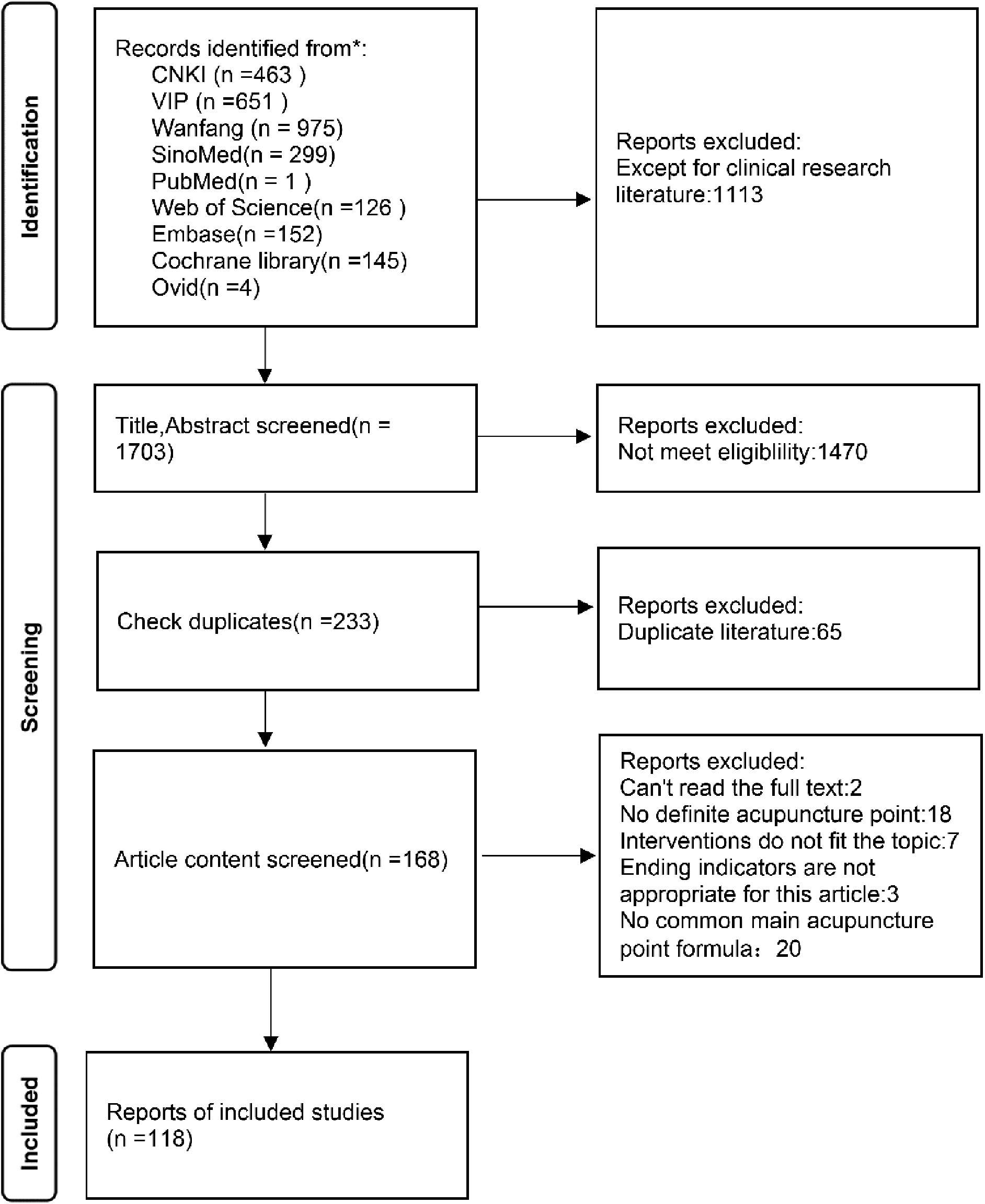
Frequency of acupoint application
A total of 127 acupuncture prescriptions involving 66 acupuncture points with a total frequency of 577 are included in this paper, including 14 meridian points, extra-meridian qi points, ear points, and head acupuncture points. 20 of the most frequently used acupuncture points are shown, and the top 5 points are Tai-chong (LR3), Qu-chi (LI11), Zu-san-li (ST36), Feng-chi (GB20), and He-gu (LI4). Among them, Tai-chong (LR3) is used 82 times in all prescriptions, accounting for 64.57% of the leading position (Table 1; Fig. 3).
Frequency of application acupuncture points for hypertension treatment
Frequency of application acupuncture points for hypertension treatment
Risk of bias graph.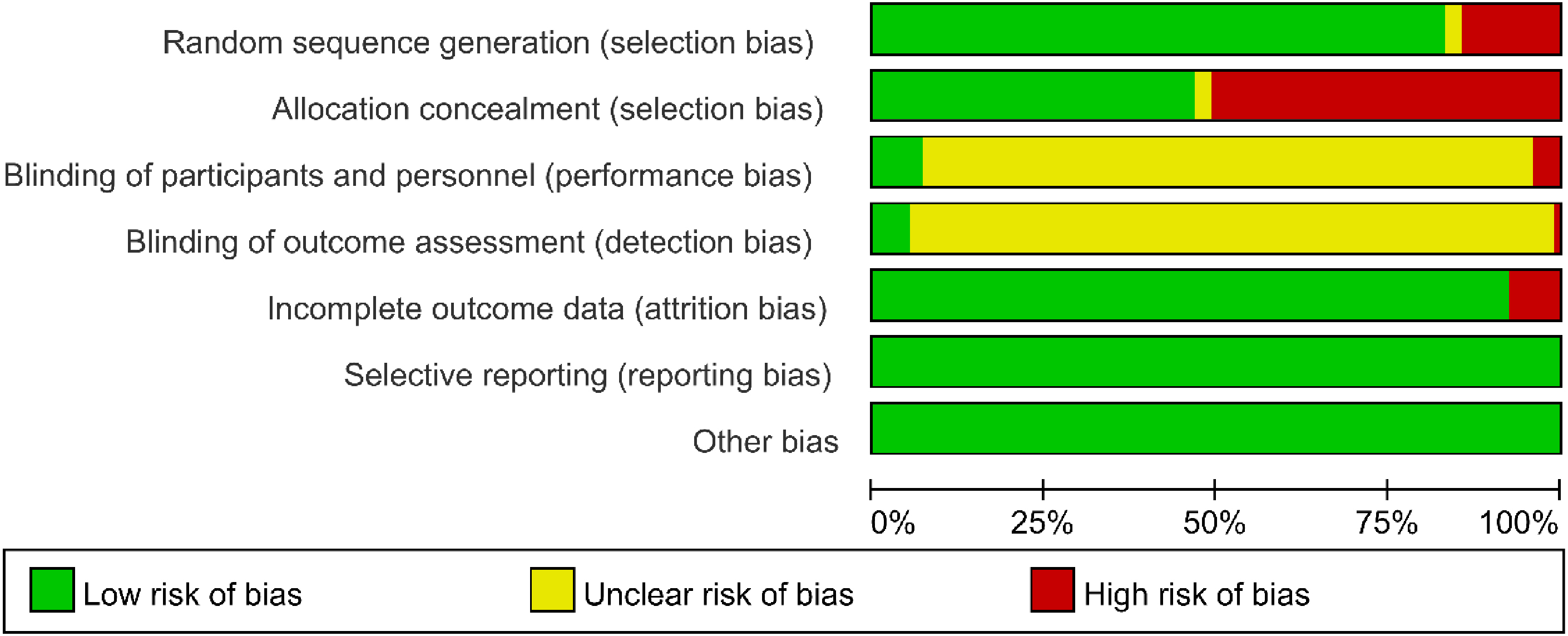
Frequency of application acupuncture points for hypertension treatment.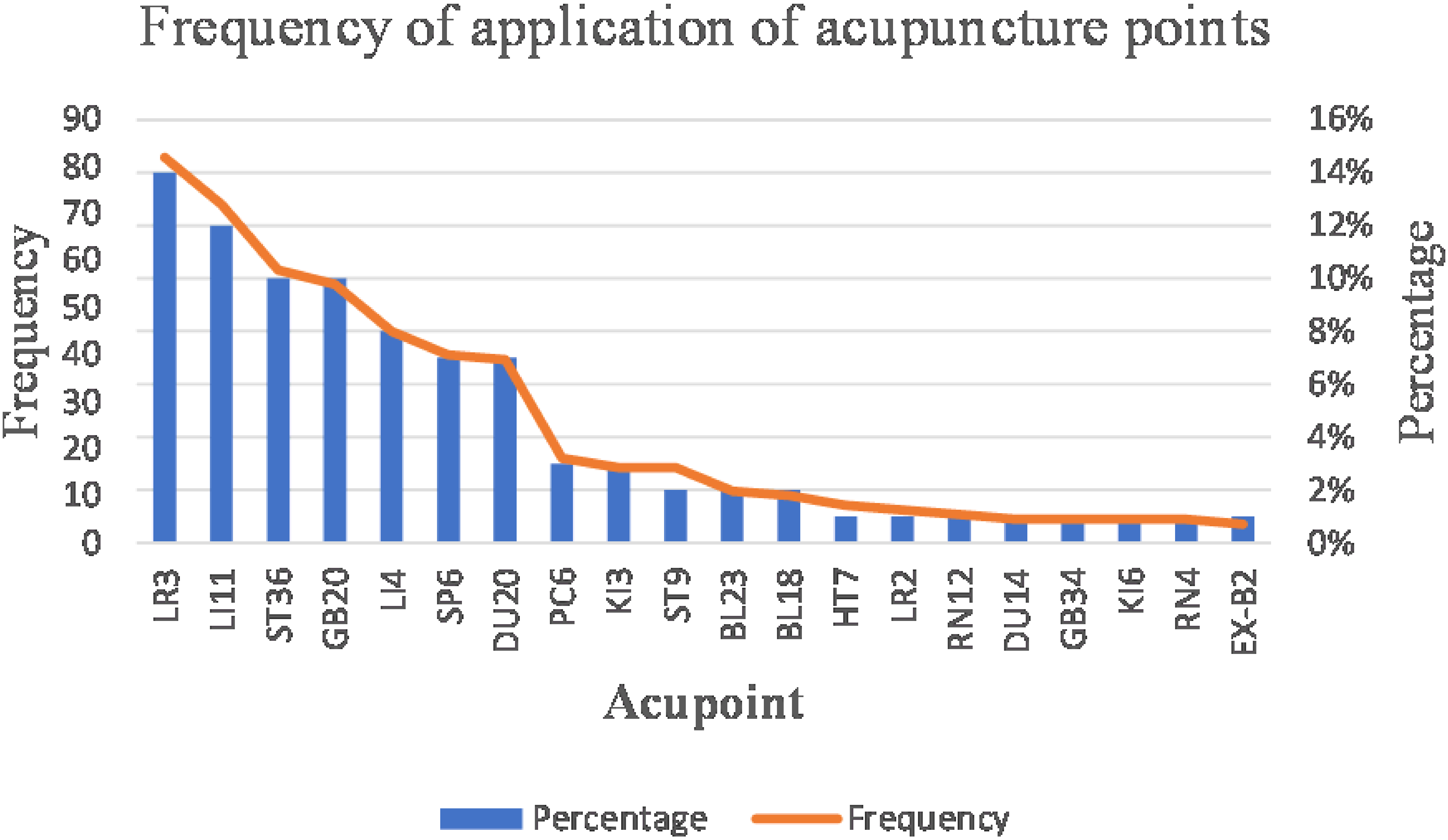
A total of 15 relevant meridians are involved in this study (Table 2; Fig. 4), and the most frequently used of these meridians was the Large intestine meridian, with 118 times, involving 3 acupoints; while the 2nd most frequently used meridian is the Liver meridian, with 89 times, involving 2 acupoints; the acupoint located in the 3rd is the Stomach meridian, with 81 times, involving 7 acupuncture points. The meridian with the most acupuncture points is the Bladder meridian, which has 8 acupuncture points, but is not used very often.
Frequency of meridian application for hypertension treatment
Frequency of meridian application for hypertension treatment
Acupoint distribution analysis for hypertension treatment
Most of the acupoints used to control blood pressure in this study are distributed in the lower extremities, with a frequency of 239 uses and 23 acupoints in the lower extremities, reflecting the distal acupuncture points advocated in TCM (Table 3; Fig. 5).
Association rule mining analysis
The correlation rule analysis is performed on 127 prescriptions and set the support level at 10%, the confidence level at 80%, and the maximum number of antecedents at 2. The correlation analysis from Fig. 6 revealed that Feng-chi (GB20), Tai-chong (LR3), Zu-san-li (ST36), He-gu (LI4), and Qu-chi (LI11) were the core acupoints for the treatment of hypertension, where thicker lines and darker colors represented higher co-occurrence. Taking the top 10 support data of the association rule (Table 4), the combination of Qu-chi (LI11) and Zu-san-li (ST36) had the highest support of 45.67%, followed by Tai-chong (LR3) and He-gu (LI4), indicating that the combination of Qu-chi (LI11) and Zu-san-li (ST36) is selected by 45.67% of all prescriptions included; The simultaneous confidence level of 87.93% indicates that 87.93% of all prescriptions containing Zu-san-li (ST36) will also select Qu-chi (LI11).
Association rule mining analysis
Association rule mining analysis
Frequency of meridian application for hypertension treatment.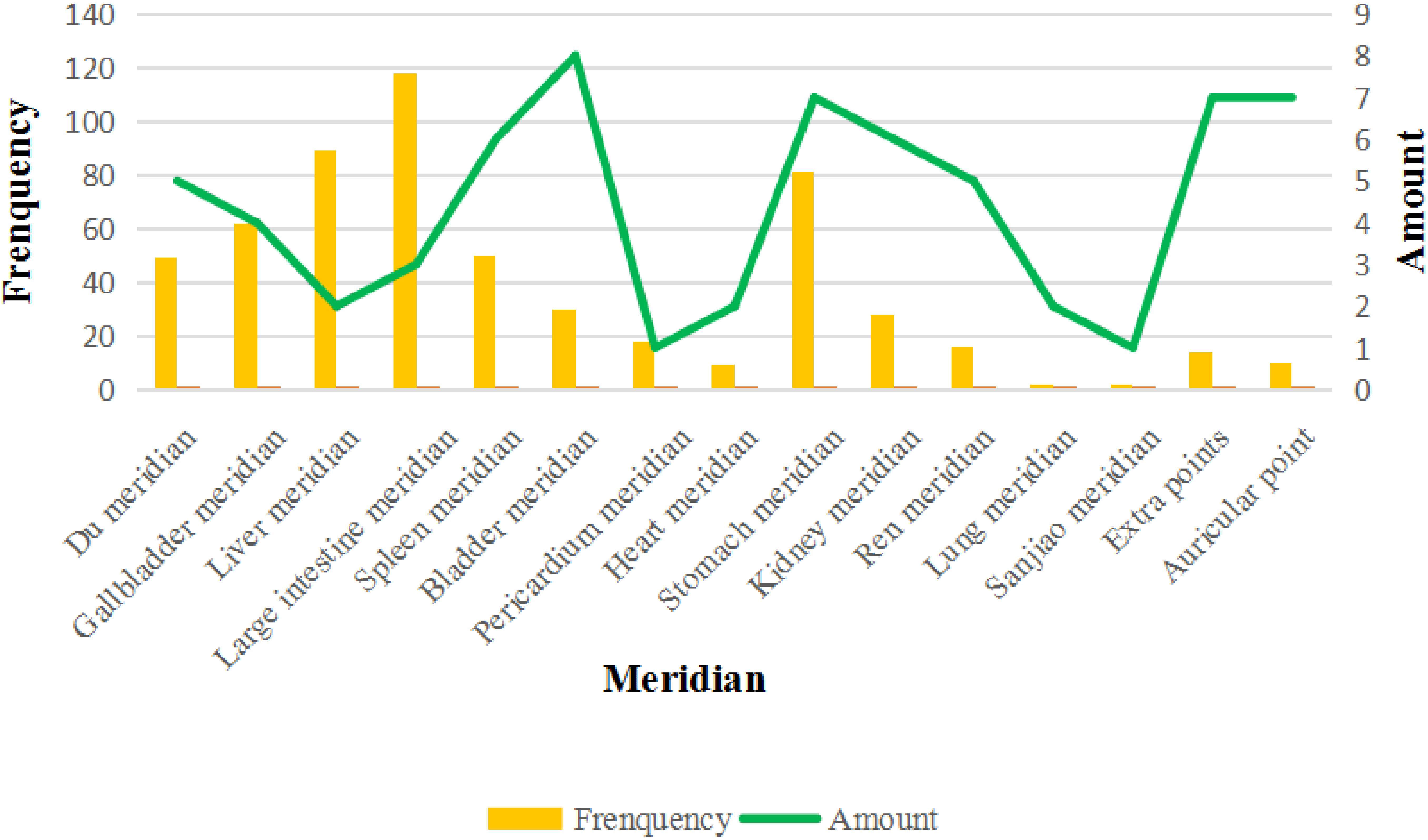
Acupoint distribution analysis for hypertension treatment.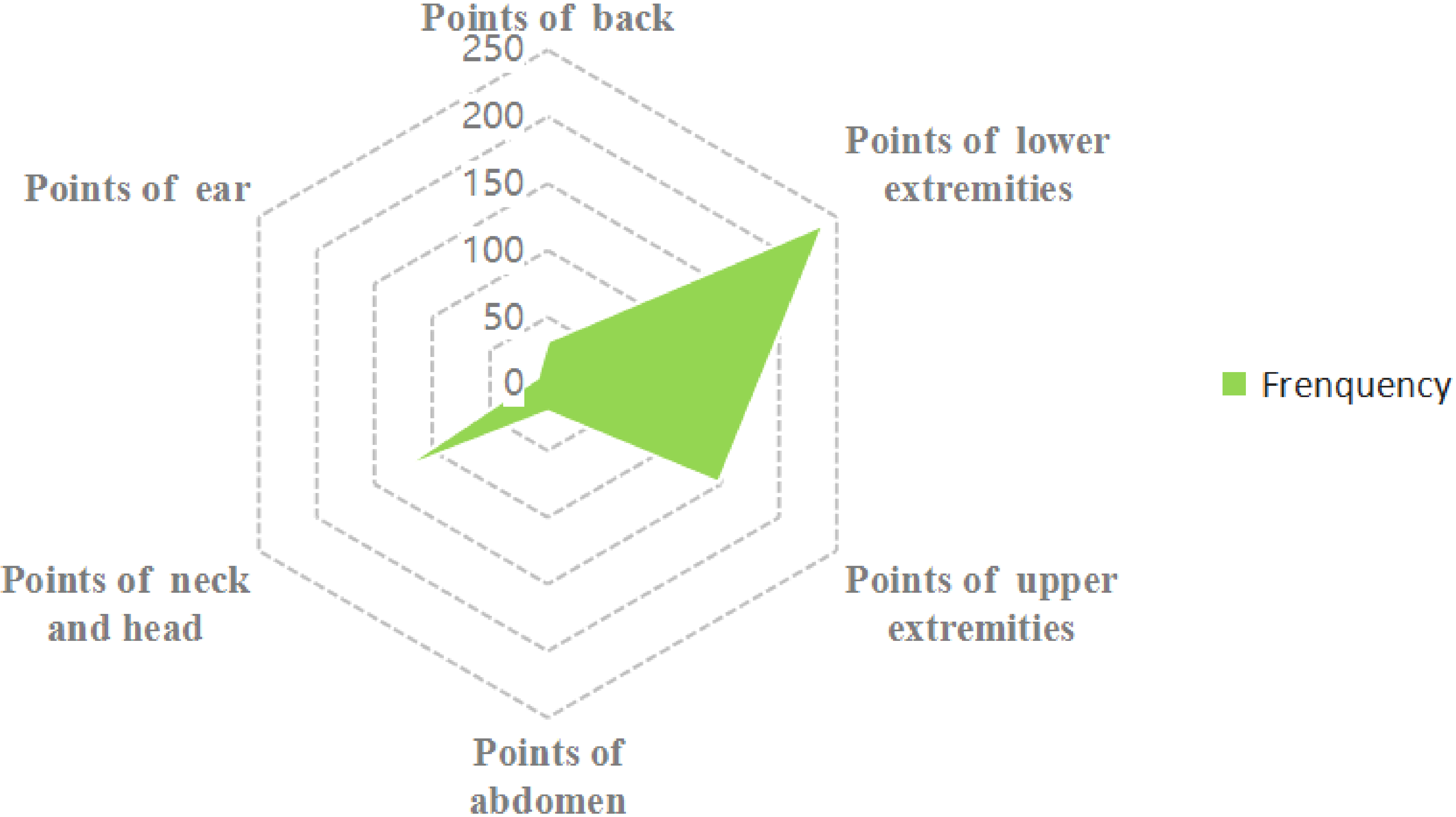
Network co-existence.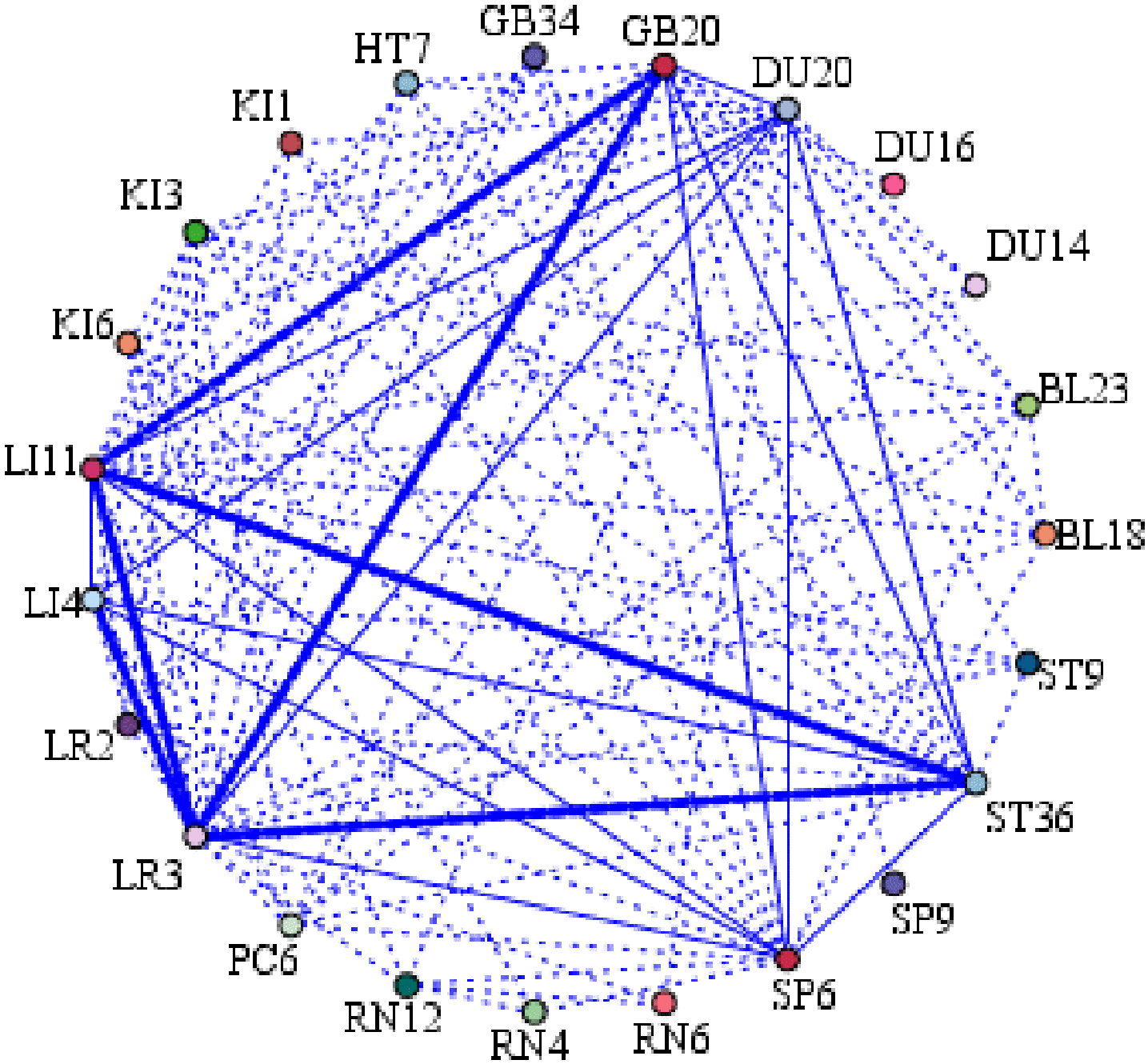
Acupuncture for hypertension complex network diagram.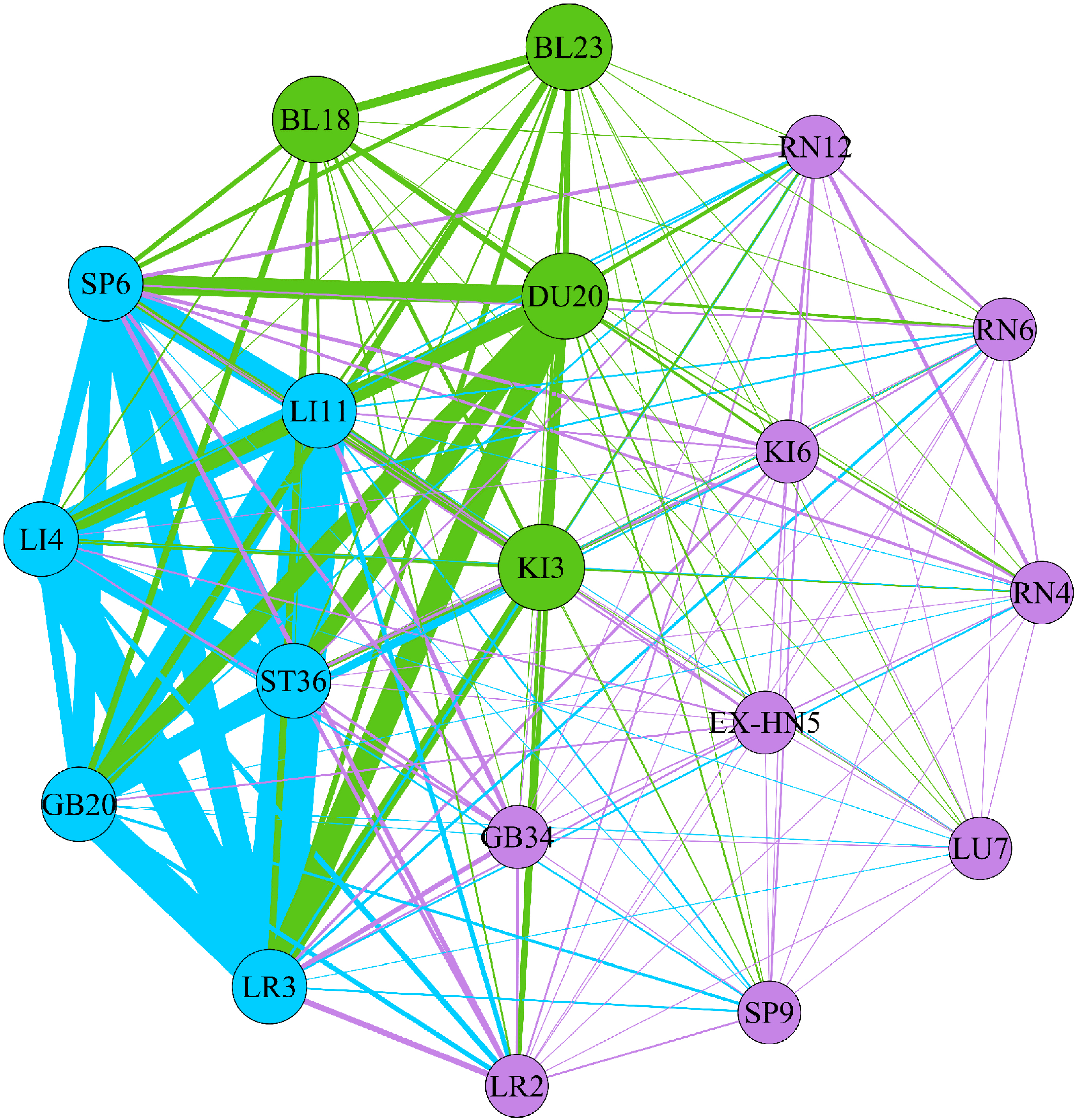
In this paper, 118 papers are included, and a total of 127 valid master point prescriptions were extracted. Association partitioning and k-core hierarchical analysis in complex network analysis will be performed on these 127 main acupuncture prescriptions [14]. The k-Core algorithm is a subgraph mining algorithm for finding the set of vertices in a graph that match a specified core degree, and each vertex needs to be associated with the other K vertices in that subgraph. After analysis, we found that the complex network graph disappeared when k-core
Acupuncture for hypertension network society division
Acupuncture for hypertension network society division
Cluster analysis tree figure.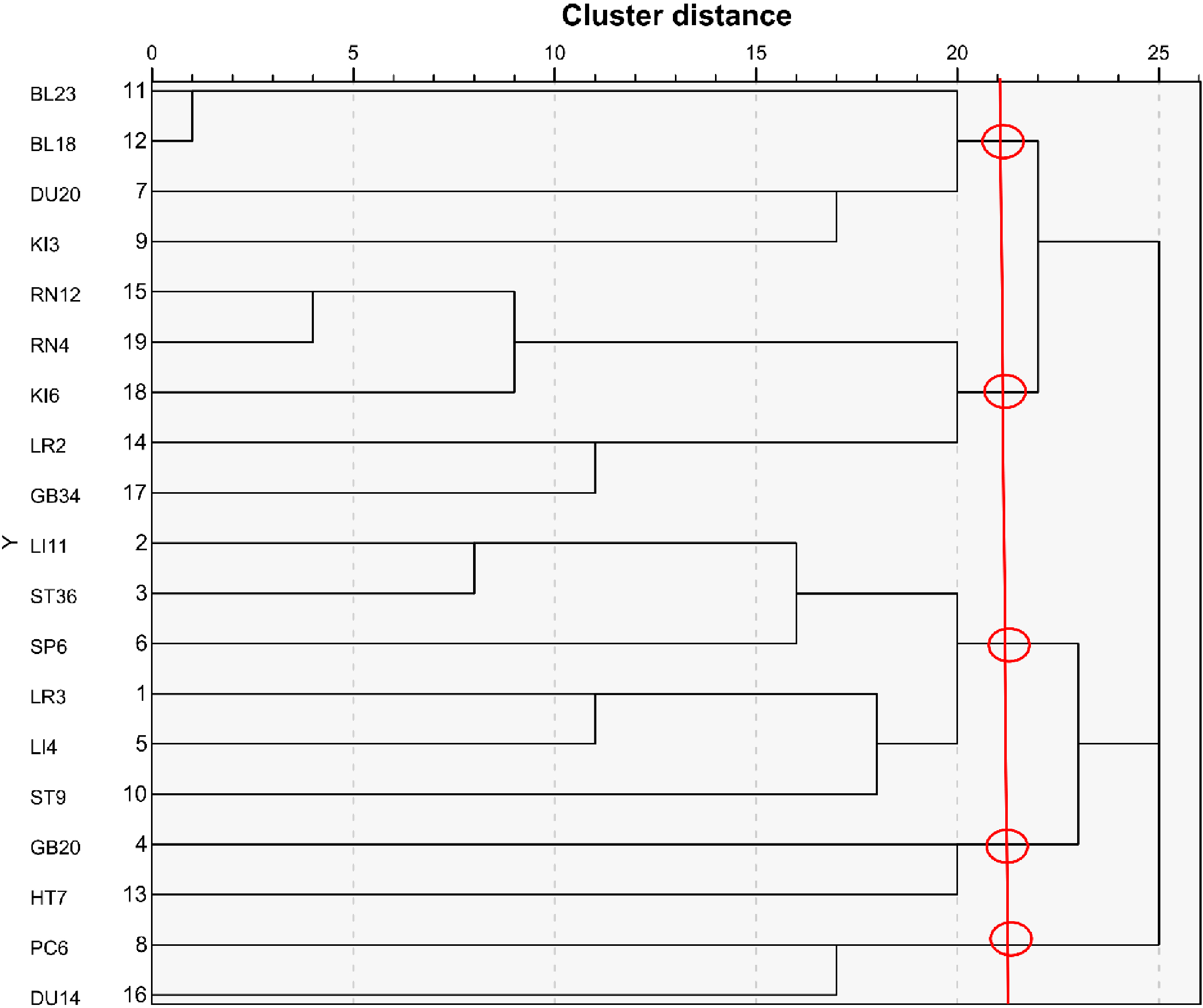
In this study, acupoints with a total frequency greater than 5 times are cluster analyzed. Cluster analysis is defined as the division of 1 set of data into clusters according to similarity and difference, with great similarity between data in the same cluster and great difference between data in different clusters. After cluster analysis, we can obtain the acupuncture point methods and principles of acupuncture for hypertension. A tree diagram (Fig. 8) was finally presented, with a red line drawn at a distance scale of 21, which gave a total of 5 clusters of acupuncture points. Cluster 1, Gan-shu (BL18), Shen-shu (BL23), Bai-hui (DU20), Tai-xi (KI3);Cluster 2, Zhong-wan (RN12), Guan-yuan (RN4), Zhao-hai (KI6), Xing-jian (LR2), Yang-ling-quan (GB34); Cluster 3, Qu-chi (LI11), Zu-san-li (ST36), San-yin-jiao (SP6), Tai-chong (LR3), He-gu (LI4), Ren-ying (ST9); Cluster 4, Feng-chi (GB20), Shen-men (HT7); Cluster 5, Nei-guan (PC6), Da-zhui (DU14).
Discussion
The 118 documents included in this study are of moderate to high risk quality, and most referred to simple randomization or assignment by order of visit, without a validated allocation concealment method. Because acupuncture treatment differs from pharmacotherapy, achieving full meaningful double-blinding is challenging, both with regard to blinding for implementation and blinding for assessment, and is not mentioned in most articles. The incomplete outcome indicators showed a low risk, indicating that the patients completed the treatment as planned with a high level of adherence. A low risk of reporting bias and other bias indicates that the assessors rigorously checked the reporting of results and that there was no other bias.
The efficacy of acupuncture in the treatment of hypertension is related to a variety of factors, especially when it comes to the process involved in the treatment, such as the quality of the personnel treating, the interventions, the treatment modality, and the characteristics of the selected acupuncture points. The characteristics of acupuncture point selection, which is also the focus of this article, are based on the different physical states of each individual, the characteristics of the disease, and so on, for evidence-based treatment. Therefore, in clinical practice, the selection of acupuncture points for the treatment of hypertension varies. In this context, this study borrows from big data mining and adopts multiple analysis methods to discover acupuncture point solutions for hypertension from different perspectives and further summarize the patterns, which can help provide reference for clinical acupuncture point selection and acupuncture point combination solutions for hypertension treatment.
Through this study, it is found that acupuncture for hypertension mainly emphasizes the therapeutic principles of nourishing yin and submerging yang, pacifying the liver and submerging yang, tonifying qi and blood, and calming the mind and restoring the pulse, and it mainly uses Tai-chong (LR3), Qu-chi (LI11), Zu-san-li (ST36) and other acupuncture points, mainly focusing on the large intestine meridian, with most of the acupuncture points distributed in the lower extremities, obtaining 3 core prescriptions and 4 therapeutic principles and methods. The above conclusions are mainly drawn by descriptive analysis, association rule analysis, complex network analysis, and cluster analysis.
A descriptive analysis is first performed to explore the frequency of acupoint application, meridian frequency and distribution pattern of acupuncture for hypertension. The analysis of 127 prescriptions revealed that Tai-chong (LR3) was used 82 times in all prescriptions, occupying the leading position with 64.57% of all prescriptions. Tai-chong (LR3) is often used in clinical practice for the treatment of hypertension and headache, and it belongs to the yuan-primary point of liver meridian, the transfusion point, which has the effect of pacifying the liver and subduing Yang, activating the blood and opening the channels [15]. Related studies have shown that Tai-chong (LR3) lowers blood pressure not only by regulating brain metabolism in the hypothalamus, cerebellum, thalamus, and medulla, but also by inhibiting oxidative stress. In the statistics of meridian frequency, it is found that the large intestine meridian is used with high frequency, which is a meridian of much qi and blood, and stimulating some points on this meridian can achieve the effect of coordinating qi and blood [16]. Modern medicine believes that stimulating the Yang Ming meridian can act on the endothelium of blood vessels, inhibit the production of inflammatory substances, act on the RAS system, and improve immune function. The distribution of acupuncture points for the treatment of hypertension is mainly focused on the extremities, with the lower extremities being one of the areas where acupuncture points are often taken.
After effective analysis of the association rules, we obtained the core acupuncture points with strong associations of Feng-chi (GB20), Tai-chong (LR3), Zu-san-li (ST36), He-gu (LI4), and Qu-chi (LI11). Among these points the core group of points Qu-chi (LI11) and Zu-san-li (ST36) is derived, while Qu-chi (LI11) is a joint point of Yangming meridian and has the effect of harmonizing Qi and blood, while stimulation of Qu-chi (LI11) inhibits abnormal sympathetic activity and lowers blood pressure through neuroendocrine mechanism [17, 18]. Zu-san-li (ST36) is also a meridian point and lower meridian point of Yangming meridian, which has the effect of tonifying Qi and nourishing Blood, and related studies [19] showed that stimulation of Zu-san-li (ST36) increases parasympathetic activity through activation of the autonomic nervous system, which in turn leads to improvement of cerebrovascular diastolic function. The two points are mainly used to tonify and invigorate the Blood, but clinically the combination of the two points is less common. Therefore, the combination of acupuncture points needs to be achieved through evidence-based treatment. After association analysis and k-core hierarchical analysis of complex networks, a total of three core association points most closely associated with acupuncture for hypertension were derived, the 1st association, Bai-hui (DU20), Tai-xi (KI3), Gan-shu (BL18), Shen-shu (BL23); The 2nd association, Qu-chi (LI11), He-gu (LI4), San-yin-jiao (SP6), Zu-san-li (ST36), Feng-chi (GB20), Tai-chong (LR3); The 3rd association, Qi-hai(RN6), Guan-yuan (RN4), Zhong-wan (RN12), Zhao-hai (KI6), Tai-yang (EX-HN5), Lie-que (LU7), Yang-ling-quan (GB34), Xing-jian (LR2), Yin-ling-quan (SP9).
After combining the 19 acupoints using a clustering algorithm, the 5 major clusters are finally integrated, highlighting the therapeutic principles of nourishing Yin, pacifying the liver and submerging Yang, regulating Qi and Blood, and calming the mind [20].
Some researchers believe that the pathogenesis of hypertension is divided into two major aspects: “deficiency” and “excess”, the former being mainly reflected in the liver and kidney, excessive dissipation of yin essence, resulting in the inability of yin essence to collect qi and blood, and eventually blood flowing backwards in the blood vessels; the latter is an imbalance of qi, blood, phlegm and stasis, which accumulates too much in the body and makes the blood vessels unstable. The above views were found to be consistent with the treatment idea of the cluster analysis in this paper. Cluster 1, Gan-shu (BL18), Shen-shu (BL23), Bai-hui (DU20), Tai-xi (KI3): Perform nourishing liver and kidney yin and submerging yang; Cluster 2, Zhong-wan (RN12), Guan-yuan (RN4), Zhao-hai (KI6), Xing-jian (LR2), Yang-ling-quan (GB34): To achieve the effect of toning Qi and blood; Cluster 3, Qu-chi (LI11), Zu-san-li (ST36), San-yin-jiao (SP6), Tai-chong (LR3), He-gu (LI4), Ren-ying (ST9): Presence of blood activation and blood pressure lowering effect; Cluster 4, Feng-chi (GB20), Shen-men (HT7): It has the effect of dispelling wind and calming the mind; Cluster 5, Nei-guan (PC6), Da-zhui (DU14): It has the effect of calming the mind and driving away evil spirits.
Limitations
First, the quality of the literature included in this article is not high, especially in the method of randomization, which did not use strict grouping, and the difficulty in achieving double-blindness due to the specificity of acupuncture treatment. Second, the literature included in this paper is predominantly in Chinese, and therefore, potential source bias cannot be excluded. Finally, this study is conducted to obtain the superior acupuncture point prescriptions for acupuncture for hypertension by means of big data mining, and future animal and clinical experiments are needed to further validate the rationality of these prescriptions.
Conclusions
This study analyzed current published data to identify potential acupuncture points and prescriptions for acupuncture in the treatment of hypertension. The study provides a reference value for the systematic diagnosis and treatment of clinical hypertension.Tai-chong (LR3), Qu-chi (LI11), Zu-san-li (ST36), Feng-chi (GB20), and He-gu (LI4) are probably the most commonly used acupuncture points for the treatment of hypertension. The large intestine meridian is the most frequently used meridian. The high frequency area for hypertension treatment is the lower extremities. The association rule reveals that Qu-chi (LI11) and Zu-san-li (ST36) are potential acupuncture points and are given priority when taken.3 core association points obtained through complex networks, the 1st association, Bai-hui (DU20), Tai-xi (KI3), Gan-shu (BL18), Shen-shu (BL23); The 2nd association, Qu-chi (LI11), He-gu (LI4), San-yin-jiao (SP6), Zu-san-li (ST36), Feng-chi (GB20), Tai-chong (LR3); The 3rd association, Qi-hai (RN6), Guan-yuan (RN4), Zhong-wan (RN12), Zhao-hai (KI6), Tai-yang (EX-HN5), Lie-que (LU7), Yang-ling-quan (GB34), Xing-jian (LR2), Yin-ling-quan (SP9). Cluster analysis concluded the treatment principles of nourishing Yin and submerging Yang, pacifying the liver and submerging Yang, tonifying Qi and Blood, and calming the mind and restoring the pulse. In addition, most of the acupoints on the extremities are selected for the treatment of hypertension.
Ethics approval and consent to participate
Not applicable.
Data availability statement
Not applicable.
Author contributions
XL, WW and FC are the co-first authors and contributed equally to the statistical analysis and drafted the manuscript. YL, WW operated the software and inspected the data. JH, ZK and HZ helped design the study and collected the data. FC conceived the study and drafted the manuscript. All authors read and agreed to the published version of the manuscript.
Footnotes
Acknowledgments
Not applicable.
Conflict of interest
The authors declare no conflict of interest.