




Abstract
BACKGROUND:
Polyetheretherketone (PEEK) is a polyaromatic semi-crystalline thermoplastic polymer with mechanical and lubrication properties favorable for biomedical applications. Despite of its aesthetic appearance, ceramic brackets are unsatisfactory in brittleness and thickness, while PEEK is a potential material for aesthetic orthodontic brackets.
OBJECTIVE:
To fabricate a novel aesthetic orthodontic bracket and evaluate friction properties of PEEK and stainless steel wires.
METHODS:
All polyether ether ketone (PEEK) and ceramic samples disks were made into disks (diameter, 5 mm; thickness, 2 mm). The tested surfaces of PEEK were ground with #600, #800 and #1200 SiC papers, followed by polishing with Sof-Lex kit (3M ESPE, USA). The surface roughness was tested using a laser profilometer device (VK-X200, Keyence, Japan). The COFs of the specimens and stainless steel (SS) archwires were tested using a Universal Micro-Tribotester (UMT-3, Bruker, USA). The wear scratches on the materials’ surfaces were examined by using a scanning electron microscope (SEM) (Hitachi SU8010). The elastic modulus and hardness of samples were examined with a nano-indenter (XP, Keysight Technologies, USA).
RESULTS:
The mean surface roughness of PEEK and Ceramic are 0.320
CONCLUSION:
Within the limitations of the present study, PEEK shows lower coefficient of friction than ceramic. PEEK has excellent properties such as low friction coefficient, smooth surface and good mechanical properties, and thus meets the requirements for orthodontic brackets. It is considered as a potential bracket material with both low friction and aesthetic performance.
Keywords
Introduction
Polyetheretherketone (PEEK), first developed in 1978, is a kind of semi-crystalline thermoplastic polymer with excellent mechanical properties and biocompatibility [1, 2, 3]. It has been successfully applied in spinal implant, plastic surgery, heart valve and other biomedical fields [4, 5, 6, 7]. As technology advances, PEEK has also played a role in the dentistry [8, 9, 10]. For example, it has been used in academic research and the commercialization of a variety of dental devices, including dental implants, healing caps, post and cores, crowns, abutments, and denture prosthetic frameworks [11, 12, 13, 14, 15]. It has enormous potential in the dental practice as a supplement or alternative to standard metals and ceramics. Additionally, PEEK is an organic polymer compound and consists of three benzene rings linked by two ether groups and one ketone group. Studies have shown that PEEK has outstanding chemical resistance, wear resistance, mechanical properties, and thermal properties [16, 17].
With the development of social economy and improvement of living standard, the orthodontic market is developing fast. Adult orthodontic patients are increasing year by year [18]. Traditional metal brackets meet the needs of treatment, yet with some defects. For example, the metal brackets negatively affect patients’ social interaction and is not applicable to patients who are allergic to metal. Before MRI scans of the head or neck, stainless steel brackets must be taken off [19]. Moreover, it results in metal artifacts of X-ray films, which could affect doctors’ judgment of the alveolar bone and root in the orthodontic treatment. In 1980s, ceramic brackets were introduced as an alternative that is more aesthetic than metallic brackets [20]. However, ceramic material is high-cost, brittle and more prone to fractures during the torque and inclination movements [21, 22, 23]. Furthermore, to ensure strength, the ceramic brackets are usually large and thick, which weakens their aesthetics and comfort [24]. Thus, development of a novel orthodontic bracket with esthetic benefit and not more friction than that of a ceramic bracket is in line with the current clinical demand. So far PEEK has not been reported to be applied in orthodontic brackets.
Although the ceramic bracket owns many advantages, its disadvantages cannot fail to be noticed. The study is an experimental comparative evaluation of mechanical properties, surface roughness and friction properties between PEEK and ceramic for orthodontic brackets. Our investigation might be the first attempt to introduce a novel aesthetic orthodontic bracket made from PEEK (Fig. 1) and quantify the friction and mechanical properties in the simulated orthodontic treatment. This study would provide theoretical basis for the application of PEEK as a material for orthodontic aesthetic bracket and broaden PEEK’s scope of dental application.
Materials and methods
Fabrication of a novel aesthetic orthodontic bracket
A 3D model of orthodontic bracket was built with Geomagic Wrap (3D System, USA) and the virtual model was exported as a standard triangulation language (STL) file. PEEK blocks were purchased from Röchling Group (Germany) and the novel aesthetic orthodontic brackets were machined by using a 5-axis milling machine (HSC20linear, DMG MORI, Germany). The novel aesthetic orthodontic brackets are shown in Fig. 1.
The novel aesthetic orthodontic brackets made from PEEK.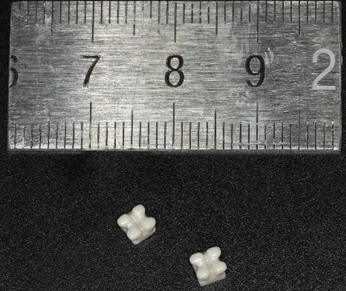
PEEK disks (5 mm in diameter; 2 mm in thickness) were purchased from Röchling Group (Germany). All tested surfaces were ground with #600, #800 and #1200 SiC papers (Norton, France) on the Grinding and Polishing Machine (Laizhou Lyric Testing Equipment, China), followed by polishing with Sof-Lex kit (3M ESPE, St. Paul, MN USA). Alumina ceramic disks (5 mm in diameter; 2 mm in thickness) were purchased from KHF Co (Guangzhou, China). Specimen preparation was completed by the same experienced researcher.
Surface roughness and morphology
All samples were cleaned with 75% alcohol and distilled water. The test of all samples was performed by a laser profilometer device (VK-X200, Keyence, Japan). The filter was set to apply to the entire image by Analysis Application, and then the ROI was set to take a measurement. The raw image is converted to a frequency spectrum after undergoing a Fourier transformation. A Gaussian filter at the cutoff frequency was superimposed and a reverse Fourier transformation was performed, converting the data back to image data. The edges of the image are subject to Point error because of interrupted data, so the ROI should be set in the center of the image. The reference surface was defined as a plane at the average height of the filtered data. The surface roughness was expressed in terms of roughness average (Ra), which is usually expressed in nanometer (nm). Five samples for each group were prepared in the measurement of surface roughness. For each specimen, two areas were selected. The most representative 3D profile for each of two materials was displayed.
Coefficient of friction (COF)
The base and slot of novel orthodontic brackets are not completely consistent with those of commercially available ceramic bracket. As a result, very flat discs were used instead of brackets, allowing for standardization of friction conditions and thus valid quantification of wear performance results. The COF of stainless steel (SS) archwires against the specimens was tested using a Universal Micro-Tribotester (UMT-3, Bruker, USA). The custom holders with slots were connected to sensors and both ends of SS archwires weld in the slots. Test specimens were attached to the UMT-3 plate using waterproof adhesive (3M ESPE, St. Paul, MN, USA) in a standard mode. This guaranteed that the SS archwires (PLASDENT CORP, CA, USA) with a cross-section at 0.019*0.025 inches stayed parallel to the discs during the experiment. The wires were cleaned with 75% alcohol and distilled water and the specimens were immersed in the artificial saliva (Peking University Hospital of Stomatology) at room temperature of 25
Analysis of scanning electron microscope (SEM)
The sample surfaces after friction test were examined under a scanning electron microscope (SEM) (Hitachi SU8010, Japan) at
Nano-indentation tests
The results of nano-indentation tests were used to calculate elastic modulus and hardness. Three discs per group for Nano-indentation were prepared. For each specimen, two points on the surface were examined with a nano-indenter (G200, Keysight Technologies, USA). The diamond Berkovich indenters tip and a constant rate of 15
Statistical analysis
The average Ra value and the mean transparency were recorded. The input of the data was performed by Microsoft Excel 2019 software (Microsoft Co., USA). Data were presented as mean values
Results
Surface roughness and morphology
The surface roughness was measured under a laser profilometer device. The mean surface roughness of PEEK and Ceramic are 0.320
List of abbreviations
List of abbreviations
Friction coefficient, surface roughness (
Surface morphology of PEEK group and ceramic group, a. PEEK, b. Ceramic. It could be found that the surface of the two groups is basically uniform and smooth.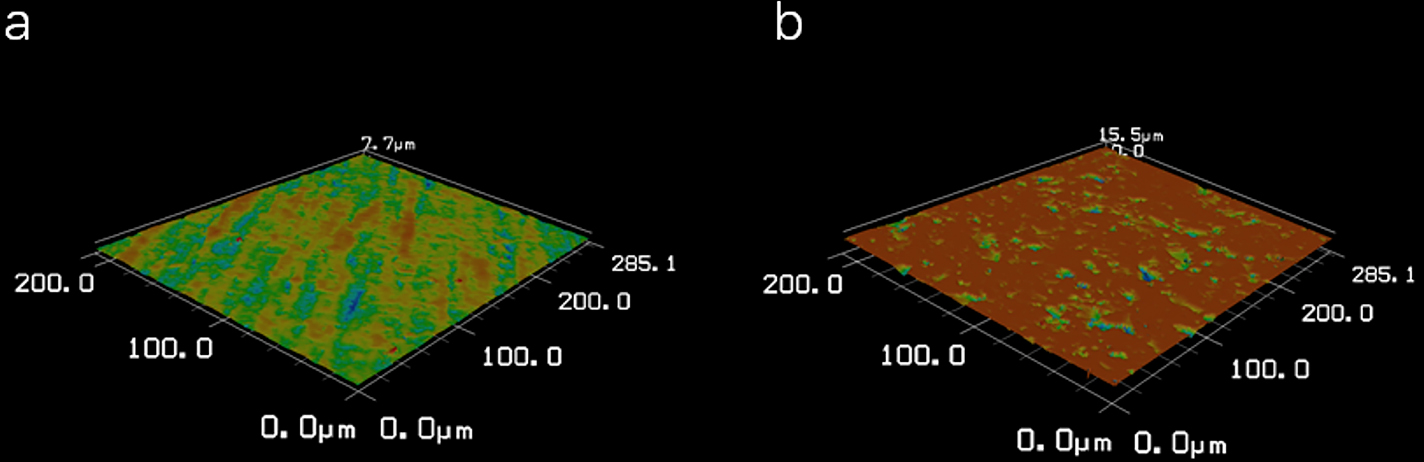
SEM image of surfaces after friction test in PEEK group and ceramic group (blue arrow: peeled ceramic abrasive particles; orange line: sample surfaces after friction test), a. PEEK (x 2000), b. PEEK (x 100), c. Ceramic (x 2000), d. Ceramic (x 100).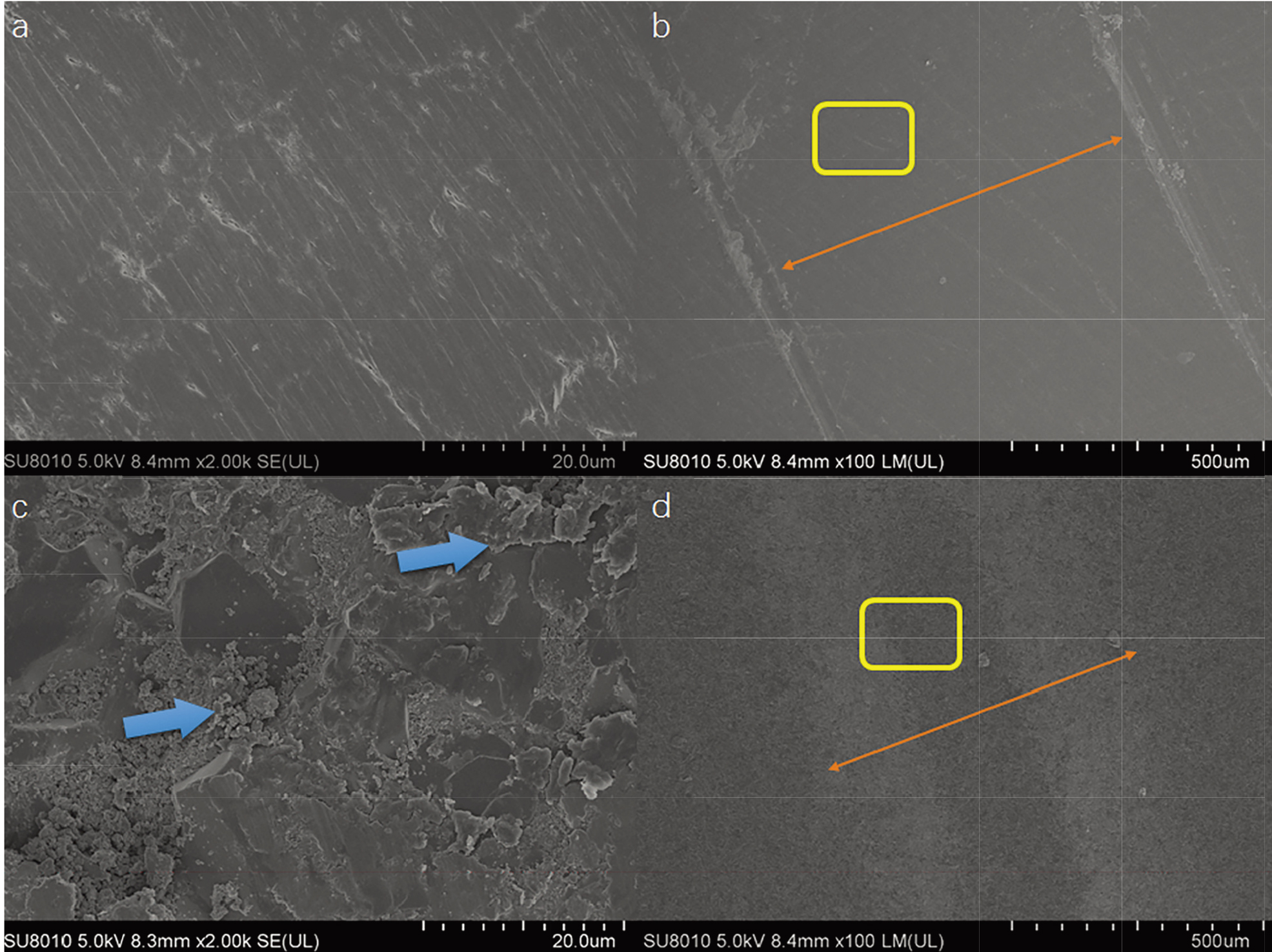
Table 2 showed the mean COF in two groups. PEEK had a lower friction coefficient than ceramic and the difference between the two groups was statistically significant (
Analysis of scanning electron microscopy (SEM)
The sample surface after friction test is shown in Fig. 3. Wear mechanism was clarified by the micromorphology under SEM. In Fig. 3c (x 2000), obvious scale-like desquamations and granular debris (blue arrow) were observed in the friction area. The abrasive wear of Ceramic was the main wear style, characterized by chipping fractures. Repeated friction between wire and Ceramic surface drove plastic to deform. Chipping debris after crack on the Ceramic surface shows abrasive wear. While PEEK surface still looks smooth without obvious scale-like desquamations and granular debris, indicating adhesive wear (Fig. 3a).
Nano-indentation testing
Elasticity modulus and hardness of PEEK and Ceramic are illustrated in Table 2. The Ceramic had far greater elasticity modulus and hardness than PEEK.
Discussion
With an increasing demand of adults for orthodontic treatment, the appearances of brackets have attracted extensive attention. Some patients prefer aesthetic ceramic brackets compared with metal brackets. However, the high cost and fragility of ceramic brackets have perplexed the patients and orthodontists for a long time. This research aims to evaluate the mechanical properties, frictional coefficient and surface roughness of PEEK and ceramic, in hope of finding out an alternative that is both aesthetic and functional.
The majority of polycrystalline brackets are manufactured using ceramic injection molding (CIM), which has the advantage of producing complex and precise items in large quantities at a rapid rate [28, 29]. However, polycrystalline ceramic brackets are made by agglutinating aluminum oxide particles at low temperatures, which results in a rough surface with a higher attrition coefficient and greater fracture susceptibility [30]. Despite the superior aesthetic properties, deficiency of the ceramic brackets was clear.
Polyether ether ketone (PEEK) has excellent wear characteristics, with low coefficient of friction and abrasion, excellent friction resistance and mechanical properties, and could replace traditional metals in some extreme environments in industry and manufacturing [31, 32]. With an outstanding creep resistance, PEEK is widely applied in extrusion and injection molding. It is also an implant biomaterial biocompatible with surrounding tissues and does not exhibit any cytotoxicity or mutagenic effects [33, 34]. There hasn’t been reports about allergic reaction caused by PEEK. Therefore, PEEK is a good choice for patients with suspected metal hypersensitivity and metal allergy. Its cytotoxicity to fibroblasts and osteoblasts demonstrates that it and its composites are biocompatible [35]. Currently, PEEK has been widely used in various medical fields, such as skull reconstruction, joint replacement, disc arthroplasty, academic investigations and dental practice, such as crowns, dental implants, temporary abutment, healing abutments, and removable partial denture frameworks. Its outstanding biomechanical properties in dentistry provide more clinical benefits most likely due to its bone-like modulus compared with traditional metal materials. It could be yellow tone, close to the color of natural tooth. Compared with metal bracket, PEEK bracket shows better aesthetic effect. Heimer et al. reported that PEEK seems more stable against discolorations than other denture resin materials including PMMA-based, and composite materials [36]. The artifacts resulting from metal brackets usually affect dentists’ judgment of alveolar bone and root in the X-ray examination, but PEEK can be penetrated by X ray [37], allowing for metal-artifact-free examination by magnetic resonance imaging (MRI) and computed tomography (CT). Patients with PEEK orthodontic brackets don’t need to remove their brackets before MRI examination. Furthermore, with high brittleness, ceramic brackets are easily damaged in the orthodontic treatment, which could result in its reduced service life and negative effect on orthodontic treatment [38]. Being more flexible than ceramic, accompanied by easy extrusion and injection molding or subtractive manufacturing, PEEK makes possible fabricating smaller and thinner orthodontic brackets, and lowering the risk of crack in the treatment. Therefore, PEEK is considered as a potential material for orthodontic appliance.
Some investigators found that saliva may promote lubricious behaviors. Under the action of the artificial saliva, frictional force decreased significantly [39, 40]. Therefore, the artificial saliva was used as friction medium in this research. Many studies have reported that a higher roughness leads to an increased bacterial adhesion or plaque formation [41, 42], so a bracket with smooth surface, thus easy to clean up, is required. It could be observed the surface of the PEEK group showed as smooth as that of ceramic group under the laser profilometer and there were no significant differences in surface roughness (
Reducing the friction between brackets and wires is a main goal in an efficient orthodontic treatment [43]. In the process of orthodontic treatment, friction results from the relative sliding between the orthodontic arch wire and brackets. A lower friction allows for safer and more efficient teeth movement, and make the patients more comfortable [44]. Alsubaie et al. reported that frictional resistance resulted in more than 60% loss of the applied force on ceramic brackets [45]. In our study, the PEEK group showed lower COF than the ceramic group and better performance in friction. Wear can be categorized as abrasive, adhesive, fatigue, and corrosive wear based on their mechanism of action [46]. According to the SEM analysis of surfaces after friction test, the wear between ceramic and stainless steel wire is speculated as abrasive. The relative movement between the arch wire and ceramic surface causes abrasion and debris fall-off on the ceramic surface. In this study, scale-like desquamations and granular debris were observed under the SEM. The debris also produces friction, increasing the friction coefficient of the ceramic group. Adhesive wear is common in metal and polymer materials. It derives from the bonding of microscopic high points between two sliding materials. In the friction spot, the relatively homogeneous surface was observed, yet no obvious fragments were found. The excellent friction performance of PEEK might benefit from its self-lubrication. Many studies have confirmed that self-lubrication results from transfer films of PEEK on the steel counterparts, which helps to reduce friction resistance [47, 48, 49]. PEEK films are said to be continuous, uniform, and thick [47]. A smooth and continuous transfer film is usually thought to be beneficial for protecting the polymer surface from hard-metallic asperities and reducing wear [50]. The formation of transfer films of PEEK/steel is able to avoid the direct contact of PEEK with hard asperities of steel [51]. It is speculated that the wear behavior between PEEK and SS wire might be adhesive. Many studies showed promising results in developing monolithic PEEK and composite (PEEK-NiTi) wire as alternative orthodontic wires [32, 52, 53]. The orthodontic treatment and appearance might be more satisfying, if PEEK could be used in both orthodontic brackets and wires in the future. Processing technology advantages of PEEK will also advance the development of customized brackets.
This study should be viewed in light of the limitations relevant to selection of wire materials. Because only SS wire was used in this study. Different types of wires, i.e. Beta titanium (TMA) wire and NiTi wire could be considered in next experiments. It would be interesting to conduct more studies about PEEK brackets, evaluating processing materials and methods in the future [54]. Additionally, bond strength should be evaluated carefully, testing in saliva [55] or other enamel contaminants [56], along with curing methods [57] and times [58]. Finally, biomechanical analyses [59] and torque capacity [60] should be evaluated before routine clinical use.
Conclusion
Within the limitations of the present study, polyether ether ketone (PEEK) shows lower coefficient of friction than ceramic. In summary, PEEK has excellent properties such as low friction coefficient, smooth surface and good mechanical properties, and thus meets the requirements for orthodontic brackets. Based on the findings of this investigation, it is deemed a suitable bracket material with both low friction and attractive performance. PEEK has huge promise in the dental field in the future as a supplement or replacement to traditional metals and ceramics. However, further research in the oral environment and clinical procedures is required to determine the practicality and long-term performance of PEEK in clinical orthodontics.
Footnotes
Acknowledgments
This research was supported by Beijing Natural Science Foundation (7214274), Clinical Medicine Plus X – Young Scholars Project, Peking University (PKU2023LCXQ012), Clinical Research Foundation of Peking University School and Hospital of Stomatology (PKUSS-2023CRF101), Program for New Clinical Techniques and Therapies of Peking University School and Hospital of Stomatology (PKUSSNCT-13A11) and Program for New Clinical Techniques and Therapies of Peking University School and Hospital of Stomatology First Clinical Division (YMZXJ-2009).
Conflict of interest
The authors declare that they have no conflict of interest.