




Abstract
BACKGROUND:
Joint position sense test assess patient mobility and proprioceptive ability. Yet, application used under different conditions may biases reproduction error resulting in different therapeutic consequences.
OBJECTIVE:
To investigate knee angle reproduction test under different test conditions.
METHODS:
25 healthy subjects (mean
RESULTS:
Absolute mean knee angle reproduction error showed significant difference for body position and vibration (Position: 95% CI 0.71 to 2.32;
CONCLUSION:
Body orientation and movement direction influence the resulting knee angle reproduction error in healthy subjects. Practitioners are advised to use standardised test procedures when comparing different within- and between-patient results.
Trial registration: DOI 10.17605/OSF.IO/AFWRP.
Introduction
The return to sports of an athlete after injury is a multifaceted and often challenging decision [1, 2, 3, 4], made daily by clinicians, physiotherapists, and coaches [5, 6]. One important criterion is the state of the proprioceptive feedback mechanisms, which are required to determine an adequate movement pattern [7, 8, 9, 10]. Accurate proprioception is a determinant of knee stability and plays a major role in daily activities, exercises, and sports [11]. Proprioception has been shown to be particularly reduced after anterior cruciate ligament (ACL) injuries [12, 7, 13]. The ACL is a key component of knee stability. Clinical evidence suggests that proprioceptive deficits exist in posture after anterior cruciate ligament reconstruction [14, 15, 16, 17, 18]. In their systematic review and meta-analysis, Flemming et al. indicated that proprioceptive feedback is still compromised 6–24 months following surgical treatment [19]. Thus, damage to the ACL may impair the ability to reproduce joint angles [20]. Reproducing knee angles as one parameter of correct knee functioning relies on a variety of different mechanoreceptors and muscle spindles as the main sources of information [7, 21, 22]. Ruffini end organ-like receptors and Golgi tendon receptors enable an adequate joint position sense, that is, the perception of relative muscle and joint position during movement [23]. Injury or surgery of the anterior cruciate ligament strongly affects mechanoreceptor function and negatively affects knee function, including lower extremity neuromuscular activation [18, 24, 25]. As adequate knee angle reproduction relies on continuous neuromuscular activation, deficient proprioceptive feedback with poor joint position sense can result in reduced knee angle reproduction [8]. Therefore, the sense of individual joint position seems to be a crucial parameter for a safe return to activity. However, the mechanism underlying joint position sense during adequate functional posture has not been completely elucidated [26, 7]. Moreover, it is associated with fatigue and can therefore be used to predict injury risk resulting from a delayed neuronal response [26]. Since joint position sense could provide key information to reduce the risk of injury and improve surgical outcomes [26, 27], the assessment of joint position sense in physiotherapeutic practice may lead to a safer return to activity after injury. Further, proprioceptive exercise can reduce pain and stiffness after ACL injury [28]. A major restriction in orthopaedic-physiotherapeutic practice is the current inconsistency in proprioception measurements in knee angle reproduction testing [23, 8]. As the mechanoreceptor activation pattern depends on body orientation and movement direction, we hypothesised that variations in test procedures can lead to different therapeutic consequences. Comparison of previous studies remains difficult due to heterogeneity in study protocols, equipment, and testing positions [29]. Therefore, the aim of the present study was to investigate the knee angle reproduction test as a measurement of joint position sense under varying test conditions, such as different body orientations and movement directions.
Methods
A clinical randomised trial with blinded outcome assessors was undertaken for two consecutive days. The study was done in accordance with the ethical standards of the Committee on Human Experimentation of the institution in which the experiments were done and in accordance with the Declaration of Helsinki of 1964 and its later amendments or comparable ethical standards. The study was approved by the Institutional Ethics Board of the Sports University Cologne (152/2019). The experimental design was preregistered on ‘Open Science Framework’ (DOI 10.17605/OSF.IO/AFWRP). Participants were recruited through voluntary participation. Consenting participants were allocated using a stratified random allocation sequence to three different test conditions (direction: ex
Knee angle reproduction test: 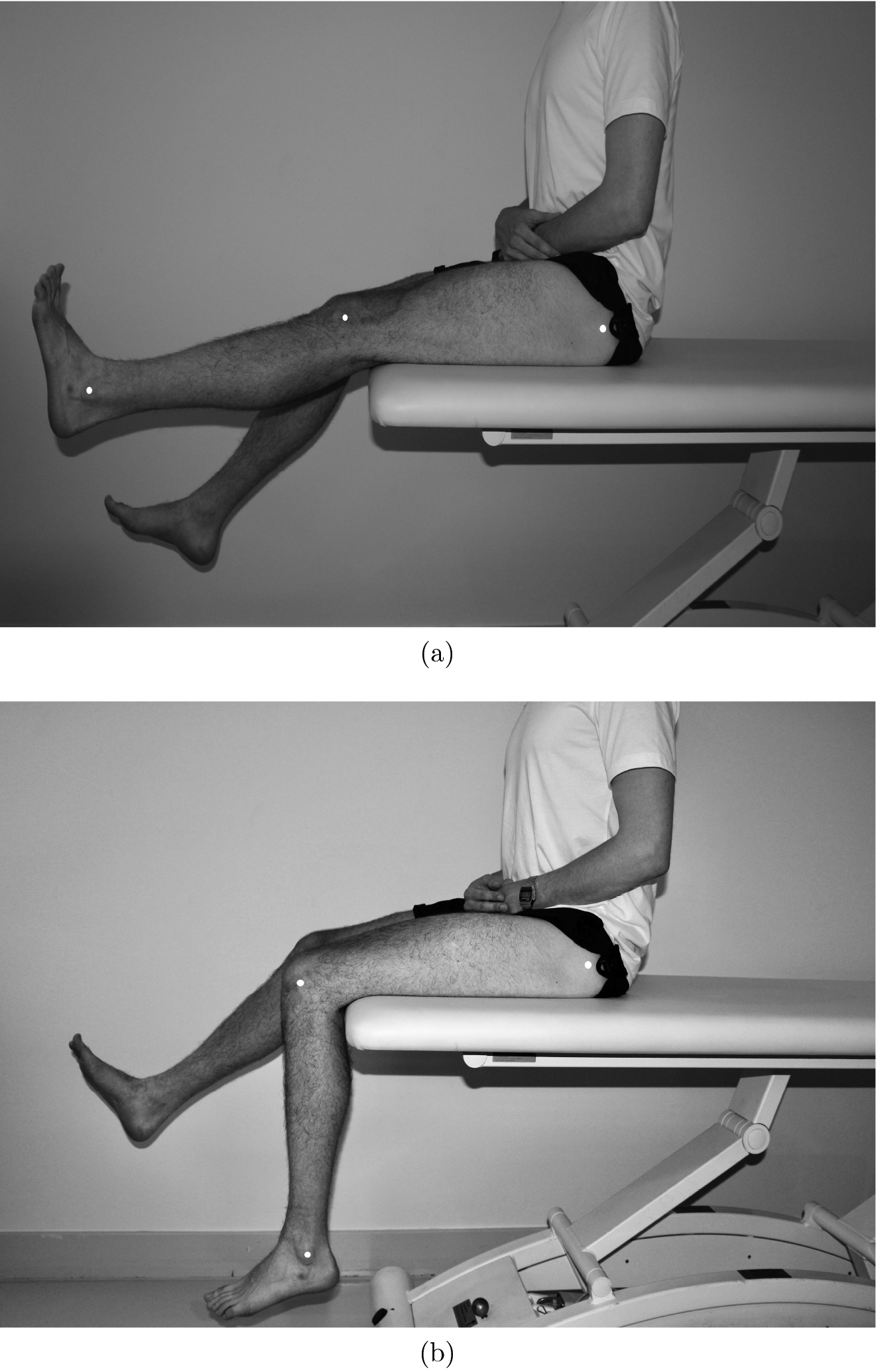
Prior to testing, participants were familiarised with the study protocol via standardised verbal instructions. To preclude general angle reproduction disabilities, reproduction errors were tested on an elbow angle reproduction test in advance. Participants were asked to reproduce 90
Knee angle reproduction test: 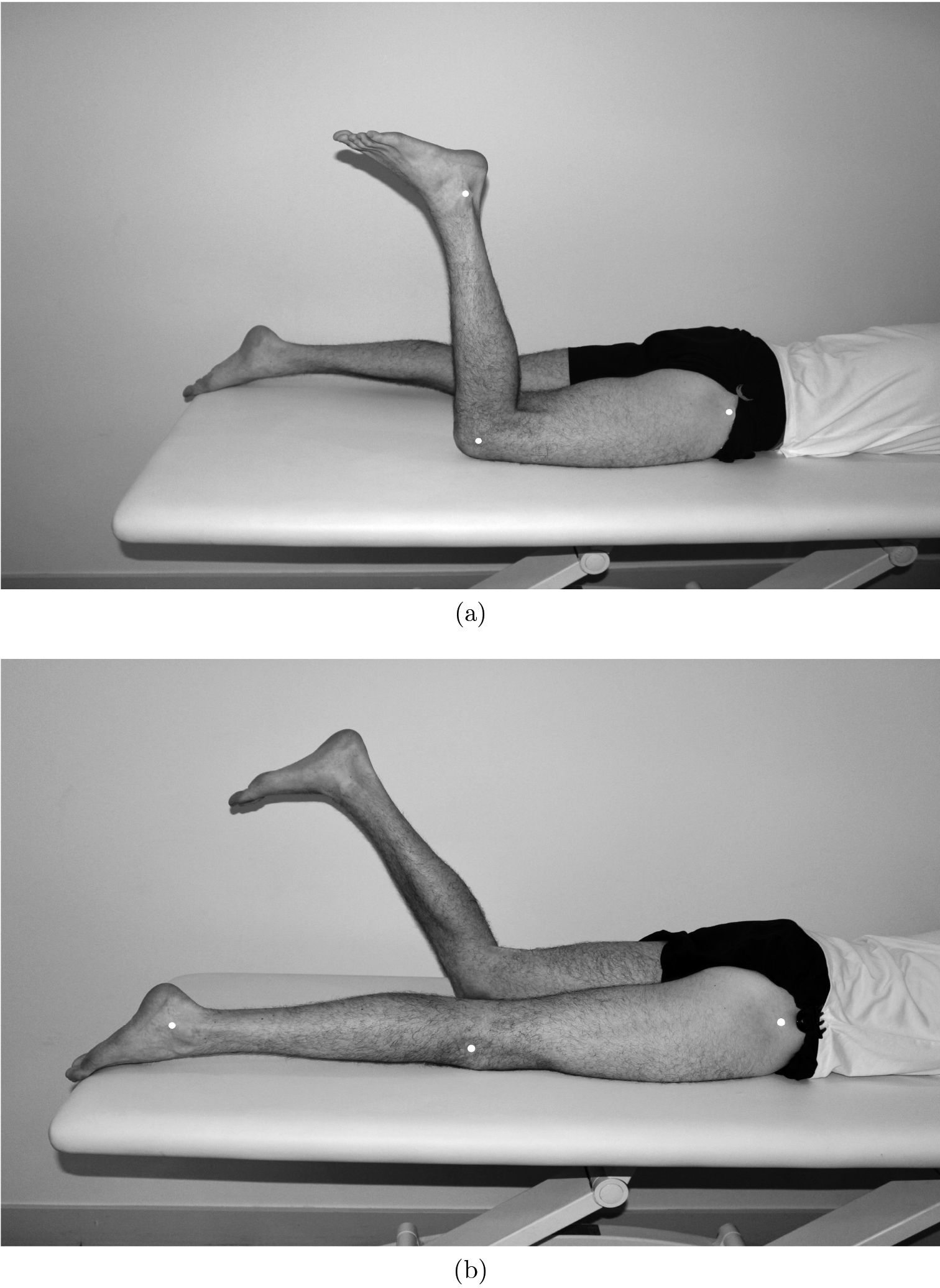
Additionally, the participants performed the same procedure during the manipulation of the semitendinosus tendon. A common method of anterior cruciate ligament reconstruction is semitendinosus tendon allografting [5, 34, 35, 36, 37, 38]. Therefore, vibration was applied to disturb the proprioceptive function of the semitendinosus tendon, mimicking post-surgical neuromechanical behaviour. Vibration was induced by a customised engine (‘Braun’ engine, 120 Hz) [39]. A frequency above 80 Hz was selected, as this was previously shown to activate and influence the majority of sensory fibres [17, 40, 41]. For the testing procedure, each participant lay down or sat on an adjustable physiotherapy bench. The participant’s left knee was set passively to a random angle chosen by the test operator. Previous studies have indicated no clinically important differences in proprioceptive performance between dominant and non-dominant limbs in trained participants [42, 43, 44, 45]. Next, the participants were instructed to actively reproduce the left knee angle with the right leg. For the subsequent knee angle determination, fixed anatomical landmarks were tagged: tuberculum majus humeri, epicondylus lateralis humeri, processus styloideus radii, trochanter major femoris, lateral knee joint cavity, and alleolus lateralis (shown in Figs 1 and 2). Each test included five trials. To minimise proprioceptive transfer to the next test, the participants walked around for about two minutes between tests. The participants were blindfolded for all conditions to prevent visual feedback.
The outcome measure was the knee angle reproduction error, measured as degree [
Statistical analysis
Statistical analyses were performed using R (Version 3.3.3). Data were checked for missing values, distribution, and outliers and descriptively summarised as means
Results
Twenty-five healthy young students (age
Pre-test
Comparison of the reproducibility of the elbow angle on the same side and on the contralateral side (mirroring) showed no statistically significant differences (mirroring: t (24)
Descriptive values of self-chosen target knee angle and the resulting absolute reproduction error in the prone and sitting position with and without vibration induced on the semitendinosus tendon in a knee angle reproduction test (n
25). (Min
lowest self-chosen knee angle; Max
highest self-chosen knee angle; SD
standard deviation; SE
standard error)
Descriptive values of self-chosen target knee angle and the resulting absolute reproduction error in the prone and sitting position with and without vibration induced on the semitendinosus tendon in a knee angle reproduction test (n
Boxplot of the difference in knee angle reproduction error including all repetitions: light grey 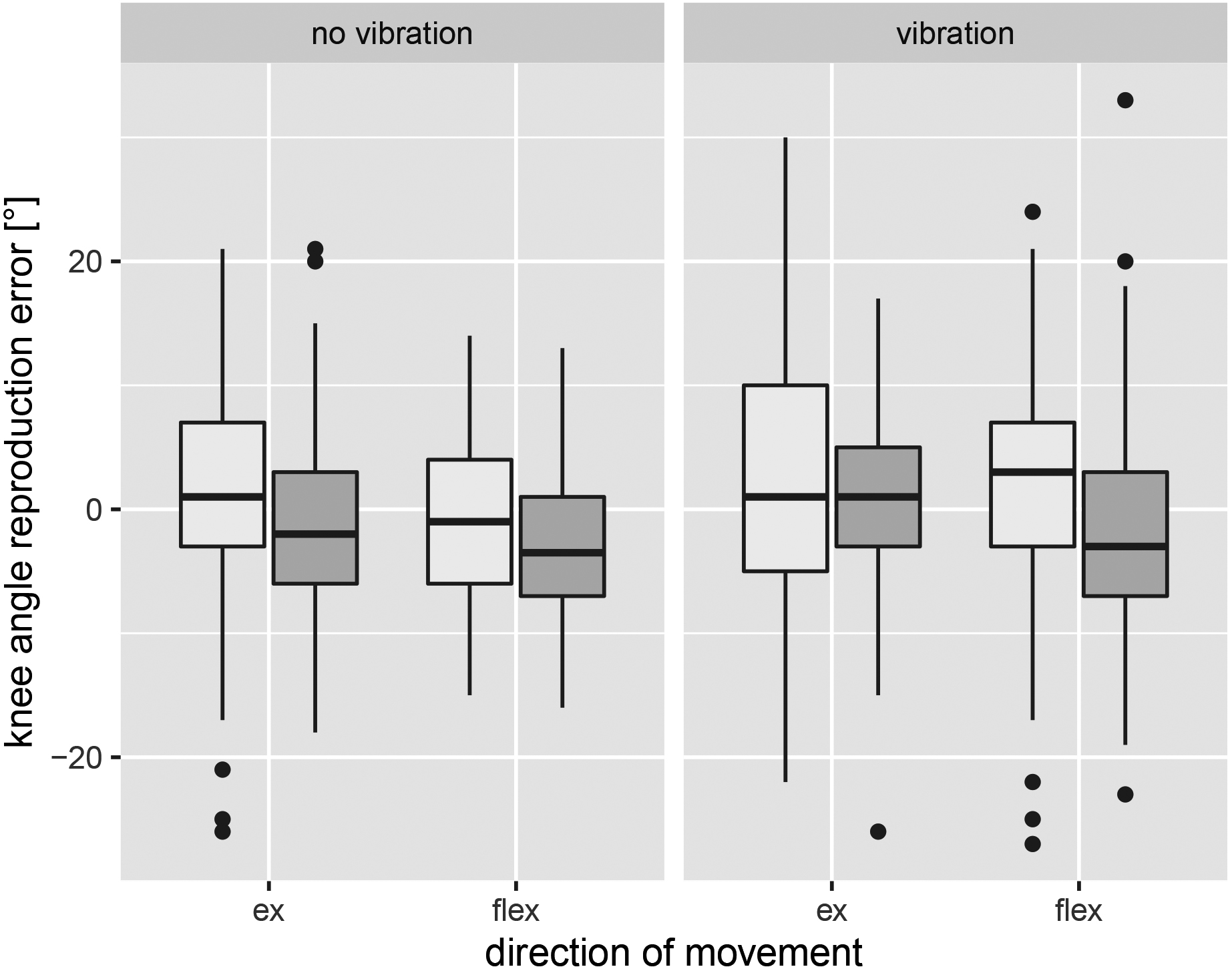
Boxplot of the signed mean difference in knee angle reproduction error: light grey 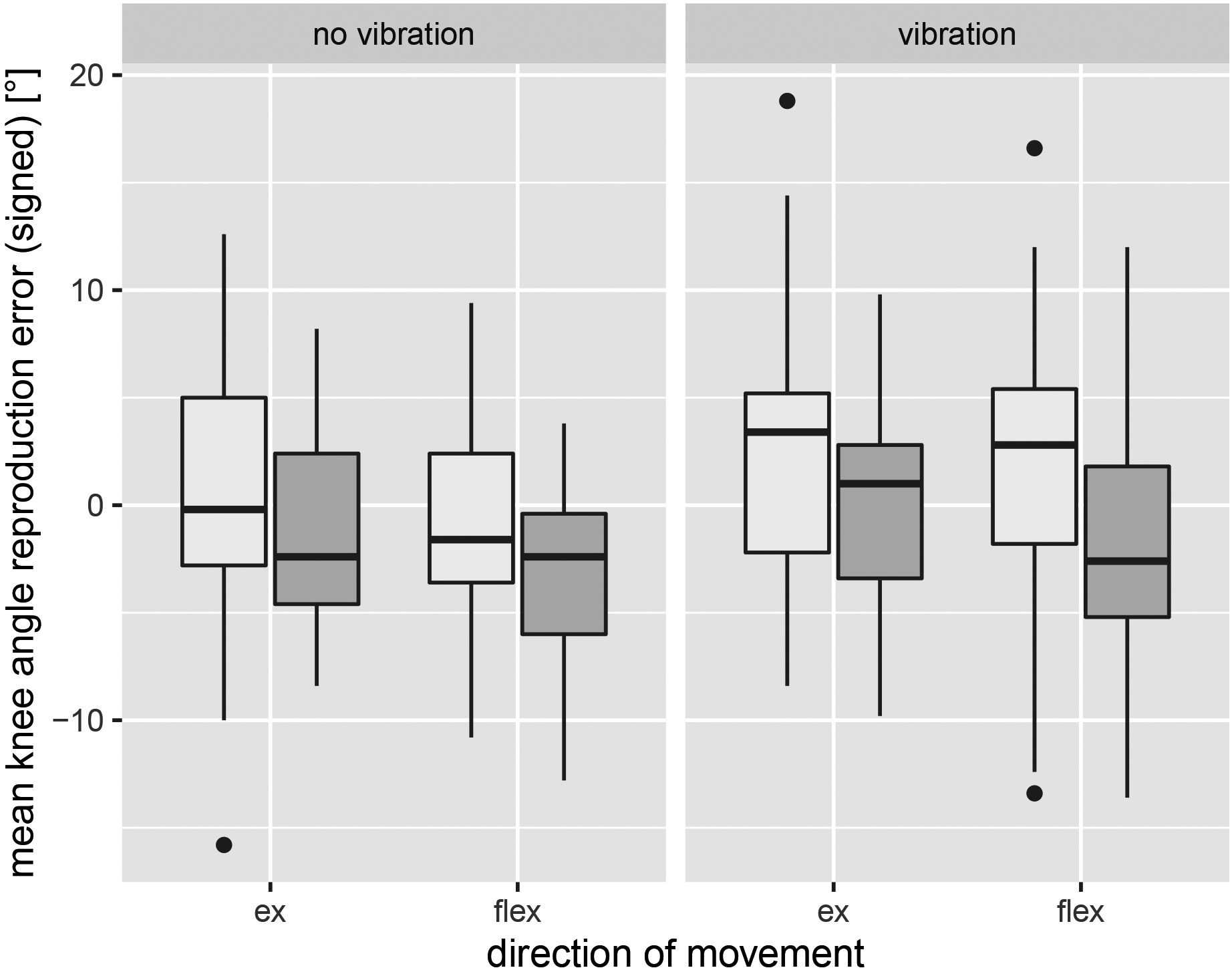
Boxplot of the absolute mean difference in knee angle reproduction error: light grey 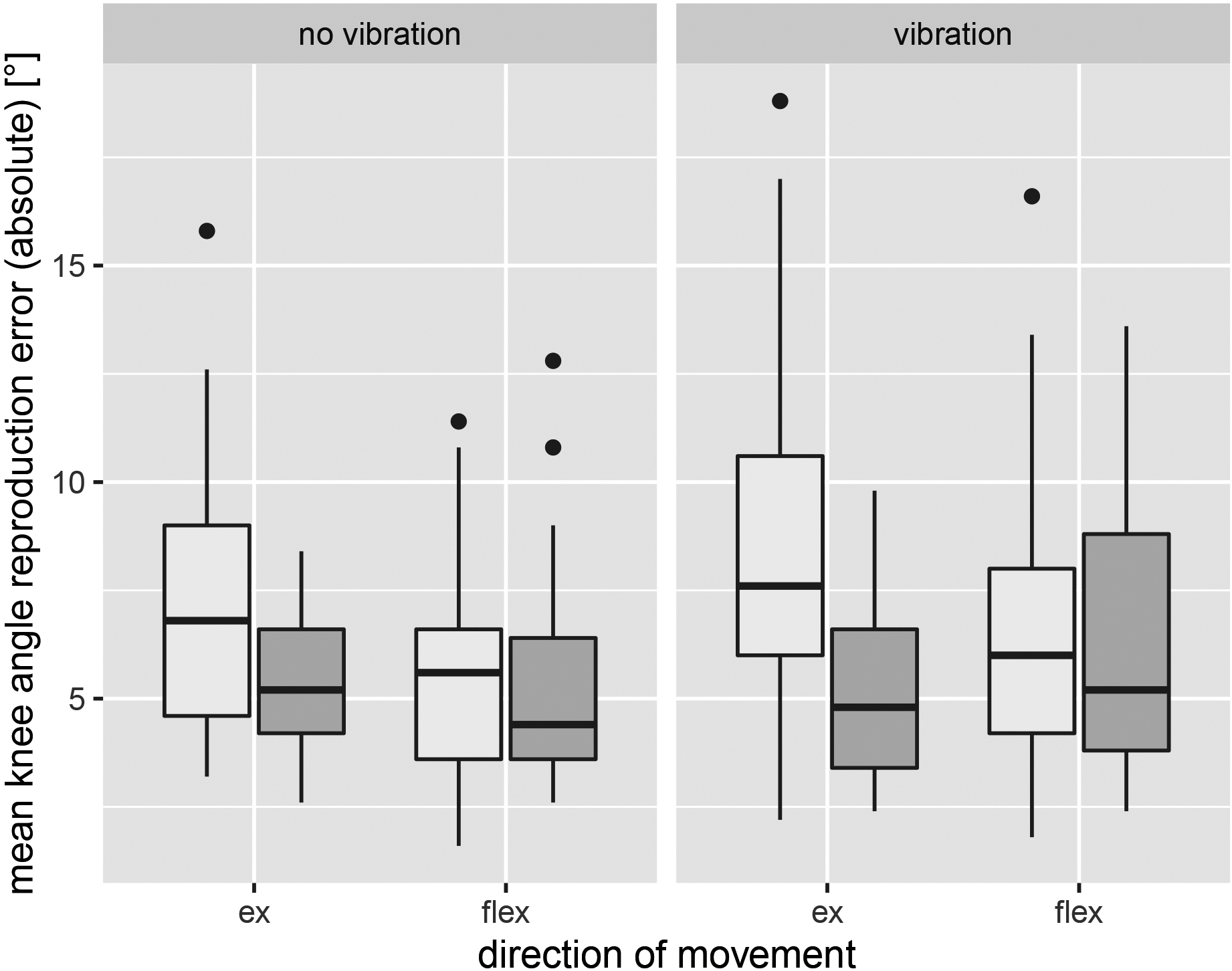
Inspection of the normal Q-Q plot indicated that the data were normally distributed for each group. Levene testing revealed no deviation from homoscedasticity for signed angle reproduction error (
Discussion
The aim of the present study was to evaluate joint position sense by investigating knee angle reproduction ability under different testing conditions. The results confirmed the hypothesis that the ability to reproduce knee angles differs between sitting and prone positions. The results further indicate that the initial starting position, either from knee flexion or extension, influences reproduction ability. These findings are of great practical importance, as currently the literature does not prescribe uniform standards regarding the starting position of the joint position sense test [7, 8, 46]. Based on our results, the general ability to reproduce knee joint angles is not interchangeable between different starting positions and body orientations. An adequate reproducibility of the knee joint angle from the prone position cannot be directly compared with the same results from the sitting position. A possible explanation for this could be the difference in body position in space and especially in the position of the head (upright versus horizontal) [47]. Different tactile feedback on the thigh could also have influenced the resulting position sense [9]. In a seated position, tactile feedback is primarily given on the back of the thigh, whereas in a prone position, tactile feedback is more likely to be found on the front. The somatosensory system is responsible for the perception of haptics, movement, position of body segments, temperature changes, and pain [48]. To perceive these diverse sensory impressions, the somatosensory system has a large number of mechanoreceptors at its disposal. Various body orientations might be relayed to different mechanoreceptors, thus making standardisation of test methods paramount. Further, primary cilia (PC) play a crucial role in the signalling between the intra- and extracellular space. Grevenstein et al. [49] detected a significantly lower rate of PC positive cells compared to other tissues and ligaments of other species, which might be a tissue-specific characteristic of the ACL [49]. Third, the elongation ability of the muscle-tendon unit of the ischiocrural musculature might be reduced while sitting with both legs extended. Furthermore, the predominant pre-tension of the m. quadriceps femoris, depending on the aforementioned stretching ability, may have caused better reproducibility [50, 51]. In addition to the elasticity of ligament and tendon structures, other factors can also play a role in carrying out a knee angle reproduction test [52], such as restrictions on movement in the elderly or those with orthopaedic injuries limiting the choice of starting position. To mimic the clinical setting, testing was performed in non-weight-bearing conditions, even though weight-bearing might be more functional [41]. Therefore, transferring the results to daily activities should be done with caution. Clinical studies have shown possible impairments of proprioception in the knee joint in patients with anterior cruciate ligament rupture and lower neuromuscular activity in anterior cruciate ligament reconstruction [7, 24, 14, 16, 17]. This can be attributed to disturbed neural feedback caused by the destruction of the mechanoreceptors in the anterior cruciate ligament or the muscle spindle, as well as by the removal of the neural feedback of the semitendinosus or patella tendon after surgery [7, 18, 53]. Following Bock et al. [39], the present study used vibration as an interference source to induce impairment of neuronal feedback and thus proprioception of the knee joint in healthy subjects. The aim was to simulate the neuronal injury mechanisms of semitendinosus plastic surgery in anterior cruciate ligament reconstruction and to examine the possible effects on proprioception. It was expected that manipulating the semitendinosus tendon by vibration would induce a significantly reduced ability to reproduce knee angles under all joint position sense test conditions. The results showed that vibration represents a recognisable influence and thus serves as a source of interference with proprioception. However, it is questionable whether the vibration causes a disturbance in the neuronal feedback of the semitendinosus tendon. There could be other possible factors, such as the attachment of the vibration device or a pure sensitivity disturbance of the skin surface due to vibration [54]. However, anterior cruciate ligament reconstruction by means of semitendinosus allograft surgery potentially has far more consequences than what induced vibration is capable of simulating [55]. One possible approach could be the use of artificial intelligence (AI) to might reduce the risk of neurological damage and improve clinical outcome prediction. Especially in the field of diagnostics and therapy AI has already shown considerable advantages [56, 57, 58, 59]. This could be beneficial for the patients’ rehabilitation process. This is the first study to investigate and confirm the impact of body orientation and direction of movement in an active knee angle reproduction test, considering possible interaction effects. A potential influence of body orientation and movement direction, even in healthy athletic persons, could be suspicious of an even greater discrepancy in orthopedically impaired patients. Further research in non-healthy subjects, such as anterior cruciate ligament patients, is recommended before drawing clinical conclusions. To date, the current literature remains difficult to compare with the present results, because different testing protocols, equipment, and no uniform concerning testing positions have been used. Further, no studies have considered possible interaction effects between body orientation and direction of movement of the knee [46, 52]. This is the first study to compare the results of different body orientations and directions of movement in an active knee angle reproduction test.
Conclusion
Due to the reproduction errors in knee angle reproduction tests determined by different test conditions, practitioners are advised to use standardised test procedures to progress their clinical value and implementation into daily practice. The results in different settings should be critically analysed – that is, a direct comparison between the prone and sitting positions in a practical approach might not be recommended. Furthermore, considering the economic health aspects, the choice of test conditions should be based on the participants’ resources to perform their best results. Practitioners should be aware that varying test conditions can lead to different therapeutic consequences. Future studies should focus on additional influencing factors on testing procedures, such as weight-bearing conditions. However, it would be of great interest to elucidate how the resulting reproduction error depends on the knee in setting the target angle.
Clinical messages
Body orientation has an influence on knee angle reproducing capabilities, whereas reproduction error is significantly higher in the prone position. Direction of movement (starting from knee extension or knee flexion) might have a practical influence on knee angle reproduction errors. There is evidence that disruption of senso-motoric feedback leads to a decline in reproductive capacity. Practitioners should be aware that varying test conditions can lead to different therapeutic consequences.
Authors contribution
Juliane Wieber: Conceptualisation, Methodology, Software, Formal analysis, Investigation, Data curation, Writing-Original Draft, Visualisation, Project administration.
Jasmin Brandt: Conceptualisation, Methodology, Investigation, Writing-Original Draft.
Eva Hirschhäuser: Conceptualisation, Methodology, Software, Investigation, Writing-Original Draft.
Maike Pieper: Conceptualisation, Methodology, Formal analysis, Investigation, Writing-Original Draft.
Robert Rein: Conceptualisation, Data curation, Software, Formal analysis, Supervision, Project administration.
Philip Catalá-Lehnen: Resources, Proof-Reading-Original Draft, Data interpretation.
Bjoern Braunstein: Conceptualisation, Software, Resources, Data curation, Supervision, Project administration.
Funding
This research did not receive any funding from public, non-profit and/or commercial organisations.
Footnotes
Acknowledgments
The authors would like to thank all the subjects who participated in the study.
Conflict of interest
The authors declare that there is no conflict of interest.