




Abstract
BACKGROUND:
In wireless communication standard 4G and 5G, the body centric network plays an important role for the wireless communication between various devices.
OBJECTIVE:
This research relates to a wide-band conformal co-planar waveguide (CPW) antenna for wearable applications.
METHODS:
The proposed CPW antenna is printed on 0.1 mm thick bio-compatible polymide substrate whose dielectric constant and permittivity are 3.5 and 0.02 respectively. The total area of the antenna is around 17.5
RESULTS:
Specific Absorption Rate (SAR) is calculated after placing the antenna at various places of human phantom model and showed that SAR values are below 1.6 W/Kg which is the maximum margin recommended by Federal Communication Commission (FCC), i.e when tested with 1 g and 10 g of human tissue of phantom model, for the test frequency range of 5.5–6.1 GHz, SAR value falls between 0.9987 and 0.921 W/Kg respectively. The antenna also shows the radiation efficiency around 92% with overall realized gain 5.2 dBi which are substantial values for wearable applications.
CONCLUSION:
The outcomes of this research revealed the feasibility of the recommended antenna becoming a major contender of future Internet of Things (IoT) applications.
Keywords
Introduction
In wireless communication standard 4G and 5G, the body centric network plays an important role for the wireless communication between various devices. The IEEE 802.15 standardization group has been created to standardize applications that are intended for placing various wireless devices on the human body or within the human body and creates dispersion research for body systems for communication. This research is being done in an effort to help satisfy the rising demand for body communication systems. The realm of Personal Area Networks (PANs) and networked body areas (BANs) is where one will unequivocally find a home for body-centric communications. On-body communications, one of the applications, explain the connection between body-mounted devices that are able to communicate wirelessly. Off-body communications, on the other hand, define the wireless communication between various outer region devices such as smart phones and base units or portable gadgets that are positioned in the surrounding environment. Both types of communications are examples of applications. Hence, in-body communication refers to the communication link through virtual between the wireless medical implants and nodes located on the body.
The important research issues in the field of antennas design with respect to on body wireless communication network system are discussed in this work. In general, the criteria for wearable antennas for all current applications call for them to be lightweight, inexpensive, practically maintenance-free, and not need any installation. There are a number of specialized occupational subsets that make use of body centric communication systems. Some examples of these occupations are fire fighters, paramedics, and members of the armed forces [1]. In addition, the elderly, children, and athletes are all groups who might benefit from the use of wearable antennas for the purpose of surveillance.
There is a lack of freely accessible information about the electromagnetic characteristics of wearable fabrics. In [2], the waveguide method for wireless communication was discussed for the measurements of the electromagnetic characteristics of a textile substrate. The simulation took into account both the permittivity and the loss tangent value, which were both significant.
Wearable technology-based Internet of Things applications are rapidly increasing to fulfil the forthcoming need for high-performance wireless connection. In a setting that is focused on the wearer’s body, the antenna is absolutely necessary for effective communication. When an electronic component can be developed and constructed such that it may be incorporated into a wearable substrate, the user experience is improved. Wearable technology is becoming an increasingly important component of telemedicine services [3, 4, 5]. Because of the myriad of ways in which it influences performance, the human body presents the biggest challenge to the development of a wearable platform. The high dielectric lossy characteristics of the body, ongoing bodily movement, and the curvature of the body all provide substantial challenges for the development of wearable technology [6, 7, 8, 9]. The antenna has a bandwidth that is not very wide, and the influence of the human body on the efficiency of the antenna has not been taken into consideration. On the other hand, due to the fact that the human body exhibits lossy behavior in nature and it affects the network bandwidth. Many other types of antennas, including as MIMO structures, defective ground structures, Electronic Band Gap structures [EBG], and orthogonally oriented structures [10, 11, 12, 13, 14, 15, 16, 17], have been developed specifically for wearable applications. However, the suggested antennas take up more space and result in a decrease in the performance of the whole antenna system. An investigation into the use of different implanted antennas for a variety of applications has also been carried out. Additionally, SAR has been spoken about [18, 19, 20, 21, 22]. In addition, issues concerning the difficulties and potential applications of biomedical antennas with SAR properties have been discussed [23, 24, 25, 26, 27, 28, 29, 30].
Implantable antenna proposed in [22].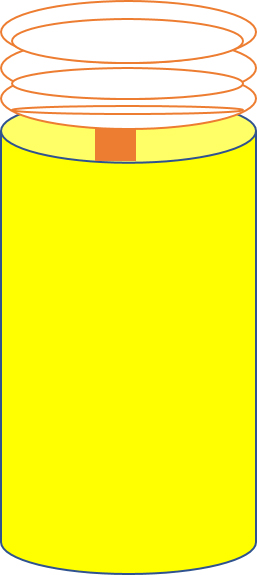
The overall composition of the article has been broken down into four distinct components, which together make up the antenna design and analysis. In Section 1, the emphasis is placed on the design and parametric analysis of the designed antenna, as well as the simulation of the antenna’s characteristics. Conformability of the antenna is provided with respect to its equivalent findings in Section 2. The performance of the antenna over human tissues has been covered in Section 3, and Section 4 will provide the conclusion of the study.
The wearable capsule like antenna, proposed for wearable applications is shown in Fig. 1. Despite very good radiation characteristics seen in the presented antenna, it has overall dimensions of
In this research, a conformal antenna resonating at 5.8 GHz ISM band for wearable application is investigated with details of design insights. The proposed antenna has been printed on the 0.1 mm polymide substrate with the dimension of 17.5
The structure and dimension of the proposed antenna is shown in Fig. 2. The proposed co-planar waveguide (CPW) antenna is printed on the quasi bio-compatible flexible 0.1 mm thick polymide substrate whose dielectric constant is 3.5 with overall dimension of 17.5
Overall structure and dimension of the proposed conformal antenna.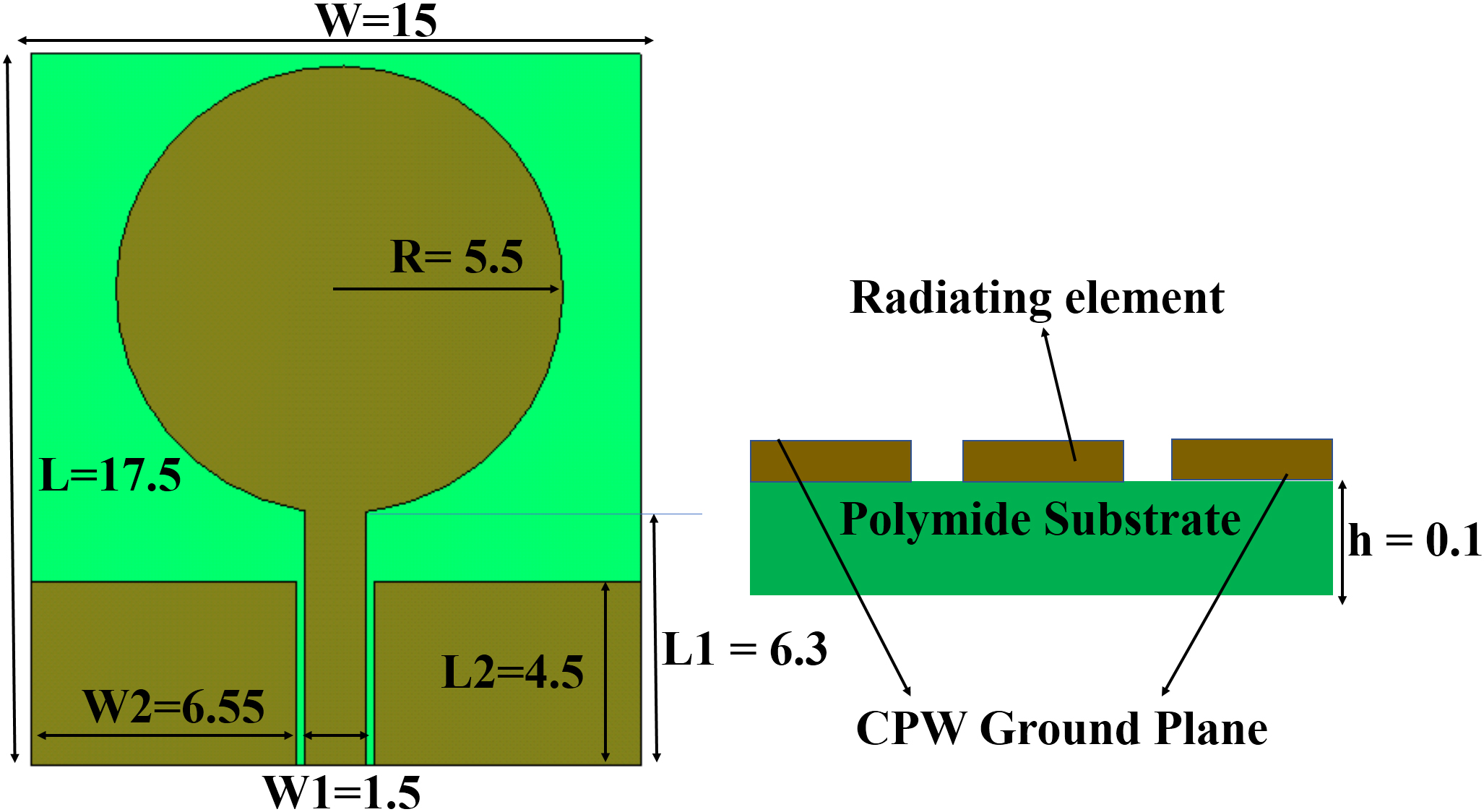
Simulated S-Parameter of the proposed antenna.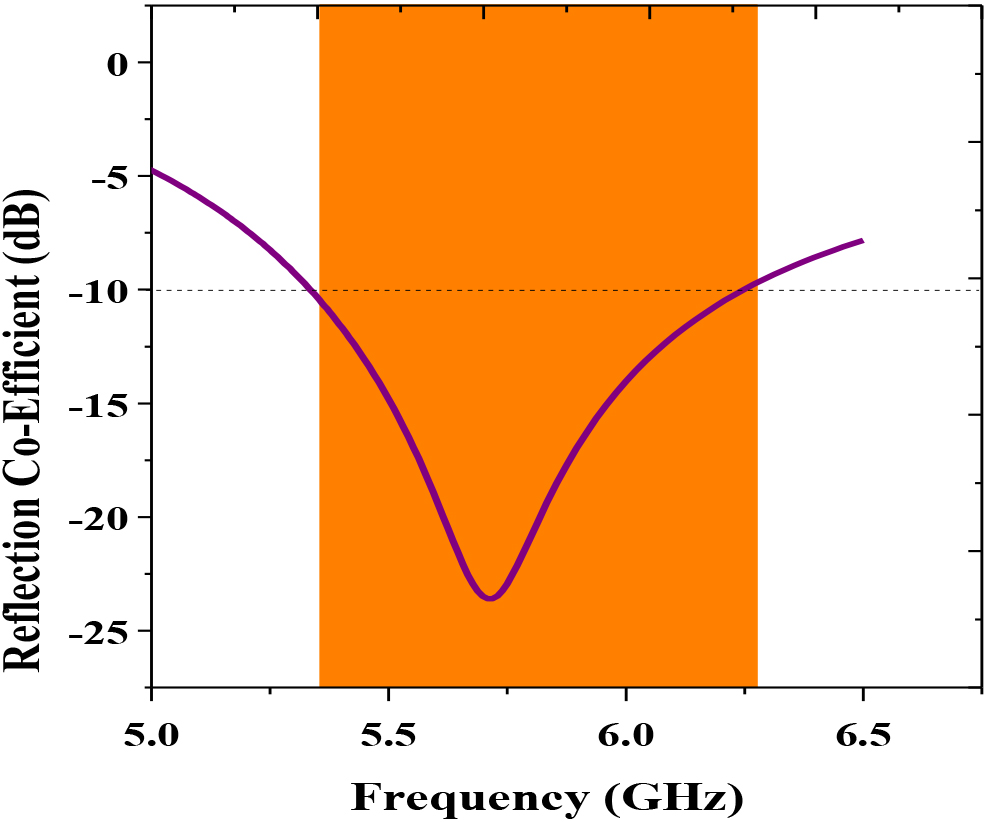
The proposed CPW antenna was designed and validated after performs of parametric analysis and proper tuning through use of Computer Simulation Technology 3D commercial Electro-Magnetic simulator [23]. The simulated S-parameter of the proposed CPW based wearable antenna for 5.8 GHz applications is depicted in Fig. 3. As seen, the proposed antenna operates between 5.3–6.3 GHz over
Parametric study of the proposed antenna when changing (a) R, (b) L1, (c) L2.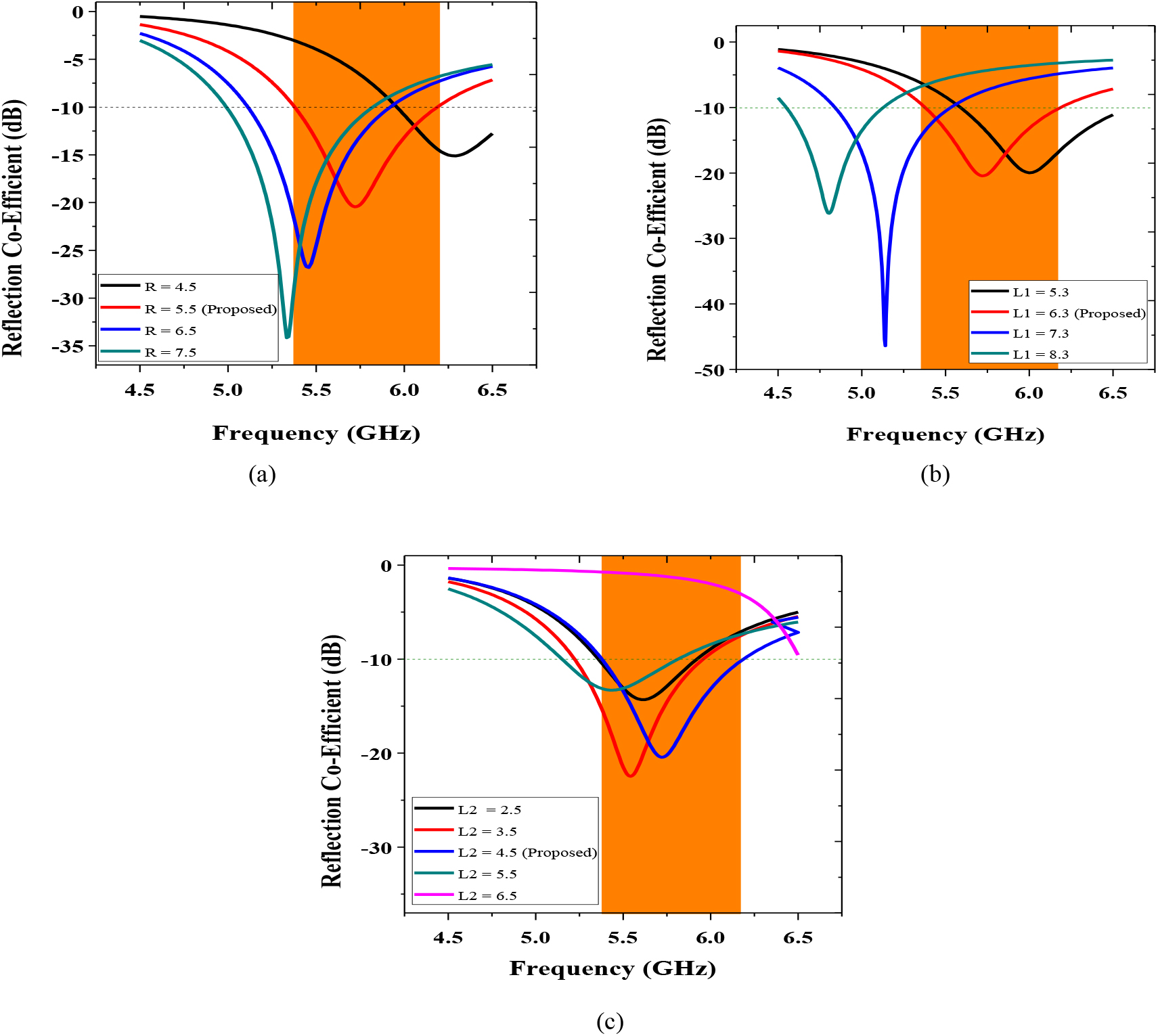
In this part, an analysis of the thorough parametric research of the proposed antenna has been done in order to offer a short design insight of the suggested antenna. This analysis is shown in Fig. 4a–c, respectively. If you change one parameter, you must ensure that all of the other values remain unchanged in order to continue with the parametric analysis. The radius of the radiating element is adjusted with a step size of 1 mm between 4.5 mm and 7.5 mm, as is illustrated in Fig. 4a. When determining the frequency of resonance at 5.8 GHz, the radius of the circular patch is an important factor to take into account. When the radius is increased from 4.5 mm, the frequency of operation is moved to the right side of the spectrum. Following an increase in length (radius), there is a subsequent reduction in the frequency of operation that occurs. Furthermore, the length (L1) of the feeding strip has been adjusted to range from 5.3 mm to 8.3 mm. A resonance of a nature similar to that reported in the operating frequency has been detected. The influence of the ground plane was further explored by varying the vertical length (L2) from 2.5 mm to 6.5 mm. This allowed for a range of values to be found. It was observed that impedance matching caused quite a significant variation in the operating frequency.
(a) Surface current distribution, (b) Electric Field distribution at 5.8 GHz.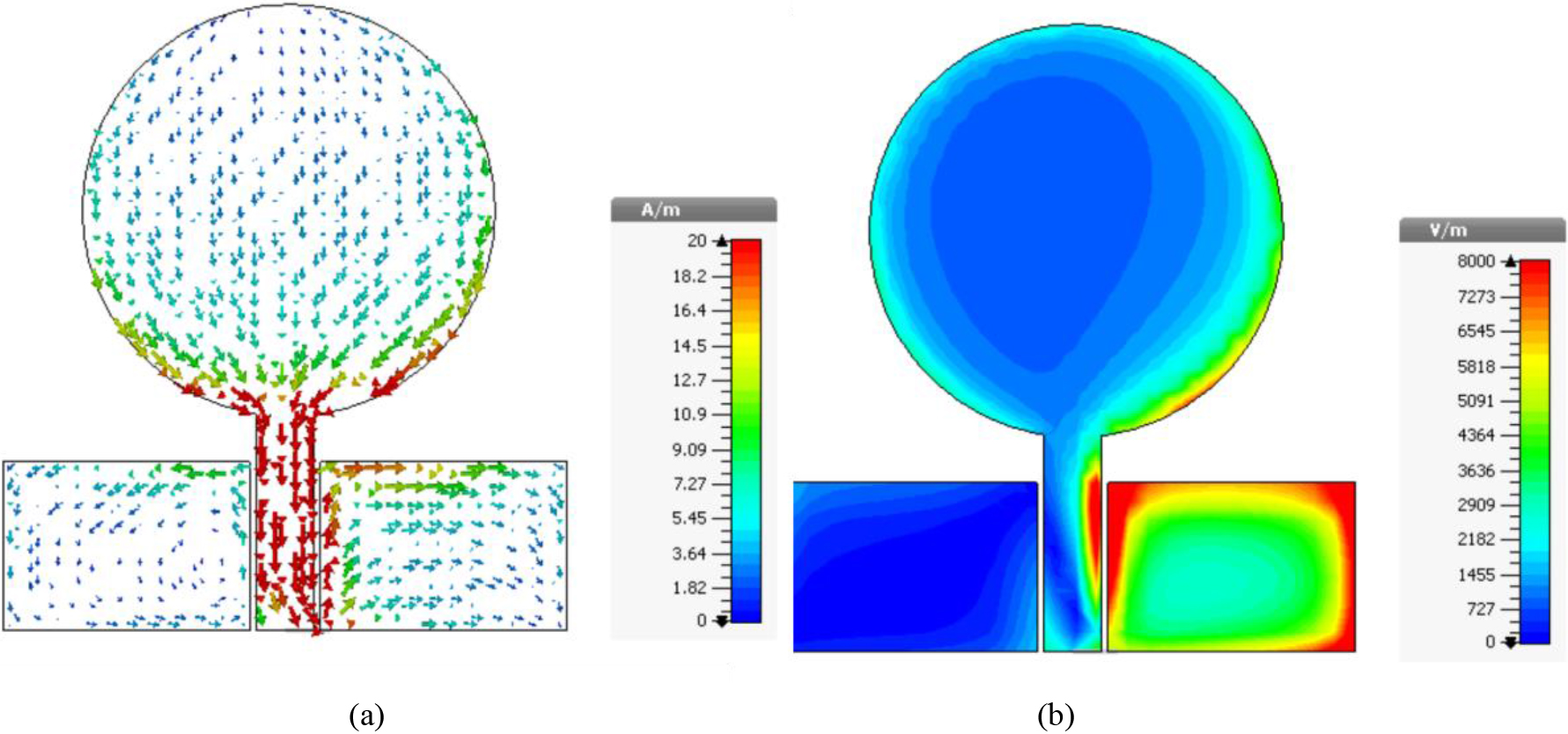
The surface current distribution of the suggested antenna is seen in Fig. 5a, which may be found here. It is possible to see the peak current as it travels around the feeding strip and the perimeter of the circling radiator. Due to the fact that the antenna is of the monopole kind, the substrate does not have a ground plane. Because of this, there will not be any surface waves present in the emitted wave while the antenna is maintained on a human body. The distribution of the electric field produced by the suggested antenna is shown in Fig. 5b. In order to maintain the human body at a safe distance from ever-increasing SAR values, the maximum E-field distribution covers just one third of the antenna surface.
(a) 3D radiation pattern, (b) Two-dimensional radiation pattern.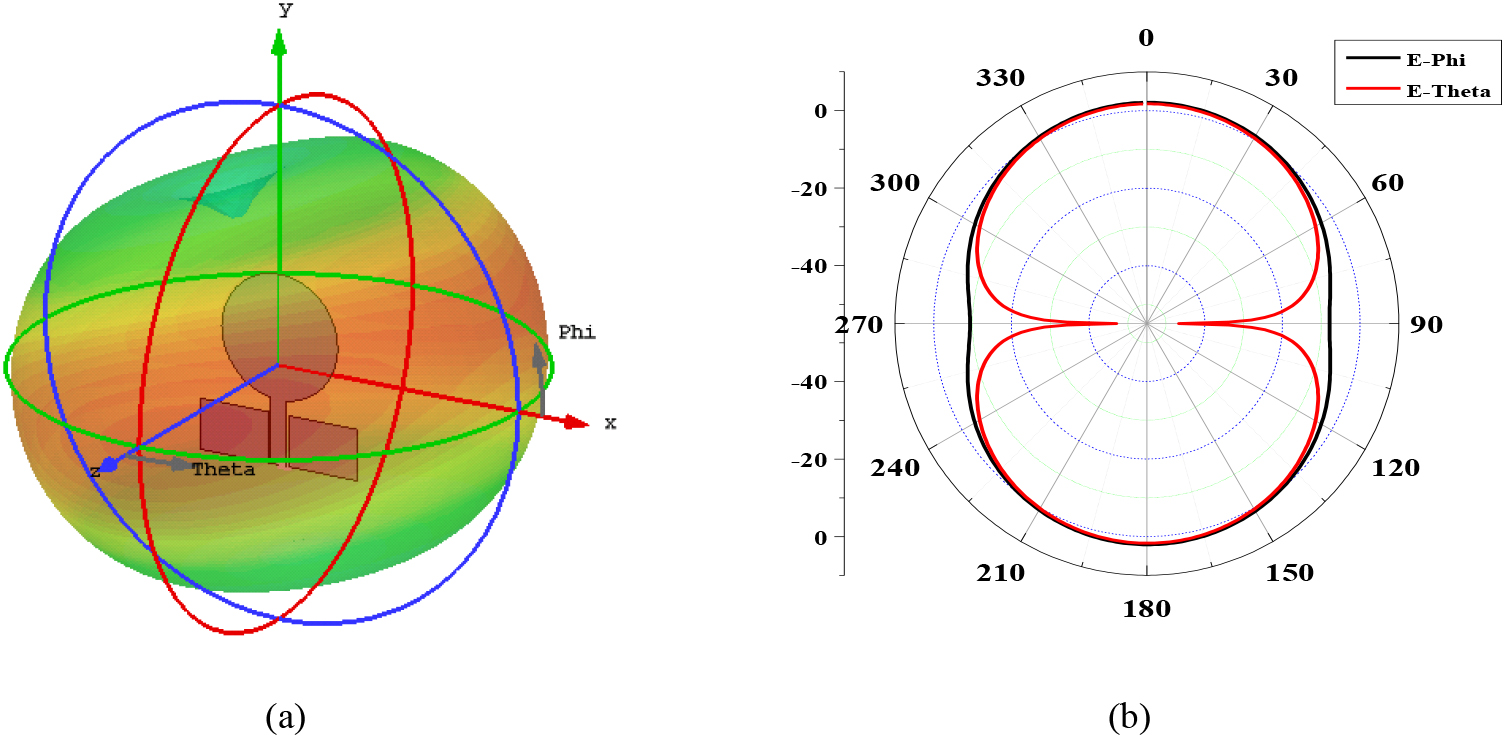
Simulated gain of the proposed antenna.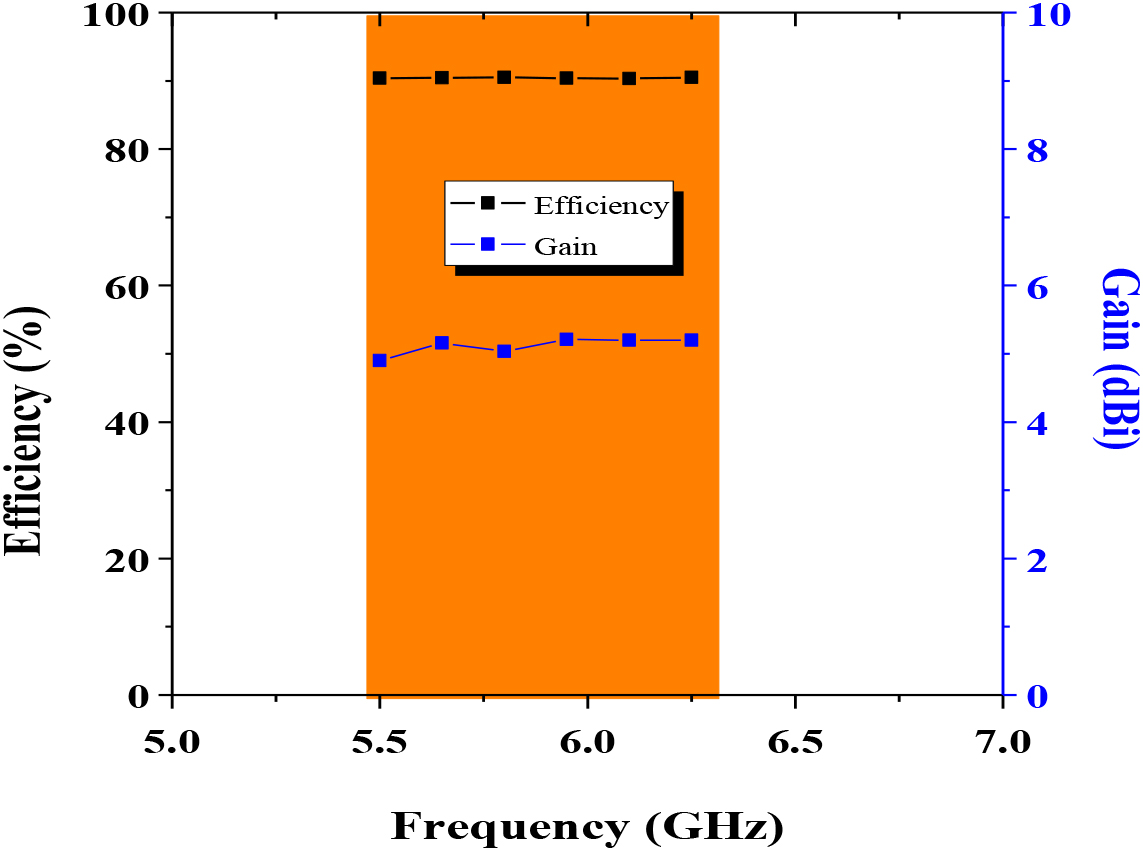
Both the three-dimensional and two-dimensional radiation patterns of the suggested antenna are shown in Fig. 6, respectively in (a) and (b). The suggested antenna system has no radiation field discovered on the backside of the proposed antenna, as can be shown in Fig. 6a, which demonstrates that the antenna emits the most radiation on the front side of the radiator. As a result, electromagnetic waves will not be transmitted into the human body, bringing the Specific Absorption Rate (SAR) to its lowest achievable level. This demonstrates that the antenna is an excellent prospect for use in wearable applications.
The efficiency of the proposed antenna and gain has been exhibited in Fig. 7. The antenna has overall radiation efficiency of around 90–92% with significant realized gain around 5.2 dBi throughout the entire band of operation which sufficient for wearable applications.
Conformal analysis
With the construction from a conformal substrate with a thickness of 0.1 mm, the suggested antenna has the potential for employment in conformal environments. Bending study for various radii of the antenna has been performed for the determination of the resilience of the antenna, as shown in Fig. 8. The antenna exhibits almost identical performance in terms of reflection co-efficient even after bending the entire antenna with a radius spanning from 70-30 degrees as seen in Fig. 9.
Conformability of the proposed antenna.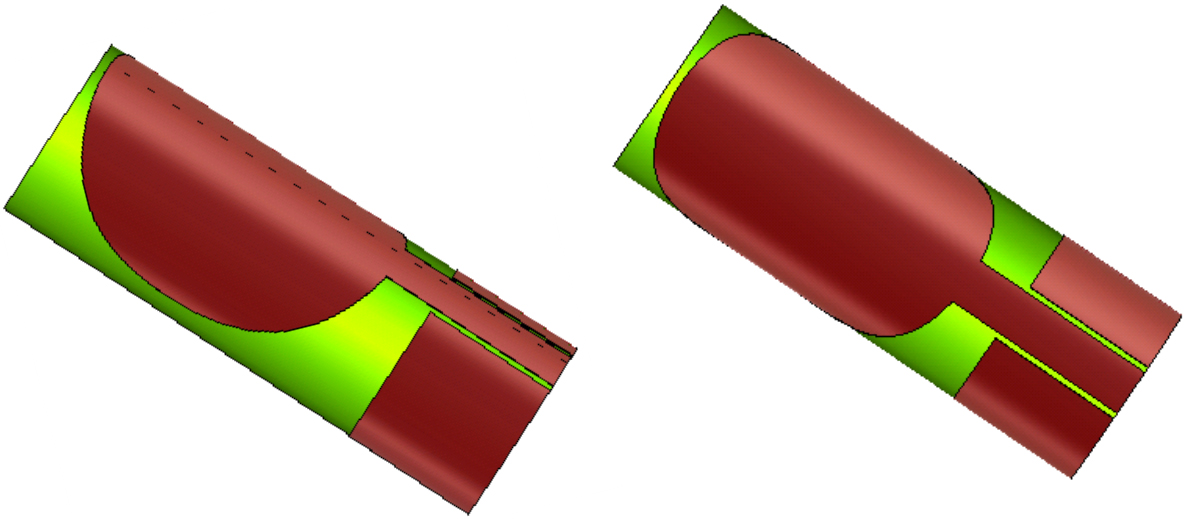
S-Parameter of the proposed antenna during bending analysis.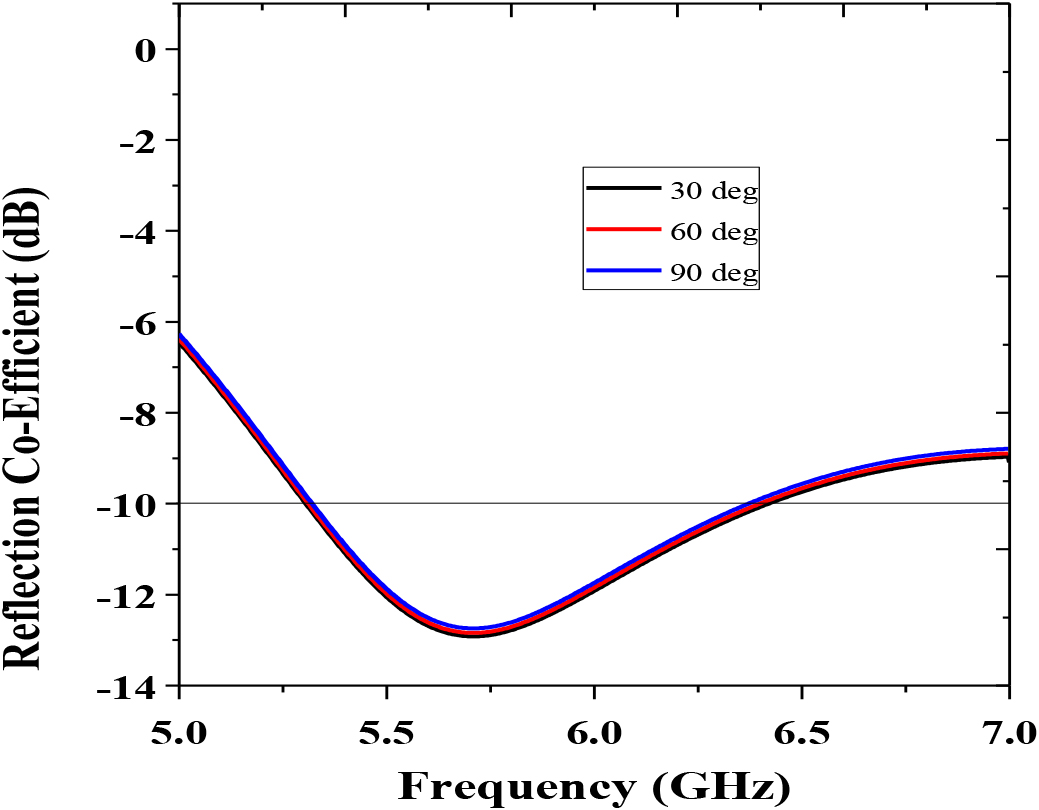
The proposed design resonates at the desired reflection co efficient value at 5.8 GHz. Though the bending of antenna was varied to different angles, it is vivid that the resonance frequency does not change significantly. Hence, it is better suited for wearable devices which demands conformability.
The layered view of the human tissue is depicted in Fig. 10. There are layers constituted a human tissue including muscle, fat and skin with various electrical parameters. The electrical properties of the proposed antenna listed in Table 1 are in terms of permittivity, conductivity and thickness of tissue [24]. As the thickness of the human tissue varies throughout different sections of the body, the performance of the antenna will be affected in some way. But, according to the findings of our investigation, since we have established a baseline value, the performance of the antenna does not significantly change even when it is moved to a variety of different places.
Electrical properties of different layers of human tissue
Electrical properties of different layers of human tissue
Representation human tissue layers.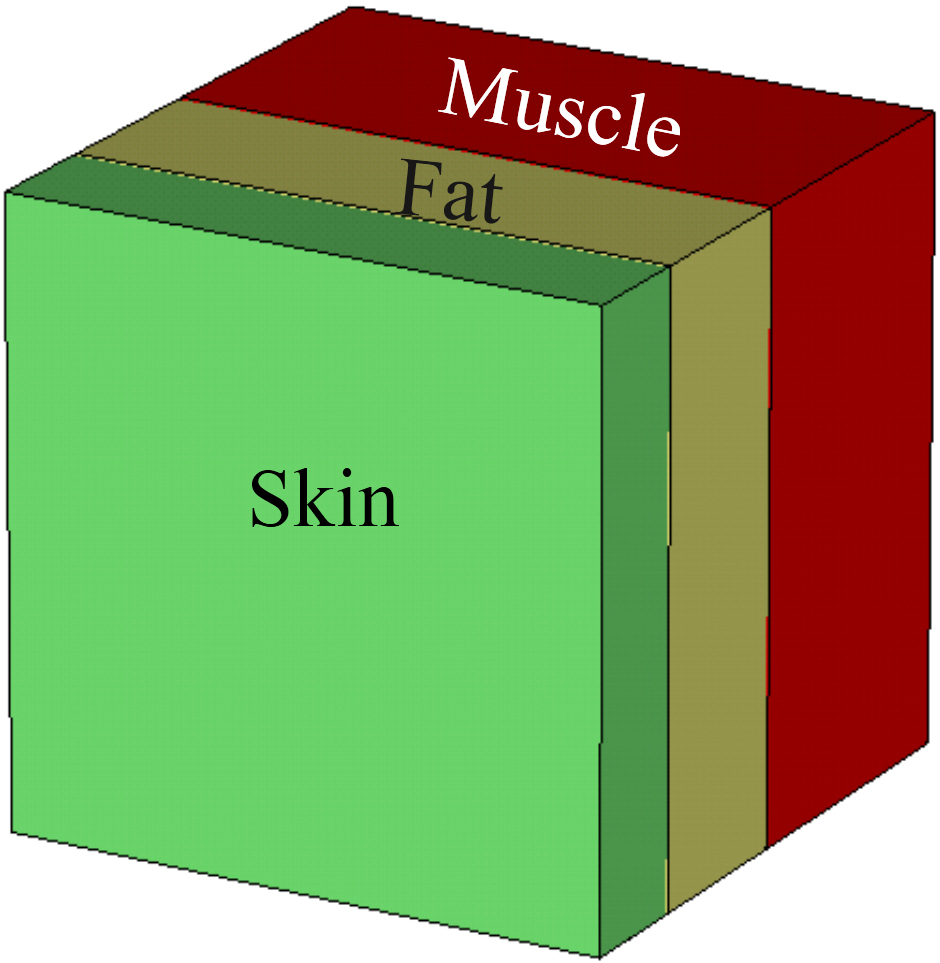
Placement analysis on the human body.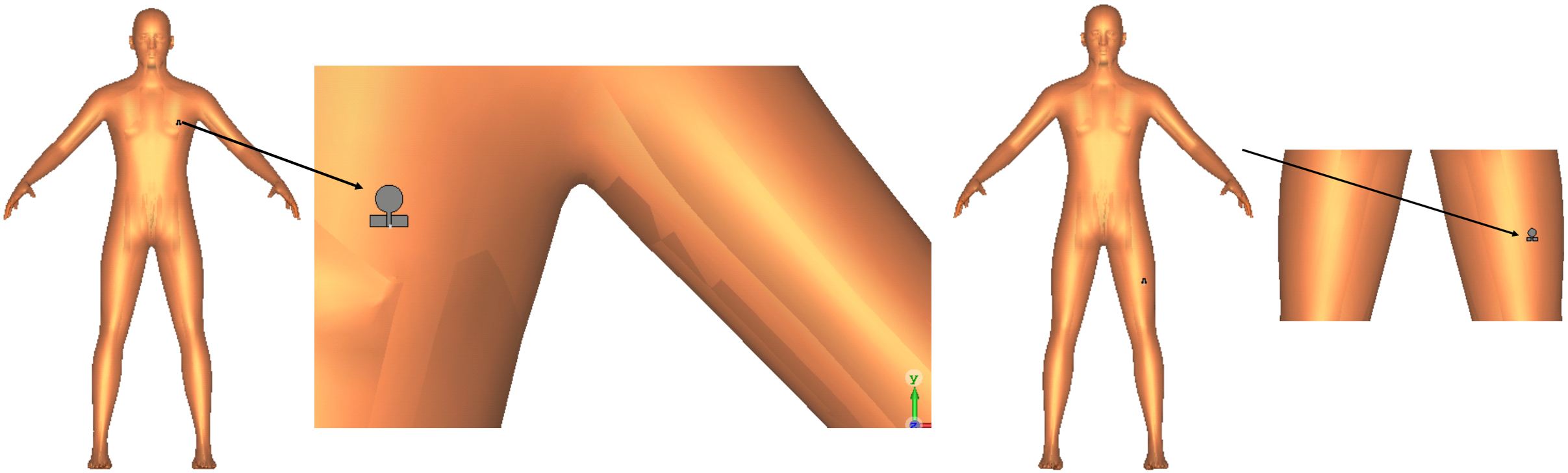
The antenna has a significant impact while the antenna is placed on the various part of the human body which exhibits the lossy character of the body as well as with respect to motions. As a consequence, analysis is more difficult with respect to wearable manner than with anon-body antenna. The suggested design has been examined in a wearable structure under on-body arrangement for comprehension of the MIMO antenna performance. Figure 11 clearly depicts this placement analysis when the design is attached to the human body, considering it is lossy in nature and various folding and body motions. Assessment of antenna performance in bodily settings is a challenging job. The human body is made up of several layers, such as skin, fat, muscle, and so on. Each layer has its unique dielectric characteristic that varies with frequency.
The s-parameter while kept on the human body is depicted in Fig. 12. Despite, the human body consisting of several layers and different dielectric constants, the proposed antenna has the ability to perform consistently by covering the required band of operation. It proves the antenna presented in this article is the right candidate for wearable applications.
When designing antennas for wearable applications, the effect of SAR plays a crucial role as it decides robustness of the performance. Figure 13a and b shows SAR analysis when the antenna was kept on the human body. At 5.6 GHz, the SAR value was observed to be 0.9987 and 0.921 W/Kg for 1 g and 10 g of human tissue respectively. The SAR for adjacent frequency is listed in Table 2.
Estimated SAR values at various frequencies
Reflection co-efficient of the proposed antenna as wearable device.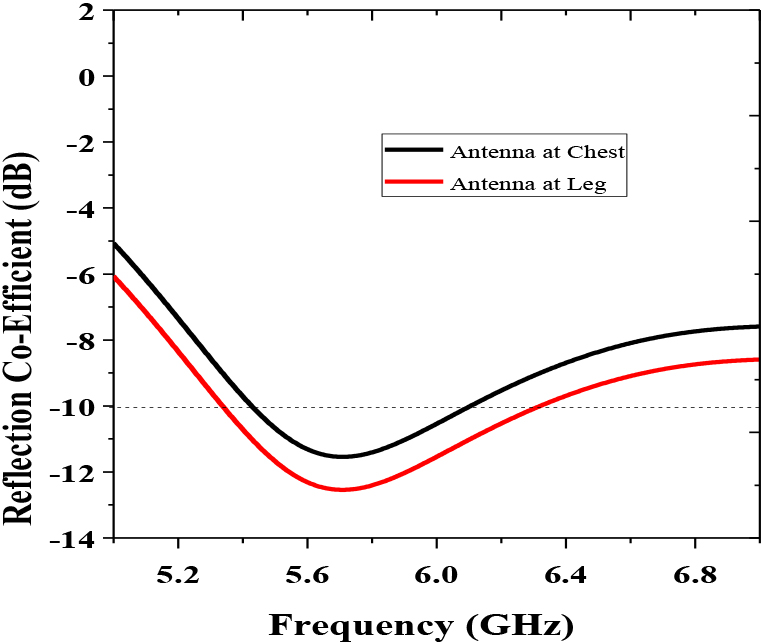
SAR analysis of the antenna when used as wearable device at 5.6 GHz (a) 1 g of tissue (b) 10 g tissue.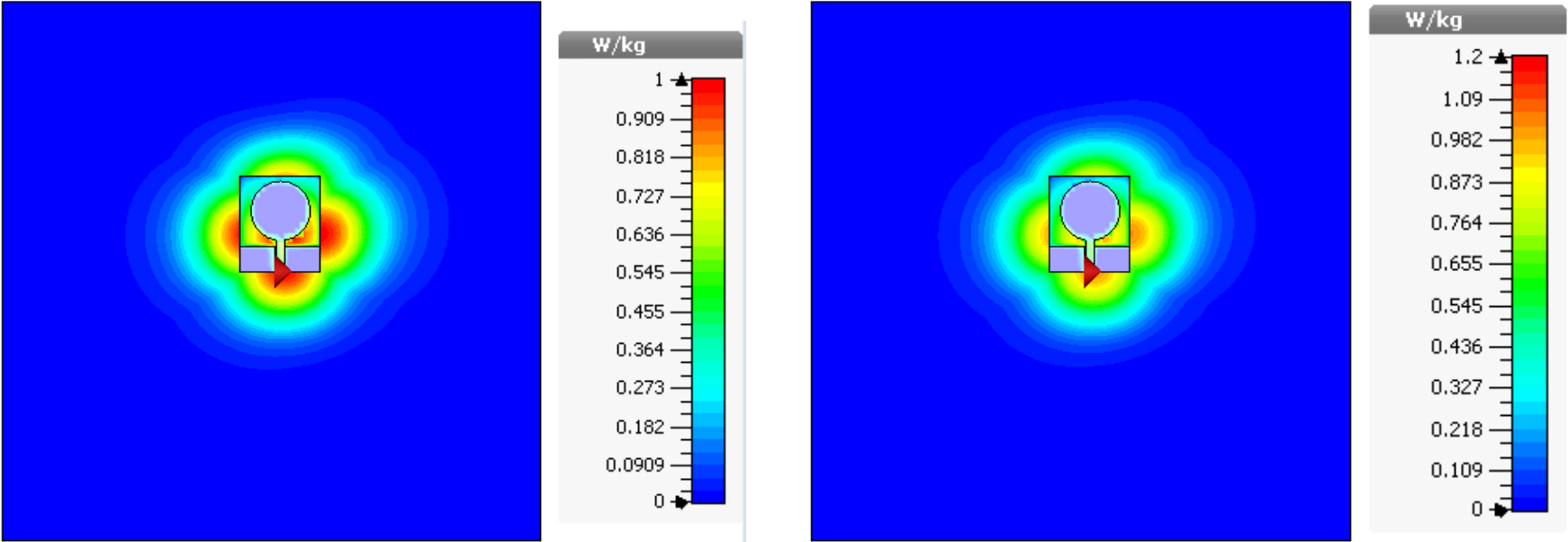
(a) Simulated position of antenna into the human tissue (b) SAR analysis when antenna implanted.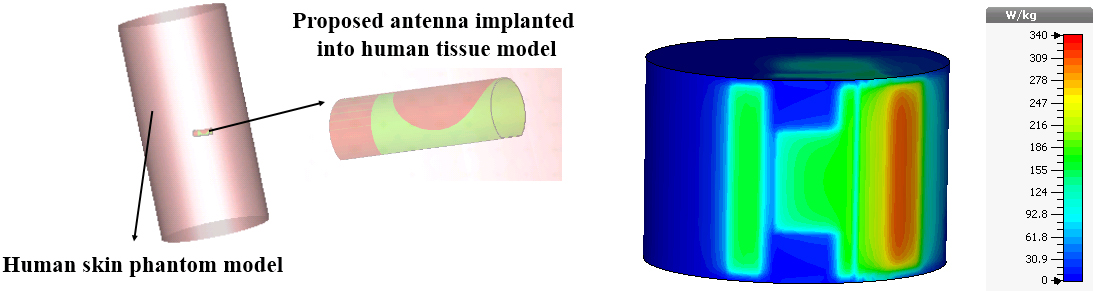
Estimate of the performance of the antenna was made when it was implanted into the human body and analysis of its corresponding features made. This is shown in Fig. 14a and b. The human skin model was developed with the use of CST software for this analysis. The developed antenna was located at center of the skin model as shown in Fig. 14a. Reflection co-efficient of the antenna in free space and on the skin model is exhibited in Fig. 14. When antenna was in free space, overall bandwidth of the antenna spans were between 5.3–6.3 GHz. On the other hand, when the antenna was implanted, there was a reduction in bandwidth which was a little narrower and broader between 5.4–6.2 GHz over
Reflection co-efficient of the antenna in free space and implanted.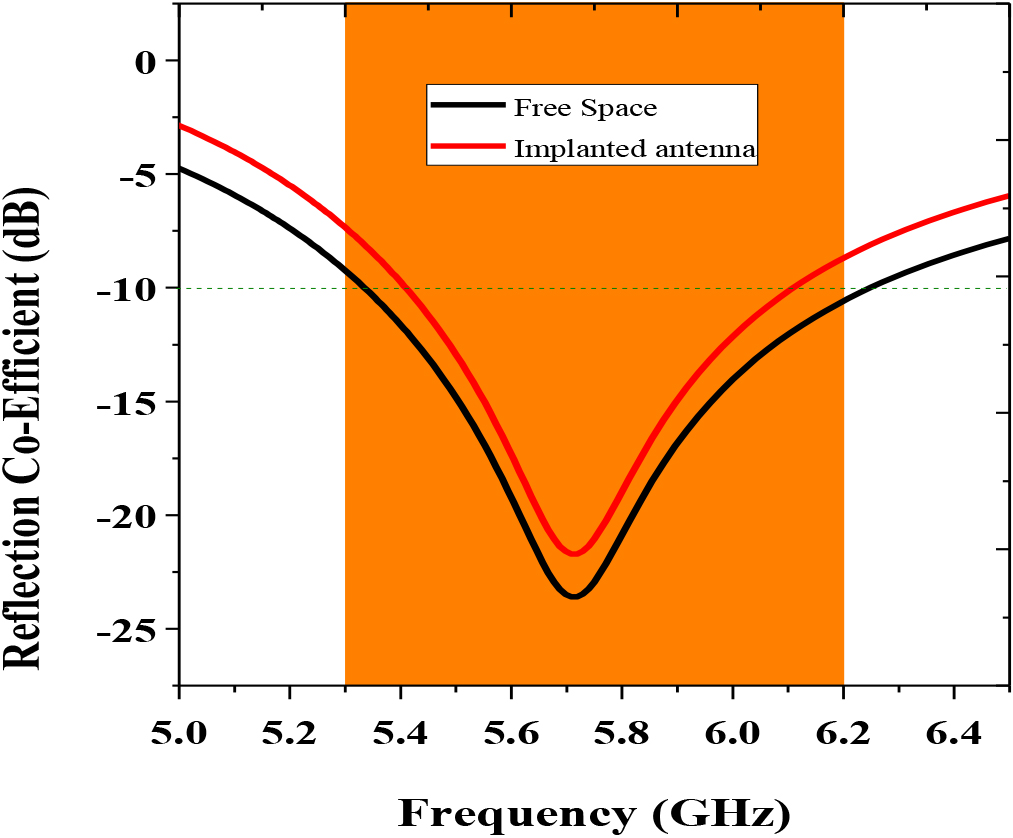
Estimate of SAR for proposed antenna was made and details are listed in Table 2. With the antenna having wide band operation ranging from 5.3–6.4 GHz, estimation of SAR was done for 1 g and 10 g of human tissues for equal frequency intervals for the values 5.5, 5.7, 5.9 and 6.1 GHz. The antenna was seen having maximum SAR within 1 W/Kg which is below the value recommended by the FCC.
Directivity of the proposed antenna.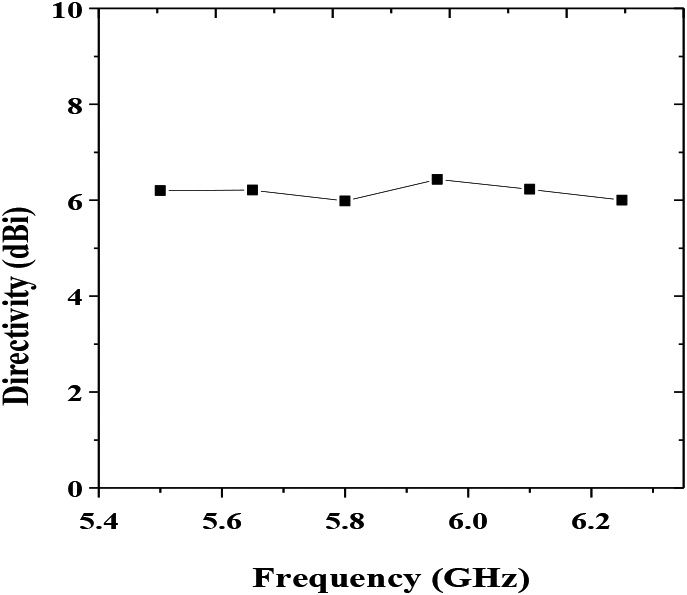
Figure 16 shows the directivity versus frequency plot of the proposed antenna at the required band of operation. The directivity of an antenna is always higher than the gain of the antenna. The overall gain for the proposed antenna is around 4 dBi. Hence directivity is a little higher than the gain in the range of 6.25 dBi. This is sufficient for an antenna employed for bio-medical applications.
The distance between the antenna and the human phantom was made. Details are plotted as shown in Fig. 17. It is a well-known fact that SAR is higher when the antenna is closer to the human tissues and vice versa. The effect of distance has been plotted. A gradual reduction in SAR is seen when the distance is increased from 0.5 mm to 3 mm with the step size of 0.5 mm.
The performance of the antenna might be further enhanced by utilizing various bio-compatible substrates such as Poly dimethyl siloxane (PDMS), Alumina, Macor, zirconia, and so on. This is because the polymide substrate is believed to be only partially biocompatible.
Comparisons study with state-of-the-art methods
SAR vs distance between phantom and antenna.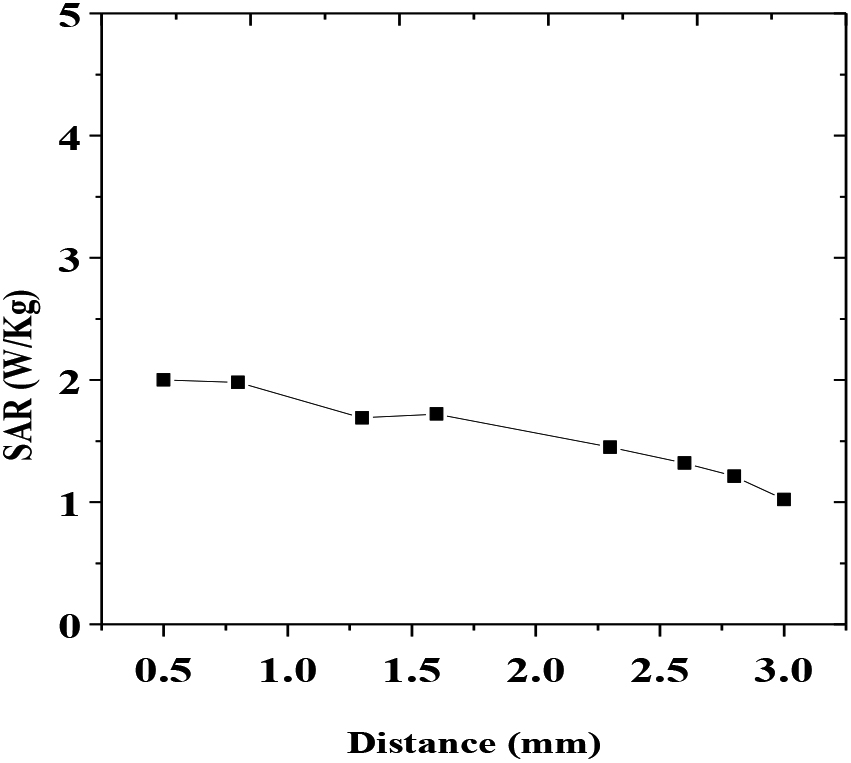
Comprehensive analysis of the proposed antenna in terms of performance comparison has been carried out. Details are shown in Table 3. Apparently, the proposed antenna has a performance better than the other antennas referred in the literature. The total size of the proposed antenna is 3 times smaller than the conventional antenna. With such smaller dimensions, the antenna has the ability to do a good performance in terms of other parameters. The proposed design exhibited outstanding performance in both radiation and SAR evaluation.
The purpose of this research article was to examine a highly efficient conformal antenna capable of resonating at 5.8 GHz in the ISM band for use in a wearable device. The antenna has total dimensions of 17.5
Footnotes
Conflict of interest
None to report.