




Abstract
The realisation for Indigenous people in Australia to be counted in official statistics occurred in 1967. The identification of Indigenous people in Australia in national data requires historical and contemporary issues to be considered. This includes how Indigenous people have been defined and by whom, as well as how identification is operationalised in official data collections. Furthermore, the completeness and accuracy of Indigenous people identified in the data and the impact this has on the measurement of health and wellbeing must also be taken into account. Official national reporting of Indigenous people is calculated using data from censuses, vital statistics, and existing administrative data collections and/or surveys. In alignment with human rights standards, individuals in Australia can opt to self-identify as ‘Indigenous’ in the data. However, challenges persist in deriving quality Indigenous data. This can result in biases in the estimates used to describe Indigenous people and the progress of Indigenous people. Measurement issues arising from incomplete and inaccurate data pertaining to Indigenous people require serious consideration particularly if this data is being used for addressing disparities within Australian society. This article discusses priority issues in identifying Indigenous people in the national data in Australia’s colonial context.
Keywords
Introduction
The identification of Aboriginal and Torres Strait Islander people1 in official statistics has been controversial throughout Australia’s history. Indigenous people in Australia have been counted for official government purposes since the first census but their inclusion in official population reporting has only been a legal requirement since 1967 [1]. Despite the development and refinement of international and national standards regarding definitions of Indigeneity and procedures to count and describe Indigenous peoples over the past 40 years, there are ongoing issues about, routinely collected, accurate data pertaining to Indigenous people in the nation. This comprises high quality Indigenous identification across all data collections, consistency in the standard practices of operationalising the Indigenous status question as well as the realisation of the right to self-determination [2] in contemporary Australia. Gaps in these issues can have significant influences upon statistics about Indigenous people.
Indigenous people in Australia experience serious inequalities across most measures of health and welfare when compared to their non-Indigenous counterparts. Disparities2 occur across all jurisdictions and are associated with socioeconomic status and remoteness [3]. They have been well described and need no further discussion here [4, 5]. Rather, this paper explores Indigenous identification in official statistics in Australia and the associated issues that must be addressed to comprehensively and successfully tackle disparities. The collection and utilisation of census data, vital statistics and other relevant administrative data are critical in describing and monitoring the social, economic, health and wellbeing of Indigenous people. The Australian Bureau of Statistics (ABS) is the official statistics institution in Australia. Other agencies, including the Australian Institute of Health and Welfare (AIHW) also produce information about Indigenous people in Australia. The completeness and the accuracy of data about Indigenous people is dependent upon the propensity of Indigenous people to identify as such in the census, and when accessing health and social services or interacting with other organisations.
The enumeration of Indigenous people in Australia is also necessary for the allocation of population level funding and individual services. The Commonwealth Grants Commission3 uses measures of population growth, including intercensal differences, based on ABS estimates of population level to allocate funds [6]. The Australian Government requires Indigenous people to identify themselves as such to receive Indigenous specific services and programs, such as monetary grants, university enrolment, welfare and housing assistance, specific employment opportunities and school programs. This identification comprises three steps. An Indigenous person must be (1) of Aboriginal and/or Torres Strait Islander descent; (2) they must self-identify as Aboriginal and/or Torres Strait Islander; and (3) they must be accepted by the community in which they live or formerly lived. The Australian Institute of Aboriginal and Torres Strait Islander Studies provides individuals with information about resources they can use to prove their descent and community acceptance [7].
This three-step identification process with its relatively onerous proofs of Indigeneity is not applied when information is collected by the ABS in censuses or surveys, by health, social or educational service providers, and by registries (such as births, deaths and marriage registries). Instead a single question is asked of everybody being counted, registered or accessing services, or is required to be answered by an official who is providing the service. Known as the Standard Indigenous Question (SIQ), it is “Are you [is the person] of Aboriginal or Torres Strait Islander origin?” The standard responses accepted are: “No”; “Yes, Aboriginal” or “Yes, Torres Strait Islander”; “Yes, Aboriginal” and “Yes, Torres Strait Islander” [7]. Implemented in 1996, the SIQ has been supported by most but not all, Indigenous organisations and representatives for the collection of official statistics.
The aims of official statistical collection to systematically provide information to support the government, the economy and the wider public may, inadvertently, be at odds with the recognition of the rights of Indigenous peoples under the United Nations Declaration on the Rights of Indigenous Peoples. Specifically, Article 3, which states the right to self-determination, as well as Article 4 which states the right to autonomy or self-government in matters relating to internal or local affairs [2]. The incorporation of these international human rights of Indigenous peoples clearly requires the recognition and inclusion of Indigenous people in the formal processes of priority setting, data collection, indicator development, statistical measurement approaches and reporting.
This article discusses the identification of Indigenous people in Australia in official statistics and routinely collected administrative data. It briefly examines the historical development of the SIQ in Australia, as well as describes how Indigenous identification is managed in the statistical reporting on the contemporary health and wellbeing of Indigenous people. It elucidates some of the more contemporary issues that require consideration in identifying Indigenous people in the context of Australia’s colonial history and considers resultant measurement issues that arise in the national statistics.
The authors would like to state that historical terms that were used to describe Indigenous people in Australia have been used in this article for the purposes of accuracy. A number of these terms are not acceptable in Australia today. We apologise for any distress these terms may cause.
Australia in context
On January 26
On the commencement of the British Act on 1 January 1901, the Commonwealth of Australia federated, with an agreement between the six self-governing colonies, which today are the Australian states. Australian states include Western Australia (WA), Queensland (Qld), New South Wales (NSW), South Australia (SA), Victoria (Vic) and Tasmania (Tas). There are also two4 mainland territories, specifically, the Australian Capital Territory (ACT) and the Northern Territory (NT) (see Fig. 1 [9]). The terms of the agreement were embodied in the Australian Constitution, ‘which established a federal system of government under which the Commonwealth of Australia operates today [10]. Section 127 of the original Constitution provided that “aboriginal natives” were not to be included in any Commonwealth State or other count of population. Section 127 was removed by referendum in 1967 (see below). The nation continues to be a democratic administrative authority, with each of the states having their own constitutionally governed administrations [10]. The ACT and the NT have been granted a limited right to self-government [11, 12].
Australian map. Source: Geoscience Australia, 1993.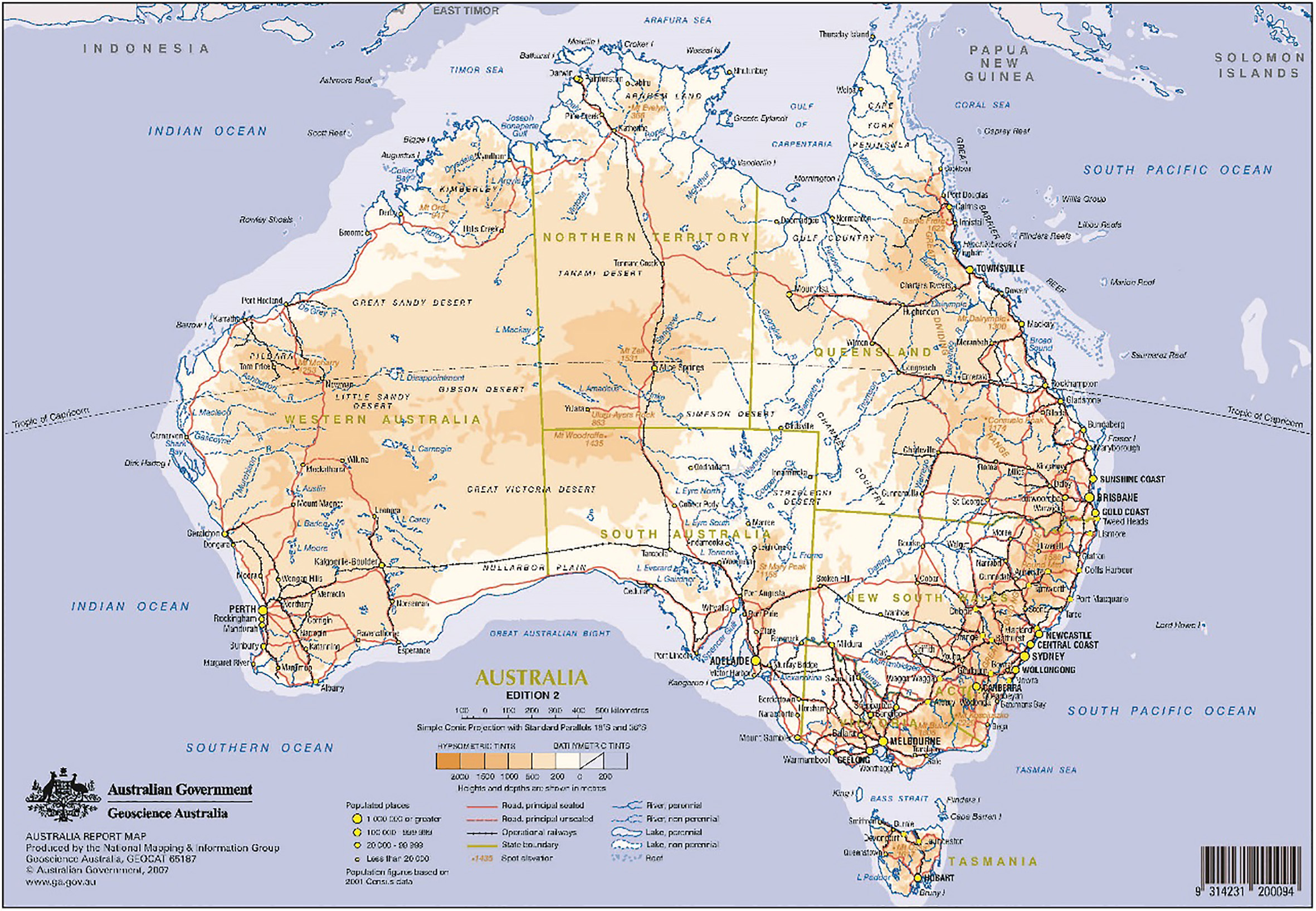
Indigenous people in Australia include two distinct groups, Torres Strait Islander people from the Torres Strait Islands located between Cape York and Papua New Guinea and Aboriginal people who come from all other parts of the continent. At time of first settlement, there were more than 500 different clan groups (also called ‘nations’) each with their own language and dialects, culture and belief systems. The numbers of Indigenous people living in Australia before white settlement has been estimated as being between 150,000 to over 1,000,000 [13, 14].
No single cultural description encompasses Indigenous people in Australia. Culture is not stagnant and while it has changed dramatically since colonisation, it has also retained many facets. Language, stories, community, and the lands (termed ‘Country’) on which people’s ancestors lived, are the mechanisms by which beliefs, values, rituals, dances and sacred knowledge are passed on from generation to generation. It is estimated that 250 Indigenous languages, each with a number of their own dialects existed at European contact in Australia in the late 1800s [15]. This has changed dramatically since colonisation. In 2014–15, 38 percent of Indigenous people in Australia over 15 years of age spoke an Indigenous language with 28 percent in non-remote areas and 76 percent in remote areas [16]. The descent group that an individual is born into determines the ‘Country’ that person comes from. Further there are complex kinship systems that describe the relationships between family members and different clan or skin groups.5 Descent groups and kinship systems are well established and are used to describe relationships with other people, an individual’s skin or clan group, the ‘Country’ where they are from as well as their responsibilities to their group.
Indigenous people were prescribed limited rights from respective governments as deemed necessary from the time of colonial settlement until the change in the Constitution in 1967. The doctrine by which Australian settlement occurred has been particularly important in the legal justification of dispossessing Indigenous people from their lands to enable British appropriation of Australia [17]. Furthermore, the states and territories as well as the Commonwealth had laws, practices and policies that resulted in the separation of Indigenous children from their families into homes of non-Indigenous families or institutions up until the 1970s. The dispossession of Indigenous people of their land and forcible removals of Indigenous children have ongoing negative impacts upon cultural continuity, as well as the health, social and emotional wellbeing of present day individuals, families and communities [18].
Indigenous people in Australia, 2016 population estimates
Indigenous people in Australia, 2016 population estimates
At last census, the Indigenous population was estimated to be 798,400, comprising 3.3 percent of the total Australian estimated population [19]. Table 1 shows the proportion of Indigenous peoples of the total populations of the states and territories [20]. The NT has the highest proportion of Indigenous people at 30.3 percent, and NSW has the most Indigenous people of any of the states and territories at 265,685.
Since 1901, numerous laws specific to Indigenous peoples included definitions of Indigeneity for the purposes of identifying and counting Indigenous people in the nation. The identification of Indigenous people throughout Australia’s history has had one of two purposes: to exclude or to include. Upon federation in 1901, Indigenous people were subject to a range of race specific civil arrangements and up until 1967; these arrangements were actioned through the states, resulting in the identification of Indigenous people, for the purposes of exclusionary practices. For example, An Ordinance Relating to Aboriginals (s 9.2) [21, p. 63] was a Commonwealth Act passed in 1911 that related to Indigenous peoples in the Northern Territory stating:
It shall not be lawful for any aboriginal or half-caste to be or remain within any prohibited area, unless with the express permission of a Protector.6
The transition from exclusionary to inclusionary identification of Indigenous people occurred progressively from the 1950s, culminating in the 1967 referendum. Constitutional change occurred in Australia through the 1967 referendum where almost 91 percent of Australians voted ‘Yes’ for change to two sections of the Australian Constitution. Sections 51 and 127 in the Australian Constitution were changed. Specifically, the two sections originally stated [10, s.51 (xxvi); s.127]:
51. The Parliament shall, subject to this Constitution, have power to make laws for the peace, order, and good government of the Commonwealth with respect to: …The people of any race, other than the aboriginal race in any State, for whom it is deemed necessary to make special laws.
And:
127. In reckoning the numbers of the people of the Commonwealth, or of a State or other part of the Commonwealth, aboriginal natives shall not be counted.
The change to Section 51 would allow for federal laws to be uniform across all the states and territories that would give the Commonwealth powers to make laws concerning Indigenous people. The change to Section 127 has been critical to ensure the enumeration of Indigenous people in the census. The 1967 referendum resulted in the removal of constitutional barriers to enable federal visibility and engagement with Indigenous peoples within the Country. The identities of Indigenous people and their propensity to identify is impacted by the way in which they have been and are today, defined [22, 23].
Indigenous people have been described, classified and defined since the beginning of white settlement. No less than 67 identifiable classifications, descriptions or definitions of Indigenous people existed within Australian legislation up until 1997 [24]. While it is not within the scope of this article to review all definitions and categorisations, it is important to provide a brief overview of how Indigenous people have been defined and described throughout the nation’s history. It is also important to note that the number of Australians who identify as Indigenous in national data is influenced by these policies [22]. Definitions of Indigeneity were developed for the administrative actions of governments. The political discourse, driven by social acceptability and understandings within certain regions and of particular eras underpinned their development. Further, this resulted in each state and territory having independent definitions. For example, Torres Strait Islander people had laws specific to them in Queensland, with the Torres Strait Islander Act 1939, that defined ‘islanders’ by race, descent or by living on a reserve with an ‘islander’ [25].
The definitions of Indigenous people in Australia have progressed through three eras, (1) the blood-quantum era; (2) race era; and (3) the three-part definition era [26]. Generally speaking, Aboriginal people, not Torres Strait Islander people, were the focus of the definitions arising from the blood-quantum era, where both Aboriginal and Torres Strait Islander people were discussed throughout the other eras. We have also provided a timeline of the Indigenous identification questions used to identify Indigenous people in Australian censuses for the purposes of exclusion prior to the 1967 referendum (Table 2) [27] and after the 1967 referendum for the purposes of inclusion (Table 3) [27, 28, 29, 30, 31, 32] in national reporting.
Australian Indigenous identification questions in the census prior to 1967
Australian Indigenous identification questions in the census prior to 1967
Source: Barnes et al.,1997.
Australian Indigenous identification questions in the census after 1967
Sources: Barnes, et al, 1997; ABS, 1996, 2001, 2006, 2011, 2016.
Distinctions of Indigenous people based on the colour of skin or “blood”, appeared in legislation from the first year of the established Commonwealth [24]. The statement was found in the Post and Telegraph Act of 1901 whereby only ‘white labour shall be employed’ for the Commonwealth contracts or arrangements of the carriage of mail [33, s. 16]. A number of other state legislations had classifications of blood-quantum starting in 1839 in NSW through to the late 1950s [26]. Aboriginality was quantified through categorisations such as ‘whole-blood’, ‘full-blood’, ‘half-blood’, ‘half-caste’, ‘quarter-caste’, ‘quadroon’, ‘octoroon’ [26]. These distinctions were made by Europeans with federal and state authority and were frequently based on subjective notions of skin colour. The data collected by this method are based on subjective counts and observations and therefore not sufficient for the purposes of statistical reporting.
Race era (1960s to 1970s)
State and territory definitions of Indigenous people were used up until the 1967 referendum. After the referendum the federal government required a way to engage in and systematically address national issues in Indigenous affairs. In order to do this, there was a requirement to better identify Indigenous people and capture the demographic profiles of Indigenous people. The inclusion of Indigenous people in national reporting after the 1967 referendum saw a change in the official government discourse regarding how to best define Indigenous people [27]. There was a move away from non-Indigenous directed definitions, towards enabling Indigenous people to identify themselves. An operational definition used within a number of legislations was developed after 1967, defining an “Aboriginal person…as a member of the Aboriginal race of Australia.” The term ‘race’ was also used in to identify Indigenous people in censuses from 1911 to 1976, but in the 1971 census the term ‘racial origin’ appeared. The word ‘origin’ was not defined in 1971 and has not been since, to the authors’ knowledge.
Three-part definition era (1980s onwards)
The three-part Commonwealth definition of Indigenous people in Australia was adopted by the Federal Cabinet in 1978 [34]. Recalling that descent, self-identification and community acceptance are the three components in the Commonwealth definition, the operationalisation of the definition holds controversy. The concept of biological descent in defining Indigenous people was introduced as early as 1939 in records from South Australia [35]. Self-identification is relatively straight forward. For those people, family groups and communities impacted by laws that resulted in displacement, serious challenges can arise in acknowledging Indigeneity through descent, self-identification and being accepted by the community in which and individual has lived.
The transition from applying race concepts to administrative reporting through to concepts of descent was a much faster process than that from blood-quantum to race. This may have been reflective of a transitioning period during which Indigenous people were brought into the discussion of Indigeneity within the nation. Additionally, in 1986 a working definition of Indigenous peoples was offered by the UN Working Group on Indigenous Issues, developed within the comprehensive ‘study on the problem of discrimination against indigenous populations’ [36]. This, along with a range of other mechanisms, resulted in the provision of an international model of reporting Indigenous peoples through self-identification within nations. Specifically, this included that Indigeneity was no longer to be defined by administrations, but that self-identification was the recommended approach. The 1981 Australian census was the first time that the term ‘racial’ was not included in the question on origin (Table 3).
Although self-identification for Indigenous people was an option for people in the 1971 census, individuals were limited to a single ‘racial origin’. The 1996 Census was the first to provide for people’s origin to be recorded as both Aboriginal and Torres Strait Islander; prior to this only one or the other could be recorded [27, 28, 29, 30, 31, 32]. The current SIQ was developed by the Australian Bureau of Statistics and adopted formally in 1995 as the standard for identifying an individual as a member of the Indigenous population. While the questions provided in Tables 2 and 3 are those used in the census, it should be noted that there are different articulations of the question depending on the type of data being collected and who is completing the form [7]. For example: if the person is filling out the form, the question is: “Are you of Aboriginal or Torres Strait Islander origin?” [7]
There are a number of socio-political considerations in the way that historical definitions of Indigenous identity continue to impact Indigenous people in Australia today and as a result also impact Indigenous people’s willingness to engage within formal government systems. For example, the legislation created on the basis of blood-quantum was utilised as a tool of oppression in Australia [37]. This resulted in and has ongoing legacies regarding Indigenous people being included in the development of society or to be provided with the opportunities to engage in society at their full potential. These considerations are outside the scope of this review. However, it is critical to note that the discourses by which Indigenous identity has been developed in Australia can have very real consequences in the propensity for Indigenous people to identify in the national data.
Contemporary issues in definitions of Indigenous people in Australia
Conceptually, there are three components that require consideration in the contemporary reporting of Indigenous people in official statistics. This includes human rights, recognition (i.e. definitions, identity and identification) and statistics (i.e. methodologies and limitations in enumeration and reporting). Discussions regarding Indigenous identification in Australia has primarily been focused on the statistical issues that arise. However, there is a requirement to further discuss how human rights can be applied to address issues in national statistical reporting. Additionally, the contexts in which Indigenous peoples are recognized within nations can also have wider implications in regard to how Indigenous affairs are addressed in contemporary Australia. Here we discuss how the application of international human rights and theoretical understandings of recognition can work towards providing useful frameworks to address existing and arising issues regarding the identification of Indigenous peoples in official statistics and reporting.
Application of international human rights in identifying Indigenous peoples
The United Nations Declaration on the Rights of Indigenous Peoples (UNDRIP) was adopted by the United Nations General Assembly on 13 September 2007. It was voted in through a majority of 144-Member States. It had been under development since 1982 and provides a broad framework of global standards for the human rights of Indigenous peoples [2]. While there is no internationally agreed upon definition of Indigenous peoples, the UNDRIP provides a framework for nations by which the necessary mechanisms can be implemented to ensure the survival, dignity and wellbeing of Indigenous peoples through self-determination [2]. The right to self-determination is in Article 1 of the International Covenant on Civil and Political Rights as well as Article 1 of the International Covenant on Economic, Social and Cultural Rights. Importantly, the right to self-determination is seen to be relevant to governments accountability and the requirement for consultation and appropriate participation in decision making by governments. It should be therefore, critical to the way in which Indigenous peoples are identified within national reporting structures.
Regarding the definition of Indigenous peoples, the UNDRIP does not have a working definition of Indigenous peoples. However, a few international definitions and criteria have been developed within other UN instruments. In 1986, a working definition of Indigenous peoples was offered by the UN Working Group on Indigenous Issues, developed within the comprehensive ‘study on the problem of discrimination against indigenous populations’ [36, p. 29]:
Indigenous communities, peoples and nations are those which, having a historical continuity with pre-invasion and pre-colonial societies that developed on their territories, consider themselves distinct from other sectors of the societies now prevailing on those territories, or parts of them. They form at present non-dominant sectors of society and are determined to preserve, develop and transmit to future generations their ancestral territories, and their ethnic identity, as the basis of their continued existence as peoples, in accordance with their own cultural patterns, social institutions and legal systems.
The International Labour Organization adopted its Convention on Indigenous and Tribal Peoples (169) in 1989 [38]. The Convention is a comprehensive international agreement for Indigenous peoples to exercise control over their lives to preserve and develop their identities, languages and cultures. While a definition is provided, according to Convention 169, the fundamental criterion in Indigenous identification is self-identification [38, pp. 1–2].
Article 1
This Convention applies to:
Tribal peoples in independent countries whose social, cultural and economic conditions distinguish them from other sections of the national community, and whose status is regulated wholly or partially by their own customs or traditions or by special laws or regulations; Peoples in independent countries who are regarded as indigenous on account of their descent from the populations which inhabited the country, or a geographical region to which the country belongs, at the time of conquest or colonisation or the establishment of present state boundaries and who, irrespective of their legal status, retain some or all of their own social, economic, cultural and political institutions. Self-identification as indigenous or tribal shall be regarded as a fundamental criterion for determining the groups to which the provisions of this Convention apply.
Additionally, there are seven criteria that the United Nations Permanent Forum on Indigenous Issues (UNPFII) sets outs as a guide for the identification of Indigenous peoples across the globe [39]. This includes the: (1) Self-identification as Indigenous peoples at the individual level and accepted by the community as their member; (2) Historical continuity with pre-colonial and/or pre-settler societies; (3) Strong link to territories and surrounding natural resources; (4) Distinct social, economic or political systems; (5) Distinct language, culture and beliefs; (6) Formation of non-dominant groups of society; and (7) Resolve to maintain and reproduce their ancestral environments and systems as distinctive peoples and communities [39].
The lack of an international definition, changing definitions within nations and differences between nations, results in challenges in the collection and reporting of data pertaining to Indigenous peoples. There is however, a disconnect in the application of definitions within administrative systems for identifying Indigenous peoples in statistics. In Australia, the operationalisation of this criteria has its limitations. The nations SIQ conceptually incorporates two components of descent and self-identification described in the three-part definition. This excludes the component of community acceptance and several other aspects of the UNPFII criteria. The Australian SIQ is operationalised only through the component of self-identification. While it is critical to ensure self-identification, the extent to which those people who do self-identify is indicative of descent and/or community acceptance is not known.
Theorising recognition and the identification of Indigenous peoples
The recognition of Indigenous peoples within official Australian statistics has been achieved within the context of colonial and racial settings. It is possible to argue that the recognition of Indigenous peoples within colonial settings works to reproduce a colonial structure and provides Indigenous peoples with colonizer-sanctioned forms of recognition [40]. The right to be counted has historically fallen under hegemonic processes, whereby rights were granted to Indigenous peoples by the colonizer. The parameters regarding the recognition of identity can be achieved by Indigenous peoples for Indigenous peoples. However, the procedure of recognition of Indigenous peoples within nations and the formalization of identifying Indigenous peoples in official statistics reporting is typically granted within existing Western forms of governance and reporting processes. The concept of granting permissions is based on a hegemonic relationship, as often seen between colonized Indigenous peoples and governments. As an example, the Australian government subjectively counted Indigenous people for the purposes of excluding them from the nations census counts from 1901 through to the 1967 referendum, when a national democratic vote resulted in constitutional change that saw Indigenous people being included in census counts [1]. This example shows how Indigenous issues are domesticated within Western structures. It is also worth noting that it was only through a moral imperative expressed in a national poll by non-Indigenous voters, that enabled the recognition of Indigenous people to be included in the official Australian picture.
Indigenous self-identification is current best practice within national data sets in Australia, however, progress is still being made as how to best govern national data used for research, policy and practice. Arising from community discussions internationally and nationally, the conversation has been framed as ‘Indigenous data sovereignty’ which includes the inherent and inalienable rights and interests of Indigenous peoples to the control of data storage, ownership and access of data [41]. Self-determination is a central concept within the development of data governance. It is through the facility of anti-colonial agency and empowerment [42] that Indigenous peoples can direct the future of the data pertaining to them. That is, Indigenous peoples making decisions through their own models of governance, without reliance upon Western constructs, for their own purposes. There are a range of models that can create safe and secure data sharing environments that address ethical and cultural considerations [43]. Theoretically, it is therefore possible to meet the needs and interests of Indigenous people and those of governments. However, this will require building the capability and functioning of Indigenous data stewardship into national data governance processes.
Reporting on the health and wellbeing of Indigenous people in Australia
There are a number of research articles and government reports describing the health and wellbeing of Indigenous peoples in Australia. However, it was not until the 1990s that national reporting became a priority. The first known official report on the health and wellbeing of Indigenous people in Australia was the 1956 Report of the Select Committee appointed to Enquire into Native Welfare Conditions in the Laverton-Warburton Range Area, also known as ‘The Grayden Report’ [44]. The Grayden Report showed conditions of poverty and disease affecting Indigenous people living in the Laverton-Warburton Range Area, which was used to advocate for resources and support [44]. The first comprehensive national report was ‘The Health and Welfare of Australia’s Aboriginal and Torres Strait Islander Peoples’ in 1997 and was the first of a series of reports utilising existing data to provide comparative reporting between Indigenous and non-Indigenous people in Australia [45]. Its purpose was stated by the then Governor General of Australia, Sir William Deane, as ‘in particular, as any caring Australian who reads this health and welfare report must recognise, nothing can justify any delay in our doing whatever we can to address the overwhelming health problems of Aboriginal and Torres Strait Islander Australians’ [27].
Today, there are range number of official reporting mechanisms to monitor the health and wellbeing of Indigenous people in Australia. Key among these are the ‘Aboriginal and Torres Strait Islander Health Performance Framework’, a biennial report covering about 70 key measures, which began in 2006 and is published by the Australian Health Minister Advisory Council [3]. Additionally, the ‘Overcoming Indigenous Disadvantage’ report, produced by the Productivity Commission since 2003 which provides a report card on a range of health and social issues that currently includes 52 indicators [46]. In December 2007, the Council of Australian Governments (COAG), through a National Indigenous Reform Agreement (NIRA), agreed to a partnership between all levels of government to work with Indigenous communities to achieve the target of ‘Closing the Gap in Indigenous Disadvantage’ [47]. With recognition by COAG for the need for long term commitment, the target areas of the agreement include a range of indicators that cover: (a) Early Childhood (1 target); (b) Schooling (3 targets); (c) Health (2 targets); (d) Economic Participation (1 target). In order to evaluate COAGs achievements in Closing the Gap, national annual reports are delivered by the Australian Prime Minister [48]. More recently, COAG agreed to work in partnership with Aboriginal and Torres Strait Islander Australians to refresh the Closing the Gap agenda [49]. It is expected that a new Closing the Gap framework, target and performance indicators will be agreed to by the end of 2018. Once agreed this will require its own monitoring and reporting mechanisms. Additionally, there are plans and reports that are complementary to the existing COAG targets and other reporting mechanisms.
Visual conceptualisation of primary national Australian official data collections MBS 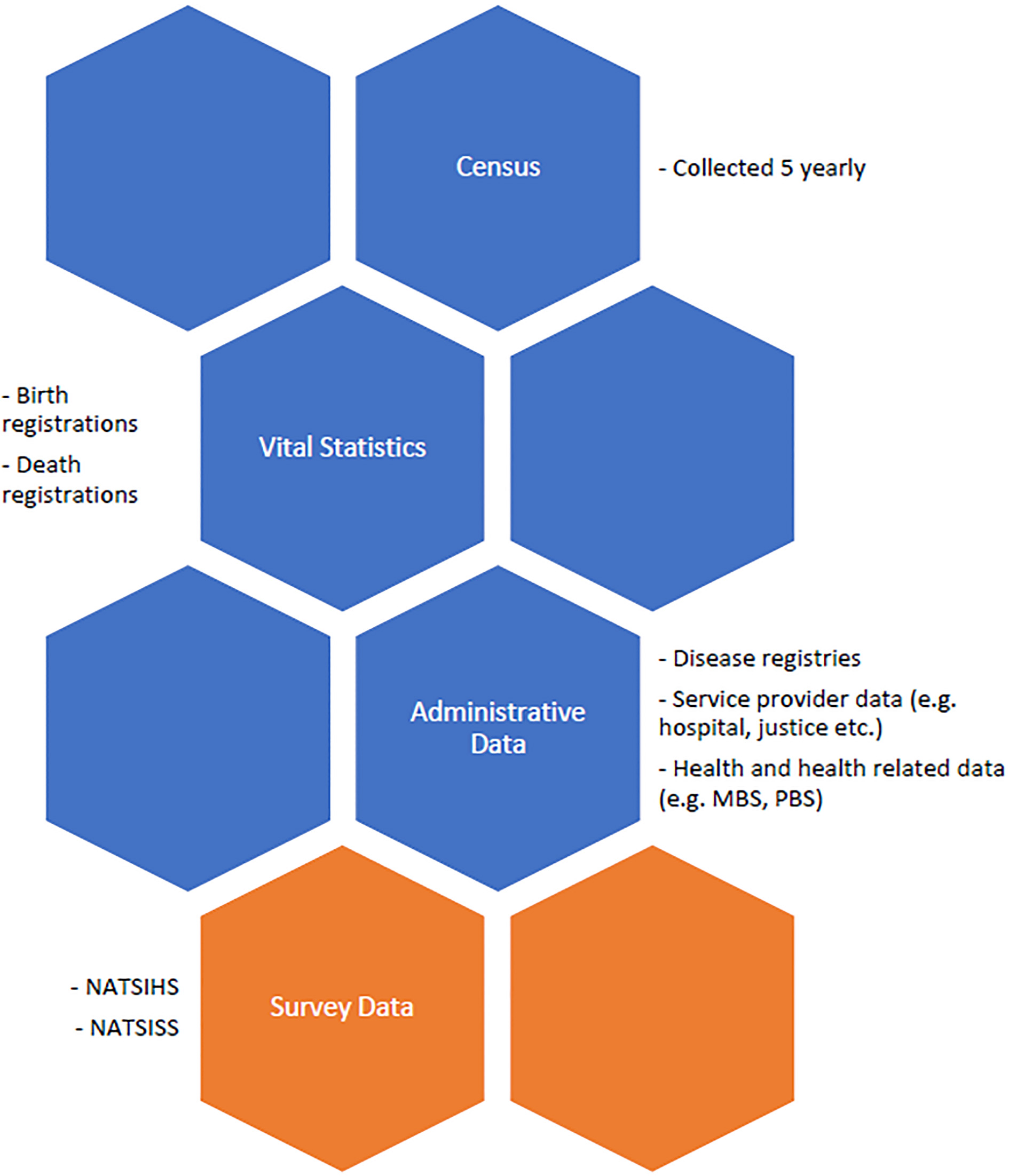
There is a large data component required for the reporting of Closing the Gap and other reporting mechanisms across a wide range of official data collections. These data collections are governed by state and federal governments that hold official National Minimum Data Sets (NMDS). These are a set of data elements that are used for national mandatory collection and reporting. The AIHW works with the states and territories to improve the quality and comparability of the collected data and report on these data both nationally, by jurisdiction, remoteness and other levels of geography as data permits. Each collection contains an Indigenous status identifier of possibly varying quality.
The data network in Australian reporting of the health and wellbeing of Indigenous people includes the census, vital statistics, administrative data and national surveys all of which, in principle, should collect Indigenous identification (see Fig. 2). Significant progress has been made in the improvements on Indigenous identification in national data collections since the first 1997 national report. Furthermore, Indigenous identifiers have been progressively included in administrative data collections over time. Key issues affecting data collections are variability in the quality of Indigenous enumeration in these collections and changes in identification in the collections over time. Also, smaller sample sizes can lead to high variability in estimates which affects both the ability to disaggregate and the ability to monitor changes accurately over time. Due to the reliance upon the use of existing data in Australia’s reporting procedures, the quality and accuracy of the identification of Indigenous people within national data collections requires consideration. There have been a range of reports that discuss the issues associated with the reporting of Indigenous people in these data [50, 51, 52, 53]. Currently major limitations within data collections include:
Indigenous enumeration procedures in the census; The coverage of the Census Post Enumeration Survey (PES); Quality monitoring of Indigenous Identification in the data; Coherence and consistency in the adoption of the ABS SIQ and recording categories on data collection forms and within information systems across jurisdictions; Variations in the procedures for the collection of Indigenous status information across jurisdictions; No best-practice recommendations for protocols across state and territory jurisdictions for linking deaths data to Census records; No best practice recommendations across state and territory jurisdictions to collect and monitor the under-identification of Indigenous mortality [47].
In response to this, the NIRA included a range of activities that aimed to improve data quality that included a number of specific national data improvement projects to assess the current state of affairs and to develop processes in order to systematically improve the outcomes of data collected for the purposes of official reporting [47]. Additionally, there were a range of commitments agreed to by state and territory jurisdictions that would be an enhancement to the national commitments. This included that all jurisdictions:
Adopt the standard ABS Indigenous status question and recording categories on data collection forms and information systems for key data sets; Improve procedures for collecting Indigenous status information in health and education data; Develop and implement initiatives to raise the Indigenous community’s awareness about the importance of identifying as Indigenous when accessing services [47].
Inaccuracies in the reporting of population counts can result from the non-reporting of Indigenous people, non-Indigenous people incorrectly identifying as Indigenous, as well as the choice and consistency of procedures used to derive population estimates. The size of the gap between those who are not reported and those who are in data sets, and any variations in the size of the identification gap that occurs over time will also impact the quality and accuracy of Indigenous reporting. Estimating the health and wellbeing needs of Indigenous people in the nation therefore requires close attention with regards to the consistency and standardisation of methodological approaches used in national reporting, in addition to ongoing assessments of the quality of the data used.
Census counts of indigenous people in Australia, 1971–2016. Source: ABS, 2018. 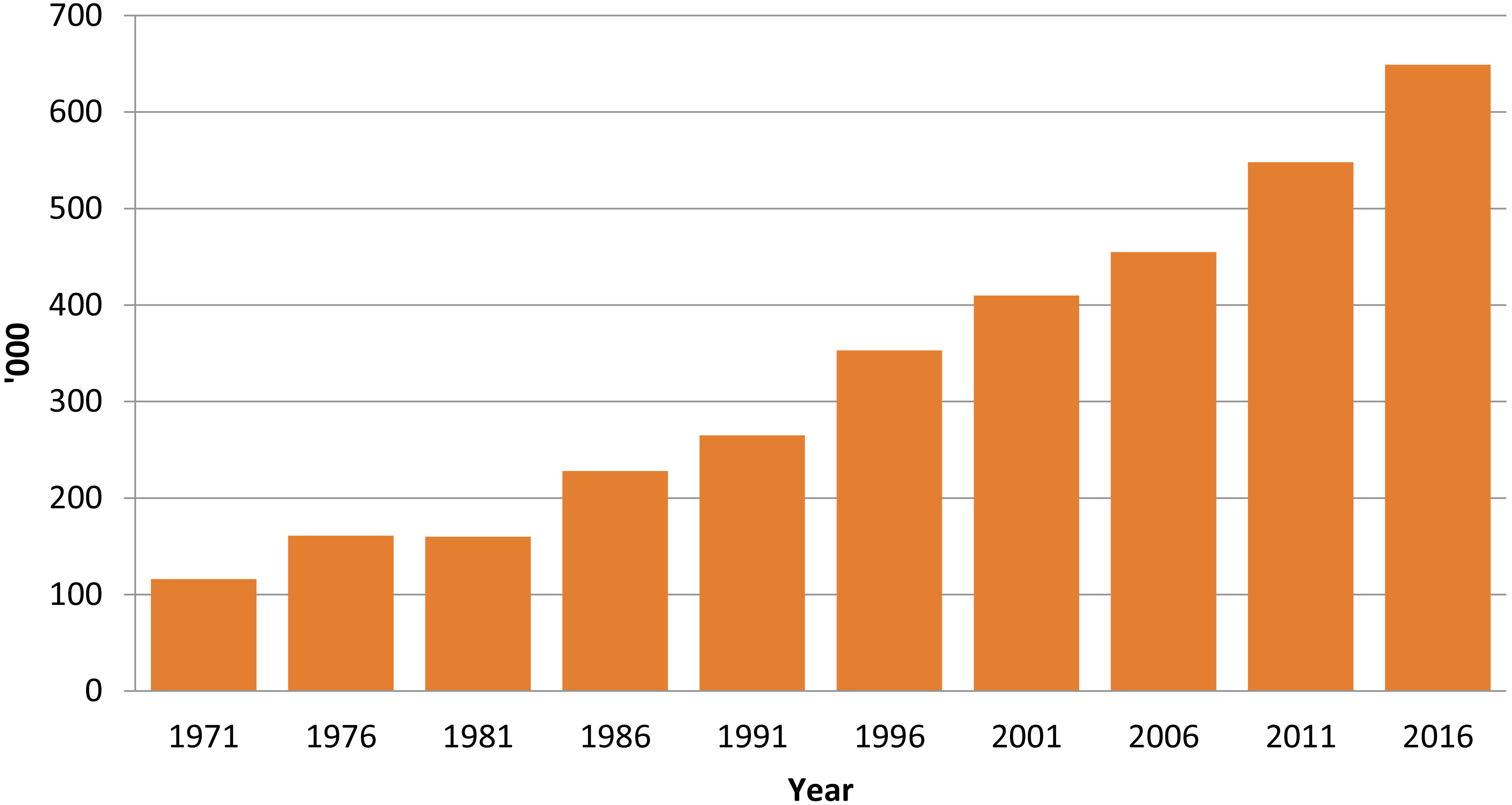
The lack of completeness in these data collections can lead to numerator/denominator bias. Generally speaking, the denominator is determined from the census population. The Indigenous population is backcast and projected after each census [57]. These backcast populations are then used to recalculate trend data. The incomplete numerator data does not get revised.
In Australia, Indigenous identification rates have been shown to change quite dramatically between censuses. Changes in Indigenous identification rates between censuses will impact national statistics including those used for reporting. Figure 3 [54] shows the changes in the census counts for each census after the 1967 referendum. There are two primary issues with Indigenous identification in the census that impact reporting including: (1) under counts; and (2) compositional changes. Both are affected by explainable factors, including births, deaths and migration as well as unexplainable factors, including census coverage, response rates and changing propensity to identify. For example, 78.6 percent of the Indigenous population increase from the 2011 census to the 2016 census is considered to be due to explainable demographic factors [54]. The accuracy of counts in the census are assessed through the ABS PES which provides estimates of the under count of people by gaining an independent measure of census coverage [55, 56, 57]. Compositional changes are assessed through identifying estimate variations between censuses and how Indigenous people have identified in the SIQ in the census. Table 4 shows undercount percentages and the intercensal percentage changes in population composition of Indigenous people from 1996, when the SIQ was implemented to the most recent census of 2016.
Percentages of undercounts and intercensal population changes in the estimates of Indigenous people in from 1996 to 2016
Percentages of undercounts and intercensal population changes in the estimates of Indigenous people in from 1996 to 2016
Source: ABS 1997, 2002, 2006, 2012, 2018.
Data used to derive national vital statistics are collected by state and territory Registries of Birth, Deaths and Marriages (RBDM). Each piece of information collected by the registries have been legislated within individual states and territories. Incomplete ascertainment and misclassification of Indigenous status in Australian birth and death registrations adversely affects data quality, accuracy and completeness. These issues require considered attention particularly because that they are critical in life expectancy estimates, fertility rates, cause-specific and all-cause mortality rates, as well as survival estimates of disease outcomes. Further, the quality and accuracy of national estimates can also be compromised by variations across state and territory jurisdictions. Births and deaths data are used to derive population estimates in Australia, so non-registrations and inaccuracies in Indigenous identification can lead to numerator and denominator bias.
The reported deaths of Indigenous people in Australia are incomplete. The SIQ is used on all state and territory RBDMs death registration forms to collect information on the person who has died. While it is considered that most of the deaths of Indigenous people are registered through the RBDM, there are issues with non-reporting or incorrect identification of Indigenous status. A national record linkage study conducted by the ABS showed that 28 percent of deaths registrations did not match Indigenous status reported in the census [58]. Furthermore, there are issues regarding death registration delays as well as official reporting standards and whether statistics are reported based on the period of death or the period of death registration. Registration delays are more common for Indigenous deaths than non-Indigenous deaths in Australia, with 89.2 percent and 94.7 percent of peoples’ deaths registered in the year of occurrence, respectively [58]. Additionally, there are wide variations in the known identification rates across state and territory jurisdictions (Table 5) [59].
Indigenous deaths identification rates, state/territory and Australia, 2011–12
Indigenous deaths identification rates, state/territory and Australia, 2011–12
Source: ABS, 2013.
There are considerable issues with the registration of Indigenous births in Australia. This includes non-registration, delayed registration and under-enumeration (due to non- or incorrect Indigenous identification) of Indigenous births. Similar to the death registrations, the SIQ is used on the birth registration documents, however, there are known barriers to ensuring that births are registered, particularly for those who live remotely, including costs or perceived costs, a lack of online infrastructure and limitations in culturally appropriate services [60]. Reports from Queensland and Western Australia utilising data linkage to assess completeness of birth registrations describe that 17 percent and 18 percent, respectively, of Indigenous babies were not registered at birth [61, 62]. While there has been some work undertaken to describe the extent of the under-registration of births in Australia, there is yet to be a comprehensive assessment of the impact that under-registrations and under-enumeration of Indigenous births can have on indicators, specifically infant and child mortality rates. There is a requirement for both accurate numerators (e.g. number of deaths) and denominators (e.g. number of births) to ensure rates are calculated accurately.
There are two primary national surveys administered by the ABS that collect information specific to Indigenous people in Australia health and wellbeing in each state and territory jurisdiction. This includes:
The National Aboriginal and Torres Strait Islander Health Survey (NATSIHS); The National Aboriginal and Torres Strait Islander Social Survey (NATSISS).
There are a range of other surveys that collect data for the total Australian population and also report on Indigenous status. They may be historical like the ‘Bettering the Evaluation And Care of Health’ survey (1998) or current and ongoing including the labour force survey (quarterly). Here we focus on the two primary national surveys for official statistics reporting. The NATSIHS is a six yearly survey that is conducted to collect health data including health status, risk factors, socioeconomic circumstances. The 2012–2013 NATSIHS sampled approximately 12,900 people [63]. Whereas the NATSISS includes data collected about demographic, social, environmental and economic characteristics. It should be noted that there is no comparative population available. The 2014–2015 NATSISS sampled approximately 11,178 people [16].
There are a number of methodological issues that need to be assessed to ensure the viability of the national surveys. This includes assessing both sampling and non-sampling errors, which the ABS has discussed in detail [16, 63]. There is however limited reporting regarding the involvement of Indigenous people and institutions in the development, collection and measurement of these surveys. The SIQ is used to check for whether individuals meet the criteria of the surveys, which means that the primary concern with Indigenous identification within the surveys will be regarding people’s willingness to identify and engage with the survey collection. The authors are aware, however, that there are consultations with Indigenous people throughout the entire survey process.
Administrative datasets
There are a broad range of administrative data sets that are used in the official reporting of Indigenous health and wellbeing. There are variations in the utilisation of the SIQ across the administrative data sets and varied levels of completeness of Indigenous status of different administrative data sets. Administrative data is usually collected at state and territory jurisdictional levels and complied in national data collections, where data is used for official reporting. Reporting requirements will determine the type of administrative data that is utilised. However, administrative data is often linked to vital statistics provide a comprehensive picture of health and wellbeing. Linked administrative data also has an important role in improving the identification of Indigenous people within data sets [64, 65, 66]. One of the most utilised administrative data sets in health in Australia is the admitted patient data collection. Table 6 shows the completeness of Indigenous status in the hospital separations data in each jurisdiction.
Completeness of Indigenous status in Australian hospitals by state/ territory
Completeness of Indigenous status in Australian hospitals by state/ territory
Sources: AIHW, Indigenous Identification in Hospital Separations Data: quality report, 2010.
This article discusses some of the critical issues in identifying Indigenous people in Australian data sources for the purposes of national official statistical reporting. Importantly, it explores how Indigenous people in Australia have been defined for the purposes of identification for official reporting purposes. It also discusses some of the tensions that can arise between governments and Indigenous peoples due to the colonial context in which data collection has been developed and in which it occurs. It also illustrates the potential for international human rights to be used as a tool in ensuring that all levels of government in Australia collect accurate and quality information about Indigenous people in Australia. This approach would complement already existing commitments from governments in improving Indigenous identification within national data for the purposes of national reporting.
It is clear there continues to be quality and accuracy issues with the data pertaining to Indigenous people in Australia. However, the issues with the data and variations across jurisdictions, extends far beyond being simply a collection exercise. There is a need to have a national discussion regarding how to address the concerns about data arising from Indigenous people in Australia as well as how we can work together to move forward in ensuring Indigenous leadership in national data governance. There have been a range of commitments coming from different levels of government and the efforts of official reporting bodies to drive improvements in Indigenous identification in data collections over time is commendable. However, we need to develop formal mechanisms that can support the collective needs and self-determination aspirations of Indigenous people, communities and organizations in the way data is collected and utilised for the health and wellbeing reporting in the nation.
Footnotes
This article will henceforth refer to Aboriginal and Torres Strait Islander people as Indigenous people in Australia or Indigenous people, with respectful recognition of the heterogeneity of the First Nations peoples of the lands, sea and air.
The term disparity incorporates the terms ‘inequity’ and ‘inequality’, whereby there are explicit associations with unfairness and injustices, and equivalence descriptions for each member of society, respectively. The term disparity may or may not be discussed with an implicit understanding that differences may be avoidable and unfair.
The Commonwealth Grants Commission is the statutory body for allocating Goods and Services Tax across Australia’s States and Territories.
Australia technically comprises ten territories; we have only included all states and the territories on the mainland of the Australian continent.
Clan groups share a common language and kinship system, based on patrilineal and matrilineal lines of descent. Skin groups are a system of social organisation that subdivides people within clans.
The Chief Protector of Aboriginals was a Commonwealth created position to assume the care, custody or control of any Aboriginal or ‘half-caste’ (referring to having only one Aboriginal parent) if, in the protector’s opinion, it was in that person’s interest.
Acknowledgments
The authors would like to acknowledge the work and other members of the International Group of Indigenous Health Measurement (IGIHM), particularly the Identification working group. They would also like to acknowledge the IGIHM co-chairs, Sam Notzon and Michele Connolly for their leadership and support. Authors would also like to acknowledge the funding and institutional support to undertake this work. Kalinda Griffiths was supported by a Scientia Fellowship with the Centre for Big Data Research in Health at UNSW. Lisa Whop was supported by a National Health and Medical Research Council (NHMRC) Early Career Fellowship [#1142085] as was Gail Garvey [# 1105399], and Joan Cunningham was supported by an NHMRC Research Fellowship [#1058244].