




Abstract
Food wastage because of the lack or incompletion of a household replenishment system is an essential topic to be addressed. An appropriate utilization of Internet of Things (IoT) and Artificial Intelligence (AI) technologies with particular components is needed to design a smart household replenishment system to reduce food wastage. Therefore, this systematic review is dedicated to survey papers utilizing IoT and AI tools for perishable items storage compartments, as they are always full of items that need to be monitored. This study was conducted by following the PRISMA search strategy. It examined 70 papers in chronological order starting from 2000 when LG Electronics invented the first smart refrigerator, and research on technology involvement in food storage compartments increased. This comprehensive research aims to point out the approaches, contributions, used components and limitations of the reviewed papers to develop a unified framework for a household replenishment system. The analysis resulted in 43 approaches using IoT technology, 27 using AI, and recently the use of AIoT has been trending in the past two years. This systematic review provides future directions for researchers acquired from the limitations of the reviewed papers to enhance the household replenishment system by developing and adding required features in smart food storage compartments. Further investigation into smart home appliances would lead to extensive approaches like smart shops, industries, and eventually smart cities.
Keywords
Introduction
The waste of food is an essential issue to consider. There are many reasons for the waste. Without an organized shopping list, consumers purchase food based on imperfect memories of what remains at home and advanced marketing techniques used by supermarkets and other vendors. Additionally, severe weather conditions (or a pandemic in some cases) that require home isolation may make people unintentionally buy more than needed. People may forget their uneaten food, be unaware of expiration dates, store leftover food for too long, and food not well organized inside the refrigerator—losing food has many consequences. As part of home appliances, this paper intended to focus on refrigerators in particular as they always have perishable items that require monitoring. In contrast, other home appliances, such as washers and dryers, are occasionally used.
Inside the refrigerator, wasted food will unnecessarily consume space and electricity; the spoiled food means the water, labor, and other resources needed to produce it have been wasted [6,20,34,41,52,61]. A specialized agency of the United Nations called the Food and Agriculture Organization (FAO) studied food that ends up being wasted worldwide. The FAO study shows that one-third of the total amount of food worldwide is thrown away or lost, and consumers cause 40% of the waste [20,94]. The study was based on related kitchen appliances and the storage used to store food [20]. Adding features that track stored food items, monitor consumption and remaining food levels, will reveal a pattern of household behavior and consumption. The pattern will form the household replenishment system that will provide a shopping list to guide the household and stores. The historical information regarding the consumption rate of each perishable item will be gathered and recorded by the implanted sensors in the storage compartment. Then, it will be analyzed accordingly to form the pattern and predict the upcoming purchase along with the expected quantity [53,87].
Artificial Intelligence technology’s original seeds were planted in 1950 by Alan Turing [85]. Mr. Turing, proposed his idea in his book “Computing Machinery and Intelligence,” wherein he suggested people be concerned about the question “Can machines think?” [85]. From the proposed question by Mr. Turing, the basic idea of AI can be understood. It allows computers and machines to process data to be useful information using AI tools and techniques such as text mining, data mining, machine learning, image recognition, image processing, voice recognition, natural language processing, and other tools that allow machines to think, make and help decision-making processes like humans [34]. For example, Shweta in 2017 presented a solution for the smart refrigerator by using Artificial Intelligence technology [81]. The presented solution uses a machine-learning approach called the Aging algorithm. It includes a database to record the data processed by a microcontroller using the algorithm. The database is pre-loaded with images of different types of vegetables to train the data. The data was trained to detect the texture, shape, and other features of the captured images. It allows the system to compare the captured images with the loaded images. The comparison takes place to make a proper decision on the vegetable’s age. The system aims to monitor only vegetables. Thus, a camera is placed inside the refrigerator where the vegetables are located. The camera captures images and is connected to the microcontroller, where the images get analyzed for their age. After the analysis, the images will be sent to a microprocessor that converts and transmits the received information into signals. The signals will be received in the form of voice. Then, an attached voice indicator notifies the household about the vegetable status [81].
Nagarajua et al. [59] proposed a conceptual idea of using artificial intelligence in smart refrigerators to eliminate the wastage of food. This paper does not include specific components to be used; it was kept for the implementer to decide. The proposed solution has two approaches. One approach is using image recognition, referred to as predictive vision. Image recognition is an approach that could be applied by one of the AI tools called deep-neural networking. The authors suggested using the conventional neural network for vast data in this paper. The captured images will be processed, and the system will make the decision based on a comparison with pre-loaded identified images in a database and trained data. The second approach is using Natural Language Processing (NLP), which allows the household to communicate with the smart refrigerator by speaking out loud whenever they place items or take out items into or from the refrigerator; quantities of items can also be mentioned in the refrigerator. NLP will recognize the spoken information by the household and record it in a database. The database will be updated every time the household gives any voice command [59].
Gull et al. [27] proposed a conceptual idea for a system to enable the household to monitor food items stored in a smart refrigerator using Artificial Intelligence of Things (AIoT) via a personal computer. A novel idea of embedding the AI. Using decision tree advanced ID3 model, a machine learning algorithm, and an eNose system with different gas sensors. The gas sensors are used to identify food items, meat, rice, fruits, and vegetables from the emitted gases. Then, the captured data is sent to a trained database to label the food items accordingly [27]. Therefore, the camera module, eNose system, voice recognition, and Natural Language Processing technologies could mimic human action. The obtained data could be recorded and processed to train prediction models. Upon verification and validation of the developed models. The models would help to make proper decisions in predicting the suggested shopping lists and provide the desired output.
The state-of-the-art Internet of Things (IoT) technology made it easier to connect things (objects and electronic devices) to the Internet. IoT technology allows objects to communicate, exchange, and store information via communication channels, databases, and internet protocols that make up an IoT platform. The IoT is driven by AI technology. The IoT started in 1982 at the University of Carnegie Mellon. Computer science students modified a Coke machine so it would inform a computer network about the inventory status and drink temperature. The IoT revolution began in earnest in the early 1990s [21,40,84]. Just as the Carneige-Mellon students found Coke machine data useful, recent technological developments, as shown in this literature review, will bring accurate, timely information to consumers to automate their household replenishment systems. Information can be obtained by involving the new technology in home appliances. A patent titled “Household consumable item automatic replenishment system including intelligent refrigerator” granted to Sone in 2001 demonstrated an automated household replenishment system. It included various components that are interconnected and connected to the Internet to monitor stored items’ status. A detailed diagrams and illustrations were provided to illustrate the workflow of the proposed system [83]. Thus, it is essential for an easier lifestyle to maintain household demands along with proper management of supplies in a smart structure. The potential of IoT would lead to smart homes, markets, industries, and eventually smart cities [3].
Realizing that information flow can arise after things have been identified and devices are connected in the same network, called Information integration, leads to thinking about making that possible. The literature found that exchanging data can be done in a system and stored in a shared database such as Google Firebase or an offline database. The data can be retrieved as input from sensors, RFID systems, camera modules, and barcode systems in many ways. A controller such as the Arduino UNO dashboard device can be configured to retrieve data from different sources, process them, and send them to a mobile application or a central database as an output [9], as shown in Fig. 1. The database is accessible by authorized people via the Internet. The information stored in this database can be viewed, managed, modified, and updated for several reasons. From the user’s perspective, the information could be about the flow of the stored items at home, allowing the households to make proper decisions about what to purchase next, know what items are about to expire, and control the surrounding climate to ensure freshness. Furthermore, if stores and suppliers are allowed to interact with that database, they can analyze the habits of each household, improve products, set proper marketing plans, form a pattern of subsequent purchases, and ensure the product availability [88].

Data flow of household replenishment system.
Most current devices can be identified and connected to the internet wirelessly via WiFi or Bluetooth connections or wired via Ethernet for exchanging information and other purposes. Appliances such as regular refrigerators or storage cabinets require specific AI or IoT components to allow them to be converted into smart storage compartments of perishable items.
This paper will focus on AI and IoT components and information integration methods used by the reviewed papers that enhance the household replenishment system. Therefore, this paper analyzes relevant research about how AI and IoT technologies can create a unified framework that includes all used components to eliminate food waste and enhance the Household Replenishment System and provide future directions. The presented possible combination of all used components could be used as guidance for developers and future directions for researchers.
The remainder of this systematic review is organized as follows; section two is the research methodology, section three is the Household Replenishment Systems Analysis, section four is the findings and discussions, and the fifth section is the conclusion and future directions.
The comprehensive research has followed the PRISMA guidelines, as shown in Fig. 2, which are helpful for researchers creating and arranging systematic reviews [61].
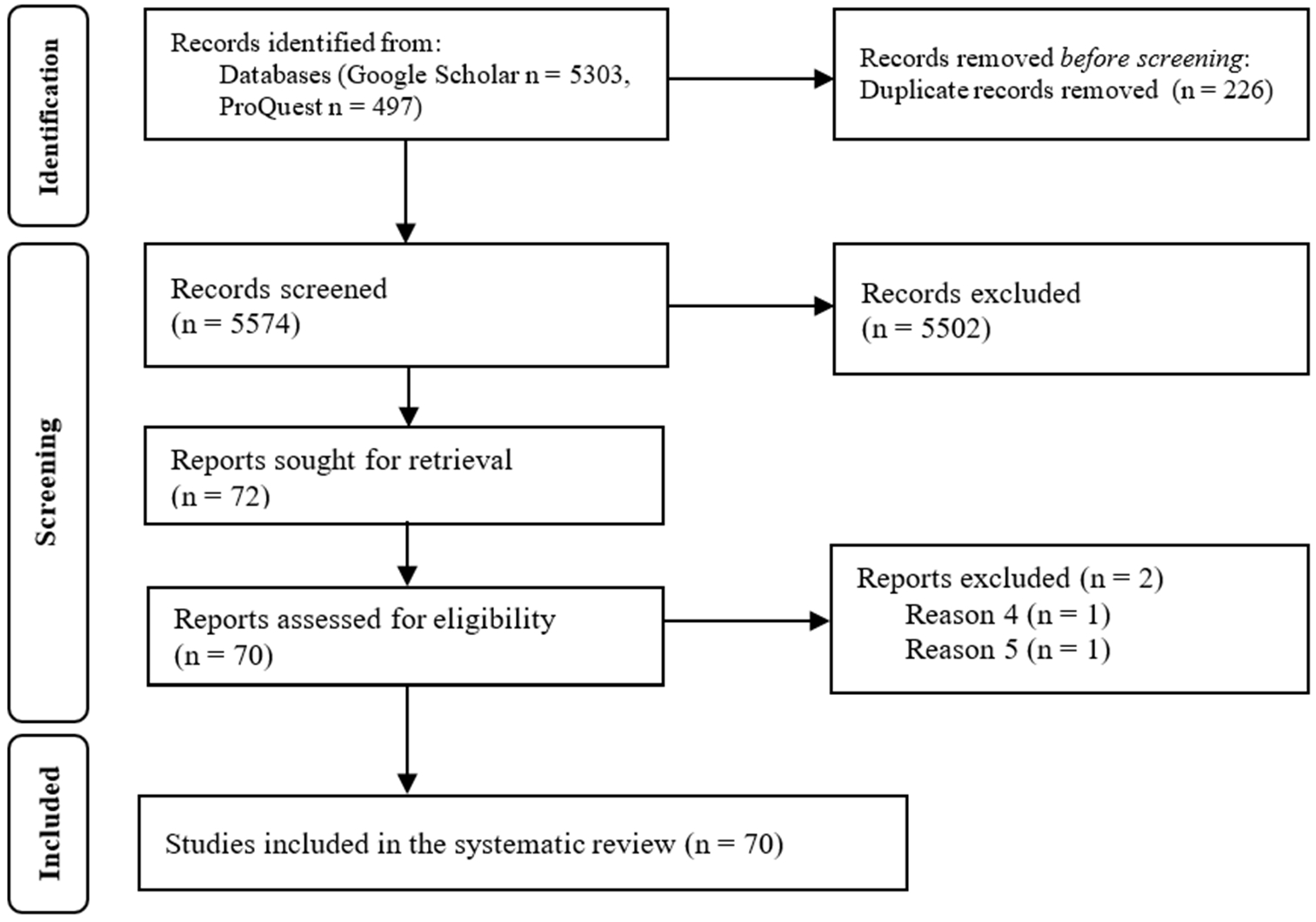
Search strategy following PRISMA flow diagram 2020.
Several factors cause the slow movement of research and implementation of the new technologies needed to convert storage compartments into smart, home storage compartments for perishable items. Among them are the cost of system configuration, manufacturing, and research and security issues [61].
This systematic review surveys the relevant work on an application of IoT, Artificial Intelligence of Things (AIoT) technologies on perishable items storage compartments, the household interaction, and a detailed description of components, 2) point out the advantages and limitations of the concept, 3) find the frequency of the components appear in the research, 4) and perform data mining technique that built a decision tree for a continuous variable decision on the reviewed papers, and 5) offers a unified framework to developing a system that can include all necessary components. Also, future research directions to enhance the household replenishment system to reduce food wastage will be provided, as shown in Fig. 3.
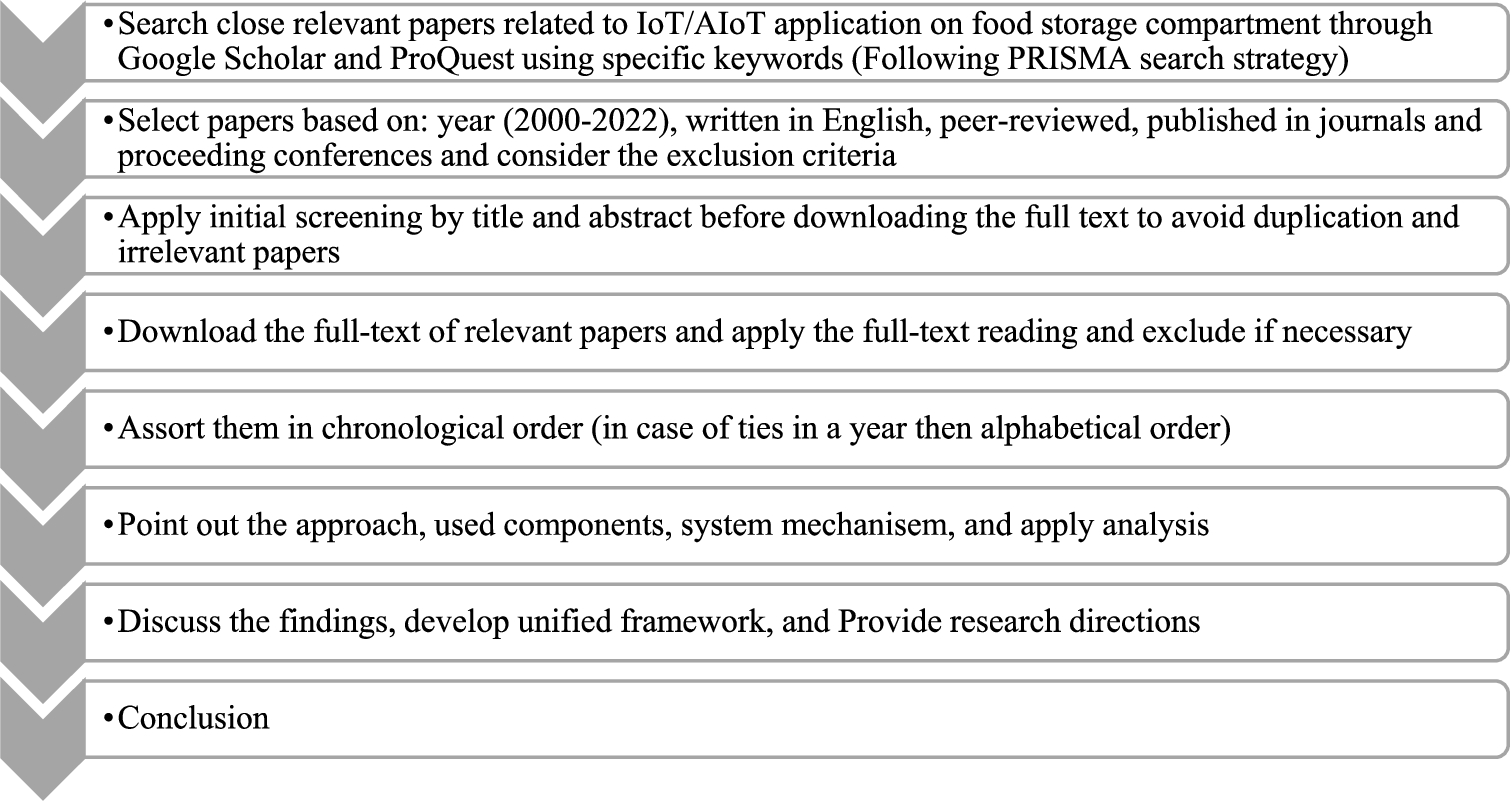
Summary of the systematic review methodology.
This systematic review focuses on papers published from 2000 when LG Electronics invented R-S73CT the first smart refrigerator, and research on technology involvement in refrigerators began to increase [23,91]. Combination of keywords were used for the search, as follows: “Smart refrigerator”, “Smart refrigerator AND “internet of things”, “Smart refrigerator” AND “artificial intelligence”, “Smart Fridge”, “Grocery Ordering Systems”, “Fridge” AND “IoT” AND “AI” AND “Smart refrigerator”, “smart food storage”, “Intelligent Refrigerator”, “Intelligent Refrigerator” AND “artificial intelligence”, “Intelligent Refrigerator” AND “internet of things”. The search conducted in this paper uses ProQuest and Google Scholar databases. Only papers written in English and published in journals and conferences are selected for this paper. Publications were excluded if they had or were: 1) access restrictions for the entire paper, 2) papers for class projects, 3) proposed systems that applied IoT or AI on other than home food storage compartments, 4) relevant but the mechanism of household interaction was missing, and 5) newspapers, wire feeds, blogs, podcasts, websites, patents, dissertations and theses, books, and magazines are excluded. Table 1 shows a summary of the search results using the keywords and search engines.
Summary of initial search results on both databases
The initial search resulted in 5800 possible papers to review, as shown in Fig. 2. Before the initial screening 226 duplicated results were removed. From the initial screening of the titles and abstracts of each result and applying the exclusion criteria, 72 papers remained in this systematic review. There were 42 conference papers and 28 published papers. Two papers were excluded after the full-text reading for reasons number 4 and 5.
Here are some examples of excluded papers after the screening of the title and the abstract with exclusion explanations:
A paper titled “Design of High-Efficiency Refrigerator Test System for Industrial Internet of Things” by Xian et al. [90] was excluded as it focuses on reducing the refrigerator’s power consumption.
A paper titled “A Taxonomy and Survey of IoT Cloud Applications” by Pflanzner et al. [68] It is about the application of IoT in general. It talks about the smart home appliance and the smart refrigerator as an example, stating the product of Samsung and its features. No details were given, and no solution was proposed.
A paper titled “Application of Affordance Factors for User-Centered Smart Homes: A Case Study Approach” by Younjoo et al. [15] is a case study about a smart home’s central interface that helps the user to view and manage home appliances, the smart refrigerator was one of the examples, and no details were given to support this systematic review.
A paper titled “Older Adult Segmentation According to Residentially-Based Lifestyles and Analysis of Their Needs for Smart Home Functions” by Jiyeon et al. [92] is about old people’s lifestyles and how vital smart homes are to them. Also, it brought the smart refrigerator as an example of what it could have as features briefly.
A paper titled “Monitoring in IOT enabled devices” by Gupta. [29] It talks about letting the smart refrigerator adjust the temperature itself based on the weather to reduce power consumption. It has nothing related to tracking food items inside the storage compartment.
A paper titled “Intrusion Detection In Internet Of Things (IOT)” by Anthony et al. [64] It talks about the security of IoT and provides a block diagram for how smart refrigerators are being connected through Bluetooth to a smartphone and showed it as an example with a weighing sensor. However, it is still about how hackers can easily interrupt it.
A paper titled “Safety of Food and Food Warehouse Using VIBHISHAN” by Khan et al. [43] talks about food safety and gives some ideas and tools to monitor it inside warehouses. There was no module or test implemented or even conceptual solution to support inclusion.
A paper titled “Multi-Class Fruit Classification Using Efficient Object Detection and Recognition Techniques” by Khan and Debnath [42] This paper is good as it helps in the fruit recognition method using AI. But it is being excluded as its focus is only on fruit recognition and removing the noise of the pictures to make a proper decision on the taken images. Therefore, it does not include the mechanism of tracking and reporting food items inside the refrigerator to the household, which is the focus of this work. Maybe later, this paper can be used to understand how to test the AI approach and get results of the developed unified framework.
Here are two examples of why papers were excluded after full-text reading:
The paper titled “Next Generation Smart Fridge System using IoT” by Bhatt et al. [10] is closely relevant to this review but was excluded. It was a class project.
The paper is titled “Inventory Management of the Refrigerator’s Produce Bins Using Classification Algorithms and Hand Analysis.” by Morris et al. [57] was excluded as it focuses only on hand detection and allowing the recognition model to clear the picture using a CNN classifier from the background and keeps the food items’ image for comparison. There is no mention of how the household interacted with the system. Maybe later, this paper can help to use the AI approach better and get robust results from the developed unified framework as an extension of this systematic review.
This section analyzes the selected papers based on the used approach and the implemented components. The 70 reviewed papers apply to the IoT technology or a combination of IoT and AI technologies, also referred to as Artificial Intelligence of Things (AIoT), and how those technologies can work with perishable item storage compartment systems.
Twenty-seven papers shed more light on the combination of AIoT components with perishable items storage compartments. Ten showed the results based on conceptual assumptions, 15 based on simulations, and 2 on the implementation of the system.
Forty-three papers drew the connection between IoT components and perishable item compartments. Twenty showed the solutions with conceptually assumed results, 17 of them were based on simulation, and six were on implementation of the system.
This section contains subsections that detail the IoT and AI components used in each reviewed paper. Each subsection will end with a table that summarizes the discussed matter. The component model and type will be written as mentioned in the reviewed papers. A checkmark (X) will be against the authors’ name if the type or model of the used component is included but not specified. Otherwise, it will be left blank or not listed in the subsections’ tables as it was not used.
This section ends with highlighted contributions, and limitations of and observations from each reviewed paper in Table 20 and Table 21, respectively. A complete table summarizes the subsections of the used components in Table 22. It forms the base for a data mining technique and a decision tree for a continuous variable decision. The frequency of used components among the reviewed papers is used to define the relationship between the used components and form them into categories. The continuous variable decision is used for the variables that depend on the outcome of each other, which applies to this paper. Therefore, this type of decision tree method is used, as shown in Table 23.
IR/ ultrasonic sensors
These sensors measure the liquid level inside items stored and the distance between them in the storage compartment. IR the infrared radiation sensors work by sending several light lines as signals across the compartment. Then, a measurement will be sent to the controller when a new or moved object interrupts the light to measure the distance or the remaining quantity level [89]. Ultrasonics are sound sensors that send sound signals and based on how the objects reflect, the distance will be measured [6]. A connected database will be updated with the feedback captured from these sensors, where the items’ status will be calculated accordingly [83]. Some authors used these sensors, as shown in Table 2.
Articles in which the authors used IR/Ultrasonic sensors
Articles in which the authors used IR/Ultrasonic sensors
This component is different than the default built-in climate sensor. Temperature and humidity sensors are placed inside the storage compartment. These sensors give feedback to a connected device (controller or household mobile device) in the network or update the connected database with an up-to-date status of the storage climate. Some climate sensors can be programmed to control the climate inside the storage compartment from a distance. Several types of climate sensors are included in some of the reviewed papers, as shown in Table 3.
Articles in which the authors used climate sensors
Articles in which the authors used climate sensors
A light sensor has different uses. Sometimes it can check the light inside the storage compartment. Once it senses light, it can trigger the connected equipment to function or send an alert that the refrigerator door is open [89]. A list of authors used this type of sensor in their systems, as shown in Table 4.
Articles in which the authors used light sensors
Articles in which the authors used light sensors
A gas sensor is designed to sense and measure the gas generated by food items such as vegetables, fruits, and meat to identify the item type and predict spoilage. Several types of gas sensors were involved in some of the proposed systems, as shown in Table 5.
Articles in which the authors used gas sensors
Articles in which the authors used gas sensors
A door open-close sensor is a sensor that is used to trigger the connected equipment whenever the storage compartment’s door is opened and closed or remains open or alerts the household that the door is open. Some of the reviewed papers used several types of these sensors, as shown in Table 6.
Articles in which the authors used door open-close sensors
Articles in which the authors used door open-close sensors
Weight sensors can be placed or connected to the bottom of the storage shelves. Then these sensors give feedback to a connected device in the network or update the connected database with an up-to-date status of stored items’ weight as a quantity measurement. Some of the reviewed papers used several types of these sensors in their systems, as shown in Table 7.
Articles in which the authors used weight sensors
Articles in which the authors used weight sensors
The Global System for Mobile is a device that has a SIM port that enables the linked device to have telecommunication ability. It enables the storage compartment to send alerts based on the received data from the controller and sensors. Also, it allows the household to control the refrigerator by sending commands via SMS [50]. Some authors applied a GSM module, as shown in Table 8.
Articles in which the authors used GSM module
Articles in which the authors used GSM module
The RFID system identifies objects from their identity tags. It consists of two parts the RFID tag and the RFID reader. The RFID tag is where the information about the thing is stored. It has two types, and each type has several models that read the associated tags [44]. One requires a long-life battery, and the information recorded on it can be modified and updated at any time, and it is called an RFID active tag. The other tag is called an RFID passive tag, and this type of tag does not require a battery as the tag will automatically activate once it becomes close to the RFID reader, and the information recorded in this tag cannot be changed. A tag will be attached to each object, and whenever that object becomes close to the RFID reader, it will be activated. The RFID reader will read the information, and then send it to a connected central database. Sometimes auto-scan can be set up to run an overall scan of the stored items to check their availability. The setup can be programmed to be periodically or triggered by another sensor [23]. Some authors applied the RFID system, as shown in Table 9.
Articles in which the authors used RFID system
Articles in which the authors used RFID system
The barcode system is a technology that acts similar to the RFID system but it is a manual system. A barcode scanner is required to scan the barcode tag located on any barcoded item. The barcode tag consists of lines and numbers printed in a certain way representing information about an associated item. Then, a scanner reads the information about the scanned item and sends it to a connected database. The information carried by the barcode varies and may contain data such as an item’s type, quantity, and expiration date [33,50]. Some papers applied the barcode system, as shown in Table 10.
Articles in which the authors used a Barcode system
Articles in which the authors used a Barcode system
Most current devices have already been designed to be identified and connected to the internet wirelessly via a WiFi connection or wired via Ethernet and with each other via Bluetooth. Other appliances such as regular refrigerators or storage cabinets require specific IoT equipment to be identified. One of the reviewed papers used an Ethernet connection, a wired network that enables devices to communicate within a local area network and to the internet [30]. Some systems used different types of connections, as shown in Table 11.
Articles in which the authors used connection medium
Articles in which the authors used connection medium
Controllers are used to send and receive information, store data, enable internet access for the connected equipment, and be configured to process the received data. Some of the reviewed papers used an IoT platform, tablets, or personal computers to act as the controller, but with larger data storage. Several types of controllers are installed in the systems conducted by the authors, as shown in Table 12.
Articles in which the authors used controllers in their systems
Articles in which the authors used controllers in their systems
(Continued)
The Internet Protocol is a set of regulations controlling network communication with a given (IP address) that identifies machines connected to the internet or locally. An IP address will act as a unique identifier assigned to a smart refrigerator to allow the household to monitor and control that particular refrigerator [44]. Several types of internet protocols are applied in reviewed papers, as shown in Table 13.
Articles in which the authors applied an Internet Protocol
Articles in which the authors applied an Internet Protocol
An IoT Platform allows objects to communicate, exchange, and store information via communication channels, databases, and internet protocols. According to Floarea et al. [23] there are four types of IoT platforms: 1) Machine-to-machine connectivity (M2M), which handles the communication between the IoT-connected components via a telecommunication network, but cannot process data; 2) Infrastructure as a Service (IaaS) acts as a backend server over the internet, allowing individuals to have a space with full access to control, store, and process data (platform is compatible with many operating systems); 3) Hardware-Specific software is exclusive software that operates devices; and 4) Consumer/Enterprise software extensions generally come as packages of multi-functional software programs and act as an IoT platform [3,23].
To operate an IoT platform, several features must be included [3,23]: 1) connectivity and normalization for the data flow assurance and accuracy, 2) device management where the connected devices are managed appropriately, 3) a scalable database that can accommodate vast amounts of data, 4) managing data from connected devices to take appropriate actions, 5) the ability to generate analytics reports based on individual preferences, 6) a dashboard to allow individuals to view meaningful information, 7) additional tools that allow testing, implementing, and modeling, and 8) an external interface that allows the IoT platform to be expandable and to be monitored from a mobile device. Different IoT platforms use different systems, as shown in Table 14.
Articles in which the authors utilized IoT Platform
Articles in which the authors utilized IoT Platform
Smart refrigerators can be connected to household devices and the internet through external tablets or personal computers; some use built-in touchscreens. With a pre-installed application or web application, this tablet could communicate with all devices connected to the network. It also can receive, process, store, update and send information to a central database or a household mobile device. PC acts like tablets with more capabilities; they usually have extra capacity, provide a convenient programming environment, and serve as a home server. While touchscreens vary, some are like tablets and others just for a few functions. Here is a list of authors using different types of these devices in their systems, as shown in Table 15.
Articles in which the authors utilized Tablets/PC in various systems
Articles in which the authors utilized Tablets/PC in various systems
Specifically designed software allows mobile devices to interact with the storage compartment in many ways, such as retrieving information, monitoring, controlling, and approving shopping lists. Several types of mobile applications are used in different papers, as shown in Table 16.
Articles in which the authors used Mobile Application
Articles in which the authors used Mobile Application
In the reviewed papers, databases store information captured or received from the connected devices within the local network so the household can manage it. Different types of databases were used in the reviewed papers, as shown in Table 17.
Articles in which the authors used systems with an offline-database
Articles in which the authors used systems with an offline-database
Webcam means the reviewed paper used a camera to capture low-resolution images. A camera module means that the reviewed paper used a camera connected with a programmed device for image recognition and processing and/or higher resolution images. Some Authors used different types of cameras, as shown in Table 18.
Types of cameras used in the literature
Types of cameras used in the literature
The recognition module in this paper refers to machine learning or deep learning to recognize images, voices, and captured data. Algorithms and models enable the system to recognize and make decisions on the stored items’ status [11,55]. Also, they can use facial recognition to learn the consumption habits of each household member and form patterns accordingly, patterns of food use [11]. several methods of recognition modules are applied, as shown in Table 19.
The recognition modules used in the literature
The recognition modules used in the literature
The approach each reviewed paper used on the introduced systems towards a smart refrigerator is shown in Table 20, along with the papers’ contribution regarding storage compartments. Table 21 shows the limitations of and observations from each reviewed paper.
Approach and contribution of reviewed articles
Approach and contribution of reviewed articles
(Continued.)
(Continued.)
Limitations of and observations from reviewed articles
(Continued)
(Continued)
This subsection provides a table that summarizes each reviewed paper’s used components. It consists of a list of authors in chronological order, and when a tie occurs between years, the authors are listed alphabetically. A checkmark (X) will indicate that the system introduced by each author included that component. The checkmark will be entered differently according to the footnotes for the recognition module and implementation type columns. The footnotes are repeated before each page break in Table 22.
Summarization of used approach and components by the reviewed articles
Summarization of used approach and components by the reviewed articles
(Continued.)
Several types of controllers used in reviewed papers: Raspberry Pi, Arduino (Uno, WeMos D1 R2, and ATMega 2560), etc.
Two internet protocols used in reviewed papers: IP address and MQTT.
IoT platforms refer to different types used in reviewed papers: Cloud-based, Google Firebase, Thingspeak, etc.
Recognition module referred to machine learning or deep learning to recognize images and data used in reviewed papers.
Implementation: C for conceptual, S for simulation, and A for the actual implementation of the proposed system by the reviewed papers.
Different types of databases were used in the reviewed papers: PLX-DAQ, Excel spreadsheet, etc.
Table 22 presents all reviewed papers in chronological order. The chronological order and the check marks indications show the revolution of the household replenishment systems over the years. Therefore, it will be easy for the researchers or manufacturers to keep the trendy components or eliminate them as they become outdated, based on their objective. The researchers and manufacturers could also consider other factors shown in other tables to decide on the targeted combination. For example, Table 23 and Table 24 could be used as guidelines to assign weight coefficients among the presented components based on their trendiness, frequency, functionalities, etc.
This subsection reports the frequency of component selection based on the used approach. Using MS Excel to find the frequency between the used components and approaches Table 23 shows the reviewed papers with different approaches in using IoT and AIoT components toward home perishable items storage compartments. The following are charts captured from the performed analysis on these used components based on the frequency result in Table 23.
Of the 70 reviewed papers, 43 used IoT technology to convert perishable items storage compartments into smart devices. Twenty-seven papers used AIoT technology. The camera and recognition modules were not used in the IoT approach, while all AIoT systems use the recognition module. That is because the IoT approach does not mimic human interaction to make decisions, but AIoT does. Moreover, the GSM module was only used once by a system using the AIoT approach. The GSM module communicates with the grocery to authenticate orders [16]. The systems applying IoT technology tend to be more robust than in the past. Based on the reviewed papers, the reason is that AIoT requires additional components that need more time for training data, effort, and cost as it involves many steps. Looking at the implementation of the introduced systems will clear that reason, as shown in Fig. 4. The AIoT approach in the reviewed papers used a prototype by a computer to test the results and prove the system’s accuracy as it is all about computational tools rather than conceptual or actual implementations. In contrast, IoT is based on the components’ functionalities when connected locally and to the internet. Therefore, it is possible with the IoT approach to predict the results conceptually rather than through simulation or actual implementation.
Frequency of used components in the introduced systems by the reviewed papers
Frequency of used components in the introduced systems by the reviewed papers
Table 23 shows the frequency of approaches and components used in the introduced systems by the reviewed papers. The dark diagonal line indicates the frequency of single elements. The rest of the numbers indicate the pairwise frequency between the used components and approaches in the reviewed papers. The papers proposed their systems were 88.57% conceptual and simulated systems, while only 11.43% were actually implemented systems. It indicates that the implementation of such systems to gather practical results might be expensive. Especially when it comes to the implementation of AIoT systems, which involves machine learning that requires a lot of time and money.
Comparison between the used components by the reviewed papers
(Continued.)
After analyzing the systems introduced in the 70 reviewed papers, this section will discuss the findings based on the descriptive analysis. Therefore, this section will have two sub-sections. The first section is about the used components and their functionalities, advantages, limitations, and disadvantages regarding the identification of stored items, as shown in Table 24. Finally, based on Table 22 and correlation analysis results Table 23, the decision tree will help develop a unified framework in which the used components are connected and communicate with each other to enhance the household management system performance.
Components comparison
In this section, a comparison between the used components in the introduced systems in the reviewed papers is discussed. Table 24 highlights the functionality and advantages of each component and the limitations and disadvantages as stated in the reviewed papers. Some components have nothing to do with tracking food items. Therefore, N/A will be written as its limitations and disadvantages.
A unified framework
Based on the previous analysis of the reviewed literature, this paper presents a unified framework in which all possible combinations of the mentioned components for the household replenishment system are presented. A decision-tree technique that uses a continuous decision variable, and is known as a regression tree, is used to connect and allow the components to communicate [54]. The unified framework is a showcase that gives researchers and manufacturers a starting point for enhancing the performance of the household replenishment system shown in Fig. 6. The components are categorized based on their functionalities, as shown in Table 25 followed by Table 26 for a description of how they work.
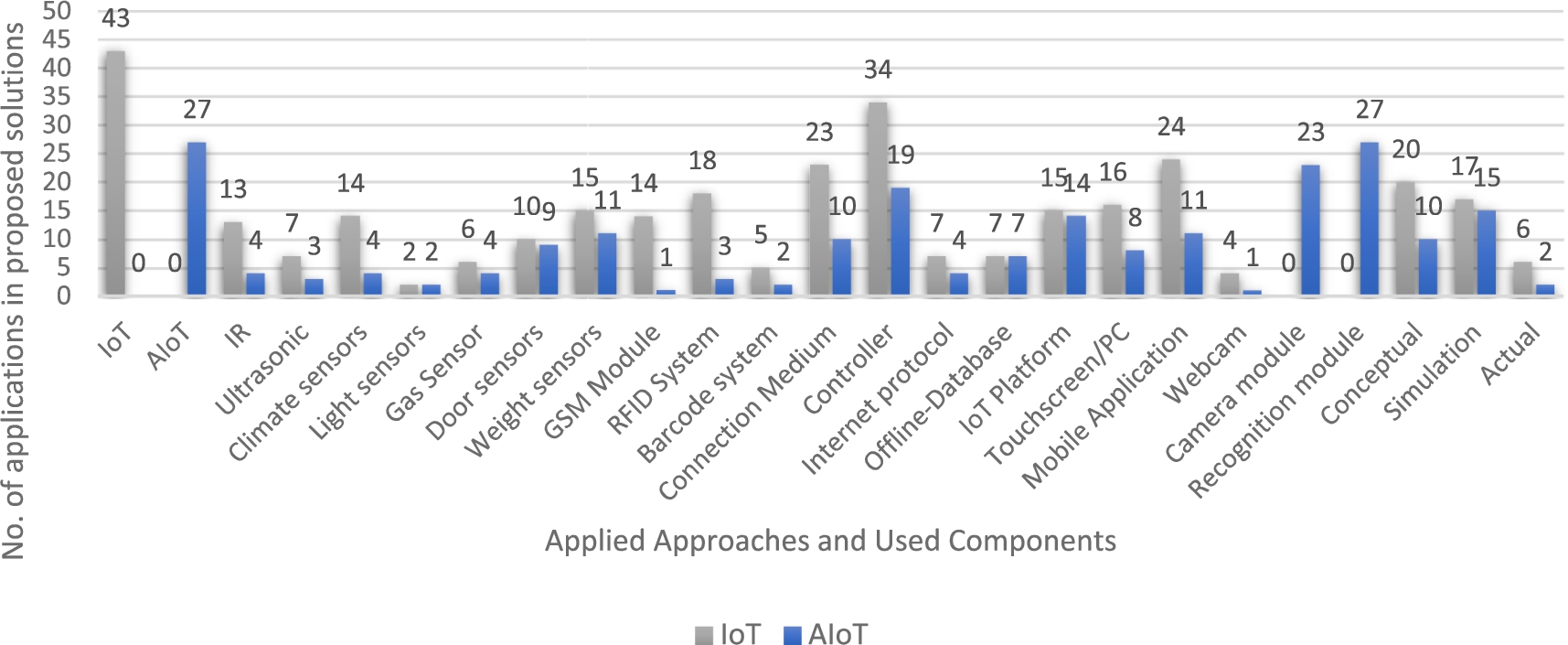
IoT vs. AIoT approach on smart storage compartments.
Therefore, the researchers and manufacturers would gain knowledge over the years about the components used in household replenishment systems based on the reviewed papers. For example, Loh et al. proposed a design of a system that can keep track of the free space inside the storage compartment. The authors divided the design into stages. Starting from the sensing sensors, through control and interface circuits, and ending with GSM circuit. The designed system was dedicated for space measurement and tracking food quantity [50]. Nayak et al. [62] and Panchal et al. [67] proposed a framework that presents specific components for remote monitoring. The framework was presented as a block diagram starting from the sensors ending with the market. The system was dedicated to monitor the stored items via IR sensor and initiate orders to the nearest market [62,67]. Hou et al. [35] proposed a framework that contains barcode and RFID technologies for food management. The proposed framework was split into several stages called units. The sensing, storage, control, push, and display units. The system was dedicated to the tagged items, and the non-tagged items can be entered manually [35]. Gürüler [30] proposed a block diagram that also shows specific components of the system. The proposed system was designed to allow the household to communicate with the storage compartment via SMS [30]. Hachani et al. [31], Floarea et al. [23], and Esmaeili [5] proposed a system architecture that uses RFID technology to capture stored items’ information. Kwon et al. proposed a system architecture that contains three stages. The first stage consists of capturing sensors. The second stage consists of database management. The final stage is the output stage [47]. Edward et al. [19] proposed a system architecture that consists of input, processing, connection medium, and output [19]. Wu et al. [89] proposed a system architecture that shows the identification of the items via Google Firebase using inside and outside cameras [89]. Anand et al. [6] have a slight difference. Anand et al. [6] added more sensors like gas, ultrasonic, and weighing sensors connected to a controller and to Google Firebase [6]. Nasir et al. [61] proposed a framework that shows three stages of the system: input, processing, and output. The proposed system was limited to specific components [61].
The unified framework presented in this paper in Fig. 6 is meant to be a generalized form of a framework derived from the specified frameworks presented in the reviewed papers. It is divided into four stages, and each stage consists of a combination of all components used in the reviewed papers. The starting triggers, input, processing, and output stages. The starting triggers stage consists of either automated or manual components that trigger the input stage components to start to work. The input stage’s components capture the data from the storage compartment and pass it through to the processing stage. The processing stage then processes the captured data into meaningful information and displays them accordingly via the output stage’s components. Later, the researchers and manufacturers could modify the components based on their perspectives and objectives. Figure 6 assigns a number to each component to help with components’ illustrations in Table 26.
However, the systems with the AIoT approach were developed in 2012 and 2013, then stopped until 2016, when they resumed growing. In 2020 and 2021, the use of AIoT approaches doubled the uses of IoT, Fig. 5, because of the technological revolution in Artificial Intelligence and human-less interactions with machines.
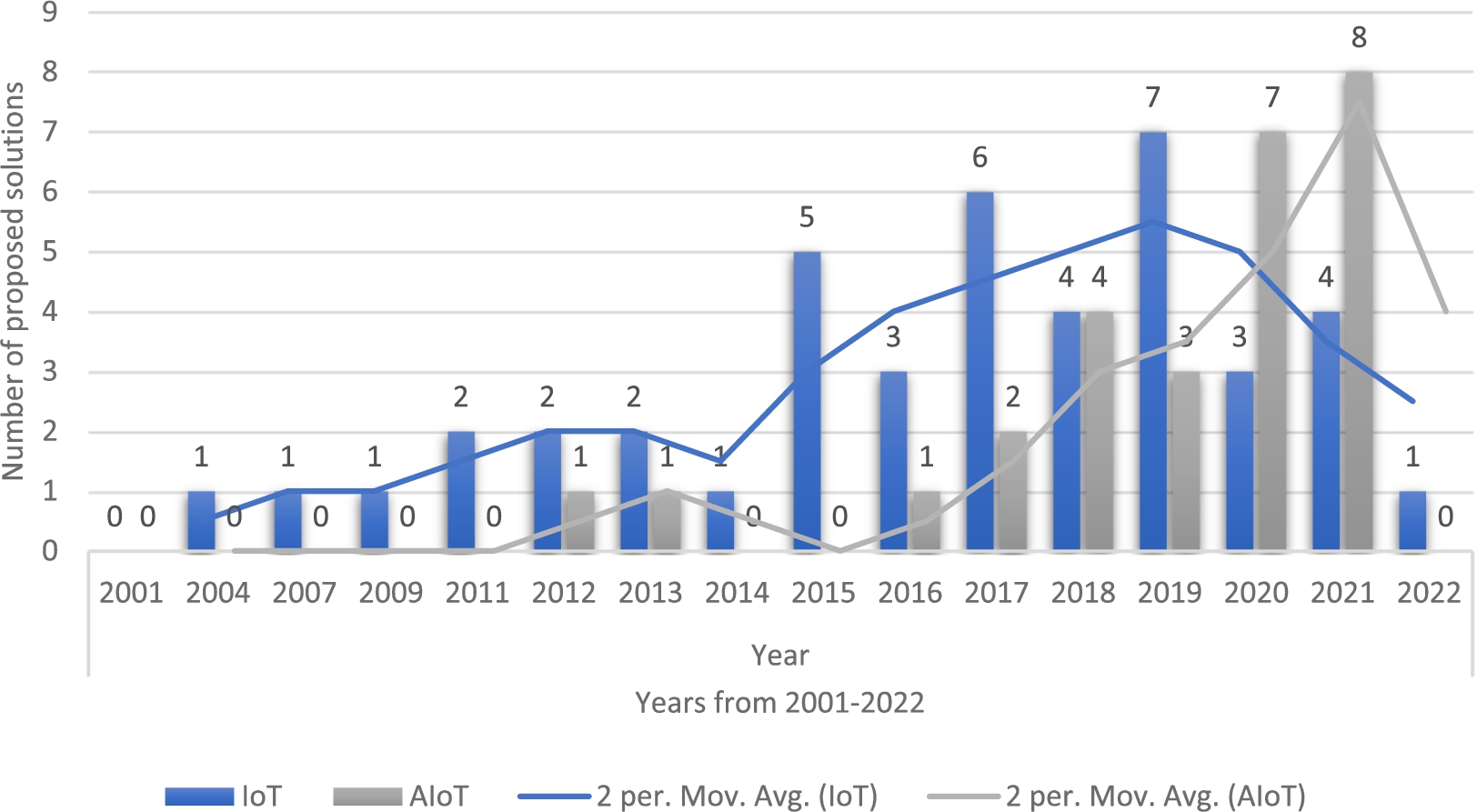
Application of IoT and AIoT over the years.
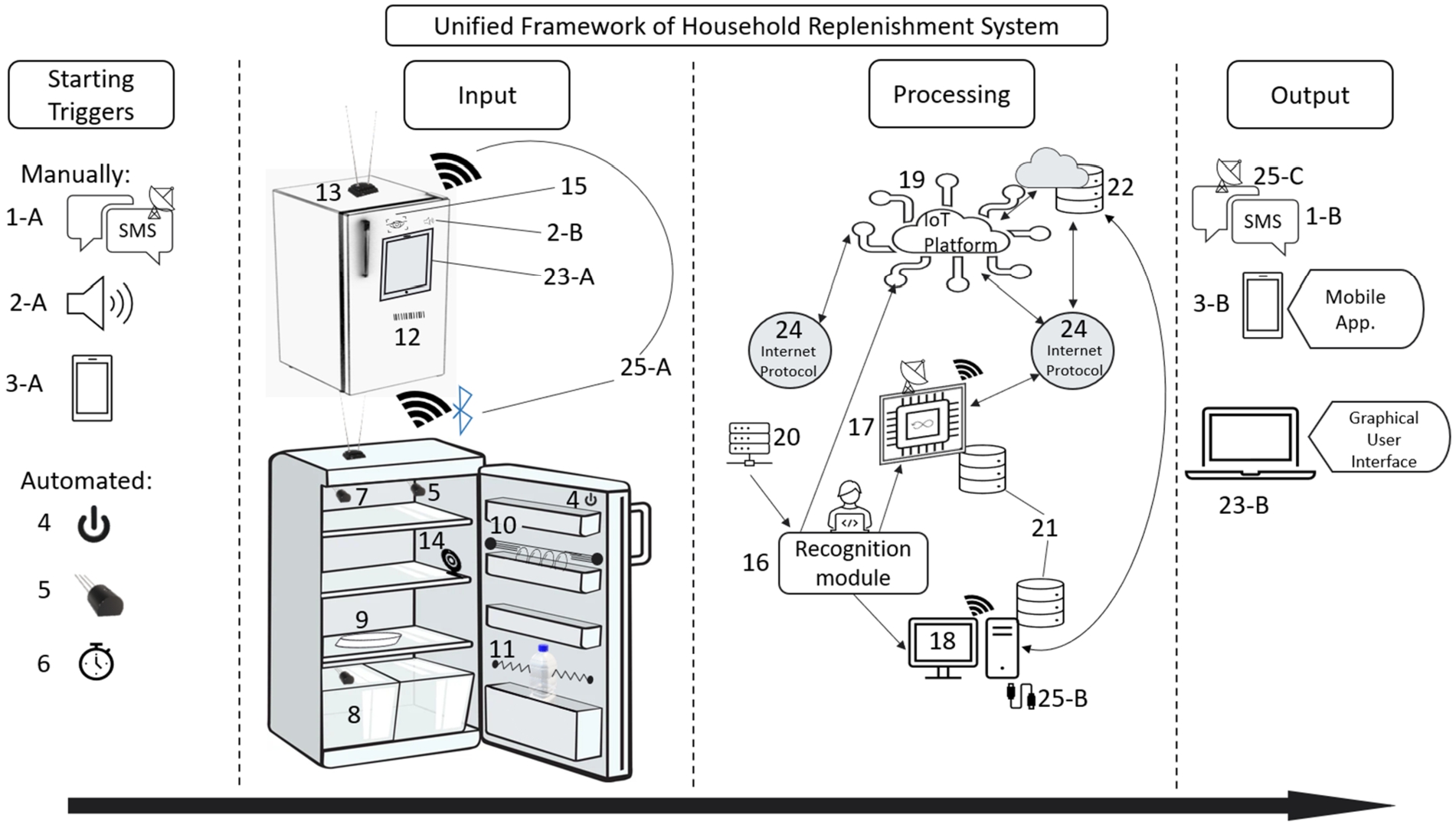
A unified framework for household replenishment system.
Based on literature, Table 25 classifies each component shown in Fig. 6 with its category. The categories are classified based on the components functionalities, as follows: 1) starting triggers are the components that trigger all input components to work except the barcode scanner and some RFID scanners that could work manually; 2) input components can be used for both quality management and quantity management, the quality management components are used to monitor the environment inside the storage compartment, the quantity management components are used to keep track of the stored items’ quantities and the household consumption habit, some of the quantity management components can identify the stored items and some do not; 3) the processing components receive the data from the input components to be processed and recorded; 4) then, the processed information can be retrieved by the output components to be displayed; 5) the processed information can be stored in either online or offline databases, and the connection medium that enables communication between all system components could vary.
Categories of used components by the reviewed papers
Based on literature, a detailed illustration of the unified framework components shown in Fig. 6 and tied to their categories and associated with the assigned numbers is provided in Table 26.
Detailed illustration of the framework components
(Continued.)
This paper focused on smart refrigerators as they always contain items that require monitoring. In contrast, other home appliances, such as washers and dryers, are used occasionally. However, other things could be learned from other smart appliances at home—for example, washer, dryer, coffee machine, etc. Therefore, in the future, there might be a need to conduct a review of other home appliances and show their effect under the smart home umbrella in general. This paper surveyed the relative work conducted on IoT and AI technologies applications on a home perishable items storage compartment to convert them into smart ones and show the households’ interaction. It focused on papers starting from 2000 using the mentioned keywords and criteria in methodology Section 2. A total of 70 papers were selected to be reviewed that applied either IoT or AIoT technologies toward smart refrigerators and/or cabinets following PRISMA search strategy. Twenty-seven papers shed more light on the combination of AIoT components with storage compartments for perishable items. Ten papers showed the results based on conceptual assumptions, fifteen papers based on simulations, and two papers on the implementation of the system. Forty-three papers drew the connection between IoT components and storage compartments for perishable items. Twenty papers showed the solutions with conceptually assumed results, seventeen of them were based on simulation, and six were on implementation of the system. These results indicate that the verification and validation of AIoT applications tend to be expensive. Therefore, this paper uses data mining techniques to build a continuous decision variable to analyze the reviewed papers that resulted in a unified framework including all possible combinations of used components. The used components were categorized into stages based on their functionalities. The starting triggers, input, processing, and output stages. A detailed description of the components used, functionalities, and limitations was provided.
The systematic review starts with section one, the introduction; section two, the research methodology; section three, the Household Replenishment Systems Analysis; section four, the findings and discussions; and ends with the conclusion and future directions section.
This comprehensive research pointed out the reviewed papers’ approaches, contributions, used components, and limitations.
The proposed framework was presented in this systematic review. It could be considered a showcase that gives researchers and manufacturers a starting point for enhancing the performance of the household replenishment system. It provides a visualization of all possible combinations of components used in literature for such a matter. Verification and validation to demonstrate the efficiency and effectiveness of the unified framework need to be addressed in the future.
Several summarized tables of the conducted review were provided. The summarized tables are intended to give researchers and manufacturers many factors to decide on the most effective combination of components that could be included or excluded with respect to their objectives. Moreover, the summarized tables could be used as guidelines to assign weight coefficients among the presented components based on their trendiness, frequency, functionalities, etc.
To the best of the authors’ knowledge, this would be the first comprehensive approach that includes all possible combinations of components used in household replenishment systems. Based on the thoroughness of the reviewed literature, the authors believe that this is a comprehensive framework expected to yield better results, but that is something that needs to be explored in other opportunities. In the spirit of continuous improvement, testing will result in outcomes that might lead us to make changes. More investigation needs to be done to include dissertations, theses, and books that tackle the same topic. Future work is to enlarge the scope and include introduced systems to enhance the household replenishment system to reduce food wastage in dissertations, theses, books, and patents. Furthermore, further investigation into smart systems and smart home appliances would be an introduction to extensive approaches like smart homes, markets, healthcare divisions, industries, and eventually smart cities.
Finally, this paper provides future research directions and sheds more light on areas of improvement for manufacturing companies gathered from the reviewed papers to enhance the household replenishment system. The proper use of IoT and AI technology may improve the household replenishment system in many ways:
Improvement of household replenishment system. Ways to find an optimal threshold period. The auto setting of the threshold period by the system. Prediction of patterns of user habits based on consumption and purchases. Criteria of store selection for the replenished items. Remote maintenance for smart refrigerator. Considering using components by maintaining the minimal cost of implementation. Investigate and resolve security issues. Expand the search by involving vendor management inventory (VMI). Consider the involvement of the suppliers to enhance the online shopping system to be automatically done. Expand the search to identify the significant IoT and AIoT components that work together for substantial results to enhance the household replenishment system and reduce food wastage along with verification and validation.
Conflict of interest
None to report.