




Abstract
The 1990s marked the end of Yugoslavia and the height of conflict and urban destruction (Dubrovnik, Mostar, Sarajevo and later Belgrade). Bogdanovic (1993), an architect and former mayor of Belgrade, coined the neologism ‘urbicide’ to designate an enterprise of urban destruction which goes beyond the simple strategic objective of the physical destruction of the city, but that of the annihilation of memories, identities, and cultures associated with the city in question and its urbanity, that is to say, of the ‘ritualized murder of the city’. At the end of these multiple conflicts, the cities and the related tourism had to be rebuilt. Over the last twenty years, information technologies, the creation of peer-to-peer digital platforms (Booking, Airbnb, Expedia) and virtual reality for museum and heritage visits have boosted the attractiveness of the destination and tourism projects. The emergence of tourism projects based on digital and new technologies is booming in the Balkans, particularly the capitals like Belgrade or Sarajevo. By looking at different technological and digital projects for tourism purposes, we will see how local, private, transnational and citizen actors have taken up this project and if this projects contribute to the touristic destination.
Introduction
The twentieth century was the height of conflict and destruction, particularly during the Second World War, when cities such as Coventry in England and Dunkirk in France were almost completely destroyed [20]. During this period, the destruction of cities was on an unprecedented scale [14]. The 21st century presents new risks, including the destruction of cities and societies by wars and terrorist threats [3]. In an attempt to deal with these new challenges and risks, the concept of resilience, and more particularly the resilience of cities, was developed in the early 2000s to become a strategic issue in the preservation of lifestyles and the safeguarding of populations, making it possible to avoid any break in the dynamics (economic, political, social) that could lead to major crises [15]. In tourism, the concept of resilience is also used, particularly with regard to the efforts made by a destination to relaunch itself after having suffered significant damage following natural disasters, health crises or security risks [23]. The various public and institutional actors are developing regulatory policies and implementing the necessary financial and human resources to support the reconstruction of affected tourist sites, in order to relaunch the destination as quickly as possible [23]. Tourism raises many expectations on the part of governments as well as public and private decision-makers, who see it as “a potential source of growth for their economy, of activities with a highly inclusive dimension and of improving the well-being of their population [33]. Despite a mass tourism model based on natural, cultural or historical assets, served according to standardized offers marketed by tour operators and travel agencies, tourist destinations are transforming and varying their models to cope with the gradual disappearance of mass tourism in favor of intelligent tourism which prioritizes the competitiveness of the destination through its capacity to innovate and renew itself [4].
Over the last twenty years, information technology, the creation of peer-to-peer digital platforms (Booking, Airbnb, Expedia) and virtual reality for museum and heritage visits have boosted the attractiveness of the destination and tourism projects. Using stereotypical references to attract foreign visitors, Serbian and Bosnian tourist destinations emerged in travel guides as early as the 19th century. In 1935, a Yugoslav book suggested, for example, that the “hundred mosques” of Sarajevo and “the gardens of picturesque Mostar form a whole reminiscent of the tales of a thousand and one nights” [42]. The 1984 Sarajevo Olympic Games marked the peak of the tourist appeal of the former Yugoslavia and its cultural capital, Belgrade being the political and economic capital, through the symbolism of the sporting event and its media exposure, crowning the multicultural richness and the living together.
Since the beginning of the 1990s, the Serbian and Bosnian tourism sectors have been affected by various endogenous and exogenous factors. In addition to the war that brought down the former Yugoslavia, the years that followed were marked by, on the one hand in Bosnia-Herzegovina, the ethnic cleansing of the country and the 1425 day siege of Sarajevo between 1992 and 1995 and the institutional and ethnic instability resulting from the Dayton Agreement, and on the other hand in Serbia, the various conflicts during the Balkan War, the war in Kosovo and the daily bombing of Belgrade. The reconstruction process of the tourist destination by the authorities of both countries has been put on the back burner by the multiple international and European aid plans. Despite this, the Serbian and Bosnian governments, aware of the economic potential of tourism, and of the fact that it lags behind other European countries and its close neighbors such as Croatia, have adopted strategic tourism development plans. In the case of Bosnia and Herzegovina, a strategic tourism plan for the period 2008–2018 including 5 key factors was established: stable political and security environment, favorable economic trends, satisfactory state of the environment, appropriate technological development and favorable health situation [2]. However, this report can only be considered as a basis for further work. The five pillars of tourism development mainly highlight the problems and fractures in the tourism organization and de facto institutional governance of the federal government, rather than providing real quantified objectives and concrete solutions.
Armed conflicts, such as those that took place in Sarajevo and Belgrade, have forced local decision-makers to rethink the tourist landscape and its de facto tourism development [28], in view of the degradation of the built and natural heritage, the loss of unique intangible heritage and the societal reconfiguration. This new tourism development is giving rise to a reconstruction of the tourism offer that was proposed before the conflict (nature tourism, health tourism) based on new technologies (virtual reality, tourism promotion and marketing for international tourists, development of tools for the intelligent city) while developing a new offer around the heritage and the memory of the conflict [22,29]. Shaped by the different institutional and tourist actors of the destination, tourism becomes the bearer of representations disseminated and propagated by tourism, becoming a means to improve the living conditions of the inhabitants. Whether they are cities, metropolises or tourist destinations, the risks of being affected by natural or anthropic events (climatic hazards, natural risks, violent political or social events, etc.) are just as important, inviting the stakeholders of tourist destinations to reflect on the concept of tourism resilience within global resilience [13]. Although the success of tourism is linked to the diversity and wealth of resources available to tourist destinations (natural, climatic, architectural, cultural resources, etc.), and to the quality of their facilities and infrastructures, these are not enough to ensure the sustainability of destinations affected by such risks [13].
Objective and methodology
Objectives
The case study of the cities of Belgrade and Sarajevo proves to be a promising choice in the analysis of the resilience of the tourist destination in the face of a major disruption in the tourist dynamic. Following the conflict, new complexities have arisen in terms of representations of places by tourist and urban actors and their feelings by visitors who come to discover these places and local populations. The way visitors look at them is plural, difficult to grasp. It intertwines the quest for originality and otherness, humanist and “resilient” awareness, but also the process of identification. This research also highlights several shortcomings. Several researchers have focused on the consequences of the conflict in urban life and its reconstruction, the heritage representations of the conflict, the impact on communities and the triethnic society (in the case of Bosnia and Herzegovina), and post-conflict resilience. ranging from urban planning to risk prevention, including psychological trauma. However, the analysis of the reconstruction and resilience of the tourist destination with the catalyst of new technologies has so far not been the subject of specific research at the level of Balkan cities in the scientific literature. As Cholat et al. point out, “the contemporary, past or future mutations of societies, the transformations of human relationships with space and time, the new demands of populations, the rise of uncertainties question the tourist activity and its “adaptations” in the general sense of “conforming to circumstances, agreeing” [9].
Methodology
The reconstruction and resilience of Sarajevo and Belgrade tourist destinations, through new technologies, is part of this set of measures to rebuild tourist destinations still marked by the representations of successive conflicts and the stigma still visible. The use of information technologies for tourism purposes has favored the development of historical destinations, but also of destinations that have experienced human, natural or economic events [33], such as Croatia or Slovenia. By looking at different technological and digital projects for tourism purposes in the cities of Belgrade and Sarajevo, we will see how the different actors (urban, national, tourist, cultural, civil, etc.) have taken up this initiative in order to make it concrete over time and what results have been achieved on the territory.
Does the application of tourism projects oriented towards new technologies and the smart city contribute to the reconstruction and resilience of these Balkan capitals, following the process of urbicide?
To do this research, we first conducted a documentary analysis of publications and reports produced by the governments of the Federation of Bosnia and Herzegovina and the Republic of Serbia, scientific articles, monographs and newspaper articles on the revival of Bosnian tourism after the war from 1992–1995, and Serbian tourism after the end of the Kosovo war in 1999. Following this we’ve analyzed two projects taking place in Belgrade and Sarajevo. The first is called “Belgrade smart city festival”. The initiative aims to help the major cities of the Balkans embrace new technologies and achieve urban development through innovation. SCEI mainly provides education and networking to local governments and related organizations, including the Smart City Festival held annually in Belgrade since 2017. The second project Sarajevo smart city project, aims to embrace the capital in the era of smart, sustainable and inclusive city to local and tourist populations through the collaboration of local, private and UN authorities. Subsequently, we tried to identify the technological and digital initiatives, the actors involved in the tourism development processes, their roles and the specific choices of these projects and their potential contribution to the development and resilience of the Bosnian and Serbian tourist destination. In order to obtain additional information, we interviewed political, cultural, tourism, economic and technological actors involved in the two projects, in Sarajevo (5) and Belgrade (5), to refine our analysis.
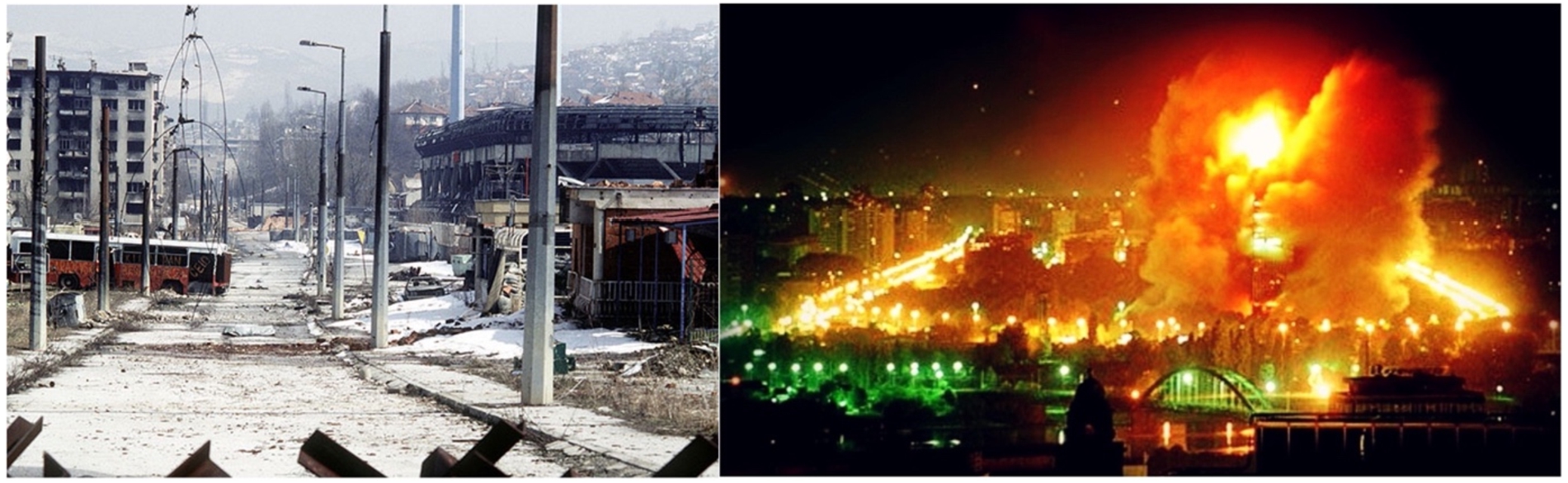
Street of Sarajevo for the siege and Belgrade city centre under bombardment.
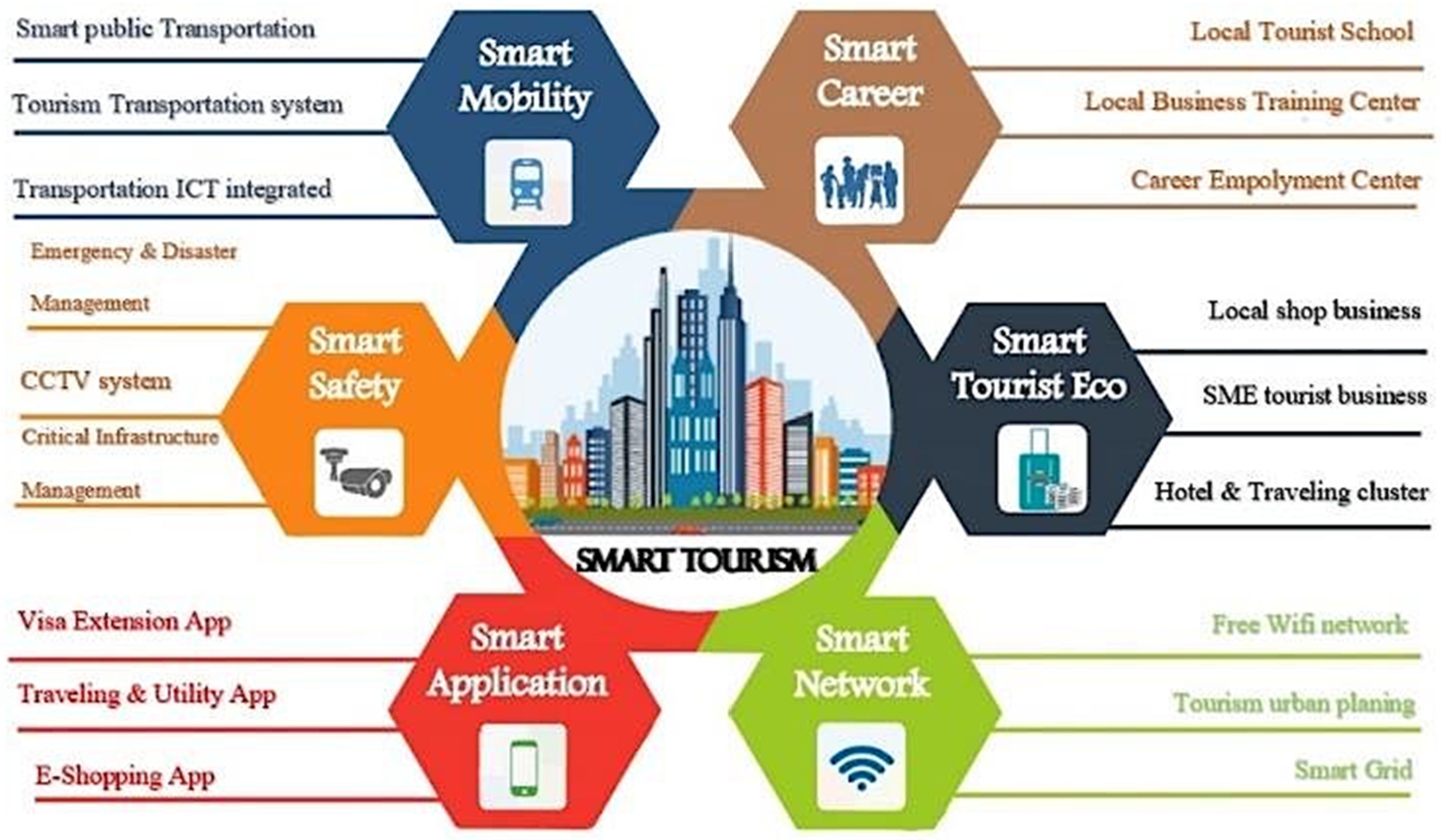
Smart tourism application model in the smart city [47].
The notion of urbicide, unrecognized but necessary concept
Sarajevo and Belgrade, two of the most important cities in the Balkan region, experienced in the 1990s a series of intentional destruction by two types of belligerents (Fig. 1). On the one hand, Sarajevo is infamous in its contemporary period for the 1425-day siege during the Balkan War between 1992 and 1996, which resulted in a process of ethnic and cultural cleansing [35]. Beyond the conflict that affected the region, it is the process of methodical destruction of the city, its identity and its intercommunal culture that attracts attention. Sarajevo and the Bosnian war as a whole have become a symbol of the intentionality of destruction by the belligerents against the high places of urban identity, multiculturalism and interethnicity. As a result of the conflict, the city’s physiognomy, the multiple heritage resources and the multi-identity vocation of the population were altered. Following the siege, the Bosnian capital underwent a profound process of societal homogenization due to the massive departure of non-Bosnian populations and the arrival of displaced persons from Bosnia from the Republika Srpska. The city lost part of its cosmopolitan identity, intellectual and economic potential [43]. The reconstruction and transformation of Sarajevo at the end of the conflict profoundly transformed the urbanity of the city along ethnic lines. This separation changed the regional and urban system, causing a process of homogenization of the whole [1].
Belgrade, the capital of Serbia, was bombed by NATO forces from 24 March to 10 June 1999, a period of 78 days. NATO was conducting a bombing campaign against the Federal Republic of Yugoslavia, then Serbia, the largest military operation in its history. The Atlantic Alliance’s bombing was decided after negotiations between Slobodan Milosevic and envoy Richard Holbrooke on a Kosovo peace plan failed to end the fighting that had pitted the Serbian army against Kosovo Albanian separatists since March 1998, resulting in more than 2,000 deaths and 400,000 displaced persons in 1998 [34]. During these 70 days of daily bombardments, 36,000 air sorties were carried out on essential infrastructure such as bridges, power and telephone stations, oil refineries and storage facilities, as well as homes [25]. These NATO bombings forced President Slobodan Milosevic to order the withdrawal of Serbian troops from Kosovar territory and to stop the conflict.
Bogdan Bogdanovic, an architect and former mayor of Belgrade, originally coined the contemporary concept of ‘urbicide’ to designate an enterprise of urban destruction which goes beyond the simple strategic objective of the physical destruction of the city, but that of the annihilation of memories, identities, and cultures associated with the city in question and its urbanity, i.e. the ‘ritualized murder of the city’ [6]. This term, which took off during the Balkan conflict in the 1990s, was only rarely taken up by researchers in urban studies or urban planning, confined to the Balkan War and the attack on emblematic cities such as Dubrovnik, Sarajevo or Mostar [31]. It was only revived in the 2010s, during the outbreak of violence caused by the rise of Al Qaeda and Daech in the Middle East and the repression of Bashar El-Assad’s regime in Syria, as well as Russia’s invasion of Ukraine in 2022. The destruction of the cultural and cultic heritage of cities such as Mosul has thus been interpreted through the prism of urbicide. As a concept of both geography and geopolitics, the concept of urbicide is a troubled one, lacking epistemological definition due to its lack of interest by the scientific community, particularly the English community [44,45]. Campbell et al. directly challenge the divisions within academic research that have prevented the emergence of critical research that addresses the complexity between political violence and attempts to target or annihilate urban places [8]. Herscher harshly criticizes scientific debates on urbicide that assume a binary relationship between the urban and civilization. This simplism is based on romantic imaginings of urbanity that obscure the centrality of cities and urban cultures as key sites where violence and destruction are both central and ongoing [46]. Nevertheless, in recent years, with the emergence of terrorism in urban and metropolitan centers, this concept has emerged more and more in urban studies, as a phenomenon that is both specific to the urban, and at the same time broader, bearing questions of national identity, memory issues, heritage preservation, urban destruction and rebirth, and the resilience of societies. The modern cities have an endogenous potential of urbicide with two-fold target: the infrastructure and experience of the urban. “The target thus is wider than the buildings of the city alone. Rather it comprises the array of objects and dynamics that make up both the material infrastructure of the city and the experience the latter gives rise to” [11].
In the case of this research, we take the same position than Coward, that the concept of urbicide is plural. There is not one type of urbicide, but several forms of urbicide, with different intentions and means depending on the stated aim. Being a fluid concept due to its lack of academic recognition, we are going to explore the concept of urbicide in greater depth. We create more precise indicators, in order to establish a degree of certainty, more or less variable between Sarajevo and Belgrade [6,8,11]:
Conditionality of urbicide (War, Civil War, external attack, terrorist attack, manifestation, etc.)
Intentionality of urbicide (desire to erase identity/memory, complete destruction of infrastructure, targeted destruction, etc.)
Duration of conflict/destruction
Means of destruction (military weapons, explosives, fires, bombing, Military or civil uprising, etc.)
Infrastructure targeted (public buildings, institutional buildings, political institutions, monuments, museum, churches, cultural institutions, civilian houses, etc.).
Actors/perpetrators (militaries, politicians, civilians, terrorists, etc.)
The interest of starting from the observation that an urban space has undergone a process of urbicide, allows us in our intellectual posture, to start from the postulate that a premeditation of destruction of the city by internal or external actors, plays an influence on the new setting in tourism of the tourist destination, on the part of the new urban, political and institutional actors. As explained before, Such conflicts or/and process, generate new heritage, both tangible and intangible, which is added to the pre-existing heritage stock (or what remains of it). This post-conflict tourism results in a reconstruction of the pre-conflict tourism offer [22], while developing a new offer around the heritage and memory of the conflict [22,30].
From urbicide to rebuilding, tourism to be rebuilt and reinvented by new technologies
In the case of urban spaces that have suffered wars, the tourism of the city in relation to the past conflict is at risk of interpretation, or even reinterpretation of the urban architectural and identity representations of the past conflict by the actors of the destination and the territory [22]. The various actors involved in the process of putting the memory of the past conflict into tourism participate in the urban fabrication of new territories, within which the considerations (reparations) of the past, sometimes instrumentalized, occupy a place and a horizon that cannot be surpassed” [21]. The conflict and the post-conflict resulting from it are vectors for the transformation of the relationships between all the actors in the city and the city itself. The memory of the conflict within the city and its representations becomes a factor of malleability from the local to the global scale, often sensitive to dominant public opinion: ‘From one end of the planet to the other, states are now confronted with competing and alternative visions of the past which challenge the traditional domination of national history’ [37]. An ideological confrontation is becoming increasingly strong in traumatic or conflict areas, through the non-distinction between memory, which is an ‘experience’ that sacralizes memories by mythologizing them, and history, which is a ‘learned’ and scientific construction, based on facts and a critical discourse, offering a ‘selection of facts’, but also a structuring of the narrative [36].
Tourism, through the development of tourism desired by some of the actors concerned in the post-conflict phase, becomes a vector of representations (of heritage, identity, history) or favours those already existing. These representations can themselves become vectors for issues of territorial, national and ideological identity, disseminated within the framework of the production and promotion of tourist offers, potentially finding themselves confronted with political and geopolitical issues. The tourism of a city that has experienced conflict, such as Sarajevo and Belgrade, goes hand in hand with a staging of the memory or memorialization of the post-conflict urban space [22]. This memorialization of urban space is to be seen as part of the post-conflict urban process of physical and mental reconstruction of the built environment and identity. The intentionality of the destruction committed in Sarajevo exacerbates the fear of the loss of urban identity and provokes a desire on the part of institutional actors to conserve these places of memory [12]. The memorialization of the conflict is part of a logic of reconstruction of the tourist destination Sarajevo, favoring the remodeling of the urban identity through a tourism of the city focused on the conflict and its memory, as a potential factor of reconstruction, reconciliation and resilience [28,29].
Indicators of urbicide process in case of military and war actions
Indicators of urbicide process in case of military and war actions
Tourism has become a central element for cities and metropolises: “tourism industry as many cities that tap into tourism competitiveness bank on smart city infrastructures and focus on enhancing the city’s competitiveness” [24]. Since the deployment and explosion of the internet bubble at the end of the 20th century, the development of information and communication technologies (ICTs) has led to profound organizational changes and a significant redefinition of markets in the tourism business [26]. From a general point of view, smart tourism mixed with the smart city concept bring economic benefits, new possibilities for a better inclusivity and sustainable and improvement for creative and cultural heritage accessibility [24]. Many cities like Gothenburg, Malaga or Valencia have embraced the concept of smart tourism cities to invest massive resources to implement and sustain smart tourism systems that work to solve the problematics of over-tourism problems by protect citizens and offer a better living environment [17]. If the concept of resilience is not said clearly, it emphasizes smart tourism infrastructure and governance equip smart destinations with sensing, opening, sharing, governing, and innovating capacities that can enhance destination resilience. The examples and developments of new technologies in tourism take various forms to become new tools for promoting territories and creating interest and renewing curiosity [17]. These tools can just as well take the form of software such as QR codes, dematerialized tourist guides, virtual reality, museum and fun applications, etc., as new practices and developments within the territory such as the installation of touch screens in museum spaces, e-tourist offices, drones or future flying taxis [17]. In their model, Vasuaninchita et al. (Table 1) highlight the many potential opportunities and synergies between smart city and smart tourism by government structures and agencies and developers to “stimulate the local economy and address the problem of unemployment rate, poverty and social disparity” [47]. The importance of digital media and new technologies in the tourism sector has been affirmed since the dawn of the 2000s. It takes shape not only in the construction, promotion and dissemination of the tourism offer, but also in the narration and discussion of tourism experiences [32]. New technologies can make a positive contribution to the evolution of visitors’ imaginations, expectations and tourism practices.
The dissemination of tourism images and representations has never been easier with the Internet. The new technological and digital revolutions in the case of destinations such as Sarajevo and Belgrade, can contribute to the reconstruction and resilience of the tourist destination, by enhancing the existing assets (history, cultural and natural heritage) and the new attractions (memory, innovation). By banking on this technological niche, the two cities looking for rebuild and transform its tourist territory and deploying the image of a renewed and intelligent tourist destination that goes beyond the bruised and traumatic city frozen in the collective unconscious [31]. However, the use of these new technologies by some actors can have a negative impact on the destination by contributing to the creation of an image among foreign visitors [30].
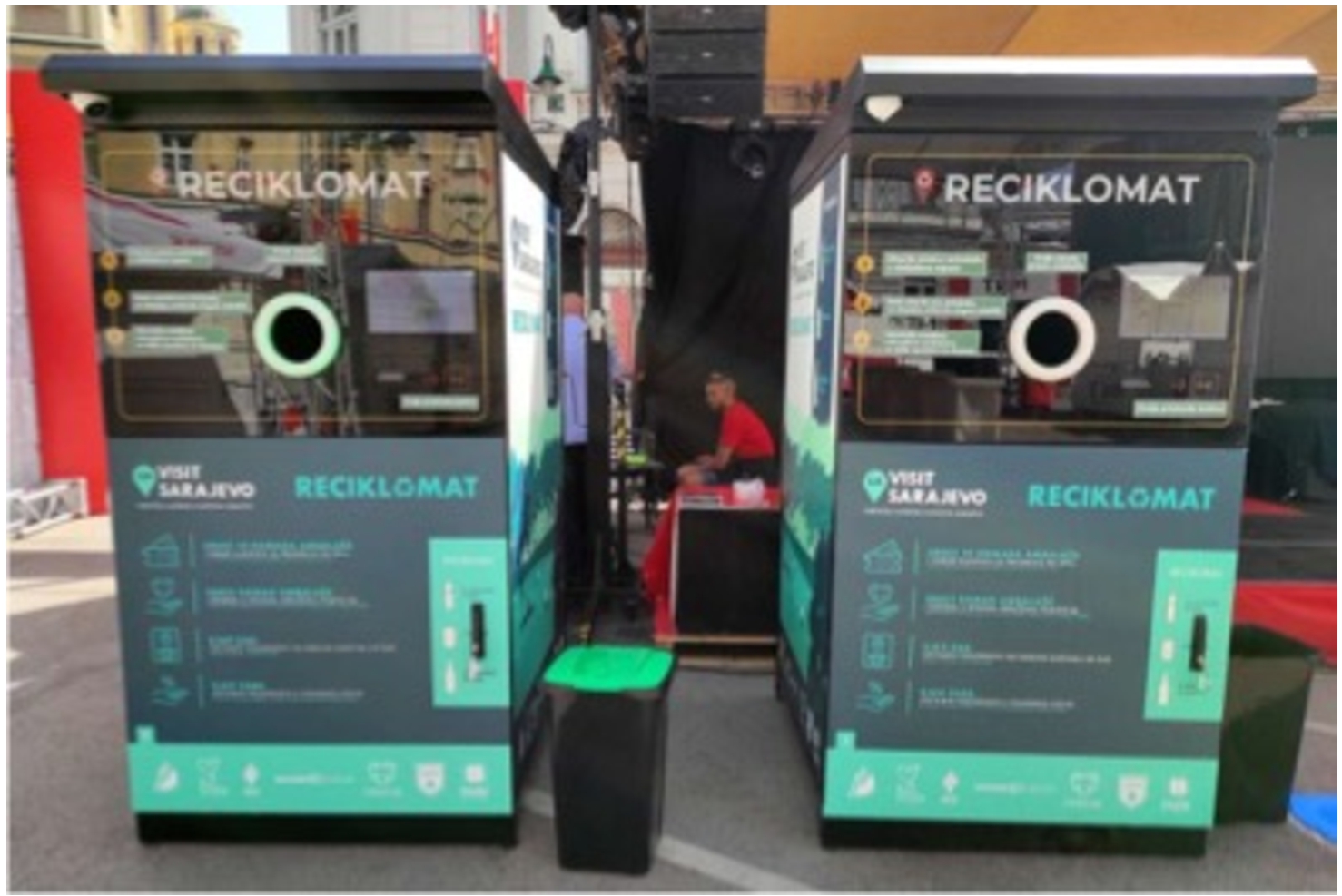
First smart recycling machine in BiH introduced by Sarajevo tourism.
The Sarajevo Smart City Project
In recent years, the concept of smart tourist destinations (STDs) has been developed as a result of the development of smart cities (Fig. 3). The advent of new technologies has led to the emergence of smart cities aimed at providing their stakeholders with effective and efficient technological solutions. The objective of smart cities is to improve the performance of people, systems and processes of business, government and other public and private sector entities. Its main objective is to improve the quality of life of all residents [33]. The concept of smart and digital tourism is increasingly emerging as a component of the smart city concept, aiming to provide tourists with solutions to specific travel-related needs [47]. The smart city concept offers new economic and social opportunities for people. In particular, it promises to capitalize on its economic opportunities and social benefits while easing the pains of urbanization [47].
The Sarajevo Smart City Project consists of a set of different projects, initiated by the city of Sarajevo and several international organizations. These include the European Union and the United Nations Development Programme. The presence of so many transnational organizations in the case of Sarajevo and Bosnia-Herzegovina is a result of the legacy of the 1992–1995 conflict and the 1995 Dayton Accords. These agreements consecrated international and European tutelage over Bosnian political institutions, enshrining the ethnic and constitutional partition of the country. “The state of Bosnia and Herzegovina consists of two entities (Federation of Bosnia and Herzegovina and Republica Srpska) and the Brcko District. The Federation of Bosnia and Herzegovina is an entity consisting of ten cantons that are further administratively divided into municipalities. One of the cantons is also Sarajevo Canton that consists of 9 municipalities, of which 4 comprise the city of Sarajevo” [19].
The political instability due to the political system, the economic and ideological means to finance and develop technological transition and digitalization projects, make the authorities embrace the European and international definition of the smart city. The different projects of smart Sarajevo are structured around a neo-institutional paragon as defined by the European Union legislation: “Smart cities improve traditional networks and services using digital and telecommunication technologies for the benefit of its inhabitants and business” [16]. The application of the concept of Smart city technologies in urban areas “will help to reduce emissions and better manage natural resources; improve urban transport networks, water supply and waste disposal facilities, and upgrade energy efficiency in buildings” [19]. The tourism sector is involved in the development of the “Sarajevo smart city” project. Due to its numerous attractions (rich natural environment of mountains and forests, varied and multicultural gastronomy and its historical and cultural heritage), Sarajevo and its region have a high potential as a curative and recreational tourist destination for visitors in high demand for travel, discovery and change of scenery [27]. For the past ten years, Sarajevo’s tourism authorities have wanted to highlight the territory’s other assets, particularly the surrounding natural assets. New technologies allow us to promote the tourist attractions of the city and its surroundings. We are trying to diversify more and more the technological means for tourism purposes (Tourist speaker Sarajevo, 2022). The siege of Sarajevo remains in our memories, in our city, in its foundations and walls. Numerous projects subsidized by the European Union and the United States help to enhance the urban and memorial heritage. New technologies are increasingly involved in these projects. (Cultural speaker Sarajevo, 2022).
The Sarajevo survival tools project and ecosmart project are two examples of projects initiated to develop tourism sector in Sarajevo (Table 2)
Smart city Sarajevo projects from 2010 to now
Smart city Sarajevo projects from 2010 to now
Despite the prevalence of projects increasingly oriented towards new technologies, the majority of these projects are slowing down, compared to their European counterparts. These different projects, placed in a desire to modernize and Europeanize Canton Sarajevo, come up against the bureaucratic, political and economic problems that the country and its leaders face. The projects carried out mainly by international institutions underline the lack of political consensus and, consequently, of a sufficient financial windfall. The national government is obsessed with nationalistic issues, exacerbated at every opportunity. We have subsidies thanks to the city and the canton, but above all the international and European bodies (Cultural speaker Sarajevo, 2022).
The embryonic recognition of the role of new technologies is revealed in the projects set up in Sarajevo: “Sarajevo needs more digitalization which will help to manage energy consumption, traffic flow and pollution, waste and water, etc.” [27]. Unlike European and North American countries, which have been on the transformative ground of new technologies within the city and in the tourism industry for several years, Bosnia and Herzegovina and Sarajevo are still in their infancy. New technologies are seen in the Canton as both a means to foster the transformation of the city, which has been underway since the end of the war, and as an additional opportunity to improve the living conditions of residents, increase the economy and enhance the attractiveness of the city. The tourist section is playing its part, through the digitalization of guides and attractions for practical purposes. However, the lack of financial means and the current political and constitutional governance prevent the rapid development of a smart city model and smart tourism as is being developed in the main tourist regions.
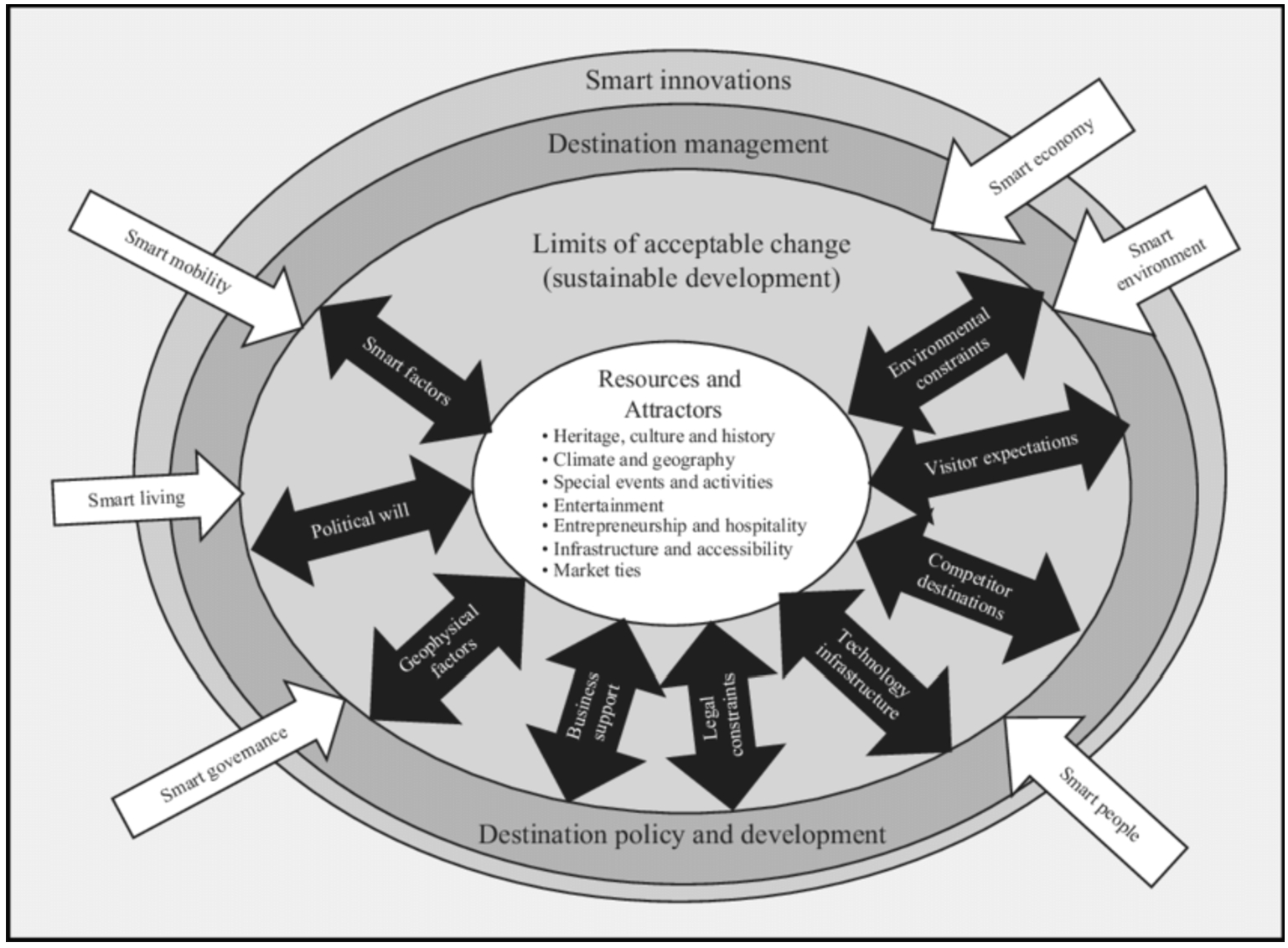
The conceptual framework of resilient smart tourism destination [14].
As described by the organizers, the smart city festival in Belgrade “is an event that brings together key actors – organizations, companies, startups, entrepreneurs, citizens, and consumers in the field of urban innovation, IoT, green energy, and climate” [40]. The Smart City Festival is an annual event organized by Friedrich Naumann Foundation for Freedom, the Smart City Education Initiative (SCEI) and the support from more than 50 stakeholders from the fields of urban development, technology, politics, academia and business from the region and world [41].v The main goal of this festival is to offer solutions to some of the problems of contemporary urban living, help the major cities of the Balkans embrace new technologies and achieve urban development through innovation (Fig. 4). Like the Sarajevo smart city project, this festival brings together a large majority of European and international bodies and private actors. Among the organizations are the Creative Europe programme of the European Union, the Erasmus + programme of the European Union, the Europe for citizens programme of the European Union, the City of Belgrade and technology-related companies such as Telekom Srbija. Investments in new technologies and modernization of the city of Belgrade and Serbia started more than 15 years ago. There is a political will to make Belgrade a technological hub for the Balkan region. As a candidate for EU membership, many projects are being initiated jointly (Cultural speaker Belgrade, 2022). When we talk about technological or modernisation projects, we’re going to talk about the Belgrade waterfront, which is a titanic project. However, the Belgrade smart city festival highlights dozens of projects that have an influence on the daily life of the population in the field of energy, transport, etc. (Technology speaker Belgrade, 2022).
Belgrade Smart City Festival from 2014 to 2022
Belgrade Smart City Festival from 2014 to 2022
The tourism sector, unlike in Sarajevo, seems to be less involved in the new technologies project in the case of Belgrade. When analyzing the different projects and themes addressed, these mainly focus on education, health, local governance, environment and urban resilience. If tourism is not directly involved, the different projects also fit in with a desire to Europeanize the smart city, within the framework of a country applying for membership of the European Union. Consequently, these projects and themes indirectly serve the development of tourism, through the development of digital tools and digitalization accessible to all. According to a study conducted by the Friedrich Naumann Freedom Foundation (FNF) on 2020 municipalities across Serbia in September and October 31: We have been using new technologies for several years to attract tourists to Belgrade and to promote the natural assets of the city and the region. The city has undeniable cultural, architectural and historical assets. We can see this in the visitor figures. We are doing better than before the covid period (Tourism speaker Belgrade, 2022).
Smart city solutions in most provinces in Serbia are either not interlocking between cities, or It turns out that they did not adopt a city solution. Most (48%) of Jicha systems that introduced smart city solutions implemented smart financial solutions in the form of electronic payments. In the smart city project area, second place is smart communication projects such as Wi-Fi access and cloud data centers (2%), followed by smart water management (32%) [41].
Since 2014, 9 types of projects related to new technologies and the smart city, developed for Belgrade as well as for other Serbian urban spaces. These projects have been drawn up in collaboration with the various economic, local, European and technological players, with the primary aim of improving living conditions for local residents, accessibility and everyday safety, in line with European criteria [40,41]. If the propensity and quality of ongoing projects show an investment towards smart transition (Table 3), several reports point to structural deficiencies in the implementation of these projects at the urban level in Belgrade but also in the surrounding cities and in Serbia: The biggest problem in Serbia’s smart city development is that the project is not progressing due to lack of funds. According to FNF, 31 out of a total of 24 local governments are experiencing difficulties in financing smart city projects. Lack of expertise and experience in each city is also cited as a reason for delaying the adoption of solutions. Nevertheless, most cities are pushing for the introduction of smart energy solutions, especially to improve energy efficiency and use of renewable energy. Moreover, due to the recent increase in electricity rates across Europe, cities are paying keen attention to smart energy management issues (Smart City Korea, 2021).
From a tourism point of view, new technologies in the development of Belgrade as a destination are not among the priorities of the smart city. If the projects focus on energy, transport, the development of mobile applications or urban sustainability, tourism is only indirectly benefited here. This analysis confirms the view of Lazarevic and Pavlovic that Belgrade and Serbia more widely“has a good basis for the development of smart tourism from the point of view of technology and human capital, but that there is low innovative and voluntary potential for it”[39]. To become direct projects with a direct influence on tourism, these existing projects (Table 3) must be part of a specific master plan for the development of a smart tourism project. So far, the projects developed have focused primarily on the smart city project. The next step, which should be done in parallel to the central project, is to involve the different actors (tourist, political, economic, cultural, etc.) in structuring projects linked to the smart city, favoring the well-being of the inhabitants and promoting the tourist areas of the city, especially those linked to the past conflict, in a cultural and memorial perspective.
Through the cases of Sarajevo and Belgrade and the technology projects, we were able to establish several findings. The two capitals of the Balkan region share common histories, cultures, links and sufferings. Belonging to the same geographical area, they have experienced two forms of urbicide of the city, as a result of military actions, different intentions on the part of the belligerents, but with the result of traumas within the urban system and the populations. Through the prism of tourism and new technologies, we have tried to see and compare, several decades after these destructions, how these capitals have appropriated digitalization and the digital revolution as a means of reconstruction and urban resilience. In recent years, the concept of smart tourist destinations has been developed as a result of the development of smart cities or digital territories. The advent of new technologies has led to the emergence of smart cities and digital territories, aiming to provide their stakeholders with effective and efficient technological solutions. The aim is to improve the performance of people, systems and processes in business, government and other public and private sector entities. Its main objective is to improve the quality of life of all residents [47]. The concept of smart and digital tourism is increasingly emerging as a component of the smart city concept, aiming to provide tourists with solutions that meet specific travel-related needs [47]. The smart city is above all a system that acts on a set of phenomena, complex and recurrent, relying on technological potentialities, especially digital, including the tourism industry, making the urban landscape a space of technopopularism [38]. In this context, the concept of smart destination, may be “a plausible response to these structural changes, providing enhanced and personalized experiences through the interconnection between stakeholders in interconnected service systems” [7,38].
Several projects are being developed or are in the process of being developed to make these two capitals leaders in the Balkan region, with the aim of becoming hubs in the field of intelligent cities. These projects take on a strong political connotation, turning towards the process of accession to the European Union, notably by embracing the European definition of the smart city, European treaties and laws on sustainable and technological issues [19]. This political leaning of smart city technological development raises a distortion between support of local and transnational authorities and disengagement (in the Bosnian case), if not a parallel interest (in the Serbian case) of federal and state authorities. At the tourism level, the two smart cities events/projects by Sarajevo and Belgrade, show at present a lack of concrete actions and projects specific to the technological development of the urban tourism destination. The willingness of local and transnational authorities to develop tourism through new technologies is currently based on a holistic and global vision of technologies within the city, as an engine of transformation, attractiveness and resilience. The means and methods used reflect the current complexities that still exist in government structures. At present, we cannot confirm a digital turn in Bosnian tourism [27] or in Serbian tourism [39].
If the political systems governing Bosnia and Herzegovina and Serbia are different, the political will to become a member of the European Union, the common historical and memorial past of the conflicts in the former Yugoslavia and the widening of the economic fields by the diversification of tourism, are strong drivers for the development of smart cities based on new technologies, particularly in tourism: “Regardless of what strategic positioning is adopted by the next generation of smart tourism cities, there is a growing consensus among scholars and practitioners that one of the defining characteristics of smart tourism destinations should be their ecosystem-centred approach [5,18] to the development and management of tourism as well as its wider challenges” [10]. the central element for a full and complete application of smart tourism, lies on the part of all the actors, in placing technological and tourist innovation, from a peripheral role, to a central role in the development of the smart city. Embracing this twin and central smart city/smart tourism principle, “will act as an enabler for destination management organizations in smart tourism cities to expand their remit and influence beyond managing and marketing assets” [10]. The smart tourism model in Sarajevo and Belgrade (Fig. 4) must be based on a set of principles on which tourism itself is based: Political will, geophysical factors, business support, legal and regulatory constraints, competitiveness of the destination, expectation visitors, environmental constraints, smart factors and technological infrastructures. Through these principles submitted to the conceptualization of exchanges between the management of the destination and all the resources and attractions of the urban territory, the specificities of a smart city model, would allow Sarajevo and Belgrade, but also all Balkan cities in the future, to develop a new tourist offer. the smart tourist destination model would thus make it possible to enhance a heritage on the scale of the entire city, promoting its knowledge of foreign tourists, its enhancement and its history, increasing tourist attraction and the economic benefits for the resident populations.
The place of digital technology in the tourism industry of Sarajevo and Belgrade is becoming an increasingly determining factor in the reconstruction and resilience of the urban system affected by the urbicide, but more globally of the states on which they depend. New technologies and IT, through the local initiatives presented above, have become essential in a large proportion of tourist destinations around the world and offer a glimpse of the possibilities inherent in post-urbicide tourism and global attractiveness. While collaboration between federal and state actors slows down the rapid implementation of major transformations, local initiatives between populations, researchers, international actors and associations nourish community resilience. This community resilience contributes to the growing success of the projects developed. Smart tourism in the case of Bosnia-Herzegovina or Serbia should be part of a transversal logic of reconstruction and resilience of the tourist destination, of the system in terms of infrastructures, of tourist representations and of multiple attractiveness. However, collaboration at the top of the states, European integration projects and within the Balkan region itself will be decisive.
Conflict of interest
None to report.