




Abstract
BACKGROUND:
Physical therapy modalities are often applied in treatment of neurological conditions in children and adolescents.
OBJECTIVE:
Evaluation of the methodological quality of research focusing on the application of physical therapy modalities in children and adolescents with neurological conditions.
METHODS:
Papers published between 2007 and 2018 were included in the review. 149 papers were analyzed and finally 26 studies investigating the use of physical therapy modalities in children and adolescents with neurological conditions were included in the review. Jadad scale (0–5) was used to assess the methodological value of the studies.
RESULTS:
The mean Jadad score was 1.46 (researcher 1) and 1.38 (researcher 2). A score of 0 was awarded to nine (r1) and eight papers (r2). A score of 5 points was awarded to three (r1) and two papers (r2).
CONCLUSION:
1. The evidence showing the effectiveness of the use of physical therapy modalities is mainly of low quality. 2. The Jadad scale is a valuable tool to assess the quality of research, although it does not always reflect the real value in the case children participate in studies. 3. The analyzed studies show that physical therapy modalities are effective in the treatment of children and adolescents with neurological disorders.
Introduction
Due to developments in medicine, continuously increasing numbers of children with neurological disorders are identified. Early implementation of comprehensive therapy and rehabilitation is essential because of the neuroplasticity of the central nervous system (Panina et al., 2012). Development of optimal therapy is a challenge for the entire medical team (Andruszczak et al., 2012; Garcin, 2018). Physical therapy is often used as an element of modern therapy. Competitiveness of physical therapy is associated with its low invasiveness and limited risk of adverse events (Olchowik et al., 2009; Asagai, 2016; Phillips et al., 2016; Olchowik et al., 2010; Zwolińska, 2011; Kwiecień-Czerwieniec & Woldańska-Okońska, 2012).
Research into the use of physical therapy modalities allows to develop reliable recommendations for the use of physical therapy in clinical practice (Spodaryk & Bromboszcz, 2004). The methodological quality of a study allows to identify the risk of a biased assessment of treatment effects made by the authors of the study, which is an indispensable step in the process of choosing the best therapy. One of the scales most commonly used to assess the methodological value of research is Jadad scale. This scale has also been adapted for use in many health care areas, including physical therapy (Olivo et al., 200811). It is an easy-to-use tool that is not time-consuming, recommended by other researchers and research institutions (Halpern & Douglas, 2005; Kaczyński & Solnica, 2012).
Systematic reviews can identify significant gaps in knowledge and indicate the need for new research (Mancini et al., 2014). Systematic review focusing on physical therapy modalities used in children and adolescents with neurological diseases may be helpful for clinical practitioners in making therapeutic decisions and for researchers implementing projects related to such issues. Literature analysis carried out by us indicates there is a lack of such reviews, therefore we decided to undertake the above subject.
The aim of the review was to assess the methodological quality of research investigating the use of physical therapy modalities in children and adolescents with neurological disorders.
Research questions: What is the value of scientific evidence related to the effectiveness of physical therapy modalities used in children and adolescents with neurological diseases? Is Jadad scale a useful tool for assessing the methodological value of research involving children and adolescents? What is the effectiveness of physical therapy modalities in the treatment of children and adolescents with neurological disorders?
Materials and methods
The review included papers published between 2007 and 2018 which discussed the use of physical therapy modalities in treatment of children and adolescents with neurological disorders. One of the authors (MG) searched the databases which included Science Direct, SpringerLink, Wiley Online Library, Academic Search Complete, Health Source, Medline Complete, PubMed, and Polish Medical Bibliography. The search was performed using combinations of the following key words: physical therapy, physical therapy modalities, laser, LLLT, LED, magnetotherapy, magnetostimulation, electrotherapy, TENS, NMES, FES, hydrotherapy, cryotherapy, cold therapy, shock wave therapy, child, adolescent, developmental age, and Jadad scale. The review included papers published in various languages (English, Polish, Russian, Portuguese). The following data was extracted from the selected papers: the author and the year of publication, measurements, participants (number, age, sex), details of the intervention (dose, number of sessions, body area), outcomes (short- and long-term effects), side effects, and limitations. Contact with the authors was made when additional data was required.
In total, 149 studies were analyzed. We conducted the selection of papers, and in the case of a disagreement, a consensus was reached through discussion. Papers on nerve conductivity, involving healthy volunteers, descriptions of planned studies and studies underway were excluded from the analysis. Case descriptions and reviews by other authors were omitted. Finally, 26 original papers were evaluated. The attached flowchart presents the rules for the selection of the studies subjected to the evaluation (Fig. 1).
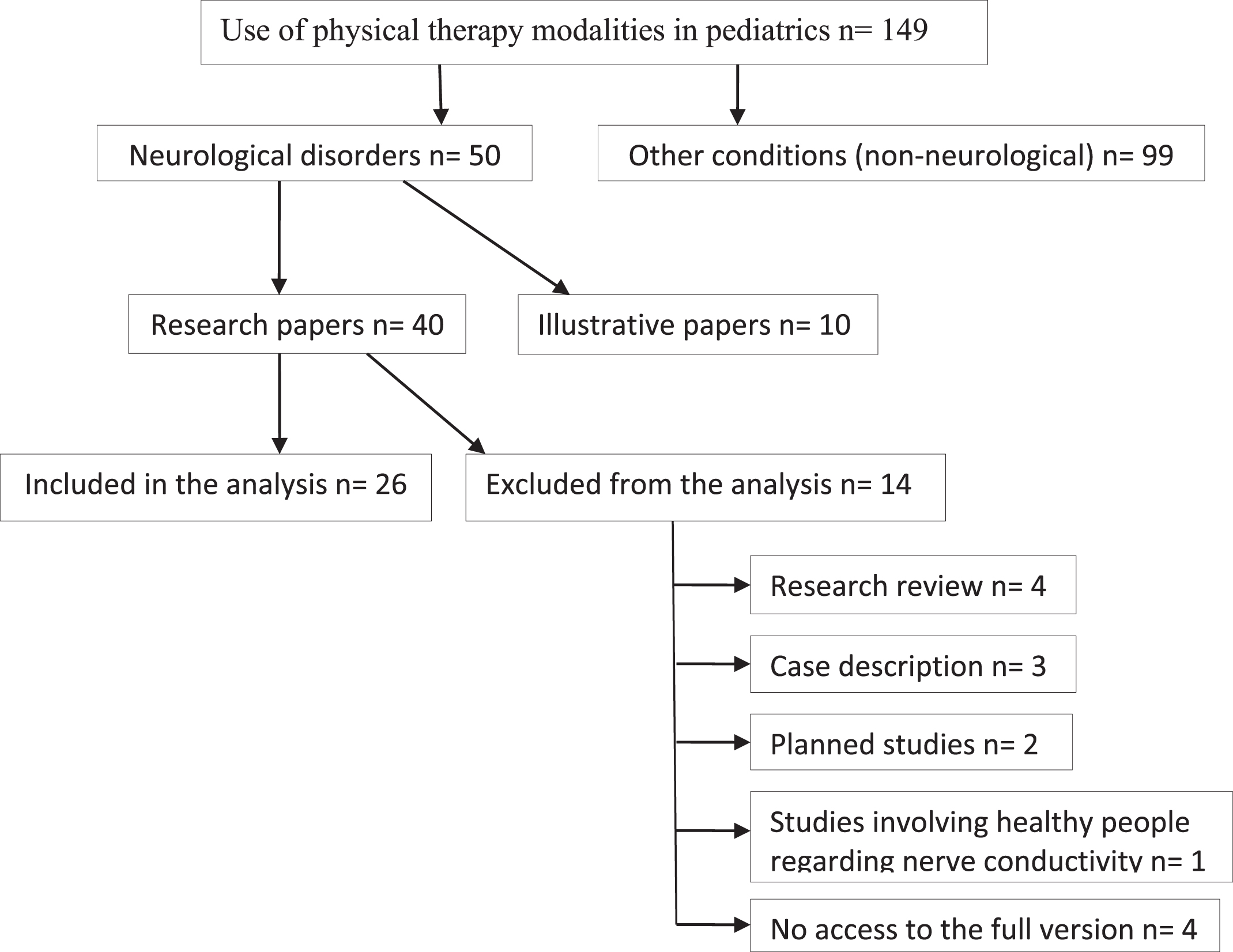
Flowchart of the procedure.
Jadad scale was used to assess the methodological value of the papers. It is a 6-point scale (0–5). Zero rating means the lowest methodological quality, while a rating of five reflects the highest evaluation of a study (Table 1) (Halpern & Douglas, 2005; Jadad et al., 1996). The evaluation was carried out independently by two researchers (JZ, MG). Compatibility of the assessments by both researchers was tested using Kappa coefficient.
Guidelines for Jadad scale assessment (Jadad et al., 1996; Chung et al., 2012)
Of the total 149 papers, 26 met the criteria and were included in the review. The studies on the use of hydrotherapy (one study), cold therapy (three studies), LLLT (three studies), LED therapy (two studies), electrotherapy (eight studies), magnetotherapy (five studies), and shock wave therapy (four studies) were analyzed. A total of 1069 participants took part in the studies; one paper lacked information on the number of participants included in the study.
Disease entities occurring in the subjects taken into account in the study included cerebral palsy (18 studies), headaches (one study), spina bifida (one study), meningomyelocele (two studies), facial nerve paralysis (one study), ADHD (one study), diabetic polyneuropathy (one study), and psychoautonomic disorder (one study).
Table 2 shows the studies according to the type of physical therapy modality used. Within each physical therapy modality, a chronological order was used.
Analysis of the studies included
Analysis of the studies included
*LLLT- Low Level Laser Therapy; ** LED- Light Emitting Diode; *** TENS- Transcutaneous Electrical Nerve Stimulation; ∧ FES- Functional Electrical Stimulation; $NMES- Neuromuscular Electrical Stimulation.
The results of the papers included in the review indicate that the use of physical therapy modalities in children and adolescents with neurological disorders produces positive results. The review shows that the published papers do not always contain full information about the study participants, the parameters of the procedures performed or the observed side effects of the therapy (Fig. 2).
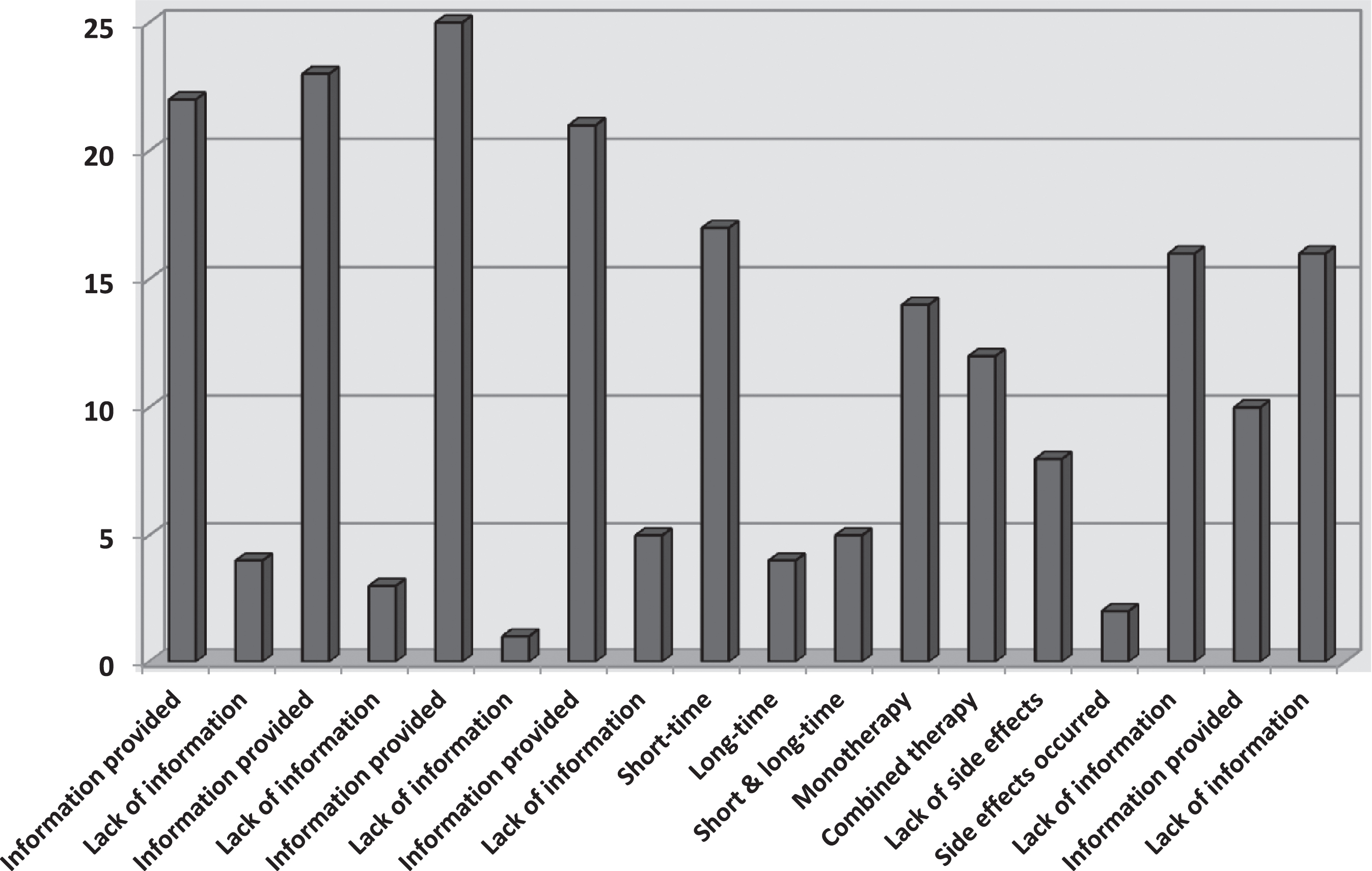
Analysis of the included papers.
Below is the score given by both researchers for the individual papers (Table 3) as well as a summary of the ratings by both researchers (Fig. 3).
Scoring in Jadad scale for individual papers
Scoring in Jadad scale for individual papers
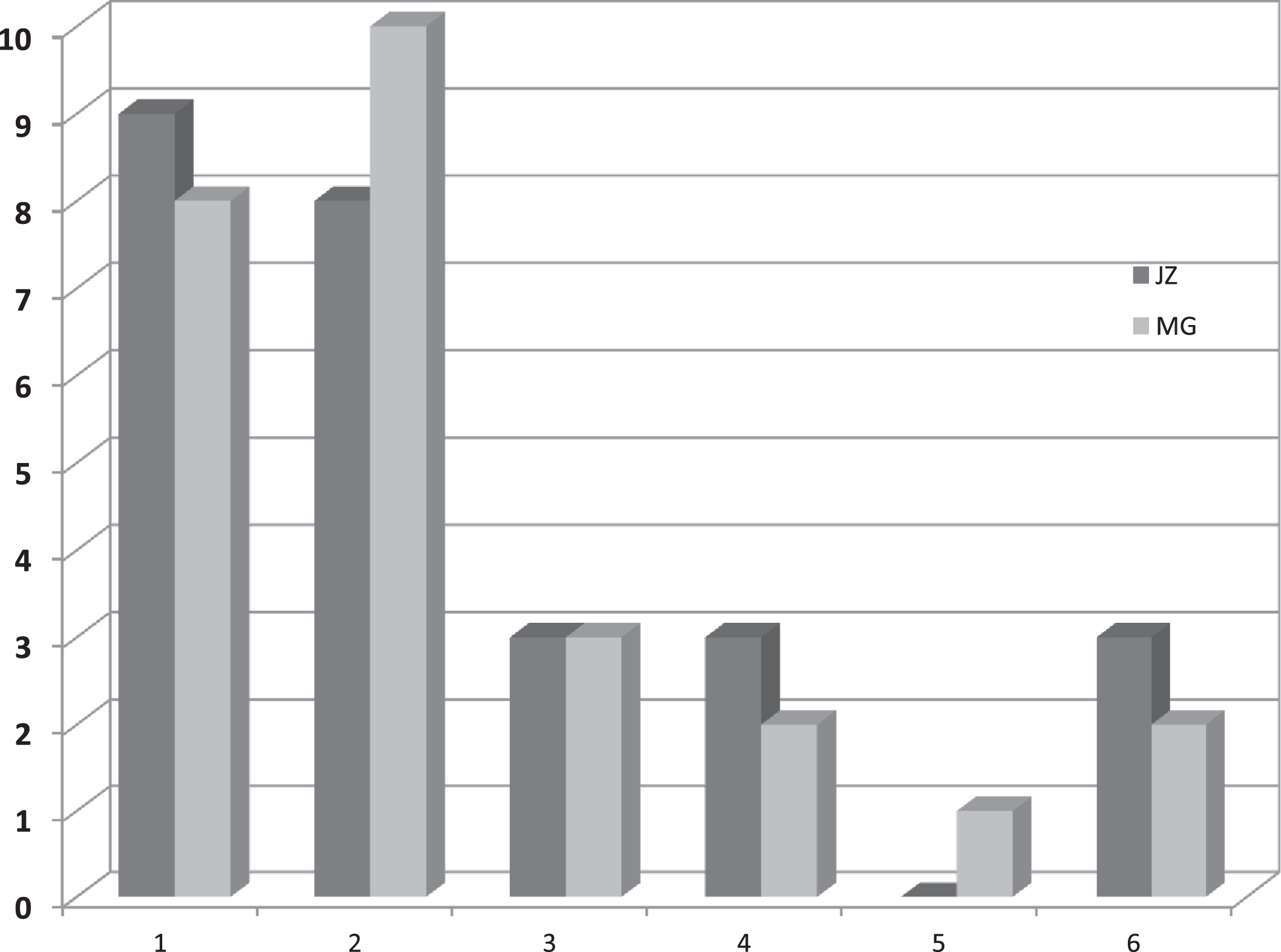
Comparison of the results of the assessments by both researchers.
The calculated Kappa coefficient showed almost complete agreement between the two researchers (JZ, MG) in the overall Jadad score (Kappa coefficient = 0.92). The relationship was statistically significant (p < 0.001). A highly statistically significant correlation between the analyzed variables (Spearman’s rho = 0.94, p < 0.001) was also found (Table 4).
The relationship between the general Jadad scores for both researchers
p < 0.001, Kappa = 0.92; p < 0.001, Spearman’s rho = 0.94.
We found full agreement between the researchers in the scoring for randomization (Kappa coefficient = 1, p < 0.001), as well as correct / incorrect randomization (Kappa coefficient = 1, p < 0.001). The researchers’ opinions were also fully compatible in the rating of the blinding of the study (Kappa coefficient = 1, p < 0.001).
Nearly full agreement between the researchers was also found in their scoring for correct/incorrect blinding (Kappa coefficient = 0.91, p < 0.001) (Table 5).
Relationship between Jadad scores for correct/incorrect blinding of the studies for both researchers
p < 0.001, Kappa = 0.91.
Nearly full agreement between the researchers was shown in the score given for information about participants who dropped out from the study (Kappa coefficient = 0.82, p < 0.001) (Table 6).
Relationship between Jadad scores for information about participants who dropped out from the study, for both researchers
p < 0.001, Kappa = 0.82.
The arithmetic means of Jadad scale ratings by the 1st researcher (JZ) amounted to 1.46 and by the 2nd researcher (MG) equalled 1.38. The median for the evaluations by both researchers amounted to one.
Most physical factors can be used to treat disorders and dysfunctions of the nervous system regardless of the patient’s age (Zwolińska, 2011; Kwiecień-Czerwieniec & Woldańska-Okońska, 2012). However, there are some deficiencies in the standards of physical therapy in patients at developmental age (Phillips et al., 2016; de Sá & Gomes, 2013).
Evidence-based medicine (EBM)
The progress in medicine depends on the implementation of high-quality research (Almeida et al., 2018). Research planned and implemented in accordance with the requirements of evidence-based medicine (EBM) allows to document the effectiveness of physiotherapeutic methods, and this in turn is an indispensable condition for development in the field of physical medicine and rehabilitation
(Olchowik et al., 2010; Zwolińska, 2011; Kaczyński & Solnica, 2012; Mancini et al., 2014). Randomized clinical trials (RCTs) are the basic source of scientific evidence confirming or not the effectiveness of various therapies (Kaczyński & Solnica, 2012; Möller, 2011).
Analysis of systematic reviews often indicates a lack of a sufficient number of randomized trials. However, appropriate assessment of the quality of non-randomized trials can provide valuable scientific data (Kaczyński & Solnica, 2012).
Jadad scale
Many scales are used to assess the methodological quality of research. The risk of biased assessment is reduced by the use of standardized tools that include Jadad scale (Olivo et al., 2008; Kaczyński & Solnica, 2012). This scale is most often applied but its usefulness is questioned by some researchers.
In this systematic review, two independent authors assessed the methodological quality of 26 studies, using Jadad scale. All the studies focused on application of physical factors in patients at developmental age with nervous system diseases or dysfunctions. The results of the conducted research indicate good effects of physical therapy, although the methodological quality of the conducted tests is not high.
Chung et al. (2012) interprets a score ≥3 on Jadad scale as indicative of a high-quality study, whereas a result ≤2 reflects a poor-quality study (Chung et al., 2012). According to such classification, 20 (JZ) and 21 (MG) studies included in our review present poor methodological quality. Only six (JZ) and five (MG) studies are of high methodological quality.
Simon (2006) suggests that a score of ≤3 on Jadad scale reflects poor reliability of evidence reported by a study regarding the effects of a given intervention (Simon, 2006). In our review, as many as 23 out of the total 26 studies considered, obtained score ≤3, which allows us to conclude that there is very unreliable evidence related to effectiveness of physical factors used in treatment of children and adolescents with neurological disorders.
Chung et al. (2009), Lee et al. (2011) as well as Chung et al. (2012) used Jadad scale to evaluate medical research (Chung et al., 2009, 2012; Lee et al., 2011). Chung et al. (2009) obtained the mean Jadad score of 1.87. In the study by Lee et al. (2011) this result was 1.75. In the study by Chung et al. (2012), the mean rating of the studies amounted to 1.33 for the years 1991-1995, and 3.00 for 2011. In our review, the mean Jadad score was 1.46 (JZ) and 1.38 (MG).
The low methodological value of the studies included in our review resulted from the lack of randomization, blinding and incomplete information about cases of non-completion of the study. Approximately one in three of the analyzed studies scored 0 in Jadad scale according to both researchers (JZ, MG).
Notably, a correct design of randomized trials is sometimes impossible due to organizational reasons. An ethical aspect of trials involving control groups treated with placebo also needs consideration (Kaczyński & Solnica, 2012).
Implementation of double blinded studies reduces the risk of unreliability of researchers and allows to avoid research bias (Spodaryk & Bromboszcz, 2004). Blinding of the researcher and the evaluator is possible and even desirable, while blinding of a small child or a child with difficult contact does not always seem necessary for the examination. Double blinding is not always possible due to the nature of the interventions (Olivo et al., 2008).
The element that most often made it impossible for a study to obtain a maximum Jadad score was the lack of information about the participants who dropped out from the study. If the data on the size of the examined group were included in a table, while the text contained no information about the reasons for the non-completion of the study by individual subjects, the study obtained a lower score. According to the authors of this review, if discontinuing the study was not related to the therapy, then, with a sufficiently large group of respondents, other reasons for exclusion are not significant for the quality of the study.
Limitation of the assessed papers
In the case of diseases and disorders frequently occurring in a population, the groups included in the study should be sufficiently large (Spodaryk & Bromboszcz, 2004). Inclusion of small sample sizes in a study is linked with a greater risk of false results (Spodaryk & Bromboszcz, 2004; Olivo et al., 2008; Kaczyński & Solnica, 2012). It is noticeable in this review that very small groups of participants were often included, despite the prevalence of diseases.
The lack of blinding affects the internal reliability of the study (Mancini et al., 2014). Only in five (JZ) and four (MG) studies assessed, correct blinding was performed, which increases the risk of biased assessment in the tests selected for the review. If a physical modality procedure is not easily recognizable, it is possible to perform a blinding.
In some of the studies considered, there is no information about the parameters and methodology of the procedure. In order for publications on physical modalities to stimulate the development of clinical practice and contribute to the improvement of the treatment process, it is necessary to consider information on the parameters of physical therapy performed. Also, according to Galea (2012), such information is extremely valuable (Galea, 2012).
In 16 papers, the authors did not provide information about the occurrence or absence of side effects of therapy. These elements are important for physiotherapists in clinical practice. However, in the case of young children or patients with difficult contact, the effectiveness of the treatment and possible side effects may be difficult to assess.
Strengths and limitations of the present review
The strength of our review lies in the fact that an independent assessment was carried out by two researchers. In the case of any doubts, the reviewers re-verified the texts of the papers. In addition, e-mail contact with authors of papers was initiated in order to clarify doubts that have a significant impact on the methodological value of a study. In order to supplement and update the literature, the search of databases was repeated several times.
Given the fact that various physical factors were investigated and different methods were applied in assessing effectiveness of the therapies in the relevant studies, no meta-analysis was carried out. The limited number of papers included is a drawback of this review. There is a risk that during a search of literature a publication may be omitted due to the fact that the physical factor modality is not always included in the key words. Also, several different papers by the same author were included regarding light therapy, which may pose a risk of this author’s bias.
Conclusion
The evidence related to the effectiveness of the use of physical therapy modalities in treatment of children and adolescents with neurological disorders was predominantly found to be of low quality. Jadad scale is a valuable tool enabling assessment of the quality of research, although it does not always reflect the real value of studies in the case of research involving children and adolescents. The analyzed studies show that physical therapy modalities are effective in the treatment of children and adolescents with neurological disorders.
The authors of this review recognize a need for: Continuation of well-designed research, with high methodological quality, investigating the use of physical therapy modalities in children and adolescents with neurological diseases Carrying out systematic reviews including a critical evaluation of such tests
Conflict of interest
None to report.