




Abstract
Osteoporosis is a disorder, that leads to fractures and fatal problems in bones. It is believed that more than 200 million individuals are affected globally. Furthermore, osteoporosis is caused by micro-architectural degeneration of bone tissues, which increases the risk of bone fragility and fractures. Moreover, the osteoporosis categorization is essential for the medical industry, which classifies the skeleton problems of individuals caused by ageing. This work presented the prediction of femur bone volume for osteoporosis classification. Moreover, the femur bone X-ray image is utilized for the classification. The preprocessing phase is employed to neglect the noise contained in input bone images through a non-local means filter. In the image segmentation process, the SegNet is utilized to isolate the specific portion. Moreover, the template search approach based on femoral geometric estimation is carried out and the feature extraction phase is essential for a significant feature extraction process. The proposed tuna jellyfish optimization based deep batch-normalized eLU AlexNet (DbneAlexNet) is utilized in the osteoporosis classification process. Furthermore, accuracy, Positive Predictive Value (PPV), Negative Predictive Value (NPV), True Positive Rate (TPR) and True Negative Rate (TNR) are the metrics to validate the model and the superior values 0.913, 0.906, 0.896, 0.923 and 0.932 are achieved.
Keywords
Introduction
The femur bone can be referred to as the thigh bone. Moreover, it is the lengthy, largest and heaviest bone. This bone’s length is nearly 26% of the height of the individual. The femur bone is separated into three sections, which include the upper extremity, the body, and the lower extremity. The upper section is made up of the neck, head and two trochanters. The body is a long and cylindrical structure, that is slightly curved. The lower extremities are larger than the upper extremities. It is slightly cuboid in shape, but its diagonal diameter is bigger than its anteroposterior [23]. Moreover, osteoporosis is a form of skeletal illness defined by a reduced mass of bones. It is restricted by the microstructure of bone cells, which increases the susceptibility and fragility to fractures. In 2019, there were 32 million people were affected in Europe. This growth is regulated by the lifestyle aspects such as food and physical movement. Thus, it can be expected that the pandemic will worsen the situation and significantly affect the person [11]. If osteoporosis is not identified in the early stage, then the bones are affected by osteoporotic fractures and it is more dangerous in the spine. Therefore, continuous research is necessary to develop the best diagnostic method that would allow the detection of osteoporosis at an early stage of development [27, 17].
Osteoporosis is commonly known as a chronic illness, in which the bones are weakened increasing the possibility of fractures. This condition is overlooked and relatively quiet because the consequences are only felt when the fracture has happened. This asymptomatic condition is a complicated health issue affecting women, in which approximately 80% of them are in the postmenopausal stage. If they are not treated or prevented properly, it may cause severe injuries. Normally, individuals have a certain quantity of minerals and calcium present in a specific region of the bone. If this quantity increases significantly, then the bones become more denser, tougher and less likely to break. Hence, the earlier prediction of osteoporosis minimized the risk of bone crack. A person suffering from osteoporosis is susceptible to fractures which cause serious damage to bones. In such cases, a very small amount of pressure is applied on the bone to perform their daily activities, which does not affect a healthy bone [24]. The common method for detecting osteoporosis is the calculation of Bone Mineral Density (BMD) [6] and BMD estimates the thickness of bones via X-rays. The BMD test is employed for estimating the T-score of the body. The T-score of a person’s bone density report is used to calculate the difference between his/her BMD to that of a healthy 30-year-old [24].
Osteoporosis condition has become more prevalent with the rise of the ageing population. It is a critical, multi-factorial health issue. This is a social as well as a health issue that must be treated in the earlier period. In recent years, the clinically relevant approaches for diagnosing osteoporosis have been split into two categories, they are invasive and non-invasive examination. Moreover, the invasive examination utilizes histomorphometry, whereas the non-invasive examination comprises biochemical testing, medical imaging, bone density assessment and so on. There are many imaging diagnostic methods for osteoporosis including dual-energy X-ray absorptiometry (DEXA) [6], quantitative computed tomography (QCT) [29], quantitative ultrasound (QUS) [28], magnetic Resonance check diagnosis (including diffusion-weighted imaging (DWI) [9], ultrashort echo (UTE), magnetic resonance imaging (MRI), high-resolution magnetic resonance imaging (HRMR), magnetic resonance spectroscopy (MRS) and so on [5]. In medical image processing, deep learning models including convolutional neural networks (CNN) have demonstrated considerable efficacy. Moreover, the Deep CNN (DCNN) is a deep learning method, that has been gaining a significant role in computer vision. The deep learning uses the image pixels and their relevant classes of medical images and consequent learning for feature description. Numerous early studies have also shown the promising results of DCNN used in a variety of medical imaging including radiology, pathology, dermatology, and ophthalmology [2].
Motivation
Bone X-ray images are widely regarded as the most effective approach for diagnosing osteoporosis and predicting the risk for fractures. For this, several methodologies were used, but it was still expensive and required a longer time for osteoporosis detection. Therefore, this research utilized a hybrid optimization-enabled deep learning technique for effectually identifying osteoporosis.
Main contribution
A prime objective is to model a reliable methodology for categorizing osteoporosis using X-ray images. Here, the Non-Local Means (NLM) filter is employed in the preprocessing, and then the noise from the image is neglected. Moreover, the SegNet is utilized for segmenting the bone image. Following, that, the template search approach is employed for estimating the femoral geometry. Afterwards, the Grey Level Co-occurrence Matrix (GLCM), medical feature, Local Vector Pattern (LVP) feature, Pyramid histogram of orientation gradient (PHoG) features and CNN features are extracted. Finally, osteoporosis classification is done by DbneAlexNet, where its hyperparameters training is done via the proposed tuna jellyfish optimization.
The crucial contribution is elucidated as follows: tuna jellyfish optimization based DbneAlexNet for osteoporosis classification: A novel model is developed for femur bone volumetric estimation based osteoporosis classification, utilizing the tuna jellyfish optimization based DbneAlexNet. Here, the hyperparameters present in the DbneAlexNet are trained using tuna jellyfish optimization. Furthermore, the tuna jellyfish optimization is obtained by a merging of tuna swarm optimization with jellyfish search optimizer.
Structural organization
This paper is labelled in the following way: The traditional methodologies in osteoporosis classification are explained in Section 2 and the proposed osteoporosis prediction is defined in Section 3. The experimental result of the proposed technique is explained in Section 4. Furthermore, the conclusion is illustrated in Section 5.
Literature review
Shankar et al. [16] developed the Gradient Harmony Search based Deep Belief Network for osteoporosis detection. Here, preprocessing, segmentation, geometric evaluation, feature extraction and osteoporosis categorization are the five procedures used in osteoporosis classification. Moreover, the gradient descent required less computation time and less storage. Nonetheless, it failed to consider the advanced segmentation techniques for attaining even more precise performance. Nazia Fathima et al. [21] devised the modified U-net for BMD estimation. Here, the linear regression model was designed to evaluate the BMD. It obtained higher classification accuracy for DEXA and X-ray images. Still, it did not produce a reliable outcome in real-time applications. Liu et al. [5] developed the deep U-Net model for osteoporosis diagnosis. In this, the input image pattern on each layer was identical. This approach produced a precise categorization result and effectively minimized the influence of image distortion in BMD measurement. Still, the processing time was high. Suzuki et al. [22] devised a mandibular cortical index (MCI) and mandibular cortical widths (MCW) based osteoporosis classification. During orthopedics treatment, the patients were subjected to BMD and panoramic radiography tests. This approach required a little storage space. However, it failed to assess the prevalence of cortical bone porosity throughout the body. Prakash et al. [24] developed the 4x-expert system for osteoporosis segmentation and detection, which employed a multi-model machine learning algorithm to improve prediction accuracy. This method provided segmentation outcomes via the quick processes and it offered flexible features. Nonetheless, it offered poor reliability in real-time usage. Shaker [1] developed the Recurrent Neural Network (RNN) based osteoporosis detection method. The osteoporotic fractures were predicted using spine images. This approach was suitable for larger datasets and it failed to utilize the DEXA images for osteoporosis prediction. Shahzad et al. [14] developed the osteoporosis classification model using CNN. It was more efficient in terms of extracting more features. This approach effectively identified the bone volume and predicted osteoporosis effectively. However, the sensitivity level was too low. Su et al. [18] developed the fusion of CNN and handcrafted features (CNN
Major challenges
Some of the challenges faced by the classical techniques for osteoporosis classification are listed below:
The method [22] did not use deep learning based Artificial Intelligence approach. Since the raising quantity of training samples did not enhance the diagnostic accuracy. Furthermore, it failed to include the creation of software for performing the Mandibular cortical index (MCI) categorization on the cortex of the limb’s bones. The RNN accurately predict osteoporotic fractures based on spine scans. However, the dataset employed in this method was very small, and it failed to represent the complete range of real-time feature space [1]. The CNN model [14] provided clear visualization, since, the visualizations of pre-trained models were more difficult to classify the femur bones. Moreover, it produced fewer notable outcomes. The CNN
Proposed tuna jellyfish optimization based DbneAlexNet for osteoporosis classification
The crucial role of this research is to build the osteoporosis classification model using the proposed tuna jellyfish optimization. Initially, the input femur bone image is subjected to the pre-processing module, where the noises present in the image are removed using an NLM filter [19]. After that, the femur boundary segmentation is carried out using the SegNet [25]. After segmentation, the femoral geometry measurement is done using the template search method [16]. Thereafter, the feature extraction is carried out to extract the GLCM texture features [3, 15], medical level features, LVP feature [10], PHoG feature [26], and CNN features [18]. Here, the GLCM features include the Angular Second Moment (ASM), correlation, contrast, Inverse Difference Moment (IDM), entropy and homogeneity. On the other hand, medical-level features [16] include Hip Axis Length (HAL), Femoral Neck Axis Length (FNAL), Femoral Head Diameter (FHD), Femoral Neck Width (FNW), Neck Shaft Angle (NSA), and shaft width. Following this, the osteoporosis classification is performed by the DbneAlexNet [4], where the parameters of DbneAlexNet are trained by the proposed tuna jellyfish optimization algorithm. Finally, the osteoporosis classification is obtained. Figure 1 represents a block diagram of tuna jellyfish optimization based DbneAlexNet for osteoporosis classification.
Block diagram of tuna jellyfish optimization based DbneAlexNet for osteoporosis classification.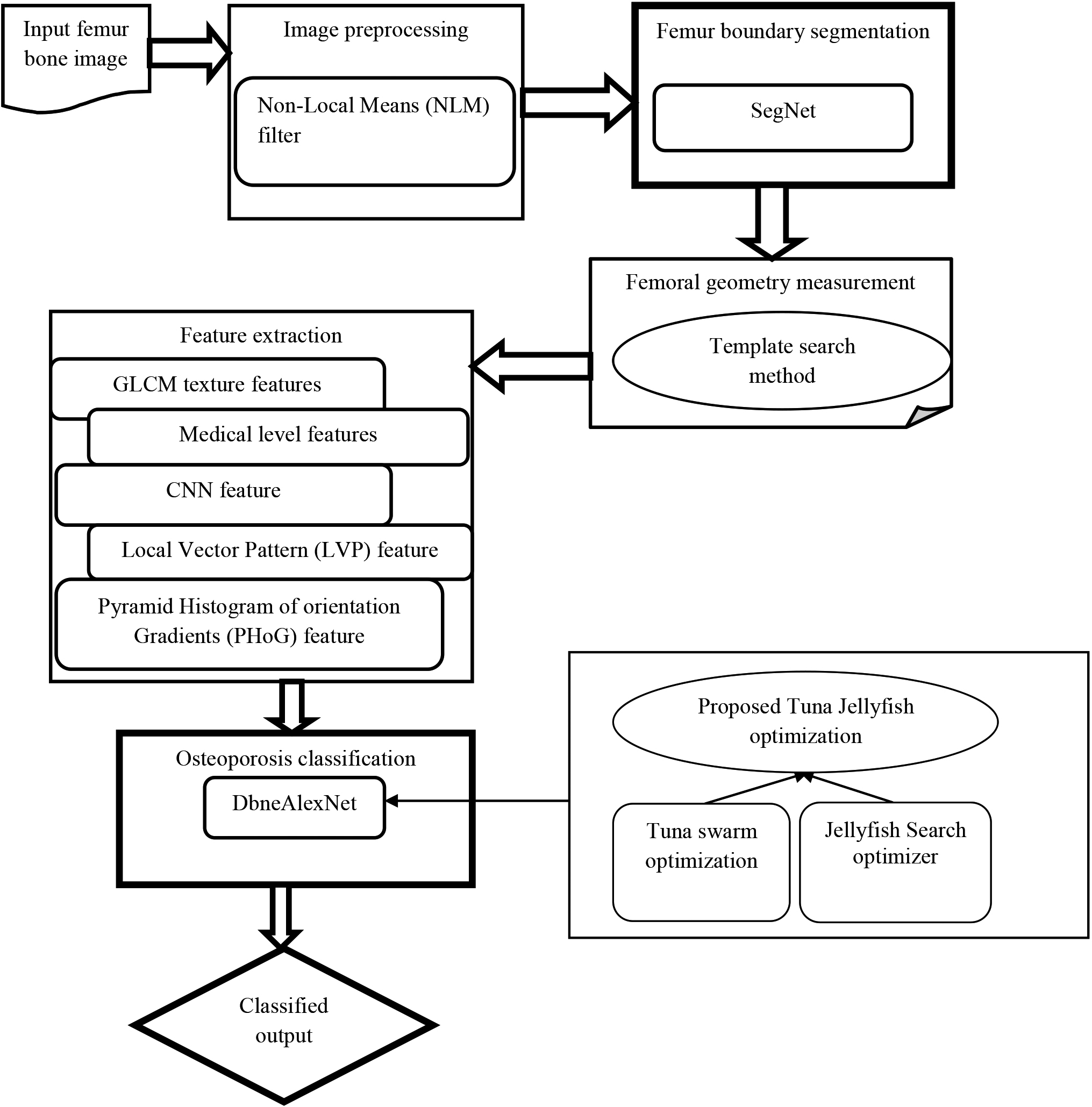
Input femur bone image is gathered through a dataset
where the whole counting of the image is denoted as
Preprocessing is the initial step, where noise is reduced. Here, the noise present in the images is filtered out using the NLM [19] filter. The input image
where
where
The pre-processed image
Architecture of SegNet.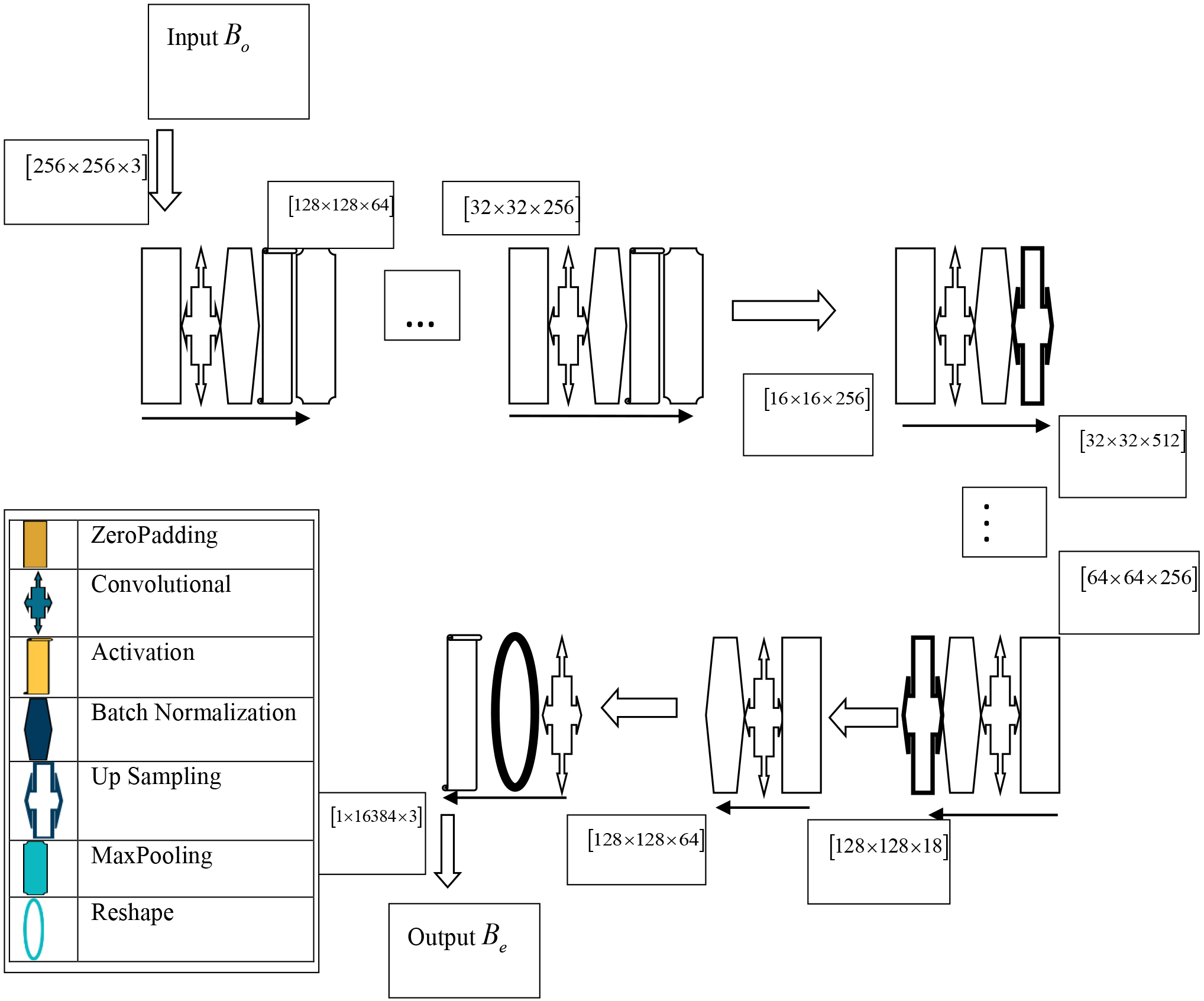
SegNet [25] is the encoder network, where the corresponding decoder network follows the final layer for pixel-based classification. The structural depiction of SegNet is given in Fig. 2. The encoder has 13 convolutional layers, and training is conducted with weights. Furthermore, the fully connected (FC) layers are removed to get a higher-resolution feature map. The training of the decoder filter without the feature maps is convoluted by the SegNet, which employs the max-pooling function and directs the upsample. Furthermore, SegNethass is the decoder that increases the resolution of the input feature maps. Additionally, a decoder utilized a pooling index to assess a linked max-pooling of the encoder and non-linear upsampling. As a result, the dense feature map is created by conserving the upsample maps and convolving them with trainable filters. The segmentation output is represented as
Femur geometry measurement
The template search approach [16] computes the important locations in the femur segment while measuring the femur geometry. The femoral boundary measurement is utilized for computing the numerous medical-level features. Moreover, the effective prediction of femur geometry is needed to find the fracture risks and bone strength. The methods required to measure the geometry of the femurs are shown in Fig. 3. Here, the segmented femur image
Application of Circular Hough transform: It is used to determine the circle’s center by detecting a circular patch of the femur segment. The ideal center is denoted by Find the points Mark the point Create a perpendicular bisector to Detecta point
Femur bone structure.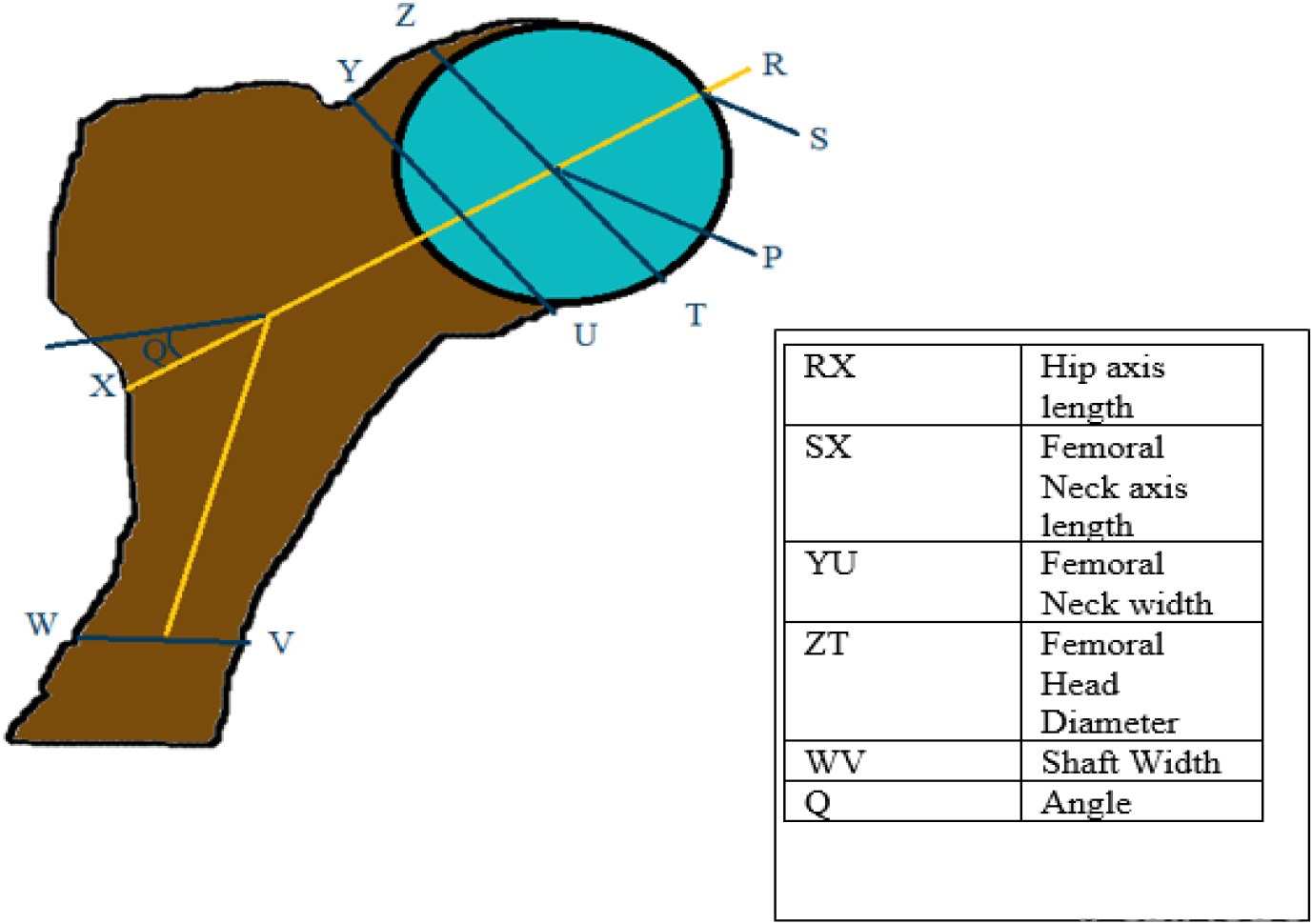
The image after femur geometry measurement
Grey level co-occurrence matrix (GLCM) texture features
To achieve spatial dependency amongst the image pixels, the GLCM features [3, 15] are used. The GLCM is a kind of matrix having the counts of columns and rows are equivalent to grey levels. The pixel distance
Angular Second Moment ASM [3] is defined as the addition of squares of the image’s grey levels. It is also referred to as energy. Whenever the intensity levels are asymmetrical, the ASM value is increased. Moreover, ASM is specified as
where
Contrast [3] measures the brightness of an image. If the image pixels have similar intensity, then the contrast value is low. Moreover, contrast is denoted as
where
Correlation [3] is described as an index of grey value dependence and is expressed as a portion of the comparability of the pixel to its neighboring measurement. Therefore, the correlation expression is denoted as
where
Entropy [3] is utilized for predicting the heterogeneity of the images. It is a statistical aspect for specifying the texture data of an image. It is given by
Inverse Difference Moment (IDM) [3] specifics the smoothness of the image. If the grey value of the pixels matches, the IDM value is high. Furthermore, the IDM is written as
Homogeneity [15] offers the degree of measurement that determines the proximity of the origin. Moreover, the homogeneity is denoted as
To attain a smooth output, it is required to identify all points
The medical level features [16] are essential for effective classification, and they enhance the classification accuracy. Moreover, Hip Axis Length (HAL), Femoral Neck Axis Length (FNAL), Femoral Head Diameter (FHD), Femoral Neck Width (FNW), Neck Shaft Angle (NSA), and shaft width are medical features, which are extracted by a geometric point and that are predicted by the automatic template search technique. Moreover, the medical feature is attained from Fig. 3.
Hip Axis Length (HAL) is a measurement of the distance between the bigger trochanter as well as its inner pelvic brim. Here the points
Femoral Neck Axis Length (FNAL) is the distance between the bigger trochanter
Femoral Head Diameter (FHD) is the distance amongst the geometric point
Femoral Neck Width (FNW) is the shorter distance, which is vertical to a neck axis with the femoral neck. Furthermore, FNW is the distance between the points
Neck Shaft Angle (NSA)
Shaft width implies a width of the femur below the trochanter minor, and a line
Local Vector Pattern (LVP) feature
Local Vector Pattern (LVP) [10] represents a one-dimensional texture pattern and generates a structure-related image. It determines the referenced and pixel values at various distances and angles. Moreover, a vector direction
where
A histogram of orientation gradients (HoG) over each image sub-region at each resolution level constitutes the pyramid histogram of orientation gradients (PHOG) descriptor [26]. To do this, every image is composed of a series of increasingly finer spatial grids through the doubling of divisions in every direction (similar to a quadtree). The PHOG descriptor is an HoG, that covers a sub-region on every image resolution. Moreover, the PHOG features are obtained in the following way.
Initially an edge curve of an image is extracted for the following steps. The cells are isolated from the images by multiple pyramidic levels. In each stage of pyramid resolution, the HOG of every grid was calculated. Moreover, a local shape is denoted via an edge orientation histogram. Moreover, step 1 involved the location of the edge contour of an original image and calculating an orientation gradient. All HOG vectors of a pyramid resolution are combined to generate PHOG-featured images. By combining all HOG vectors, spatial data is captured. Several pyramid levels are considered and each HOG is connected to unity. Furthermore, the PHOG features are indicated as
The CNN [18] is made up of convolutional layers, pooling (POOL) layers, and an FC layer, which is deliberated in Fig. 4. Normally, input
CNN feature.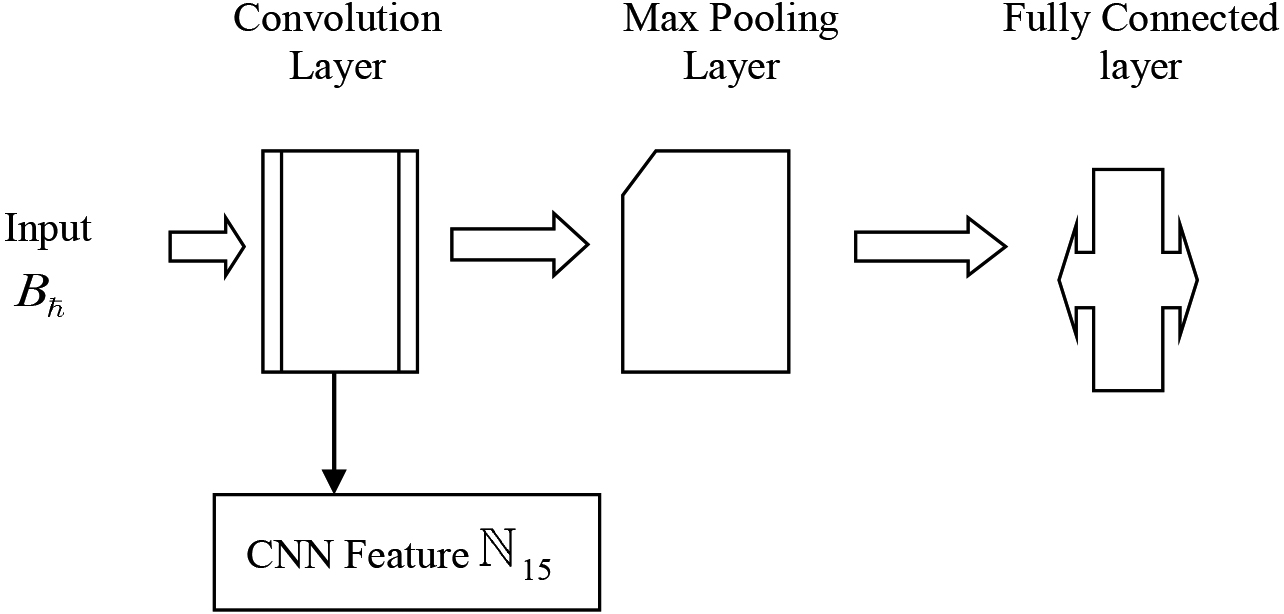
Here, a feature vector
In the osteoporosis classification stage, the DbneAlexNet is employed. Here, the tuna jellyfish optimization algorithm is utilized for the training process of DbneAlexNet. The DbneAlexNet has faster learning as well as convergence speed. Here, a feature vector
Architecture of DbneAlexNet
The DbneAlexNet [4] contains the convolutional layer, which is followed by batch normalization, Max pooling, flattening, dense layer and dropout layers. Figure 5 illustratesa structure of DbneAlexNet. In this, a feature vector
Structure of DbneAlexNet.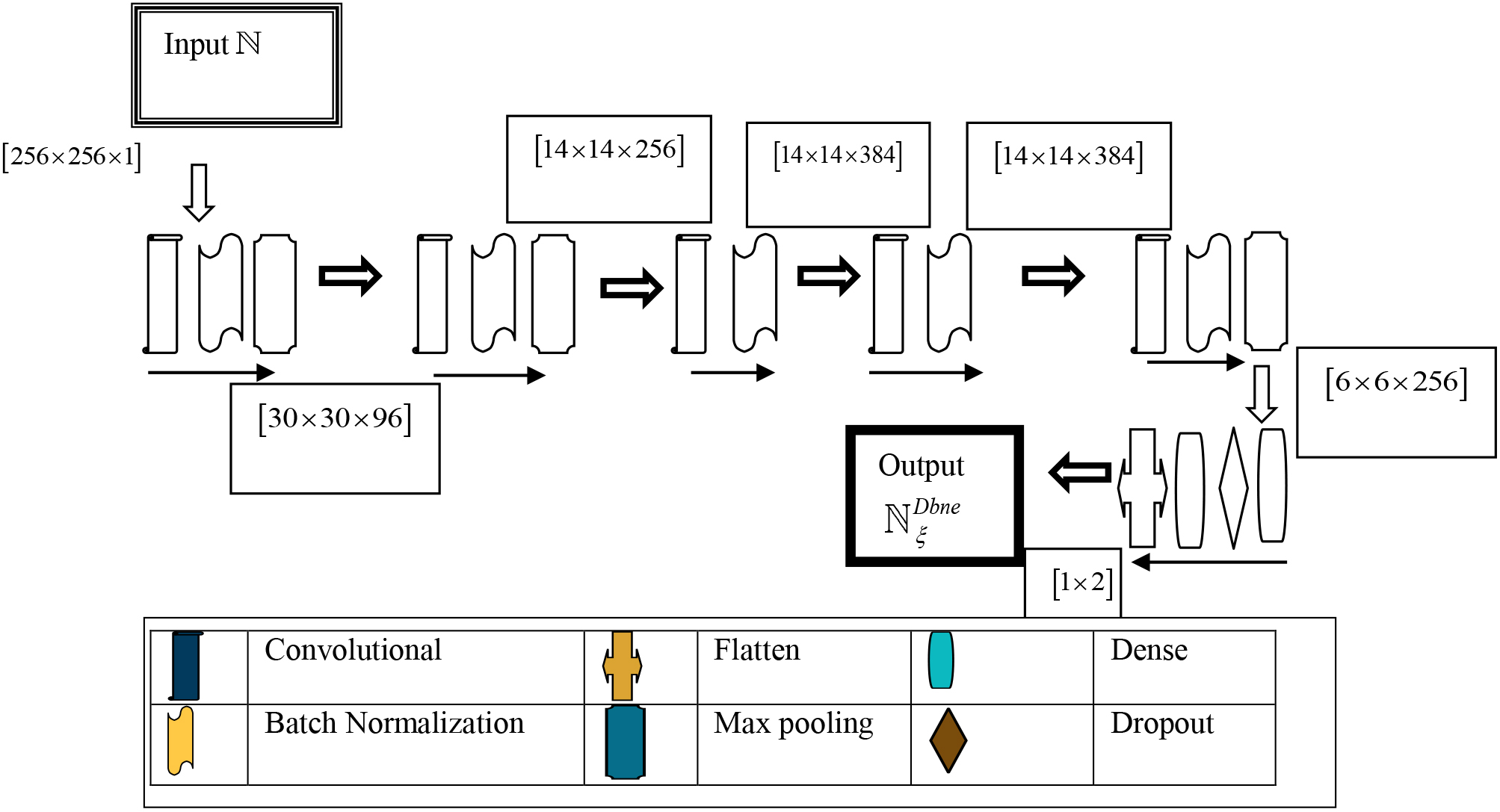
The parameters of DbneAlexNet are tuned using the proposed tuna jellyfish optimization. Moreover, the merging of tuna swarm optimization [13] and jellyfish search optimizer [7] formed the tuna jellyfish optimization. Here, tuna swarm optimization depends on the Tuna fish’s cooperative hunting behaviour. The Tuna is scientifically known as Thunnini, which is a carnivore sea fish. There are different kinds of tuna categories, and their sizes are varied. Tuna are the top aquatic predators that eat a wide range of surface and midwater live species. In addition, the tunas have persistent swimming behavior with a distinct effective swimming style. As a result, tuna will employ a “group travel approach for prediction”. They hunt and attack the prey using their intellectual abilities. Moreover, spiral and parabolic foraging are the two powerful and clever foraging strategies of tuna swarms. Moreover, it has higher robustness and scalability to provide the finest solution. Furthermore, the jellyfish search optimizer is combined with tuna swarm optimization to diminish the computational complexity. Jellyfish search optimizer [7] is based on the behaviors of jellyfish, which exist in a variety of depths and environmental conditions in the deep sea. They appear as bell-shaped and utilized their limbs to harm an object. Moreover, they do not harm people, though anybody who swims up to them or comes into contact with them is affected. Furthermore, jellyfish bloom is produced by the ocean circulation and specific attitudes of all jellyfish within the swarm. The movement is varied with respect to the food location. The optimal position of jellyfish is estimated by comparing the quantity of available food. It was utilized for resolving the structural optimization issues. Furthermore, these two algorithms are merged to attain the rate of convergence. The tuna jellyfish optimization are modelled in the following section:
Step 1: Population initialization
The initial population in tuna jellyfish optimization is generated randomly, which is given by,
where
Step 2: Fitness Computation
Fitness is regarded as an important criterion for finding the finest solution. Moreover, the fitness function depends on the Mean Square Error (MSE) of the solution. Therefore, a solution provided with a minor MSE is considered as an optimum solution. The fitness is expressed as,
where the entire count of the images is specified by
Step 3: Spiral Foraging
Spiral foraging is the first strategy in tuna jellyfish optimization. At this point, the group of tuna fish chases the prey in a closely tight spiral shape. The majority of the fish do not have the awareness of selecting the direction, because a small group of these fish moves vigorously in one direction, whereas the neighboring fishes will change their direction. It generates a larger group with similar persistence for starting the hunting process. The mathematical model for the spiral foraging method is given by,
where
The tuna possesses strong exploitation capability in the search space for food. Moreover, it generates a random location on a search space and it is a reference point during the spiral searching phases. This allows every user to investigate a larger space and provides the tuna swarm optimization with worldwide exploration capability. The expression of updated search space is denoted as follows,
where
Step 4: Parabolic Foraging: Parabolic foraging is the second strategy of tuna jellyfish optimization. Here, every tuna follows the previous one and constructs a parabolic curve that covers the prey. Furthermore, tuna search the food by looking around them. These two procedures are carried out concurrently. This specific model is expressed as follows,
where
Consider
To improve the convergence speed, the jellyfish search optimizer [7] is merged in this phase, and the updated equation of tuna jellyfish optimization is expressed as follows,
where upper and lower bounds are stated as
Substitute Eq. (27) in Eq. (25),
Equation (3.6.2) indicates the updated solution of tuna jellyfish optimization. For every iteration, all individuals randomly find one of the above-mentioned two foraging strategies and regenerate the location based on the probability
Step 5: Re-estimation of Fitness
The overall fitness of an upgraded solution is found, where a solution that has minimal MSE is taken as an ideal solution.
Step 6: Termination
Continued the iteration till the ideal solution is reached. Moreover, Algorithm 1 represents the pseudocode of the proposed tuna jellyfish optimization.
Experimental assessment of the proposed tuna jellyfish optimization (TJFO) based DbneAlexNet (TJFO_DbneAlexNet) in osteoporosis classification is explicated in this section. Here, accuracy, Positive Predictive Value (PPV), Negative Predictive Value (NPV), True Positive Rate (TPR) and True Negative Rate (TNR) are employed in performance valuation.
Experimental setup
The Python tool is employed to implement the proposed TJFO_DbneAlexNet model for osteoporosis classification. Table 1 shows the hyperparameters used by the proposed TJFO_DbneAlexNet model.
Experimental parameters of the proposed TJFO_DbneAlexNet model
Experimental parameters of the proposed TJFO_DbneAlexNet model
The simulation outcome of the proposed TJFO_DbneAlexNet in osteoporosis classification is deliberated in Fig. 6. Here, the input image is shown in Fig. 6a and b represents the preprocessed outcome. Moreover, the segmented outcome is displayed in Fig. 6c.
Dataset description
In this work, a real-time database was generated by gathering the data of nearly 100 people from Chennai. It contained X-ray images attained from nearly 50 men and 50 women in the 25–81 age group for categorizing osteoporosis. Moreover, the images are categorized as normal and abnormal cases. The number of samples in the dataset is 49.
Image outcomes.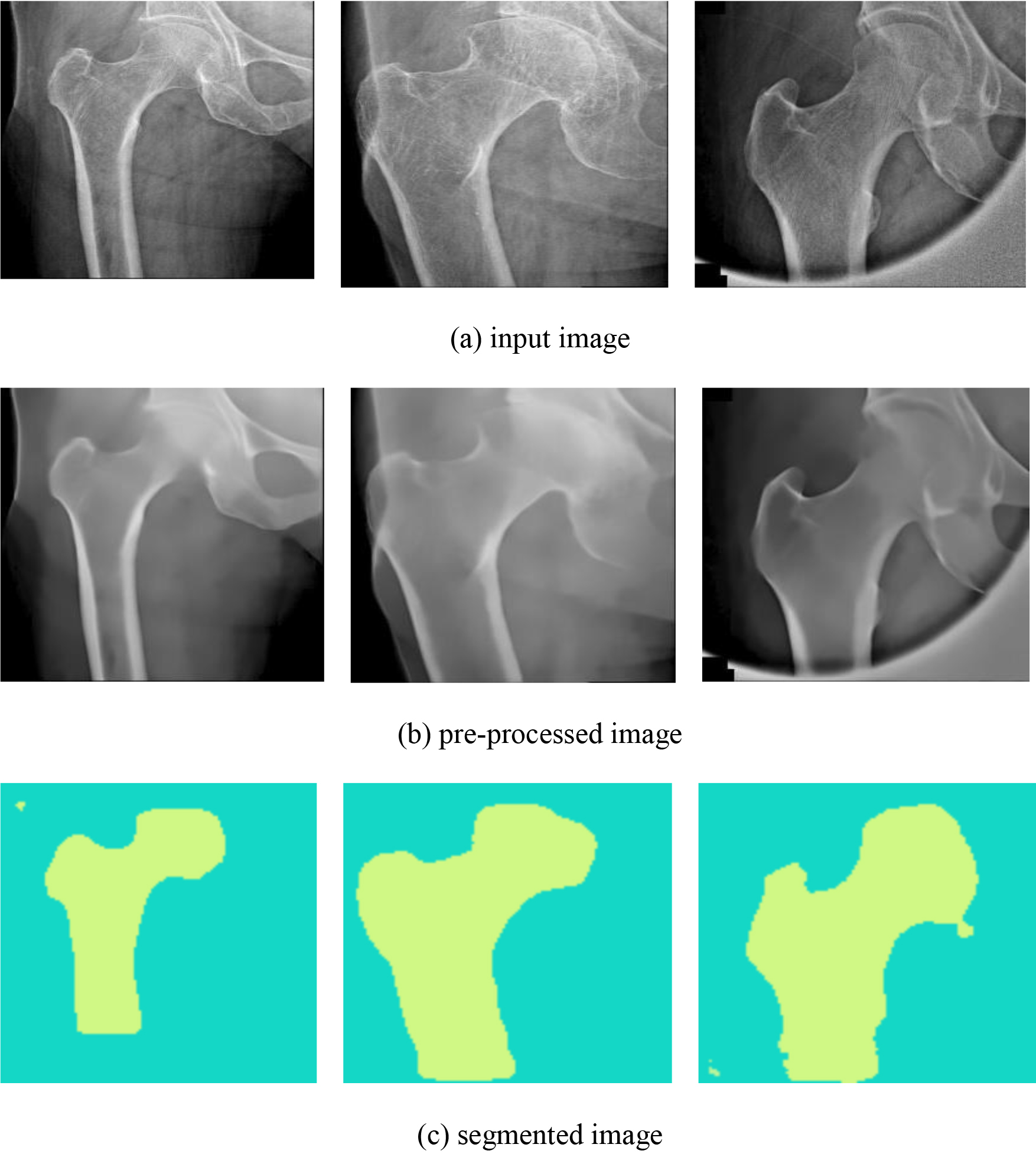
The metrics including accuracy, PPV, NPV, TPR and TNR are considered to evaluate the performance of TJFO_DbneAlexNet in osteoporosis classification.
The accuracy metric exactly indicates the absence or presence of a disease among a whole quantity of samples analyzed.
where
Positive Predictive Value (PPV) is a unit that verifies the presence of illness, in which the test predicts a positive outcome.
Negative Predictive Value (NPV) indicates a negative prediction and the person has a negative test result. It represents the absence of disease.
True Positive Rate (TPR) is utilized for identifying the ratio of diseased people who are precisely known as diseased. Moreover, the TPR is termed as sensitivity.
The fraction of precisely identifiable positive to overall negative results is demarcated as True Negative Rate (TNR). Furthermore, the TNR is indicated as,
Performance evaluation of the proposed TJFO_DbneAlexNet in several epochs are presented in Fig. 7. Here, accuracy, PPV, NPV, TPR and TNR are utilized for validating the performance of the proposed TJFO_DbneAlexNet. Furthermore, the performance is computed by modifying the training data. The performance evaluation regarding accuracy is depicted in Fig. 7a. For a training data of 70%, then the performance of TJFO_DbneAlexNet in 10, 20, 30, 40 and 50 epochs are 0.772, 0.794, 0.819, 0.827 and 0.876. Moreover, the performance of the proposed TJFO_DbneAlexNet in terms of PPV is shown in Fig. 7b. In 80% of training data, PPV of 0.801, 0.821, 0.843, 0.852 and 0.885 are achieved in 10, 20, 30, 40 and 50 epochs. Furthermore, Fig. 7c displays the assessment regarding to NPV. For 50% training data, the NPV of proposed TJFO_DbneAlexNet in 10 epoch is 0.702, 20 epoch is 0.731, 30 epoch is 0.750, 40 epoch is 0.785 and 50 epoch is 0.825. Similarly, the estimation regarding TPR is deliberated in Fig. 7d. Considering 60% training data, TPR values 0.745, 0.753, 0.765, 0.803 and 0.856 are attained in 10, 20, 30, 40 and 50 epochs. Similarly, the estimation of TNR is portrayed in Fig. 7e. Considering 90% training data, TNR of proposed TJFO_DbneAlexNet in 10, 20, 30, 40 and 50 epochs are 0.873, 0.889, 0.896, 0.904 and 0.933.
Performance evaluation considering.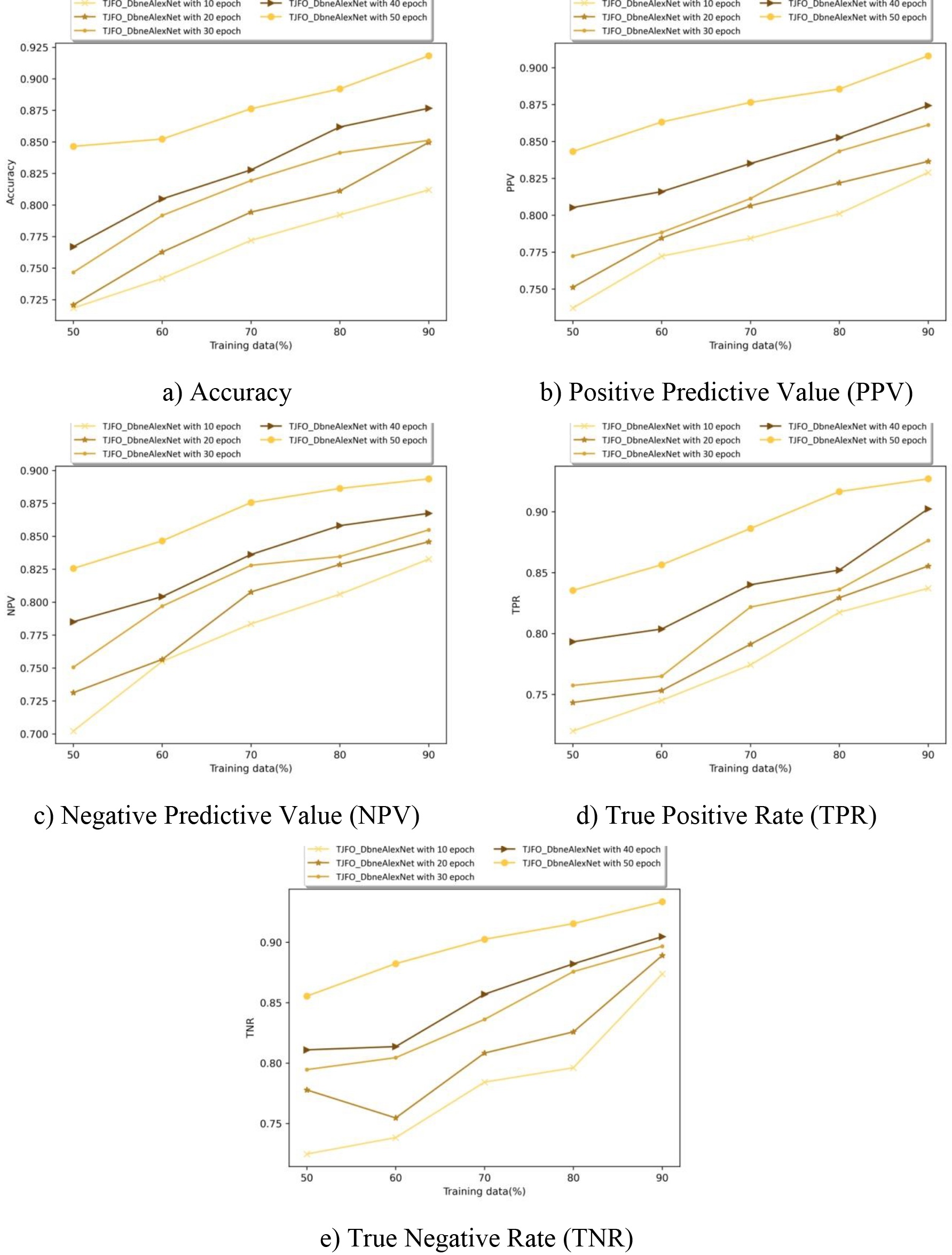
The performance of the proposed TJFO_DbneAlexNet is compared to other existing methods like Mandibular Cortical Index and Mandibular Cortical Widths (MCI-MCW) [22], Recurrent Neural Network (RNN) [1], Convolutional Neural Network (CNN) [14] and CNN
MCI-MCW: It uses the machine learning measurement software. It is performed using various tests for screening the osteoporotic condition. This method can achieve highly reproducible classification results.
RNN: It is widely used in orthopaedic studies and has the capability of producing better results in segmenting bone structure and osteoarthritis diagnosis. The best results are produced by this model in fracture prediction.
CNN: It has been used for examining osteoporosis and generates better results in detecting osteoporosis.
CNN
Comparative evaluation
The comparative assessment of the proposed TJFO_DbneAlexNet is explained by estimating metrics and modifying the K-fold and training data. Here, MCI-MCW, RNN, CNN and CNN
Estimation using training data
Comparative evaluation of TJFO_DbneAlexNet in osteoporosis classification using several training data is revealed in Fig. 8. Here, Fig. 8a shows the valuation corresponding to accuracy. Considering a training data of 70%, the accuracy of TJFO_DbneAlexNet is 0.883, while MCI-MCW, RNN, CNN and CNN
Estimation using training data.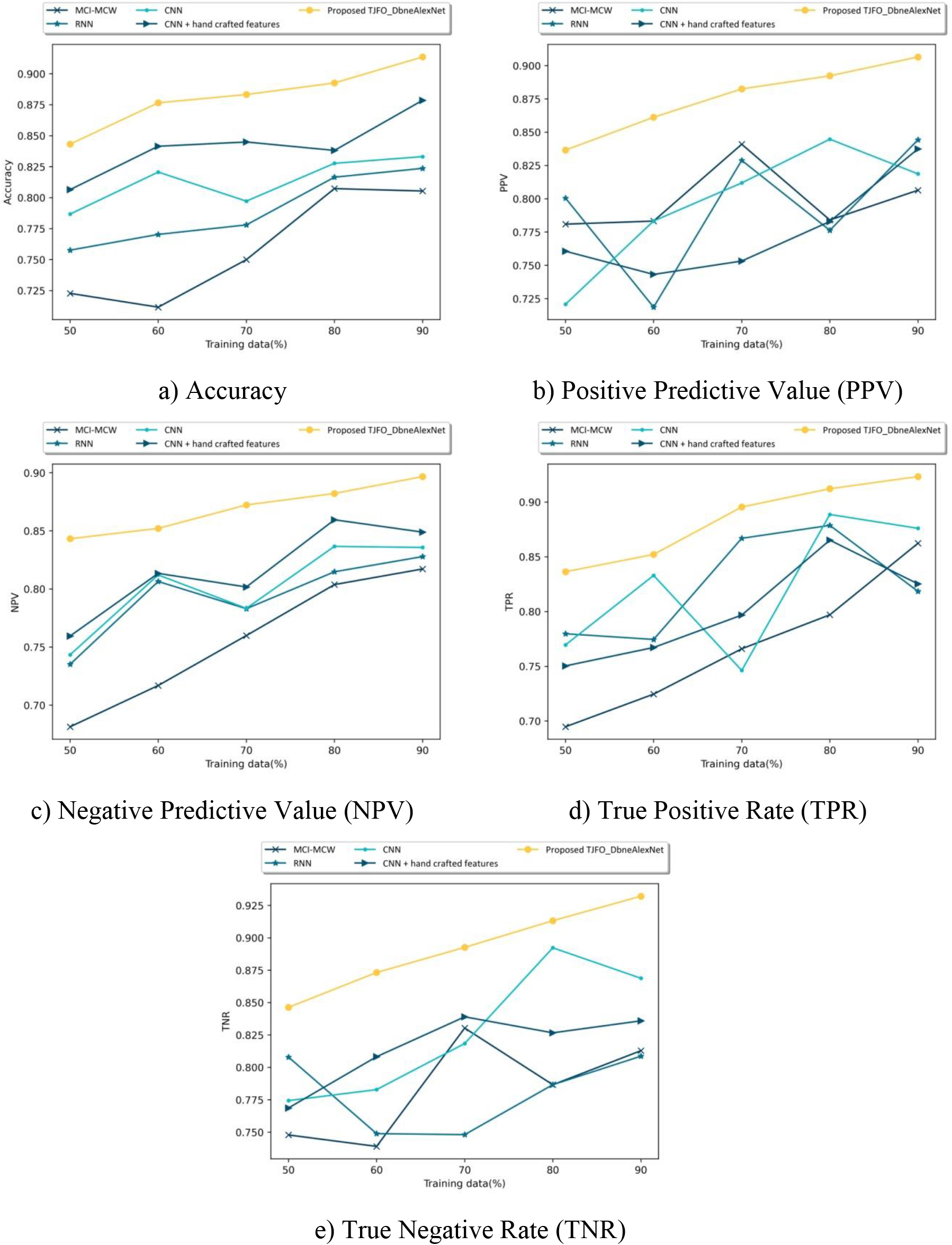
Estimation using K-Fold.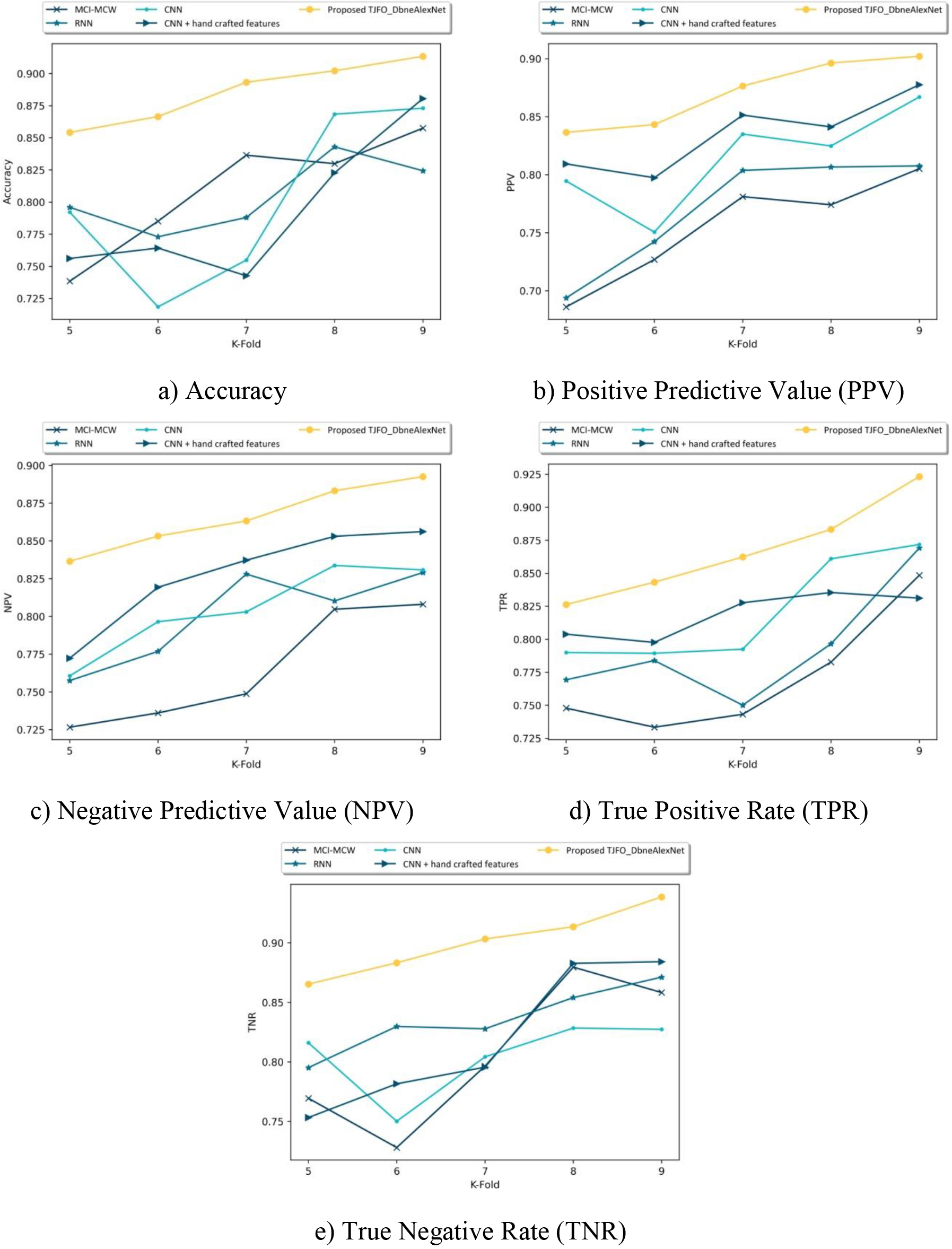
Figure 9 portrays the estimation of TJFO_DbneAlexNet in osteoporosis classification with regards to different K-Fold values. The assessment regarding accuracy is shown in Fig. 9a. Consider K-Fold
Comparative discussion
Table 2 denotes a comparative discussion of the performance of the proposed TJFO_DbneAlexNet and existing approaches. Here, the performance of TJFO_DbneAlexNet and the existing methodologies are attained in numerous K-Fold and training data. In 90% of training data, the maximum accuracy of the proposed TJFO_DbneAlexNet is 0.913, whereas MCI-MCW, RNN, CNN and CNN
Comparative discussion
Comparative discussion
Confusion matrix.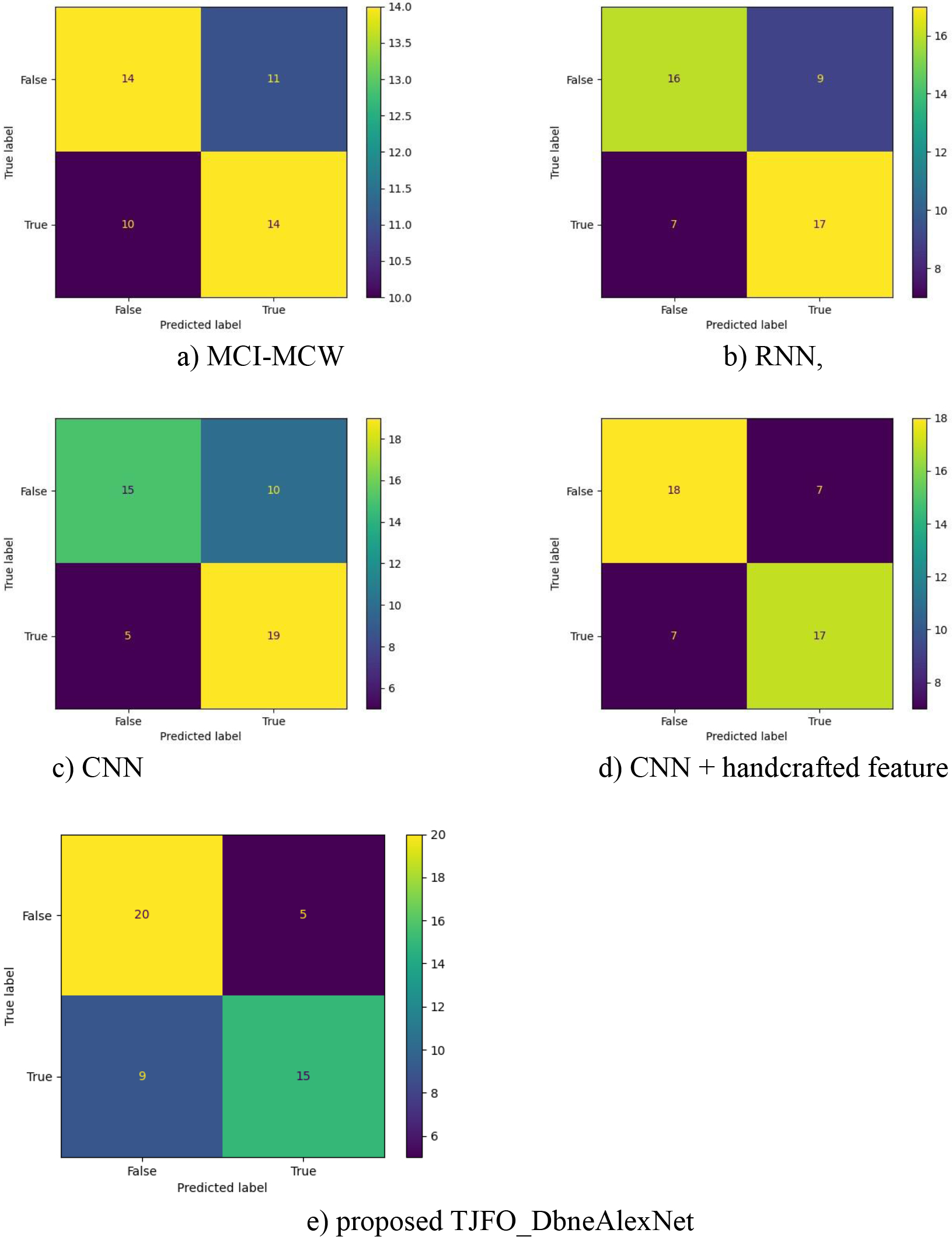
Convergence curve of the proposed TJFO_DbneAlexNet.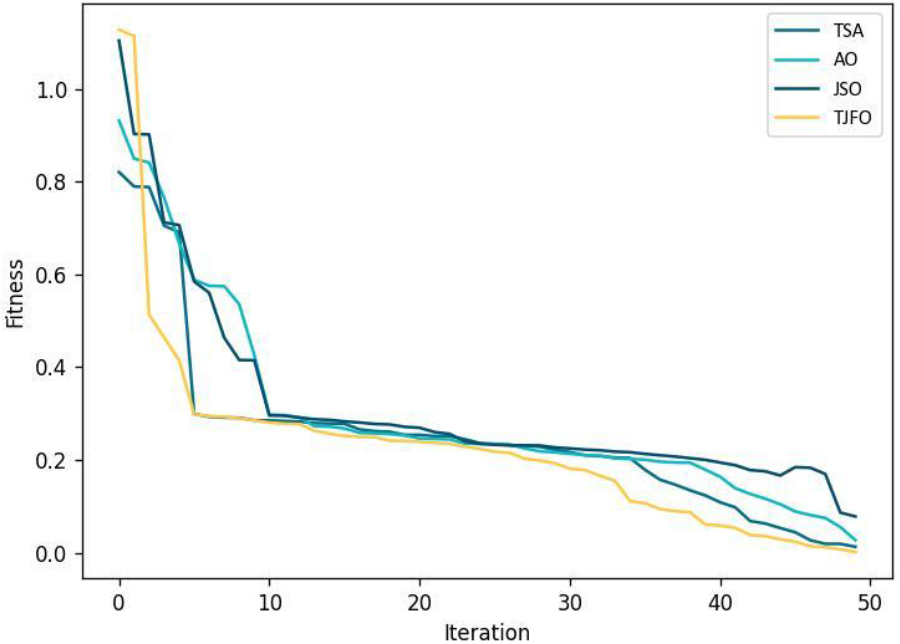
In certain systems, the collection of the predicted and actual classification information is called a confusion matrix. Figure 10a–d, and e specifies the confusion matrix of the MCI-MCW, RNN, CNN, CNN
Convergence plots
The value of the objective function against the computation time during the minimization process is shown using the convergence curve. Figure 11 shows the convergence behavior of the proposed method. The algorithms used for comparison are the Tunicate Swarm Algorithm (TSA) [20], Aquila Optimizer (AO) [12], Jellyfish search optimization (JSO) [8], and the proposed TJFO. The fitness values obtained by the TSA, AO, JSO, and TJFO are 0.0134, 0.0277, 0.787, and 0.0022 for iteration 50. The evaluation results show that the proposed method can converge more easily than the other methods.
Conclusion
In the medical field, osteoporosis is a silent killer disease associated with the danger of fractures, which is often diagnosed based on T-score and Bone Mineral Density (BMD) values. Generally, osteoporosis is a bone condition that includes reduced bone mass, bone degeneration on a lesser scale and a high tendency to fracture. It is a significant prosperity stress throughout the world. Thus, the deep learning based osteoporosis classification is modelled in this research. Furthermore, an X-ray image of the femur bones is used in the osteoporosis classification. The Non-Local Means (NLM) filter is applied to diminish the noise of input bone images. The SegNet is used to isolate certain parts of an image during the segmentation process. After measuring the femur geometry, the medical, GLCM, LVP, CNN and PHoG features are extracted. The tuna jellyfish optimization trained DbneAlexNet is used for osteoporosis classification. Furthermore, the efficiency of the proposed model is valued by the accuracy, PPV, NPV, TPR and TNR measures, where the optimum values such as 0.913, 0.906, 0.896, 0.923, and 0.932 are attained. In future, this framework will be enhanced through a hybrid network model to attain ever more superior performance.
Footnotes
Author’s Bios