




Abstract
BACKGROUND:
Autistic adults continue to experience high rates of unemployment and underemployment.
OBJECTIVE:
A scoping review was undertaken to: a) synthesise key findings in the literature regarding autism and employment from the employers’ perspective; b) examine trends in employer attitudes, theoretical frameworks and interventions; c) highlight gaps in the literature; and d) propose avenues for further research.
METHODS:
Literature published between January 1, 2009 and January 1, 2023 was examined using the following databases: CINAHL via Ebsco, Cochrane Library, EMBASE via Ovid SP, ERIC via Ebsco, Medline, PsycINFO via Ebsco, Scopus, Web of Science and ProQuest for dissertations and theses.
RESULTS:
The search identified 55 studies that met inclusion criteria. Selected articles were organised into the following themes: theoretical frameworks from the employer perspective, autism employment supports from the employer perspective and employer-specific interventions.
CONCLUSION:
This scoping review suggests that minimal research has been conducted on employer interventions that specifically target work environmental factors. The promotion of diversity in the workplace is an encouraging trend but this has not necessarily included the promotion of neurodiversity. Future research should include interventions to improve current and prospective employer knowledge and attitudes in not just hiring but supporting autistic persons in the workplace.
Keywords
Introduction
Autism spectrum disorder (ASD) has been described as a complex neurodevelopmental disorder characterised by persistent deficits in social communication and interaction across multiple contexts. Autistic persons have long-term difficulties with social-emotional exchange, reading non-verbal aspects of communication, and developing, maintaining, and understanding relationships (American Psychiatric Association, 2013). With the shift from Diagnostic and Statistical Manual of Mental Disorders (DSM) IV to DSM V diagnostic criteria in 2013, Asperger’s syndrome is now part of this spectrum as well.
About one in 44 eight-year-old children has been identified with ASD according to estimates from the Centers for Disease Control and Prevention Autism and Developmental Disabilities Monitoring (ADDM) Network (CDC, 2020), an increase of 15%since 2012 and the highest prevalence so far since tracking commenced in 2000. There were 205,200 Australians with autism in 2018 (ABS, 2018). This represented an increase of 21.5%from 2015. This was likely to reflect a combination of known and unknown factors, including increased autism awareness in the community, diagnostic substitution, and a change in diagnostic criteria leading to earlier and more accurate diagnosis (ABS, 2018; Leonard et al., 2010). The total annual cost of autism in Australia has been estimated to be between AUD $8.1 billion and AUD $11.2 billion (Synergies Economic Consulting, 2011). These costs include general and mental healthcare, education, social services, impact on wellbeing and a reduction in income from reduced employment (Synergies Economic Consulting, 2011).
The UN Convention on the Rights of Persons with Disabilities (2006) states that disabled persons have the right to work on an equal basis with others (United Nations, 2006). The Disability Discrimination Act 1992 (Australian Human Rights Commission, 1992) prohibits discrimination against disabled persons in employment, education, publicly available premises and provision of goods and services. Unfortunately, the employment rates for autistic persons are worse than for persons with intellectual disabilities, learning disabilities, and speech impairments (Chen et al., 2015; Roux et al., 2013). In Australia, the unemployment rate for autistic adults is 34.1%, more than triple the rate for other disabled persons (10.3%), and almost eight times the rate for non-disabled persons (ABS, 2019). 75%of Australians believe that autistic persons struggle to gain employment and 70%of Australians believe that employers need to adjust for those employees (Jones et al., 2019). In the USA, the average autistic adult who has achieved employment can only maintain their job for approximately two years, which is half that of the national average of 4.2 years (Wei et al., 2018). Not only is unemployment a significant risk factor for depression, anxiety, low self-esteem, and poor life satisfaction (Paul & Moser, 2009), but the unemployment of autistic adults may also be a factor in generating homelessness (Stone, 2019).
Diversity is a term that encompasses an increasing number of differences such as race, gender, ethnic group and sexuality. Diversity involves how persons perceive themselves and how they perceive others, which in turn affects their interpersonal interactions (Patrick & Kumar, 2012). Diversity management refers to a process aimed at creating and maintaining a positive work environment where both the similarities and differences of persons are embraced, which can lead to more committed, satisfied, higher-performing employees, and greater financial gains for an organisation (Patrick & Kumar, 2012). Neurodiversity specifically refers to the idea that neurological diversity is the result of a normal and natural variation in the human genome (Jaarsma & Welin, 2012). Persons diagnosed with autism, attention deficit hyperactivity disorder (ADHD), dyslexia, Tourette’s syndrome, and other conditions which have a strong heritable component, may choose to regard themselves as neurodiverse or neurodivergent (Robinson, 2019). This neuronal variation is natural but causes difficulties for autistic persons in areas such as empathy and social skills (Kapp et al., 2013). Nevertheless, outstanding skills, including special isolated skills and perceptual peaks are frequent features of autism (Meilleur et al., 2015).
Rationale for a scoping review
A scoping review may be undertaken to: a) examine the extent, range, and nature of research; b) determine the value of undertaking a systematic review; c) summarise and disseminate research findings; and d) identify gaps in the existing literature (Arksey & O’Malley, 2005; Levac et al., 2010). A scoping review can have a broader scope than traditional systematic reviews, with the application of wider inclusion criteria, but should not be confused with traditional literature reviews (Munn et al., 2018). A scoping review should not be seen as a cheaper alternative or regarded as a “rapid” or “cheap” option (Arksey & O’Malley, 2005). Instead of being guided by a highly focused set of research questions, as would be expected of a systematic review, a scoping review is ideally guided by a requirement to identify all literature regardless of study design. Scoping reviews may thus be used to identify the boundaries and context of a particular topic and summarise the key characteristics of the included studies. Scoping reviews will still require rigour and transparency to ensure trustworthiness in the results (Munn et al., 2018). With regards to employment in autism, the extent of information available in the literature about employer needs and supports that they themselves require in dealing with autistic persons remains unclear. Moreover, very little is still known about factors which can build employer capacity. The body of literature appears to be quite heterogeneous, which would make it less amenable to a more precise systematic review suited to narrower research questions (Peters et al., 2015).
Goals of the review
For these reasons, a scoping review was conducted to: a) synthesise the key findings in the literature regarding autism and employment from the employers’ perspective; b) examine trends in employer attitudes, theoretical frameworks, and interventions; c) highlight gaps in the literature; and d) propose avenues for further research.
This methodological framework was adopted in the development of the following scoping review questions: Which theoretical frameworks have been used to investigate the role of the employer in the employment of autistic persons? How do employer attitudes towards autism impact the employment of autistic persons? What is known within the existing literature about support for employers of autistic persons including intervention programs in the workplace?
Methods
Search strategy
A multi-step process was used to identify relevant publications for review. The literature from January 1, 2009 to January 1, 2023 was searched from the following databases: CINAHL via Ebsco, Cochrane Library, EMBASE via Ovid SP, ERIC via Ebsco, Medline, PsycINFO via Ebsco, Scopus, Web of Science and ProQuest for dissertations and theses. The following search string was used: (Autis* OR ASD OR ‘Autism Spectrum Disorder’ OR Asperger* OR ‘Pervasive Development Disorder’) AND (workplace OR workforce OR ‘work environment’ OR employer?) AND (’vocational rehabilitation’ OR intervention? OR therapy OR support OR tool? OR attitude? OR innovat* OR diversity OR neurodiversity). Since research into autism in the workplace is relatively recent (Austin & Piano, 2017) a ten-year timeframe was chosen for the identification of relevant research. In addition, reference lists of the included articles that met the inclusion criteria were searched. A web search using Google Scholar was also undertaken. The first 50 documents within the search were reviewed to maintain consistency. A review beyond this number was not required as no new information emerged. Lastly, the reference lists of the final number of publications included in the review identified further references until a saturation point was reached. Manual searching of Autism, PLoS ONE, the Journal of Occupational Rehabilitation and the Journal of Autism and Developmental Disorders, key journals in this area, was also undertaken.
The study protocol was drafted using the Preferred Reporting Items for Systematic Reviews and Meta-analysis Protocols (PRISMA) Extension for Scoping Reviews (PRISMA-ScR): Checklist and Explanation (Tricco et al., 2018). The advice of an experienced research librarian was sought regarding relevant databases and to develop search strategies to achieve optimal results. These were further refined through team discussion. Endnote Version 9.9 (Clarivate Analytics, 2019) was used to assist with record management. The Endnote library was imported into NVivo 12.5 (QSR International, 2018) to enable thematic analysis of the identified publications.
Eligibility criteria
The process of a scoping review is an iterative rather than linear process which requires researchers to engage with each stage reflexively. Therefore, the authors refined the inclusion criteria and research questions through increasing familiarity with the literature (Arksey & O’Malley, 2005). The following inclusion criteria were specified as a guide to narrow the search further: a) published in English; b) published between January 1, 2009 and May 31, 2022; c) publications including human subjects aged 18 and above with all levels of ASD (bearing in mind that autism is not a standalone diagnosis with co-occurring conditions; d) referenced publications from peer-reviewed journals, books, postgraduate dissertations and theses. The latter was deemed relevant due to the dearth of study volume and the relative recency of research into autism and employment from the employer perspective.
The following exclusion criteria were applied: a) publications outside those identified in the inclusion criteria such as opinions, book reviews, editorials, and commentaries; b) undergraduate dissertations; c) web documents and sites; and d) analyses of policies. Non-English publications were excluded due to the practical cost and time requirement for translation. Studies with persons under the age of 18 were included if they also contained persons aged 18 and above. No restrictions were placed on the sample size. Systematic reviews and all other types of review articles, including narrative reviews, were also identified for inclusion.
After the initial database search, duplicates were removed, and the titles of the studies were assessed to remove irrelevant articles. The first two authors independently reviewed the titles and abstracts of each study to determine eligibility based on the inclusion and exclusion criteria. Any differences were referred to the third author for consolidation. A full-text review was completed by the first two authors with any discrepancies referred to the third and fourth authors for final consolidation. The research team also received RSS (Rich Site Summary) notifications until May 31, 2022 from the aforementioned databases as new citations became available. These articles were similarly reviewed according to inclusion criteria and suitability for the research topic. A standardised data extraction table was utilised to extract data from all the included publications. The table (see Appendix) contained salient information regarding each study (author, year of publication, country of origin, study population characteristics, methodology, outcomes, conclusions, and limitations). Outcomes were not defined a priori as a wide range of outcomes of interest were found.
Charting the data
Data analysis occurred as a reflexive and comparative process in phases: (1) data preparation and organisation, (2) immersion, (3) coding, (4) categorising and theming, and (5) interpretation (Leavy, 2017; Merriam & Tisdell, 2015; Braun & Clarke, 2019; Braun & Clarke, 2021). Candidate themes were constructed by reviewing the NVivo 12.5 (QSR International, 2018) code extracts with construct maps to identify patterns and relationships between codes (Braun & Clarke, 2006). A repeated and thorough review of the literature led to the identification of three themes presented as a narrative account to provide context and generalisability for the readers. The data were synthesised and interpreted to map the scope, depth, and breadth of available research. The review findings refer to autistic persons rather than ASD due to potential negative connotations associated with the term disorder (Kenny et al., 2016). In this context, autism is reframed as a variation that resides within the neurodiversity spectrum rather than a disease, condition, or disorder.
Consultation with experts
While considered an option in the scoping review process (Arksey & O’Malley, 2005), a consultation exercise was adopted to enhance the review findings through a formal discussion with experts in the field, which consisted of four psychiatrists, a paediatrician and two clinical psychologists with at least 10 years of specialist expertise in autism. The paediatrician had ongoing expertise with adults, having continued with their care beyond the age of 18, including consideration of implications for relationships, living arrangements and employment. In addition, three employment consultants who worked with autistic job seekers were interviewed. This consultation exercise occurred throughout the analysis to validate the findings and inform further stages of the scoping review (Arksey & O’Malley, 2005).
Results
The initial search strategy returned 1556 citations for preliminary screening, 1243 of which remained after duplicates were removed. These included an additional 23 citations that were identified through web and reference list searches. Of these, a further 1186 citations were removed as their titles and/or abstracts did not address the scoping review questions or meet the inclusion criteria. The full texts of the remaining articles were read to assess for eligibility. The final number of citations that met the inclusion criteria, and were thus included in this review, was 55 as shown in the flow diagram in Fig. 1. Most of the studies were from the United States (n = 23), followed by Canada (n = 11), Australia (n = 9), Sweden (n = 4), United Kingdom (n = 5), Germany (n = 1), Israel (n = 1) and Ireland (n = 1).
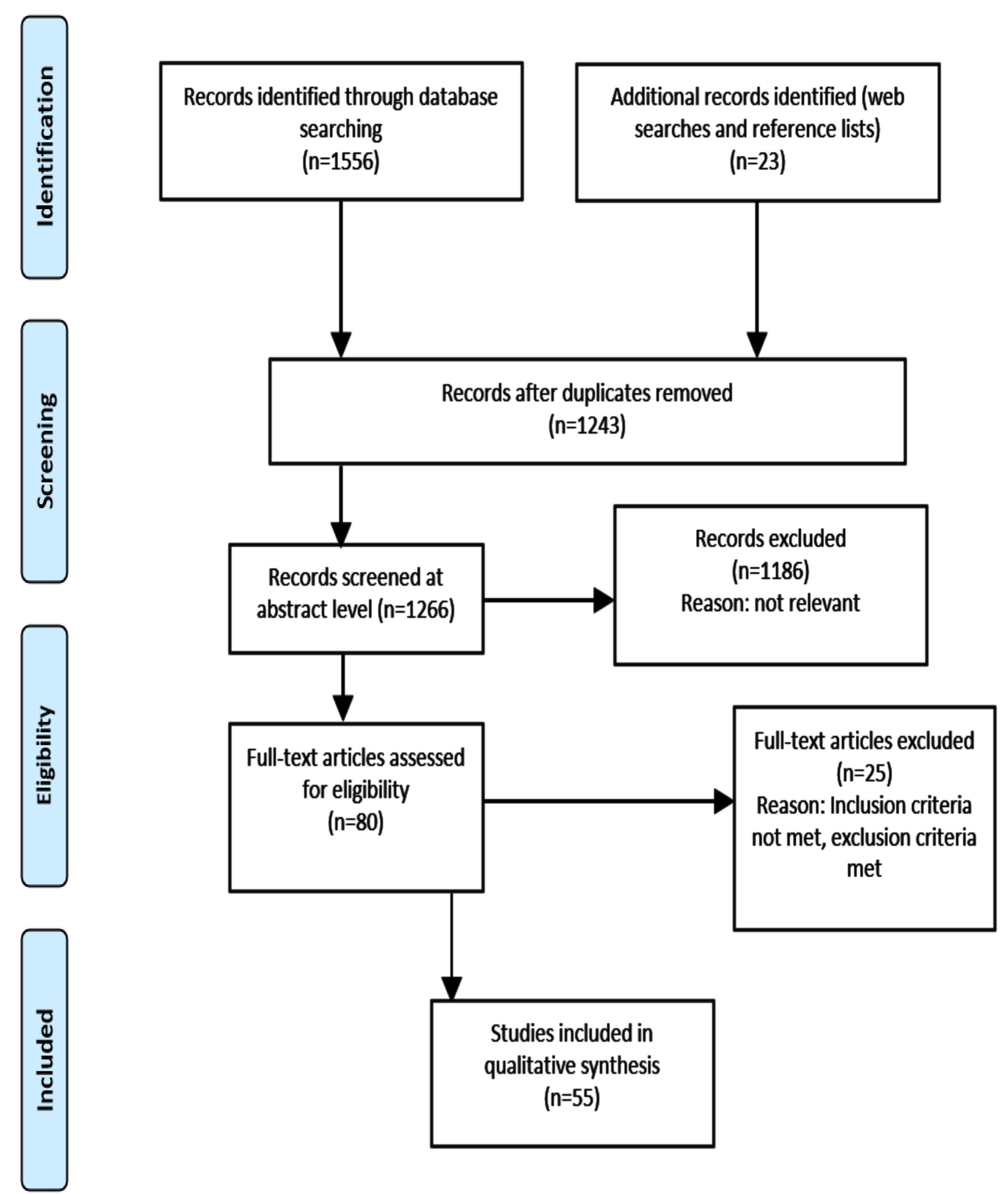
Preferred reporting items for systematic reviews and meta-analyses (PRISMA) flow diagram.
The type of study, as well as the level of evidence provided, was varied. A hierarchy of scientific evidence from Level 1 (highest) to Level V (lowest), based on effectiveness (Joanna Briggs Institute, 2014), is presented in Table 1. There were studies identified in this scoping review at the highest level of evidence, classified as systematic reviews, meta-analyses, and randomised controlled trials (n = 2). The second level of evidence considered studies that were not randomised but utilised two groups (n = 0). The lowest level captured descriptive studies (n = 53). No Level II, III and V studies were identified.
Levels of evidence of reviewed studies (Joanna Briggs Institute, 2014)
The following three themes were identified: 1) theoretical frameworks for the employer perspective; 2) autism employment supports from the employer perspective; and 3) employer-specific interventions. The presence of negative attitudes towards autism in the workplace was shown to underscore all these three themes, thus confirming a continuing need to address perceptions of deficit and recognise prospective autistic employees’ special talents and strengths (Meilleur et al., 2015; Vogeley et al., 2013).
Theoretical frameworks for the employer perspective
The Theory of Planned Behaviour (TPB) (Ajzen, 1991), identified in this scoping review is a useful framework for analysing employer perceptions towards hiring disabled persons (see Fig. 2). The TPB delineates the role of social influence variables in predicting intentions to engage in specific behaviours and has assisted in the understanding of why changes in employer awareness can lead to better change outcomes for employees. According to TPB, three theoretically independent categories are assessed to measure behavioural intention. These are behaviour beliefs (personal attitudes towards or evaluation of a behaviour and its perceived outcomes), normative beliefs (the beliefs of others and social pressures related to a behaviour), and control beliefs (beliefs about resources and skills required to undertake a behaviour). These three categories act as a function for behavioural intention. Action is more likely to occur if one approves of the behaviour, perceives it as socially acceptable, and has resources to enable the behaviour (Ajzen, 1991). A selective review of the demand-side employment literature and employers’ attitudes towards disability, showed that although behaviour and control beliefs were significant, normative influences of management were the most important predictor of behaviour (Burke et al., 2013). In contrast, all three (behaviour, normative and control beliefs) were identified more recently as evenly balanced in influencing hiring agents’ lack of extending job opportunities to autistic persons (Mai, 2019).
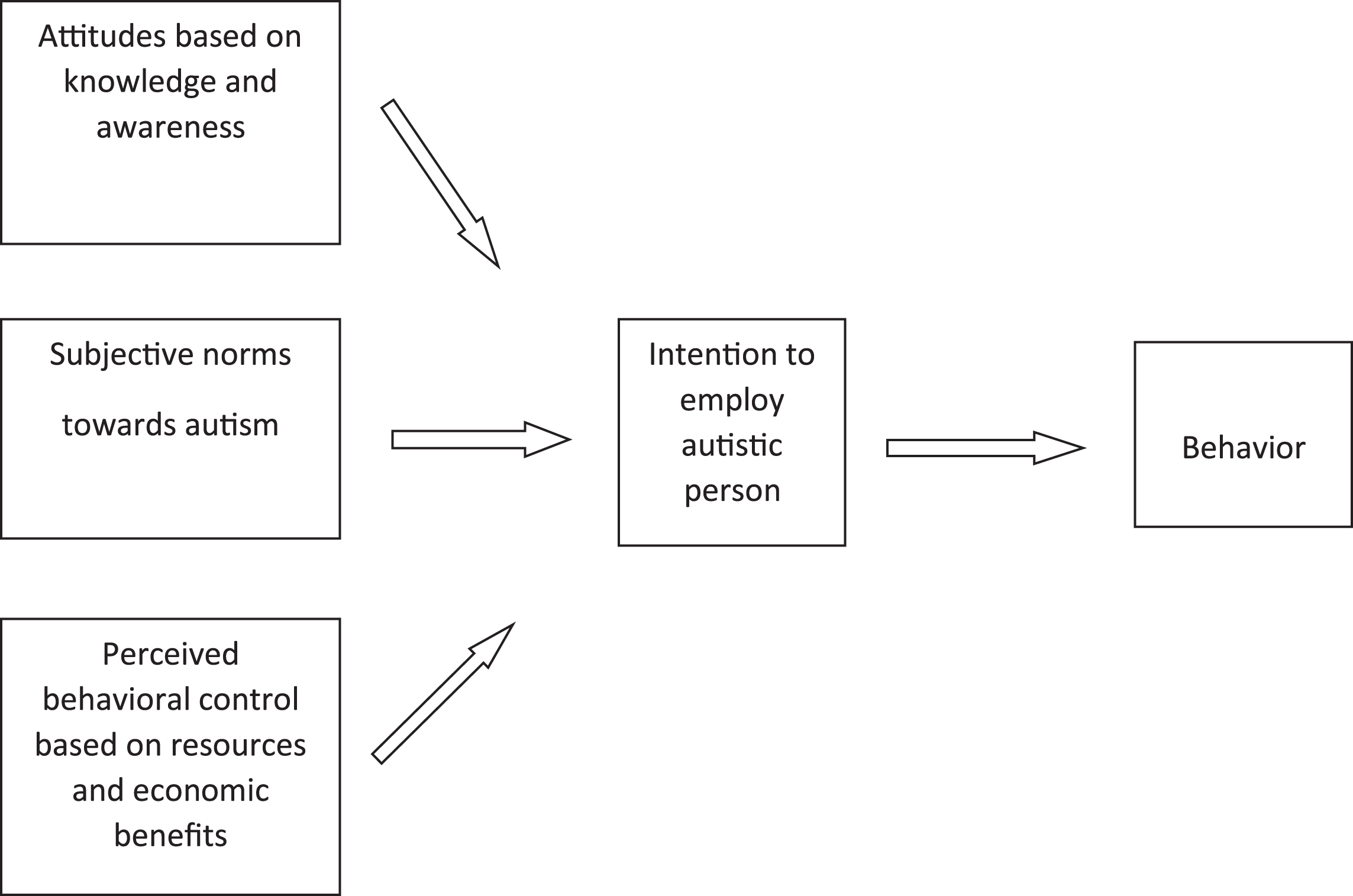
Theory of planned behavior (TPB): A cognitive decision-making model (Ajzen, 1991).
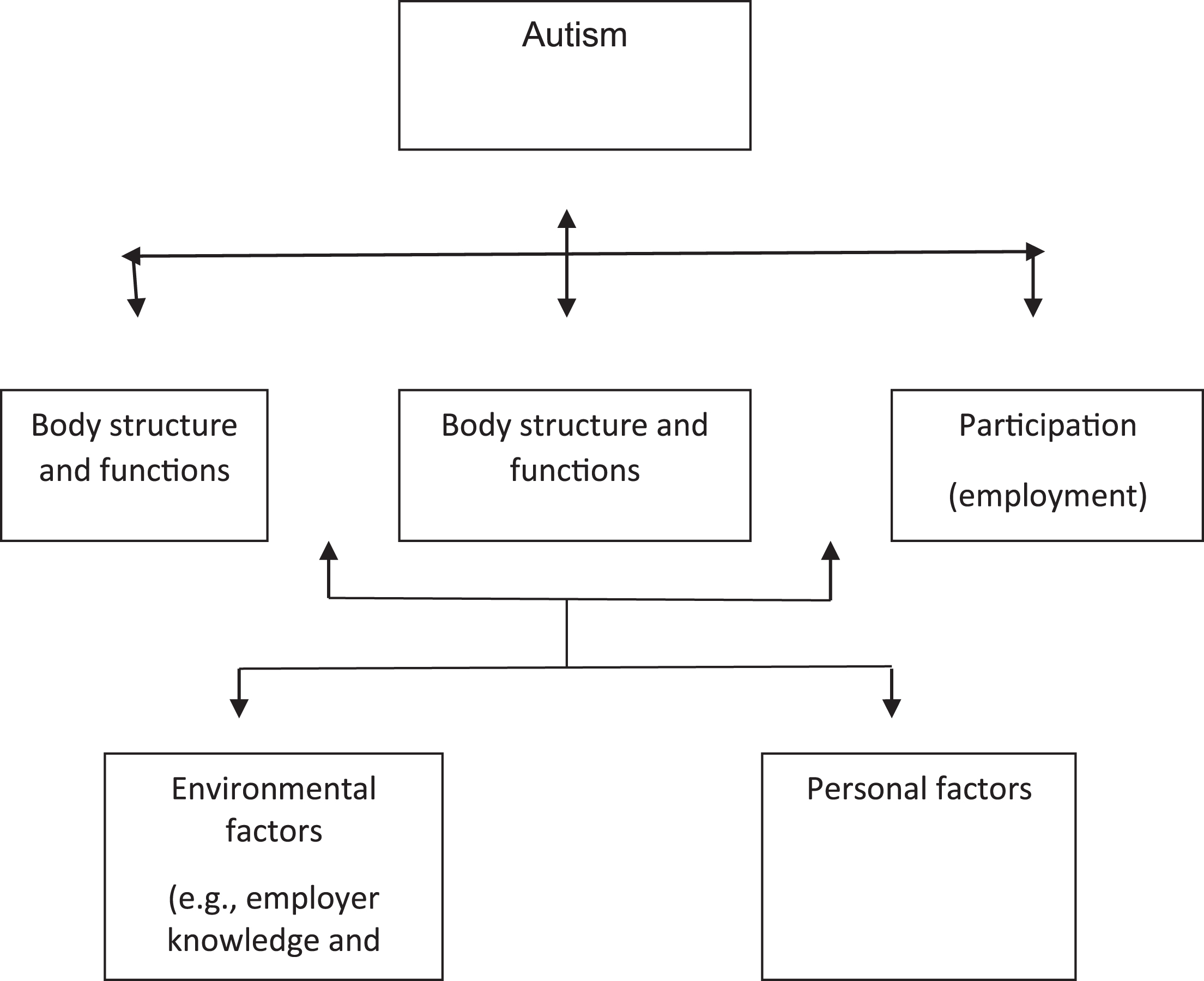
The international classification of functioning, disability and health core sets (World Health Organisation, 2001).
In essence, TPB outlines the role of social influences in predicting intentions to adopt specific behaviours and clarifies why changes in employer knowledge can lead to better outcomes for autistic employees. In a survey of 92 employers from a convenience sample of small, medium, and large companies in Seattle, USA, TPB successfully predicted employer intentions to engage in outreach activities. Subjective norms were of greatest importance, which implied that senior and mid-line management needed to be targeted to establish normative expectations supportive of hiring disabled persons (Fraser et al., 2011).
Several reviews have suggested the use of other theoretical frameworks to examine the role of the employer (Harmuth et al., 2018; Scott et al., 2019). The Person-Environment-Occupation Model notes that interventions may be more effective when they acknowledge the person holistically, with diversity training specific to autism as well as a coordinated and systematic approach (Harmuth et al., 2018). The ecosystem framework has been proposed to highlight the employment of autistic persons as inextricably linked to community resources such as family support, workplace capacity building (e.g., employers, co-workers) and policy (Nicholas et al., 2018a). Using a Leadership Theoretical Framework, a phone interview was conducted with 54 adult autistic employees derived from a national, internet-based, voluntary autism register in the USA (Parr & Hunter, 2014). Although authentic leadership had the highest correlation with satisfaction, organisational commitment and work engagement, each person on the spectrum is likely to have different needs and preferences for several important leadership behaviours (Parr & Hunter, 2014). Transformational leadership had the highest correlation with performance, and consideration had the highest correlation with intentions to turnover (Haskins, 2019). Employers who provide an authentic leadership style, direct communication, detailed tasks, and consistent workplace structures are more effective in improving work performance and interpersonal outcomes for autistic persons (Haskins, 2019). As employers often lacked control over many aspects of organisational life when enacting their responsibilities as managers, their capacities for thinking and action, and their actual knowledge of autism, are all powerful shapers of their responses in managing autistic persons (Cockayne, 2019).
There has been a gradual inclination towards the need to understand autistic persons in a broader perspective, extending beyond diagnostic criteria into various aspects of functioning and environmental domains (Mahdi et al., 2018). Many factors in the work environment can serve to either inhibit or facilitate the inclusion of autistic persons (Waisman-Nitzan et al., 2019). Support from employers and co-workers are important contributors to a positive work environment (Khalifa et al., 2019). Unfortunately, the ICD (International Classification of Diseases) 10 (WHO, 2001) and DSM (Diagnostic and Statistical Manual of Mental Disorders) V (American Psychiatric Association, 2013) classification systems used for the diagnosis of autism do not take environmental factors into account. A holistic perspective which integrates personal, social, and environmental aspects is required, particularly as the significance of environmental factors is often emphasised by autistic persons and their caregivers. Ultimately, a personalised rather than diagnosis-based method of resource allocation and reimbursement will mark a paradigm shift in the diagnostic assessment of autism (Bölte et al., 2018).
The World Health Organisation (WHO) International Classification of Functioning, Disability and Health (ICF) Core Sets (WHO, 2001) has not only been identified as a useful tool to examine the employment literature but can also be used to highlight the important role that environmental factors such as employer knowledge and awareness can play as a challenge to, or enabler of, employment for autistic persons. This includes how demand-side factors and employer practices interact with personal factors (Burke et al., 2013; Scott et al., 2015; Scott et al., 2019). In a study which examined the satisfaction of 114 employers in a program to support job success in young autistic adults, a demand-side approach, which treated employers as valued clients, appeared to result in higher levels of employer satisfaction (Müller et al., 2018). The ICF is a meaningful framework in which the effects of the complex interaction between personal and environmental factors can be contextualised. Furthermore, it broadens thinking beyond “fixing” a disability to one that places equal merit on enhancing functional capacity and promoting participation in all areas of life (WHO, 2001). As the functional differences seen in autism are heterogeneous with respect to disability and ability or exceptionality, the ICF has added value as a framework that can capture a person’s functioning across all dimensions of life. Interventions which target contextual factors are critically needed to improve employment outcomes in autism (Bölte et al., 2018; Scott et al., 2019).
As the Information Technology (IT) industry is a sector that has employed relatively more autistic persons, a theoretical framework to study IT workplace readiness to equitably include autistic persons in the workplace is very relevant (Annabi & Locke, 2019). As organisational and environmental factors are a result of neurotypicals’ knowledge and attitudes, when they are knowledgeable about autism, autistic employees will experience fewer barriers (Annabi & Locke, 2019).
The focus of initial research has been on supports for the employee. Studies have since emerged exploring the needs of employers and both employers and employees simultaneously (Vogeley et al., 2013). Both groups are committed to employment processes, but their understanding of the required support, expectations and productivity requirements differ (Scott et al., 2015). Unfortunately, the data is less than encouraging. Autism has been rated as the second-highest disability after acquired brain injury to generate the least interest in employment amongst employers. There may be a general interest amongst employers to hire disabled persons, but this interest diminishes when it involves hiring for their own company (Andersson et al., 2015). Autism in the workplace is not on the radar for most companies (Westover et al., 2018). Nearly half of employers indicated that the nature of work at their business was too difficult (Riesen & Oertle, 2019). Employers lacked knowledge regarding autism (Waisman-Nitzan et al., 2019). Although they may be knowledgeable about autism characteristics, they lacked understanding of autism in an employment setting. They also overwhelmingly believed that business managers did not have a good understanding of autism (Adams, 2018). This lack of appropriate understanding from employers and co-workers is one of the biggest barriers to successful employment (Chen et al., 2015).
While employers showed positive general attitudes, they had reservations towards hiring workers with certain types of disabilities (Ju et al., 2013). Attitudes and actions do not necessarily go hand in hand and the role of social desirability makes the precise reasons for this unclear (Andersson et al., 2015). Even while generally positive attitudes are reported, hiring practices may still be discriminatory. What employers know about autism is inaccurate and frequently based upon guesswork (Cockayne, 2019). Managing autistic persons or knowing autistic persons outside work is for many managers their main source of knowledge about autism (Cockayne, 2019). The pivotal nature of the managers’ role is clear, with recurrent themes emerging that it is ignorance of socio-cultural forces and the invisible nature of the condition that frustrates managers (Cockayne, 2019). Addressing the misconceptions of autism and how stigma can be a contributing factor to the low labour participation rate can provide opportunities for recognition of how autistic persons can provide benefits to the organisation (Vaughan, 2019). Employers may perceive the problem to be the employees, thus blinding them to their own contributions to the problem (Patton, 2019). However, positive past experiences with disabled persons are associated with more willingness to hire and retain disabled employees (Ju et al., 2013). Previous experience is linked to greater interest in hiring and employers had greater interest in hiring than they thought other employers had (Andersson et al., 2015). Post-hiring attitudes further demonstrated a shift from pre-hiring attitudes, via experiential learning in hiring and managing autistic persons (Vaughan, 2019).
The influence of employer size on employee attitudes has also been studied. For example, a general pattern of openness to hiring disabled persons the larger the employer size is noted (Jasper & Waldhart, 2013). There was a general trend of greater concern among small to medium-sized employers (Scott et al., 2017). Smaller employers perceived challenges at significantly greater levels than larger employers (Scott et al., 2017). Employers of autistic adults from larger organisations, which received external support and had previous experience with disabled persons, were more likely to have favourable attitudes (Scott et al., 2017).
Attempts have been made to reassure employers that they would not incur additional costs when employing autistic persons over and above those associated with any new employee. Although this may be related to lower wages earned by those with autism and part-time working positions, this challenges pre-existing attitudes that hiring autistic adults results in increased costs and lower productivity (Scott et al., 2017). Openness about disability was the most important factor in hiring processes, followed by education and knowledge, extra resources, and guidance. Financial compensation was ranked as the least important (Andersson et al., 2015). Therefore, hiring autistic persons is potentially a good business decision. Additional benefits on workplace culture, diversity and inclusivity have also been identified (Scott et al., 2017). Employers reported high satisfaction rates in a range of key performance areas, and company benefits from participation of other staff, company image and customer relations (Beyer et al., 2016). The motivation to hire autistic persons includes a mixture of practical factors, social values and the fulfilment of a moralistic purpose. At the very least, employing autistic persons conveys an indirect societal benefit (Waisman-Nitzan et al., 2019).
A synthesis review of grey literature, which focused on services, supports and strategies that can foster employer capacity to support employment of adults with developmental disabilities, including autism, identified accommodation in the workplace as a vital factor, in addition to employment support, job coaching, education, awareness training and recruitment (Rashid et al., 2018). Employers reported a high willingness to make common accommodations for autistic employees (Adams, 2018). However, the process of requesting accommodations is not simple and requires disclosure by the employee. Furthermore, autistic persons may have different workplace accommodation needs than those with other types of disabilities, in particular support for social and communication skills (Lindsay et al., 2019). Employers are aware that they should make protective accommodations such as the provision of extra time and modifications to the physical working environment (Cockayne, 2019), supports of a non-physical nature (Pierce, 2018), and on-site training services through demand-side employment services (Stuckey, 2016). Accommodations are critical because they can help to enhance quality of life and work productivity (Lindsay et al., 2019). However, adjustments can also mark autistic persons as in need of special attention and treatment. The invisibility of autism is a major reason why accommodations are either not asked for, not offered, or provided imperfectly (Cockayne, 2019). Visibly disabled persons find it easier to maintain employment compared with invisibly disabled persons. Employers may be more uncertain or critical of invisibly disabled persons (Rashid et al., 2017b). There was a division of opinion between managers as to which autistic interns should be given special treatment, with a tendency to underestimate abilities and overestimate challenges pre- and post-internship (Remington & Pellicano, 2019). To allocate fair accommodations and promote distributive justice within the workplace, supervisors require knowledge and understanding of the employees’ strengths and needs related to their disability (Waisman-Nitzan et al., 2019). Arguably, accommodations should then apply to all employees, including those in management or supervisory ranks (Pierce, 2018).
Despite the recognition that autistic persons can excel in certain workplaces such as IT, these technology workers still experience isolation and workplace challenges. This may be due to a limited understanding of their talents and sub-optimal environmental accommodations (Annabi & Locke, 2019). Once again, despite the good intentions of many employers, there is a troublesome lack of understanding and a vantage point of disability for autistic persons, rather than the view that they are good workers who can bring important contributions to the workplace (Rashid et al., 2020). Moreover, many programs are still pan-disability or generic in their approach (Nicholas et al., 2018b). This means that more specific, personalised and autism-friendly employer programs need to be developed.
Studies that have highlighted changes in the social environment rather than seeking change in developmentally disabled persons, acceptance of diversity among employers and co-workers and the business sense of hiring developmentally disabled persons, previously identified as gaps in the literature, have now been published (Haskins, 2019; Jacob et al., 2015; Scott et al., 2017). More recently, organisational and personal factors facilitating successful employment of autistic adults were explored qualitatively using semi-structured interviews (Dreaver et al., 2019). Three themes were identified as key to supporting success, namely knowledge and understanding of autism, work environment and job match. Employer knowledge and understanding appeared to underpin the ability to facilitate employment. Knowledge of autism underpinned relationships between autistic employees and their co-workers and was a crucial factor in boosting their confidence. Autism education and awareness training was described as the most effective approach to developing positive relationships. The authors concluded that interventions and supports which targeted attitudes, and the workplace social environment, were essential for successful employment outcomes (Dreaver et al., 2019).
Education is vital in hiring autistic persons (Rashid et al., 2020). This includes instruction for colleagues and supervisors about the strengths and weaknesses of autism (Vogeley et al., 2013), education about autism for individuals in hiring positions (Stuckey, 2016), training staff to build a supportive workplace (Hedley et al., 2017), intensive training before the onboarding of autistic employees (Haskins, 2019), disability diversity training of both “soft” and “hard” workplace skills (Albright et al., 2020), holistically designed policies and a whole-of-government approach (Khayatzadeh-Mahani et al., 2020). When employers and employees have greater awareness of autism, they will be more welcoming, accommodating, and supportive of autistic persons (Johnson et al., 2020). However, there has been minimal emphasis on strategies for better communication amongst employers, co-workers, and employees. The lack of emphasis on communication skills and lack of focus on developing communication strategies is a significant gap in the literature (Rashid et al., 2018).
The results of a multi-informant international survey of autistic persons, their families, employers (n = 35), service providers, and researchers indicated that the key barriers to employment included stigma, a lack of understanding of autism and communication difficulties (Black et al., 2019). All stakeholders endorsed a holistic approach to employment aimed at fostering communication between key stakeholders, addressing attitudes, using strength-based approaches, and providing early work experience. These findings conflicted with previous research that identified the provision of employer training and implementation of environmental supports as important for success (Black et al., 2019).
Employer specific interventions
Interventions which directly target employers are notably very limited in number and quality despite the suggestion that interventions are needed to address both knowledge and understanding of autism in the workplace and the skills required to modify the work environment appropriately (Scott et al., 2018). In the first study to experimentally examine a controlled intervention that led directly to competitive employment, an employer-based nine-month intervention programme was developed and implemented for autistic high school youth to learn job skills and acquire employment. The intervention was notably intensive and involved 720 field hours of supported employment using a highly trained autism employment specialist. At three months post-graduation, 90%in the treatment group had acquired competitive part-time employment compared with 6%in the control group. The majority (87.1%) had maintained employment after 12 months, which suggested that autistic youth can gain and maintain competitive employment with the right supports in place (Wehman et al., 2017).
Using a mixed-methods convergent parallel design, employers who participated in a 12-week employment preparedness program for autistic youth and young adults reported pro-inclusion attitudinal shifts and intentions to hire autistic persons, based on relationship formation and knowledge gain. Unfortunately, continued reticence to employ was noted as an ongoing barrier (Nicholas et al., 2019). The use of innovative technologies to empower managers to increase accessibility within their organisations has recently been explored. VR (virtual reality) allowed managers to educate themselves about the sensory environment and its impact on autistic persons. VR solutions can also provide information on immediate practical strategies that require minimal implementation costs (O’Sullivan et al., 2018).
The first Randomised Controlled Trial of an autism-specific workplace intervention involved 84 employers throughout Australia who employed at least one adult with self-identified autism, high functioning autism and Asperger’s syndrome, who participated in a 12-week intervention (Scott et al., 2018). The autism specific workplace tool was known as the Integrated Employment Success Tool (IESTtrademark) and comprised an employer self-administered paper-based practical manual with eight modules. The purpose of the IESTtrademark was to increase awareness of autism in the workplace, promote the strengths of autistic employees, recognise potential workplace difficulties for autistic employees and provide employers with strategies for workplace modification and adaptation. The IESTtrademark was developed from an environmental rather than personal perspective (Scott et al., 2018). Outcome measures were administered at baseline and 12 weeks, using a 20-item Employer Self-Efficacy Scale (ESES) and the Scale of Attitudes Towards Workers with Disabilities (SATWD). Self-efficacy beliefs are the perceptions that individuals have regarding their skills and abilities (Bandura, 1982; Sheeran et al., 2016). A significant improvement in self-efficacy was reported in the treatment group but, disappointingly, there was no significant difference in self-efficacy in implementing autism-specific workplace modifications and employer attitudes towards disability in the workplace (Scott et al., 2018). A subsequent evaluation of these outcomes revealed the importance of improving current and prospective employer knowledge and understanding of autism, despite the impracticalities associated with the use of a paper-based manual (Scott et al., 2020). Further evaluation of the effectiveness of the IESTtrademark in larger groups of employers with little to no previous experience and an online web-based application of the IESTtrademark to the employer population was recommended (Scott et al., 2020).
Consultation with experts
Individual discussions were conducted with experts in the field, which consisted of four psychiatrists, a paediatrician, two clinical psychologists with at least ten years of specialist expertise in autism, and three employment consultants who worked with autistic job seekers. These experts were given an opportunity to share their experiences in relation to the role of employers and ways in which they may be better supported to improve employment outcomes for autistic persons. Relevant comments are noted below:
I have witnessed conflicts in the workplace occurring in the absence of work performance difficulties. Therefore, the challenges are interpersonal as the autistic person goes to work to work, not to socialise. Individualised supports are needed for the social dimension.
There has been so much emphasis on supports for autistic persons. From my experience, employers have been completely overlooked. As professionals, we need to make sure that there are support mechanisms in place for employers and employees.
If employers bring the strengths of autism into the job role, efficiency and productivity would be much better. Educate employers that autism is not just about disability and inefficiency.
I have found it extremely challenging finding a good fit between the autistic person and the workplace. There is a tendency to gravitate towards certain occupations at the risk of prolonging a stereotype for autism.
The experts were also given feedback regarding the results of the scoping review and further exploration of personal experiences, which enriched the diversity of the findings further.
Discussion
Despite the recognised importance of the employer perspective, there remains little research on what the specific attitudes of employers are towards maintaining employment, rather than just employing, and how this can influence opportunities for employment (Chen et al., 2015); how attitudes can be changed; how employers can get the most out of an autistic employee; what type of interventions are effective (Baldwin et al., 2014; Burke et al., 2013; Chen et al., 2015); and the level of funding and type of incentives required for employer training (Taylor et al., 2012). Currently, very little is known about employers’ capacity to support autistic persons, how to better understand employers’ needs and their key role in employment processes (Scott et al., 2018). While there is a need to better train staff and build a supportive workplace, there is limited evidence for programs changing employer perceptions and the role of environmental accommodations for workplace success (Hedley et al., 2017).
Autistic persons are more likely to lose their employment from behavioural and social challenges rather than their inability to perform assigned work tasks (Fong et al., 2021). Despite the centrality of environmental factors in successful employment of autistic persons (Waisman-Nitzan et al., 2021), little research has been conducted on employer interventions that specifically target work environmental factors. To a large extent, many accommodations are still based on “natural supports such as supervisors and co-workers” (Waisman-Nitzan et al., 2021). Ongoing difficulties faced by the autism population in obtaining and maintaining employment indicate that employment supports and preparation may not be sufficient to achieve successful employment outcomes (Rashid et al., 2017a). The core difficulties with managing the diverse workforce of today does not stem from the heterogeneity of the workforce itself but from the inability of managers to fully understand its dynamics, remove themselves from personal prejudicial attitudes, and release the potential embedded in a diverse workforce creatively (Barak, 2016). Furthermore, it can be argued that employer diversity measures, in the absence of inclusive procedures and processes, does not equate to an inclusive workplace. Autism is still widely perceived as a deficit or disorder which causes problems at work and requires specialised support, rather than presenting unique gifts and strengths (Lorenc et al., 2018). These strengths have the potential to facilitate improvements in functioning and quality of life (de Schipper et al., 2015). Moreover, being employed itself has a positive impact on quality of life (Barneveld et al., 2014). The lack of opportunities does not lie with autistic persons themselves but a society unwilling or unable to accept others who may bring different gifts to the community (Graetz, 2010). Therefore, this deficit model is still likely to permeate and negatively influence opportunities for employment.
Relevant to this are three dimensions of attitudes towards disability. These are the cognitive, the affective and the behavioural (Eagly & Chaiken, 1993). More specifically, the cognitive dimension includes the thoughts and beliefs that people have about disabled persons. The affective dimension consists of feelings and emotions that people have about these persons, and the behavioural dimension consists of people’s actions in relation to disabled persons. A considerable amount of literature has been published on how attitudes towards general disability have evolved over time and how quantitative approaches, such as surveys, can be used to map out these attitudes (Burke et al., 2013; Fraser et al., 2011; Jasper & Waldhart, 2013; Ju et al., 2013). However, there is an inconsistency between positive employer attitudes reported in the literature and low employment rates for autistic persons (Burke et al., 2013). Whilst generally positive attitudes are reported, hiring practices are still likely to be discriminatory. This may in part be due to employers not understanding the diagnosis and associated discrimination (Santuzzi et al., 2014).
Theoretical frameworks, such as the Theory of Planned Behaviour (Ajzen, 1991), can be applied to investigate how and why employers’ beliefs towards perceived challenges to hiring do not always align with hiring practices. However, caution should be exercised when applying traditional leadership and organisational research to special employee populations such as those with autism (Seitz & Smith, 2016). The application of TPB is particularly limited in this context. In the first study to statistically test and apply TPB to nationally representative and randomised survey data from the US Department of Labor, hiring practices relating to normative beliefs (disability awareness training and visible top management involvement) were the most supported practices across different employer sizes (Jasper & Waldhart, 2013). Therefore, further research using TPB has the potential to contribute to its development and utility.
There is also a need to differentiate between how employers view various types of disabilities, both physical and psychological (Jasper & Waldhart, 2013). Autism is arguably more stigmatising than other disabilities and stigmatising attitudes can be greater in autism compared with severe forms of mental disorders. This may be attributed to the episodic visibility of the symptoms of autism, the perception that the symptoms are controllable, and higher expectations from co-workers and supervisors as the person appears normal (Johnson & Joshi, 2016). Negative societal attitudes towards autism may also negatively impact a person’s chances of being employed, particularly after disclosure. This negative response is unfair, psychologically harmful and embarrassing for autistic persons with the worst possible outcome being their resignation (Solomon, 2020).
The significance of capturing the perspectives of multiple stakeholders to obtain a holistic understanding of the barriers and facilitators to the employment of autistic persons has been highlighted (Black et al., 2020). Importantly, an appropriate job match based on interests and strengths, while simultaneously considering weaknesses and long-term on-the-job support, seems key to successful employment (Hendricks, 2010). Autism talents and special interests may be used as a strength and predictor of successful employment (Kirchner & Dziobek, 2014). Although caution should be used against stereotyping the abilities and interests of autistic persons (Baldwin et al., 2014), the special talents and interests of autistic persons can lead them to outstanding achievements (Vogeley et al., 2013). Factors that have led to workplace success, and what works for whom and when, are worthy of further examination (Hedley et al., 2017). This is supported by literature highlighting the importance of a strengths-based approach (Chen et al., 2015; Hendricks, 2010; Kirchner & Dziobek, 2014; Lorenz et al., 2016; Ortiz, 2018; Parr & Hunter, 2014; Richards, 2012; Scott et al., 2018). However, a caution exists with regards to this approach, as an awareness of strengths but also challenges and motivations for employment may be more appropriate (Waisman-Nitzan et al., 2021). In contrast, a recognition of individual support needs could be more important, especially when there does not appear to be strong evidence of a workplace autism advantage (Bury et al., 2020).
An ongoing need to understand demand-side characteristics to meet employer and work environment concerns prevails. Employers should not be hiring autistic employees simply because it is the right thing to do and what is considered corporate social responsibility (Thorpe, 2018). A shift from general attitudes to actual behaviours (Fraser et al., 2011) and a continual change in mindset to one of functional diversity, which includes neurodiversity, could be advantageous. This means that each person is recognised for their unique functions rather than being abled or disabled (Graetz, 2010; Jaarsma & Welin, 2012; Kapp et al., 2013). Ju et al., (2013) recommended a dissemination of examples of successful employment for disabled persons and more sophisticated designs, such as mixed methods, to enhance the strength of research, dimensions, and generalisation of findings. This would not only be of benefit to competitive employers but also assist in reducing stereotypes and improving autism awareness (Solomon, 2020). From the perspective of disabilities in general, it has been argued that the provision by employers of accommodations to retain employees with disabilities not only improves organisational culture but also serves to foster a sense of being valued as a human being. The perception by employers of the costs of workplace accommodations was outweighed by numerous benefits derived from hiring, retaining, and promoting disabled persons (Hartnett et al., 2011).
There remains an ongoing focus on support and interventions for autistic persons, the interface between behavioural-gradient, structural-infrastructure, psychosocial factors, and digital technologies for the vocational development of autistic persons (Mpofu et al., 2019). Supported workplace interventions using job coaches (Beyer et al., 2016), workplace mentors and trained staff have increased access to competitively paid employment, increased hours of work, increased hourly earnings and enhanced quality of life (Pillay & Brownlow, 2017). Other employee interventions included behavioural skills training (Burke et al., 2010), video modelling and prompting (Burke et al., 2013), as well as virtual reality job interview training administered using computer software or via the internet (Smith et al., 2014). Behavioural skills training has been regarded as effective and evidence-based whereas video-based instruction and self-management procedures appear to have more variable effects (Anderson et al., 2017). Overall, there is overwhelming evidence of the efficacy of vocational skill interventions for autistic persons although the characteristics of the intervention, measures of generalisation and maintenance need to be investigated further (Fong et al., 2021; Seaman et al., 2016).
Support in the context of what works for the employee, although also beneficial for the employer, is not a direct tool for the employer per s
The importance of knowledge and education, including disability awareness training to provide purposeful and specific information to employers, has been a recurring theme (Rashid et al., 2017b). Many employers’ opinions are likely rooted in ignorance about various disabilities. Greater employer knowledge is needed to facilitate disabled persons gaining more access to the labour market (Andersson et al., 2015). There is much more that can be done to build capacity in employment support, integrated vocational support and employer capacity (Nicholas et al., 2018b). The education and awareness training themes were also evident in the grey literature (Rashid et al., 2018). Effective strategies included the use of innovative methods, education, and cultivation of employers (Farley et al., 2018).
The training of employers regarding autism can assist with a reduction of misconceptions and misunderstandings of expectations that frequently lead to turnover (Johnson et al., 2020). Despite research reporting on the use of the latest technologies to support the autistic person, such as video modelling and prompting (Burke et al., 2013), virtual reality job interview training (Smith et al., 2014), the iPod touch as an assistant (Gentry et al., 2015), assistive technologies and a smart workplace concept (Tomczak, 2021), there is little research on how innovative technologies may be leveraged for the benefit of employers. Awareness still needs to advance to acceptance and action so that autistic persons receive greater opportunities for meaningful employment (Nicholas et al., 2019).
Research gaps
The literature to date has been mostly descriptive in nature. There were very few systematic reviews, most likely due to the dearth of study volume and rigor. Many review studies were not systematic reviews as defined by the Cochrane Collaboration (Higgins & Green, 2011) and there was no available data on the experiences of older autistic adults aged 65 and above. Studies typically included employers more familiar with autism than ‘regular’ employers (Adams, 2018). Researcher bias may have occurred with personal family members on the spectrum (Ortiz, 2018), yet no studies to date have established whether any of the employers were themselves on the autism spectrum (Cockayne, 2019).
The main challenges faced by many researchers are small sample sizes and a lack of standardised outcome measures (Parr & Hunter, 2014; Wehman et al., 2017), thus affecting generalisability. Employers were not random, diverse, and nationally representative (Ju et al., 2013) and studies focused primarily on the employment for adults without intellectual impairment (Black et al., 2019). Study participants were not separated based on level of function nor specific diagnosis (Harmuth et al., 2018), while most of the quantitative studies that surveyed attitudes did not include an in-depth qualitative inquiry, which would have provided richer data. There was also a disproportionate focus on the cognitively able autism population despite autism being a heterogeneous condition. In addition, study participants were rarely based on level of function and specific diagnoses (Harmuth et al., 2018). Of note is that longitudinal studies of what works in the workplace to support autistic persons are lacking.
The research gap also applies to investigating organisational culture and leadership styles in terms of discovering how successful organisations employ and maintain autistic employees, or are successfully inclusive (Waisman-Nitzan et al., 2021). Moreover, the importance of a supportive workplace culture, which is key to maintaining staff, may not need to be considered so much through an interventionist approach but rather through a workplace that has created a supportive environment through the organisation’s leadership and values that translate into effective practices (Waisman-Nitzan et al., 2021).
Review limitations
A weakness of this scoping review is the absence of quality indicators to assess the quality of the included studies (Arksey & O’Malley, 2005). There is a risk that the existence of studies, rather than their innate qualities, is used to form conclusions (Munn et al., 2018). As non-English publications were excluded, potentially relevant literature may have been missed leading to a publication bias towards studies conducted in English-speaking countries only. As data were found in developed countries, cross-national comparisons were not possible such that these findings may only apply to countries with similar economic structures (Jacob et al., 2015). Additionally, the focus was on the employer perspective, where consultation with autistic persons did not occur thus there is a possibility that some important perspectives may have been missed.
Conclusion
This scoping review suggests that little is still known about employers’ capacity to support autistic persons, how to better understand employers’ needs, their key role in employment processes, or how innovative technologies may be used to improve knowledge about autism and deliver workplace interventions. The promotion of diversity in the workplace is an encouraging trend, but this has not necessarily included the promotion of neurodiversity. Sadly, despite the best of intentions, stigma and discrimination still exist. Future research should include interventions to improve current and prospective employer knowledge and attitudes, in not just hiring but supporting autistic persons in the workplace. Research should also explore how undiagnosed autistic persons, who from the employer’s perspective clearly present with autism characteristics, have successfully adapted to the workplace. More recent employment statistics for autistic persons are highly desirable to determine if changes in the workplace and an employer focus in the last few years have translated into increased employment rates.
Author contributions
The first author conducted the conceptualisation, formal analysis and preparation of the initial draft. The second and third authors provided a secondary formal analysis and preparation of the initial draft. The fourth author contributed to review and editing. All authors contributed to the revision of the final article.
Footnotes
Acknowledgments
Author one wishes to express gratitude to the Australian Government Research Training Program for support for the research and all authors wish to thank the participants for their willingness to give their time and valuable contribution.
Conflict of interest
None to report.
Ethics statement
The study was approved by the University of Southern Queensland (approval number H19REA161).
Funding
This research was supported by the Australian Government Research Training Program Scholarship (no number assigned).
Informed consent
Not applicable.
