




Abstract
Aiming at the problems of low convective heat transfer coefficient and high energy consumption in the air-cooled data center of immersed liquid cooling, an improved deep learning algorithm is proposed for the data center system of immersed liquid cooling equipment room. By improving the design of the immersed liquid cooling system, heat exchange is carried out between the immersed liquid cooling system and heating components such as the central processing unit of the server. The insulation coolant and cooling water achieve server heat dissipation through energy exchange, achieving data management of the immersed liquid cooling room. The proposed algorithm improves data management efficiency while ensuring computational accuracy by conducting in-depth training and learning on the obtained immersed liquid cooling data, thus achieving the management of data in the immersed liquid cooling room. Through experiments, it has been proven that the immersed liquid cooling system in this study has high data management efficiency and low error, and can maintain server memory heat below 37 ° C, with a research accuracy of up to 92%.
Keywords
Introduction
With the introduction and implementation of the policies related to the “new infrastructure”, the development process of industries such as 5 G, cloud computing and industrial Internet has been accelerated, and downstream demand on Internet Data Center (IDC) products and services is increasingly grown. It is estimated that the market size of data center rack in China will exceed 600 billion yuan in 2025, and the energy consumption will exceed 300 billion yuan [1]. With increasingly wider application of technologies such as the big data and the cloud computing, the scope of data business is growing, the data level is increasingly improved, and the energy consumption is gradually increased [2]. As an important carrier for data storage, data processing, data conversion and data mining, data center can easily consume a lot of energy in operation, to make the temperature of equipment rise quickly, thus increasing cost for operation and maintenance, and the increasingly grown carbon emission will lead to pollution to environment; therefore, a solution is urgently needed to quickly and effectively reduce the temperature of equipment.
Aiming at the problems mentioned above, scholars at home and abroad have developed deep research from different perspectives, in which domestic scholars have solved the problem of IDC cooling in a way of an improved cooling device: A two-channel accurate cooling system is proposed in Literature [3]; the water cooling heat pipe radiator is adopted, to achieve the cooling method dominated by liquid cooling and supplemented by wind cooling. The study has technological advances by design of the dual-channel precision cooling system to achieve temperature drop with cooling water. However, the waste heat in the machine room cannot be recycled with the cooling system, and the heat generated by energy flows is emitted in an unorganized way, which also leads to energy dissipation. An efficient cooling system based on the combination between the separating heat pipe and the vapor compression cooling is proposed in Literature [4], so as to control the indoor temperature within a relatively stable data scope. This method can improve the temperature control ability by distributing cooling equipment in the space reasonably and building a cooling system to minimize the above problem. However, this method has unfavorable control effect in condition of large server size. Therefore, overseas scholars develop research on the aspect of improving the IDC computing framework: A BP neural network model based on optimization of the genetic algorithm is proposed in Literature [5], which improves IDC computing efficiency by optimizing network parameters based on iterative training of genetic operators; however, this method has lots of error data in application, with low fault diagnosis efficiency. An improved IDC computing framework based on the K-MEANS algorithm is opened in Literature [6], which conducts aggregated analysis on all the IDC processing data based on the aggregative center K. This method can aggregate the same kind of heating data to achieve data classification, thereby improving the ability of data analysis. However, this method has obscure data types when planning for the aggregative center, and is difficult to realize categorizing and calculating of data information.
Design of data center system for immersive liquid cooling machine room
In view of the deficiencies in the above research, by combining the energy conservation design achievements with the optimized IDC computing framework, this research proposes the data center management system for immersive liquid cooling machine room, which can be used to realize automatic acquisition and analysis of data in immersive liquid cooling machine room, so as to monitor the operation status of the immersive liquid cooling data center system in real time, solve the problems of low convective heat transfer coefficient and large energy consumption in the air-cooled heat dissipation mode of the immersive liquid cooling data center system, and improve monitoring ability to the operation status of the machine room. The semi-structured computer room has unified data and flexible management, and can support application scenarios such as the Internet data warehouse, storage and analysis of liquid cooling data and distributed computing, and can support both local storage and external storage [7]. The deep learning algorithm, which achieves strong adaptability to different scenarios by constantly learning and adjusting parameters, deals with complex data structures and nonlinear problems, improves data processing ability and application ability, and has high learning capacity, wide coverage area and good adaptability, is adopted for the data management system to calculate the input data, to accelerate training speed by improving the neural network; in addition, it extracts the characteristics of the big data and learns the data characteristics, so as to improve the management accuracy of the liquid cooling data center [7]. The schematic diagram of the overall scheme is shown in Fig. 1.
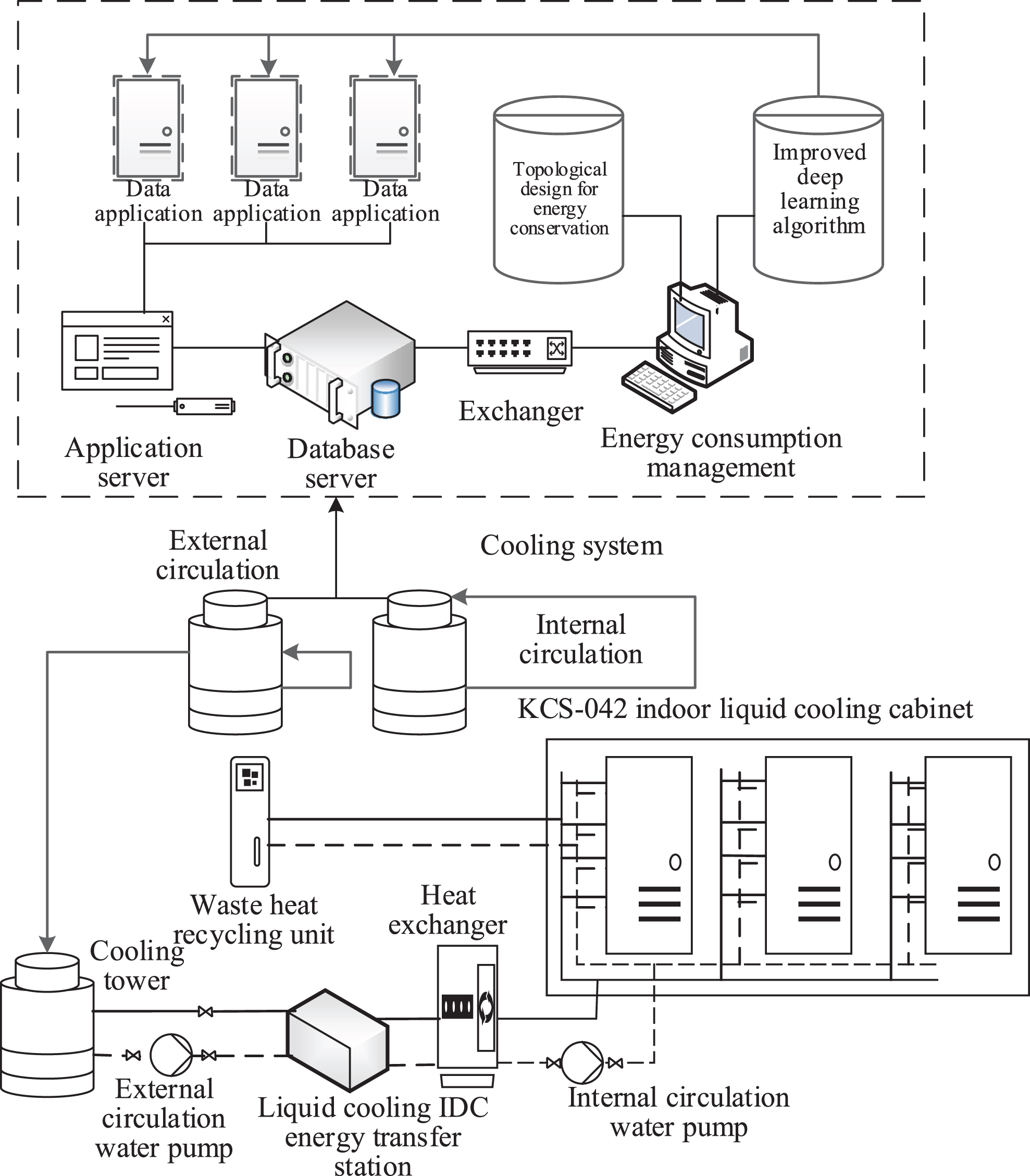
Overall scheme design.
In this research method, KCS-042 indoor liquid cooling cabinet is adopted for the whole immersive cabinet, with no influences such as external humidity, dust and vibration. The totally insulated and corrosive-free liquid in the cabinet prevents components of the machine set from external influences and prolongs the service life. Different from the single air cooling method in data center at present, the research achieves the conversion from extensive undifferentiated cooling to immersive accurate liquid cooling. It immerses the components with large heating quantity in the server with insulated cooling liquid; at the same time, it achieves waste heat recovery and works as the liquid cooling IDC energy transfer station [8]. Conduct optimization reform on the energy input end, the energy conservation end and the output end at the same time, to change the data center from a “major component of energy dissipation” to an “energy transfer station”, to innovate the energy flow mode and construct the comprehensive energy service system. The grade of the heat energy emitted by the liquid cooling data center is much higher than that of the traditional wind cooling data center, with more productivity value, providing precondition for recovery of waste heat [9].
The immersive liquid cooling data center includes the internal circulation system and the external circulation system, which are isolated from each other with a heat exchanger, to form the two-stage heat transfer method. The KCS-402 indoor liquid cooling cabinet distributes the cooling water transferred here into liquid cooling heat pipe radiators of each layer in the cabinet; the cooling water absorbs the heat in the insulated cooling liquid in the server cabinet through internal recycle, and then delivers the heat energy to the heat exchanger through the loop. With the power provided by the cooling water internal recycle water pump, the liquid passes through the heat exchanger, and the energy is delivered to the liquid cooling IDC energy transfer station through the heat exchanger, to reduce energy loss and realize heat dissipation of high heat flow heating elements in the server [9]. By connecting with the common return water line between the liquid cooling distribution unit and the cooling water, the liquid cooling maintenance unit can be used to detect the operating parameters of each server cabinet, to realize isolation and provide convenience for maintenance. Since the number of server does not match the heat load of the cabinet, it is difficult to keep the temperature in the insulated cooling liquid and the cooling water stable. For this reason, independent zoning is adopted to match with the insulated cooling liquid in the server, to ensure uniform distribution and constant temperature of the insulated cooling liquid in servers in each cabinet [10].
When the data center management system for immersive liquid cooling machine room is applied in actual practice, the following aspects shall be considered:
Rational configuration of equipment: Based on the actual needs of the data center, the immersive liquid cooling unit, air conditioning system, power system, network system, etc., shall be configured reasonably to ensure the stable and efficient operation of the data center.
Optimization of liquid cooling system: The liquid cooling system shall be optimized according to different application scenarios to improve energy efficiency, temperature control accuracy, and other performance parameters of the system. The liquid cooling system shall have lower energy consumption and heat loss by using advanced circulation technologies such as reflux and temperature difference control. Heat sources in the data center may include computers and peripherals, refrigeration machines, air conditioning systems, etc., which need to be properly controlled to minimize heat emission. Meanwhile, the data center shall be under closed management to avoid the entry of external heat.
Implementation of intelligent management: The intelligent management shall be implemented for the data center management system, including real-time monitoring, fault warning, performance optimization, etc. Administrators can use the data center management system to monitor the operation of the data center in real-time and deal with failures in time, thereby improving the operational efficiency and stability of the data center.
Regular inspection and maintenance: Aiming at the data center management system for immersive liquid cooling machine room, regular inspections and maintenance are necessary to ensure normal operation of the system. Inspection activities include monitoring operation status of equipment, system performance indicators, temperature control of the liquid cooling system, etc. Any identified failures shall be handled promptly to avoid adverse effects on the data center.
In summary, the data center management system for immersive liquid cooling machine room works in the best mode by rational equipment configuration, optimization of the liquid cooling system, heat control, intelligent management, as well as regular inspection and maintenance.
Energy-conservation topology design of data center of liquid cooling machine room
Increasingly grown global demand on IDC services increases the total power consumption and the carbon emission. Since IDC has low air density and unfavorable heat dissipation ability, in order to reduce IDC consumption and save energy, the research cools the economizer in the direct air environment by utilizing external air directly or indirectly, so as to greatly reduce the cooling power dissipation. Different air-side economizer topological structures are adopted according to changes in seasonal climates and environments, which can be divided into the direct air-side economizer and the mixing air economizer; the topological structure of the direct air-side economizer is shown in Fig. 2.
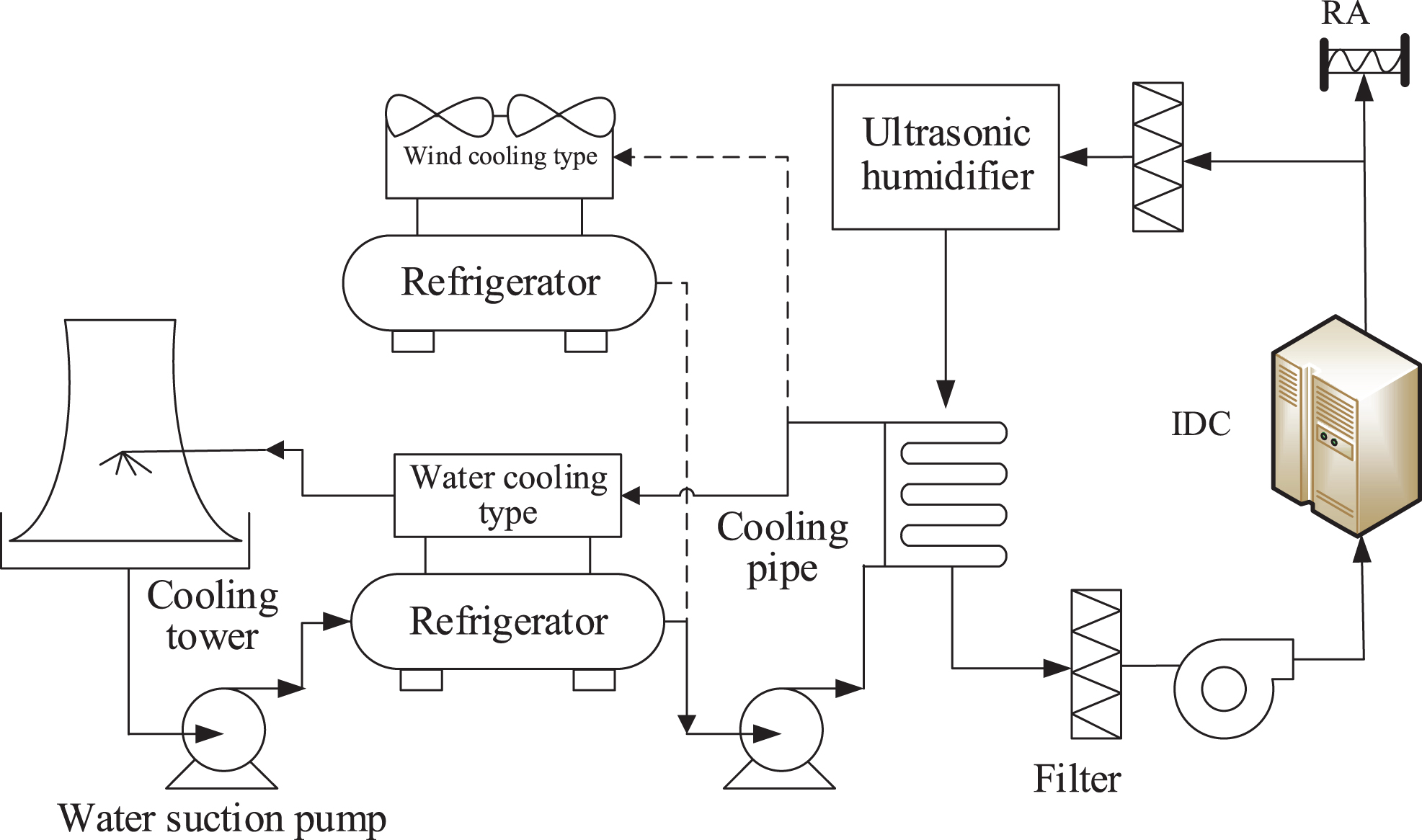
Topological structure of the direct air-side economizer.
As shown in Fig. 2, RA represents for the hot reflux air; when the outdoor air conditions are within the needed set point ranges, external cool air is extracted to recycle it to IDC space, which is the simplest technology, known as the direct air-side free cooling. The direct air-side economizer is composed by various dampers, controllers and fans, which provides fresh air by utilizing the cooling system based on the compressor, to reduce the temperature of the IDC equipment, so as to partially or totally change the configuration. In addition, in a city in North China, IDC can be cooled down due to the cool and dry climate in most time, especially at night and in winters; however, this method is not applicable to places with relative low dew point temperature, for there will be high humidification cost [11]. In addition to various advantages of the direct air-side economizer, there are some restrains in direct use of external air, such as introduction of wet air, needless air pollutants and particles; when external air is introduced into the direct flow space, the air pollutants in these places will not lead to any failure in any direct flow equipment.
As mentioned above, direct recycling of direct internal air leads to disturb of internal environment conditions. On the other hand, the mixing air-side economizer allows heat transfer through the operation of air-air heat exchanger, in no need or only a small amount of outdoor air is transferred to the internal direct environment. Various configurations can be adopted for the economizer, to achieve different performances in each configuration according to weather conditions. The economizer can make use of the advantages of the direct and indirect air-side economizer in one configuration. The schematic diagram of the economizer is shown in Fig. 3.
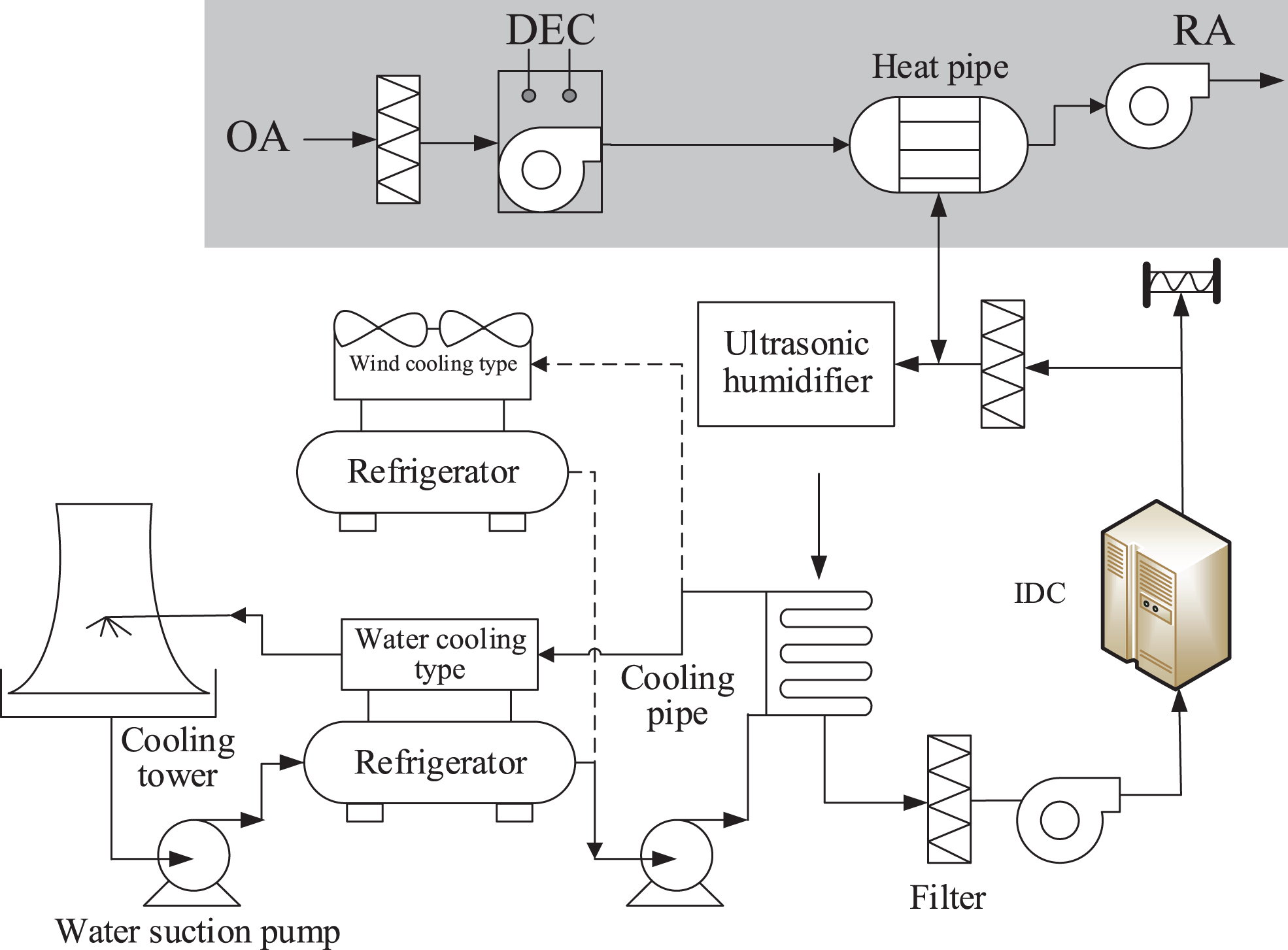
Topological structure of the mixing air-side economizer.
In Fig. 3, DEC represents for direct evaporative cooler (DEC), with the operational mode basically the same as that of the direct and indirect economizer discussed above. The direct economizer is in the operational mode in winters and middle seasons, and the mixing air-side economizer is generally in the activated state in summers and hot weather conditions in southern cities. However, in summers and hot weather conditions, the economizer reduces the workload of the water cooling unit by utilizing external cold air indirectly with the heat pipe, and HP transfers sensible heat by utilizing the working fluid evaporation near to hot return air (RA) and the condensation near to cold outside air (OA). From the interior of IDC to the exterior, the level of the infrastructure of cooling can be utilized to further reduce the power dissipation of IDC [12].
With respect to effective management on the massive data of the immersive liquid cooling system, in order to acquire data characteristics rapidly, the non relaxation hash (NRH) algorithm based on improved deep learning is adopted in this research, to achieve data processing in wider ranges and obtain the results more quickly. In this algorithm, firstly, the quasi-constrained function of the NRH algorithm is acquired according to sample data:
In formula (1), L(B) is the quasi-constrained function of the NRH algorithm; bi is the numerical code of the NRH algorithm; i is the data serial number; n is the total number of samples. The numerical code of the NRH of different types of data of the liquid cooling system can be calculated according to the values of the sample data with the formula listed above, and the absolute value of the numerical code of NRH is utilized to make a comparison with the number 1, so as to acquire the minimum liquid cooling system data difference degree.
In calculating of data related to the liquid cooling system, the constrained function of the NHR algorithm can be used to effectively filter the availability of the data; however, for the data of the liquid cooling system with large difference of the discrete type, it is necessary to calculate with the tangent function tanh(x), with the expression listed as follows:
In Formula (2), x is the discretized liquid cooling system data. The tangent relationship of discrete data is acquired based on data exponential transform, to make comparison between the discrete data and 1, so as to complete the primary filtration of the sample data. Criticality calculation is conducted on the sample data after filtration, to acquire the risk function of the sample data as follows [13]:
In Formula (3), soft(x) is the critical value function of the data, and η is the rate of growth of the critical function curve. The function of the above formula is the critical function of the sample data. The critical function is similar to the tangent function of the discrete data, both of which are exponent arithmetic to independent variables and are the results of comparison made with the number 1.
There are feature expression forms of different layers of structures in liquid cooling system data after data pre-processing; in order to integrate the feature maps of different layers, the research introduces a feature integration module based on deep learning, with the structure as shown in Fig. 4.
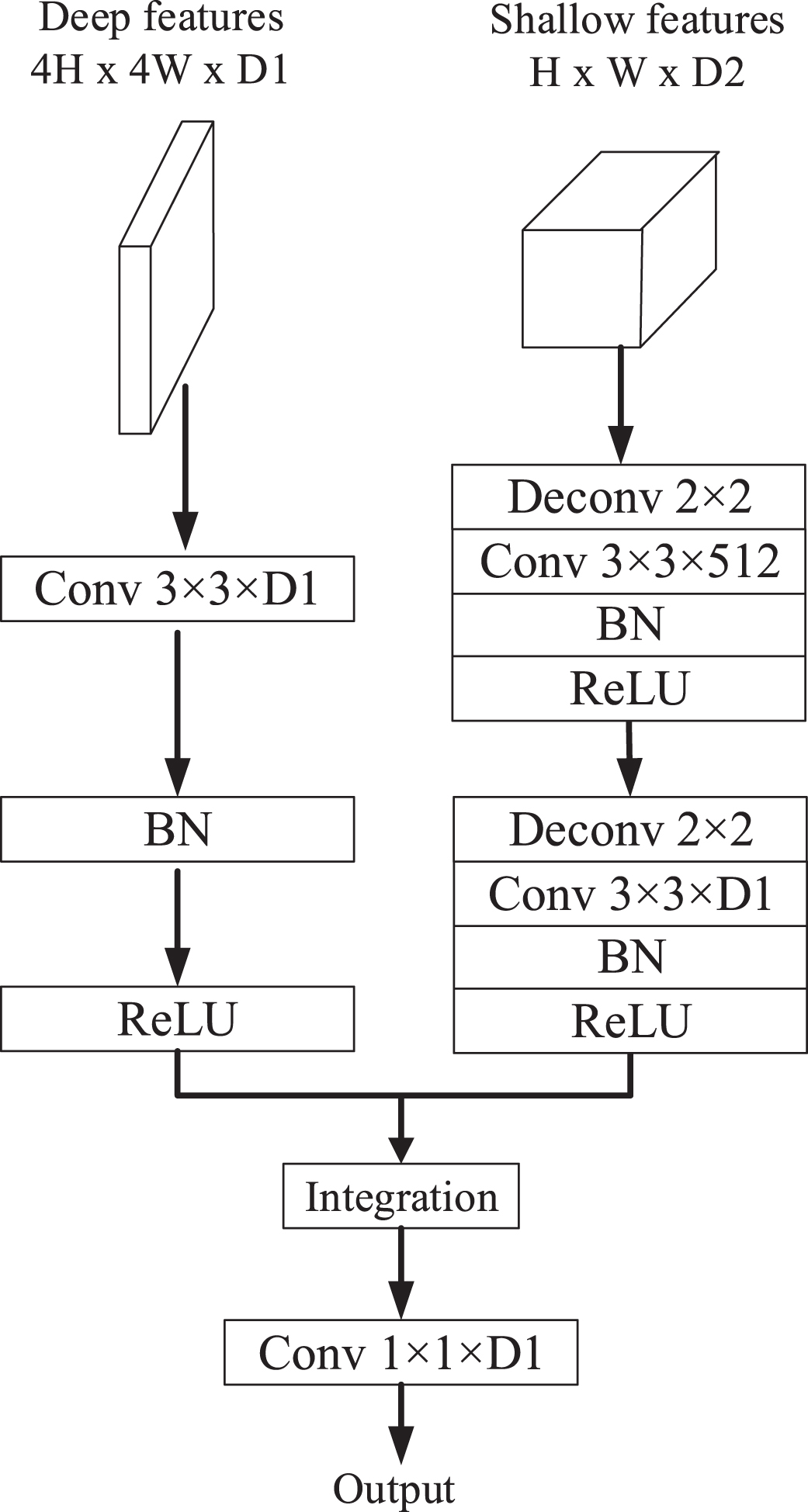
System structure of feature integration module.
In Fig. 4, two-layer deconvolution is conducted to the liquid cooling system data feature drawings that are collected, to realize the upsampling, then the output map with the same size of the shallow feature map is generated. The core size of the deconvolution layer is 2x2. Behind the deconvolution layer, there is a 3x3 convolutional layer, a normalization layer (BN) and an activation function layer (rectifying linear unit, ReLU). Behind the lower feature map, there is a 3 x 3 convolutional layer, a BN and a ReLU. Then two output feature maps are integrated. The deep learning network parameters during the initial stage are set as XQ, Xμ and yr, in which XQ is the input of the neural network Q; Xμ is the input of the certainty strategy gradient network μ; yr is the reading of related data to calculate the energy loss of the liquid cooling system [13]. All the data is prepared as the time series of the N time steps, which divides data into training data (used for training of neural network) and verification data (used for verification of neural network to find the best parameter setting).
Before the start of the training, it is necessary to initiate the parameters of the deep learning algorithm, and a special Q network design is proposed, to simplify the data training of the liquid cooling system, in which the critical Q network (XQ|θQ) is similar to the Q value of a state-action pair: which takes the current state and the next action (combined into the vector quantity XQ) as the input and outputs a scalar value; the scalar value indicates the cost of adopting the action in the state s. In addition, μ (Xμ|θ μ) (parameterization by θ μ) is the strategy gradient network; it acquires the latest state, the operation history and the current state (Xμ) of the liquid cooling system data, and outputs the new operation to be implemented. The procedures used for constructing the improved deep learning algorithm are listed as follows:
The data integration procedures update the weight of the neural network with gradient descent, to update the commenter network by minimizing the error of mean square between the output of the ultimate layer Q and the original award data; according to the output of μ, when taking actions in the current state, the strategy gradient network is updated by minimizing the output of Q. In order to avoid overfitting, this algorithm also calculates and verifies the errors, to track the best weight parameter setting of the two neural networks.
Based on the data integration process mentioned above, the data processing result of the liquid cooling system is acquired from the output end, as shown in the following Formula [14]:
In Formula (4), J is the liquid cooling system data of the output; n is the number acquired by equipment sampling; sij is the level of similarity of sample data; λ is the positive factor of equipment; φij is the Hash similar function with non relaxation in critical function depth.
Solve the data according to the function derived above, and calculate the sample loss function derivation function value according to the data of sample selection loss, to ultimately acquire the regular derivative of the liquid cooling system data as follows:
The regular derivative of data processing of the liquid cooling system can be calculated based on the above formula, and the training and evaluation network can rapidly calculate the energy cost of the cooling state of the immersive liquid cooling machine room.
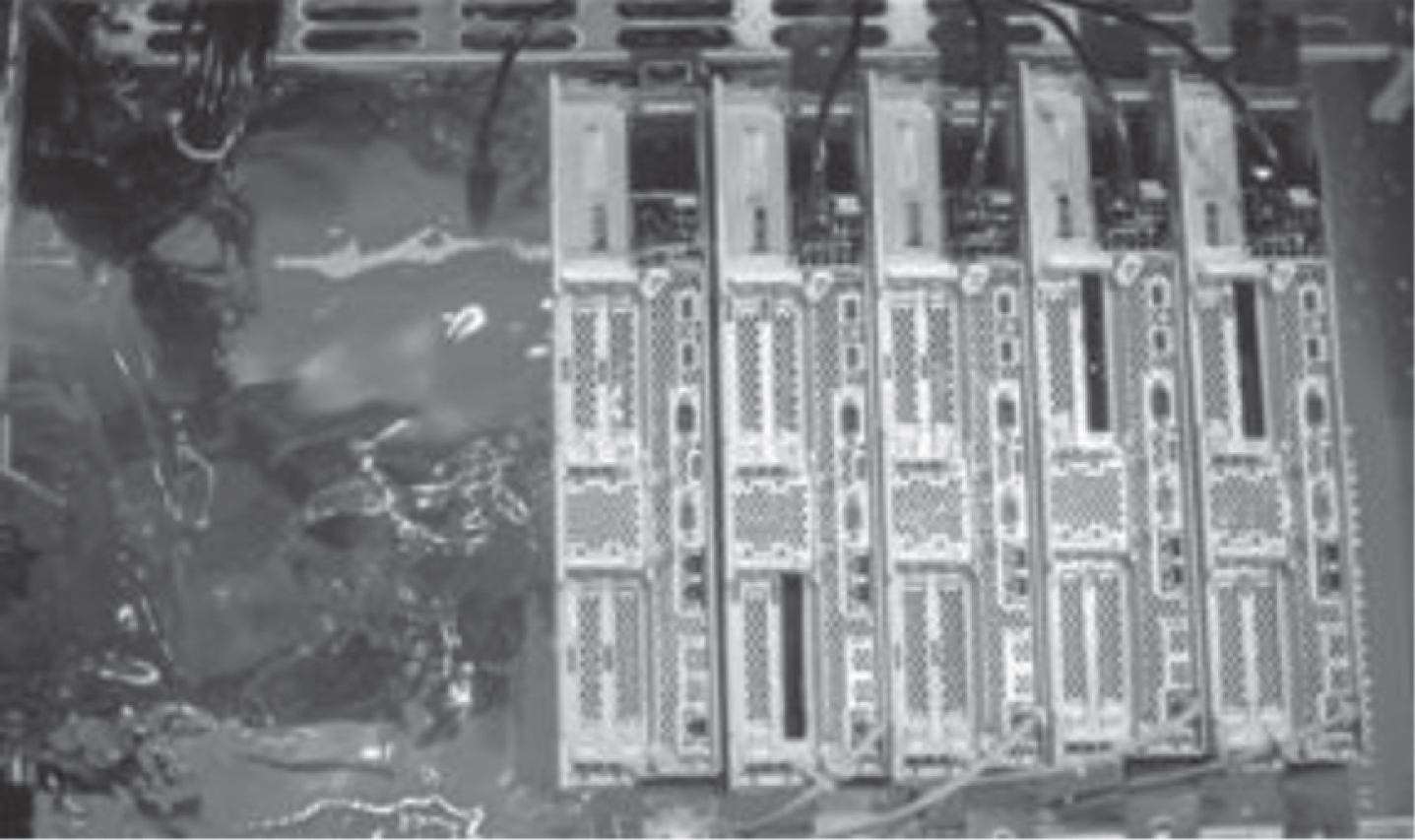
Experiment simulation is conducted in order to verify the management system of the data center of the immersive liquid cooling machine room, in which the experiment environment is as follows: the Intel(R)Core(TM)2 E8400CPU is used in the control system with Opensuse as the server operating system, including 10 NFS servers, 6 host servers and 3 data servers, and XEN virtual machine manager is Xen-4.0. The experiment focuses on measuring the power consumption of the CPU under load conditions using Power Meter, a power consumption measurement software. Power consumption data is collected every 10 seconds and sent to the controller for model estimation in order to reduce energy consumption of the system while ensuring service quality. The immersive liquid cooling system adopted in the research is a horizontal type system; in a shell filled with cooling liquid, the blade server node unit inserts into the track and is immersed vertically from above down.
The horizontal type liquid cooling system in Fig. 5 is composed by many parallel server systems; there is mutual effect among different servers, to increase the cooling performance. Online insertion and extraction maintenance is supported by the system; when there is fault in any server, operators can take out the fault server node in no need of turning off the power, which can be put into the horizontal type liquid cooling system after maintenance by operators. The experimental environment parameters of the research are shown in Table 1.
Immersive cooling system.
Experimental environmental parameters
After the experimental environment setting mentioned above, in order to verify the energy conservation performance of the immersive liquid cooling data center in the research, keep the temperature of the liquid cooling heat dissipation water as a constant value, and the recovery of the waste heat can be realized by adjusting the opening of the water valve entering into the heat recovery heat exchanger [15]. With respect to the control logic of the liquid cooling heat dissipation, whether to enter into the heat recovery mode is a prerequisite for judgment. When the system is in the cooling mode, the temperature of the cooling water in the water supply and return system is controlled at 12-18°C, and the water supply and return flow is shown in Table 2.
Setting of water supply flow parameters
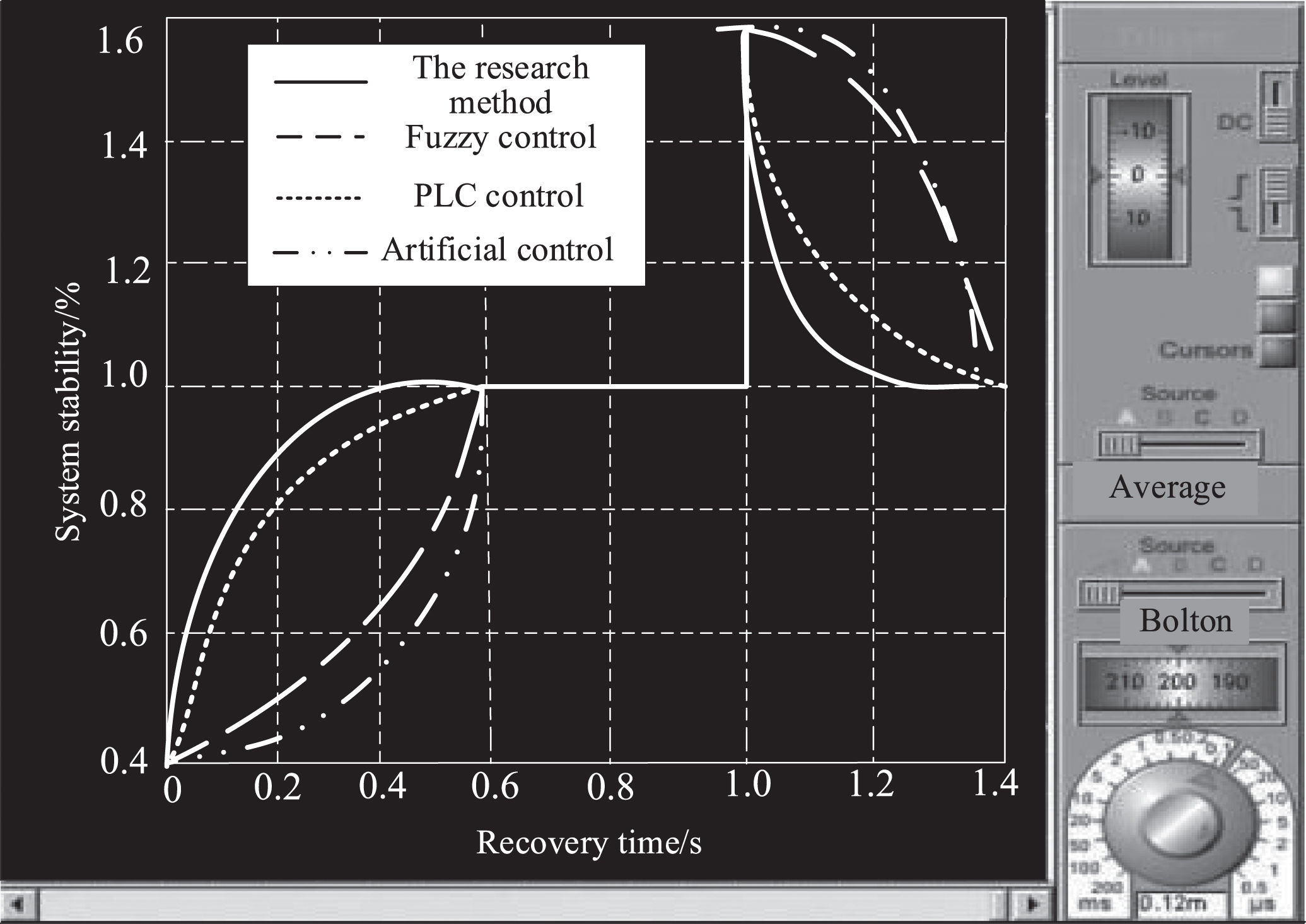
Because of the changes in the water supply and return flow in the cooling system, the cooling water exchanges heat with the server, to take the heat off the server, so as to realize heat dissipation to the server [16]. As shown in Table 2, the immersive cooling system in the research has favorable cooling efficiency, with quick temperature drop and constant temperature; in addition, the waste heat recovery unit is utilized to realize cooling and heat recovery, to reduce power consumption. The parameters in Table 2 can further prove the stability of the energy-conservation topology of the immersive liquid cooling data center; after making comparisons with multiple traditional control energy-conservation systems, its stability curve is shown as Fig. 6.
It is obvious that fuzzy control and artificial control have unfavorable stability, and the research method and the PLC control method have favorable stability, in which the research can reach stability with minimum recovery time, indicating that the energy-conservation system in the research is the most stable.
The optimal operational state of the data center management system for immersive liquid cooling machine room depends on application scenario and specific requirements. The system shall perform data statistical analysis on the immersive liquid cooling machine room to assist users in understanding its operational status. The stability performance of the system is clearly described in the curve shown in Fig. 6.
Comparison diagram of the stability of the energy-conservation systems.
In order to verify the data management ability of the improved deep learning algorithm, comparisons are made between the improved deep learning algorithm in the research and the BP neural network model in Literature [5] (model 1) and the K-MEANS algorithm in Literature [6] (model 2); the time delay results of the fault data samples of the liquid cooling system data center processed with the three algorithms are listed in Table 3.
Data analysis time
According to the experiment comparison table, when analyzing the equipment data of the liquid cooling data center with the technology in Literature [5], the average time is larger than 50s; when analyzing the equipment data of the liquid cooling data center with the technology in Literature [6], the average time is larger than 50s; when conducting data analysis with the method of the research, the average time is about 2s. Therefore, the system of the research is the best in data processing speed.
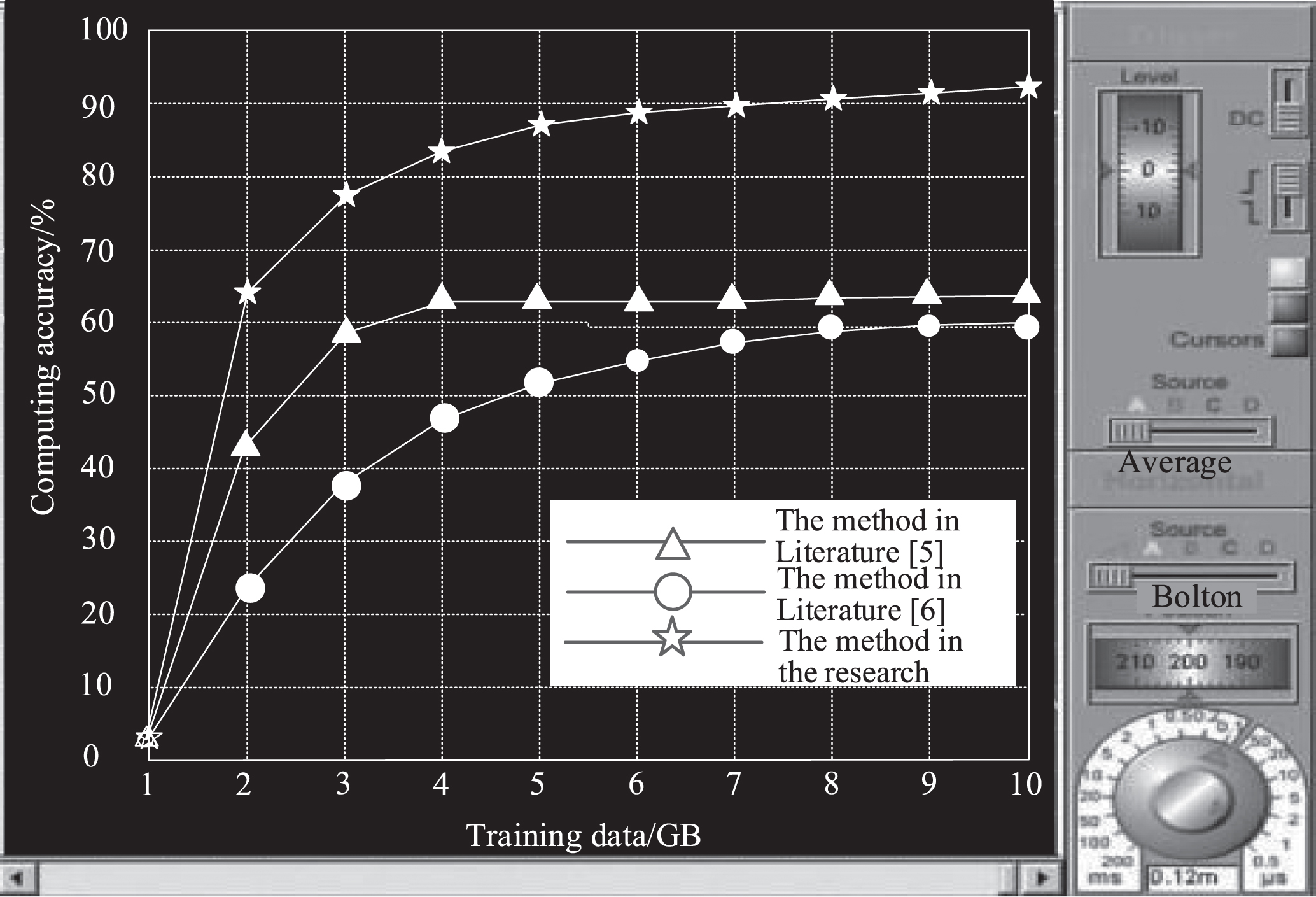
Error analysis is conducted as follows, it is assumed that the errors of various systems are judged separately under the same environment interference, and the error formula is listed as follows:
In Formula (6),
Schematic diagram of error comparison.
It can be seen from Fig. 7 that in condition of the same data size and test time, both the error of the method in Literature [5] and that in Literature [6] are larger than the error of the method in the research. In addition, the calculation accuracy of this research can be up to 92%. It indicates that the method in the research achieves higher accuracy on error computing, with less time and high accuracy in data analysis.
The research introduces the immersive liquid cooling system, and designs the immersive liquid cooling data center; in addition, it conducts deep analysis on the influences of the water inlet temperature and the flow of the internal circulation of the cooling water on the heat resistance of the liquid cooling heat exchanger, and analyzes the internal circulation mode of the cooling water to improve capability of the immersive liquid cooling system in specific scenarios. By utilizing the non relaxation hash (NRH) algorithm based on improved deep learning, it accelerates the IDC data processing speed of the liquid cooling system, with the average processing time of only 2s, and ensures the accuracy of data (up to 92%). It integrates the data feature mapping of different layers of liquid cooling systems with a feature integration module to improve the data analysis capability of the liquid cooling system at different levels, and verifies the practicability and reliability of the method based on experiment. Although with great advantages in operating energy consumption and applicability, the immersive liquid cooling scheme in the research needs the overall coordination and improvement of the whole data center due to the featured cooling method. In addition, with larger production cost in cooling liquid, the production cost shall be reduced for wider application of the research. However, the control of cooling time and the evaluation of post-cooling service life are still urgent problems to be solved, which need further research.