




Abstract
In recent years, the continuous growth of global carbon emissions has brought about climate change and global ecological environment problems, as well as severe challenges to the development of human settlements. Based on the concept of low carbon, this paper analyzes and summarizes the current situation of green space in typical residential areas, and quantifies its annual carbon sequestration. Then this paper discusses the design optimization strategy to improve its carbon sink efficiency based on the current situation. Finally, the effectiveness and enforce ability of the optimization strategy are verified by estimating the annual carbon sequestration increase value of the green space after the optimization strategy is applied to an example. The method has a certain reference value for the design and research of urban ecological human settlements with the concept of green and low carbon.
Aims and background
The residential area planning is the basic place and space to practice low-carbon cities from the operational level [1, 2]. It is the most suitable and practical level for the development of low-carbon cities based on China’s national conditions [3]. Judging from the current urbanization level and urbanization growth rate in China, the urban population will reach 840 million by 2025 [4]. The huge population base will conflict with the existing housing demand [5, 6, 7]. Future cities must solve a large number of housing problems while developing their economy, and residential planning and construction will become the focus of future construction [8, 9, 10]. From the experience of low-carbon development in the international community, most of them correct and supplement the development of theory through a large number of practices [11, 12], abandon the misconception of low-carbon development of pure technology theory, and good planning can guide low-carbon development [13, 14]. Through different perspectives of residential planning, this paper aims to provide theoretical and practical basis for the construction of low-carbon residential areas in China, and explore a scientific development path for improving the residential environment, strengthening ecological protection, and promoting sustainable development of residential areas.
Methods and recommendations
Basic principles of space environment shaping in urban low-carbon residential planning
The concept of sustainable development and ecosystem has been introduced into the planning and design of residential areas. Designers have a new understanding of the value of the overall environment. The role of the local is less than that of the whole, and the effect of the whole determines the function of the local. This kind of thought coincides with our country’s “unity of heaven and man” overall thinking, Taoism’s idea of order of everything, and the “butterfly effect” theory proposed by American scholar Lorenz, which shows that there is no lack of consideration on the integrity of things at all times and in all countries.
In view of this, the designers of the residential area return to the human survival itself, and regard the residential area as one of the subsystems of the city. According to its own environmental balance, it is regarded as an ecological unit. Although it needs to draw energy from the big system of cities, its own dynamic balance is the key to maintain its self-renewal ability. The research on low-carbon residential planning and design has expanded and added new sciences such as system theory, synergism, cybernetics, etc.
In the specific design, it is necessary to abandon the previous method of solving problems one by one, integrate the involved subsystems from a global perspective, and pay more attention to the overall relevance. The systematic integration of the space environment of low-carbon residential areas is to conduct a comprehensive analysis of various elements, use appropriate ecological and low-carbon technologies instead of blindly copying the so-called advanced technologies, so as to make the planning and technology levels coordinate and complement each other [9, 10].
The principle of reasonable opening is a kind of residential design that develops in symbiosis with the city on the basis of considering the privacy and neighborhood of residential areas. It integrates the perspective of system integration, considers the reasonable degree of opening, integrates residential space, residential life and development and operation into the urban system network, forms convenient communication channels with the city, and forms its own structural space. Taking the complexity into account in the design of residential areas, the principle of giving priority to the efficiency of a single system is abandoned, and the comprehensive structural balance is taken as the main consideration. For example, the design of the road system in the residential area used the concept of “unobstructed access” for reference, which ensured the privacy of the residential area while blocking the connection between the residential area and the outside world, and was not conducive to the integration of various elements of the residential area and the urban system. At this time, a reasonable and open residential area is to form a hierarchical relationship consistent with development in the residential area structure. The latest is a new three-level structure of “urban community” – “residential environment area” – “basic residential unit.” Such a development mode can make full use of the existing resources of the city, so as to avoid the waste of resources caused by repeated construction.
Determination of the key points of spatial environment strategy in urban low carbon residential district planning
The residential environment generally covers both material and spiritual aspects. During the planning and design, various contradictions and interests of the residential area will focus on the physical environment, so the physical and spatial environment elements will be taken into consideration in the planning and design of the residential area.
The difference of external space form formed by spatial structure and architectural layout will make the sunshine, ventilation, noise, etc. of the residential area more different, which will directly affect the microclimate of the residential area. The successful external space form of residential area can build a good residential micro environment, which has an important impact on reducing energy consumption and building a low-carbon residential area. When designing the space form of low carbon urban residential areas, we should pay attention to the existing space form relationship within the boundaries of residential areas and outside the residential areas, and treat the framework structure of space form with a holistic view and a systematic view. Facing up to the fundamental purpose of research, it can create a high-quality micro environment for residents in residential areas, and solve the direct contradiction between residential design and energy conservation and livability under the background of high energy consumption, as well as people’s high requirements for quality of life.
At present, most of the residential planning focuses on motor vehicles, ignoring the development of low-carbon transportation such as public transport and bicycles. The low carbon urban residential planning is reflected in the road traffic system, which is to reasonably consider the roads, dynamic traffic, static traffic and slow traffic in the residential area. Through the guidance of road traffic design in residential areas, we will weaken the use space of motor vehicles, strengthen the connection between non motor vehicle traffic and public transport in residential areas, encourage low-carbon travel, seek the appropriate balance between transportation and life in low-carbon residential road space, and achieve a low-carbon residential road traffic system.
In addition to the energy-saving technology of residential buildings, the technology elements involved in the space environment are closely related to the quality of living and directly determine the low-carbon efficiency of residential areas. Compared with the technology of single residential buildings, the space environment technology is more integrated. In general, the technical elements of space environment mainly include new energy use technology and resource recycling technology strategy. The use of new energy in residential areas can not only provide operation for residential buildings, but also minimize the consumption of lighting in residential areas. The resource circulation is an effective means to optimize the space environment of the residential area in terms of environmental cleanliness and resource conservation. It is an effective guide to the construction of low-carbon residential areas to reflect the technical elements of space environment from the planning and design stage, which can ensure that there is no deviation in the direction of the construction of residential areas.
Results and discussion
Low carbon design strategy for external space form of residential area
Different organizational forms of residential buildings in residential areas will have a greater impact on the number of residents that can be accommodated in the same area. A reasonable spatial organization form can make the residential area accommodate more residents, which is an effective means to improve the efficiency of space utilization, or increase the open space area in the residential area, increase carbon sinks, and directly reduce the per capita carbon emissions in the residential area when the number of residents remains unchanged. Secondly, the space layout of residential groups in the residential area will directly affect the sunshine and ventilation, and a reasonable layout can build a good microcirculation in the residential area. Therefore, the following is a detailed analysis of the strategic model of space environment in low-carbon urban residential areas from three aspects: land use efficiency, sunshine, ventilation and wind protection.
Considering the relationship between land use economy and residential building economy, from the perspective of vertical space of residential area, multi-story residential buildings can save land by increasing the number of floors, while for large-scale high-rise residential buildings in front of the entrance, reasonably increasing the number of floors within the height limit is the main means and way to improve the floor area ratio, reduce building density and improve land use efficiency. The way to improve land use efficiency by vertical space is also to define the reasonable residential floor height. On the premise of maintaining a healthy floor height of no less than 2.5 m, every 10 cm of floor height reduction can save 2% of land.
The traditional layout of residential groups has fully considered the impact of different combination forms of buildings on striving for sunshine and reducing sunshine. Low carbon urban residential areas should draw on its essence, increase the use of terrain, greening and other means, and ensure that each household has at least one living space that can have 24 hours’ full window sunshine in cold days. See Fig. 1.
Consideration of sunshine in the layout of traditional residential buildings.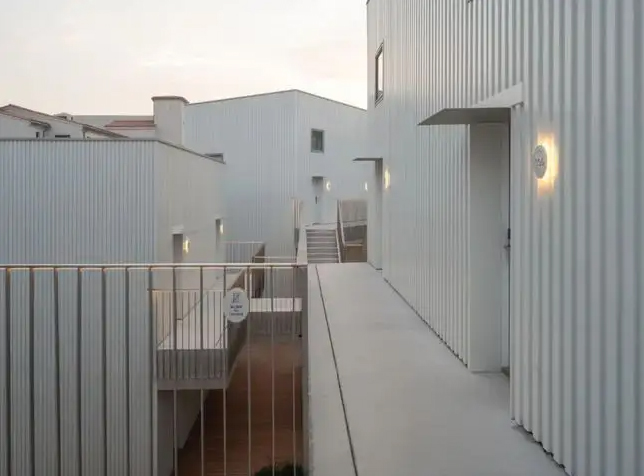
The effect of natural ventilation directly determines the utilization rate of air conditioning in residential areas in summer, thus directly affecting the energy consumption and carbon emissions of residential areas. The combination relationship of building groups and the layout between them and other environmental elements in the residential area can make better use of the wind environment in the residential area. In the way of housing combination, the effect of natural ventilation should be taken into account, and the surrounding layout should not be selected as far as possible. During the planning and design of the residential area, through the combination of roads, water surfaces, green spaces and buildings, and after comprehensive consideration of the consistency with the dominant wind direction in summer, an air duct is formed to introduce the wind into the residential area.
In the design of road parking space, the guiding principle is to reduce land for parking and increase underground parking space. Through the organic separation of vehicle space and pedestrian space, residents can have relatively independent and safe communication space, reduce the exhaust gas pollution caused by large traffic volume and achieve the design purpose of low-carbon roads. The detailed design of parking space should be combined with road greening, landscape greening, etc., so that the land in the residential area can be used efficiently, and the space for carbon sink development can be guaranteed, so as to play the role of plants in air purification, sound insulation and noise reduction, and maintain a good cycle of the micro environment in the residential area (see Fig. 2). According to the different parking modes, the advantages and disadvantages of different parking modes are compared (see Table 1), and the sustainable design of three modes of ground, ground and three-dimensional parking is specifically described.
Comparison of parking modes in residential areas
Comparison of parking modes in residential areas
Parking space in residential area.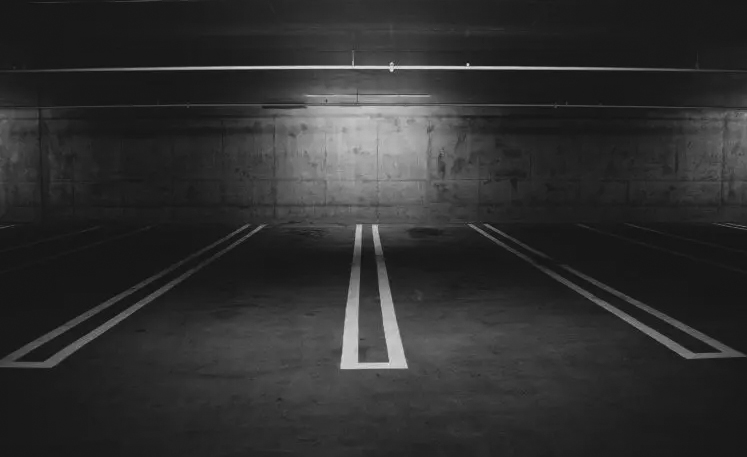
The most common mixture of people and vehicles in residential areas in China is to distinguish between the slow lane and the roadway through the height difference at the same break. This way of slow traffic design makes people and cars interfere with each other in the residential space. From the perspective of safety and the maintenance of the residential environment, it is not the first choice for low-carbon slow traffic. In recent years, there are many reconstruction and optimization schemes for mixed pedestrian and vehicle traffic, among which courtyard road is an ideal low-carbon optimization mode. The courtyard road is intended to express the coexistence mode of slow traffic and vehicle traffic under the premise of limiting the speed and traffic flow. Pedestrians can use all the road space. The layout of the road space is similar to the landscape garden, making the road full of cultural charm. This slow traffic mode has been used for the first time in the Woonerf reconstruction planning in the Netherlands, and has been well promoted (see Fig. 3).
Woonerf courtyard road in Holland.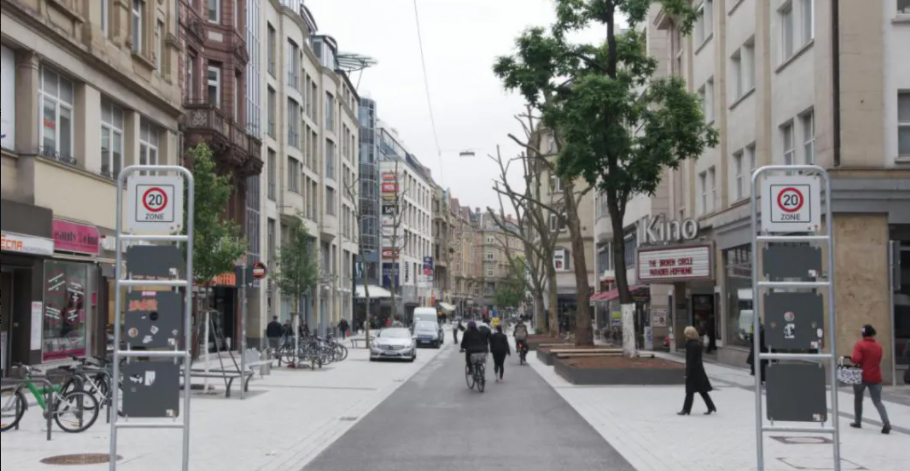
Slow traffic in residential areas mainly includes walking and cycling. In the construction of pedestrian residential areas, corridor system can be used to build the slow traffic network in residential areas. The corridor can connect the space between the entrance and exit of the residence and the entrance and exit of the residential area. It can not only provide shade and shelter from rain, but also cover the head space of the corridor with soil for greening or as a place for rainwater collection. The corridor system can be grounded to increase the carbon sink of the residential area and improve the microcirculation. The network like pedestrian corridor system has become a part of the residential green system and ecological corridor. Its significance has gone beyond the scope of simple pedestrian space, and it plays an important role in maintaining and connecting ecological elements.
According to the design of urban greenway under the low-carbon concept, the bicycle traffic in the residential area is designed as a part of the urban slow traffic network, and the comprehensive analysis summarizes that the purpose of bicycle travel in the residential area is leisure, commuting or specific guidance. However, the proportion of residents’ bicycle leisure in the residential area is very small, so the proportion of bicycle leisure lanes can be weakened, and a large proportion of commuting or specific guidance can be used as the main function of bicycle lanes in the slow traffic network of the residential area, so as to build a road system that connects with the public transport, large commercial and office areas around the residential area, and update and optimize with the change of demand.
The carbon effect of residential greening can be divided into direct carbon effect and indirect carbon effect. The commercial carbon effect is the emission and fixation of carbon dioxide, and the indirect carbon effect is what we are talking about here to improve the microclimate of residential areas. It can reduce the use of energy consumption by buildings in residential areas through the adjustment of the climate and environmental conditions of residential areas. Improving the microclimate of residential areas mainly involves wind protection, reducing exposure, avoiding glare, adjusting temperature and humidity, and eliminating noise and dust. Landscape greening design, as a component of the residential space environment, cannot be ignored. While achieving the beauty of the residential area, it is necessary to ensure the pleasant microclimate of the residential area, so as to build a comfortable and healthy environment as a whole from the microclimate to the macroclimate.
Specifically, in terms of wind protection, the green group cloth dustpan can block or guide the direction of air flow, thus changing the air flow of the air environment towel in the residential area. High building wind is very easy to appear in high-rise residential areas, which is a typical example of poor air flow environment in residential areas. This requires us to add some greening to help improve the spatial layout of residential buildings after careful consideration. The green belts in groups can resist the strong wind, and the greening in groups plays a greater role in regulating the wind speed.
In addition, the energy consumption of residential areas in summer is relatively high. The sun exposure in summer will increase the skin temperature of residential buildings, thereby affecting the indoor temperature. Hot weather and continuous high temperature will make residents in residential areas use air conditioners more frequently and for a longer time. The plant landscape has a good effect on shielding solar radiation. Through greening, the overall heat gain and ambient temperature of the residential area can be reduced. For example, the arrangement of layered plant groups on the west side of the building can effectively prevent the west sun, thus improving the comfort of residents in the west facing residence. This is also what we call an indirect means of reducing carbon emissions, and data shows that this indirect carbon effect will exceed the carbon effect of the gram, and become one of the means that we cannot ignore.
Conclusion
As a relatively cutting-edge and hot topic in the field of urban planning, low carbon has its core content in line with the goal of sustainable development of the city. Combining it with the eternal topic of human beings – the construction of human settlements has certain guiding significance for the improvement of the residential environment. The high-speed urbanization in China has made the construction of urban residential areas always high. The article mentions suggestions and methods for building a low-carbon living environment, and the energy security and environmental pollution it brings can be solved through certain low-carbon and energy-saving technologies. The application of low-carbon guidance technology from the perspective of planning and design, the source of residential construction, will become a new trend in the development of the concept of residential construction.