




Abstract
Digital publishing is the process of informatizing the content of traditional publishing. It not only involves the processing of information, but also includes the whole process of digital publishing enterprise management and operation. Compared with traditional publishing, digital publishing has a wider distribution channel with the advantages of more diverse forms and marketing aspects, the transition from traditional digital publishing to digital publishing has become an inevitable trend. But there are still many problems in digital publishing in our country. Including the transformation of digital copyright awareness and maintenance of digital copyright, the source and maintenance of digital publishing technology, and the scarcity of compound talent resources. In order to solve these problems, we must combine the digital publishing industry with modern information technology. This paper builds a digital market preference prediction model based on big data and fuzzy control algorithms. By analyzing and predicting each consumer’s usage information, the digital consumer market preference is obtained. This research uses big data and fuzzy control algorithms to build a consumer market preference estimation model for digital publishing transformation. Through the observation of the consumer market, it can promote digital companies to make effective decisions and conduct reasonable organizational analysis, which can further improve The development process of digital publishing transformation promotes the overall development of the enterprise. Through verification, this model has high accuracy and reliability, can support the operation of actual enterprises, and plays an important role in the development of enterprises. Finally, based on the content of the article research, we put forward the following suggestions for the transformation and development of digital enterprises (1) conduct market analysis through big data and fuzzy control technology, and clarify market positioning (2) promote traditional publishing and digital publishing through big data and fuzzy control technology Integrated Development of Publishing (3) Cultivate Excellent Composite Talents for Digital Publishing Transformation.
Introduction
Digital publishing is developed on the basis of traditional publishing. Traditional publishing refers to the process of using paper as a medium to disseminate information, including information collection, processing, printing, and sales. The medium of mass publishing has been replaced by communication media. Digital publishing is the process of screening, processing, and editing information by using relevant digital processing technologies, so as to transform information into digital products. The process of digital publishing is manifested in product informatization, process informatization and marketing method informatization. Digital publishing products mainly include e-books, novels, audio and video on the Internet, games, etc. Digital publishing has many advantages over traditional publishing. First of all, the channels of communication are more extensive, and the development of communication networks has also increased the speed of information dissemination. The second is the diversity of forms, from traditional books, newspapers and other forms to products including video, audio, games and other forms. Finally, there is an increase in publishing speed. Traditional publishing needs to involve multiple links from information acquisition to final publication, and the printing process of traditional publishing takes a long time, but the rise of digital publishing has solved this problem. The birth of digital publishing has greatly promoted the development of the publishing industry and driven the process of the publishing industry’s transformation to informatization [1, 2].
The rise of digital publishing can be traced back to the 1950s, and now it has achieved good development in various countries. However, due to the late start of informatization in my country, digital development is still at a disadvantage. In order to promote the development of the publishing industry in our country, we must solve the existing problems in digital publishing and promote the transformation from traditional publishing to digital publishing. At present, the problems existing in the development of digital publishing in my country include the transformation of digital copyright awareness and the maintenance of digital copyright, the source and maintenance of digital publishing technology, and the scarcity of interdisciplinary talent resources. In order to solve these problems, we must integrate the digital publishing industry with modern information technology [3, 4].
Fuzzy control rises with the development of industrial society. As the complexity of the system increases, the traditional control theory’s pursuit of precision control strategy is difficult to meet the development needs of industrial systems. Traditional control theory pursues accuracy. This theory can perfectly solve the control problems of relatively simple systems. However, if the system is more complex, the pursuit of accuracy by traditional control theory will lead to inefficient operation of the system and low efficiency of the system. At the same time, the system designer is a person who is proficient in computer professional knowledge, but the system operator often does not understand computer knowledge. If the designer designs a complicated and fine-grained control method, it may cause the operator to fail to understand it. Based on the above reasons, fuzzy control theory was born. Fuzzy control theory believes that the complexity and precision of system control are relative, and the complexity of the system is determined by industrial development, which is an irresistible factor, so we must give up the precision of system control to adapt to the development of its complexity. Fuzzy control theory can realize that the operator does not need to master the internal realization principle of the system, but can effectively control the system, so that the human brain can replace the precise instrument as the controller of the system. As shown in Fig. 1, the application mode of fuzzy control theory is as follows. With the enrichment of fuzzy theoretical knowledge, the combination of fuzzy control theory with soft computing, neural network and other algorithms has made contributions to the development of all walks of life. Predecessors have made mature theoretical achievements on fuzzy control theory, but the relevant research has not involved the transformation of digital publishing [5, 6].
Application mode of fuzzy control theory.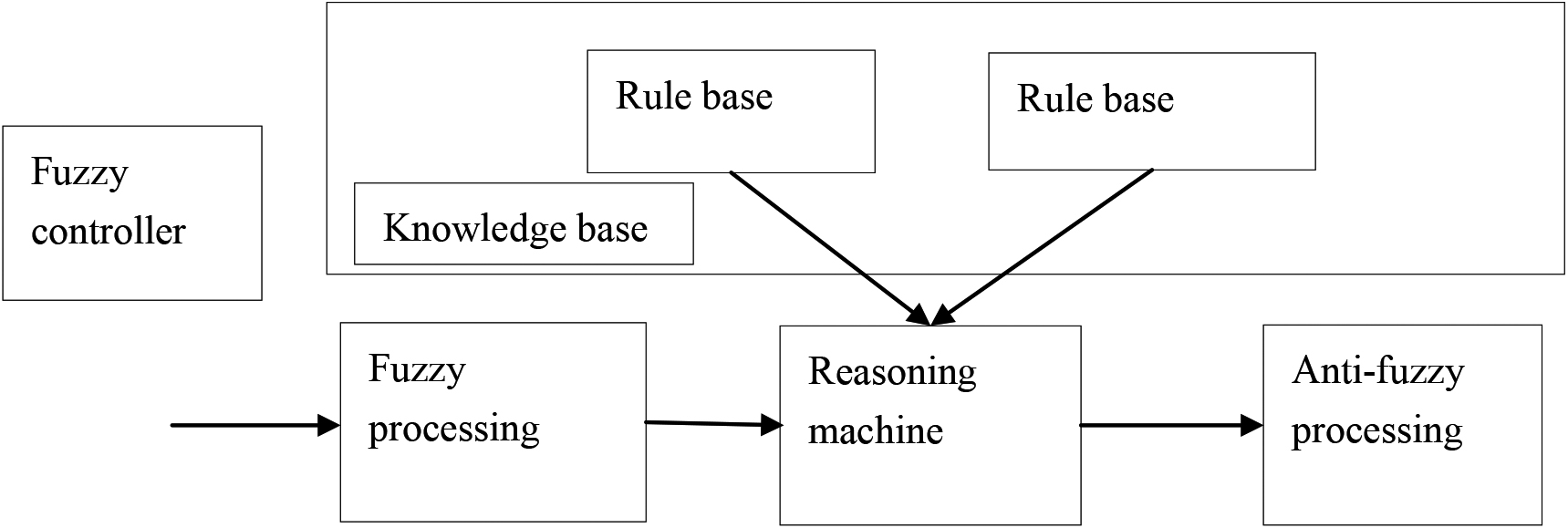
Big data and fuzzy control are widely used in the transformation of digital publishing, which brings opportunities for the systematic and standardized development of digital publishing transformation. At present, with the rapid development of the digital society, the pressure on publishing companies to carry out digital transformation is also increasing. Big data and fuzzy control technology play a great role in information collection, information processing, and information display. Using big data technology and fuzzy control technology to build a digital transformation model for publishing companies can promote the development of digital companies to the greatest extent. The rise of big data and fuzzy control has brought opportunities for the development of digital publishing enterprises [7, 8]. Its specific application mode is shown in Fig. 2.
The application mode of big data and fuzzy control in digital publishing enterprises.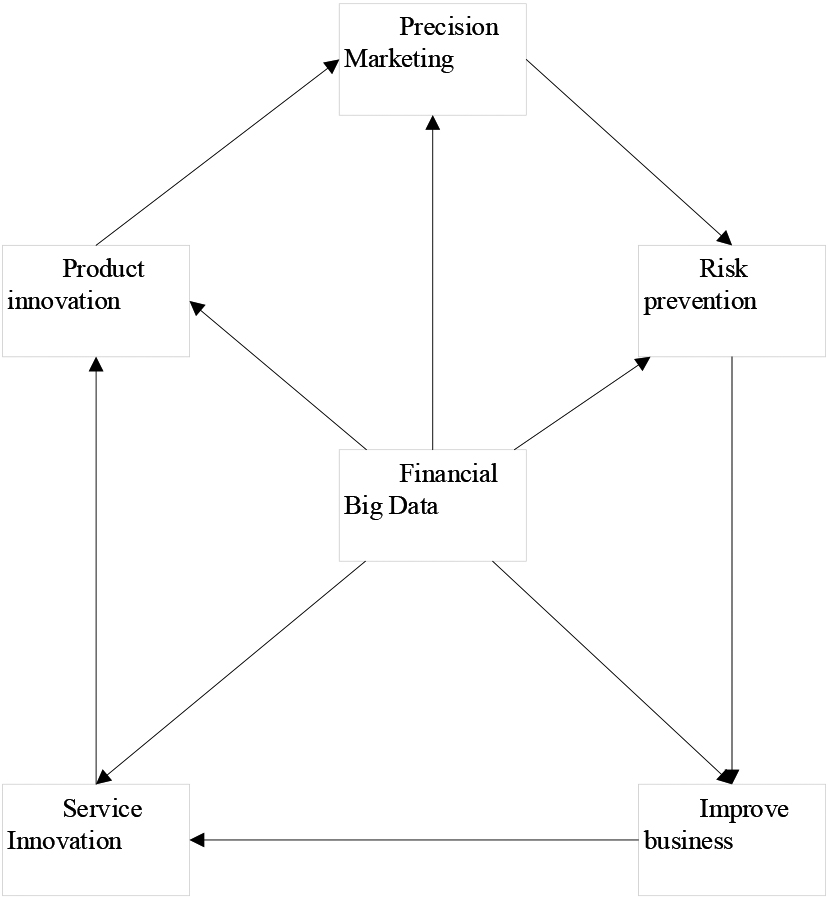
The theoretical research on digital publishing transformation has been very mature, but there is a lack of reliable models in terms of specific applications. The article is based on previous research, on the basis of understanding the development status of digital publishing enterprises, and combining big data and fuzzy control technology to solve the problems in this field. The article first understands the problems existing in the transformation of digital publishing, then combines big data and fuzzy control algorithms to construct a digital market preference prediction model, and finally puts forward suggestions for digital publishing transformation based on the research of this article and related market conditions [9, 10].
The change of digital copyright awareness and the maintenance of digital copyright
Compared with traditional publishing, digital publishing is more difficult in maintaining copyright. Digital publishing products are electronic resources. With the rapid development of the Internet today, the risk of digital publishing products being stolen is greatly increased. The control of digital publishing copyright in China is mainly in the hands of authors. However, digital publishing involves multiple subjects such as authors, publishing companies, and distributors. Because the existing model in our country only relies on authors to maintain digital copyrights, it is difficult to maintain digital copyrights in China. The lack of awareness of digital copyright protection reflects the weak awareness of Chinese citizens on digital assets. Table 1 compares the relevant parameters of copyright maintenance in digital publishing and traditional publishing. In 2001, my country’s law stipulated the definition of information network dissemination rights, reflecting the country’s emphasis on digital publishing copyright. But at present, my country’s digital publishing copyright is still facing the problems of weak copyright awareness and difficult maintenance. It can be seen from Table 1 that there are many difficulties in digital publishing copyright maintenance. Traditional publishing is superior to digital publishing in terms of content piracy protection, content plagiarism protection, information quality maintenance, and author copyright protection [11, 12].
The comparison of copyright protection between digital publishing and traditional publishing
The comparison of copyright protection between digital publishing and traditional publishing
With the rapid development of the information society, traditional publishing is changing to digital publishing. Many companies blindly follow suit in order to make huge profits. However, because their digital publishing technology is immature and there is no reasonable digitizer operation mode, many enterprises fail in the final transformation, and even are on the verge of bankruptcy. Digital publishing involves many emerging technologies such as database technology, big data analysis technology, and Internet of Things technology. Although these technologies are currently relatively mature, there is no reasonable operating model for these technologies in the field of digital publishing. At the same time, after digital transformation, some enterprises cannot rationally use these technologies to maintain the digital industry chain, and only convert them into digital content. The conversion to digital content on communication media has not managed and maintained informatization, resulting in low management efficiency, frequent errors in the digital publishing industry chain, and ultimately the failure of enterprise transformation [13, 14].
Compound talent resources are scarce
Traditional publishing is based on a single paper medium, while digital publishing integrates information into images, videos, and audios. Traditional publishing only requires staff to have the ability to analyze and integrate information, while digital publishing requires staff to have high computer professionalism and practical experience, as well as the ability to analyze and publish information. What is needed is a combination of computer capabilities and information Composite talents with integrated processing capabilities. However, at present, our country lacks compound talents with these two abilities, which leads to the slow development of my country’s digital industry. The lack of human resources has seriously affected the development of my country’s digital publishing industry [15, 16].
Digital market preference prediction model based on big data and fuzzy control algorithm
Model concept
An important reason for the failure of digital enterprise transformation is the lack of prediction of the preference of the digital consumer market, and the prediction of the preference of the digital consumer market. It is an important basis for digital enterprises to make decisions, an important basis for decision-making, and also the basis for digital enterprises to formulate marketing plans and predict the consumer market. It can improve the core competitiveness of enterprises and grasp the opportunities of market development. Many digital companies have grasped the trends of the digital market, resulting in the inability to meet consumer needs in the process of digital transformation, resulting in the failure of digital transformation [17, 18]. Figure 3 is the core control structure of the prediction model.
The core control structure of the predictive model.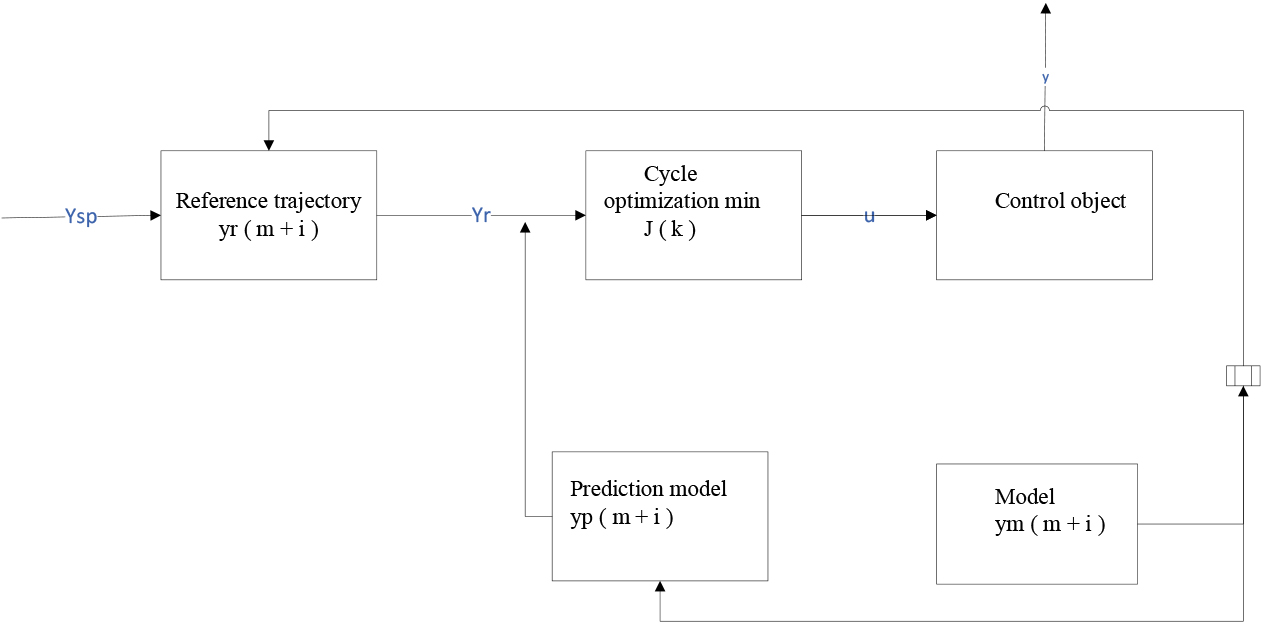
Because the collected consumer data is diverse, the model adopts a nonlinear structure. Making predictions, representing predictive systems based on fuzzy sets and big data techniques in a discrete space.
Step 1: Predict the state function of the system as shown in the Eqs (1) and (2), where m is the system state, x is the input, and y is the output. As shown in the Eqs (1) and (2).
The representation method of the state space is shown in Fig. 4, in which the structure part includes a dynamic state space M 1, which is responsible for converting the input m value into an x value, and a static conversion space M 2, which is responsible for converting the input x value Values are converted to y values [19, 20].
Nonlinear system structure diagram.
Step 2: The dynamic space M1 of the nonlinear system can be represented by the Eqs (3) and (4), and the static space M2 can be represented by the Eq. (5), where v is a meaningless static variable in the static space, and h is a fuzzy control link important nonlinear gain, and it is often in a discrete state.
Step 3: Formulate the expression rules of fuzzy control. The core of fuzzy control lies in the process of decision-making control of incomplete and fuzzy information through control algorithms. The construction of fuzzy control rules is the core of fuzzy control. In order to predict consumer preferences, the model needs to use a large amount of structured, semi-structured, and unstructured data. Therefore, the fuzzy control model we build needs to be able to handle a large amount of data with complex structures and high latitudes. Its specific fuzzy control rules are shown in Eqs (6)– (9) [21, 22].
Step 4: Based on the above Eqs (6)–(9), the transformation of the state space M 1 is realized. We obtain the initial input value x, and input the input value of x into the state space M 2 for processing. The specific state space control rules as shown in the Eqs (10)–(12) [23, 24].
In order to test the validity of the above model, we obtained the use records of some digital users to analyze the digital market preference. The data we collect mainly involves the user’s usage data, including the user’s digital reading form, mainly in the form of news, web pages, e-books, etc., as well as the user’s reading time, including the user’s reading time and habitual reading time period, also includes the user’s reading preference, including the user’s reading content and reading media. The proportions of these three data are shown in Fig. 5.
User usage data.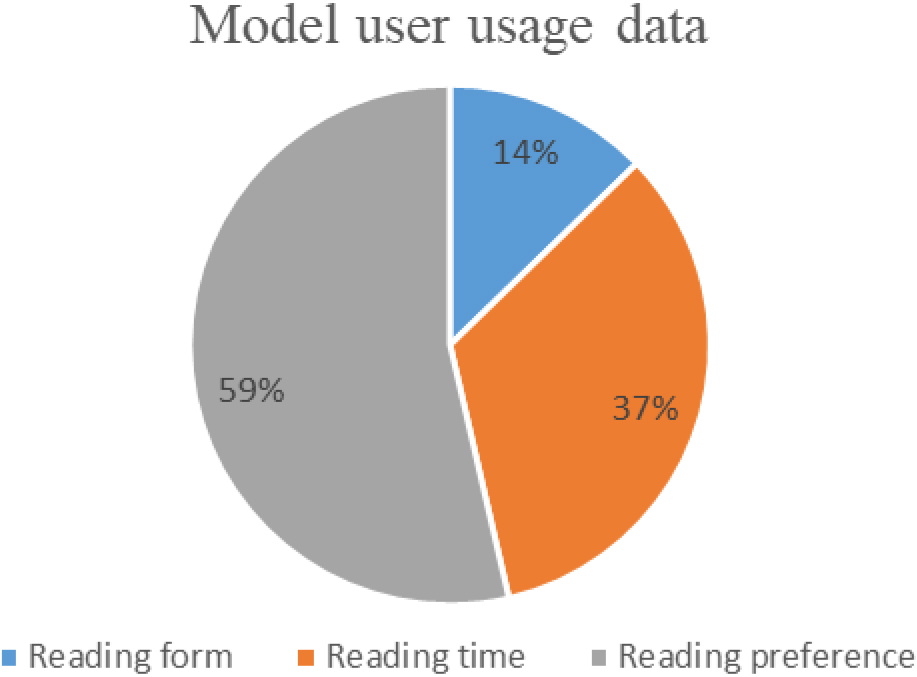
Carry out association analysis on these data to analyze the correlation between these data attributes, use the correlation coefficient r as the sieve less than the standard, if
The data is input in the form of a multi-dimensional matrix, where the form of the matrix is shown in Eq. (13), where 1 means that there is a relationship, and 0 means that there is no relationship, and the relevant decision analysis is carried out through the fuzzy system M1 and M2 [25, 26].
Its specific output results are shown in Table 2. Through the analysis of the data in the table, the consumption preference of each user can be directly obtained, and a large amount of data obtained through big data analysis can provide a large number of training sets for this model, so that Deriving digital consumption preferences across consumer markets for decision support and organizational control.
Output of model results
In order to further confirm the effectiveness of the model, we need to further evaluate the model. In order to ignore the subjectivity of manual evaluation, we must use model algorithms for re-evaluation. The artificial neural network evaluation method simulates the operating principle of the human brain and can establish an evaluation model based on the training set. The use of artificial neural network evaluation has the following advantages: (1) Simulate the evaluation principle of the human brain, which is in line with human thinking; (2) The evaluation is performed by the machine, abandoning the subjective factors, and the evaluation results are more objective and fair. The core algorithm evaluated using the artificial neural network is shown in the formula, and the evaluation results are shown in Table 3.
Results of evaluation using artificial neural network
Results of evaluation using artificial neural network
As shown in Table 3, using the artificial neural network for evaluation, the prediction accuracy rate is as high as 95.32 %, indicating that the model constructed in this experiment is very usable, and the influence of outliers is slightly greater, indicating that it is necessary to strengthen the data preprocessing work to improve Accuracy of input data. Concentration and reliability are also excellent.
This research uses big data and fuzzy control algorithms to build a consumer market preference estimation model for digital publishing transformation. Through the observation of the consumer market, it can promote digital companies to make effective decisions and conduct reasonable organizational analysis, which can further improve The development process of digital publishing transformation promotes the overall development of the enterprise. Through verification, this model has high accuracy and reliability, can support the operation of actual enterprises, and plays an important role in the development of enterprises.
Digital publishing transformation strategy based on big data and fuzzy control algorithm
Carry out market analysis through big data and fuzzy control technology to clarify market positioning
In recent years, my country’s digital consumer market has shown trends such as diversification, personalization, and changeability. Consumers tend to pay for personalized products in order to improve their own efficiency. In the process of transforming the digital publishing industry, we must consider. The transformation of the digital consumer market. Analyzing market consumer preferences through big data and fuzzy control technology will help companies grasp market trends and support decision-making analysis and organization. At the same time, it can also understand the consumption intention of each consumer and provide personalized services. The traditional publishing industry focuses on information and content, and blindly conducts marketing and publicity. In order to promote the transformation and development of digital publishing, we must transform the development center of the publishing industry into one centered on users and the market, and explore a digital publishing model that suits enterprises and satisfies consumers. The digital publishing industry also needs to explore a more flexible and changeable model to meet the needs of users as much as possible, process, classify, screen and reorganize digital content to discover more excellent works, and provide users with personalized solutions according to market needs. While developing existing users, actively expand target customers and continuously expand, so as to realize the expansion of the scale of digital publishing enterprises [27, 28].
Promoting the fusion development of traditional publishing and digital publishing through big data and fuzzy control technology
Both digital publishing and traditional publishing have their pros and cons. With the emergence of digital publishing, people’s reading habits have also changed. Portable communication media has made reading more fragmented, and people’s reading methods have also changed from deep reading to shallow reading and fragmented reading. This reading method lacks focus, the depth of knowledge understanding. Digital publishing products are regarded as a product of fast food. The update speed of digital products is very fast. Its fast food-style and fragmented content lacks the constraints of core values. The content involved is mixed and may affect the physical and mental health of young people. Some people are opposed to digital reading, thinking that digital reading is no longer pure reading, it is more like a form of entertainment. In order to solve these problems, we must slow down the transformation of digital publishing, promote the combination of digital publishing and traditional publishing, and build a new model of integrated development. Using big data and fuzzy control technology, construct an evaluation model for the integrated development of traditional publishing and digital publishing, as the basis for the transformation of digital publishing, so as to promote the development of digital publishing transformation [29].
Cultivate excellent compound talents for digital publishing transformation
Digital technology is the core force for the development of the digital publishing industry, and interdisciplinary talents with computer and information processing capabilities are the driving force for the development of digital technology. Therefore, to promote the transformation and development of digital publishing, it is necessary to promote the cultivation of excellent compound talents for digital publishing transformation. On the one hand, colleges and universities should promote the development of relevant disciplines such as information technology, combine theory with practice, improve students’ practical application ability, and fundamentally improve students’ professional quality; on the other hand, publishing companies should strengthen training for employees, Assess the capabilities of employees and select suitable positions for them. And actively organize learning and training to create an atmosphere of common learning within the organization [30].
Conclusion
Digital publishing is the process of informatizing the content of traditional publishing. It not only involves the processing of information, but also includes the whole process of management and operation of digital publishing enterprises. Compared with traditional publishing, digital publishing has a wider distribution channel.
With the advantages of more diverse forms and marketing aspects, the transition from traditional digital publishing to digital publishing has become an inevitable trend. But there are still many problems in digital publishing in our country. Including the transformation of digital copyright awareness and maintenance of digital copyright, the source and maintenance of digital publishing technology, and the scarcity of compound talent resources. In order to solve these problems, we must combine the digital publishing industry with modern information technology. This paper builds a digital market preference prediction model based on big data and fuzzy control algorithms. By analyzing and predicting each consumer’s usage information, the digital consumer market preference is obtained. This research uses big data and fuzzy control algorithms to build a consumer market preference estimation model for digital publishing transformation. Through the observation of the consumer market, it can promote digital companies to make effective decisions and conduct reasonable organizational analysis, which can further improve The development process of digital publishing transformation promotes the overall development of the enterprise. Through verification, this model has high accuracy and reliability, can support the operation of actual enterprises, and plays an important role in the development of enterprises. Finally, based on the content of the article research, we put forward the following suggestions for the transformation and development of digital enterprises (1) conduct market analysis through big data and fuzzy control technology, and clarify market positioning (2) promote traditional publishing and digital publishing through big data and fuzzy control technology Integrated Development of Publishing (3) Cultivate Excellent Composite Talents for Digital Publishing Transformation.
Innovation points: (1) Promote the transformation and development of digital publishing from the perspective of information technology, combining big data and fuzzy control algorithms with the transformation and development of digital publishing. (2) Construct the model of the article from the perspective of the digital publishing market, and promote the transformation and development of digital publishing through the forecast of the consumer market. (3) The artificial neural network is used to evaluate the model constructed by the article, which is objective and true.
Insufficiency: The article finally mentions that the integration of traditional publishing and digital publishing should be promoted, but no specific measures are given, and follow-up research is needed to supplement.