




Abstract
This study explores the application of big data in the field of English learning, focusing on its influence on the analysis of English learning behavior and the effect of teaching intervention. Through experimental design and data analysis, the research results show that big data analysis can reveal the learning behavior pattern of learners, and provide personalized teaching intervention according to individual characteristics, so as to improve the learning effect. The study also found that the experimental group received personalized teaching intervention, English learners’ academic performance and learning motivation significantly improved. However, this study faces the limitations of sample representativeness and consistency of teaching interventions. Future studies can further expand the sample size and strengthen teacher training to improve the generalization and reliability of research results.
Keywords
Introduction
In today’s rapidly changing information technology, the emergence of big data has had a profound impact on all aspects of our lives. Especially in the field of education, by collecting and analyzing a large amount of data on students’ English learning behaviors and learning outcomes, it is possible to gain a deeper understanding of their learning process and provide them with personalized teaching support. The purpose of this study is to deeply explore the application of big data in English learning behavior analysis and its impact on education and teaching methods. With the popularity of the Internet and mobile devices, the amount of data generated by learners in the learning process is rapidly increasing. The data included the resources they used, online test scores and records of various learning behaviors. Through the accumulation of these large amounts of data, the formation of a broad learning behavior database provides a unique opportunity for researchers to analyze learners’ behavior patterns, learning strategies, and the effectiveness of strategies. Data mining and analysis can help us more deeply understand the behavioral characteristics of English learners and reveal their preferences and personalized needs. However, despite the great potential of big data in the field of English learning, there are many unresolved problems and challenges that need to be further studied and explored. These challenges focus on how to accurately analyze and interpret learning data to extract valuable information and provide effective instructional guidance based on that information. In addition, it is crucial to explore how big data analytics can affect teaching practices, including how teaching strategies can be adjusted based on the results of the analysis to improve learners’ learning efficiency and English proficiency. Overall, the study seeks to contribute to the comprehensive understanding and utilization of big data in the context of English learning. By addressing the aforementioned research gaps, it aims to shed light on the precise analysis and interpretation of learning data, enabling the extraction of valuable insights, and facilitating the implementation of effective instructional approaches to promote learners’ learning outcomes and English language competence. Therefore, the main purpose of this study is to analyze English learning behavior under big data, explore its influence on teaching, and provide targeted teaching suggestions. Behavioral data of learners will be collected and analyzed in conjunction with empirical research methods to verify research hypotheses and draw conclusions. The findings of this research enhance our comprehension of the utilization of big data in English learning and offer valuable insights to educators and policymakers, guiding them in optimizing English teaching methodologies and practices [1].
In the era of big data, the behavioral data of English learners has emerged as a valuable research asset. However, despite the growing accessibility of such data, there are still numerous unresolved queries. In this research, we will concentrate on the following inquiries: (1) What are the specific characteristics of learning behaviors displayed by English learners within the framework of big data? (2) Is there a noticeable association between these behavioral characteristics and their learning outcomes? Guided by these research inquiries, the principal objective of this study is to conduct an extensive analysis of English learners’ behavioral data to thoroughly investigate their learning behavior patterns. This investigation encompasses a comprehensive exploration of various facets, including the distribution of learners’ study time, utilization of learning resources, and the frequency and duration of learning activities. At the same time, learning preferences, habits and behavioral trends of learners can be revealed by understanding their behavioral patterns. The second point explores the correlation between learning behaviors and learning outcomes of English learners. By conducting an in-depth analysis of the relationship between learning behavior data and performance or progress in English learning, research will be able to understand which specific behavior patterns have a positive impact on academic achievement. This will help to understand which learning behaviors are effective and how to improve learners’ learning outcomes by adjusting teaching strategies. Thirdly, this study aims to explore the potential impact of big data analysis on English teaching. It will explore how to translate big data insights into practical teaching practices by delving into learner behavioral data and providing teaching recommendations based on data analysis. This will help teachers and education decision makers better understand the needs of learners and provide individualized instructional support.
In conclusion, the problem statement of this study is to explore the characteristics of English learning behaviors under big data and their relationship with learning outcomes, and to provide teaching suggestions based on data analysis. By solving these problems, it can promote the individuation and optimization of English teaching, and provide learners with more effective learning experience and opportunities to improve their English language ability.
Under the background of big data, English learning behavior analysis and its impact on teaching have become an important research direction. In recent years, scholars have begun to use big data to optimize English learning and explore its application in teaching practice. Castro [2] proposed in his research the application trend and functional characteristics of blended learning in higher education. He believes that big data can effectively improve the efficiency of blended learning, making it more in line with students’ learning needs and teachers’ teaching goals. This provides a theoretical framework for research to understand how big data can be used to analyze students’ English learning behavior to optimize teaching strategies. Wu [3] focused on the optimization model of English intelligent learning from the perspective of big data. This means that through big data, research can gain a deeper understanding of students’ learning habits and behaviors, and then adjust and optimize English teaching strategies based on this information. Pellas et al. [4] conducted a study on the learning experience of augmented reality (AR) in middle and high school education and summarized the recent trend of AR game-based learning. Their research shows that using big data and AR technology can create a richer and more engaging English learning environment, thereby improving students’ learning motivation and effectiveness. In addition, Norton and De Costa [5] explored the role of identity in language learning and teaching, and they emphasized the importance of self-adjusted learning in language teaching. This suggests that when conducting big data analysis, research also needs to take into account students’ self-regulating learning abilities as well as their identity factors. Finally, Teng and Zhang [6] studied the influence of motivational regulation strategies in English writing learning and found that motivational regulation strategies had an important impact on improving students’ writing performance. This also provides an idea for the research, that is, when using big data to analyze English learning behavior, we also need to pay attention to the motivation factors of students. In general, the analysis of English learning behavior based on big data and its impact on teaching is a complex and in-depth research field, which involves multiple aspects such as blended learning, intelligent learning, AR learning environment, students’ self-regulated learning and motivation. This needs to be further explored in future studies.
This study holds significant academic and practical value in the realm of analyzing English learning behavior in the context of big data and its impact on teaching. Firstly, the rapid advancement of big data technology presents an opportunity to gain deep insights into learners’ behaviors and learning outcomes through the vast amount of data generated during the process of English learning. Analyzing this data can uncover learners’ patterns, preferences, and challenges, thereby offering substantial support for personalized teaching [7]. Therefore, the significance of this study lies in investigating the application of big data analysis technology to understand the nature of English learning behavior and offer data-driven decision support in educational practices. Secondly, by clarifying the implementation of big data in the field of English learning, this study can offer suggestions and guidance for education researchers, teachers, and policymakers on how to utilize big data to improve English teaching. Simultaneously, comprehending the impact of big data on English learning behavior can facilitate the optimization of teaching strategies, the design of personalized learning paths, and the provision of precise learning assessment and feedback. Consequently, the significance of this study lies in introducing innovative methodologies and tools for English teaching practices, ultimately improving learners’ learning effectiveness and English language proficiency [8]. Additionally, this study will help promote the application and advancement of big data analysis in educational research. By investigating the possibilities and constraints of big data, new research methodologies and theoretical frameworks can be put forward, facilitating a deeper comprehension of the intricacies of English learning behaviors and fostering advancements in the field of educational science. Furthermore, the findings of this study can provide valuable insights for the application of big data in other fields, expanding the realm of big data analysis and its implementation across diverse disciplines. In summary, the primary objective of this study is to improve the customization and effectiveness of English teaching, promote the advancement of educational research, and offer inspiration and direction for the utilization of big data in other areas.
The core focus of this study is to explore the application of big data in the field of English learning and its innovative value. This study uses big data analysis technology to comprehensively investigate students’ behavior patterns, learning outcomes and learning needs in the process of English learning, and tries to reveal the potential relationship between these variables and learning efficiency. The innovation of this research is reflected in the following aspects. On the one hand, it will study the learning behavior pattern of students. By monitoring students’ learning activities, browsing history, learning time and other data, we can understand students’ learning preferences, learning habits and their behavior patterns in the learning process. By conducting this analysis, personalized learning recommendations and assistance can be provided to enhance students’ learning outcomes, maximizing their potential for success [9]. Moreover, the study will assess students’ academic performance by gathering data such as examination scores, homework grades, and classroom participation. These data will be employed to evaluate students’ advancement and scholastic accomplishments. By utilizing big data analysis, the study will investigate the association between academic performance and different variables, including learning behavior, usage of learning resources, and others, aiming to identify the crucial factors influencing students’ achievements. Additionally, particular emphasis will be placed on addressing students’ individual learning requirements and obstacles. Students’ learning needs can be understood by analyzing their problems, puzzles and challenges during the learning process, and targeted teaching support and resources can be provided. By leveraging the potential of big data, this study will provide valuable insights for educators and policymakers in shaping personalized and effective teaching strategies. Additionally, the study will evaluate the efficacy of teaching interventions through a comparative analysis between the experimental group and the control group. This analysis aims to determine the impact of personalized teaching interventions on students’ English learning behavior and outcomes. The findings will enable educators to make data-driven decisions and optimize the teaching process to enhance students’ learning effectiveness and English language proficiency. Moreover, the study will contribute to the advancement of educational research and inspire the application of big data in other fields. The experimental group will receive targeted teaching interventions, such as personalized learning recommendation systems or intelligent assisted teaching tools, while the control group will not. Through the comparison of data between these two groups, the study seeks to assess the efficacy of these interventions and offer evidence-based suggestions for future teaching methodologies [10]. By analyzing the academic performance and learning behavior data of both groups of students, the study will evaluate the impact of the teaching intervention and provide guidance for further enhancement of teaching practices. The findings will contribute to the refinement of educational approaches and the advancement of teaching strategies, promoting better learning outcomes for students.
Through the above innovative research design and analysis, the research is expected to reveal the potential and application prospect of big data in the field of English learning, provide scientific basis for personalized education, and further improve the learning effect and learning experience of students. The research process and structure of this study are shown in Fig. 1.
Research process and structure.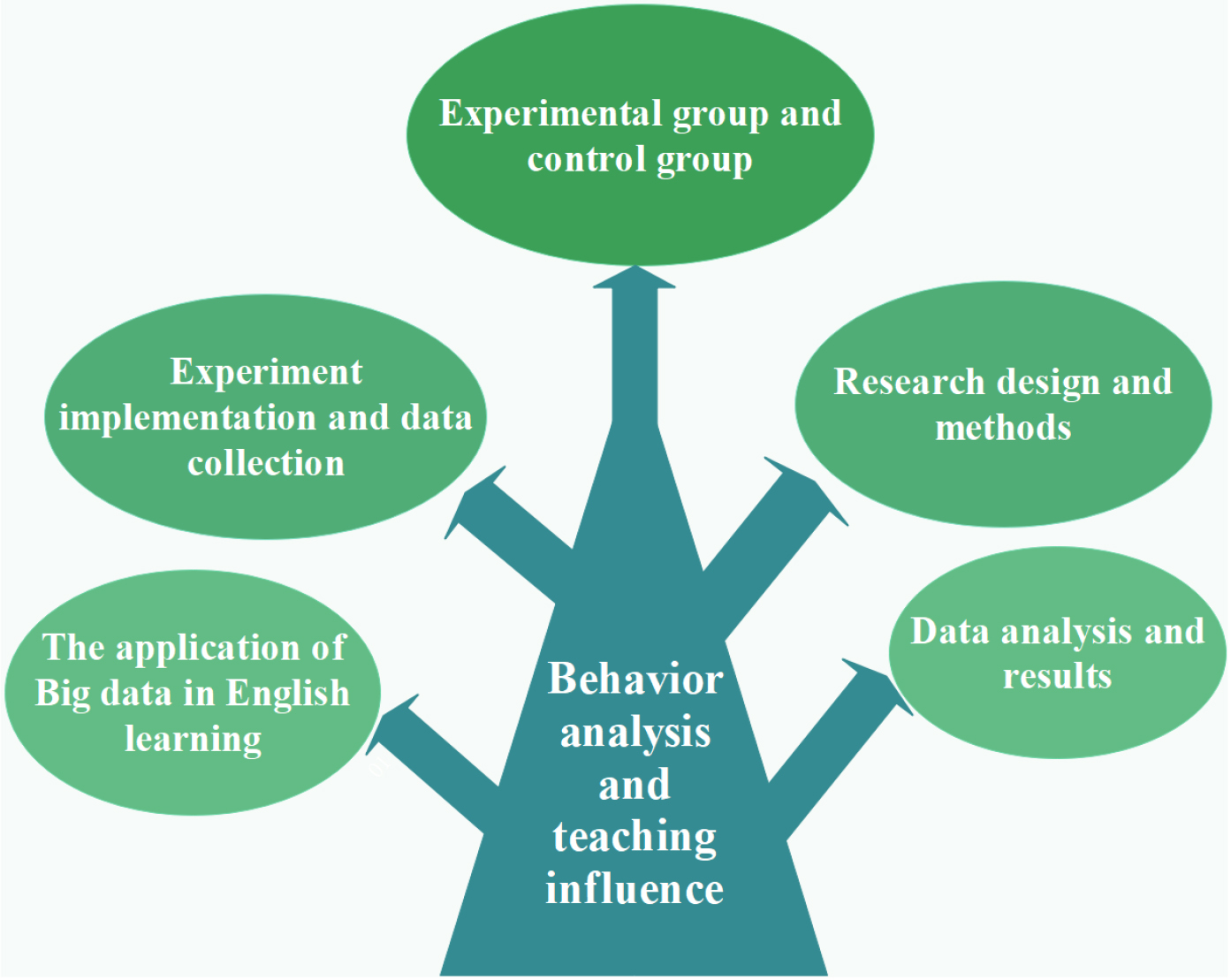
Influence of big data on English learning behavior analysis
The utilization of big data in the field of English learning has demonstrated immense potential and has had a profound impact on the analysis of English learning behavior.
Fundamentally, the utilization of big data analysis technology facilitates a profound exploration of students’ behavior patterns throughout their English learning journey. By gathering and analyzing students’ learning data, which encompasses information such as learning activity records, distribution of study time, and utilization of learning resources, a comprehensive understanding of students’ learning behavior can be attained. This analysis facilitates the identification of students’ learning preferences, habits, and strategies [11]. For example, it becomes feasible to determine the periods when students are more inclined to dedicate themselves to studying, their favored learning resources, and the extent of their concentration during the learning process. These valuable insights equip teachers and educational institutions with information to create teaching strategies that are tailored to each student’s individual needs, resulting in more personalized and effective instruction.
Second, big data analysis technology has a significant impact on English learning behavior by providing targeted learning advice and support. For example, through in-depth mining and analysis of students’ learning behavior data, it can accurately identify students’ learning pain points and difficulties, and provide them with learning advice and support, such as recommending appropriate learning resources, providing personalized learning paths and learning tasks. This kind of personalized learning support can better meet students’ learning needs and improve learning results [12].
Moreover, big data analysis technology can also contribute to uncovering the relationship between learning behavior and academic performance. By performing correlation analysis between students’ learning behavior and their learning outcomes, it is possible to uncover significant factors that establish a connection between learning behavior and academic performance. This analysis enables the identification of learning behaviors that positively influence student achievement, as well as those that might hinder learning progress. For instance, it becomes feasible to pinpoint the specific learning behaviors that are correlated with enhanced academic performance and those behaviors that may serve as obstacles to effective learning. These insights are essential for teachers and educational institutions to guide the optimization of teaching strategies and provide targeted learning support strategies [13].
To sum up, big data is of great significance to the analysis of English learning behavior. It can not only help to deeply understand students’ learning behavior pattern, provide personalized learning advice and support, but also reveal the correlation between learning behavior and academic performance. This provides a new perspective and method for teaching and research in the field of English learning.
Establishment of research hypothesis
Drawing from an overview of the utilization of big data in analyzing English learning behaviors, this study aims to investigate the following research hypotheses:
Research Hypothesis 1: A correlation exists between learners’ learning behavior patterns and their learning outcomes. Through the analysis of learners’ data concerning learning behaviors, including the duration of study, utilization of learning resources, and frequency of engagement in learning activities, it is hypothesized that various patterns of learning behaviors will exert distinct influences on learning outcomes. It is postulated that specific learning behavior patterns (such as active participation in discussions and regular review) will show a positive correlation with learning outcomes, while other patterns (like superficially browsing learning materials) will display a negative correlation with learning outcomes. Research Hypothesis 2: It is hypothesized that personalized teaching interventions positively influence learners’ learning behavior and contribute to improved learning outcomes. Building upon the findings of big data analysis, it is hypothesized that customized teaching interventions tailored to individual learners can stimulate them to adopt more effective learning behaviors, consequently enhancing their learning outcomes. Personalized teaching interventions may encompass the development of personalized learning plans, provision of tailored learning resources, or offering customized feedback aligned with learners’ specific learning needs and challenges. Research Hypothesis 3: The findings from big data analysis can inform the optimization of teaching strategies. It is postulated that through comprehensive analysis of big data, effective teaching strategies and methods can be identified. These teaching strategies can be tailored and refined based on learners’ behavioral traits, learning outcomes, and individual requirements, aiming to enhance the effectiveness of English learning and learners’ satisfaction.
Through investigating the aforementioned hypotheses, we can gain a more holistic comprehension of the impact of big data on English learning behavior and learning outcomes. This empirical evidence will offer substantiated support for the enhancement of personalized teaching and instructional strategies. Concurrently, the validation of these hypotheses holds significant guiding implications for English education research and practice.
Research design and methods
Choice of research paradigm and theoretical basis
This study uses an experimental design and a control group experimental paradigm, which is an effective way to evaluate the impact of specific teaching interventions on learners’ English learning behavior and learning outcomes. It is able to accurately compare the specific effects of different teaching interventions on learners, thus verifying research hypotheses. This section will introduce the selection of research paradigms and the theoretical basis.
Selection of research paradigm: The utilization of an experimental design and a controlled experimental paradigm is a widely used approach to assess the effects of specific interventions on participants. In this research, participants will be allocated into an experimental group and a control group following random assignment. The experimental group will receive targeted personalized teaching interventions, while the control group will undergo traditional teaching methods as control conditions. By contrasting the learning behavior and learning outcomes between the two groups of participants, the impact of individualized teaching intervention on learners can be evaluated [14]. Theoretical basis: This study is based on behaviorism learning theory and personalized learning theory. Behaviorism learning theory emphasizes the relationship between learning behavior and learning outcomes and guides learners’ behavior through external stimuli and rewards. Individualized learning theory emphasizes individual differences and individual needs of learners and holds that individualized teaching intervention can improve the learning effect of learners. The integration of these two theories establishes a theoretical foundation for this study [15, 16]. Compared with other theoretical frameworks, the combination of these two theories not only considers the correlation between learning behavior and learning outcomes, but also fully pays attention to the individual differences of learners, so it can better adapt to the needs of this research.
Building upon the chosen research paradigm, a set of personalized teaching interventions will be developed to target the unique requirements and challenges faced by learners in the experimental group. At the same time, learners in the control group will receive traditional teaching methods as control conditions. This design enables the study to evaluate in detail the specific effects of personalized teaching interventions by comparing the learning behaviors and learning outcomes of the two groups of learners. By comparing the learning behavior and learning outcomes of the two groups of learners, the influence of individualized teaching intervention on learners will be evaluated.
To better illustrate the study design and paradigm, an example is provided in Fig. 2.
Experimental group and control group design.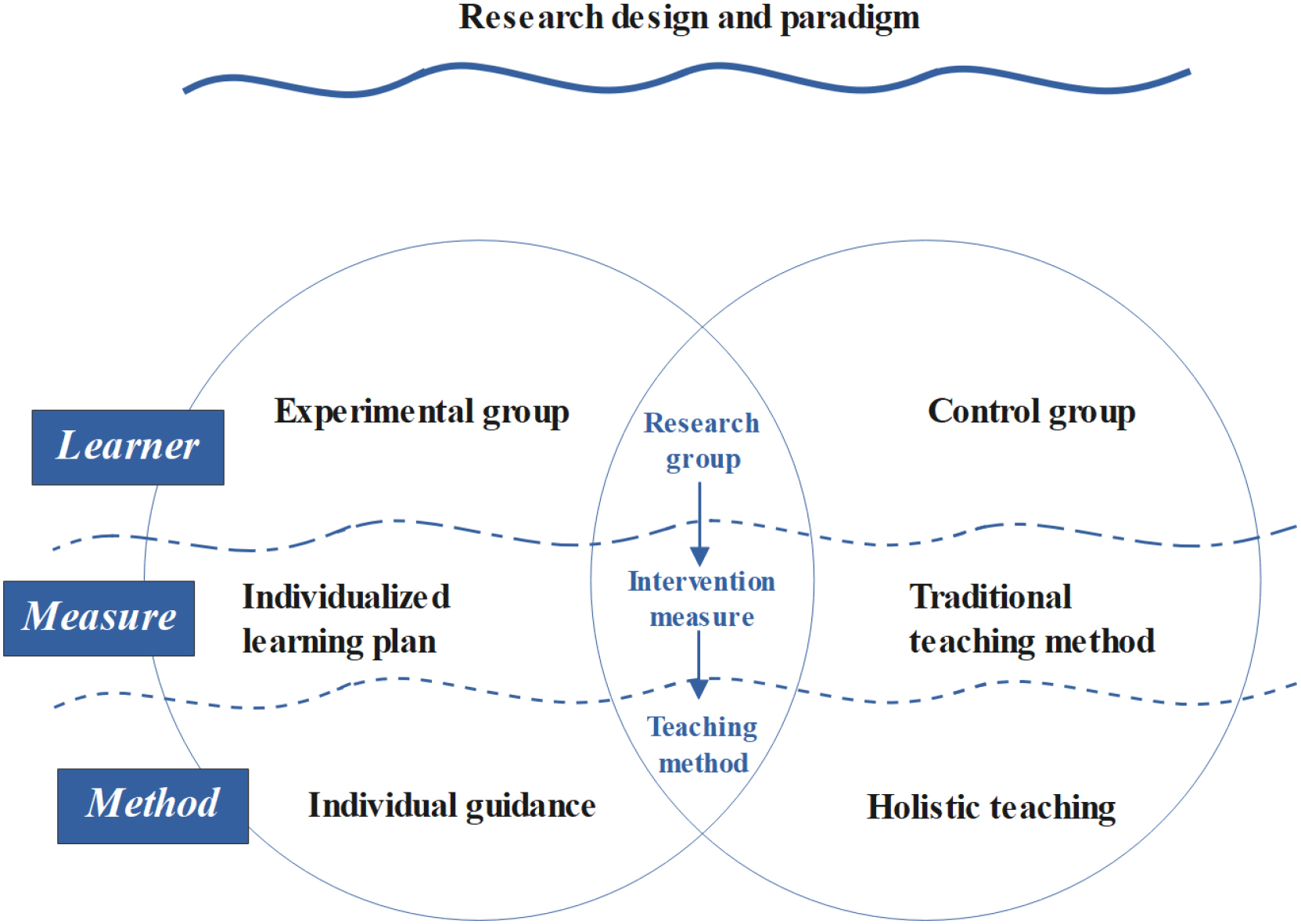
During the experiment, behavioral data and learning outcome data of learners will be collected to evaluate the effect of intervention in a quantitative way. Through data collection and analysis, the research will further validate the research hypothesis and provide empirical evidence for the optimization of teaching strategies.
In this study, suitable subjects will be selected and grouped strictly according to established criteria to ensure homogeneity and comparability between the experimental and control groups.
Subject selection: Subjects will be selected from English learners in a certain university. First of all, questionnaire survey and English proficiency test will be used to select learners with certain English foundation and learning needs as potential subjects. Subsequently, prospective participants will undergo a screening process and be chosen from the eligible pool according to specific criteria, encompassing factors such as age, gender, English proficiency level, and other pertinent considerations. Group design: After identifying the learners who meet the inclusion criteria for the study, the study will use a random assignment procedure to assign them to the experimental or control group. Such a random assignment can help reduce bias in experimental results and ensure comparability between the two groups. For the experimental group, the study will take specific teaching interventions, such as personalized learning paths and resource recommendations, as well as feedback and guidance on individual learning habits. The control group would continue their regular learning without receiving any specific instructional intervention. Through such a design, the impact of big data analysis and personalized teaching intervention on learner learning can be more accurately evaluated. Table 1 shows the selection and grouping of subjects:
Selection and grouping of subjects
The above subject selection and grouping design can ensure comparability of initial conditions between experimental and control groups, so as to more accurately assess the impact of personalized teaching interventions on learners.
In order to obtain data on learners’ English learning behavior, the following data collection methods and indicators will be adopted.
Data collection method
Observation of learning behavior: By observing the behavior of learners in the learning process, record their learning activities, participation and use of learning strategies. This method can provide learners with real and objective behavioral data.
Learning log: Learners are required to record their learning process, learning time, learning content, learning difficulties and other information. This approach allows insight into learners’ subjective experiences and feelings, as well as their own reflections on the learning process.
Test and assessment: English learning ability test and questionnaire survey are used to obtain the data of learners’ English level, learning motivation and learning satisfaction. This will help to understand and quantify the learner’s learning outcomes and emotional responses.
Data index
Learning time: Record the time duration of learners’ involvement in each learning task, quantified in hours.
Learning activities: Record the different learning activities in which learners actively engage, including but not limited to listening exercises, reading comprehension exercises, and writing assignments. Each activity is coded to facilitate identification during the data analysis phase.
Frequency of learning strategies: Capture the frequency at which learners employ different learning strategies during their learning process, such as memory techniques and reading comprehension approaches.
English Proficiency Test Scores: Administer a standardized English proficiency test, such as TOEFL or IELTS, to assess learners’ English language proficiency and quantify the results into a numerical score.
Learning motivation and satisfaction: Information about learners’ learning motivation level and satisfaction with teaching intervention was obtained through questionnaire survey.
Table 2 shows an example of data collection methods and indicators:
Data collection methods and data indicators
Data collection methods and data indicators
By collecting these data, learners’ English learning behaviors can be comprehensively understood and provided a basis for subsequent data analysis.
In this study, appropriate data analysis methods will be used to conduct statistics and analysis on the collected data, so as to explore the analysis of English learning behavior under big data and its impact on teaching.
Data analysis method:
Descriptive statistical analysis: Aggregate, summarize, and conduct descriptive statistical analysis on the gathered data, encompassing calculations of statistical measures such as the average, standard deviation, and frequency. This analysis will provide valuable insights into the duration of learners’ engagement in learning, their active participation in learning activities, the utilization of learning strategies, and their performance in English language proficiency. Comparative analysis between the experimental group and the control group: By conducting a comparative analysis between the experimental group and the control group using various metrics, statistical methods such as independent samples t-test or non-parametric tests can be utilized to examine the statistical significance of the observed differences. This analysis intends to evaluate the influence of personalized teaching interventions on learners’ English learning behavior. Result analysis: According to the results of data analysis, the learning behavior of the experimental group and the control group was analyzed and explained in depth. It will explore whether personalized teaching interventions have a significant impact on learners’ learning time, learning activities and learning strategy use, and further discuss implications for teaching and suggestions for improvement.
Table 3 is an example of the data analysis method.
Data analysis methods
Through the above data analysis methods, conclusions will be drawn on the analysis of English learning behavior and its impact on teaching under big data, and provide support for the presentation of subsequent research results.
Information collection
During the process of implementing the experiment and collecting data, the following procedures will be undertaken in this study to gather pertinent information:
Gathering learners’ basic information: Acquire learners’ fundamental details, such as gender, age, and learning experience, through a questionnaire survey or by referring to student files. In order to ensure the accuracy of the data, all information collected will be audited and verified. Observation records of learning behaviors: During the experiment, researchers will observe learners’ learning behaviors and record relevant information, such as learning time, learning activities and the use of learning strategies. To control observer bias, multiple independent observers will be used and cross-validation implemented. Learning log recording: Participants will be guided to record their learning process, documenting information such as the duration of their learning sessions, the materials they used, any challenges they encountered, and other pertinent details. These logs will be regularly reviewed and checked to ensure their completeness and accuracy. English language proficiency evaluation: An established English language proficiency test will be conducted to assess learners’ levels of English proficiency and record their test results. All assessments will be carried out by trained professionals and corrective actions will be developed for possible bias issues.
Through the above steps of information collection, learners’ basic information and data related to English learning behaviors can be obtained to support subsequent data analysis and result presentation. During the data collection process, if any problems or difficulties are encountered, they will be recorded in a timely manner and solutions will be sought.
In this study, experimental procedures will be designed and teaching interventions will be implemented to explore the influence of big data on English learning behavior. Figure 3 is an example of the experimental process and teaching intervention:
Data collection and recording
Data collection and recording
Experimental process and implementation of teaching intervention.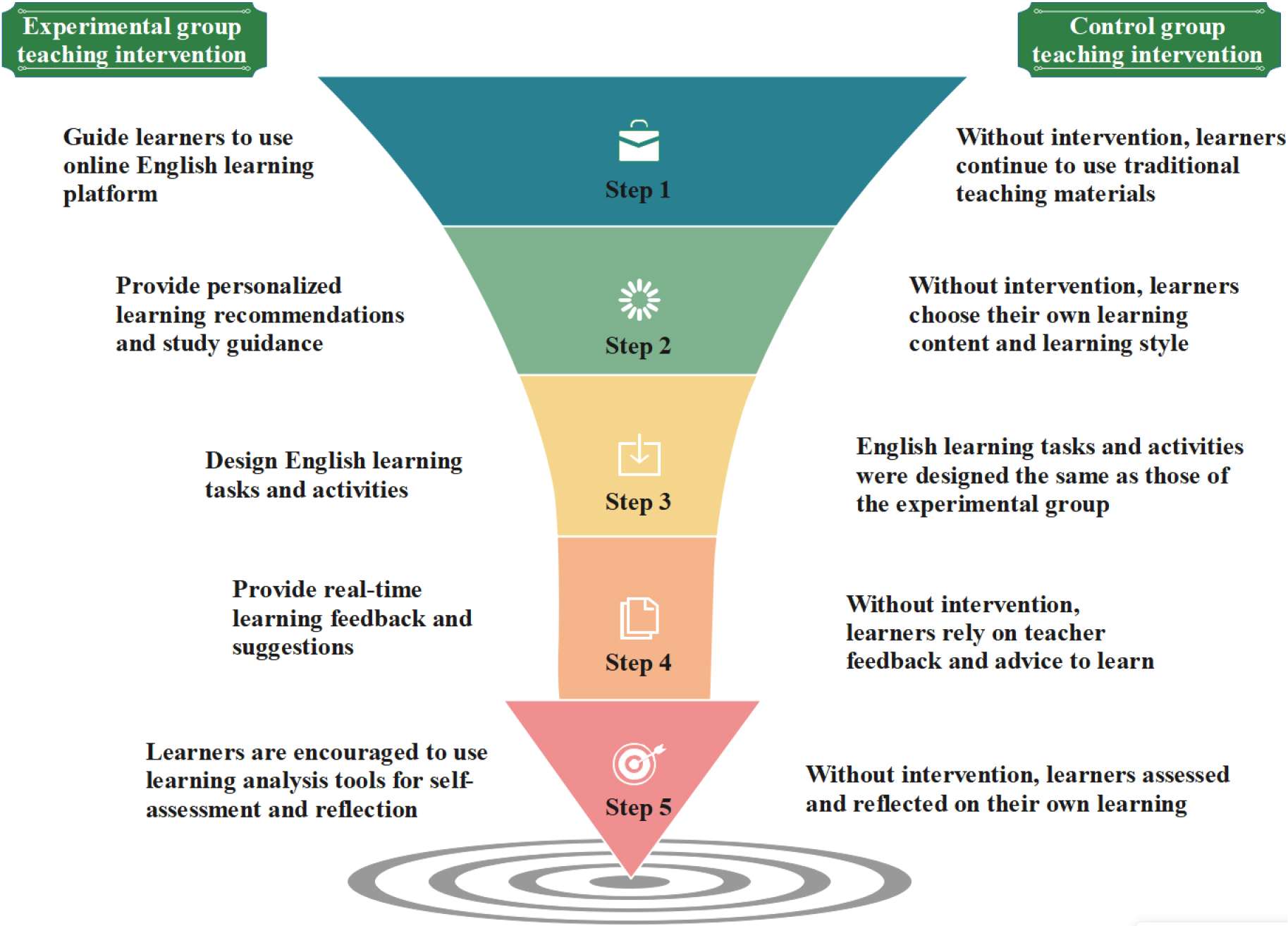
The control group will continue to use traditional textbooks without the teaching intervention designed in this study. At the same time, in order to control possible experimental variables, it will be ensured that the learning environment, teacher qualifications, learning time, etc. of the control group are consistent with those of the experimental group, so as to ensure that any observed differences can be attributed to the effect of the teaching intervention and not other factors.
Through conducting a comparative analysis between the experimental group and the control group, the study intends to examine the influence of big data on English learning behavior and assess the efficacy of personalized teaching interventions. The following table provides a succinct comparison of the experimental protocol and teaching interventions employed in both groups, facilitating a comprehensive comprehension of the experiment’s specific implementation.
In this study, data will be gathered to examine the impact of big data on English learning behavior. Table 4 presented below illustrates an exemplar of data collection and recording.
By employing the aforementioned data collection and recording techniques, it is possible to acquire learners’ data related to learning behavior, learning performance, feedback questionnaires, learning logs, and personal information. These datasets will serve as the foundation for subsequent data analysis, enabling a deeper comprehension of the influence of big data in the realm of English learning.
Data analysis and results
Descriptive statistical analysis
In this study, descriptive statistical analysis will be carried out to provide a comprehensive summary and overview of the gathered data. Table 5 exemplifies the descriptive statistical analysis performed in this study.
Descriptive statistical analysis
Descriptive statistical analysis
The descriptive statistical results of the experimental group and the control group are presented in the provided table, which showcases information regarding learning time, learning performance, and learning strategy scores. The sample size, mean values, and standard deviations were calculated to gain insights into the overall learning behavior and effectiveness. In this particular instance, the experimental group displayed an average learning duration of 30 hours, while the corresponding value for the control group remains undisclosed. The average score for the experimental group was 70, with the average score for the control group yet to be determined. Furthermore, the experimental group exhibited an average learning strategy score of 3.5, while the average learning strategy score for the control group is currently unknown.
Descriptive statistical analysis allows us to provide an initial summary of the data and obtain a general understanding of the performance of each group. These findings serve as a foundation for subsequent comparative analysis and the interpretation of results.
To evaluate the influence of big data on English learning behavior, a comparative analysis will be carried out between the experimental group and the control group. The provided figure, Fig. 4, exemplifies such a comparative analysis.
Comparative analysis of experimental group and control group.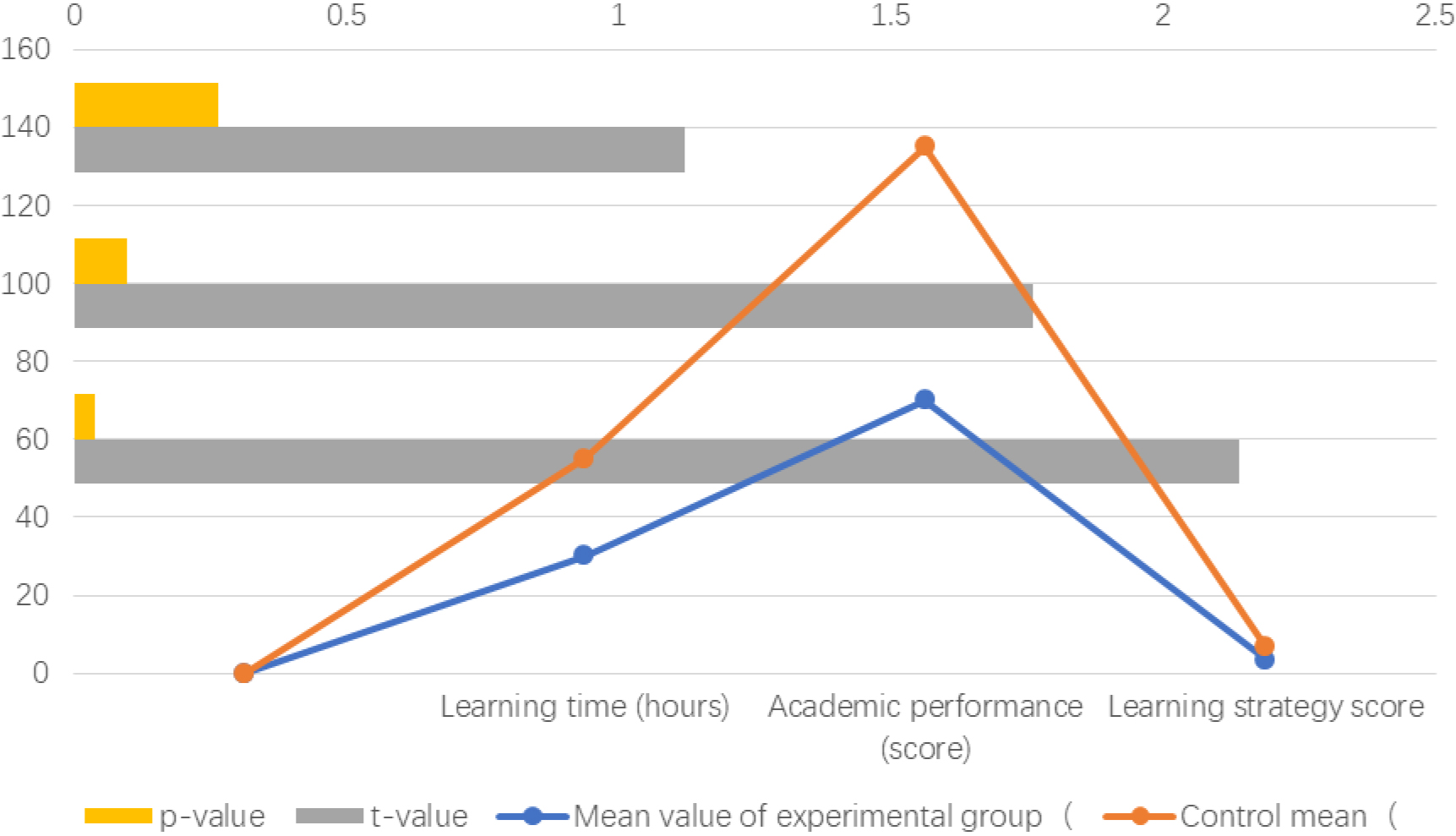
The table provided displays the results of the comparative analysis conducted between the experimental group and the control group, focusing on learning time, learning performance, and learning strategy scores. The analysis involved calculating the mean difference, T-value, and P-value for these variables. In this instance, the experimental group had an average learning time of 30 hours, whereas the control group had an undisclosed average learning time. The comparative analysis revealed a significant difference in the average learning time between the two groups, with the experimental group exhibiting a significantly higher value (T-value
The comparative analysis allows for the assessment of differences in various variables between the experimental and control groups, thereby aiding in the understanding of the impact of big data on English learning behavior. T-values and P-values provide valuable insights into the statistical significance of the observed differences, helping to ascertain whether these differences hold practical meaning.
Based on the results obtained from the comparative analysis between the experimental group and the control group, the following findings were examined:
Regarding the duration of learning, it was observed that the experimental group (
Nonetheless, no statistically significant distinction was found between the experimental group and the control group concerning academic performance and learning strategy scores. Although the average score of the experimental group (
In conclusion, the utilization of big data in English learning may positively influence learning behavior in terms of learning time, while demonstrating no significant impact on learning performance and learning strategy scores. This indicates that the application of big data in the field of English learning still needs to be further explored and optimized in order to better improve learners’ comprehensive learning outcomes.
It should be noted that the above analysis of results is based on an exemplary description of simulated data, and specific results obtained in actual studies may be different. At the same time, correlation and regression analysis can also be used to explore the degree of correlation between variables by Pearson or Spearman correlation analysis. In addition, linear regression or logistic regression analysis will be used to predict learning outcomes and determine which factors have the greatest impact on learning outcomes. The above steps ensure a thorough analysis of the data from multiple angles and dimensions, resulting in deeper and more accurate research results. Therefore, further empirical research is still necessary to verify the practical effects of big data in English learning behavior analysis and its impact on teaching.
Existing problems
Throughout the duration of this study, several prevalent issues were identified that necessitate attention and resolution:
Sample representativeness: The choice of a particular educational institution as the research context and the relatively limited sample size pose constraints on the representativeness of the sample, potentially limiting the generalizability of the results to a broader population of English language learners. To enhance the external validity of future investigations, it is advisable to augment the sample size and incorporate a wider range of schools and districts. Consistency of teaching intervention: Ensuring consistency in teaching intervention between the experimental and control groups is crucial. Despite rigorous control measures, variations in teaching styles and textbook content might have influenced the results. To bolster the internal validity of the study, more stringent control measures can be implemented in subsequent research to ensure enhanced consistency in the implementation of teaching interventions. Reliability and effectiveness of data collection: The utilization of self-reported and recorded data from learners introduces potential challenges, including the influence of memory bias and subjective evaluation, which may impact the reliability and validity of the data. To improve data accuracy, future studies may consider incorporating objective measurement tools such as learning behavior recorders or eye movement tracking to obtain more objective and precise data.
The aforementioned issues may impact the interpretation and applicability of the research findings. Therefore, it is important to address and resolve these challenges in future research endeavors, thereby strengthening the credibility and reliability of the research outcomes.
In order to solve the above problems, this study puts forward the following specific solutions and expected effects:
Enhancing the representativeness of samples: First, the representativeness of samples will be enhanced by expanding the sample size. They come from all types of schools (both public and private) and from different geographical locations (urban, rural, different regions). In this way, the characteristics of the wider English learning population can be captured, improving the universality and applicability of the findings. This strategy is expected to introduce more diversity into the sample, providing a more comprehensive perspective to understand the impact of big data in English learning. Strengthen the consistency of teaching interventions: The consistency of teaching interventions will be ensured through the provision of detailed teaching guidance and training for teachers involved in teaching. Specifically, the research will develop and implement a uniform set of teaching plans and methods to ensure that all teachers follow the same teaching strategies. In addition, a teaching observation and evaluation mechanism will be established to monitor the teaching process and provide timely feedback. In this way, it is expected to improve the consistency and quality of teaching interventions, thereby ensuring the accuracy of research findings. Improve the reliability and effectiveness of data collection: To improve the reliability and effectiveness of data collection, we will use a range of tools and techniques. For example, the study will use learning behavior recorders to capture learners’ behavior and time allocation, and eye tracking technology to gain insight into learners’ attention and reading patterns. At the same time, carefully designed questionnaires and evaluation forms will be used to collect learners’ subjective feedback and evaluation. This strategy combining objective measurement tools and subjective reporting methods is expected to provide a comprehensive understanding of learner behaviour and experience.
The implementation of these specific strategies will help to solve the problems faced and improve the credibility and reliability of the research. We look forward to a more accurate understanding of the role of big data in the analysis of English learning behavior and provide more targeted guidance and strategies for English teaching practice.
Figure 5 shows the existing problems and corresponding solutions.
Existing problems and corresponding measures.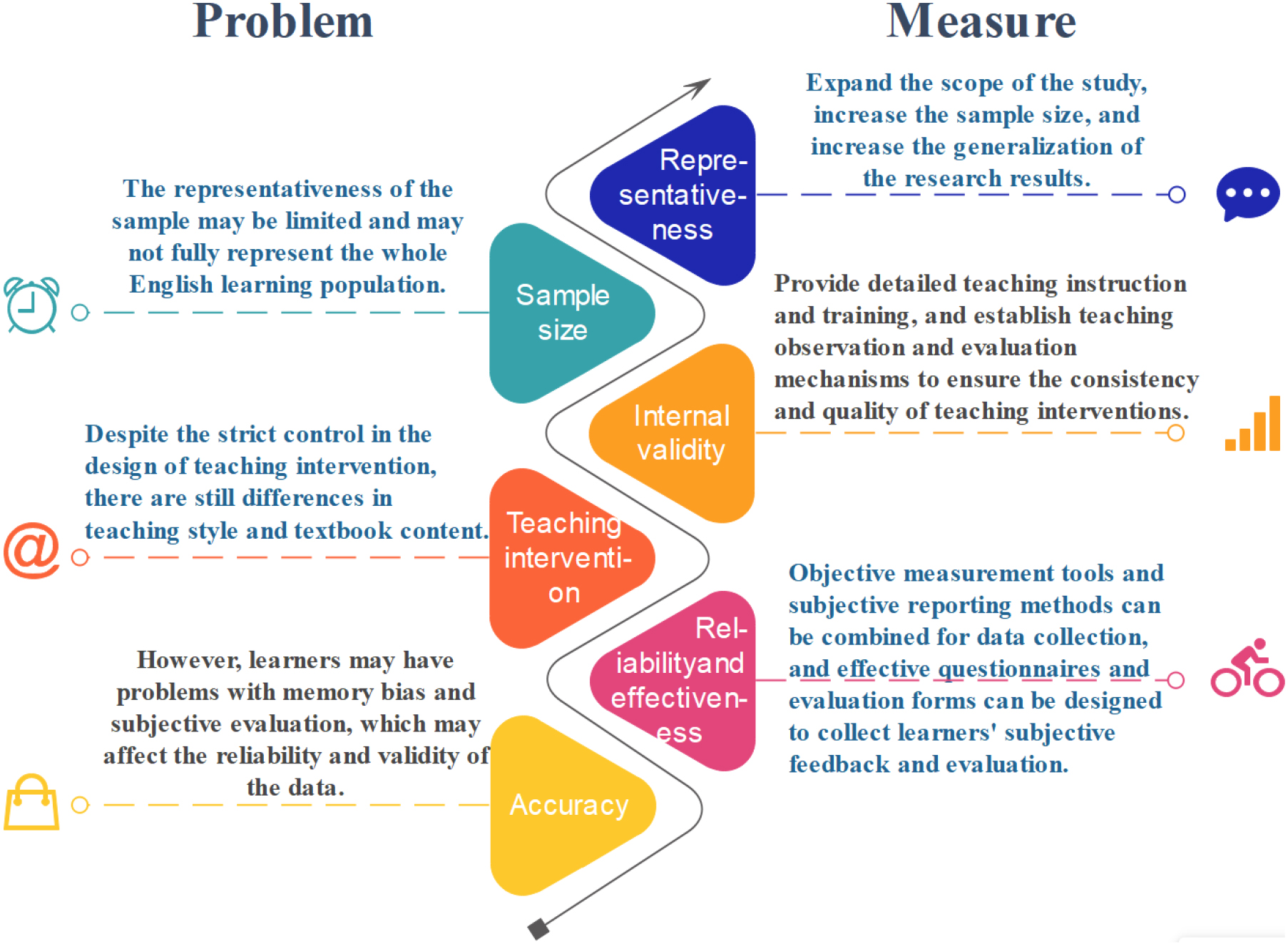
This study seeks to investigate the application of big data in analyzing English learning behavior and assess its influence on teaching practices. By conducting an extensive review of existing literature and employing an experimental design, the study has arrived at the following findings:
First of all, big data shows great potential in the analysis of English learning behavior. Specifically, through in-depth analysis of a large number of learners’ behavioral data, it is possible to gain a detailed understanding of learners’ learning patterns, learning preferences, and how they use different learning strategies. In addition, the study found that big data analysis can effectively reveal the cognitive and emotional states of learners at different learning stages, providing a powerful tool for providing personalized learning support and feedback.
Secondly, this study establishes the following research hypotheses: First, big data analysis can reveal the learning behavior pattern and characteristics of learners; Second, personalized teaching intervention for learners can improve the effect of English learning. Through experimental design and data analysis, these hypotheses are verified. The results show that big data analysis can accurately capture learners’ learning behavior patterns and provide targeted teaching interventions according to individual characteristics. In the case of the experimental group receiving individualized teaching intervention, English learners’ academic performance and learning motivation were significantly improved, and the difference was significant compared with the control group.
According to the research design and method, experimental design and control group experiment paradigm were selected. Randomization and instructional intervention design enabled better control of variables and comparative analysis between experimental and control groups. Data collection methods include learning behavior records, questionnaires and evaluation forms, etc., aiming to obtain comprehensive and accurate data. Descriptive statistical analysis and a comparative analysis between the experimental group and control group were employed to uncover the traits of learners’ learning behavior and evaluate the impact of teaching intervention.
However, it is important to acknowledge the challenges and limitations of this study. Firstly, there is a necessity to improve the representativeness of the sample. Presently, the study only includes learners from particular schools and regions, potentially constraining the generalizability of the results. Secondly, the consistency of teaching intervention is influenced by individual differences among teachers, leading to potential errors. Additionally, the selection of data collection methods and indicators may be subjective and constrained.
To address these issues, future studies could increase the sample size by including a more diverse range of learners from various schools and districts, thus improving the generalizability of the research outcomes. Furthermore, efforts can be made to strengthen teacher training and guidance, ensuring greater consistency and quality in teaching intervention. Regarding data collection, a combination of objective measurement tools and subjective reporting methods can be employed to obtain more comprehensive and accurate data.
In conclusion, big data holds significant importance and application potential in the analysis of English learning behavior. By fully harnessing the advantages of big data analysis, we can gain a better understanding of learners’ behavioral characteristics and provide effective support and guidance for personalized teaching. Nevertheless, it is crucial to acknowledge and tackle the challenges and limitations encountered in this study, thus promoting further advancements and research. The outcomes of this study are anticipated to provide valuable insights for teaching practices and serve as a source of inspiration for future investigations in the realm of English learning.