




Abstract
With the rapid development of information technology, the application of e-commerce in small and medium-sized enterprises is becoming more and more extensive. E-commerce is a development direction, not a simple transaction method. E-commerce is widely used in financial, service, and retail industries. The addition of e-commerce has promoted the transformation of these industries to informationization. This study uses the analytical capabilities of artificial intelligence to analyze the utilization rate of e-commerce in smes. The article and research ideas are firstly using artificial intelligence to build an analysis model, and secondly, using the results of model analysis to explore the utilization rate of e-commerce in small and medium-sized enterprises. Finally, according to the current situation of e-commerce utilization rate of small and medium-sized enterprises, relevant growth strategies are put forward. This paper builds an e-commerce application analysis model based on artificial intelligence technology. After multi-layer verification, the model has good performance in theory and practice. Using this model to analyze the application rate of e-commerce in small and medium-sized enterprises, we can find that there are still the following problems in the application of e-commerce in small and medium-sized enterprises. (1) Lack of experience and lack of guiding standards (2) Lack of reasonable business strategies (3) Lack of offline interaction with users. In order to solve these problems, small and medium-sized enterprises should (1) strengthen publicity and innovation and promote brand marketing (2) strengthen the cultivation and construction of talents (3) optimize the industrial model and reduce industrial costs (4) improve the industrial model and marketing of e-commerce system.
Introduction
With the growth of economy and computer technology, the concept of e-commerce has also been expanded. Traditional e-commerce refers to the completion of transactions through electronic equipment, and new e-commerce refers to the informatization and networking of all aspects of traditional transactions, and the use of the Internet or other electronic equipment to complete the implementation of all aspects of the supply chain of the enterprise. E-commerce is a development direction, not a simple transaction method. E-commerce is widely used in financial, service, and retail industries. The addition of e-commerce has promoted the transformation of these industries to informationization. There are many benefits to developing e-commerce [1]. On the one hand, it can save manpower and material costs, improve the efficiency of business operations, and provide customers with better services. On the other hand, e-commerce can help companies better understand the market and seize opportunities in market competition.
Since smes are in the early stages of development, small scale, simple personnel structure, and flexible management methods are the primary characteristics of smes. They lack a mature industrial model and can still better adapt to changes in the market. At the same time, smes are generally less innovative. Strong, with innovative products and services to seize the market. The development of e-commerce in small and medium-sized enterprises can promote the progress of small and medium-sized enterprises to informatization. On the one hand, it can help small and medium-sized enterprises to establish a mature industrial model and improve the economic benefits of enterprises. On the other hand, it can help enterprises express brand effect and expand market share. However, there are also some difficulties in the development of e-commerce for small and medium-sized enterprises, such as lack of resources, lack of development standards, and lack of core capabilities. Therefore, small and medium-sized enterprises still need to overcome many difficulties in developing e-commerce. Rate, develop their own brands and specialty products, and seize market share. The change of e-commerce utilization rate of smes is shown in Fig. 1. The e-commerce utilization rate of smes is increasing year by year, which has a good development prospect [2, 3].
E-commerce utilization rate of smes.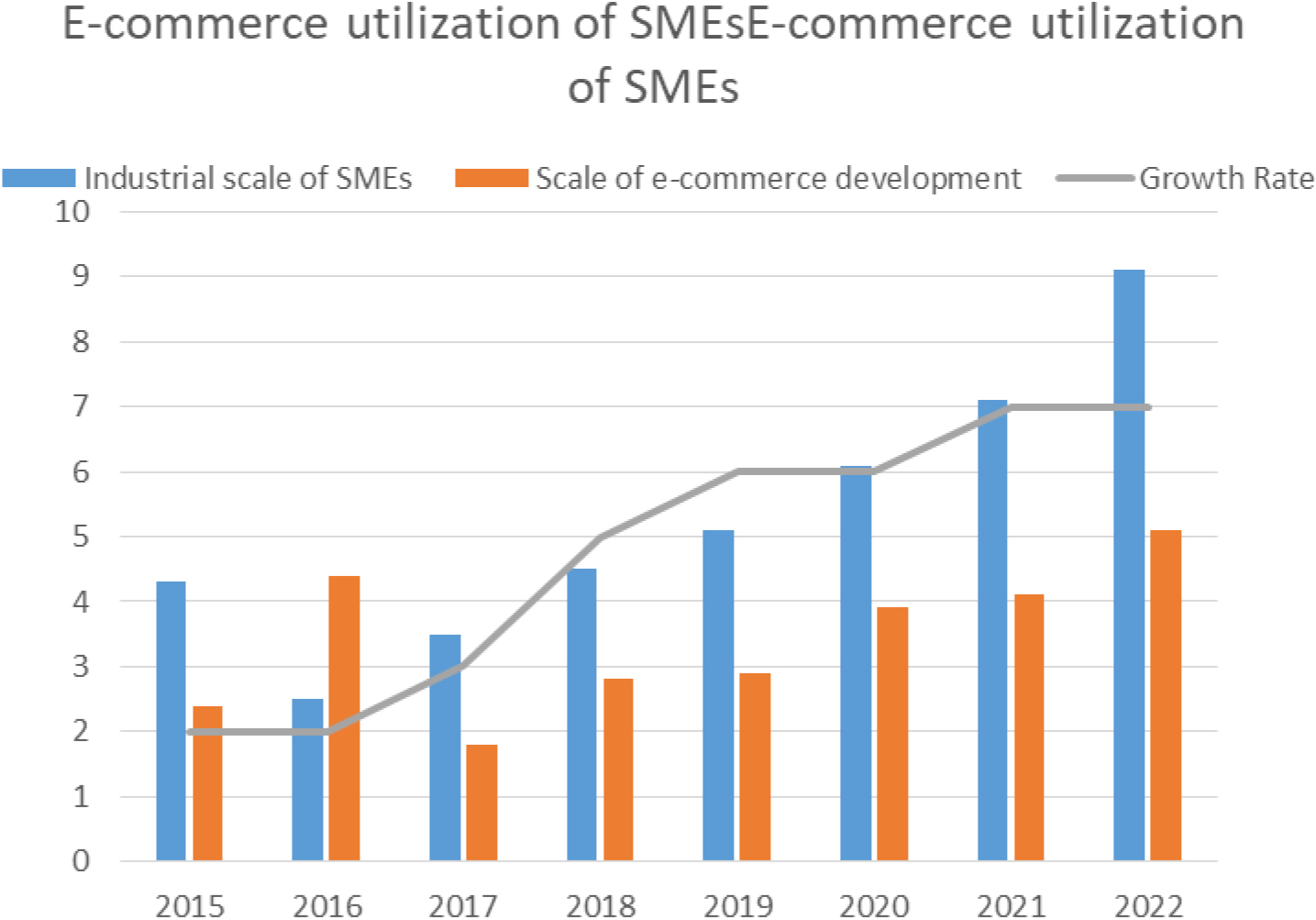
Developed on the basis of computer science in the era of artificial intelligence technology, it enables computers to have the ability to listen, read, write, think and learn like humans, and through training, they can acquire the ability to solve and analyze problems. With the deepening of artificial intelligence research, deep learning, machine learning and other fields have also developed to a certain extent. With the rise of big data and cloud computing technology, artificial intelligence has made remarkable achievements in autonomous driving, image recognition, analysis and decision-making. Artificial intelligence also has a wide range of applications in business. Artificial intelligence can be used for numerical analysis, allowing machines to simulate human thinking to analyze data, making it more flexible. In addition, artificial intelligence also has positioning target customers, product recommendations, and customer journeys in business. And many other applications. With the development of artificial intelligence, artificial intelligence has a mature application model in business, and its specific model is shown in Fig. 2 [4].
There are many problems in the development of e-commerce in small and medium-sized enterprises, including resources, talents, and mature industrial models. In order to promote the application of e-commerce in small and medium-sized enterprises, we must study a set of mature e-commerce application industrial models. However, most of the research on e-commerce is focused on the theoretical direction. In order to make up for the practical gap in this field, this study combines artificial intelligence technology and uses the analysis ability of artificial intelligence to analyze the utilization rate of e-commerce in small and medium-sized enterprises [5]. The article and research ideas are firstly using artificial intelligence to build an analysis model, and secondly, using the results of model analysis to explore the utilization rate of e-commerce in small and medium-sized enterprises. Finally, according to the current situation of e-commerce utilization rate of small and medium-sized enterprises, relevant growth strategies are put forward.
Model ideas
This model construction uses artificial intelligence algorithms, which have a wide range of applications in classification, clustering, and analysis. The basis for the application of artificial intelligence algorithms is to have a certain number of training sets. In order to meet this condition, we selected 10 small and medium-sized enterprises as research objects. The specific information of these ten enterprises is shown in Table 1. We reached an agreement with company leaders to use part of the data of the company for experimental research and to feed back the final results to them.
Specific information of research objects
Specific information of research objects
Application of artificial intelligence in business.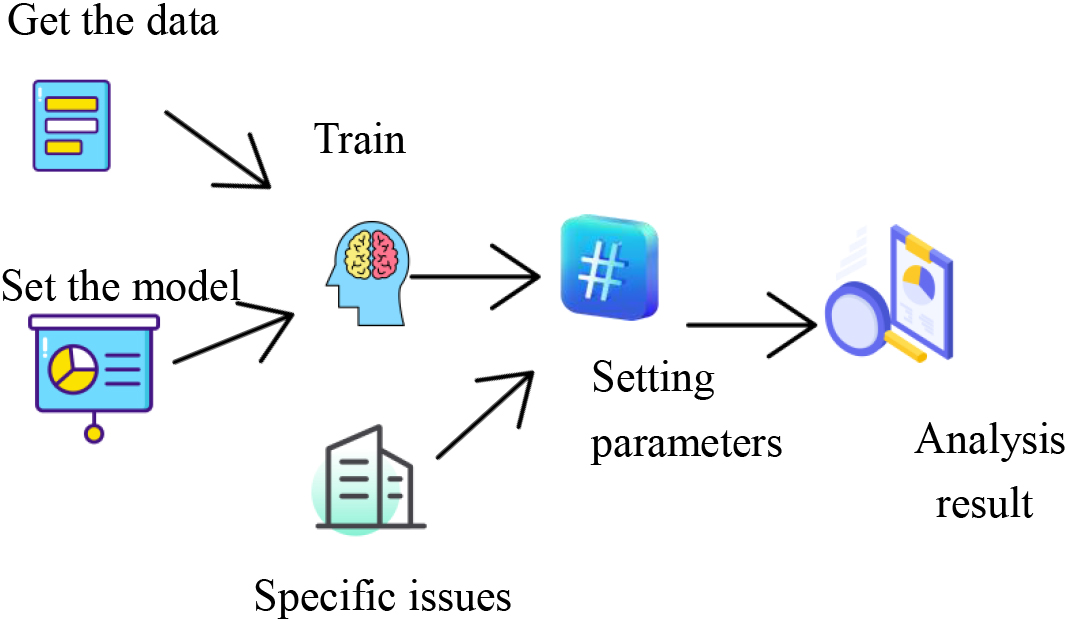
The steps of artificial intelligence analysis and processing mainly involve the process of data acquisition, processing, representation, analysis, and use. We use the relevant data of ten companies for model training. After the model is established, new companies are selected as the verification set.
Step 1: Acquisition of experimental data, the acquisition of experimental data is a complicated process. The e-commerce development of small and medium-sized enterprises permeates between various departments. To accurately grasp the relevant information of enterprise e-commerce utilization, we must use iot devices for perception. Iot sensors have good performance in acquiring data and can quickly transfer the acquired data. To the processing center. The data detection process is shown in Fig. 3. The specific formula used is shown in Eqs (1) and (2), where X represents each department,
Data detection process.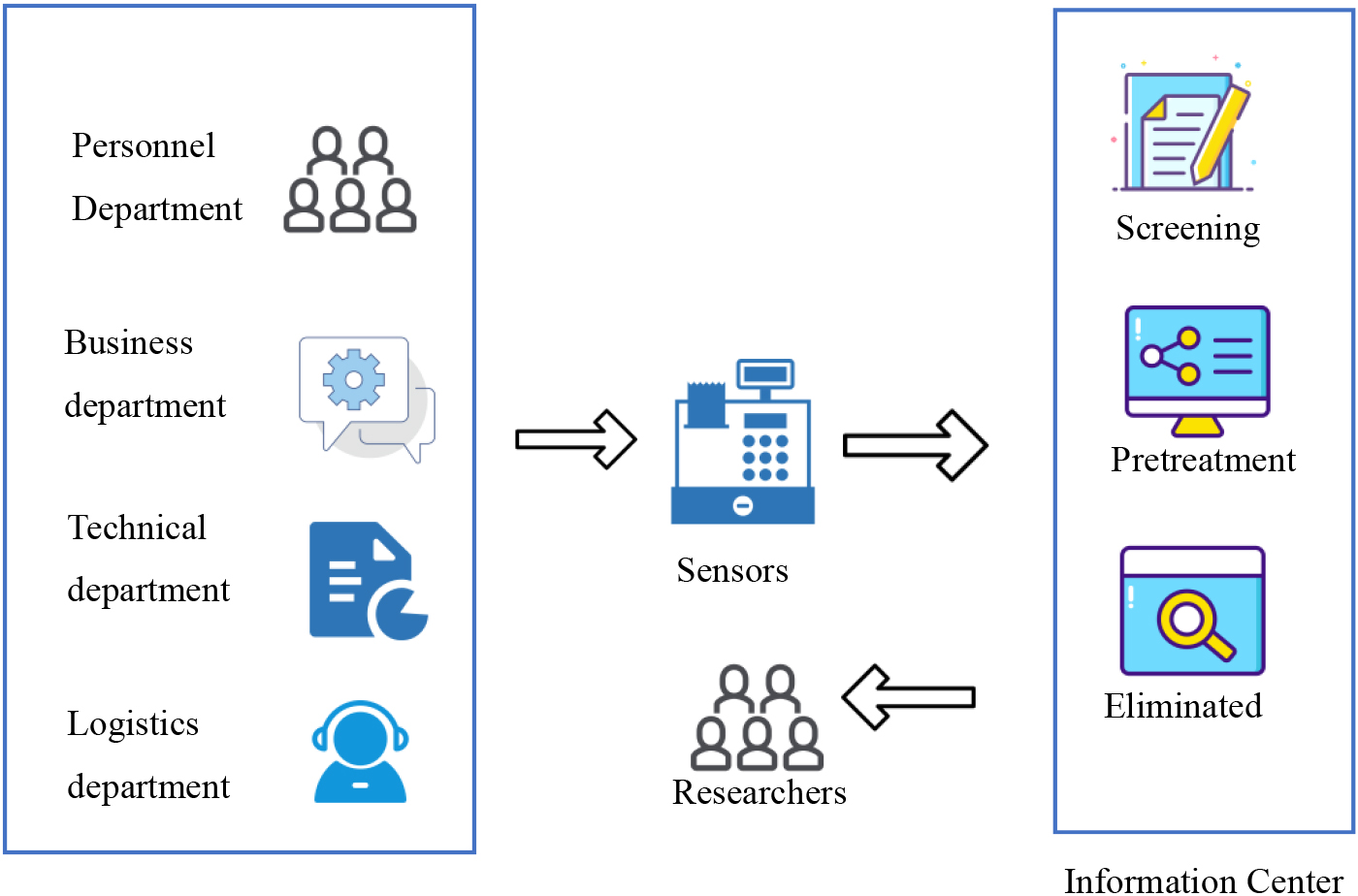
Step 2: After the data is transferred to the processing center, the data should be screened, processed, and pre-processed. Processing and screening. Where R represents the normalization constant of each department. Equation (5) is responsible for normalizing the data. Due to the variety of data sources, in order to process the data uniformly, we must normalize the data to ensure the validity of the data.
Step 3: Build an artificial intelligence analysis model.
Among them, Eq. (6) is responsible for converting the input data into a data set that can be recognized by the model. Equations (7) and (8) are the core logic of the artificial intelligence analysis model, which is responsible for extracting feature information from the data set, and according to the frequency of its occurrence, combined with artificial intelligence. Domain knowledge is analyzed. Equation (9) represents the domain knowledge of artificial intelligence, which is a collection representing a series of domain knowledge, and the domain knowledge stored in this collection is mainly related to e-commerce and enterprise development [6].
Step 4: Result output. Through simple analysis, the model can output a series of indicators of e-commerce utilization in different departments. The specific output form is shown in Table 2, but these results cannot directly reflect the e-commerce of small and medium-sized enterprises. Therefore, we use an algorithm to integrate the output results. The specific output results are shown in Fig. 4. It can be seen from Table 4 that the overall performance of the model evaluation is good, indicating that the model has good usability, and this model has certain practical significance.
The output form of the artificial intelligence analysis model
Step 5: Match the corresponding results in Fig. 4 and Table 2, and find that the recall rate, precision rate, and precision rate are all above 95%, and the formulas of precision rate, precision rate, and recall rate are shown in Eqs (10)–(12) [7].
In order to verify the effectiveness of this model, ten companies were selected as verification objects again. The selection of these ten companies was random. We compared the application of e-commerce in these ten companies with the results of model evaluation. The effectiveness of this model is verified by comparing the three parameters of precision, accuracy, and recall. The results of model validation are shown in Table 3. It can be seen from Table 3 that the overall accuracy of this model recognition is relatively high, and at the same time, it has a good recognition ability for both positive and negative examples.
Model verification results
Model verification results
Results of convolutional neural network evaluation
Output results of some enterprises.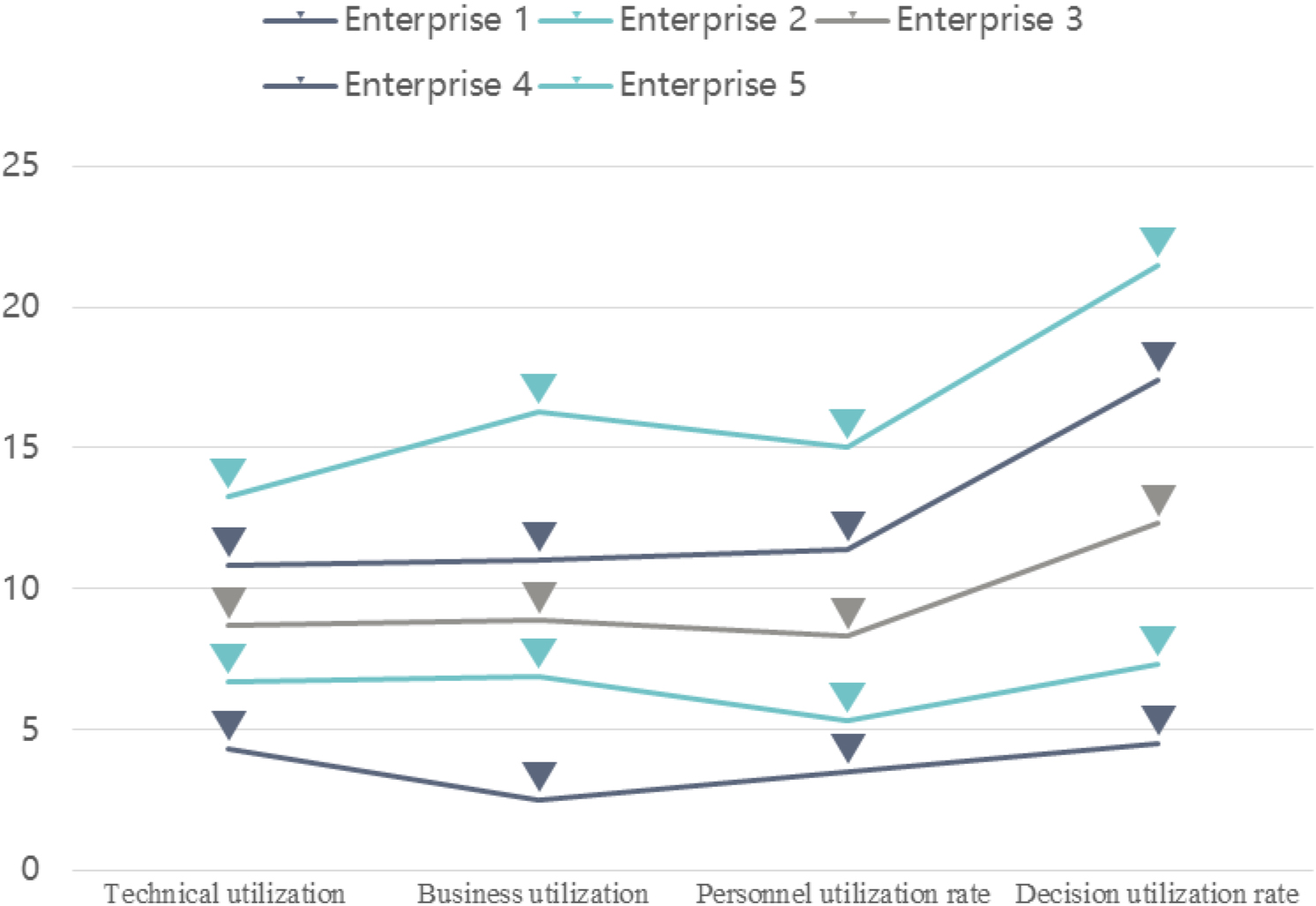
The above steps only verify the theoretical feasibility of the model. In order to confirm the usability of the model again, we first use the convolutional neural network to evaluate the model, and then use manual evaluation to re-evaluate the results of the convolutional neural network evaluation to ensure the reliability of the model. Sex. The results of the model evaluation are shown in Table 4 [8].
Model significance
The research purpose of the article is to grasp the utilization rate of e-commerce by small and medium-sized enterprises through artificial intelligence technology, discover the shortcomings of small and medium-sized enterprises in the utilization rate of e-commerce, and find out the key performance indicators to improve the utilization rate of e-commerce through the comparison of specific parameters. Develop relevant strategies to achieve growth in e-commerce utilization. The model constructed in this article is based on artificial intelligence technology. First, the model algorithm is trained through the training set, and then the algorithm is used for actual verification, which proves the usability of the model. This shows that this model can be achieved. The overall excavation of the e-commerce utilization rate of small and medium-sized enterprises is of great significance for promoting the application of e-commerce in small and medium-sized enterprises.
Status quo of e-commerce utilization rate of smes
Using the above model to conduct statistical investigations, it is found that China’s small and medium-sized enterprises have insufficient experience in e-commerce utilization, lack of guiding standards, unreasonable marketing strategies, and insufficient attention to offline store construction. The specific problems are shown in Fig. 5 [9].
Current situation of e-commerce utilization rate of smes.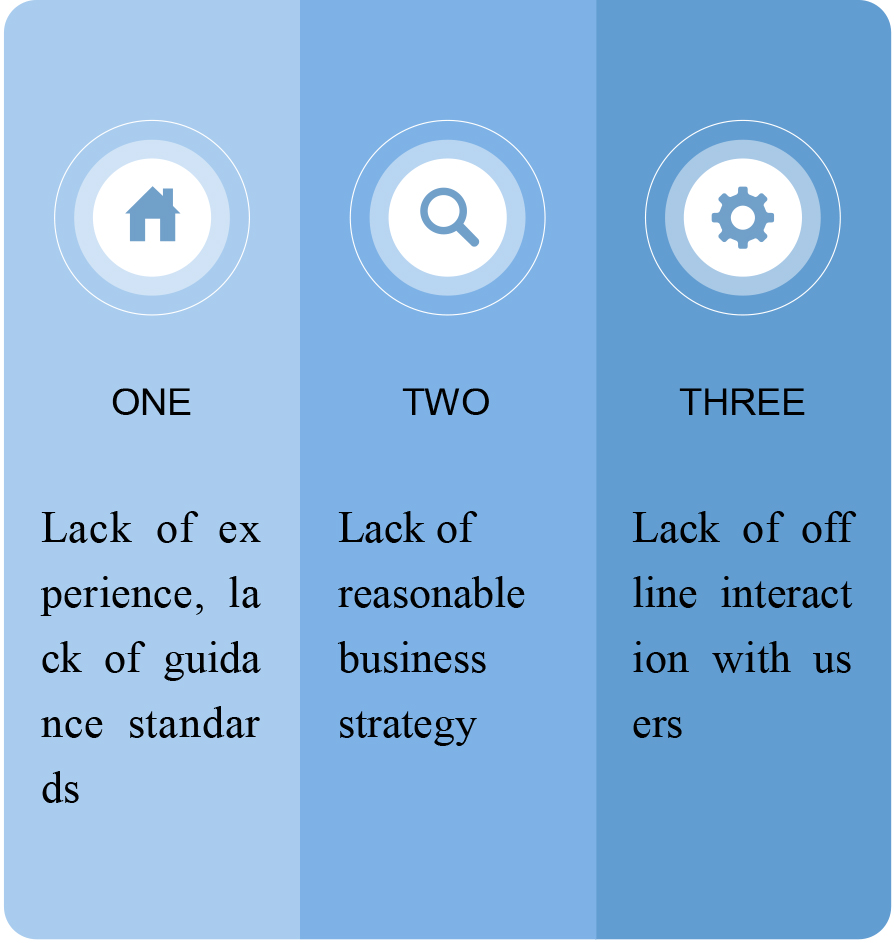
With the rapid development of social economy, more and more enterprises realize the importance of e-commerce development. Many small and medium-sized enterprises have devoted themselves to the construction of e-commerce, but due to lack of experience, limited industrial scale, lack of reliable partners, and lack of standardized guidelines, these small and medium-sized enterprises frequently encounter difficulties in the process of transforming to e-commerce. Fail. Moreover, some managers do not have a clear understanding of e-commerce, and even equate e-commerce with online sales, and copy the business model of online stores to the operation of enterprises, lacking a correct understanding of e-commerce transformation [11]. If you operate according to this model, you will encounter many difficulties in the business process of the enterprise, and the leaders’ lack of ability and lack of understanding of e-commerce lead to these transformations, which eventually end in failure.
Lack of a reasonable business strategy
The marketing means of many small and medium-sized enterprises are too simple, and they understand e-commerce as selling goods through the Internet and marketing through the Internet. Violently promote products to users based on Internet browsing records and purchase records. Such an approach will not only cause resentment from users, but also cause a decline in the overall efficiency of the enterprise. Some companies place their products on different webpages in the form of advertisements to increase the exposure and click-through rate of the products, but such forms often cause users to dislike the products. This kind of marketing method of blindly pursuing visual exposure is not advisable, and many e-commerce companies are going bankrupt because of this blind marketing strategy [12, 13].
Lack of offline interaction with users
E-commerce does not transfer all transaction activities online, but adopts a marketing method that combines online and offline. Online sales and offline sales have their own advantages and disadvantages. Offline sales can further allow users to experience the charm of the brand, and online sales can allow users to buy suitable products at lower prices. With the further development of the Internet and the increase of economic pressure, many young people will choose offline selection and online purchase to save more money [14, 15]. However, some small and medium-sized enterprises understand e-commerce as online transactions, do not pay attention to the construction of offline stores, blindly place advertisements on websites, and lack good brand effects.
Growth strategies of SME e-commerce
Improve the industrial model and marketing system of e-commerce
Due to the limitation of their capital scale, small and medium-sized enterprises must proceed in stages when constructing tea model and marketing system. First, formulate short-term industrial goals and marketing goals, formulate implementation plans, and implement short-term goals through the coordination of various departments. At the same time, in combination with the characteristics of the enterprise itself, an innovative marketing plan is formulated, and a complete marketing system is finally built to lay the foundation for subsequent development. Secondly, improve personnel construction and improve the quality of employees. Conduct regular training for employees to improve their professionalism. Let employees better understand the needs of consumers and implement them according to the needs of consumers. Finally, on the basis of the continuous expansion of capital scale, build its own logistics system, provide consumers with stable logistics services, and form the enterprise’s own industrial chain. From the perspective of marketing methods, personnel, logistics supply, etc., improve the development of e-commerce, promote the transformation of small and medium-sized enterprises to e-commerce development, and improve the utilization rate of e-commerce of small and medium-sized enterprises [16, 17].
Strengthen publicity and innovation to promote brand marketing
The only way for the sustainable development of small and medium-sized enterprises is to strengthen innovation and enhance brand value. With the rapid development of the Internet today, marketing methods are also more diverse. On the one hand, we can use the celebrity effect of celebrities to promote. Through advertising and webcasting, celebrities and Internet celebrities are invited as spokespersons, thereby expanding the influence of the product. On the other hand, we can innovate online publicity methods, avoid blind delivery of advertisements, customize personalized advertisements for users, and ensure that advertisements can provide useful value for users. At the same time. Small and medium-sized enterprises can establish a good cooperative relationship with e-commerce platforms, and enhance users’ experience with products through platform holiday promotional activities, thereby expanding the influence of products and winning users’ reputation. However, the basis for smes to realize the lawful growth of e-commerce is to strengthen innovation and enhance their own advantages [18, 19, 20].
Strengthen the cultivation and construction of talents
If small and medium-sized enterprises want to expand the utilization rate of e-commerce, they must build the network platform on which the development of e-commerce depends. The construction of these network platforms is inseparable from professional talents. If small and medium-sized enterprises want to further expand and develop, they must strengthen talent construction, improve the overall quality and professional ability of employees, and build a good network platform. Use the power of talents to enhance the core competitiveness of enterprises, and let talents become the core force of product innovation and marketing innovation. On the one hand, enterprises should pay attention to personnel training, provide good salary and treatment, and explore the potential abilities of employees. On the other hand, enterprises should carry out regular training, employee assessment, etc., in order to continuously improve the overall quality of employees [21, 22].
Optimize the industrial model and reduce the industrial cost
The application of small and medium-sized enterprises in e-commerce involves many links. At the same time, due to the limitation of the capital scale of small and medium-sized enterprises, there are many difficulties in the industrial operation of small and medium-sized enterprises. Small and medium-sized enterprises can actively cooperate with third-party companies represented by third-party logistics, and reduce the operating costs of enterprises by outsourcing some services, thereby reducing the financial pressure of enterprises to a certain extent, and can also attract the attention of enterprise leaders. Transfer to the innovation of enterprise products, so as to further promote the development of products themselves. Service outsourcing is a good choice for small and medium-sized enterprises in the early stage of construction. In the early stage, small and medium-sized enterprises should focus on product construction, promote product innovation, and ensure product quality. In the later stage, enterprises can focus on building their own industries and form their own industrial chains [23].
Conclusion
This study uses the analytical capabilities of artificial intelligence to analyze the utilization rate of e-commerce in smes. The article and research ideas are firstly using artificial intelligence to build an analysis model, and secondly, using the results of model analysis to explore the utilization rate of e-commerce in small and medium-sized enterprises. Finally, according to the current situation of e-commerce utilization rate of small and medium-sized enterprises, relevant growth strategies are put forward. This paper builds an e-commerce application analysis model based on artificial intelligence technology. After multi-layer verification, the model has good performance in theory and practice. Using this model to analyze the application rate of e-commerce in small and medium-sized enterprises, we can find that there are still the following problems in the application of e-commerce in small and medium-sized enterprises. (1) Lack of experience and lack of guiding standards, (2) lack of reasonable business strategies, (3) Lack of offline interaction with users. In order to solve these problems, small and medium-sized enterprises should (1) strengthen publicity and innovation and promote brand marketing, (2) strengthen the cultivation and construction of talents, (3) optimize the industrial model and reduce industrial costs, (4) improve the industrial model and marketing of e-commerce system.
Advantages: (1) Analyze e-commerce utilization from the perspective of artificial intelligence, combining theory and practice. (2) The model constructed by the article must be innovative. (3) The content of the article is complete and the research ideas are clear.
Disadvantages: (1) The depth of article research is not enough. (2) The article does not specifically elaborate on the e-commerce utilization rate of the research object.