




Abstract
Myelodysplastic syndromes (“MDS”), is a group of hematopoietic stem cell disorders that can progress to acute myeloid leukemia. MDS is most commonly found in the aging and elderly population with a 35% 3-year survival rate. With a limited etiological understanding of MDS, and a fast disease progression, patients with MDS may benefit from an increased intake of fresh berries, natural foods, vegetables or products packed with an abundance of vitamins. As of recently, completed and new clinical trials are currently underway to establish an inverse correlation between increased fruit consumption, specifically a berry intake with a generalized decrease in associated symptoms and an overall improved quality of living. In this special review, the author examined current completed and actively recruiting clinical trials focusing on MDS and the use of berries and their components such as vitamins, and any natural product intervention with the treatment of MDS. This review combined the comprehensive results of human clinical studies to arrive at a common trend in this area, supplemented with published studies. Despite the current information available, indicating minimal correlation or strongly suggesting more comprehensive studies, additional clinical trials using berries may prove to be useful and necessary as an intervention or as an alternative therapeutic supplement to remedy the patient’s ailment.
Keywords
Introduction
Myelodysplastic syndromes (MDS), is a group of bone marrow and blood disorders [1]. In patients with MDS, their stem cells lack the ability to mature leading to an increased abundance of immature and dysplastic cells. Mature, healthy cells flowing through the blood decrease in count, and cause the bone marrow to halt its function or work ineffectively. The cascade effect is such that there is a decreased red and white blood cell count leading to additional health issues, including but not limited to anemia, thrombocytopenia and neutropenia. As a result, the white blood cells are deemed ineffective at their function and could result in abnormal bone marrow chromosomal cells. The MDS subtypes may undergo additional molecular changes and become acute myeloid leukemia (AML), with about a third of patients developing AML. In this form of cancer (AML), blasts, or immature cells, grow at a rate that is not controlled and lead to further hematological complications.
According to the Surveillance, Epidemiology, and End Results (SEER) Program, about 86% of patients with MDS are diagnosed at or around 60 years or greater with an average, median age at diagnosis of 76 years old [1]. Within the United States, between 2007-2011, the incidence of MDS is estimated to be between 5.3– 13.1 for every 100,000 cases [2]. As the population ages, the incidence of MDS for every 100,000 patients increases. For patients aged 65 or greater, MDS incidence is predicted to be between 75 to 162 for every 100,000 cases, whereas MDS prevalence within the United States is projected to be 60,000– 170,000 with a steadily increasing estimate [2]. Regarding age as an inclusive factor, MDS is not common in people who are younger than 50 years of age, with MDS becoming more common in people who are 70 years of age or greater. Unfortunately, patients with MDS have a shorter lifespan as a result of infection or bleeding, or after MDS becomes AML.
Further risk factors that compound MDS include radiation exposure, obesity, and viral infections [3]. The 2007 Report by the World Cancer Research Fund/American Institute for Cancer Research found no association between an intake of vegetables and fruit and any type of cancer [3]. However, there was only suggestive or probable evidence rendering a protective effect implying added or benefits yet to be uncovered.
With these parameters established, deficit of conclusive information and studies, it is of utmost value to research the connection between nature products, berries, and vitamins in the prevention of MDS through a comprehensive review of relevant findings. The aim in this review is to find the most current findings on MDS, specifically in human clinical trials. This was achieved through a comprehensive global search, all in order to establish an association between an increased intake of natural products and MDS.
Materials and methods
Search strategy and determining eligibility of human clinical trials
This review was completed first by determining eligible English publications retrieved from the National Institutes of Health (NIH) United States (U.S.) National Library of Medicine Clinical Trials https://www.ClinicalTrials.gov which is a clinical trials registry. This registry is the “largest clinical trials database and currently has over 230,000 trials from 195 countries in the world” [4].
Publications deemed eligible and in the English language were retrieved using the following search filters: under “Condition or disease” the search term was ((MDS)), a term that was auto-populated and affiliated with Myelodysplastic Syndromes AND under the “Other terms” to narrow down the search, the two terms entered, separately, were ((vitamins)) and ((berries)). Only “vitamins” and “berries” were entered to identify any available human clinical trial. The end search date was 07 March 2019 with no start search date in an effort to retrieve any and all studies. The author only analyzed English and Spanish studies. To maximize the amount of information and to identify relevant articles, reference lists and primary studies were cross-referenced to arrive at an aggregated list.
Results
Data extraction
The retrieved articles from ClinicalTrials.gov under the aforementioned search criteria gathered thirty-five clinical trials and only one recruiting human clinical trial when the search terms “MDS” and “berries” was used. For the purpose of this review, the results were further separated into two additional categories based on their status, namely “Recruiting” status and “Completed” status. “Recruiting” status clinical trials rendered seven results under “MDS” and “vitamins” while “Completed” status clinical trials rendered seventeen results. This schematic can be seen on Figure 1 and Figure 2 below. The total worldwide eligible articles based on search criteria had the following information presented in columnar form (Table 1, Table 2, and Table 3): status, study title, conditions, interventions, study type, study design, outcome measures, number enrolled, NCT number, other IDs, and locations. Of the seventeen completed clinical trials (Figure 3), fourteen completed clinical trials were completed in the United States (North America), two in Europe, and one in the Pacific. Of the seven recruiting clinical trials, six are recruiting currently in the United States (North America), and one clinical trial is currently recruiting in Denmark (Europe).
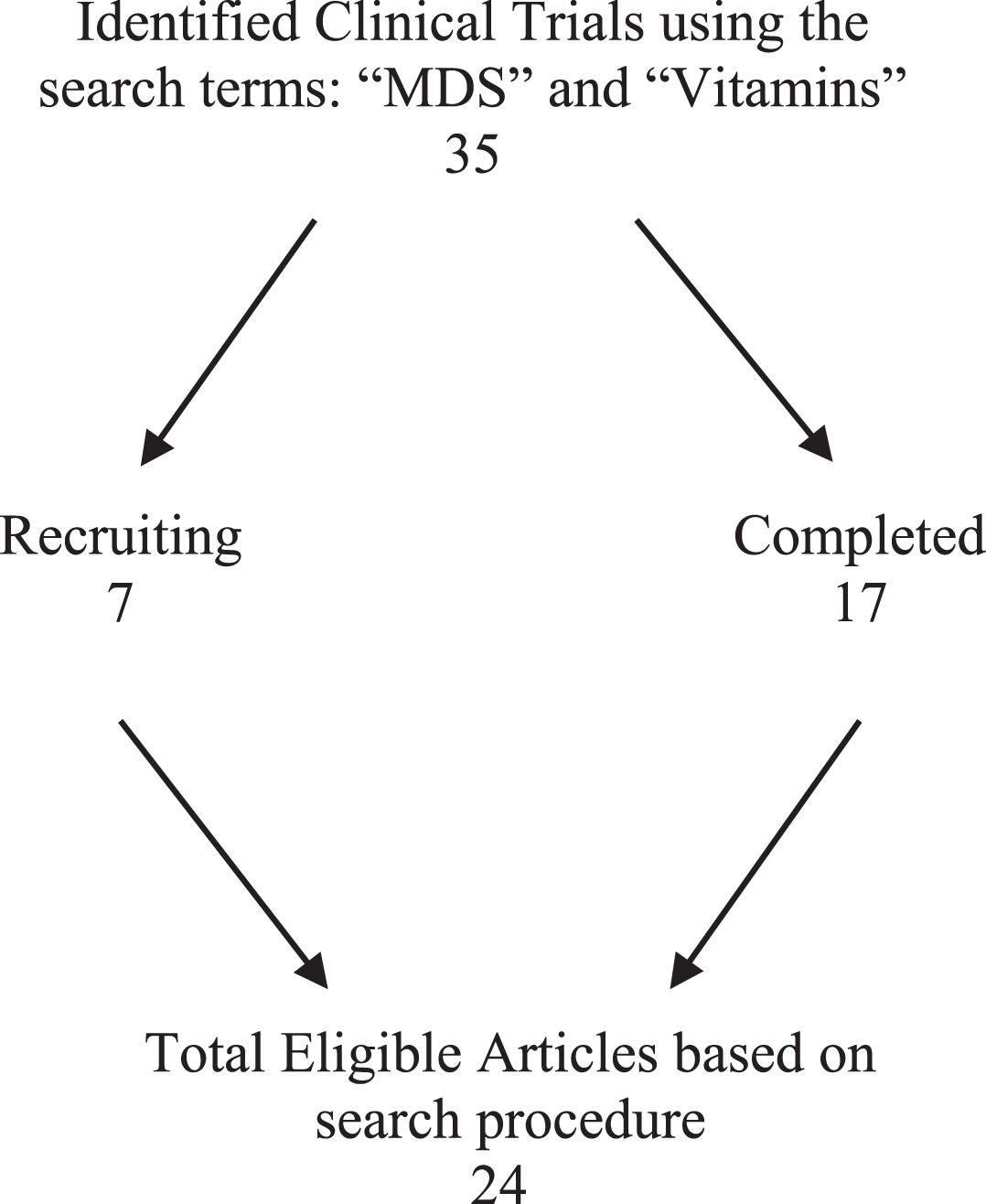
Flow chart representing the search procedure to identify eligible articles.
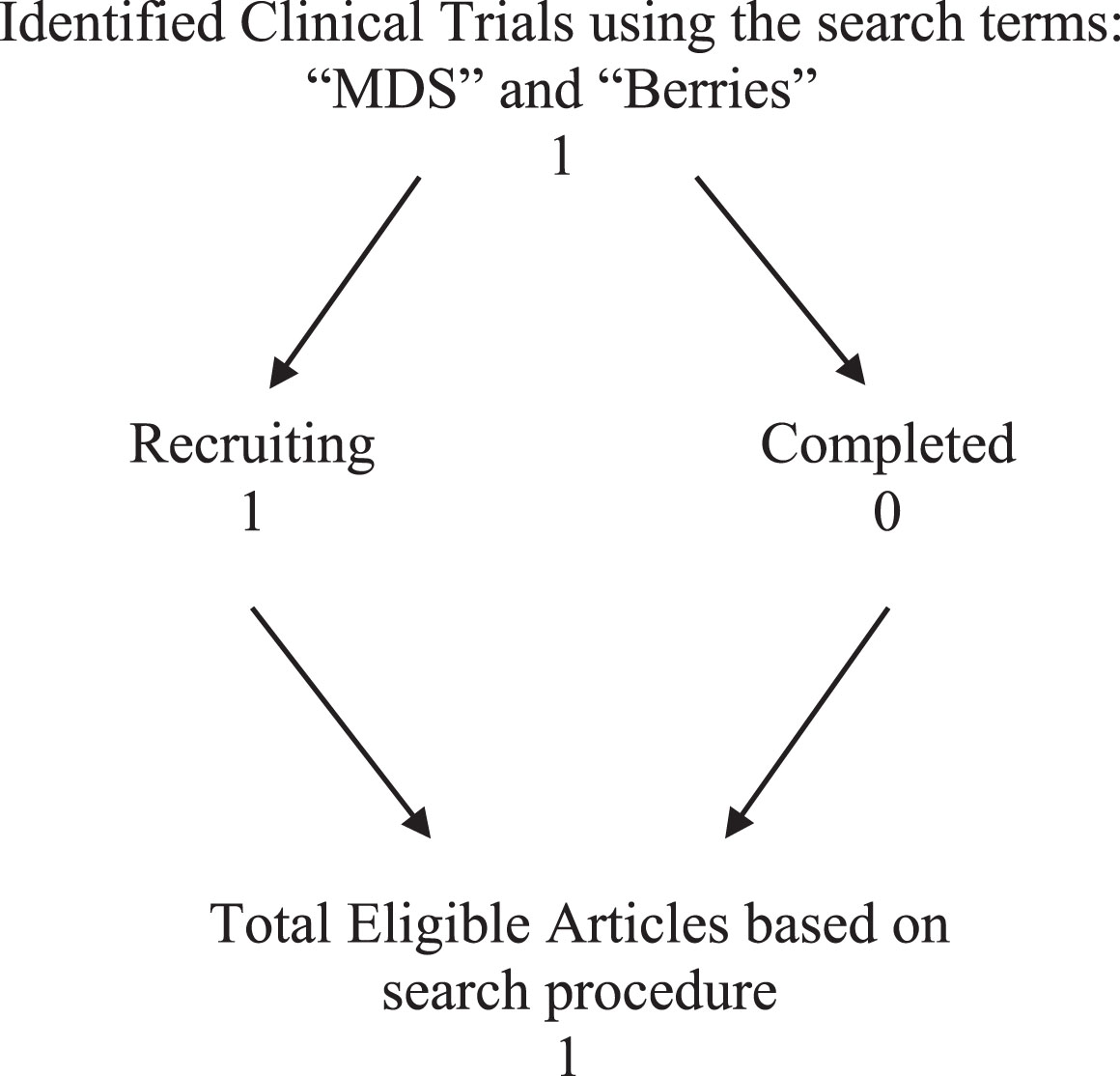
Flow chart representing the search procedure to identify eligible articles.
List of 17 interventional and observational completed clinical trials with patients with MDS using vitamins or natural products with an end date on or before 07 March 2019. Items in bold are keywords retrieved from the search procedure
List of 7 interventional and observational recruiting clinical trials with patients with MDS using vitamins (or natural products) with an end date on or before 07 March 2019. Items in bold are keywords retrieved from the search procedure
List of 1 interventional recruiting clinical trial with patients with MDS using berries with an end date on or before 27 March 2019. Items in bold are keywords retrieved from the search procedure
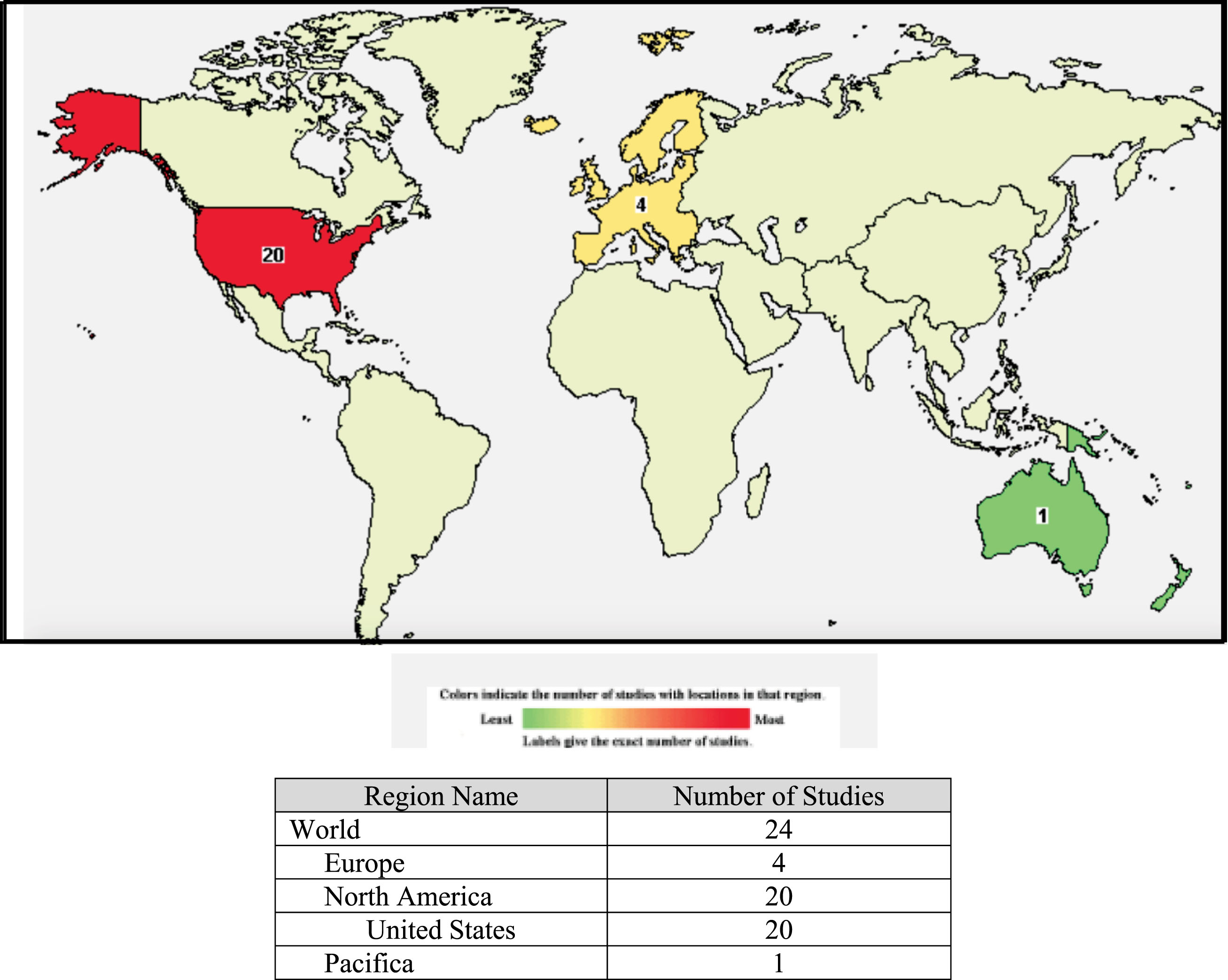
Map of 24 studies found by search of vitamins | Recruiting, Completed Studies | MDS | Start date on or before 07 March 2019. Heat legend indicates the number of studies with locations in that region. Table represents the number of studies and breakdown by world region.
Figures 1 and 2 details the sequential steps for the determination and selection of human clinical trials deemed eligible for the review. Comprehensively, thirty-five titles and abstracts were retrieved with the search terms “MDS” and “vitamins”, with one study retrieved when the terms “MDS” and “berries” was used. Eleven studies were not included as they were not under the completed status or recruiting status for their respective studies. Within the excluded studies, three studies were terminated (location: two in Italy and one in the United States), two are enrolling by invitation (location: United States), two studies’ status is unknown (location: United States and Jerusalem), one study was suspended (location: Korea), and one study was withdrawn (location: Jerusalem).
Collectively, based on their status, seventeen human clinical trials were rendered eligible based on the connection between berries, vitamins, or natural product intervention and MDS. When “berries”, as a new search term and new query in combination with “MDS”, only one recruiting human clinical trial was retrieved. Table 3 details the status, study title, conditions, interventions, study type, study design, outcome measures, number enrolled, NCT number, other IDs, and the location of this unique human clinical trial. Of the seventeen human clinical trials, fourteen were conducted in the United States of which thirteen were interventional, two studies were completed in Europe, and one study was completed in the Pacific.
Recruiting trials
Of the entire database within the NIH U.S. National Library of Medicine, only one actively recruiting human clinical trial associated with the established search terms of “MDS” and “berries” was retrieved. This result is of importance in that it is the only currently recruiting human clinical available, further highlighting the urgency to have more human clinical trials in cue using natural products.
\begin quoteA Pilot Study to Investigate the Hypomethylating Properties of Freeze-Dried Black Raspberries in Patients with Myelodysplastic Syndrome\end quote
The primary objective is to “evaluate the potential hypomethylating effects of freeze-dried black raspberries (BRBs) in the peripheral blood of patients with MDS or myelodysplastic syndrome/myeloproliferative neoplasm (MDS/MPN) after 3 months of BRB administration” [5]. The secondary objective is to “evaluate the toxicity of BRBs in patients with MDS or MDS/MPN and to evaluate the hematological response according to modified IWG criteria in patients with MDS or MDS/MPN regardless of the initial blood count” [5].
In this first human clinical trial of its kind, “eighteen patients with MDS will be treated with 50 gm/day (25 gm 2×/daily) of BRB powder taken orally in slurry of 240 ml of water” [5]. “Patients will receive oral BRBs for a period of at least 12 weeks and the respective team will plan on evaluating the DNA methylation status in those patients at presentation and then monthly for 3 months from the peripheral blood” [5]. Patients may continue to be on black raspberries if he or she can tolerate it and is benefitting from it for a maximum period of 12 months.
The BRBs may be beneficial and could potentially show promise in the human health treatment and prevention of MDS. The phytochemicals found in BRBs, if timed correctly, and with studies like this one, could be a suitable addition and intervention to positively influence health. As a result, BRBs’ biological activities may not only be deemed as a source of endogenous antioxidants, but also as an anti-cancerous fruit in future health regimens.
Of the seven recruiting human trials, only five recruiting human trials were deemed topically relevant to the study based on the method, intervention plan, variables considered, and purpose of the study (Table 2). Two studies, specifically, Therapeutic Use of Intravenous Vitamin C in Allogeneic Stem Cell Transplant Recipients, was set to “determine the effect of parenteral vitamin C on non-relapse mortality (NRM) at one year following myeloablative allogeneic HCT” [6] while TET2 Mutations in Myelodysplastic Syndromes and Acute Myeloid Leukemia With Azacitidine + Ascorbic Acid is “evaluating the efficacy of treatment with azacitidine (an FDA approved drug for the treatment of MDS) and high dose ascorbic acid in patients with TET2 mutations” [7]. The first study did not focus on MDS patients while the second study had an intervention approach of Azacitidine and ascorbic acid, which does not isolate the latter as a sole variable in improving the health responses of patients with MDS and/or MLS.
The following is a summary of the five remaining, relevant and actively recruiting human clinical trials associated with the established search terms of “vitamins” and “MDS”. These studies, based on their categorical nature, unlike the first two studies, focused exclusively on MDS and an intervention of select vitamins, which may help determine and isolate their effectiveness against the progression of MDS.
A Phase Ib/IIa Study Evaluating the Safety and Tolerability of Vitamin C in Patients With Intermediate or High-Risk Myelodysplastic Syndrome With TET2 Mutations [8]
This is an “open label, Phase Ib/IIa study designed to evaluate the safety, toxicity and biological activity of high dose Vitamin C in bone marrow and peripheral blood when administered as therapy to patients with intermediate or high-risk MDS according to the revised IPSS (international prognostic scoring system) criteria whose disease has a Ten-eleven translocation-2, (TET2) mutation” [8].
Epigenetics, Vitamin C, and Abnormal Blood Cell Formation - Vitamin C in Patients With Low-Risk Myeloid Malignancies (EVITA) [9]
The primary purpose of this “multi-centre, randomized, placebo-controlled, double-blind phase II study is to investigate if oral vitamin C may change the biology of low-risk myeloid malignancies; i.e., clonal cytopenia of undetermined significance (CCUS), low-risk MDS, and chronic myelomonocytic leukemia (CMML)-0/1 by reversing some of the epigenetic changes characteristic of these disease entities; preclinical studies have shown that active demethylation by the TET enzymes is dependent on vitamin C, and the investigators have shown that plasma vitamin C levels are exceedingly low in hematological cancer patients but are easily corrected by oral vitamin C” [9]. This study is “part of an array of EVITA studies aimed at clarifying whether the standard of care of patients with myeloid malignancies should be changed and oral vitamin C supplement added to the treatment recommendations” [9]. This study is currently being conducted in Denmark.
Monitoring, Detoxifying, and Rebalancing Metals During Front Line Acute Myeloid Leukemia (AML) and Myelodysplastic Syndrome (MDS) Therapy
The “goal of this clinical research study is to learn if giving calcium disodium edetate (Ca-EDTA) or dimercaptosuccinic acid (DMSA) to patients with acute myeloid leukemia (AML) or MDS while receiving standard chemotherapy can help to lower the level of metals found in the bone marrow and blood” [10]. “Researchers believe lowering the level of metals found in the blood/bone marrow may help to control the disease and/or improve response to chemotherapy” [10]. Ascorbic Acid Levels in MDS, AML, and CMML Patients [11] This study is a “non-interventional, specimen collection translational study to evaluate vitamin C levels in the peripheral blood of Acute Myeloid Leukemia (AML), MDS, or Chronic Myelomonocytic Leukemia (CMML) patients [11]. Plasmatic L-AScorbic Acid in Myelodysplastic Syndromes and Controls (PLASMYC) [12] MDS is a “group of heterogeneous diseases characterized by the clonal evolution of dysplastic hematopoietic stem cells” [12]. This “evolution is associated with accumulation of cytogenetic mutations which leads to acute myeloid leukaemia (AML); evolution of MDS is also associated with increase of reactive oxygen species (ROS)” [12]. The “increase of ROS is associated with accumulation of cytogenetic mutations” [12]. “Ascorbic acid (AA) is an actor of the regulation of the oxidative metabolism in the human body” [12]. “Studies showed that supplementation with AA can change the proliferation status of MDS cells; adjuvant treatment with AA is associated with a beneficial effect on the evolution of MDS and AML” [12]. The “present study aims at describing the variations of plasmatic ascorbic acid concentrations between healthy volunteers and patients with myelodysplastic syndromes advanced in their treatment or recently diagnosed during a follow-up of 12 months” [12]. This study is currently being conducted in France. The plasma collected will be later analyzed.
Other nature products
Mushrooms and MDS risk and/or treatment
In a Phase II study, maitake mushroom extract was well received and “enhanced in vitro neutrophil and monocyte function following treatment demonstrated that Maitake has beneficial immunomodulatory potential in MDS” [13]. The maitake mushroom treatment suggested “that G-CSF induction in bone marrow leads to HPC maturation and release of more functionally competent cells…improving the function in lower-risk MDS patients” [4].
Completed trials
Below is a summary of five select completed human clinical trials associated with the established search terms (Table 1). Twelve completed human clinical trials were not included in this description as they deviated from treating MDS or used a combination of a drug and a vitamin potentially proving the effectiveness of natural products cumbersome and difficult to decipher. The results from these trials, however, are pending given their start date. Cholecalciferol in Treating Patients with Myelodysplastic Syndrome [14] This vitamin D study, is a “phase II trial that studied how well vitamin D works to treat MDS patients, as cholecalciferol could increase blood counts, improve MDS symptoms, and lower fatigue” [14]. Decitabine, Arsenic Trioxide and Ascorbic Acid for Myelodysplastic Syndromes and Acute Myeloid Leukemia [15] This study is “designed to test the combination of decitabine, arsenic trioxide and ascorbic acid (Vitamin C) in 13 patients with MDS and acute myeloid leukemia” [15]. Paricalcitol in Treating Patients With Myelodysplastic Syndrome [16] Paricalcitol is a “form of vitamin D that may help myelodysplastic cells develop into normal bone marrow cells; as a Phase II trial, its purpose was to study the effectiveness of paricalcitol in treating patients who have MDS” [16]. Cephalon Decitabine, Arsenic Trioxide and Ascorbic Acid for Myelodysplastic Syndrome [17] This is an “open-label, non-randomized trial pilot Phase II trial open to patients with MDS; the purpose of the study is to determine if the combination of decitabine, arsenic trioxide and ascorbic acid is deemed safe” [17]. Doxercalciferol in Treating Patients With Myelodysplastic Syndrome or Chronic Myelomonocytic Leukemia [18] Doxercalciferol, or Vitamin D, “may improve low blood cell counts and decrease the need for blood transfusions and may be an effective treatment for MDS; as a Phase II trial, its purpose was to study the effectiveness of doxercalciferol (Vitamin D) in treating MDS or myelomonocytic leukemia patients” [18].
Discussion
The current availability of the clinical trials and the prospective impact the clinical trials could have for patients with MDS has far-reaching implications. Potential benefits that could be included are: (rendering) a positive association between both variables, reducing the symptoms associated with MDS, and in the future identifying therapeutic interventions.
On the other hand, a predicted barrier to executing these clinical trials is the specific targeted population they are seeking. To overcome this, biomarkers may help for an earlier diagnosis and intervention to develop a regimen that is both effective and personalized to meet the genetic and social needs of the patient. Another complexity to this review is the stage at which therapeutic options are offered. As a result, these circumstances will require rigorous preclinical research for tailored decisions. In reviewing the proposed treatment plans, a foreseeable difficulty is that some studies are combining drugs with a natural product, making the pinpointing more difficult (i.e. which natural product is better). Also, another limitation is the fact this review focused solely on completed clinical trials and currently recruiting clinical trials. Supported with Ma X., et. al., “In this analysis…fruit and vegetable intake did not appear to significantly influence the risk of MDS”…however, “since these factors were not evaluated in previous studies of MDS, these null findings need to be interpreted with caution” showing a promise for future studies to be warranted [1].
In conducting this review, the inherent total count collected limited the examination of available trials. It must be noted that a small count of human clinical trials strongly suggests an area for further research. Regarding efficacy, larger studies should be conducted to determine power efficacy.
A clear strength of this review is the fact that it is one of few reviews in written existence, bringing awareness, pre- and clinical attention to this type of intervention and an improved therapeutic experience for a better standard of living for patients with MDS. The present study gathers the most reputable resources to find parallels between current findings. Additionally, by conducting repeated searches, it reduced the chance of accidental oversight and reference lists were reviewed to gain full insight into completed clinical trials. Also, other databases were not searched, though it is probable any outstanding studies were not missed.
For the future, a longer study timeframe and period for human clinical trials is recommended to see if the effects will translate into lower infection rates. An interesting point to discuss is that for the future, “it may be important for clinicians to incorporate comorbidities into the risk stratification of patients with MDS when evaluating treatment options” as it could render a preventative and timely protective association [19].
Conclusion
At the forefront of advancing groundbreaking research for patients with MDS are human clinical trials that offer alternative options to traditional treatments. As an understudied and minimally explored blood disorder with discrete information, the approval of new natural therapies is welcomed in MDS research development. Despite there being no reported toxicity in natural products and bioactive compounds, additional research is necessary to explore the etiology of MDS, develop preventative and clinically-relevant measures, and improve the quality of life of individuals with MDS. As it was noted, dietary interventions may result as a supplement to the treatment plan. The future findings, too, may benefit and be useful for patients who cannot tolerate aggressive therapy combinations.
In this area of limited research, the author summarized the available completed and currently recruiting human clinical search trials surrounding MDS and berries and their components, particularly vitamins, natural products and vegetables. The returned searches suggested a promising prospect for individuals with MDS, by means of active and currently recruiting studies. It is also noted that improved bioavailability formulation is needed to complement medical interventions. Earlier and better pre-clinical work can help discover mechanisms of potent and timely action. The benefits could, then, be more persuasive for the scientific and medical community to adopt and integrate into regular treatment plans.
Funding
The authors report no funding.
Conflict of interest
No potential conflict of interest was disclosed.
Footnotes
Acknowledgments
To my mentor for her constant support, mentorship, and professional guidance. Without her, this special article would not be possible.