




Abstract
Background:
Alzheimer’s disease (AD) is increasingly prevalent and over 99% of drugs developed for AD have failed in clinical trials. A growing body of literature suggests that potent inhibitors of tumor necrosis factor-α (TNF-α) have potential to improve cognitive performance.
Objective:
In this review, we summarize the evidence regarding the potential for TNF-α inhibition to prevent AD and improve cognitive function in people at risk for dementia.
Methods:
We conducted a literature review in PubMed, screening all articles published before July 7, 2019 related to TNF blocking agents and curcumin (another TNF-α inhibitor) in the context of AD pathology. The keywords in the search included: AD, dementia, memory, cognition, TNF-α, TNF inhibitors, etanercept, infliximab, adalimumab, golimumab, and curcumin.
Results:
Three large epidemiology studies reported etanercept treated patients had 60 to 70% lower odds ratio (OR) of developing AD. Two small-randomized control trials (RCTs) demonstrated an improvement in cognitive performance for AD patients treated with etanercept. Studies using animal models of dementia also reported similar findings with TNF blocking agents (etanercept, infliximab, adalimumab, Theracurmin), which appeared to improve cognition. A small human RCT using Theracurmin, a well-absorbed form of curcumin that lowers TNF-α, showed enhanced cognitive performance and decreased brain levels of amyloid-β plaque and tau tangles.
Conclusion:
TNF-α targeted therapy is a biologically plausible approach to the preservation of cognition, and warrants larger prospective RCTs to further investigate potential benefits in populations at risk of developing AD.
Keywords
INTRODUCTION
The prevalence of Alzheimer’s disease (AD) doubles every 5 years starting at age 65 and afflicts 1 in 3 people over the age of 85 [1]. The number of patients with AD in the United States (US) is predicted to nearly triple from 5.3 million currently to 14 million by 2050 [2]. Moreover, as life expectancy continues to rise among the world’s populations, there is an urgent need for discovery and development of agents to delay the onset of AD, slow its progression or even prevent it [3, 4].
A consensus statement from 100 experts on brain and cognitive health proposed that dementia, including AD, may be preventable, at least in part [4]. The intent of the statement was a call to action for researchers and clinicians to make the prevention of AD or at least delay the onset of dementia symptoms a global public health priority [3]. The Lancet Commission on dementia later identified nine potentially modifiable risk factors related to lifestyle, behavior, and overall health, if treated, may help to prevent or delay onset of dementia [5].
Unfortunately, AD drug development has thus far proven to be exceedingly low-yield, with a 99.6% failure rate—the worst for any therapeutic area according to the US Food and Drug data [1, 2]. From 1998 to 2019, approximately 200 randomized controlled trials (RCT) have been performed, and the vast majority of therapeutic strategies have failed to show durable cognitive benefits [1, 6–8]. One exception is the class of agents that inhibit tumor necrosis factor-alpha (TNF-α), which has shown promise in the prevention of AD in exploratory studies [9].
TNF-α: Master regulator of inflammation
TNF-α is a 25 kDa transmembrane protein produced by a wide variety of cells; however, the primary synthesizers are cells of the monocytic lineage, including microglia—macrophages that reside in the brain [10, 11]. Macrophages are a key driver of systemic inflammation via production of TNF and other proinflammatory cytokines. TNF-α binds to tumor necrosis factor receptor (TNFR)1 and TNFR2 to exert a multitude of downstream effects including: 1) immune-stimulation, 2) resistance to infectious agents, 3) malignant cell cytotoxicity, 4) sleep regulation, and 5) embryonic development [12]. In acute settings such as physical trauma or infection, TNF-α orchestrates the pro-inflammatory cytokine cascade. Principally, this results in activation of lipid signaling transduction mediators, including prostaglandins and platelet activating factor [11], as well as the nuclear factor kappa-light-chain-enhancer of activated B cells (NF-κB), potentiating the inflammatory state through both cytokine and interleukin signaling pathways [13].
The chronic production of TNF-α by microglia elicits a neuro-inflammatory response associated with AD, Parkinson’s disease, multiple sclerosis, and amyotrophic lateral sclerosis [14]. This TNF-α mediated inflammation may also contribute to amyloid-β (Aβ) plaques and tau protein hyperphosphorylation (tau) known to accumulate in the brains of AD patients [14].
Systemic inflammation increases risk of Alzheimer’s disease
Systemic inflammatory diseases such as rheumatoid arthritis (RA), inflammatory bowel disease, and psoriasis, which in part are mediated by TNF (Fig. 1), heighten risk for AD, and these diseases are also approved indications for TNF blocking agents [15]. If the increased risk of AD is in part due to TNF, then TNF blocking agents could be expected possibly decrease risk of AD.
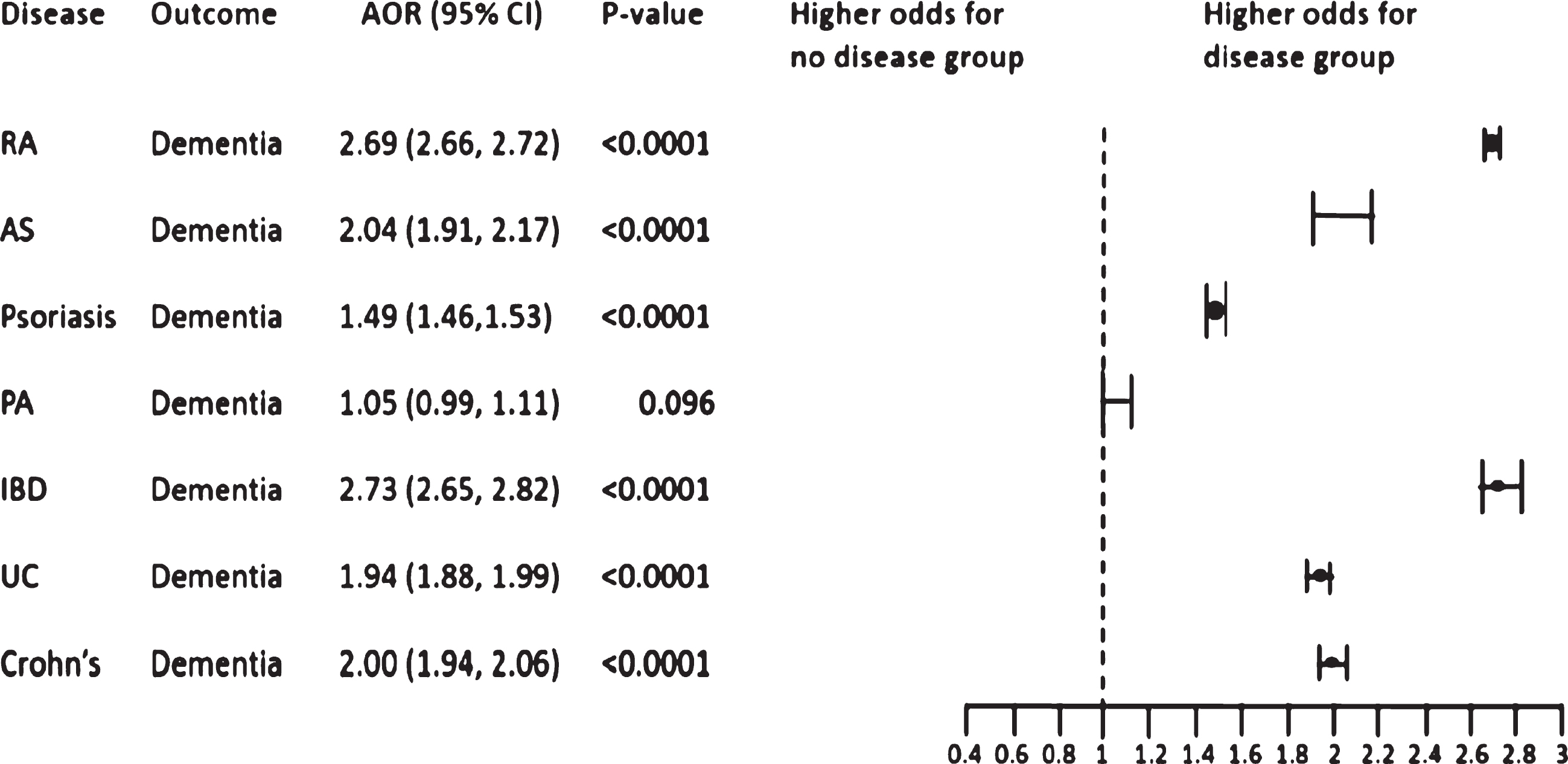
Adjusted odds ratio (AOR) for a diagnosis code of dementia associated with a diagnosis for an inflammatory disease compared to the non-inflammatory group disease [15]. AS, ankylosing spondylitis; Crohn’s, Crohn’s disease; IBD, inflammatory bowel disease; PA, psoriatic arthritis; RA, rheumatoid arthritis; UC, ulcerative colitis.
Indeed, multiple observational studies consistently report that among RA patients, those who are treated with TNF blocking agents have a decreased risk for AD (Table 1) [15–17]. Patients with systemic inflammatory diseases treated with TNF blocking agents even have a decreased risk of AD when compared to the general population [15]. RA patients treated with adalimumab had a reduced risk of AD compared to the general population, Odds Ratio (OR) 0.62 (0.43–0.89) [15]. Similarly, compared to the general population, psoriasis patients treated with etanercept, OR 0.58 (0.37–0.90), or adalimumab, OR 0.48 (0.23–0.88) had decreased risks of AD [15].
Summary of epidemiological data linking TNF blocking agents with reduced risk of AD
TNF-α has been referred to as a master regulator of the immune response in many organ systems, including the brain [18]. This pro-inflammatory cytokine is elevated in the cerebrospinal fluid of AD patients and correlates directly with disease progression [19]. A growing body of evidence suggests that targeting TNF-α is a biologically plausible strategy to improve cognition among middle and older-aged adults, and possibly treat or prevent AD [9].
In animal models, genetic and pharmacological strategies that augment TNF-α signaling exacerbate accumulation of Aβ and tau [9]. Moreover, preventive and intervention anti-inflammatory therapies to lower TNF-α including infliximab, etanercept, rapamycin, thalidomide, curcumin, and celastrol have shown improvements in brain pathology and cognitive function in AD rodent models [9].
The TNF blocking agenst exert different therapeutic efficacies in various autoimmune diseases, likely because they produce subtly different immunologic responses [20]. Some TNF inhibitor drugs are monoclonal antibodies that bind to TNF-α; these include infliximab, adalimumab, and golimumab. Alternatively, etanercept is an engineered dimeric fusion protein that is a replica of the extracellular ligand-binding portion of the human TNF receptor, thereby acting as a decoy receptor that binds to TNF and inactivates it.
Curcumin is the polyphenolic anti-inflammatory compound that is derived from turmeric, commonly recognized as the Indian herb used in curry powder [10]. Curcumin downregulates production of TNF-α and NF-κB [14].
The biologic anti-TNF agents including etanercept have rare but potentially serious adverse effects including lymphoma, congestive heart failure, demyelinating disease, and lupus-like syndrome [20]. A Cochrane metanalysis reported that, compared to placebo, biologic TNF inhibitors increase the risk of withdrawals due to adverse effects such as: a) induction of auto-antibodies and injection site reactions, with an OR of 1.47, 95% CI 1.20 to 1.86; with a number needed to harm (NNTH) = 26, b) serious infections, OR, 1.37, 95% CI 1.04 to 1.82, NNTH = 108, and c) tuberculosis reactivation, OR 4.68, 95% CI 1.18 to 18.60; NNTH = 681 [21].
Curcumin appears to have a relatively benign side effect profile, and is an inexpensive (and largely unregulated) over-the-counter supplement [10]. However, curcumin products show marked variability with respect to absorption and other important factors that likely influence their effectiveness at reducing TNF-α, and potentially for improving cognition [22–24].
We conducted a systematic literature review in PubMed, screening all articles published before April 2020 related to TNF blocking agents and curcumin in the context of AD pathology. The keywords included in the search were: AD, dementia, memory, cognition, TNF-α, TNF inhibitors, etanercept, infliximab, adalimumab, golimumab, and curcumin.
RESULTS
RCTs of TNF blocking agents
Buchart et al. conducted a double-blind study of 41 AD patients randomized to etanercept 50 mg/weekly subcutaneously (SQ) versus placebo [25]. After 24 weeks of treatment, those who received etanercept showed a trend toward improvements in the Mini-Mental State Examination (MMSE) and neuropsychiatric inventory (p values = 0.07 and 0.02, respectively) [25].
Another study randomized 15 AD patients to etanercept 25 mg SQ twice weekly (8 subjects) versus adalimumab 40 mg SQ twice monthly (7 subjects). On treatment, the patients showed a positive change from baseline MMSE 1.86 at 6 months (p < 0.006) (24.47±4.55 versus 26.33±3.06) [26]. This very small study suggested TNF blocking agents may favorably alter the otherwise predictable cognitive decline in AD patients.
Observational studies of TNF blocking agents
A query of a database comprised of 8.5 million commercially insured US adults identified 41,109 people with a diagnosis of RA [16]. This study found that the RA patients who had been treated with the TNF blocking agents etanercept, adalimumab, or infliximab had a significantly reduced risk of AD, after adjusting for diabetes, coronary artery disease, and apolipoprotein E (APOE) status, with adjusted OR of 0.45 (95% CI of 0.23–0.90; p = 0.02). This study, which was based on 9,253 AD patients, reported that AD was significantly more common in RA patients compared to non-RA patients. Additionally, the other anti-inflammatory therapies that do not reduce TNF, including prednisone, sulfasalazine, and rituximab, had no effect on the risk of developing AD [16].
Another epidemiological study, this one conducted by industry, was a retrospective database analysis of medical insurance claims that focused on a large cohort of RA patients, dividing them into 2 large groups: 1 group was comprised of 127,000 RA patients who had been diagnosed with AD and another group of 127,000 RA patients who had not been diagnosed with AD. A total of 110 patients had previously been treated with etanercept in the AD diagnosis group, whereas 302 patients had been treated with etanercept in the group without AD. This nearly 3-fold higher rate of AD in the group that did not receive etanercept translated into a significant 64% reduction in AD diagnosis for patients who had been treated with this potent TNF blocking agent [17].
These research findings were not published in a peer-reviewed journal, and instead were shared internally with pharmaceutical industry employees. Some details, however, were disclosed in a lay press investigative journalism article in which the author reported that the database query of medical insurance claims also revealed significant associations between etanercept treatment and reduced risks for memory loss and mild cognitive impairment, suggesting that etanercept might also confer protection against early stages of AD [17].
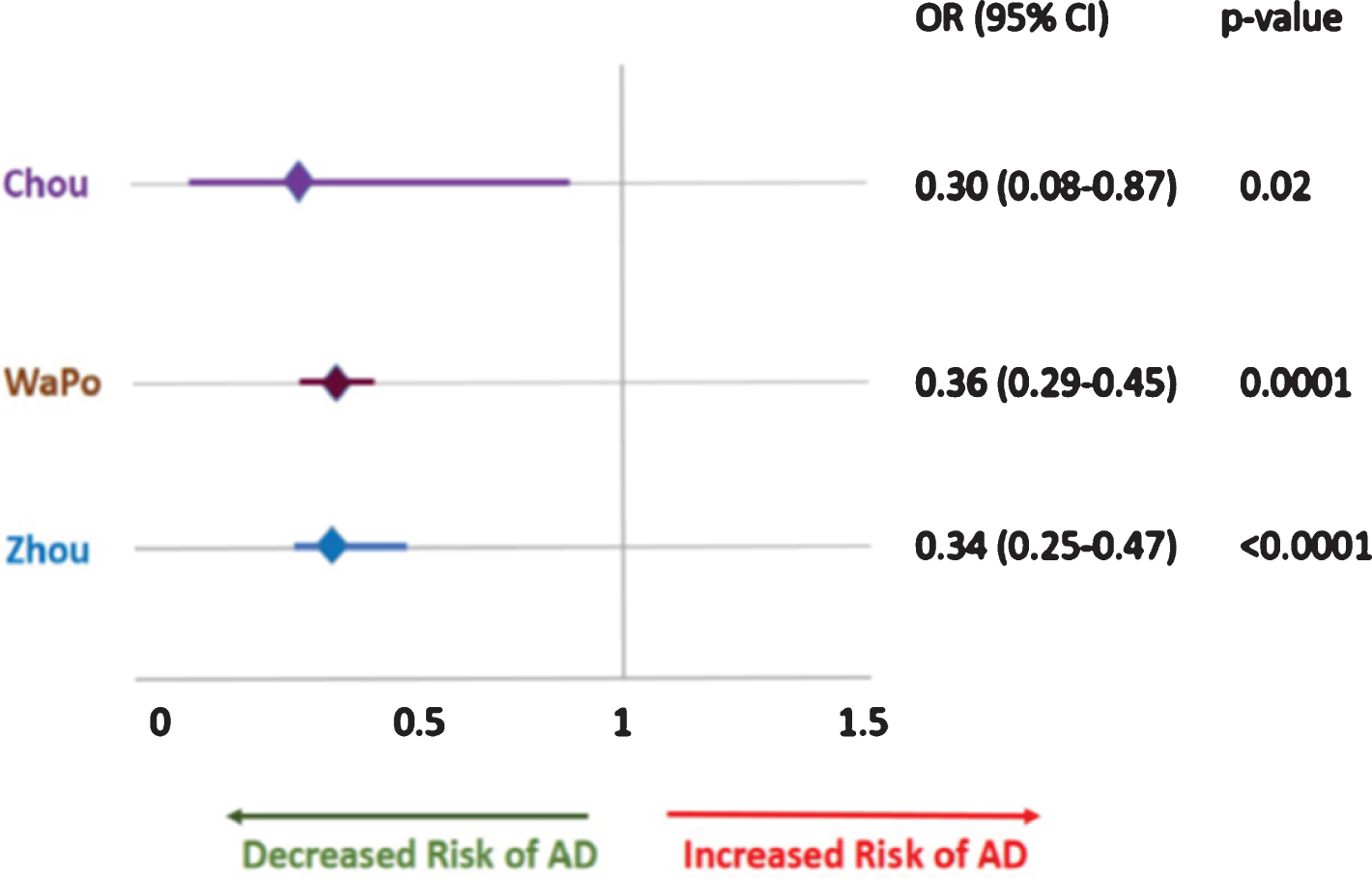
The most recent retrospective case-control study queried the electronic health records of 56 million adult patients to assess whether treatment with a TNF inhibitor was associated with reduced risk for AD among patients with RA or psoriasis [15]. The adjusted risk of AD among patients with RA was reduced in patients treated with etanercept (OR = 0.34 [0.25–0.47], p < 0.0001), adalimumab (OR = 0.28 [0.19–0.39]), p < 0.0001), or infliximab (OR = 0.52 [0.39–0.69], p < 0.0001). Etanercept and adalimumab were also associated with reduced risk for AD among patients with psoriasis: OR = 0.47 (0.30–0.73) and 0.41 (0.20–0.76), respectively (Fig. 2) [15].
One prospective single-center, open-label, pilot study was conducted on 12 patients with mild to severe AD [27]. Etanercept 25 or 50 mg weekly was administered via peri-spinal injection for 6 months. While this study had several important limitations, the investigators reported significant changes compared to baseline on several cognitive tests of memory, verbal fluency, and comprehension [27]. It was also reported that 2 patients with dementia improved within minutes of etanercept administration [27].
Another report by the same investigator team with a design similar to the above pilot study and also with several key limitations included 15 AD patients. That study reported significant improvements over 6 months on MMSE scores (mean change at 6 months: +2.13, p < 0.001), the AD Assessment Scale-Cognitive subscale (ADAS-Cog) (–5.48, p < 0.002), and the Severe Impairment Battery (+16.6, p < 0.001) [28]. Comparatively, untreated patients have known ADAS-Cog decline of 7 points per year and a 3.3 point per year decline on MMSE [28].
Animal studies of TNF blocking agents
Studies using animal models of dementia generally support the potential for TNF-α inhibitors to improve cognitive function. For example, APP/PS1 mice (a transgenic mouse model of AD) treated with 150 mcg of infliximab/per day×3 days via intracerebroventricular injection were compared to controls who received immunoglobulin G (IgG) using the same route of administration and schedule [29]. After the 3 days of infliximab injections, the Aβ deposits in the treated mice were reduced by 40% to 60%, and tau accumulation was decreased by 70%. Correspondingly, the TNF-α levels in the brain were decreased significantly by days 3 and 7; by day 14 (11 days after treatment cessation) the TNF-α levels returned to baseline [29].
Another study used intracerebroventricular injection of Aβ peptides into mice to simulate AD. They then separated the mice into 2 groups, 1 that received SQ injections of etanercept and the other receiving SQ injections of IgG. They found that etanercept prevented working memory deficits measured via the Y-maze task, and also improved long term memory deficits measured via inhibitory avoidance task test performance. Additionally, etanercept prevented the increase of TNF-α concentration in the hippocampus [30].
Another mouse model of AD reported that animals who received either etanercept or infliximab had better performance scores on a test of passive avoidance, and on the Morris water maze test, compared to the control group [31]. Of note, in the latter test mice receiving etanercept performed better than those receiving infliximab [31].
Curcumin as a potential neuroprotective agent
Turmeric, which comes from the root of the Curcuma longa plant, contains curcumin along with many other potentially beneficial constituents [32]. This botanical therapy has been used for centuries as an herbal remedy for arthritis and other medical conditions. Epidemiological studies have reported a lower prevalence of AD among the individuals in the Indian population who frequently consume curry [33]. Curcumin has anti-inflammatory and antioxidant properties, and an extensive literature shows that curcumin downregulates production of TNF-α [10, 34]. Furthermore, in vitro studies suggest that curcumin may decrease Aβ and tau accumulation in the brain [22], and reduce both TNF-α induced mRNA expression and secretion of interleukin (IL)-6 [10]. Curcumin also lowers TNF-α induced NF-κB, prostaglandin E2, and cyclooxygenase-2 expression [14, 34]. All of this suggests a possible neuroprotective role for curcumin, with potential for improving cognitive performance in older adults, reducing risk for AD, or both. Despite this promise as a neuroprotective agent, the early placebo-controlled trials of curcumin for improving brain function in humans showed no benefit, possibly due to use of curcumin preparations with poor bioavailability, or enrollment of subjects that were not within an ideal window prior to onset of more advanced pathophysiology and/or disease [23, 24].
RCT of curcumin for improving cognitive function
A randomized double-blind placebo-controlled trial that included 40 non-demented adults (age range 51 to 84 years) assigned study participants to either Theracurmin (a bioavailable form of curcumin, 90 mg twice daily) or matching placebo [22]. This is a nanoparticle colloidal suspension of curcumin that transforms the normally hydrophobic curcumin into a water-soluble form that is well absorbed in the gastrointestinal tract. In this 18-month trial, participants receiving Theracurmin showed significantly better memory and attention (Fig. 3) [22]. Measures of mood demonstrated an effect of curcumin on symptoms of depression, but no significant between group differences were seen.
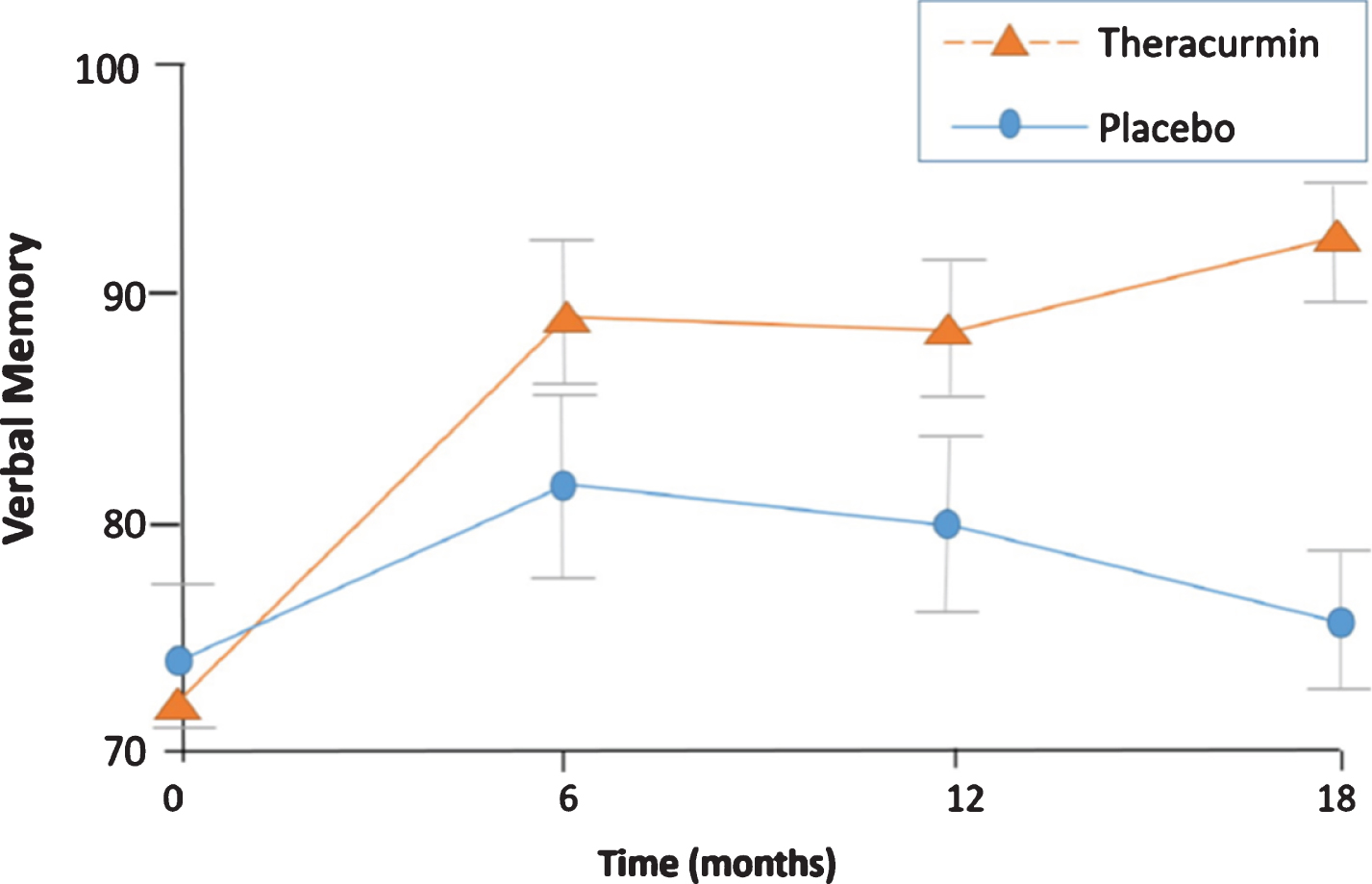
For the primary verbal memory outcome measure (Buschke SRT, Consistent Long-Term Recall), the Theracurmin group showed significant improvement from baseline after 18 months of treatment (p = 0.002); the placebo group did not show significant change (p = 0.8), and between group differences were significant (p = 0.05) [22].
In this trial, positron emission tomography (PET) scans of the brain were performed on 30 of the research participants (15 in the Theracurmin group and 15 in the placebo group) before and after treatment. These PET scans suggested that the behavioral and cognitive benefits conferred by the curcumin were associated with lower levels of Aβ plaque and tau accumulation in the hypothalamus and possibly the amygdala (between group differences showing a trend)—brain regions associated with mood and memory [22]. Moreover, changes in amygdala binding were significantly correlated with changes in Beck Depression Inventory scores in the curcumin group [20]. Theracurmin has also been demonstrated to improve cognitive function in a mouse model of dementia [35]. In that study, the higher doses of curcumin augmented brain function in mice. The authors correlated the cognitive improvement with enhanced anti-oxidative activity and increased synaptic function [35].
A recent meta-analysis focused on RCTs evaluating curcumin’s effect on cognition. This study comprising a total of only 289 subjects showed that curcumin improved scores of cognitive function and mood among non-demented older adults, but showed no benefit among AD patients [36]. To date, the cumulative RCT evidence of curcumin for improving cognition involves a modest number of participants, thus larger outcome studies will be needed to clarify its safety and efficacy.
Curcumin in general has a mild side effect profile and feasibly could function as a safe and inexpensive alternative to biologic TNF blocking agents. As mentioned above, the bioavailability of curcumin and turmeric products has been relatively poor. However, curcumin formulations with superior bioavailability that produce markedly higher blood levels may be more likely to cause serious adverse effects than the more poorly absorbed curcumin products. Thus, curcumim will need to be scrutinized for complications that can arise from immunosuppression, as have been seen with the biologic TNF blocking agents. To date, the reported side effects of well absorbed curcumin products have been principally related to gastrointestinal upset, without signals for increased risks of malignancy or infections that can occur with immunosuppression due to biologics [22–24].
TNF-α is a pro-inflammatory cytokine that appears to be integral in the pathogenesis of AD. Biologic TNF blocking agents have been consistently associated with decreased risk of AD in epidemiology studies. In preliminary clinical studies etanercept appears to improve cognition; however, larger RCTs are needed. Curcumin lowers TNF-α and was found to improve cognition and possibly reduce Aβ plaque and tau accumulation in the hyopthalamus in a small RCT using Theracurmin in older non-demented humans.
These anti-TNF therapies, including both etanercept and curcumin, are molecularly too large to pass through the blood-brain barrier and directly target TNF-α within cerebral tissue [16, 22]. Emerging evidence, however, indicates that systemic inflammation plays a fundamental role in AD, and therapies lowering TNF activity peripherally may also act to reduce cerebral inflammation indirectly [17, 22]. That systemic anti-TNF therapies such as etanercept and curcumin are associated with reduced risk of AD suggests the potential neuroprotective effcts of interrupting TNF signaling between the periphery and the brain. Furthermore, because TNF-α can cross the intact blood-brain barrier, therapies that lower systemic levels of this cytokine will indirectly lower the TNF-α levels in the brain [9, 15].
Inactivation of interleukin-1β with the human monoclonal antibody canakinumab (approved for clinical use in rheumatologic disorders, similarly to TNF blocking agents) resulted in prevention of recurrent cardiovascular events in the landmark CANTOS trial [37]. Atherosclerotic cardiovascular disease shares many causal links with neurodegeneration, suggesting the need for a similar trial with anti-TNF therapy in people at risk for AD. In a disease state characterized by therapeutic futility, TNF-α targeted therapies show promise; though larger prospective RCTs are needed to investigate their potential benefits in populations at risk for AD. These RCTs ideally would enroll non-demented patients at increased risk for AD such as those with elevated biomarkers of inflammation [38], and/or at least 1 APOE ɛ4 allele, and/or those with mild cognitive impairment. Besides using serial psychometric testing, quantitating Aβ plaque and tau accumulation using PET imaging would be informative.
DISCLOSURE STATEMENT
Authors’ disclosures available online (https://www.j-alz.com/manuscript-disclosures/20-0711r1).