




Abstract
BACKGROUND:
Resistance exercises are widely used to enhance muscle hypertrophy. Hypertrophy occurs with effect of mechanical loading, metabolic stress, and muscle damage. The time under tension in eccentric, isometric, and concentric phases of resistance exercises can alter muscle damage and anabolic hormone responses.
OBJECTIVES:
The aim of the study was to reveal the effect of the time spent in the concentric and eccentric phases of the movement on muscle damage and anabolic hormone response during resistance exercise.
METHODS:
Ten male subjects participated in the study. A, B, C tempo protocols were created by changing the time under tension to be 1 or 2 seconds in the eccentric and concentric phases of bench press and squat movements. In all protocols, isometric phases were 0 sec. The metronome was used to apply tempos. Blood samples were taken before each protocol, after administration, and in the 24
RESULTS:
Time-wise changes in CK were statistically different for all protocols (
CONCLUSIONS:
Extending time under tension in the eccentric phase of a bout of resistance exercise appears to affect the anabolic hormone response and muscle damage. In this way, increased metabolic response and mechanical stress can induce muscle mass gain.
Introduction
Resistance exercises are commonly performed as a part of physical fitness to sustain a healthy lifestyle and as a part of exercising and training programs followed by performance athletes to boost their skeletal muscle mass and strength. Factors such as the loading and the number of repetitions and sets applied while performing resistance exercises affect the extent of the response. For instance, keeping the loading level moderate despite the same number of repetitions and sets causes muscle hypertrophy, while increasing the loading results in better muscle strength [1]. The natural form of an action performed during a resistance exercise is attained through a combination of concentric-isometric-eccentric contractions. Moreover, the tempo is maintained as the duration spent within the contraction phase of every action is expressed in seconds [2]. To the best of our knowledge, mechanical stimuli stands out as the most likely and strongest hypertrophy stimuli [3]. It is possible to increase mechanical stimuli by increasing the time spent under tension. Furthermore, as the change of tempo may alter the duration a muscle spends under contraction and the difficulty of the action, it is a parameter that may affect the number of targeted repetitions and sets. It was reported that the duration a muscle spends under contraction during resistance exercises might affect the metabolic responses of the skeletal muscles based on the difference in contraction [4]. For example, an extension of the duration spent under contraction during the concentric phase decreased the number of repetitions, but this was not the case for the eccentric phase, which could generate 20%–50% more strength compared to the concentric phase [5, 6]. In addition, the extension of the duration spent under contraction (an increase of mechanical contraction) would increase muscle damage, and intra-cellular anabolic signals induce a hypertrophic response. The duration a muscle spent under contraction could affect the skeletal muscles’ physiological responses based on the muscular contraction occurring during resistance exercises [1]. However, due to the variations in the duration spent under contraction, the relationship between the anabolic signal and hypertrophic response has yet to be explained.
Resistance exercises performed acutely or chronically affect the level of basic molecules within the protein synthesis pathways [7, 8, 9] with the secretion of anabolic hormones such as testosterone and insulin-like growth factor-1 (IGF-1) [10, 11, 12]. Moreover, it has also been well documented that the manner of contraction during the resistance exercises affected the levels of anabolic hormones and that eccentric contractions were superior to concentric contractions regarding the secretion of anabolic hormones [13, 14]. Extension of the duration under eccentric loading during the concentric/eccentric contraction increased the levels of testosterone, lactate and creatine kinase (CK) levels [15] and transformed the muscle fiber phenotype into the intermediate type [16]. In addition, the testosterone and growth hormone levels that increased during acute resistance exercises were also conserved in the chronic period during the training with a longer eccentric phase compared to the isoinertial parts of training [14]. These studies suggest that changes in the duration spent under contraction at each phase during a resistance exercise performed through the combination of eccentric-isometric-concentric phases may have different impacts on the anabolic signals affecting the skeletal muscles and that the tempo with a higher duration of eccentric exercise phase would increase the anabolic hormone levels. Additionally, studies on the impact of resistance training regularly performed at different tempos for 6–14 weeks on the changes in muscle mass, body composition, the number of muscle fibers, cross-sectional area, and total muscle thickness have yielded contradictory results [17, 18, 19, 20]. Although there are several studies examining the anabolic hormone response of resistance training [21, 22], the literature regarding the impact of resistance training with different tempos on anabolic hormones is not as extensive, which causes difficulties in assessing the changes in the duration spent under the contraction at different phases and evaluating the responses in the muscles. Therefore, the main purpose of this study was to determine how the prolongation or shortening of the time spent in the eccentric and concentric phases of a movement during acute training with resistance exercises affects the serum levels of some anabolic hormones that cause hypertrophy. This study aimed to evaluate the responses in the skeletal muscles when the eccentric phase or concentric phase duration is applied as 1 sec or 2 sec, and to test the hypothesis that the tempo in which the eccentric phase is applied for 2 seconds may be more effective in increasing serum testosterone and IGF-1 levels.
Methods
Subjects
A total of 10 male subjects whose ages ranged between 18 and 25 (mean age
Participants with chronic diseases, who had a previous surgical operation history in the last year, who participated in a regular training program in the last six months, and who had a condition that prevented them from performing exercises were excluded from the study.
Malatya Clinical Researches Ethical Committee approval was obtained for the study (no: 2017/14). Subjects were informed about the study before signing an institutionally approved informed consent document to participate in the study. The study was conducted in accordance with the principles of the Helsinki Declaration.
Flow of practices and schema for taking blood sample.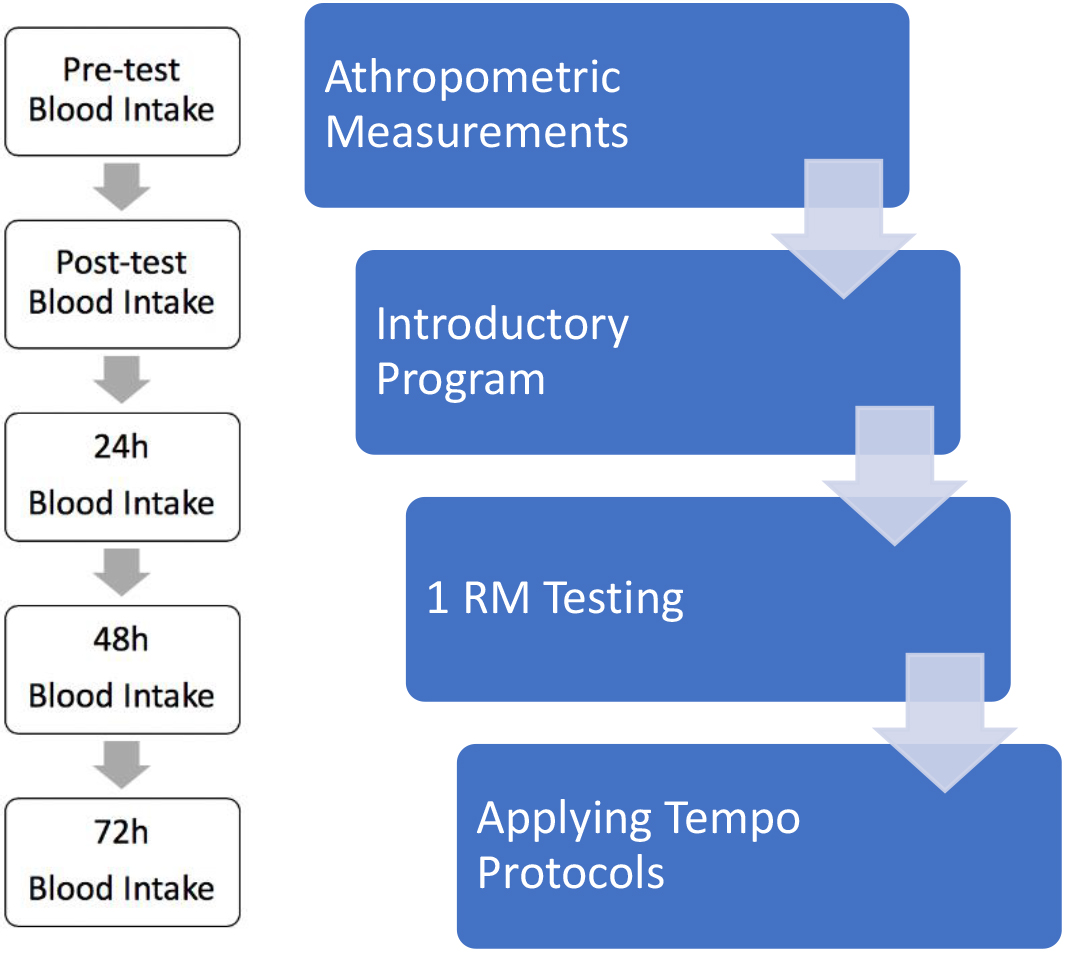
At the initial stage of research body weight, body fat percentage (Bio-electrical impedance, Tanita SC 333 A, Japan) and height measurement (SECA 213, Germany) of the volunteers participating in the study were measured. After the completion of the anthropometric measurements, participants enrolled in an introductory program in order to perform the bench press and squat movements with the correct technique and to learn how to apply 3 different tempo protocols. Afterwards one-repetition maximum (1-RM) testing was performed. The 3 different tempo protocols were performed with two-week intervals. The schema regarding the study protocol and taking a blood sample process is presented in Fig. 1.
Participants were told not to perform other resistance exercises, and not to consume substances like caffeine, alcohol, and ergogenic aids in the previous 24–48 hours before the tests. During the investigation process, no particular nutrition program was given to the subjects, and the subjects were asked to maintain their daily nutrition habits.
Procedures
Introductory program
Bench press and squat exercises were performed using an olympic barbell. Additionally, the correct gripping technic of the barbell and posture during squat and bench press exercises were also taught to the subjects. For bench press and squat repetitions, hand grip, and relevant actions were determined based on the criteria of the National Strength and Conditioning Association [23]. How to apply 3 different tempo protocols was also taught in introductory program. Than 1 week interval was given before 1RM testing.
CK activity. 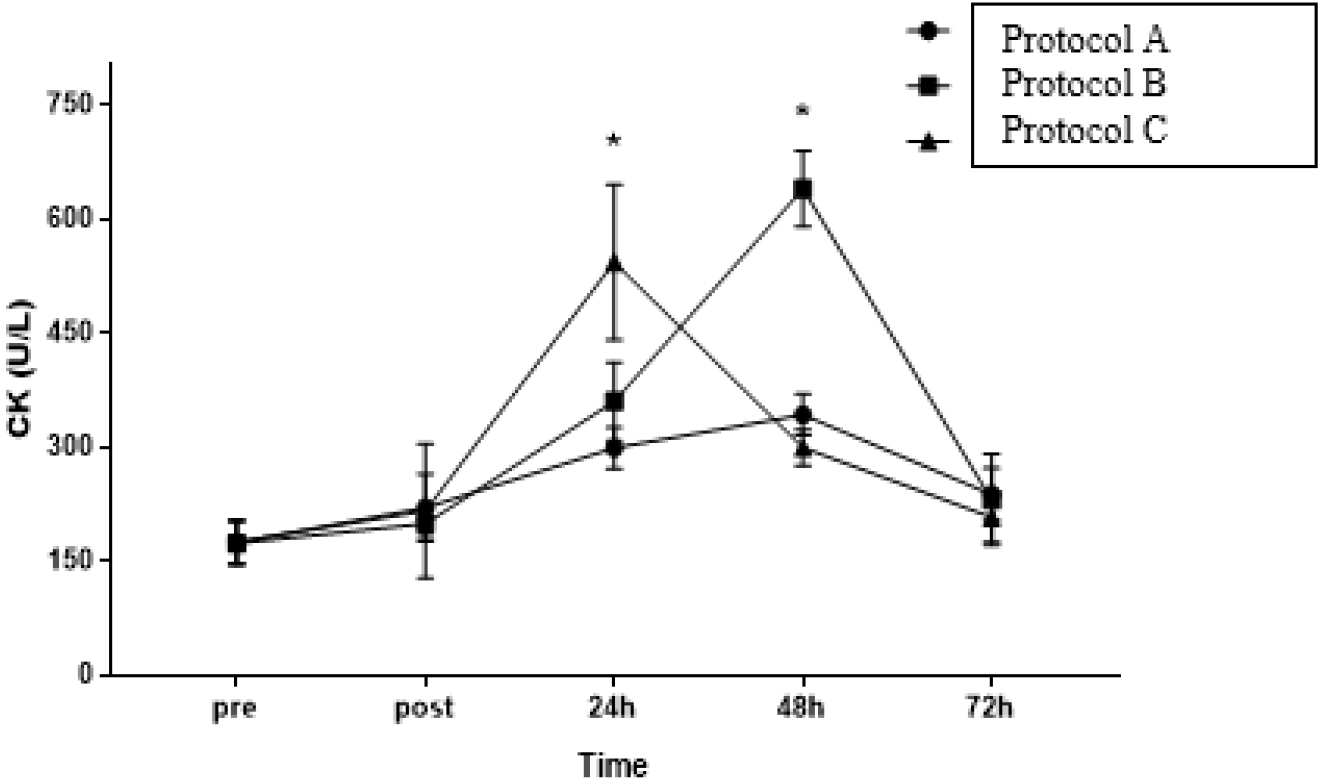
Determining the one-repetition maximum (1-RM): The maximum weights subjects could lift in six repetitions (6 RM) were determined. During each exercise, the subjects were told to perform 6 RM with the weights they were supposed to lift. Additional weights (2.5–5 kg) were added based on the perceived difficulty level and weights subjects lifted, and they were told to repeat the exercise. The practices were maintained in this manner, and the maximum weights participants could lift six times were recorded as 6 RM. 1 RM was found through the formula of 100 x weight lifted/102.78-2.78 x repetition number [24].
Exercise repetitions consisting of squats and bench presses were performed as 60 beats/min. (bpm) set by a metronome, meaning every beat lasted one second. Therefore, the subjects adapted to the timing of eccentric and concentric phases during the squat and bench press sets. The tempo durations used in the study were taught to all subjects while displaying the squat and bench press exercises. While pushing the Olympic bar during the bench press movement creates the eccentric phase, pulling back creates the concentric phase. During the squat movement, squatting creates the eccentric phase, while straightening creates the concentric phase. The isometric phase takes place between push-pull and squat-righting. Protocol A was the first protocol in which the eccentric and concentric phase times were equal and completed in 1 second. In protocol B, the eccentric phase duration was 2 seconds and the concentric phase duration was 1 second. In Protocol C, the eccentric phase time was completed in 1 sec and the concentric phase duration was 2 seconds. In all 3 protocols, the isometric phase between the eccentric and concentric phases was applied without pause, that is, for 0 seconds. This order was used because the preliminary contraction type for both exercises was eccentric.
Blood sampling
To determine the baseline level of the blood parameters to be analyzed in the study, blood samples were taken 5 times from the forearm antecubital vein between 8.00 and 9.00 in the morning following a fasting period of 12 hours before the exercise, right after the tempo practice after the exercise (post-test), and at the 24
Biochemical analyses: Insulin, testosterone, and IGF-1 levels from the serums were analyzed via the chemiluminescence method (Roche, e601 model, Roche Diagnostics GmbH Sandhofer Strasse 116, D-68305 Mannheim for insulin, testosterone and Siemens, immolate 2000, Siemens Healthcare Diagnostics Products Ltd. Llanberis, Gwynedd LL55 4EL the United Kingdom; intra-assay CV’s are %7 for all analysis) while CK and lactate dehydrogenase (LDH) levels were analyzed through the spectrophotometric method (Abbott, C 16000; Abbott Laboratories Diagnostics Abbott Park, IL 60064, USA; intra-assay CV’s are %5.2 and %3.4, respectively).
Statistical analyses
The Shapiro-Wilk test was used to test whether the data were normally distributed. Measurements were repeated owing to the failure of ensuring sphericity assumptions were analyzed through the Greenhouse-Geisser Test. Repeated measures analysis of variance (RMANOVA) and post hoc Bonferroni test were performed for the time variable between the protocols. Data are presented as mean and standard deviation figures. All statistical analyses were performed on the IBM Statistical Package for the Social Sciences (SPSS) 23 package program. The significance level was accepted as
Descriptive characteristics of the subjects (
10)
Descriptive characteristics of the subjects (
BW: Body Weight; BMI: Body Mass Index; BFR: Body Fat Rate; RM: Repetition Maximum.
The descriptive characteristics of the subjects [age (year), height (cm), BW (kg), BMI (kg/cm2), BFR (%)] are presented in Table 1.
CK and LDH differences between the tempo protocols
CK and LDH differences between the tempo protocols
LDH activity.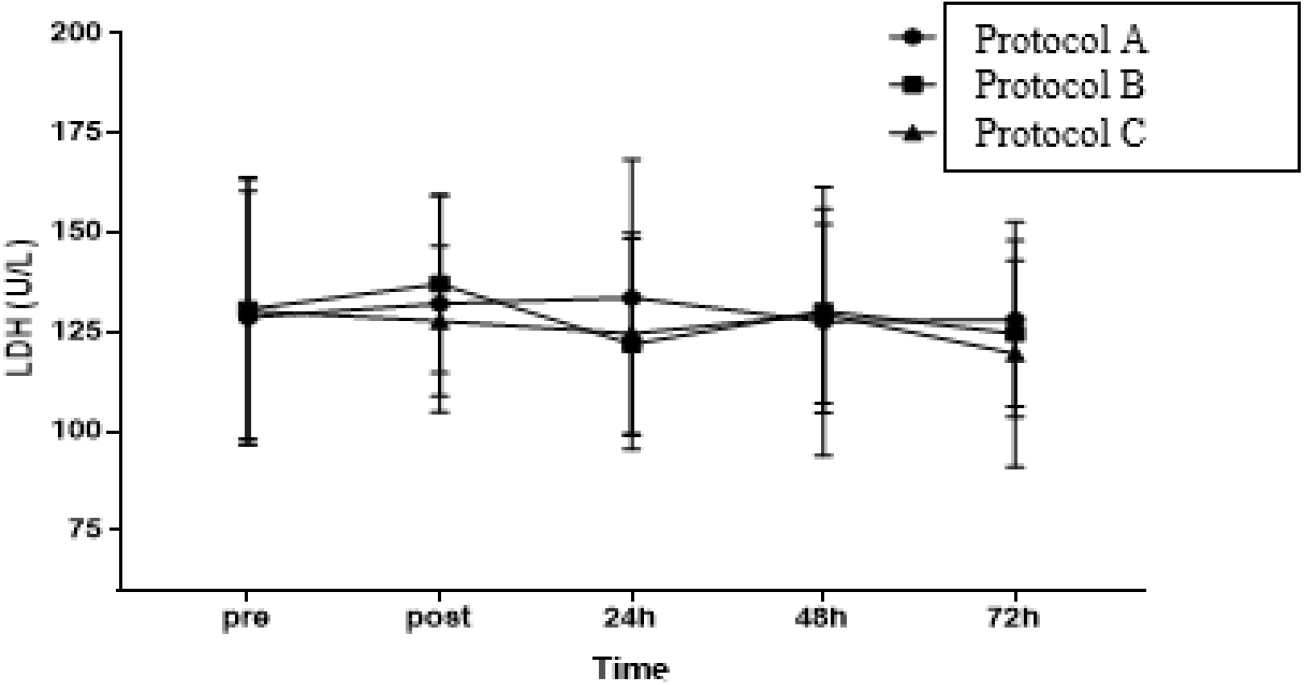
Insulin concentration changes. 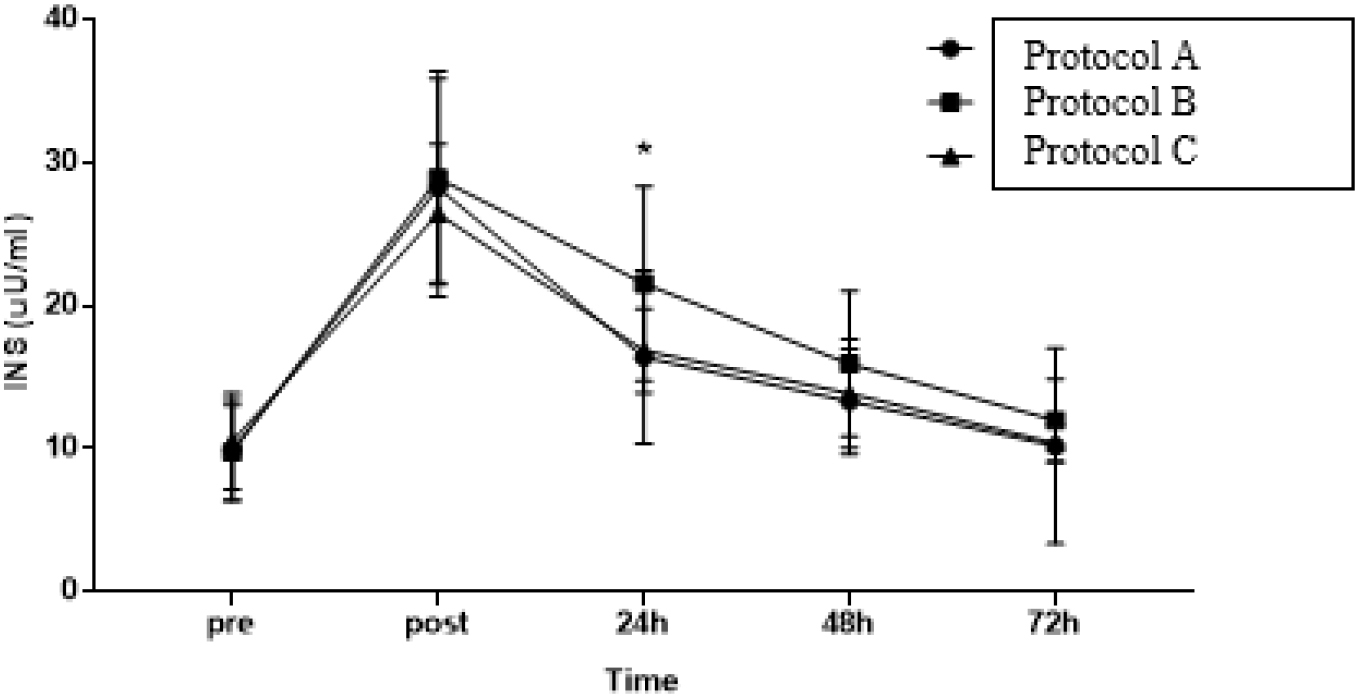
TESTO concentration changes. 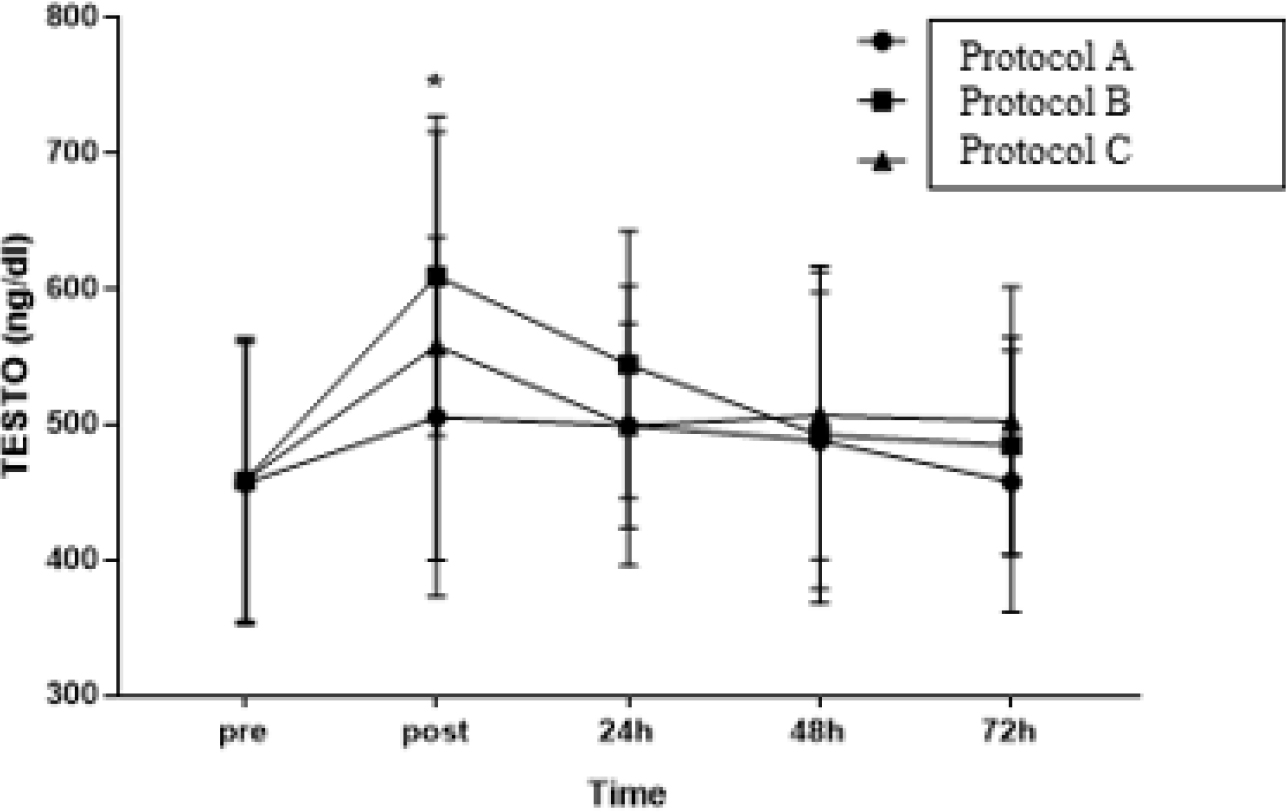
Time-wise changes regarding the muscle damage parameters of different tempo durations are presented in Fig. 2. These differences were statistically significant for serum CK values within all tempo protocols (F
No statistically significant difference regarding the serum LDH levels was found at any period of tempo protocols and between any protocols (
Time-wise changes in serum insulin levels were statistically significant for all tempo protocols. Post-test serum insulin values rose to a certain degree, and the 24th and 48
The time-wise changes regarding the testosterone hormone indicated that statistically significant change occurred only at protocol B, while no statistically significant difference was found for the other two protocols. Accordingly, serum testosterone levels significantly increased right after protocol B, while no statistically significant difference was found for the other two protocols. Testosterone levels decreased at the 72
Difference of hormones between the tempo protocols
IGF-1 concentration changes. 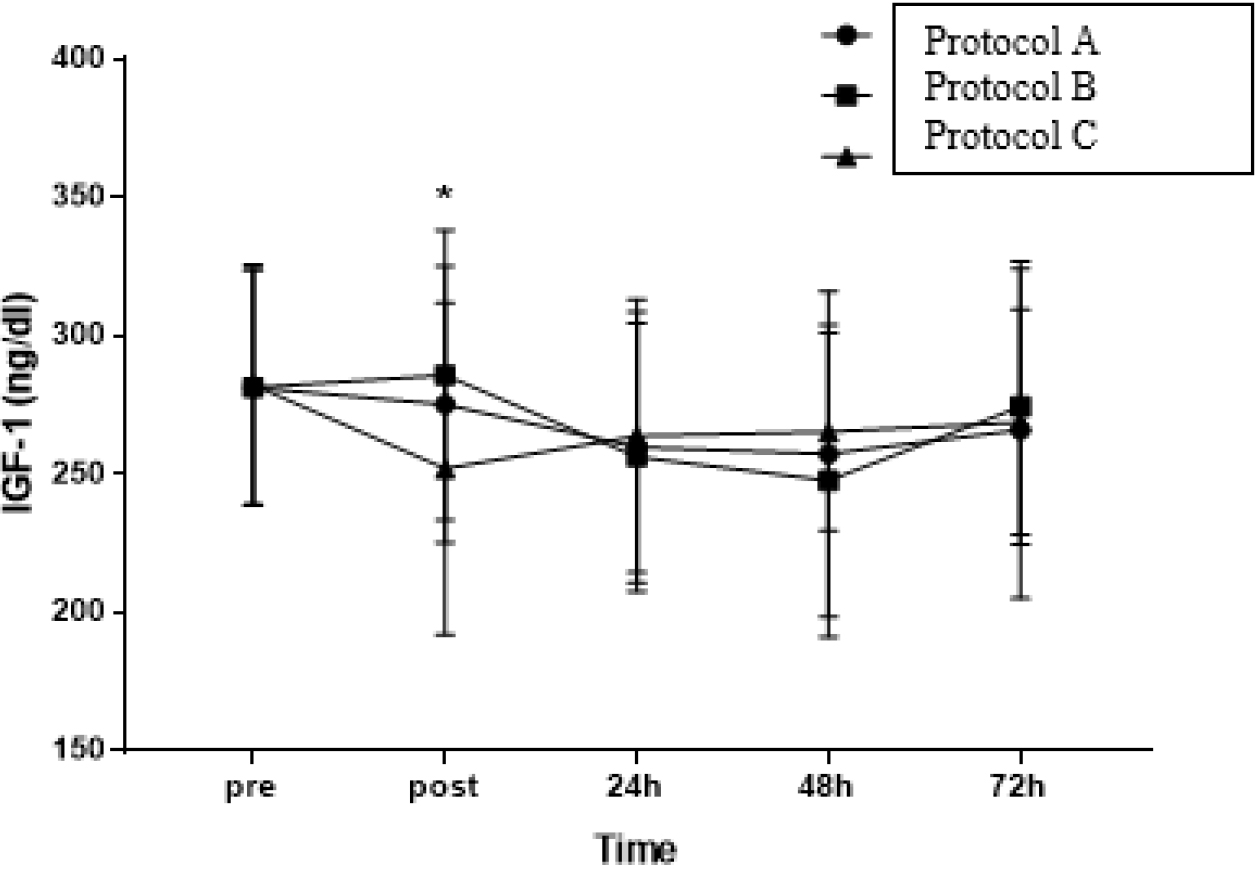
Regarding the tempo protocols, time-wise changes related to the IGF-1 differed but a statistically significant difference was found only for protocol B (F
During acute training with resistance exercises, changes in the time spent under tension at different phases of the movement are expected to produce different responses in terms of the secretion of anabolic hormones that are effective in muscle damage and skeletal muscle hypertrophy [25, 26]. This hypothesis was tested in the study. The results of the study revealed higher muscle damage and anabolic hormone response in Protocol B, in which the eccentric phase duration was longer.
To the best of our current knowledge, mechanical tension appears to be the most important stimulus in the formation of skeletal muscle hypertrophy [3]. The time spent in the contraction phases of resistance exercises may have the potential to create responses in mechanoreceptors. The literature has controversial results about how the duration of the movement phases would affect the hypertrophic response [17, 18, 20, 25]. Relevant studies have focused on long-term body composition [17, 18, 26], lean body mass [18], and muscle mass gain [25] based on variations of time under tension in resistance training. In order to reveal the effect of metabolic response caused by muscle damage after mechanical stimuli on anabolic hormone regulation, CK, LDH, insulin, IGF-1 and testosterone levels were analyzed for 3 different tempo protocols;in pre-post exercise and 24., 48. and 72. hours. According to the results, CK was higher in protocol B than in the others and it was in line with the literature results. Muscle damage arising from resistance exercises has been well documented [30, 31, 32]. Additionally, eccentric activities might cause greater muscle damage compared to concentric and isometric activities [33, 34]. The rational explanation in this situation was that maybe more type II fibers were activated during eccentric contractions, oxidative capacity decreased and actomyosin cords increased the sensed contraction and load of muscle fibers [35, 36]. The extended concentric phase causes muscle damage development to peak in 24 hours, while the longer eccentric phase extends the duration regarding the peak level of the damage to 48 hours. The striking aspect of the result obtained was that eccentric exercises not only increase muscle damage compared to concentric exercises, but also have the potential to peak in the longer run. Regarding the LDH activity, no statistically significant difference was found in the three-tempo protocol at any period (
It is a fact that the endocrine system plays an active role in the regulation of muscle metabolism, especially in terms of anabolic hormones. Accordingly, the generation of testosterone, insulin, IGF-1, and other anabolic hormones directly affects the protein regulation [37, 38, 39]. Recent studies have indicated that androgen receptors promote muscle hypertrophy by activating IGF-1 and IGF-1 receptors [40]. Gharadaghi et al. (2021) highlighted the key role that testosterone plays as the primary anabolic hormone in muscle adaptation following exercise training, through its interaction with anabolic signaling pathways and other hormones via the androgen receptor (AR) [41]. Increased insulin action after exercise is an important component of the health benefits of exercise, but its regulation is complex and not fully elucidated [42]. How the insulin concentrations that increase following resistance training suppress proteolysis has yet to be understood clearly. However, the potential mechanism of insulin regarding the muscle hypertrophy response indicates that suppression of proteolysis may develop the potential of higher hypertrophic response by causing increases in the potential of protein accumulation [38, 39, 40, 41, 42, 43]. One of the results of the present study was the statistically significant difference regarding insulin secretion in all three protocols (
Although there is a consensus in terms of the concordance between testosterone activity and training, new data continue to be presented. Compared to strengthening exercise protocols, hypertrophic resistance exercises significantly increased testosterone response [45, 46]. However, no significant change occurred in certain studies [47]. These controversial results might be arosed from the factors that might affect participants’ testosterone levels, such as gender, age, and training level, in different literature examples [48]. It has been stated that resistance exercises with high intensity and low rest intervals that contarcts large muscle groups are factors that affect the testosterone response [49, 50]. The relevant literature does not include a study that examined how different phase durations could affect testosterone hormone secretion during resistance training. Therefore, this study was conducted to examine testosterone secretion based on the difference in phase durations in resistance exercises. Although testosterone concentration increased in the post-test period for all protocols, a statistically significant increase was observed in protocol B compared to the other protocols (
Studies have reported that hypertrophic resistance training significantly increased the IGF-1 level [51]. Moreover, IGF-1 promotes protein synthesis, inhibits protein breakdown, and increases the diameter of the myotube and the number of cores in each myotube [52]. More studies reported that IGF-1 is a significant effector operating in the satellite cell signal pathways and facilitating the provision of myonucleus to muscle fibers [53, 54]. There exists no study in the available literature showing how IGF-1 concentrations differ after resistance exercises performed at different tempos. For this reason, it has been tried to determine what kind of changes will occur in the secretion level of IGF-1, depending on the phase duration of the movement. Results demonstrated an inconsistent secretion level for IGF-1 in all protocols. However, the change of IGF-1 in protocol B with a longer eccentric phase was statistically and significantly higher in protocol C where the concentric phase was statistically longer (
Limitations of the study
The most important limitation of the study is that it was conducted on a small sample size. In addition, the fact that the isometric contraction phase was not changed during the resistance exercise is a limitation as only the difference in the eccentric and concentric phase durations was investigated. In terms of muscle damage and hormone parameters, a wide variety of parameters could be examined, but CK, LDH, IGF-1, Testosterone and Insulin parameters, which are the most frequently studied in the literature, were preferred due to limited budget support. Future studies that will involve larger sample groups, investigate tempos applied at different durations, and examine wide variety parameters in terms of biochemical parameters may be decisive in revealing the results of phase duration difference (different tempos) in resistance exercise.
Conclusions
We suggest that the paradigm of increasing the time spent under contraction in the eccentric and concentric phases (approximately two seconds for reaching repetition) will contribute to the literature in terms of stimulating anabolic hormone secretion and affecting the level of muscle damage. The results can be used as an optimal hypertrophic response generation strategy for strength trainers and athletes. However, there is still a need for studies examining variables that have the potential to affect muscle damage and anabolic hormone secretion, such as different training types intensities, contraction phases, and the time spent under contraction.
Strength and conditioning trainers, exercise specialists, and sports health professionals can optimize hypertrophic response by varying the time spent in eccentric and concentric phases when planning resistance training. In addition, variations of the time spent under concentric-eccentric tensions in the relevant phases can be tried as an effective strategy to overcome the stable balance that may develop after resistance training. Concerning contraction variations, recovery times can be optimized according to the time spent under tension.
Author contributions
CONCEPTION: F.K. and M.E.K.
PERFORMANCE OF WORK: F.K, M.E.K. and M.Ç.T.
INTERPRETATION OR ANALYSIS OF DATA: F.K., M.E.K, M.Ç.T, A.H.D., Z.R.
PREPARATION OF THE MANUSCRIPT: F.K., M.E.K, A.H.D.
REVISION FOR IMPORTANT INTELLECTUAL CONTENT: F.K., M.E.K. A.H.D., Z.R.
SUPERVISION: A.H.D., Z.R.
Ethical considerations
Subjects were informed about the study before signing an institutionally approved informed consent document to participate in the study. Malatya Clinical Researches Ethical Committee approval was obtained for the study (no: 2017/14).
Funding
This study was supported by the Coordinatorship of Scientific Researches at Inonu University with the project no TDK/2017/804.
Footnotes
Acknowledgments
None.
Conflict of interest
The authors have no conflicts of interest to report.