Few studies have examined sex differences in performance fatigability and the bilateral deficit in a dynamic modality.
OBJECTIVES:
The purpose of this study was to examine: 1) Leg-, mode-, and sex-specific differences in performance fatigability during maximal, dynamic leg extension muscle actions and; 2) the time course of fatigue-induced changes in the bilateral deficit for both men and women.
METHODS:
Eleven men and 11 women participated in 3 test visits consisting of 50 maximal, concentric, isokinetic leg extensions at 60/s. Each visit was randomized to perform either unilateral right leg only (RL), unilateral left leg only (LL), or bilateral (BL) leg extensions.
RESULTS:
The BL performance fatigability was significantly ( 0.001) less than RL and LL. Both men and women demonstrated significant ( 0.001) declines in moment and an attenuation of the bilateral deficit throughout the fatiguing task. There were no differences between sex for performance fatigability ( 0.128) or the bilateral deficit ( 0.102).
CONCLUSIONS:
Unilateral muscle actions were more susceptible to fatigue than BL muscle actions. Men exhibited an earlier decline in moment than women, however, men and women exhibited similar magnitudes and patterns of decline in the bilateral deficit.
The limits of human performance are, in part, determined by the development of fatigue. Performance fatigability has been used as an objective measure to quantify the magnitude of fatigue through reductions in force or power [1, 2]. Performance fatigability has been assessed for various exercise modalities including submaximal and/or maximal, isometric, isotonic, and isokinetic muscle actions [3, 4, 5, 6, 7]. Few studies, however, have compared the magnitude of performance fatigability between unilateral and bilateral (BL) muscle actions or between contralateral limbs during unilateral muscle actions [8, 9].
It has been suggested that women tend to be more fatigue-resistant than men, possibly due to differences in the proportional area of type I muscle fibers [10, 11], muscle blood flow [12, 13, 14], and muscle metabolism [15, 16]. Previous studies, however, have demonstrated that sex differences in performance fatigability are task dependent [6, 7, 17]. Most studies that have reported sex differences in performance fatigability have utilized isometric muscle actions [18, 19]. In contrast, the few studies that have examined sex differences in performance fatigability following dynamic muscle actions have reported equivocal findings [5, 17, 20]. Thus, it remains to be determined whether the sex differences in performance fatigability exhibited during isometric muscle actions are similarly reflected during dynamic muscle actions.
The bilateral deficit is characterized by BL force production that is less than the sum of the force produced during unilateral muscle actions [21]. The bilateral deficit occurs during maximal contractions and has been reported for isometric, isokinetic, and isotonic muscle actions [22] and, theoretically, represents a neuromuscular control mechanism where motorneural excitability is limited by inhibitory signaling during bilateral muscle actions [23]. Few studies [24, 25], however, have examined how fatigue affects the bilateral deficit. Examination of the bilateral deficit during fatiguing muscle actions may provide insights regarding the differences between unilateral and BL training modalities and whether these differences should be considered during individualized training programs.
The purpose of this study was to examine: 1) Leg-, mode-, and sex-specific differences in performance fatigability during maximal, isokinetic leg extension muscle actions and 2) the time course of fatigue-induced changes in the bilateral deficit for both men and women. Based on previous studies [4, 8, 25], we hypothesized that: 1) There would be no difference in performance fatigability between legs; 2) unilateral muscle actions would exhibit greater performance fatigability than BL muscle actions; 3) men would exhibit greater performance fatigability than women, and; 4) both men and women would exhibit similar decreases in the bilateral deficit throughout the fatiguing task.
Methods
Subjects
Eleven men (Mean SD; age 22.6 3.6 yrs; body mass 80.2 7.9 kg; height 177.8 6.7 cm) and 11 women (age 21.9 0.9 yrs; body mass 60.4 10.1 kg; height 167.2 6.4 cm) volunteered to participate in this study. These subjects were part of a large multi-independent and dependent variable study. We have eviously [26] reported the fatigue-induced patterns of the moment, electromyographic, and mechanomyographic responses from the left leg during BL and unilateral leg extension muscle actions in women. The study [26] included data from the left leg only because, due to instrumentation malfunction, neuromuscular data from the right leg were not available, even though moment data were collected. Inclusion of the right leg moment data in the present study allowed for sex comparisons of the fatigue-induced changes in the Bilateral Deficit Index (BDI). The subjects were recreationally trained [27] and participated in both resistance (men 3.7 2.5 times a week; women 3.1 2.2 times a week) and aerobic (men 1.8 1.3 time s a week; women 2.6 1.1 times a week) exercise. All subjects affirmed they were free from previous injuries that would hinder their performance. The present study was approved by the University Institutional Review Board for Human Subjects prior to participation. All subjects signed a written Informed Consent and completed a health history questionnaire prior to participation.
Protocol
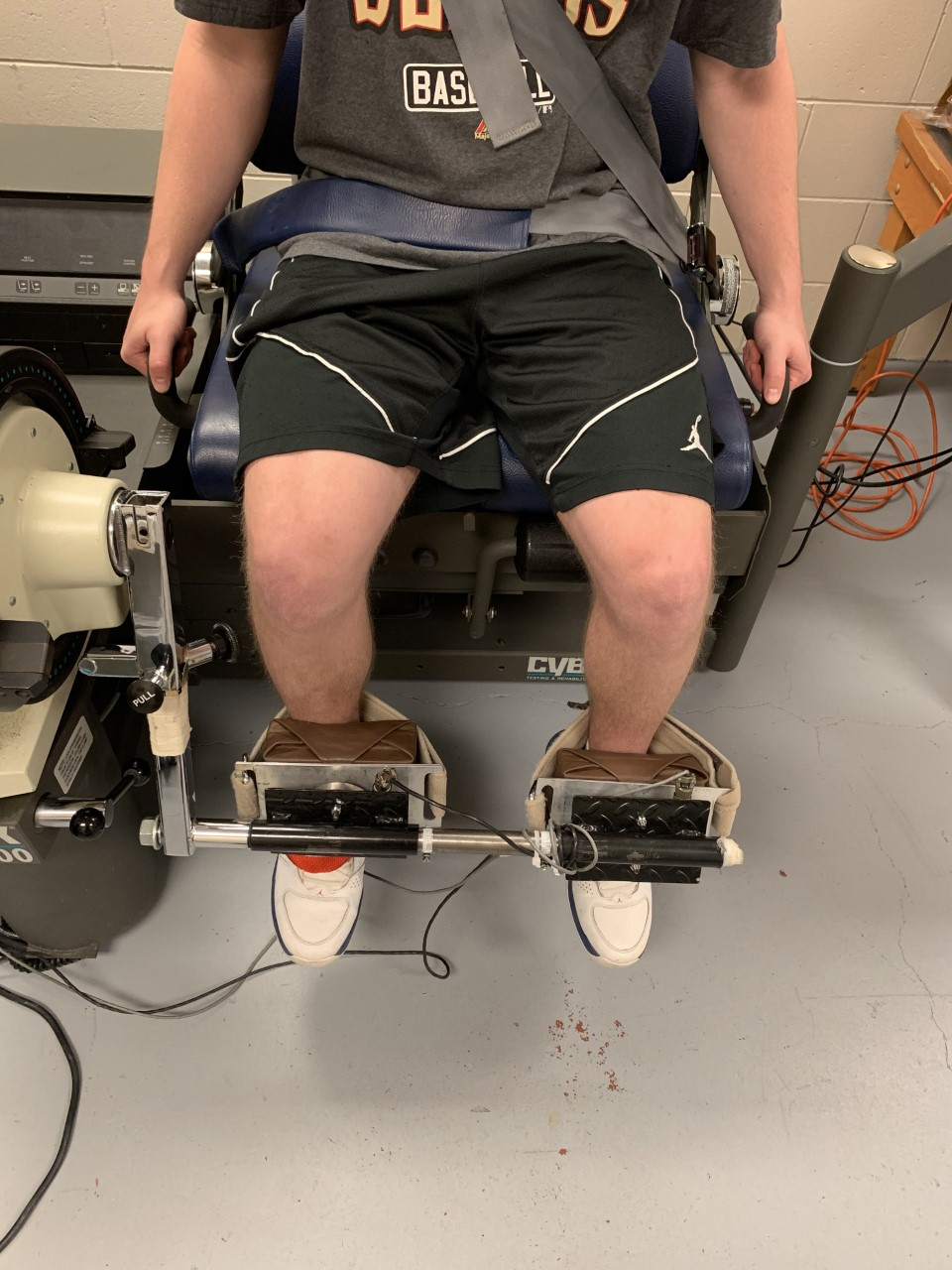
The study consisted of four visits, each separated by 3–7 days. The first visit familiarized the subjects with the exercise protocol, including BL, unilateral right leg only (RL) and unilateral left leg only (LL), submaximal and maximal concentric, isokinetic leg extensions at 60/s. All muscle actions were performed on a calibrated Cybex 6000 dynamometer (Cybex, Division of Lumex Inc., Ronkoknoma, NY, USA; Fig. 1). In subsequent test visits, the subjects first performed two pre-fatigue BL, RL, and LL maximal, concentric, isokinetic leg extensions at 60/s in randomized order to be used for normalization. The subjects then performed a fatiguing task of 50 consecutive maximal BL, RL, or LL (in random order on separate test visits), isokinetic leg extensions at 60/s. Prior to the task, the seat was adjusted to assure the subjects’ knees were aligned with the axis of rotation of the isokinetic dynamometer. As per the Cybex 6000 User’s Guide, a seat belt was secured across the chest and hips of the subjects and the subjects were instructed to firmly grasp the handrails on either side of the chair throughout the fatiguing tasks. For the BL task, both legs were attached to a customized lower limb extender for the Cybex 6000 superior to the ankle via Velcro straps (Fig. 1). For the unilateral task, only one leg was attached to the extender and the subjects were instructed to maintain a resting, passive flexion in the non-working leg.
Image depicting the isokinetic dynamometer during bilateral leg extension muscle actions.
To examine changes in the bilateral deficit throughout the fatiguing task, the Bilateral Deficit Index (BDI) was calculated from the absolute isokinetic peak moment as described by Howard and Enoka [21]:
A negative BDI indicates a bilateral deficit and a positive BDI indicates a bilateral facilitation. Performance fatigability was quantified from absolute isokinetic peak moment values from the fatiguing task as a percent change between the mean of repetitions 1–5 and the mean of repetitions 46–50.
Statistical analyses
Prior to analyses, isokinetic moment values during the fatiguing task were normalized to the pre-fatigue maximal isokinetic leg extension values that matched the condition (BL, RL, or LL) performed during the fatiguing task. The normalized isokinetic moment and BDI values were then averaged across 5 consecutive repetitions (i.e. mean of repetitions 1–5 5, 6–10 10, 11–15 15, 16–20 20, 21–25 25, 26–30 30, 31–35 35, 36–40 40, 41–45 45, 46–50 50) to generate a total of 10 data points. Performance fatigability was examined using a 2 (Sex [Men and Women]) 3 (Condition [BL, RL and LL]) mixed factorial analysis of variance (ANOVA). Mean differences for normalized isokinetic moment were examined by a 2 (Sex [Men and Women]) 3 (Condition [BL, RL, and LL]) 10 (Repetition [5, 10, 15, 20, 25, 30, 35, 40, 45, 50]) mixed factorial ANOVA. Mean differences for BDI throughout the fatiguing task were examined using a 2 (Sex [Men and Women]) 10 (Repetition [5, 10, 15, 20, 25, 30, 35, 40, 45, 50]) mixed factorial ANOVA. Follow up repeated measures ANOVAs and paired samples -tests were performed when appropriate. The time course of changes in normalized isokinetic moment values were examined with paired sampled -tests to determine mean differences for repetition 5 versus repetitions 10–50 for BL, RL, and LL leg extensions. Measures of effect size (Partial eta squared () and Cohen’s ) were calculated for all ANOVAs and paired samples -tests, respectively. IBM SPSS v. 25 (Armonk, NY, USA) was used for all analyses and an alpha of 0.05 was considered statistically significant.
Results
Performance fatigability
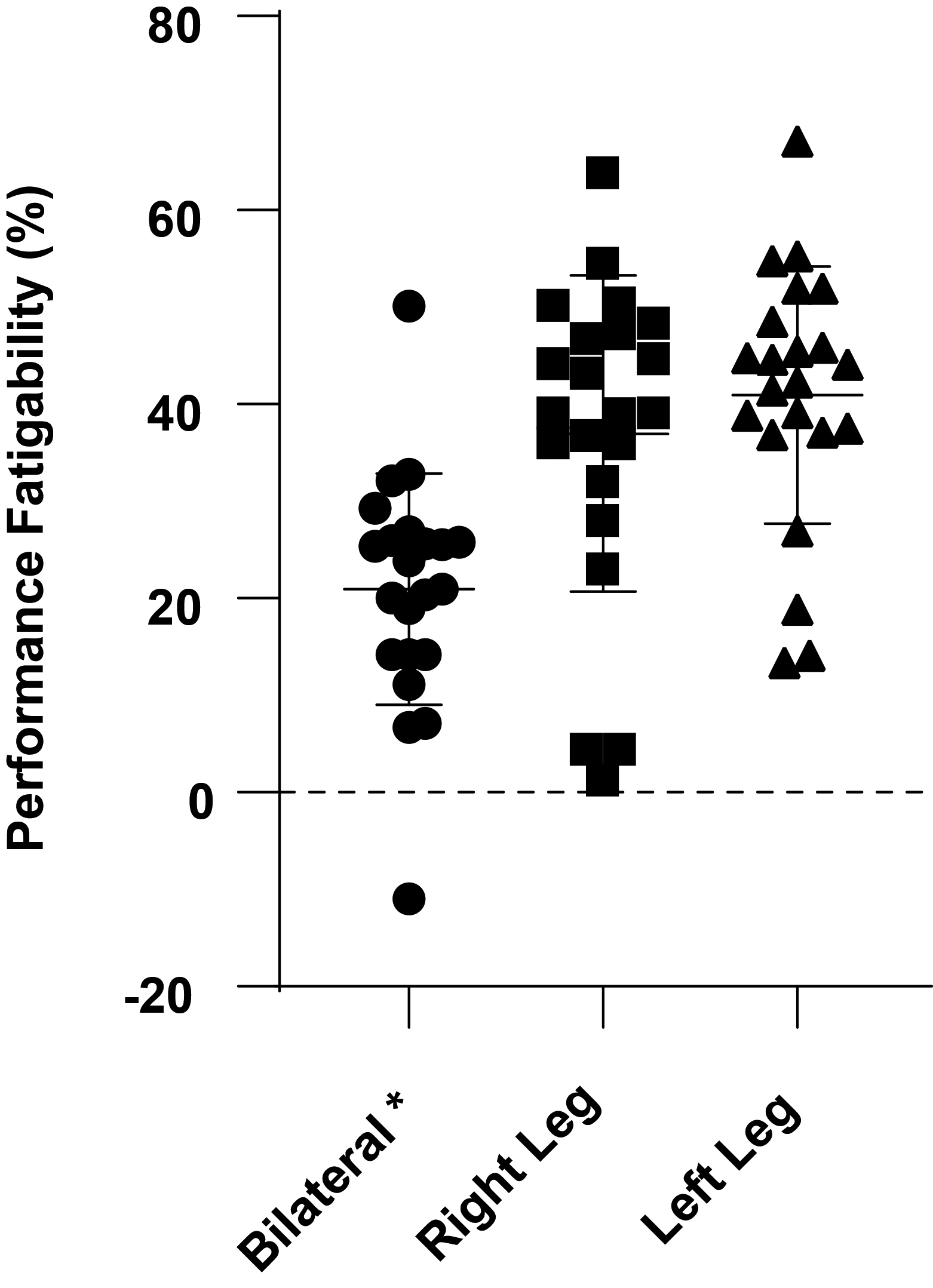
The absolute moment values for the initial (repetitions 1–5) and final (repetitions 46–50) repetitions as well as performance fatigability for the fatiguing task are described in Table 1. The results of the 2 3 mixed factorial ANOVA for performance fatigability demonstrated no significant interaction ( 0.999; 0.000) or main effect for Sex ( 0.128; 0.112), but a main effect for Condition ( 0.001; 0.430) (Fig. 1). Post-hoc pairwise comparisons (collapsed across Sex) demonstrated that BL (20.9 11.9%) was significantly less than RL (37.0 16.3%; 1.13) and LL (41.0 13.2%; 1.60). There was no significant ( 0.246; 0.27) difference between RL and LL.
Initial and final absolute moment and performance fatigability (Mean SD)
Condition
Initial moment (Nm)
Final moment (Nm)
Performance fatigability (%)
Men
Bilateral
287.1 42.7
216.2 35.6
24.1 10.5
Right leg
208.4 31.5
121.2 21.7
40.1 16.1
Left leg
207.9 42.4
113.3 24.9
44.0 13.7
Women
Bilateral
186.5 49.9
151.3 36.8
17.7 12.9
Right leg
140.2 26.8
89.9 14.8
33.8 16.6
Left leg
147.7 33.9
90.4 25.4
38.0 12.7
The initial moment was the mean of the absolute moment values from repetitions 1–5 and the final moment was the mean of the absolute moment values from repetitions 45–50. Performance fatigability was calculated as a change score percentage between the initial and final absolute moment values.
Performance fatigability for the individual subjects during bilateral and unilateral leg extensions. * Indicates that the mean performance fatigability for the bilateral condition was significantly ( 0.05) less than for the left leg only and right leg only conditions.
Normalized isokinetic moment
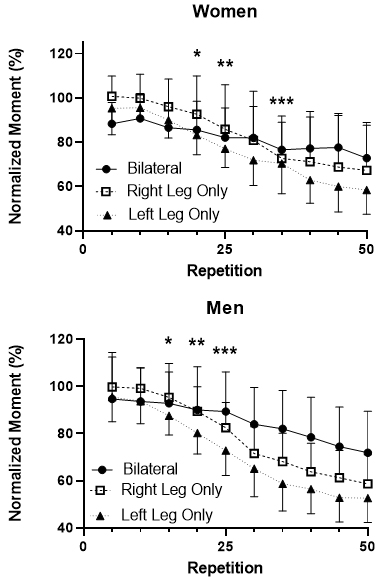
The results of the 2 3 10 mixed factorial ANOVA for normalized isokinetic moment demonstrated a significant Sex Repetition interaction ( 0.015, 0.106) and Condition Repetition interaction ( 0.001, 0.408). For the men, follow-up 1 10 repeated measures ANOVA demonstrated significant mean differences in normalized isokinetic moment across repetitions for BL ( 0.001; 0.701), RL ( 0.001; 0.869), and LL ( 0.001; 0.868) (Fig. 3). For the BL leg extensions, post-hoc pairwise comparisons demonstrated normalized isokinetic moment for repetition 5 (94.7 19.7%) was significantly greater than repetitions 25 (89.4 16.8%; 0.29), 30 (84.0 15.7%; 0.60), 35 (82.0 16.3%; 0.70), 40 (78.4 17.0%; 0.88), 45 (74.5 16.8%; 1.10), and 50 (71.9 17.5%; 1.22). For the RL leg extensions, post-hoc comparisons demonstrated normalized isokinetic moment for repetition 5 (99.8 12.7%) was significantly greater than repetitions 20 (89.4 10.3%; 0.90), 25 (82.5 10.7%; 1.47), 30 (71.6 11.3%; 2.35), 35 (68.2 12.0%; 2.56), 40 (63.9 12.0%; 2.91), 45 (61.2 11.6%; 3.17), and 50 (58.7 12.3; 3.29). For the LL leg extensions, post-hoc comparisons demonstrated normalized isokinetic moment for repetition 5 (95.5 10.5%) was significantly greater than repetitions 15 (87.5 8.1%; 0.85), 20 (80.3 8.7%; 1.58), 25 (72.8 10.6%; 2.15), 30 (65.2 11.9%; 2.70), 35 (58.8 11.5%; 3.33) 40 (56.5 10.4%; 3.73), 45 (52.9 10.3%; 4.10) and 50 (52.7 10.3%; 4.12).
Follow-up 1 3 repeated measures ANOVAs demonstrated significant mean differences in normalized isokinetic moment between conditions for repetitions 25 ( 0.041; 0.273), 30 ( 0.046; 0.329), 35 ( 0.004; 0.420), 40 ( 0.007; 0.395), 45 ( 0.006; 0.405), and 50 ( 0.014; 0.345). Post-hoc pairwise comparisons demonstrated at repetition 35, BL (82.0 16.3%) was significantly greater than LL (58.8 11.5%; 0.026; 1.64). At repetition 40, BL (78.4 17.0%) was significantly greater than LL (56.5 10.4%; 0.029; 1.55). At repetition 45, BL (74.5 16.8%) was significantly greater than LL (52.9 10.3%; 0.032; 1.55). Post-hoc pairwise comparisons demonstrated no significant ( 0.05) differences between conditions at repetitions 25, 30, and 50.
Normalized isokinetic moment for women and men during the fatiguing task. * Indicates when repetition 5 was significantly greater than all subsequent repetitions for the left leg only. ** Indicates when repetition 5 was significantly greater than all subsequent repetitions for the right leg only. *** Indicates when repetition 5 was significantly greater than all subsequent repetitions the bilateral condition.
For the women, follow-up 1 10 repeated measures ANOVA demonstrated significant mean differences in normalized isokinetic moment across repetitions for BL ( 0.001; 0.497), RL ( 0.001 0.773) and LL ( 0.001; 0.818) (Fig. 3). For the BL leg extensions, post-hoc pairwise comparisons demonstrated normalized isokinetic moment for repetition 5 (88.4 9.6%) was significantly greater than repetitions 35 (76.6 12.4%; 1.06), 40 (77.2 14.2%; 0.92), 45 (77.6 14.4%; 0.88), and 50 (72.9 14.8%; 1.24). For RL leg extensions, post-hoc pairwise comparisons demonstrated repetition 5 (100.8 9.1%) was significantly greater than repetitions 25 (85.7 10.1%; 1.57), 30 (80.8 22.1%; 1.83), 35 (72.7 19.1%; 1.88), 40 (71.2 22.6%; 1.72), 45 (68.8 24.3%; 1.74), and 50 (67.3 21.6%; 2.02). For LL leg extensions, post-hoc pairwise comparisons demonstrated repetition 5 (95.3 11.9%) was significantly greater than repetitions 20 (83.3 8.9%; 1.14), 25 (77.1 8.5%; 1.76), 30 (71.9 11.4%; 2.01), 35 (70.4 13.7%; 1.94), 40 (62.9 10.5%; 2.89), 45 (60.0 11.5%; 3.02), and 50 (58.4 11.0%; 3.22).
Follow-up 1 3 repeated measures ANOVAs demonstrated significant mean differences in normalized isokinetic moment between conditions for repetition 5 ( 0.046; 0.266). Post-hoc pairwise comparisons demonstrated no significant ( 0.05) differences between conditions at repetition 5.
Bilateral deficit index (BDI)
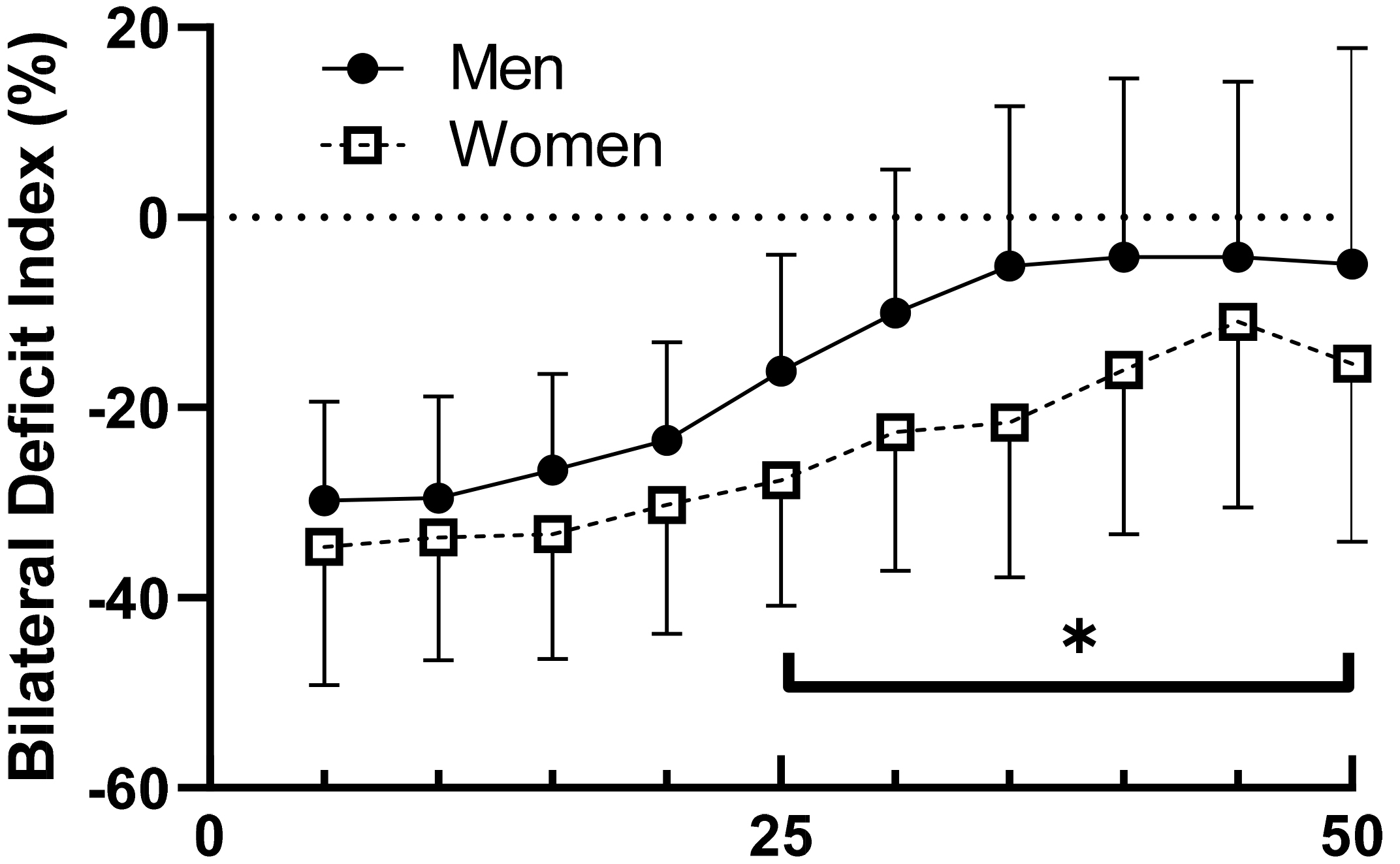
The results of the 2 10 mixed factorial ANOVA demonstrated no significant interactions ( 0.445; 0.047) or main effects for Sex ( 0.102; 0.128), but a significant main effect for Repetition ( 0.001; 0.545) (Fig. 4). When collapsed across Sex, post-hoc pairwise comparisons indicated that the BDI at repetition 5 (31.2 12.6%) was significantly less than repetitions 25 (21.9 13.8%; 0.70), 30 (16.3 15.8%; 1.04), 35 (13.3 18.2%; 1.14), 40 (10.1 18.6%; 1.32), 45 (7.6 18.9%; 1.47), and 50 (10.1 21.0%; 1.22).
Bilateral deficit index in men and women during the fatiguing task. * Indicates repetition 5 was significantly less than repetitions 25–50, collapsed across Sex.
Discussion
The findings of the present study indicated that there were no differences in the magnitude of performance fatigability between the LL and RL conditions (Fig. 2). For the time course of moment decrements, however, the significant decreases in moment occurred 5 repetitions earlier for the LL than the RL condition (Fig. 3). To our knowledge, no previous studies have compared the time course of moment decrements between LL and RL muscle actions. Thus, while the magnitude of fatigue-induced decreases in moment were the same for both legs, the left leg exhibited significant moment-related manifestations of fatigue earlier than the right leg for both the men and women.
During the fatiguing task, the initial moments during the unilateral muscle actions were approximately 72.5% and 77.2% of the bilateral moments for the men and women, respectively. Matkowski et al. [8] demonstrated that unilateral maximal voluntary isometric contraction (MVIC) leg extension force were approximately 45.8% of the bilateral MVIC moment for men. Additionally, Rossman et al. [9] demonstrated that unilateral maximal workload for leg extensions was approximately 54.1% of the bilateral maximal workload for men. These findings suggested that the proportional strength of unilateral to BL moment production may be mode specific, with isokinetic leg extensions exhibiting a greater proportionality than isometric [8] and dynamic [9] leg extensions. It remains unclear, however, whether the proportional strength of unilateral to BL moment production is velocity-dependent for isokinetic muscle actions.
Although the unilateral conditions had similar levels of performance fatigability (LL 41.0 13.2% and RL 37.0 16.3%), the BL condition exhibited significantly less performance fatigability (20.9 11.9%) compared to both unilateral conditions (Fig. 2). These findings were consistent with previous studies [8, 9] that reported greater performance fatigability for unilateral (36.6 8.4% and 44.0 6.0%, respectively) than BL (22.2 8.5% and 33.7 7%, respectively) leg extension muscle actions. Thomas et al. [2] hypothesized that the magnitude of performance fatigability is related to the amount of activated muscle mass. Specifically, Thomas et al. [2] stated, “This smaller active muscle mass permits the exerciser to endure greater perturbations to contractile function because the threat to homeostasis is predominantly restricted to a single muscle group and as such a larger magnitude of performance fatigability can be incurred before the fatigue elicited by the task is perceived intolerable,” (pg. 242). The current findings for maximal, unilateral and BL leg extensions supported the hypothesis of Thomas et al. [2] because: 1) There were no differences in performance fatigability between the LL and RL which presumably had a similar amount of active muscle mass and; 2) performance fatigability was greater for the LL and RL conditions which involved less active muscle mass than the BL condition.
In the present study, there were no sex differences in performance fatigability for the unilateral (LL, RL) or BL conditions. It has been suggested that women are more fatigue-resistant than men during isometric [18, 19] and dynamic muscle actions [28, 4, 17, 6]. Pincivero et al. [5] reported a 6% greater performance fatigability in men than women following 30 maximal, unilateral, reciprocal, concentric leg extension and flexion muscle actions at 180s. Senefeld et al. [6] reported a 12% greater decline in MVIC for men than women following 120 unilateral, concentric, isotonic leg extensions at 20% of MVIC. The results of other studies, however, demonstrated that sex differences in performance fatigability are task specific [18, 19]. For example, Yoon et al. [7] reported a 16% greater reduction in MVIC for women than men following unilateral, isometric arm flexion at 20% of MVIC to failure, but no sex difference when the same fatiguing task was performed at 80% of MVIC. Yoon et al. [20] later reported no sex differences in performance fatigability following unilateral, isokinetic forearm flexion to failure at 60s corresponding to 20% of MVIC. Senefeld et al. [17] reported an 8% greater reduction in MVIC for men compared to women following 90 unilateral, concentric, isotonic leg extensions at 20% of MVIC, but no sex differences in MVIC reduction when the fatiguing task was performed using forearm flexion muscle actions. In addition, Senefeld et al. [6] reported a 12% greater performance fatigability in men compared to women following unilateral, submaximal, dynamic leg extension to failure at 20% of MVIC, but no sex differences in performance fatigability following unilateral, isometric leg extension MVICs for 60 s. Thus, sex differences in performance fatigability have been demonstrated to be task dependent and should not be generalized across studies that utilize different methodologies including mode, intensity and muscle [4, 5, 6].
Hunter et al. [18] stated that “Sex-based differences in anatomy and physiology can alter the rate and magnitude of fatigability that develops in muscle and central nervous system for men compared to women,” (pg. 2). Sex differences in fatigue are often defined by the magnitude of performance fatigability [28, 4, 17, 6] and/or the time to task failure [3, 7, 12, 15, 29]. An additional aspect of sex differences in the rate of fatigability can be described by the time course of moment decrement as used in the current study. During the LL, RL, and BL, maximal leg extensions, 5–10 fewer repetitions were required for the men to exhibit fatigue-induced decreases in moment than the women (Fig. 3). Sex differences in fatigue responses have been attributed to differences between men and women in the proportional area of type I muscle fiber [10, 11], muscle blood flow [12, 13, 14], and muscle metabolism [15, 16]. Future studies are needed to determine if these factors contribute to sex differences in the time course of moment decline in the absence of sex differences in performance fatigability.
Throughout the fatiguing task, the magnitude of the bilateral deficit (collapsed across Sex) began to decline at repetition 25 (Fig. 4). Therefore, the disparity in force production between the summed unilateral (LL, RL) and the BL conditions was reduced over the time course of the fatiguing task. Previous studies [24, 25] that have investigated the influence of fatigue on the bilateral deficit have reported equivocal findings. Vandervoort et al. [25] demonstrated a reduced disparity between the sum of unilateral compared to the BL force production (i.e. bilateral: unilateral peak moment ratio) following 100 unilateral (RL, LL) and BL maximal, isokinetic leg presses at 105/s (approximately 0.80 initially compared to 0.92 at repetition 100). Owings and Grabiner [24], however, reported a 9% greater BDI following maximal, unilateral, isokinetic leg extensions to failure at 30/s but no change in the BDI (1.5%) when performed at 150/s. Various mechanisms have been proposed to explain the bilateral deficit [22], with the most likely mechanism being interhemispheric inhibition. Oda and Moritani [30, 31] demonstrated that compared to unilateral muscle actions, bilateral muscle actions elicited cortical potentials from the motor cortices that were smaller due to inhibitory signaling from the contralateral hemisphere via transcallosal fibers. It has been suggested that interhemispheric inhibition occurs as a mechanism to correct force imbalances in contralateral homologous muscles [32, 33], however, the findings of the present study demonstrated no significant differences between the RL and LL throughout the fatiguing task. While the attenuated BDI throughout the fatiguing task was likely due to a greater rate of fatigue during the unilateral muscle actions, these findings may also indicate a fatigue-induced reduction of the interhemispheric inhibition during BL muscle actions. Additional research is needed to determine the mechanism(s) of fatigue-induced changes in the bilateral deficit.
Conclusion
The findings of the present study demonstrated that unilateral muscle actions were more susceptible to fatigue than BL muscle actions for both men and women. While men and women exhibited a similar magnitude of performance fatigability for both unilateral and BL conditions, men exhibited fatigue-related decreases in moment 5 repetitions earlier than women during unilateral muscle actions and 10 repetitions earlier during bilateral muscle actions. Additionally, the magnitude of the bilateral deficit was similar between men and women and was reduced throughout fatiguing, maximal, dynamic muscle actions. Further research is needed to examine the relationship between fatigue and the bilateral deficit, as well as the extent of sex differences during dynamic, fatiguing muscle actions.
Author contributions
CONCEPTION: John Paul V. Anders, Terry J. Housh, Richard J. Schmidt, Glen O. Johnson.
PERFORMANCE OF WORK: John Paul V. Anders, Joshua L. Keller, Cory M. Smith, Ethan C. Hill, and Tyler J. Neltner.
INTERPRETATION OR ANALYSIS OF DATA: John Paul V. Anders.
PREPARATION OF THE MANUSCRIPT: John Paul V. Anders and Terry J. Housh.
REVISION FOR IMPORTANT INTELLECTUAL CONTENT: Cory M. Smith, Ethan C. Hill, Tyler J. Neltner, Richard J. Schmidt, and Glen O. Johnson.
SUPERVISION: Terry J. Housh, Richard J. Schmidt, and Glen O. Johnson.
Ethical considerations
The present study was approved on 12/06/2018 by the University Institutional Review Board for Human Subjects (IRB Approval: 20181218864EP) and prior to participation, all subjects signed a written Informed Consent.
Funding
The authors report no funding.
Footnotes
Acknowledgments
The authors have no acknowledgments.
Conflict of interest
The authors have no conflicts of interest to report.
References
1.
EnokaRMDuchateauJ. Translating fatigue to human performance. Med Sci Sports Exerc. 2016; 48(11): 2228-38.
2.
ThomasKGoodallSHowatsonG. Performance fatigability is not regulated to a peripheral critical threshold. Exerc Sport Sci Rev. 2018; 46(4): 240-6.
3.
ClarkBCManiniTMThéDJDoldoNAPloutz-SnyderLL. Gender differences in skeletal muscle fatigability are related to contraction type and EMG spectral compression. J Appl Physiol Bethesda Md 1985. 2003 Jun; 94(6): 2263-72.
4.
Hébert-LosierKHolmbergH-C. Dynamometric indicators of fatigue from repeated maximal concentric isokinetic plantar flexion contractions are independent of knee flexion angles and age but differ for males and females. J Strength Cond Res. 2014 Mar; 28(3): 843-55.
5.
PinciveroDMDixonPTCoelhoAJ. Knee extensor torque, work, and EMG during subjectively graded dynamic contractions. Muscle Nerve. 2003. 28(1): 54-61.
6.
SenefeldJPereiraHMElliottNYoonTHunterSK. Sex differences in mechanisms of recovery after isometric and dynamic fatiguing tasks. Med Sci Sports Exerc. 2018; May; 50(5): 1070-83.
7.
YoonTSchlinder DelapBGriffithEEHunterSK. Mechanisms of fatigue differ after low- and high-force fatiguing contractions in men and women. Muscle Nerve. 2007 Oct; 36(4): 515-24.
8.
MatkowskiBPlaceNMartinALepersR. Neuromuscular fatigue differs following unilateral vs bilateral sustained submaximal contractions. Scand J Med Sci Sports. 2011; 21(2): 268-76.
9.
RossmanMJGartenRSVenturelliMAmannMRichardsonRS. The role of active muscle mass in determining the magnitude of peripheral fatigue during dynamic exercise. Am J Physiol – Regul Integr Comp Physiol. 2014 Jun 15; 306(12): R934-40.
10.
LarssonBKadiFLindvallBGerdleB. Surface electromyography and peak torque of repetitive maximum isokinetic plantar flexions in relation to aspects of muscle morphology. J Electromyogr Kinesiol Off J Int Soc Electrophysiol Kinesiol. 2006; Jun; 16(3): 281-90.
11.
ToftILindalSBønaaKHJenssenT. Quantitative measurement of muscle fiber composition in a normal population. Muscle Nerve. 2003 Jul; 28(1): 101-8.
12.
HicksALKent-BraunJDitorDS. Sex differences in human skeletal muscle fatigue. Exerc Sport Sci Rev. 2001 Jul; 29(3): 109.
13.
LabarberaKEMurphyBGLarocheDPCookSB. Sex differences in blood flow restricted isotonic knee extensions to fatigue. J Sports Med Phys Fitness. 2013; Aug; 53(4): 444-52.
14.
ParkerBASmithmyerSLPelbergJAMishkinADHerrMDProctorDN. Sex differences in leg vasodilation during graded knee extensor exercise in young adults. J Appl Physiol Bethesda Md 1985. 2007 Nov; 103(5): 1583-91.
15.
HunterSKEnokaRM. Sex differences in the fatigability of arm muscles depends on absolute force during isometric contractions. J Appl Physiol. 2001 Dec 1; 91(6): 2686-94.
16.
RoepstorffCThieleMHilligTPilegaardHRichterEAWojtaszewskiJFP, et al. Higher skeletal muscle alpha2AMPK activation and lower energy charge and fat oxidation in men than in women during submaximal exercise. J Physiol. 2006 Jul 1; 574(Pt 1): 125-38.
17.
SenefeldJYoonTBementMHHunterSK. Fatigue and recovery from dynamic contractions in men and women differ for arm and leg muscles. Muscle Nerve. 2013 Sep; 48(3): 436-9.
18.
HunterSK. The relevance of sex differences in performance fatigability. Med Sci Sports Exerc. 2016; 48(11): 2247-56.
19.
HunterSK. Sex differences in fatigability of dynamic contractions. Exp Physiol. 2016 Feb; 101(2): 250-5.
20.
YoonTDoyelRWiduleCHunterSK. Sex differences with aging in the fatigability of dynamic contractions. Exp Gerontol. 2015 Oct; 70: 1-10.
21.
HowardJDEnokaRM. Maximum bilateral contractions are modified by neurally mediated interlimb effects. J Appl Physiol. 1991 Jan 1; 70(1): 306-16.
22.
ŠkarabotJCroninNStrojnikVAvelaJ. Bilateral deficit in maximal force production. Eur J Appl Physiol. 2016; Dec 1; 116(11): 2057-84.
23.
JakobiJMChilibeckPD. Bilateral and unilateral contractions: possible differences in maximal voluntary force. Can J Appl Physiol Rev Can Physiol Appl. 2001; Feb; 26(1): 12-33.
24.
OwingsTMGrabinerMD. Fatigue effects on the bilateral deficit are speed dependent. Med Sci Sports Exerc. 1998 Aug; 30(8): 1257.
25.
VandervoortAASaleDGMorozJ. Comparison of motor unit activation during unilateral and bilateral leg extension. J Appl Physiol. 1984 Jan; 56(1): 46-51.
26.
AndersJPVKellerJLSmithCMHillECNeltnerTJHoushTJ, et al. Performance fatigability and neuromuscular responses for bilateral versus unilateral leg extensions in women. J Electromyogr Kinesiol Off J Int Soc Electrophysiol Kinesiol. 2019; Nov 1; 50: 102367.
27.
American College of Sports MedicineRiebeDEhrmanJKLiguoriGMagalM. ACSM’s guidelines for exercise testing and prescription. 10th ed. Philadelphia: Wolters Kluwer; 2018. 472 p.
28.
PinciveroDMCoelhoAJCampyRM. Gender differences in perceived exertion during fatiguing knee extensions. Med Sci Sports Exerc. 2004 Jan; 36(1): 109-17.
29.
MaughanRJHarmonMLeiperJBSaleDDelmanA. Endurance capacity of untrained males and females in isometric and dynamic muscular contractions. Eur J Appl Physiol. 1986; 55(4): 395-400.
30.
OdaSMoritaniT. Movement-related cortical potentials during handgrip contractions with special reference to force and electromyogram bilateral deficit. Eur J Appl Physiol. 1995; 72(1-2): 1-5.
31.
OdaSMoritaniT. Cross-correlation studies of movement-related cortical potentials during unilateral and bilateral muscle contractions in humans. Eur J Appl Physiol. 1996; 74(1-2): 29-35.
32.
CornwellAKhodiguianNYooEJ. Relevance of hand dominance to the bilateral deficit phenomenon. Eur J Appl Physiol. 2012 Dec; 112(12): 4163-72.
33.
MacDonaldGZMazaraNHerzogWPowerGA. Mitigating the bilateral deficit: reducing neural deficits through residual force enhancement and activation reduction. Eur J Appl Physiol. 2018 Sep 1; 118(9): 1911-9.