




Abstract
BACKGROUND:
Sprinting at the start of a BMX race is considered one of the most important determinants of performance. Therefore, different devices and technologies have been developed to improve this ability to sprint, such as non-circular CR (CR) systems.
OBJECTIVE:
To compare new pedalling performance determinants for the first meters of the acceleration phase in BMX, with two different CR systems, circular and non-circular, in Elite abd Cadet cyclists.
METHODS:
Two level of BMX cyclists of the Spanish national team – Elite (
RESULTS:
In Elite group, no differences were found between circular and non-circular CR in total distance, reaction time, and %PM. In the Cadet group, differences were found between circular and non-circular CR conditions in %PM (
CONCLUSIONS:
The use of non-circular CR system does not result in performance improvement in either Elite or Cadet cyclists.
Introduction
The capacity to generate a high Power Output (PO) value is one of the major performance determinants in Bicycle Motocross (BMX) – e.g. Herman, McGregor [1] –. Therefore, sprinting ability is one of the key skills during the initial acceleration phase after the start [2, 3, 4]. In order to enhance power output, the BMX cyclists perform specific strength training to increase the force and “explosive” muscle capacity. Another way to enhance power output and improve the pedalling mechanics in cycling is the use of non-circular pedalling systems [5]. These systems aim to compensate the changes and losses of force application throughout the pedal stroke on the basis that when the cranks are at either top or bottom dead centre, propulsive forces tend to be minimal [6]. It appears that non-circular CRs might enhance short duration and high-power demand disciplines, like BMX and most track cycling events [7, 8, 9]. Recently Mateo-March et al. [10] studied the use of the Q ring (Rotor Bike Components, Madrid, Spain) for Elite BMX athletes, concluding that the non-circular CR could increase the total distance covered in the first 3.95 s by 0.26 m, pointing to be a sufficient reason to favour the Q-ring CR use, since it could be translated to several metres at the finish line.
The analysis of this sprinting ability requires a specific powermeter, although there are few specific BMX devices which allow the measurement of the PO with high frequency of data acquisition. For the BMX discipline, a specific SRM crank powermeter has been developed. However, this device samples at a very low frequency (2 Hz) for such an explosive exercise. In this condition, the PO measurements are not optimal for analysing the first pedalling cycle after the start which is considered as a key moment of the race (e.g. Zabala, Sanchez-Munoz) [11]. To perform these measurements, it is possible to use the G-Cog BMX powermeter (Rennen Design Group, Middleboro, Massachusetts, USA) which allows for a torque and accelerometric measurements on the rear hub at a sampling rate of 250 Hz. The reliability and validity of this BMX powermeter have been tested by Bertucci et al. [12] and Chiementin et al. [13]. It has been suggested that there were new performance determinants derived from power output and accelerometric data [14].
Thus, the aim of the present study was to analyse these new pedalling performance determinants for the first meter of start phase in BMX especially from the accelerometric data [15]. In addition, two different CR systems were analysed in order to discern their effect in this phase of the BMX race.
Method
Participants
Fourteen male BMX riders from the Spanish national team, aged 15–24 years, volunteered to participate in the study. None of these participants had any previous experience in riding with non-circular CR systems. However, they were familiar with all other testing procedures because they were based on habitual training and competition tasks. The study was approved by the ethical committee of Miguel Hernandez University and was conducted conform the recommendations of the Declaration of Helsinki.
In order to analyse performance differences, cyclists were classified according to competing categories of age – Cadet vs. Elite, 15–16 vs. 19 and more years, respectively – (Table 1). The study, approved by Spanish Cycling Federation (Spain), was conducted according to the principles of the Declaration of Helsinki and the cyclists gave written informed consent for participation. As the athletes were at a training camp for monitoring and assessing the national team during the experimental procedures, their food intake, hydration, legal drug use, physical activity patterns, recovery times and sleep times were accurately controlled [16, 17].
Descriptive (mean
SEM) of anthropometric characteristics and training background
Descriptive (mean
The protocol used was similar to the study of Mateo-March et al. [10] Cyclists were tested during two consecutive days on a standard BMX track and a standard BMX bicycle. The track was accredited to hold major events such as European championships and Spanish national championships. All subjects used the same conventional BMX bicycle (Redline Proline, Redline, Seattle, USA), individually adapted to match each rider’s individual set up measurements (handlebar alignment relative to the vertical and the saddle height). Settings were adjusted by each rider according to their preferences. Before the first testing day, subjects refrained from exhaustive exercise for at least 48 hours, and other possible influencing variables were controlled (i.e., caffeine ingestion was not allowed).
Each testing session started with a standardised warm-up lasting 35 min. During the first 20 min, the subjects rode the bicycle at an increasing pace that elicited a heart rate of approximately 100 to 155 bpm (Polar RS800 HR monitor and an electrode transmitter belt T61) with the non-circular CR. Then, they performed two sprints with each type of CR. This warm-up also served as a familiarisation period with both CRs (although participants reported feeling no difference between them).
After warming up, cyclists performed two sprint bouts, each one consisting of three maximal acceleration sprints from the gate-start platform. On day one, the first two sprint bouts were performed, in random order, with either the Q-ring or the circular CR. On day two the order was swapped, thus avoiding any possible ordering effect. Additionally, on day two each subject was tested at the same time (between 9:00 am and 2:00 pm) and under the same atmospheric conditions (15–19
The rear wheel was equipped with a G-Cog powermeter (Rennen Design Group, Middleboro, Massachusetts, USA). This powermeter, which has shown to be valid and reliable especially for the accelerometric measurements [7, 18, 19] incorporated two angular accelerometers, two centripetal accelerometers and two lateral accelerometers. From these sensors, distance, angular and linear velocity and first movement of the bike could be calculated. The force applied to the sprocket was measured by two piezoelectric sensors, from which power was calculated. All data was collected at 250 Hz for further analysis. The raw data were extracted from the upgraded software associated with the G-Cog (Rennen Group, version 1.5.3686.3518). The data were processed with Matlab (version 7.11.0584) with the signal processing Toolbox (Version 6.14).
The Q-ring is a non-circular CR approved by the UCI that aims to optimise pedalling mechanics without increasing the mass of the bicycle. For this study, we used a 38-tooth CR which was especially designed to be used in single sprocket bike like track and BMX bicycle. Due to the eccentricity of the Q-ring, the equivalent gear ratio varied from 36 teeth along the major axis (and thus when the cranks are near top and bottom dead centres) to 40 teeth along the minor axis (when the cranks are near horizontal). This is in contrast to circular CRs that provide a constant gear ratio throughout the whole pedal stroke. The above mentioned optimum CR position system allows the rider to fix the minor axis of the Q-ring in the optimum individual position with respect to the cranks, i.e. the point at which the cyclist generates the largest torque during the downstroke. The five optimum CR positions of the Q-ring were separated by 8
Example from one participant of analysis of the pedalling pattern from the ratio of root mean square (RMS) of these two envelopes of the angular speed of the rear wheel (%PM).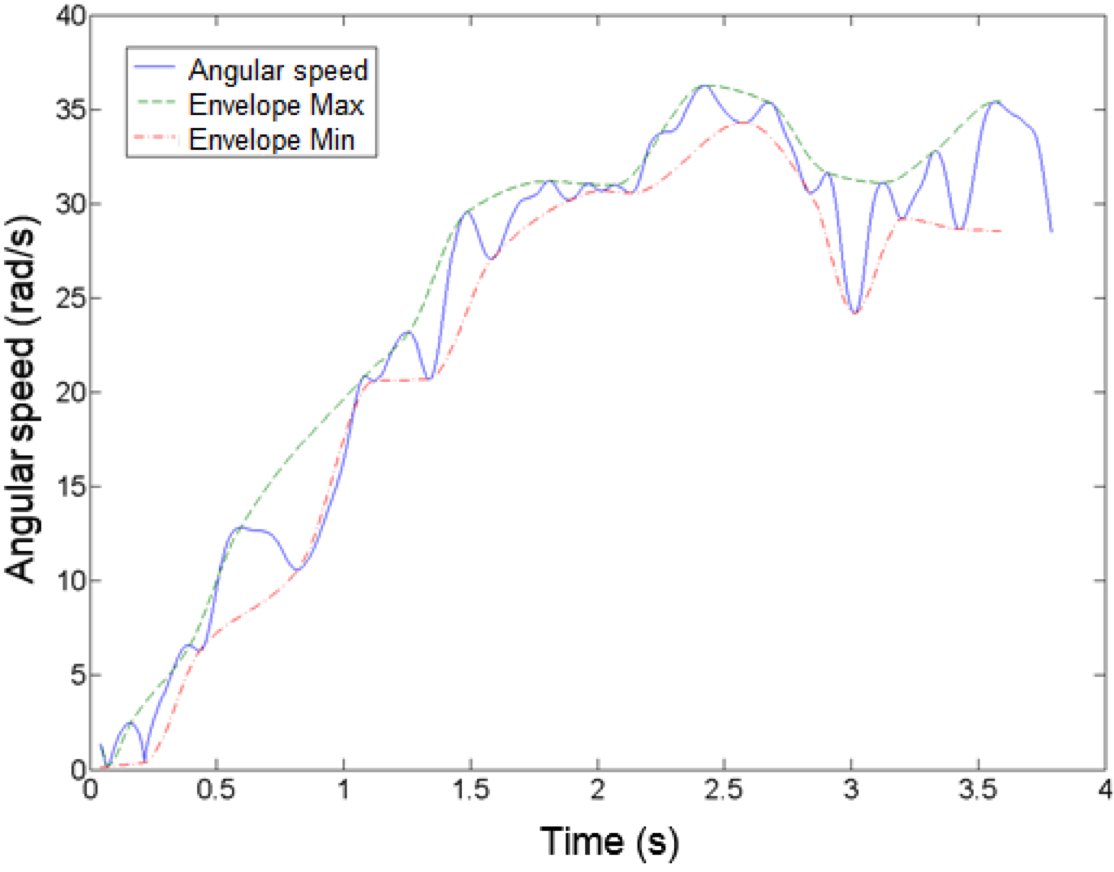
The sprints started from an official BMX starting ramp and start gate that was triggered by an official acoustic signal (Bensink BMX gates, Voorst, Nederland). Thus, we replicated the actual BMX starting conditions, with the exception that cyclists were tested on their own and not in a mass start. After the starting signal the rider accelerated as powerfully as he could. The track layout consisted of an exit descending ramp of 4.3 m and a 16% slope, then a flat distance of 3.3 m to the first obstacle (small speed jump, with no technical difficulty), and then another flat and straight line of 23.3 m.
All subjects used the same crank length (175 mm), the same gear ratio (38
Even though the cyclists were asked to perform two sprints for about 7 s in each condition, only the first 3.95 s from the bike’s first movement were analysed. This duration was chosen because it was the time that it took the best riders to arrive at the beginning of the second obstacle of the track (medium double). Therefore, the start sprinting ability was assessed by minimising the influence of individual technical skills and reaction times on performance variables. The measured variables included the distance covered in those first 3.95 s (total distance), time to obtain movement after the basic start sequence (beep). From the power output G-Cog data calculated variables included the ratio between the powers of local extrema (90 and 270
where %PM is the measure of the lateral acceleration, Acc
Different relationships between biomechanics data were analysed: 1) the relationship between the %PM and the performance (distance), 2) The relationship between the lateral acceleration and performance between two different groups, and finally 3) the relationship between the reaction time and the performance between the two groups, the elite and the Cadet.
This was carried out using Statsoft Statistica V8 software (Johannesburg, South Africa). The Shapiro-Wilk Test was applied determining the Gaussian distribution of the results, followed by Levene’s test to verify the homogeneity of variance. The main characteristics of the two groups (Elite and Cadet levels) were compared using student’s paired
Total distance, reaction time and %PM in Elite and Cadet groups
Total distance, reaction time and %PM in Elite and Cadet groups
Differences between CR type in total distance, reaction time, power output and %PM in the two groups
Relationship between the distance covered during the 3.95 s and the %PM.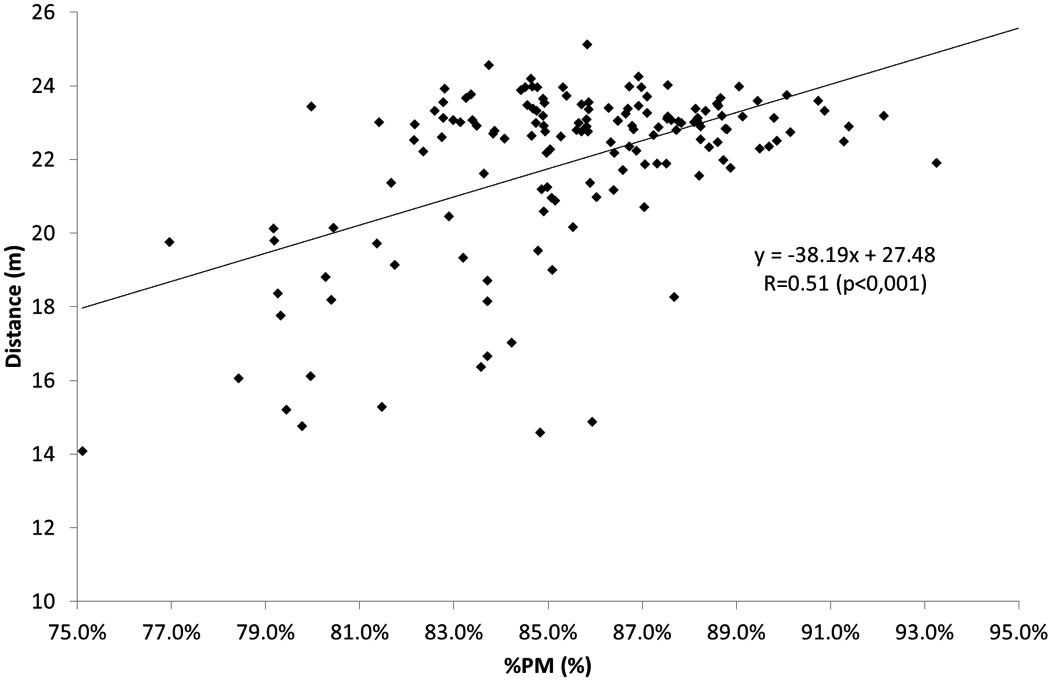
Differences between groups and between CR type are displayed in Tables 2 and 3, respectively. The Elite group covered higher distance than the Cadet group. Furthermore, the Elite group had better reaction time. Percentage PM did not differ between groups (Table 2). Regarding the CR condition, there were no differences between circular and non-circular CR in the Elite group. For the Cadet group, power output was significant lower with the non-circular condition, while the %PM was significant lower (Table 3). No differences were observed in total distance and reaction time (Table 3).
Relationship between the lateral acceleration and performance for the Elite and Cadet groups.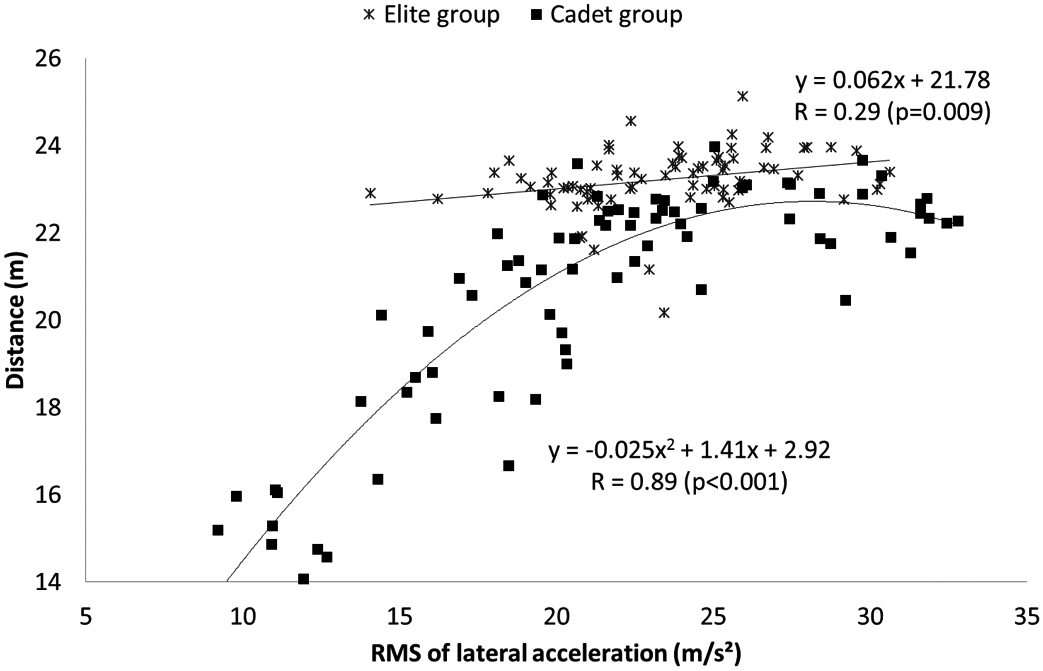
Relationship between the reaction time and the performance of both cyclist groups.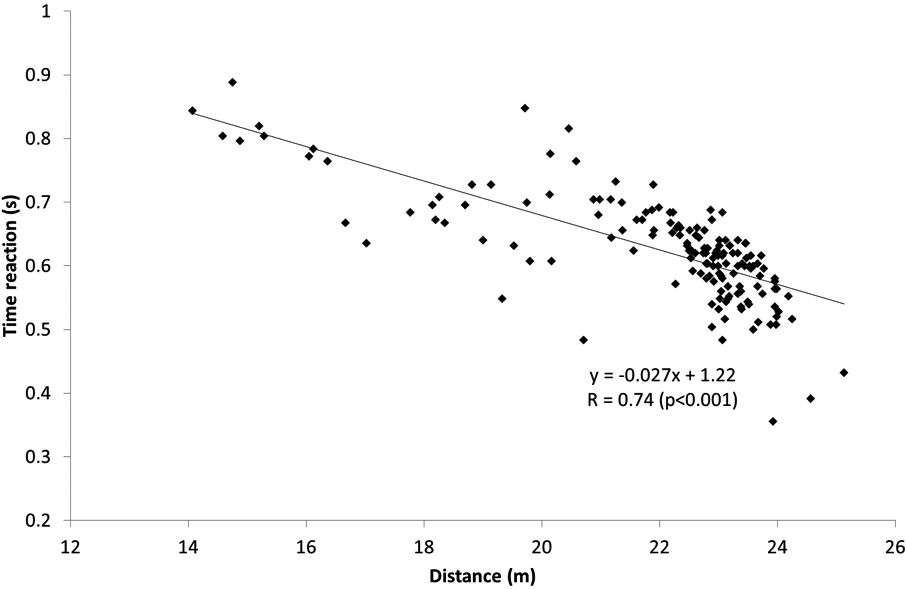
Figure 1 is an example of analysis using the relationship between the angular speed of the rear wheel ratio between the powers of 90 and 270
A significant positive correlation (
Figure 3 outlines the relationship between the RMS of the lateral acceleration values and the performance during the sprint tests. The results suggest a strong positive relationship (
The major aim of this study was to analyse the lateral acceleration of the BMX cyclists during sprint tests in function of the types of CRs and the cyclist level of performance at a relative high sampling rate (250 Hz). The main results of this study show that the new indicator of performance based on the analysis of the angular velocity variation (%PM) was strongly linked to the sprint performance but independent of the level of the cyclists. However, our results show that the %PM is not significantly different for the Elite and Cadet Groups while the sprint test performances were different. Also, these results suggest that the %PM is not the only determinant of performance during the 3.95 s sprint test in BMX. In this experiment, the reaction time was not considered in the performance, however, our results show that the reaction time was significantly lower for the Elite compared with the Cadet group while there was a strong negative relationship between the reaction time and the sprint performances (Fig. 4). These results indicate that the Elite athletes show a greater capacity to produce higher level of power output and a lower reaction time compared with the Cadet group.
Contrary to March et al. [10] our result (Table 3) do not support the notion that non-circular CR can improve significantly the sprint performance in BMX. The difference between ours and the study of Mateo- March et al. [10] could be due to the low number of subject and a low statistical power (0.28) in the present study. This result should be confirmed with higher statistical power. Our study indicates the %PM performance determinant computed was improved with the non-circular CR, however this improvement was only statistically significant for the Cadet cyclists (Table 3). The %PM was already relatively high with the circular CR for the Elite group contrary to the Cadet group. It is possible that this pedalling variable cannot increase more than the 0.9. These results could explain in part why the Cadet group have maintained the distance performance with a lower power output. These results were in line with March et al. [10] that suggest 1) that the non-circular CR system appears to be able to alter power generation, and 2) that this system can improve pedalling technique to a smoother cycling action that generates power more progressively.
The driving technique of the bicycle could have an impact on the BMX sprint performance. Our results (Fig. 3) show that the lateral oscillation acceleration of the bicycle was linked to the performance (i.e. distance) during sprint tests. These relationships were different for the two groups tested. There wa a linear correlation for the Elite group and polynomial for the Cadet group. The determination coefficient value was higher for the Cadet group (0.79) compared with the Elite group (0.07). Thus, these results suggest that the oscillation movements could increase the sprint performance. This finding is in line with the observation of Bertucci et al. [4] during sprints in laboratory conditions (no oscillation) and in actual condition. Our results show that the explanation of the performance by bicycle lateral acceleration is higher for the Cadet group compared with the Elite group. Bertucci et al. [24] suggested that the lateral oscillation could be used to optimize the effectiveness of the force application on the pedals. It is possible that the pedalling technique of the Elite group was already optimized and that the oscillation could not increase the pedalling effectiveness contrary to the Cadet group. This hypothesis is in accord with our results indicating an increase in the %PM with the non-circular CR especially for the Cadet group. For that reason, the non-circular CR could be useful for Cadet because they are younger, have less years of training and, especially, can adapt their pedalling pattern to the new brand, i.e., the non-circular CR.
Conclusion
The use of the non-circular CR may be an option for improving the %PM especially for the Cadet Group while the analysis of the %PM as a determinant of performance could be useful for the coaches. Equally, analysing the lateral oscillation of the bicycle may serve for improving the sprint test. Finally, our study supports the use of high sampling rate accelerometric data in assessing and enhancing cycling print performance.
Author contributions
CONCEPTION: Manuel Mateo-March, Alejandro Javaloyes and Mikel Zabala.
PERFORMANCE OF WORK: Manuel Mateo-March, Alejandro Javaloyes, Xavier Chiementin and José Luis López-Elvira.
INTERPRETATION OR ANALYSIS OF DATA: Manuel Mateo-March, Alejandro Javaloyes, Xavier Chiementin, José Luis López-Elvira, William Bertucci and Mikel Zabala.
PREPARATION OF THE MANUSCRIPT: Xavier Chiementin.
REVISION FOR IMPORTANT INTELLECTUAL CONTENT: José Luis López-Elvira, William Bertucci and Mikel Zabala.
SUPERVISION: William Bertucci and Mikel Zabala.
Ethical considerations
The study was approved by the ethical committee of Miguel Hernandez University and by the Spanish Cycling Federation (27/04/2018; REF: DPS.JSM.02.18). It was conducted according to the principles of the Declaration of Helsinki and the participants provided written informed consent.
Funding
This research did not receive any specific grant from funding agencies in the public, commercial, or not-for-profit sectors.
Footnotes
Acknowledgments
The authors have no acknowledgments.
Conflict of interest
The authors declare that they have no conflict of interest.