




Abstract
BACKGROUND:
A small, portable, inexpensive FP is a helpful test instrument in many strength and conditioning settings.
OBJECTIVE:
To assess the reliability and validity of a portable FP.
METHODS:
The FP was assessed statically for linearity and regionality using known weights and known weight placements across nine regions. Dynamic assessment was conducted by placing the FP on a laboratory-grade one-dimensional FP and performing static jumps, countermovement, and drop jumps with synchronized data acquisition. Frequency response of the FP was assessed by striking the top surface with a hammer.
RESULTS:
Excellent static linearity (
CONCLUSION:
The FP showed good to excellent characteristics in the static and countermovement jumps and the drop jumps when anchored. The primary limitation of the FP is its small size and light weight.
Introduction
Force platforms (FP) have become ubiquitous in the training evaluation of athletes and others both in terms of performance and injury rehabilitation. Force platforms provide information about the external forces involved in a movement; thus, helping coaches, scientists, and medical personnel evaluate various aspects of strength, speed, and power fitness [1]. Unfortunately, the typical laboratory-grade FP is prohibitively expensive, not easily portable, often requires additional expensive software, and may demand specialized personnel [2]. Laboratory-quality force platforms are usually built from steel, incorporate multiple sensitive strain gauges or load cells, are anchored to a concrete floor, and can measure forces and torques applied to the surface in three or more dimensions (i.e., up-down, left-right, and forward-backward). Investigators can use the types of information available from FPs but may also need instrumentation that is easy to use, small, portable, light, easy to interpret, reliable, valid, and affordable.
FPs in sport and rehabilitation settings are most commonly used to measure the vertical ground reaction forces of standing, gait, squatting, and jumping [3, 4]. Restricting a force platform to measure only vertically directed forces (orthogonal to the surface of the force platform) dramatically reduces the complexity and cost of the platform. As such, a one-dimensional force platform requires the user to ignore the horizontal directions of force application – horizontal anterior/posterior and horizontal medial/lateral. Particularly in vertical jumping and squatting, the vast majority of forces applied by an athlete are vertical; thus, ignoring the other horizontal forces does little to impair interpretation of the vertical force-time data for sport training prescriptions [5]. However, horizontal dimensions forces may add important information, especially for injury rehabilitation [6]. Investigators with interests in vertical force-time, impulse, peak force, rates of force development, acceleration, velocity, power, and change in position can use a one-dimensional FP to capture this information [7, 8, 9].
Sampling rate is usually under the control of the investigator and selectable via software. Typical sampling rates for one-dimensional FPs have ranged from less than 100 Hz to 1000 Hz. Determining the sample rate requires that one knows the skill or sub-skill duration of interest. For example, if the investigator is interested in an event that requires 0.02 s to complete, then it should be sampled at least twice as fast as the maximum analog signal frequency of the event of interest (i.e., sample at 100 Hz). If the event takes one second, then the time between samples should be at least 0.5 seconds [10, 11]. Since vertical jumps require approximately 100 to 250 milliseconds from start to take-off, then sampling should be at least 200 Hz or greater. Two-hundred Hertz has been shown to be adequate for studying a countermovement jump [12, 13]. In contrast, this low sampling frequency (200 Hz) may not provide ample resolution with which to examine the changing forces that may occur during faster motions [1].
A small portable FP has been gaining acceptance and use among strength and conditioning professionals and medical personnel in training, laboratory, and clinical settings. However, despite one published study of the reliability and validity of athletes’ performances using this type of FP [14], and one study of a similar two-dimensional FP [5], an in-depth study of the reliability and validity of this FP’s characteristics has not been published. This study assessed the reliability and validity of the FP using multiple measurement methods, including static, dynamic, regional force evaluation, and frequency response. The tested hypotheses were that the FP would be reliable as measured across multiple test conditions, and valid in comparison to a more expensive laboratory quality FP.
Methods
Subjects
This study addressed instrumentation rather than human subjects. For the dynamic tests one of the authors volunteered to perform the jumps.
FP1 (in the center) was placed on top of FP2. Inset shows FP1 and white Air Link adapter (on the right with cables) of FP1.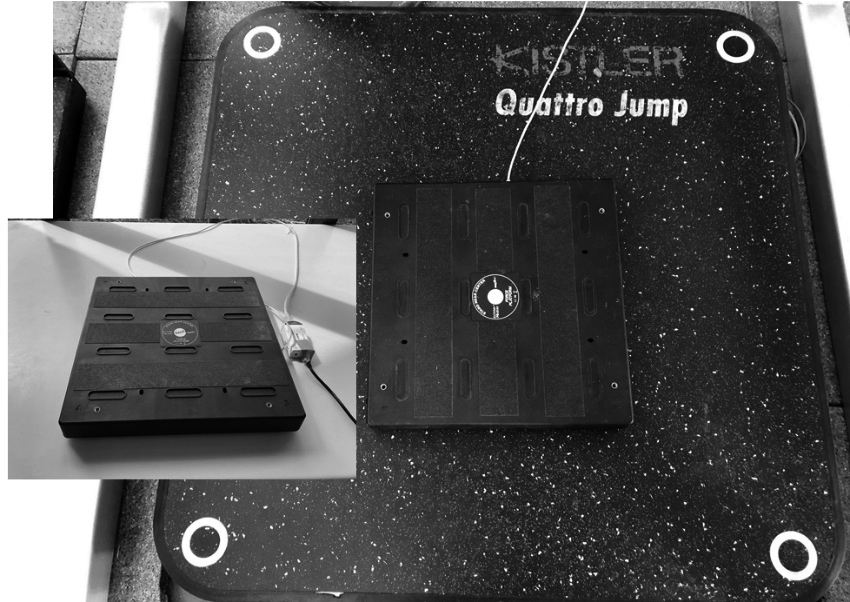
The FP (FP1) under investigation was a Pasco Scientific one-dimensional force platform (Pasco Scientific, Inc., Roseville, CA, USA, Force Platform – PS 2141). The FP was 35 cm
Assessment of reliability and validity of the FP1 required static and dynamic force-time analyses, measurement of FP1 regional differences, and determination of the natural frequency of the FP1. Data were obtained using Pasco Scientific, Inc., Capstone software (Version 1.13.2, Roseville, CA, USA).
Test procedures
Static force evaluation
The static assessment consisted of placing a stack of ten weight training weight plates one at a time on FP1. The weights were centered on FP1, and the force output was captured and stored as each weight plate was added to the stack. The weight stack ranged from 20 kg to 230 kg (196.94 N to 2260.28 N).
Dynamic force evaluation
The dynamic assessment involved placing the FP1 on top of a Kistler Quattro Jump force platform (FP2) (Kistler Quattro Jump, Type 9290CD, 920 cm
Regional force evaluation
A force platform is expected to detect forces uniformly across its top surface. In order to test the regional forces of the force platform, a known 25 kg weight was placed on top of a wood cube (5.1 cm
A. Regions for application of the 25 kg mass to assess if forces are the same across the top surface of the force platform. B. Anchoring method used to stabilize FP1.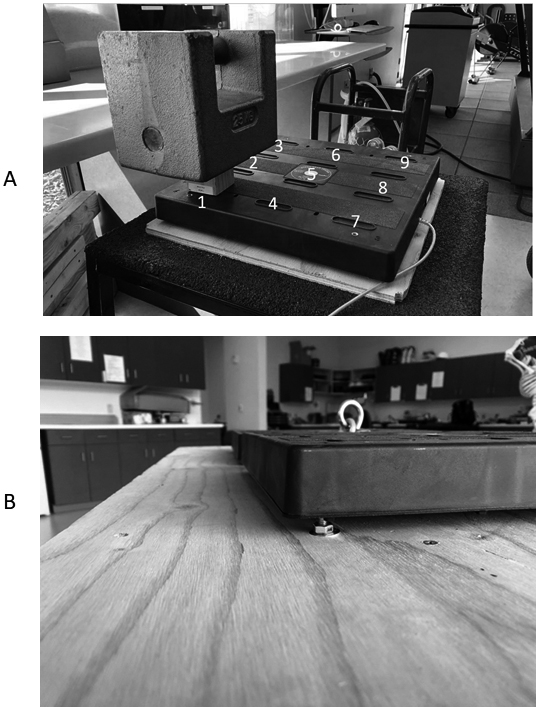
Dynamic force-time evaluation and jump-type comparison
RMS
A problematic characteristic of force platforms is a response to impact that consists of “ringing” or vibration. Ideally, a force platform should not act similar to a trampoline by contributing to the rebound or recoil of an impact and should not vibrate from an impact or push. However, nearly all objects will vibrate at a fundamental frequency when pushed, pulled, or struck [20, 21]. The platform’s fundamental frequency can interfere with the detection of force during use. Natural frequency response was assessed by hitting the surface of the force platform with a hammer (0.80 kg). Examining the FP1 frequency response was particularly challenging because when the light force platform was struck with the hammer, the entire unit bounced upward off the floor indicating that the elastic characteristics of the materials and construction were not favorable for rapidly applied impact forces such as with a hammer.
In order to stop the bounces and stabilize FP1, the platform was fixed to a custom base structure incorporating 2.4 cm plywood boards supported by 1.7 cm by 10 cm wood supports. FP1 was secured using 6.35 cm
Statistical analysis
Descriptive statistics, linear regression, repeated measures analysis of variance, and Fast-Fourier Transforms were calculated. Statistical significance was set at
Results
Static force evaluation
Ten weight plates were used to assess the linearity of the FP1. The correlation of the known weights with the force values presented by the FP was
Standard error of the intercept: 0.342 N; 95% CI
Standard error of the slope: 0.0023 N; 95% CI
Force-time curve comparisons. Black 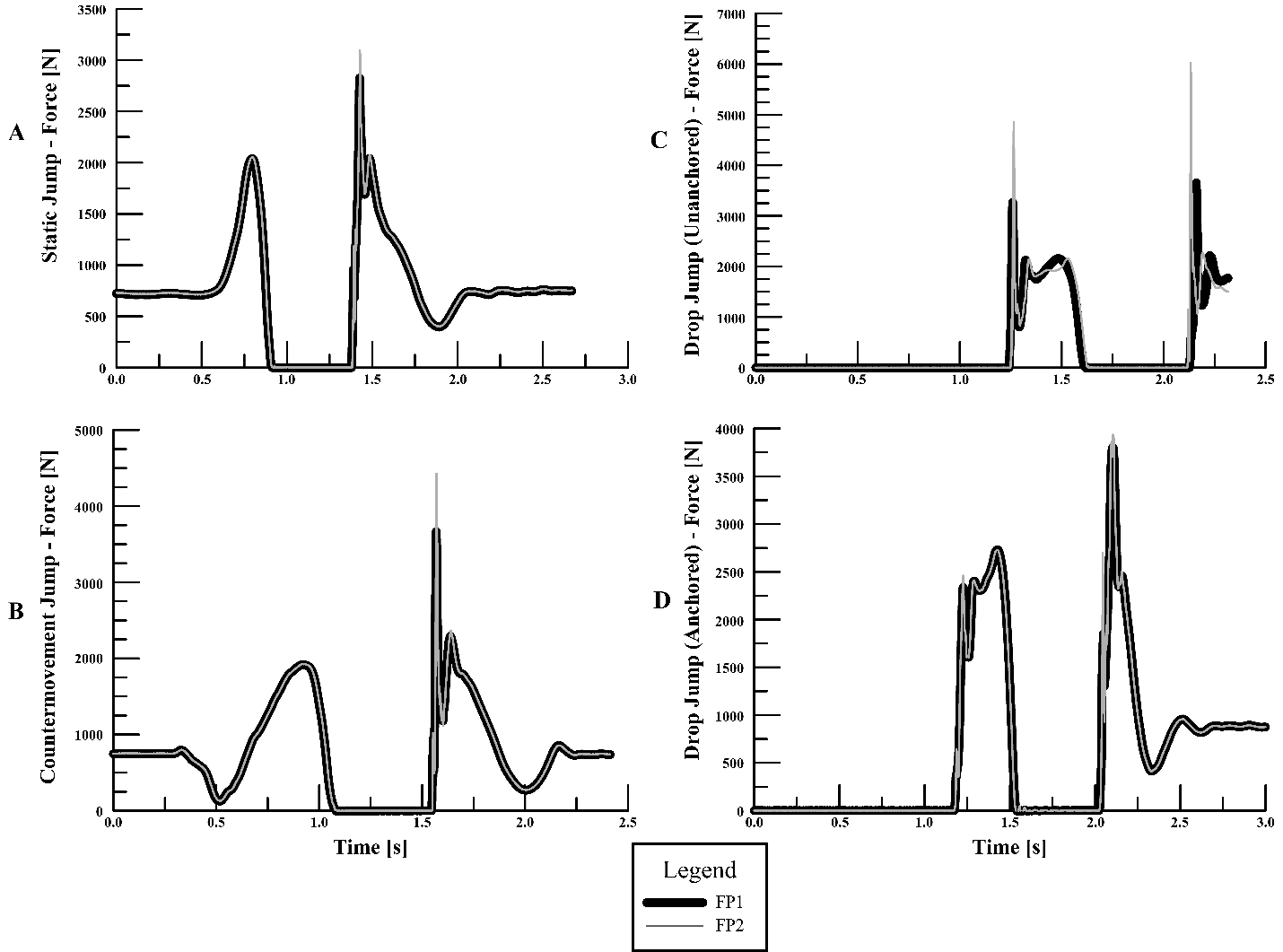
Power spectral density showing the fundamental frequency of an anchored FP1. Note that the dominant frequency occurs are approximately 195 Hz.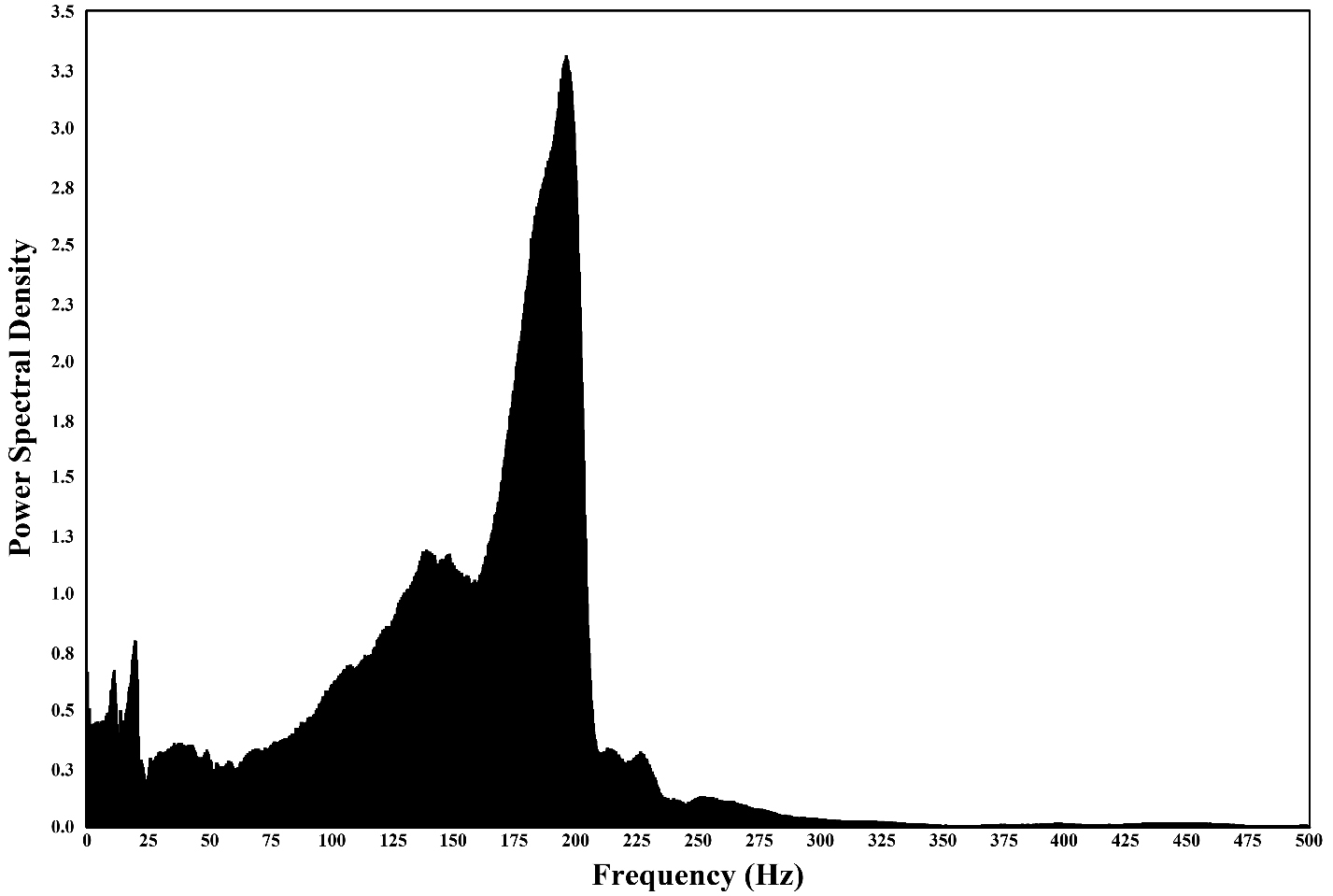
Table 1 shows the results of the three, vertical jump-type comparisons with simultaneous sampling of FP1 lying on top of FP2. Three examples of the force-time curves of the static, countermovement, and drop jumps are depicted in Fig. 3A–D for visual comparisons. The problems with bouncing during the drop jump were addressed by anchoring FP1 using bolts and a heavy wood platform (Fig. 3D).
Regional force evaluation
Five trials of the nine regions of FP1 were conducted (Table 2). The 25 kg test mass weighed 245.15 N. The grand mean of the nine regions was 245.28 N, Std Error
Regional forces
Regional forces
Five trials of hammer impacts at the center of the upper surface were used to assess the fundamental fre-quency of FP1. The five impact trials resulted in a mean of 195.36
Discussion
The static assessment of the linearity of FP1 showed excellent results with r and r
The dynamic assessment also revealed excellent validity with r and r
Given that FP1 was designed to serve in high school and university physics labs, it is not surprising that an impact-related jump might deviate from an acceptable level of validity for use in a sport and laboratory setting. However, a simple bit of carpentry showed that the problem with FP1 and drop jumps lies with the mobility and lightness of the force platform. Once anchored FP1 performed well.
The FP1 regional measurements showed good validity and reliability across regions and trials (Table 2). The statistical results of this analysis were awkward. Despite the statistically significant
The fundamental frequency of the unanchored FP1 was approximately 84 Hz, and the anchored FP1 showed a fundamental frequency of approximately 195 Hz. Although this value should be interpreted with caution, the frequency response was similar to that of a larger portable steel force platform with a mass of 30.7 kg [2]. A typical drop jump is likely the most demanding jump-type evaluated on this type of portable force platform. The relevant durations of two phases of the drop jump were 0.14 s to 0.17 s for the down or eccentric phase and 0.16 s to 0.19 s for the up or concentric phase [22]. The 84 Hz fundamental frequency of the unanchored FP1, was 4.4 to 6 times faster than the demands of the two rapid components of a drop jump. The anchored FP1 resulted in a fundamental frequency response that ranged from 10 to 12 times greater than the signal of interest [23]. Drop jumps appear to be at the limits of unanchored FP1’s mechanical behavior while the anchored FP1 can be used for drop jump assessments.
Conclusion
The results of this experiment showed that FP1 was reliable and valid based on repeated force-time measurements and multiple jump types. The primary limitations of this force platform are its small size and mass. Those pursuing drop jumps with this type of force platform should anchor the force platform to the floor or to a heavy base to ensure that the force platform does not ring or vibrate at low frequencies or bias the jump data. With proper precautions, this force platform can serve the practical needs of field and laboratory assessment of vertical jumps and squats.
The small portable force platform examined here appears to be an excellent device for measuring weight, static positions, and static and countermovement jumps. Drop jumps are near the limit of the unanchored force platform’s ability to measure rapidly applied forces while providing reliable and valid data. Future research involving this type of portable force platform should explore the influence of bolting the platform to a heavy foundation such that the platform is fixed and not allowed to bounce. Given the low cost of FP1, the device is particularly well suited for strength and conditioning facilities and programs that have few financial resources and for field testing.
Footnotes
Conflict of interest
None to declare.