




Abstract
BACKGROUND:
Sports competitions are significant sources of psychophysiological stress, especially for young athletes submitted to competitions in a congested match schedule.
OBJECTIVE:
In order to verify the effect of short recovery periods (24-hours) in the subsequent match, the response of salivary cortisol (sC) and match intensity were investigated in two successive soccer matches during an official tournament.
METHODS:
Twenty (20) young soccer players (16.8
RESULTS:
The sC concentration significantly increased in both matches (
CONCLUSIONS:
The findings of this study indicate that the short recovery-time did not influence the sC and match internal load responses in the subsequent match. In addition, athletes with high responsiveness to the stressful demands of the matches tend to maintain this condition regardless of the time on field and the RPE reported.
Introduction
The environment involving official sports competitions is replete with situations that overload the athletes in the psychophysiological context [1]. Such situations can be due to the requirement of the technical committee to achieve better results, and of the match or competition importance, as well as personal demand. This condition may stimulate an immediate response of the hypothalamic-pituitary-adrenal axis (HPA) resulting in increased levels of cortisol [1, 2]. This stressful competitive-match scenario can be exacerbated by exposure to sports competitions held with successive matches with very short periods (less than or equal to 24 hours) of recovery between moments of competition. This situation is commonly seen in sports practice in youth, which may favor greater psychobiological overload [3, 4] due to increased residual fatigue caused by the short period of time between matches [5].
Acute HPA axis activity in response to exercise is well evidenced in the literature, having the intensity and duration of the stimulus as main modulators [6]. Such activity may be modulated during sporting conditions because of the anticipatory effect to the event [2], of the results of the competition [7] and the different phases of training [8]. Furthermore, it may be related to the match importance or environment [9, 10]. In contrast, some longitudinal studies have shown convincing results that, under resting conditions, salivary cortisol response in young athletes seems to be unaffected in response to a competitive condition [4, 11]. In this perspective, due to the multifactorial characteristic of sports competition and added to the short intervals of recovery between the matches, it becomes pertinent to effectively monitor the acute physiological adjustments, especially in young athletes, in order to contemplate a rational organization of the entire preparation process.
Some methodologies associated with the salivary cortisol response such as the session-rate of perceived exertion (session-RPE) method [12] have been used to monitor both training and competitive load in adult and young athletes [13]. This method uses the values of the category-ratio scale (0 to 10 scale) multiplied by the total session time, the value is given in arbitrary units (AU) and represents the magnitude of the training or competitive session [12]. This method is sensitive to the modulation of microcycles with training load intensification and variation in intensity, volume and rest [8, 14], and contributes to orientation and monitoring of competitive loads throughout the season [15].
In addition, the session-RPE presents acceptable use in collective sports for both direct monitoring and to understand the physiological demand of the modality [16, 17].
The use of these monitoring forms is currently being encouraged by the International Olympic Committee (IOC) for training athletes in adulthood, and is useful in monitoring training and competition loads [18, 19]. Thus, identifying and monitoring the competitive internal load are shown to be fundamental in sports preparation to understand and adapt the physical and mental demands during sports competitions in order to potentiate the psychobiological performance, and consequently the sporting result [20, 21]. In addition, in its guidelines for elaborating programs for developing sporting talents, the IOC reinforces the need to increase the amount of evidence with the use of instruments to monitor the training of adolescent athletes [18].
Based on the assumption and bearing in mind that the competitions in the base categories are subject to being performed in a congested schedule with a short recovery period between them, and knowing that young athletes are exposed to a considerable metabolic and physical overload during the matches [4, 11, 22], monitoring competitive internal load either through scales and questionnaires or through biochemical variables is necessary to provide support and guidance regarding the psychophysiological behavior of the young athlete in training or competition for coaches and conditioning staff, especially during the period of sports development.
Training session structure during the eight weeks prior to the matches.
In this way, Moreira et al. [4] investigated the effect of congested matches (seven matches in seven days) on endocrine, immune, internal load and technical performance in youth soccer players in pre-match conditions. As their main findings, the authors found endocrine changes (testosterone), mucosal immunity and technical performance, even though they did not show changes in resting salivary cortisol concentrations. However, there is an important research gap in the literature that addresses this specific population during official matches with a short recovery period (24-hours) and that clarifies the acute physiological demand that could influence subsequent sports performance [23, 24].
Therefore, the aim of this study was to analyze the response of two successive matches on salivary cortisol concentrations and on match intensity during an official tournament in young soccer athletes. As an initial hypothesis we expected an increase of match load values post-matches, and that the reduced recovery time between the matches would increase salivary cortisol concentration and match internal load after the second match.
Subjects
Initially 20 young soccer players (16.8
Procedure
The athletes were selected to participate in an official competition and were determinant to part of the objectives sought by the club in this first stage. Two competitive matches were played over 2 successive days. Each match was divided into two times of 30 minutes with an interval of 10 minutes between them and a 10-minute warm-up was performed before the matches. An unlimited number of substitutions of the players could be made during the matches. The matches occurred at around 4 p.m. with a temperature of 29
Presentation of variables analyzed in mean and standard deviation
Presentation of variables analyzed in mean and standard deviation
TF: Time on field; AU: arbitrary units; IML: internal match load
The athletes were instructed to abstain from caffeine products and consumed their last meal at least two hours before saliva collection at the training center. Salivary samples were collected 15 minutes before warm-up and between 15 and 45 minutes after the end of each match. This time variation is in agreement with other studies that showed that salivary cortisol is maintained high after 45 minutes (25 until 2 hours of recovery [26]). All the subjects collected the salivary samples at the same time regardless of when they left the match.
First, the athletes sat down and washed their mouth to clean the buccal cavity. Then, with their head slightly tilted down they collected the saliva naturally for five minutes and stored it in sterile centrifuge tubes. The saliva samples were stored at
Match load
The session rating of perceived exertion (session-RPE) method was used [12] in order to quantify the intensity of the soccer matches played. Approximately 30 minutes after the end of matches or after substitution of the player, the player was asked “how was your workout?” according to the CR10 perceived exertion scale adapted by Foster et al. [12]. The players had already been familiarized with this procedure during their regular training sessions and previous matches.
To determine the internal match load (IML), the score of the session-RPE was multiplied by the total match duration (minutes) of each player, where the values are given in arbitrary units (AU). This method has been used in several team sports [8, 17, 26].
Statistical analysis
Descriptive statistics (mean, standard deviation and confidence interval (CI –95%) were utilized for all variables. The Shapiro-Wilk test was implemented to analyze data distribution (
Results
A higher post-match salivary cortisol concentration was observed after the matches. The salivary cortisol values before and after the matches had a variation of 0.8
Salivary cortisol values (mean and 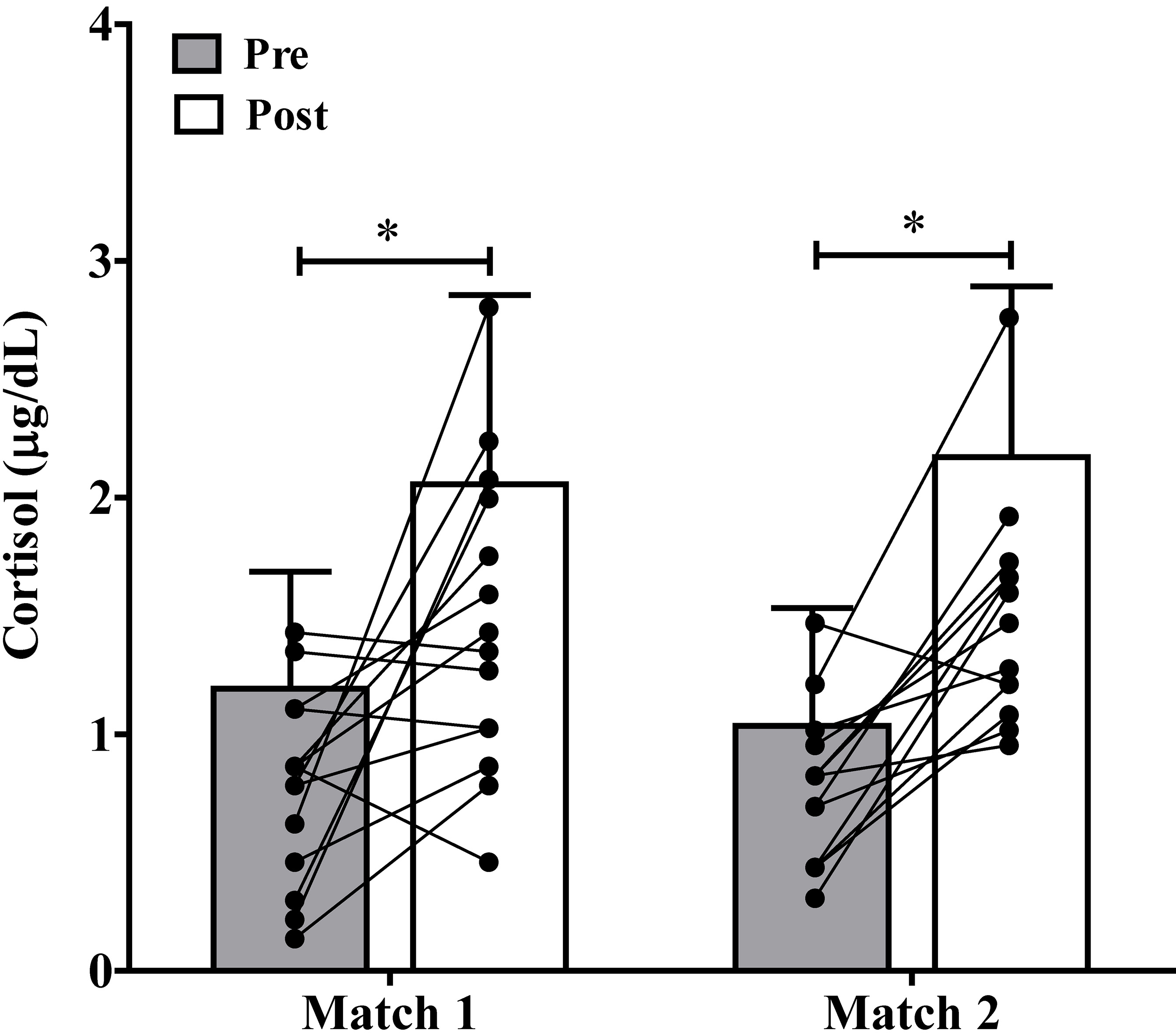
Table 1 shows data for all analyzed variables. There was no difference across the matches for time on field (
Regarding the responsiveness of the players to the matches, it was observed that the athletes who were classified as high responders (
Variables according to high and low concentration of salivary cortisol
TF: Time on field; AU: arbitrary units; IML: internal match load.
Comparison between high and low responders are presented in Table 2. Baseline values of the salivary cortisol between group was different in the Match 1, t
Values of 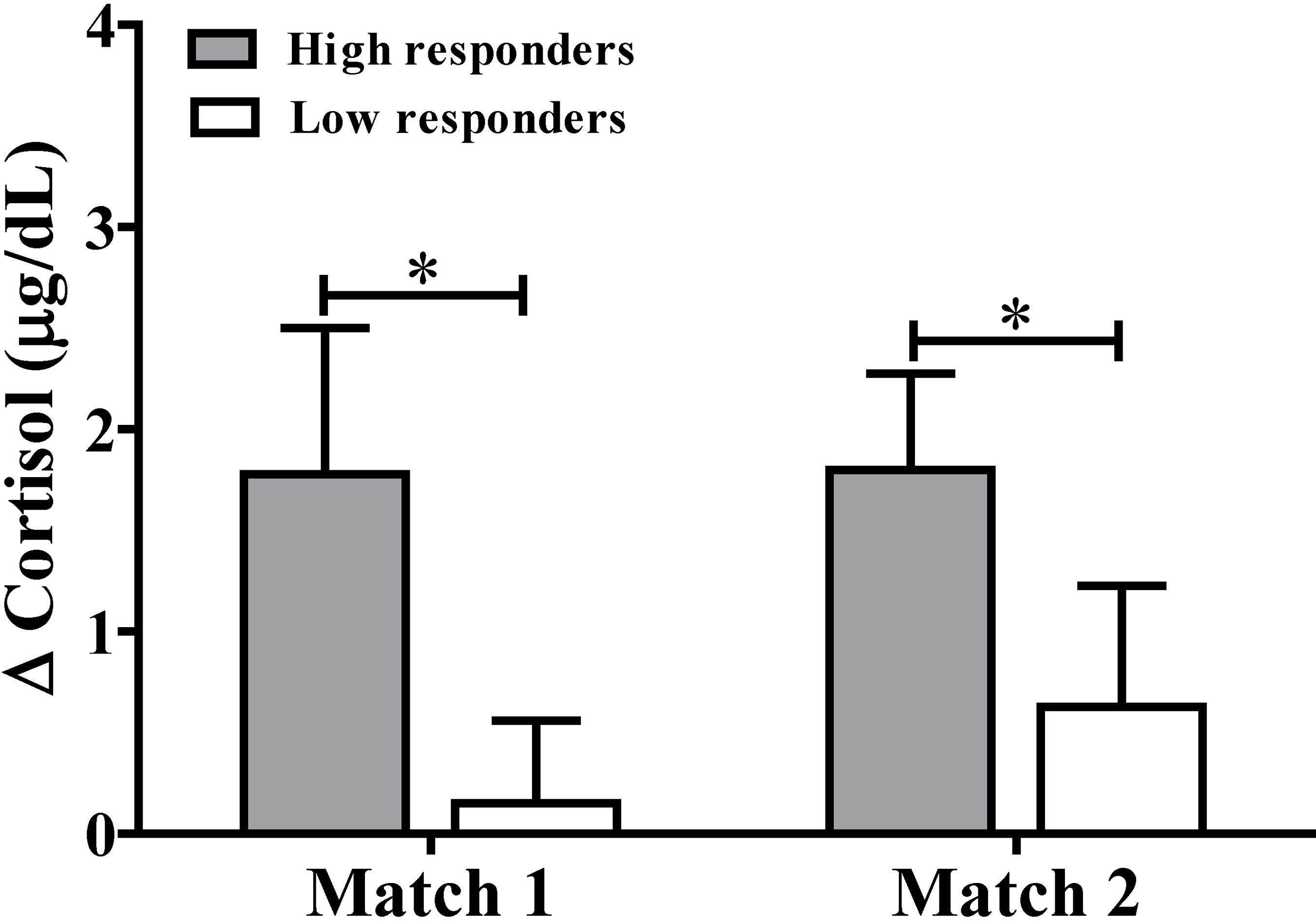
Figure 3 shows the variation delta values of salivary cortisol according the groups (high and low responders). In matches 1 and 2 was observed greater variation in group high responder in comparison the group low responder (Match 1:
The aim of this study was to examine the acute response of salivary cortisol concentrations and of match intensity in two successive soccer matches during an official tournament. The main findings were: a) cortisol salivary values increased after both matches, b) the psychophysiological fatigue caused by match 1 did not influence the endocrine or psychometric responses of the second match, thus refuting the study’s initial hypothesis. In the secondary result was observed the athletes who were classified as high responders in the first match maintained these increased values in the second match.
Regarding the increase in post-match cortisol, the findings corroborate most studies which have investigated the response of the HPA axis during competitive matches [7, 9, 10, 16, 28]. This increase was expected since this modality has an intermittent characteristic with considerable cardiometabolic demand, and because of the psychological requirement inherent in competitive matches [21]. Moreover, these aspects are the necessary stimuli for activating the HPA axis, and with consequent increase in cortisol levels [29].
As observed in the results there was an increase of 74% and 112% in salivary cortisol concentration in the first and second matches, respectively. It is important to note that although some players did not complete the two periods of thirty minutes, the stress condition remained until the conclusion of each match. This can also be confirmed in the studies by Powell et al. [24] and Duclos et al. [25] who found cortisol values that persist for up to two hours after exercise, confirming the fact that any type of physical or psychological stress promotes an increase in the adrenocortical secretion of cortisol [29].
Although the change in cortisol concentration could present a multivariate source, it was demonstrated that a stressful situation caused by a competitive match lasting less than 60 minutes was sufficient to increase salivary cortisol concentrations. In contrast, the variations were about 5% when compared to individuals of the same age during a training session of 90 minutes [30]. This higher variation in our results is explained by the fact that the hypothalamic pituitary adrenal axis (HPA axis) is sensitive to stressful situations, which is evident during competitive matches due to the physiological and especially psychological requirement of the athlete [1, 31, 32]. Furthermore, athletes may have more efficient chronic-adaptation mechanisms regarding the HPA axis because they are more responsive to acute exercises and stress situations, probably due to adaptations which occurred in training [10, 33].
Previous studies have already observed the behavior of the HPA axis during official match competitions in female soccer players who presented salivary cortisol variation between 50–110% [34, 35], and in competitions of other sports modalities such as basketball and futsal [9, 26]. Although there is a research gap on the acute response of the HPA axis during official competitive matches in both professional athletes and in base categories in soccer, there are other sports modalities in which the salivary cortisol modulation seems to be more evident [7, 9, 26]. Fernandez-Fernandez et al. [7] demonstrated an increase in the salivary cortisol concentrations in young tennis players independently of the outcomes of matches. In addition, the authors emphasized that such an increase may be directly related to the somatic and cognitive anxiety levels. On the other hand, in the study of Aguilar, Jimenez and Alvero-Cruz [28], the response of cortisol after hockey matches was only different from the pre-match condition when the athletes were faced with a defeat, even with athletes having a high physiological demand.
To help understand the psychophysiological demands of competitive matches, the internal match load of the young soccer players was available and there were no differences between the two matches. In other words, the session-RPE post-match 2 does not seem to have been influenced by the psychophysiological stress generated in match 1, although the RPE scale values were evaluated as “hard” (
In the division of the athletes by the median-split was possible to identify the athletes who had the highest values in the variation of cortisol in match 1 (high responders) also obtained the greatest variations in match 2. This increase was not accompanied by the increase proportion of the internal match load, since the values referring to the variables that compose this measure did not differ statistically from the low responders group.
Even session-RPE being a very useful tool to monitor the internal load and several studies demonstrates significant association between this variable with cortisol responses [38, 39], in this study, when the athletes were divided by median-split, was not detected a significant correlation between session RPE and cortisol levels in both matches played.
Although several studies point to an association between the cortisol response and the RPE session, it is important to note that cortisol increase as a function of an official match has psychological determinants that can be expressed independently of the external load imposed on the athlete [40, 41].
Therefore, this condition can be an important alert for coaches and staff members to reinforce the need to adopt a holistic approach in monitoring team athletes, identifying the responses of each athlete independent of the internal match load values, since the increased salivary cortisol may be related to an inadequate recovery process, with a possible delayed muscle recovery after damage-inducing exercise. In addition, cortisol increase is related to the decrease in testosterone and insulin-like growth factor-1 levels (IgF-1), which are directly linked to the process of somatic growth, which could be a negative factor especially in this age group.
Monitoring hormonal responses during matches is relevant in an attempt to understand the hormonal behavior of young athletes who are being put under more and more pressure to perform at an earlier age. Furthermore, examining the psychophysiological responses related to stress in young athletes for competition is particularly important to establish the required recovery time during tournaments or championships [22]. This could enhance the relationship between workload, the perceived stress and hormonal response during official competitions [7].
Even in light of the present findings, it is important to highlight some limitations of this investigation. Although, this study has been carried out in a real situation, increasing the ecological validity of the results, the small sample size constitutes a limitation especially in the statistical inference regarding the high and low responders. Therefore, it is relevant to consider that the non-evaluation of resting salivary cortisol as a limiting factor in explaining the hormonal behavior during the competition. In addition, the use of psychometric instruments to measure levels of anxiety, stress and/or mood to associate with the findings presented herein could broaden the understanding of the results. Future research to investigate these variables added with some performance variables (vertical jump, 35-meter sprints, and match involvement) are necessary to clarify the physiological, psychological and performance components in young athletes during successive matches.
Conclusions
This study showed an increase in salivary cortisol after each match, and psychophysiological fatigue from match 1 and the short recovery-time (24-hours) did not influence the endocrine and psychometric responses in the second match, In addition, athletes with high responsiveness to the stressful demands in match 1 tend to maintain this condition in match 2 regardless of the time on field and the RPE reported. This research also showed the need for adjustments to soccer rules such as a decrease in playing time and an increase in the number of substitutions in order to allow a proper recovery process for young players, especially for a congested match schedule. Moreover, additional studies are justified in similar situations, but with a greater number of players and performed matches.
Footnotes
Acknowledgments
This work was supported by the CNPQ (Conselho Nacional de Desenvolvimento Científico e Tecnológico, Brazil; National Council for Scientific and Technological Development process, 426102/2016-9).
Conflict of interest
The authors declare that they have no conflicts of interest.