




Abstract
Consultative leadership is a democratic style that deliberately incorporates employees into organizational management and decision-making to increase employees’ feelings of ownership and align their objectives with company objectives. As a result, during their everyday tasks, leaders constantly utilize “consultation management” for their staff. As examples, consider how to coordinate reports, communicate key ideas, and use a variety of flexible promotion strategies. This study investigates the role of consultive leadership on administrative development in developing countries. For this reason, this study has applied a questionnaire to take the respondents’ opinions in the Iraqi ministry of interior affairs. Using the Likert scale has provided quantitative value for the qualitative study. For this reason, questionnaires were provided, and this study’s results showed a positive correlation between consultative leadership and administrative development. As a result, the organization’s leader has more chances to administer the organization successfully than a manager or an unofficial leader who lacks status power.
Introduction
Consultative leadership sometimes referred to as employee empowerment [2, 14], is a style in which the leader incorporates subordinates in decision-making [36]. Because consistent proof of a connection between consultative leadership and employee performance is not yet proven, the influence of consultative leadership is now “controversial in the literature” [23]. Although consultative leadership has been shown to help support the growth of new initiatives [16], it is still unclear if consultative leadership improves the performance of subordinates and the mechanisms through which this may happen. A study conducted over two years throughout four-time points within 56 new businesses in high-technology entrepreneurial zones in China surveyed 56 CEOs and 262 members to better understand how CEO consultative leadership affects the team and individual performance.
Interestingly, the longitudinal approach enables us to evaluate the long-term effects of consultative leadership on outcomes instead of providing a snapshot, which is typical in earlier studies. In a longitudinal survey, participants are tracked over time as risks, mortality rates, or perhaps both, are continuously or repeatedly monitored.
These studies come in a wide range of dimensions and levels of complexity. At one end, a sizable community could be researched for years. Additionally, a design like this increases confidence that the connections hypothesized work in the intended manner. The study’s findings broaden one’s understanding of how performance and consultative leadership are related in the context of Chinese entrepreneurial new enterprises [3, 38].
By examining the trust-based processes at the individual and team levels that support the connection between consultative leadership and performance, researchers contribute to the theory. According to Lam et al. [23], the connection between consultative leadership and employee performance may be a proximal cognitive process in which the subordinate evaluates the leader’s actions and imitates them. A committee member that involves everyone in decision-making. Consultation, consensus-based, and congressional democrats are three categories of participatory leadership. When deciding something, communicative managers talk to their team members, but they still have the final say. The mechanism through which leadership affects employee performance, it has been contended, is emotive rather than cognitive [40]. By examining the relative impact of cognitive and affective supervisor support on the performance of individuals in the context of new ventures, researchers want to add to this discussion. Workers are provided with the tools they have to receive education through cognitive learning. As a result, kids can learn problem-solving techniques that they may employ when faced with difficult assignments. They investigate if members’ responses to the CEO’s consultative leadership behaviours are cognitive (through enhancing members’ opinions of the CEO’s skill) or affective (through fostering a strong emotional bond between the team member and the CEO). They also investigate whether both trust measures subsequently influence job performance. They also investigate if CEO consultative leadership affects organizational performance at the group level. We contend that for a new business to be effective, the CEO must foster employee trust in themselves to boost performance and foster trust among employees [34]. Even though team members working cooperatively to maximize the diversity of specific skills and expertise is more frequently what makes new enterprises successful, the team performance path has received relatively little attention in the literature [24]. A connection among two individuals is formed by means of expense assessment. In other terms, it’s a statistic created to assess the level of commitment an individual displays in a person-to-person connection. It is the outcome of an interaction. The deal aims to minimize costs while maximizing benefits. According to this theory, people should weigh the benefits and drawbacks of their communal connections. Based on the social exchange theory, the argument is that consultative leadership will improve team performance through the moderating effect of intra-group confidence at the organizational level and affective and cognitive trust in the CEO at the individual level. It is a response to Welter [39] recommendations to study the many functions that trust performs in a new venture/entrepreneurial context by looking at three different categories of trust.
To fulfil the research’s aim, this study poses these hypotheses:
H1: There is a positive correlation between the flexibility of consultive leaders and administrative management development. H2: There is a positive correlation between potent consultative leaders and the development of administrative management. H3: There is a positive correlation between the ability of consultative leaders in crisis management and administrative management. H4: There is a positive correlation between the efficiency of consultative leaders and the development of administrative management. H5: Finally, there is a positive correlation between the role of consultative leaders and administrative development.
Organizations are actively making sensible choices in the digital age, such as utilizing cutting-edge technology to increase their competitive position in the industry [37]. Nevertheless, where do ideal actions and answers come from? The majority of people have the answer. Employees are actively involved in organizational decision-making nowadays due to the significant changes in the competitive business environment that make it challenging for organizational leaders to make prompt judgments on their own [20]. In addition, there is a bottom-up flow of knowledge within the organization due to the use of contemporary information technology, like computer systems and interconnection. These cross-level, multi-dimensional “employee opinions” play a growingly significant role in leadership decision-making. The organization’s employees’ involvement in decision-making is increasingly important for enhancing a sustainable competitive position, sustainable development aim, and productivity [11]. In his renowned book “Management by Objective,” management guru Peter Drucker believed that “encouraging employee involvement” was a crucial component of effective leadership. In reality, a few well-known corporations have progressively begun to demand varying levels of employee engagement in decision-making. For instance, leaders in the R&D division of Volvo Cars continue to promote employee involvement in decision-making to boost innovation process. They also support diversity efforts [21].
It is abundantly obvious that employee involvement, a fundamental component of organizational decision-making, may assist businesses in adapting to a quickly changing business environment and enhance the effectiveness and accuracy of leaders’ judgments. Therefore, encouraging their employees to participate in a centralized decision is a crucial issue that managers have to concentrate on in the present, particularly in firms with a high-power distance culture [18]. To accomplish this, leaders must adopt consultative leadership, a democratic, supporting leadership style. Numerous academics concur that to meet the demands of a competitive market, organizational leaders must depend more and more on committed employees. As a result, consultative leadership, which aims to encourage activities supporting employees’ participation in organizational decision-making, is gaining popularity in many organizations [18, 29]. Consultative leadership arises in organizations of any size, kind, and phase, and its key distinguishing features from other leadership philosophies include transparency and employee participation in organizational decision-making [27]. Consultative leaders can completely consult their workforce while making critical decisions, sharing the decision-making authority and resolving workplace issues together [10, 19].
The following traits also define consultative leadership in practitioners: first, leaders and subordinates participate in decision-making on an equal basis and with absolute trust, and organizational challenges are handled via democratic consultation. Second, while consultative management usually entails a broad variety of employees in decision-making, the leaders nevertheless have the final say. In-depth research on consultative leadership was conducted by Huang et al. [17]. They made the case that it necessitates greater employee participation in decision-making and the exchange of information and ideas, which has been acknowledged by other academics [25]. It is clear that encouraging employees to participate in organizational decision-making is at the heart of consultative leadership and that the essential to the leadership process is to carry out several management responsibilities, like consulting employees before making choices [1, 5, 15]. Accordingly, researchers define consultative leadership as a collection of leadership behaviours that motivate employees to engage in decision-making by offering them a certain level of administrative discretion, valuable knowledge and other capabilities, as also care and inspiration, so that they can be sufficiently consulted before trying to take steps to manage work problems together. This definition is based on numerous prior studies and real-world experience [8, 10].
The complexity of the study of leadership and its undeniable importance has led to various approaches to assessing the role of leadership in an organization [30]. Some authors have tried to neglect leadership, not considering it an important force and replacing it with objective concepts such as competition and survival; others continue to look for charisma and personality traits to reject situational environmental factors [6, 26, 35]. Situational theories of leadership, linking it to contingency, seek to explain observable reality more than “perfect style” theories, but consultants and well-known books still draw attention to them because of their simplicity [4]. One way to reduce the over-chaotic nature of leadership theories is to focus on certain most important activities and characteristics, such as emphasizing decision-making or delegation of authority as necessary attributes of leadership or focusing on D.E. Sand’s three main requirements for leadership: knowledge, trust, and power [32].
No pattern would appear in such different areas of social science. This may mean that there is still a lack of uniformity in approach, but with appropriate efforts, the apparent fundamental role of organizational leadership will be recognized over time [7, 9]. Alternatively, it is possible that organizational behaviour, in particular changes in the organization over time, will require a broader explanation in which personal leadership is an integral part of a basic concept that has yet to be developed [12, 13, 30].
In conclusion, consultative leaders encourage and enable employee involvement in decision-making to make successful organizational decisions and work through issues together [22]. Nevertheless, there would be a need for theoretical study on consultative leadership and organizational practices, with the existing call for “employee participation in decision-making” needing to be optimized and enhanced [28, 33]. There is also a pressing need to balance organizational practices and theoretical investigations on “employee participation” and “scientific decision-making” from the leadership level [31]. We review the literature on consultative leadership, summarize and overview its notion, measurement of variables and theoretical comparisons, antecedents, processes, and results, and current future studies viewpoints to advance the study of consultative leadership and encourage research on the effectiveness of participative leadership.
Methodology description
This study has applied a questionnaire to take the respondents’ opinions in the Iraqi ministry of interior affairs. Using the Likert scale has provided quantitative value for the qualitative study. For this reason, 128 questionnaires were provided; from this number, only 110 were retrieved and used in this study. SPSS Statistics 25 has been used to analyze the data obtained from the respondents. The most useful classification program in usage today, IBM SPSS Statistics, uses ad hoc assessment, hypotheses development, and business intelligence to address commercial and academic issues. Collected information for description as well as multiple regressions statistical, numerical result forecasts, and projections for sense of belonging are all provided by SPSS. Moreover, the application supports visualization, lead generation, and data processing functions. In its pro version, the software system shows accessible information in a way akin to a worksheet.
The Iraqi ministry of interior’s sample and procedure managers (
Results and discussion
The questionnaires were designed in a way that divided into several sections, including personal information, then there were three main sections; under the consultative leadership, there were efficiency, potency, and flexibility subsections. Consultation leadership is a management technique that underlines team development besides inducements on the aptitudes of other individuals to create choices then progress objectives. To get their team’s views and thoughts in order to arrive at wise and strategic moves, managers communicate with people. Despite having the final say, the team’s management tends to take everyone’s input into account before making a decision. They include employees by asking for their thoughts, feedback, and opinions. Moreover, the second section was the crisis management and administrative development sections. Each leader ought to be cognizant of the four key elements of management: the manager, the situation, and the communication. All four of these considerations should be made while managing, even if their interrelationships can change based on the circumstance. Whenever a teammate is asked to express their thoughts, opinions, and knowledge about a choice, it is known as conversational choice.
The greatest degree of secondary qualifications is a doctorate. Training, exhaustive examinations, study obligations, as well as dissertations are all part of doctoral programs. While some advanced degrees include a master’s as a compulsory prerequisite, graduate schools normally involve applicants to hold a master ’s education. From the results obtained, most of the respondents were males (96.4%) aged
Frequency of the respondents’ ‘general information’
Frequency of the respondents’ ‘general information’
Frequency of the respondents’ education.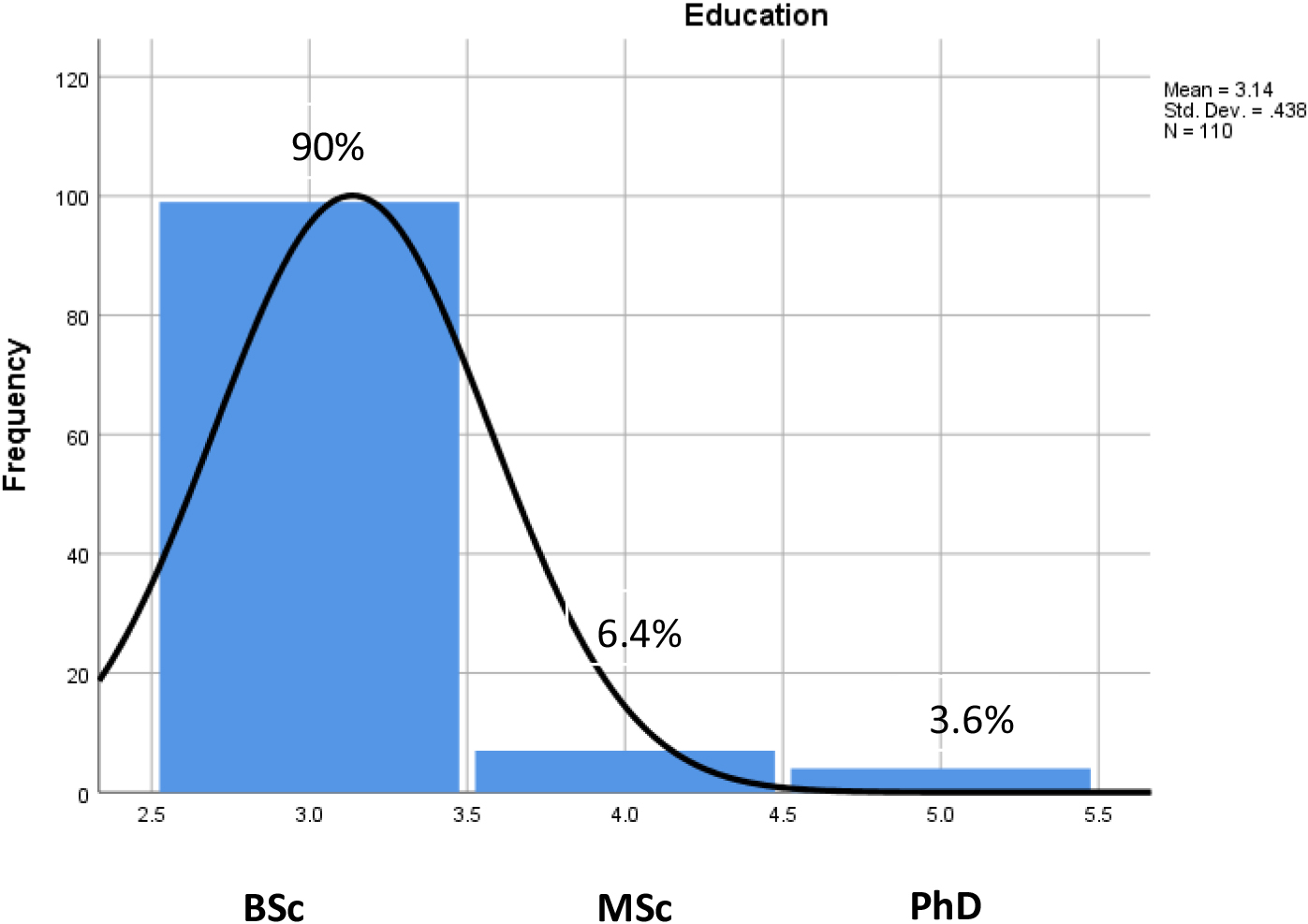
After analyzing the data from the questionnaires in the consultative section under the first subsection of ‘efficiency’, the answers from the respondents recorded significant correlation with other variables from other sections, more specifically for these four questions shown in Fig. 2.
Respondents’ response to the questions of ‘efficiency’.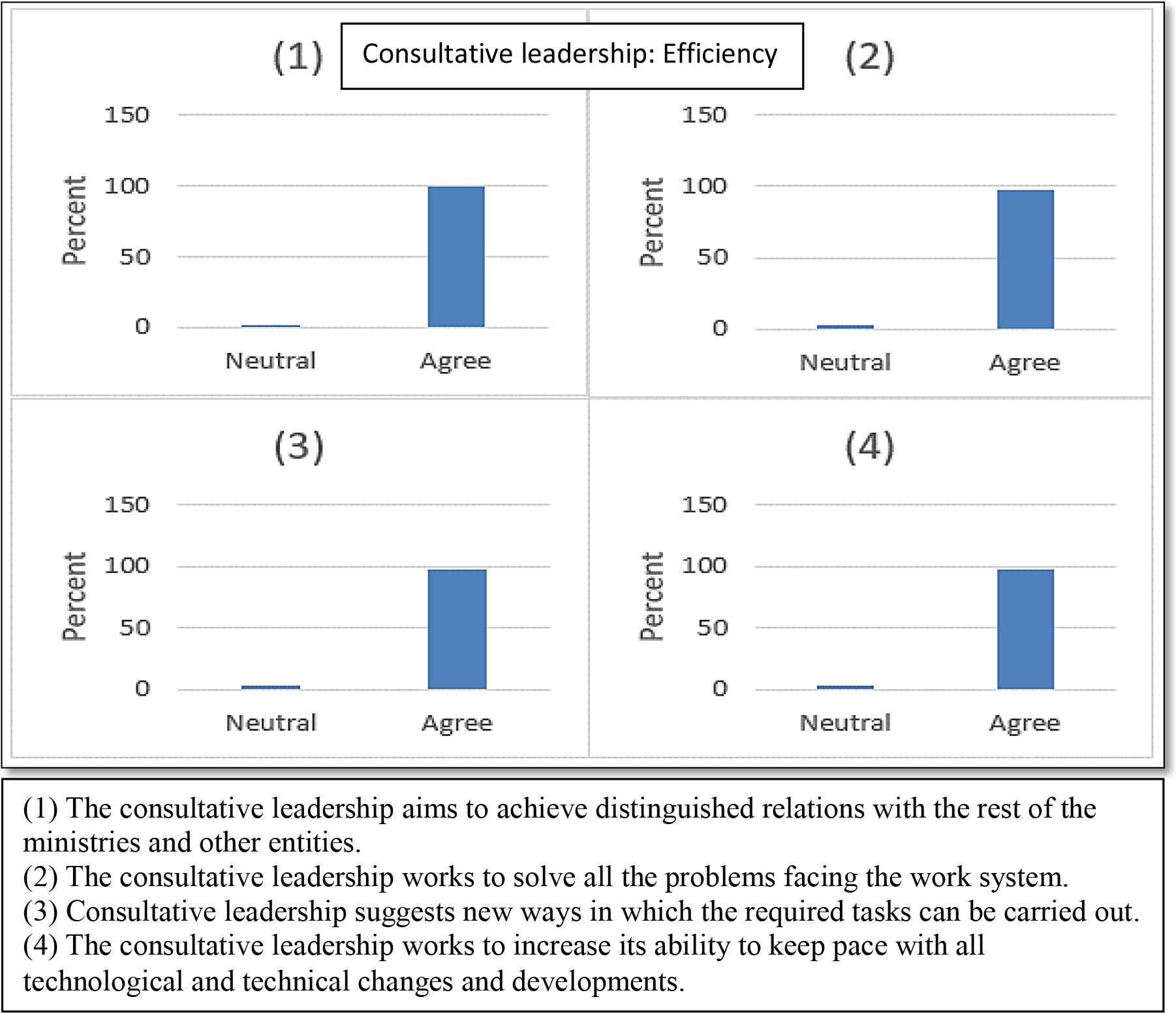
As mentioned by the respondents, almost all agreed with the concern imparted in the question, with a rate of (99%). They believed that the role of consultative leadership is important in making relations with the ministries and other entities outside their organization and solving the problems facing them. Software for managing projects, e-signature techniques, digital marketing, client connection administration (CRM), accounting system, interaction & cooperation techniques, and password protection instruments are just a few examples. Another subject that has been highlighted in the role of the consultive leadership is his/her capability to accomplish the required tasks by suggesting new methods with the support of the technological tools and techniques, which is expected from the consultive leaders to be fluent in applying them.
For the next subsection of consultive leadership in the questionnaire (potency), the respondents’ answers confirmed several significant relations to the other subsections and Fig. 3 below shows the high frequency of the answers for these questions displayed below:
Respondents’ response to the questions of ‘potency’.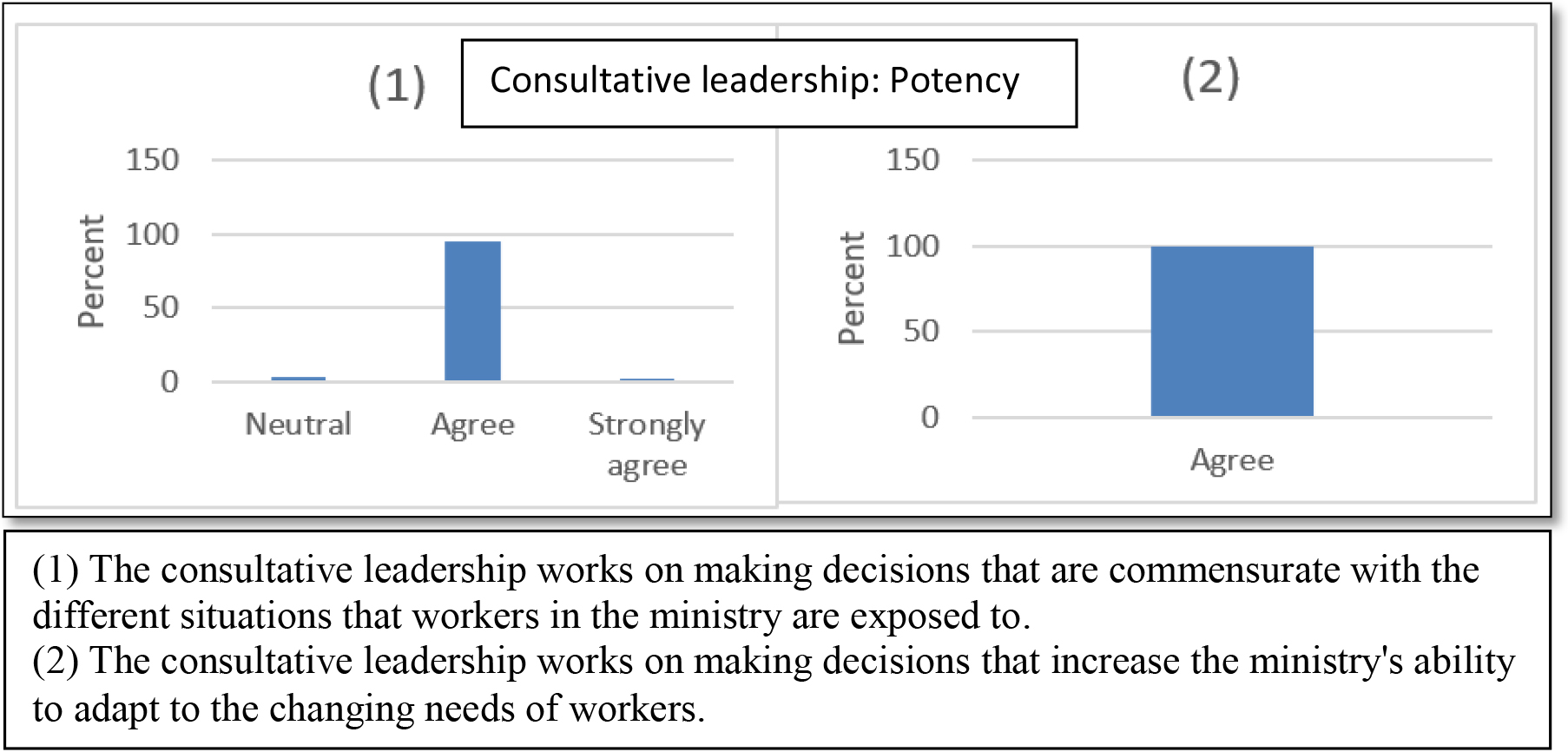
The respondents confirmed that consultative leaders could correspond to various situations the organizations and ministries may face. In a tight labor market, local authorities are having trouble hiring qualified candidates, particularly in regions with high living expenses. In order to fill critical skilled positions like construction companies, authorities could use more collective money and outside network operators. Despite having the last say, the team’s leader prefers to take everyone’s input into account before making a decision. They include employees by asking for their thoughts, feedback, and opinions. But the president will ultimately make the decision. They also show how consultative leaders’ decision-making capacities regarding the needs of the employees in the ministry.
Respondents’ response to the questions of ‘flexibility’.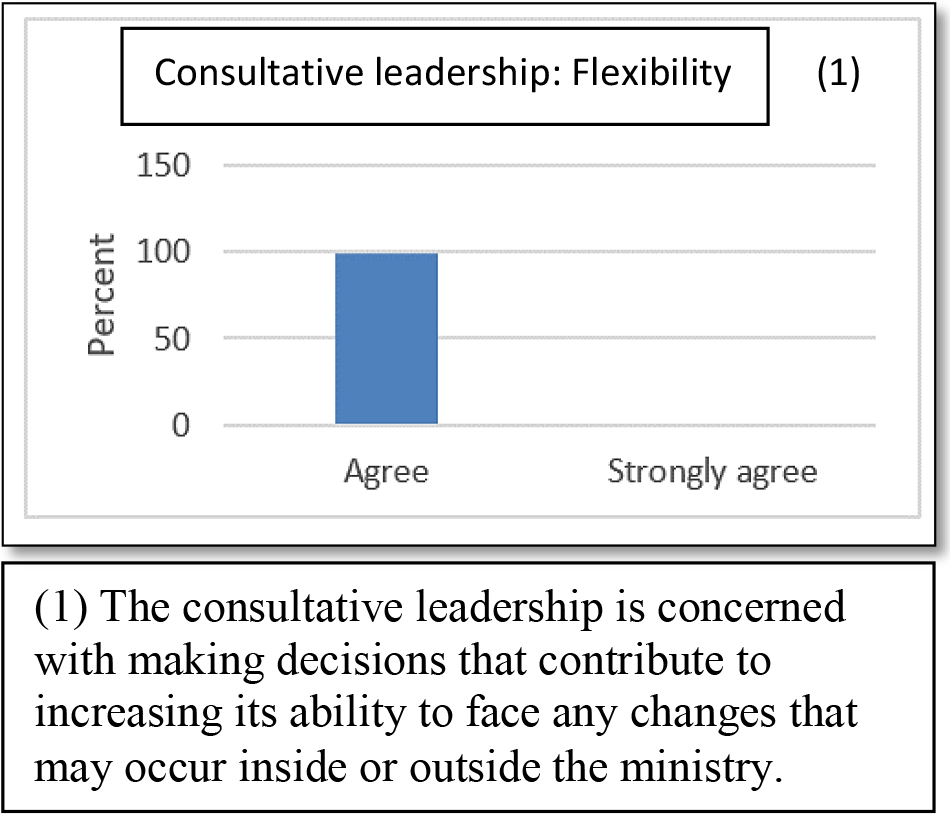
Respondents’ response to the questions of ‘crisis management’.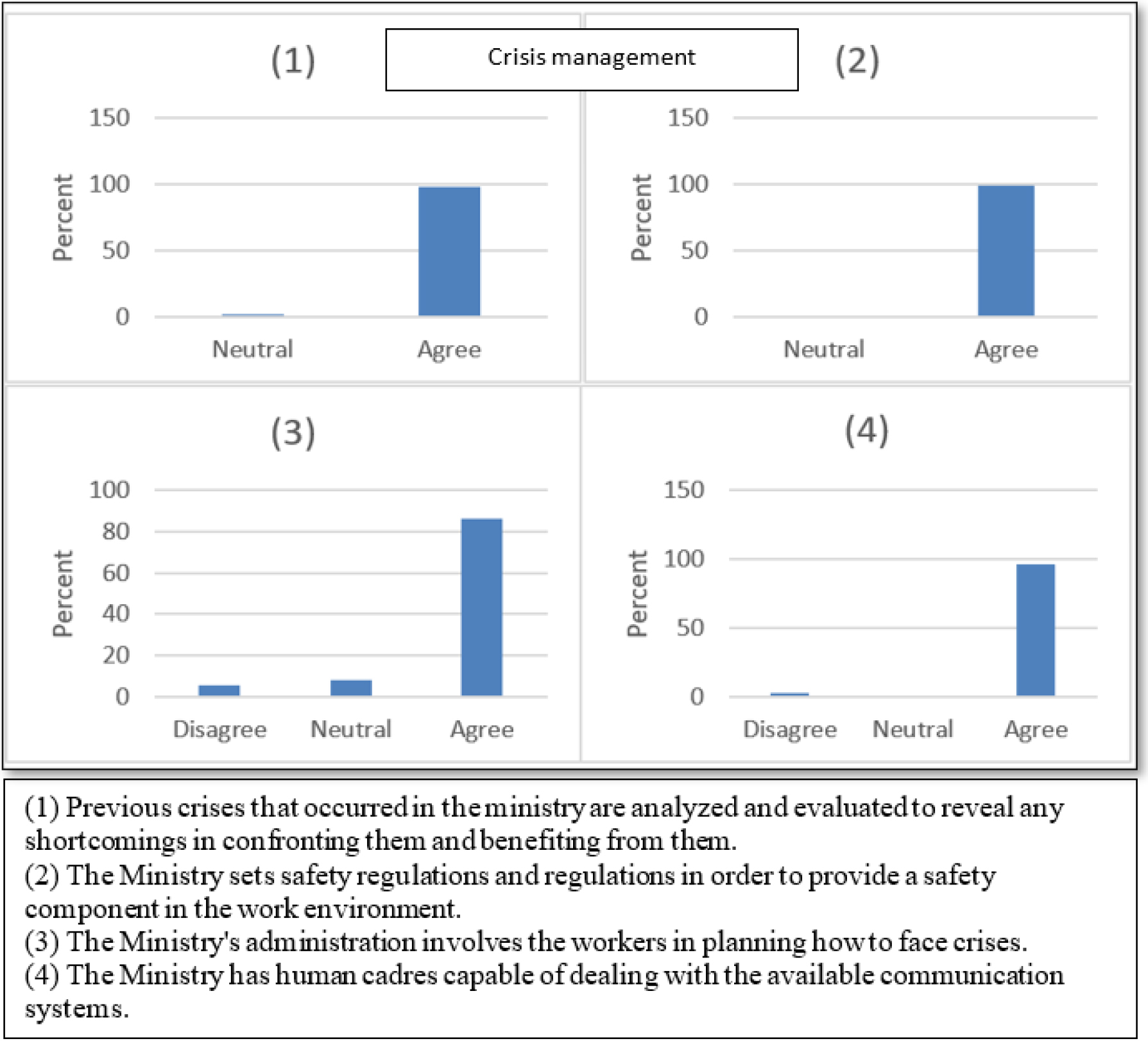
For the third subsection of the consultative leadership section in the questionnaire, which was ‘flexibility’, the respondents affirmed that through their flexible character, consultative leaders could have a positive influence and a robust decision-making ability during any changes that may occur inside and outside of the ministry as shown in Fig. 4.
Respondents answered for the second section related to ‘crisis management and showed a significant correlation to the other subsections. Almost all of them agreed that how crisis occurred in the management converted to beneficial for the ministry Fig. 5. They also agreed on how the ministry set safety regulations to secure a safety component in the work environment. They also agreed that the ministry, through cadres, can manage the communication systems shown in.
The responses completely agreed with the administration’s objective of fostering a spirit of innovation and initiative among personnel for the administration development department. Establish up a creative competition in the company and invite the staff to work in groups, offer suggestions, and choose their favorite concepts. They also concurred that management is interested in learning employees’ opinions, ideas, and suggestions to develop performance methods and lessen workloads. Workers who worked fewer hours reported feeling less pressured, being capable of handling parental responsibilities, and doing a better job overall. Furthermore, they showed a stronger commitment to the company. Most of them also agreed that management is interested in having an information system that offers all the information and data that employees need to perform their jobs. They also agreed that the administration is interested in creating circumstances that make it easier for all employees to communicate administratively, since this helps improve performance, as shown in Fig. 6.
Respondents’ response to the questions of ‘administrative development’.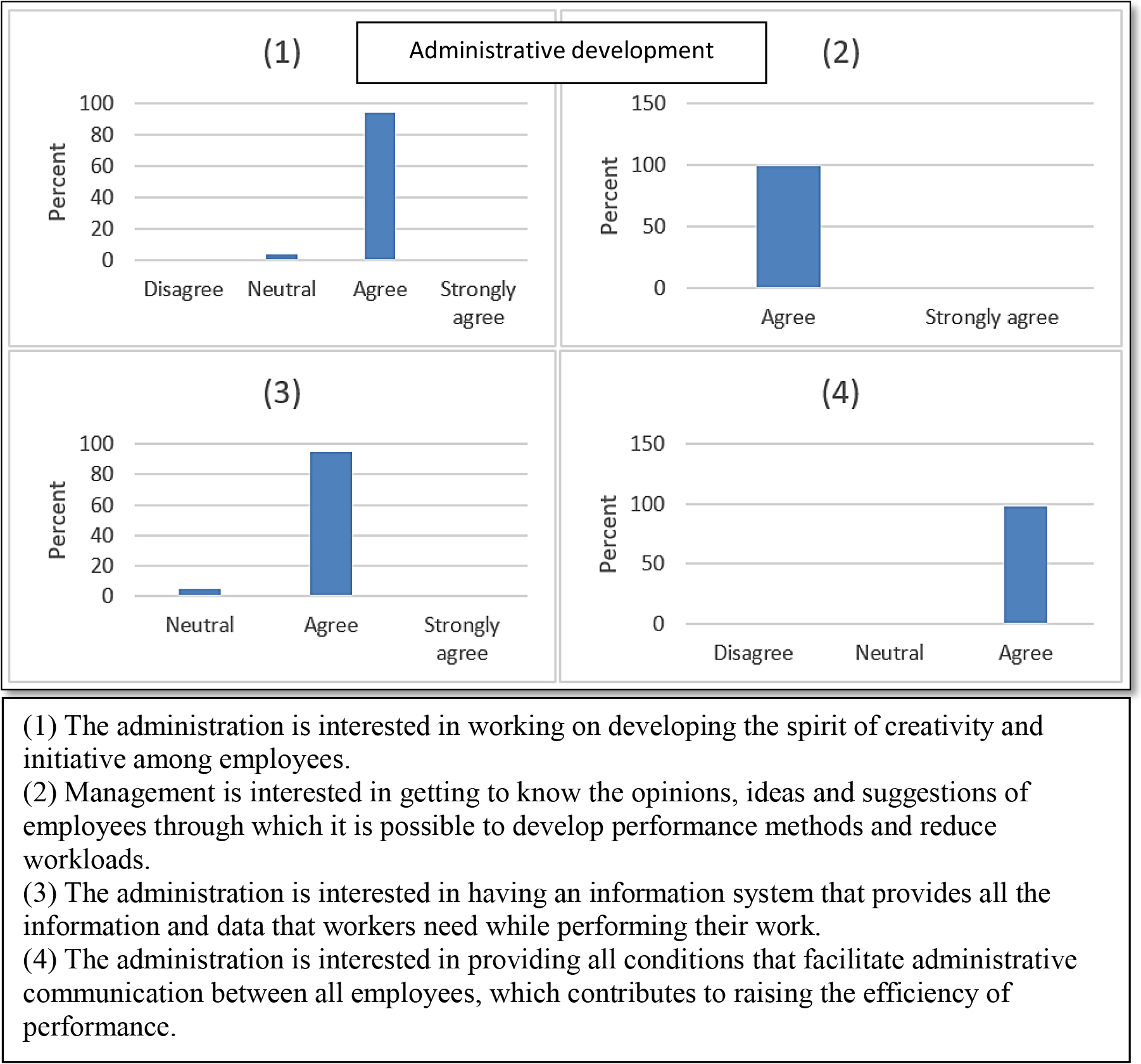
Approaching the correlations among the study variables and testing the study hypotheses, Table 2 illustrates the significant correlations at 99% and 95% levels when the r-value is lower than 0.01 and 0.05. According to the results, ‘years of experience’ has a significant correlation with ‘efficiency’ shown with the value of ‘.315
Correlation among the study variables
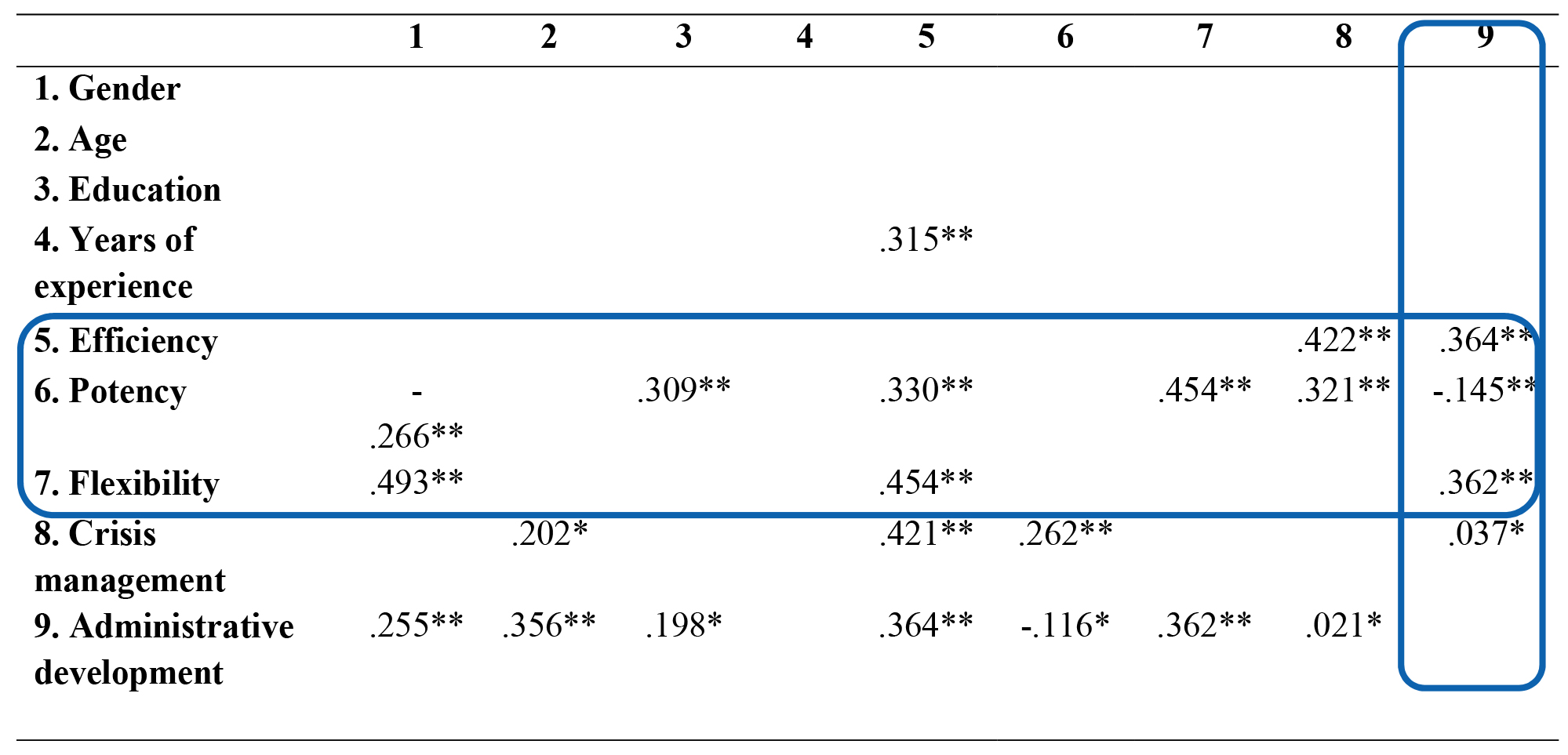
Coming to the point to look for testing the study hypothesis, it can be said that there is a significant correlation between consultative leadership (through its three components chosen in this study; efficiency, potency, and flexibility) and administrative development with the values shown in Table 2 (.364
Hypotheses testing
Table 3 explains the hypotheses testing of the study as shown that each of the H1, H3, H4, and H5 has been accepted premised on the data analysis of the study. The act of gathering, processing, cleansing, and modelling data in order to find the necessary data is known as data analysis. The findings are shared, offering interpretations and aiding in decision-making. While H2 has been rejected due to the negative result of the correlation value between the ‘potency’ and the ‘administrative development’.
This study provides the following contributions to the growth of consultative leadership through a comprehensive evaluation of the literature on the topic. To build the groundwork for future consultative leadership research, we first define the idea, assessment, antecedents, theoretical underpinnings, and outcomes of consultative leadership. The key research value of consultative leadership is clarified by methodically contrasting it with a directive and empowering leadership, highlighting the similarities and contrasts between the three. Third, we offer several prospective study options by assessing prior research on consultative leadership and considering contemporary leadership trends, thus examining what is currently being ignored by academics.
Researchers at the time of the study concluded that a sensitive, participatory approach to organizational development is not universal or even preferred in the Iraqi industry, although individual ministries have adopted variants of the “softened” style several years earlier. They concluded that in administration, one should choose the most reliable strategy in a given situation that meets the conditions of the environment. Politics based on a tough leadership style received support from people of a more practical than research mindset. The authors argued that the salvation of modern administration lies not in adaptation or gradual change.
Academics also recognize the necessity of implementing consultative management in organizational decision-making. There are aspects of consultative leadership that could be further expanded and investigated concerning the current theoretical study. Consultative leadership has significantly increased the effectiveness of leadership decisions from the viewpoint of managerial decisions in actual practice. This study investigated the role of consultative leadership in administrative development by methodically separating the idea and measuring consultative leadership by posing several hypotheses. We analyzed the causes and effects of consultative leadership and the processes by which it affects employees.
Funding
Authors did not receive any funding.
Data availability statement
No datasets were generated or analyzed during the current study.
Code availability
Not applicable.
Authors’ contributions
Ayas Mohammed Raseed Omar, is responsible for designing the framework, analyzing the performance, validating the results, and writing the article. Khairi Ali Auso, is responsible for collecting the information required for the framework, provision of software, critical review, and administering the process.
Footnotes
Conflict of interest
Authors do not have any conflicts.