




Abstract
BACKGROUND:
Multiple Sclerosis known as MS, this chronic inflammatory demyelinating condition affects the nervous system. It is a heterogenic and multifactorial disease. The goal of the current study was to investigate the relationship between MS patients’ IL18 gene expression and the vitamin D receptor gene polymorphism (FOK1rs2228570).
OBJECTIVE:
The aim of the study to investigate the association of vitamin D receptor (FOK1rs2228570) gene polymorphism and pro inflammatory cytokine (IL18) gene expression among multiple sclerosis Iraqi patients. Detection VDR polymorphism and determine whether this SNP is involved in susceptibility to multiple sclerosis and estimation IL18 gene expression and explore its relation with multiple sclerosis susceptibility.
METHODS:
Blood samples were taken from 75 MS patients in Iraq (30 men and 45 women), as well as from 75 volunteers who seemed to be in a favorable state of health and fell within the age range of 20 to 50 years. Tetra-ARMS Polymerase Chain Reaction (Tetra-ARMS PCR) was used to find polymorphisms in the vitamin D receptor (VDR) gene, and Real-time Polymerase Chain Reaction (RT-PCR) was used to measure IL18 gene expression.
RESULTS:
The findings from the analysis of VDR gene polymorphism in patients with MS indicated that the wild-type genotype T/T was present in 8 individuals, accounting for 10.6%, the heterogeneous genotype TC was 36 (48%), and the homogeneous genotype CC was 31 (41.3%), whilst T allele frequency was 52(34.6%) and C allele was 98(65.3%) with (
CONCLUSION:
The VDR(FOK1rs2228570) genotype was significantly correlated with IL18 expression in MS patients from Iraq.
Introduction
Multiple sclerosis (MS) occurs as a result of aggressive immune attack against the myelin sheath that surrounds nerve cells [1]. Both genetic and environmental factors increase the risk of MS significantly [2]. A class of fat-soluble secosteroid hormones including vitamin D have a physiological and regulatory impact, especially on brain and spinal cord development. Vitamin D has a positive impact on the immune system. It has been demonstrated that adequate levels of vitamin D may reduce the incidence of MS. Therefore, the possible effects of vitamin D warrant further investigation, although it plays a key role in the development and maturation of immune cells, including macrophages, dendritic cells (DCs), T cells, and B cells [3, 4].
Dendritic cell maturation is inhibited by vitamin D3 via suppression of the major histocompatibility complex (MHC) class II, CD40, CD80, and CD86 expression. The synthesis of pro-inflammatory cytokines such as IL-12 is decreased, while the synthesis of anti-inflammatory cytokines such as IL-10 is increased in DCs. Vitamin D3 inhibits the expression of IL2, IL17, and IFN in T cells. It also inhibits the cytotoxicity of CD8
Vitamin D binds to the nuclear vitamin D receptor (VDR). VDRs belong to the steroid/thyroid hormone receptor superfamily. The VDR gene is located on chromosome 12q12–14 in humans [3]. Changes in vitamin D metabolism and function are linked to specific variations in VDR gene such as exon 2 SNP FokI (rs2228570), also known as the start codon polymorphism (SCP) [6].
The anti-inflammatory and anti-proliferative properties of vitamin D are well established. IL-18, an immunostimulatory cytokine, is synthesized primarily by the initiated macrophages, although it may also be expressed by other cells, such as Kupffer cells, T and B cells. These activities are, at least in part, mediated via regulation and interaction with pro-inflammatory cytokines like IL-18. Due to its expression on natural NK cells, monocytes, DCs, T and B cells, both inborn and acquired immune responses can be controlled by IL-18. Its biological effects are attributed to its ability to promote innate immunity via combination with Th1 and Th2 cells. When combined with other inflammatory cytokines, it induces the synthesis of interferon (IFN) by NK, T cells, and perhaps other cells. It stimulates the expression and production of multiple chemokines, including Fas Ligand, TNF, and IL-1 [7, 8], the Th-1 immune response and IFN-
Elevated IL-18 levels are typically observed in the case of MS disease [11, 12]. With MS being a critical health issue of great significance. The purpose of the present study was to look into the link among IL18 gene expression and the vitamin D receptor (FOK1rs2228570) gene polymorphism in MS patients from Iraq.
Material and methods
The study was approved by the Ethics Committee of our institution. Venous blood (3 mL) was drawn from each of the 75 patients diagnosed with MS (30 men and 45 women). The patients were aged between 20 years and 50 years. They were age- and gender-matched with 75 apparently healthy volunteers, who served as a control group.
The VDR (rs2228570) primer sequences for Tetra-ARMS PCR
The VDR (rs2228570) primer sequences for Tetra-ARMS PCR
Amplification fragments PCR program of VDR (rs2228570)
Each sample was divided into two portions. The first 2.75 mL of blood was transferred into EDTA anti-coagulant tubes, mixed gently, and stored at
PCR program for cDNA conversion
Primers of IL18 and GADPH genes with their sequences
The remaining 250
The effect of multiple factors on study parameters was determined using the Statistical Analysis System (SAS) programme [15]. The Chi-square test was used to compare the distribution of patients and control subjects according to gender and autoimmune disease as well as genotype frequencies and alleles between sick and control groups.
PCR program for IL18 gene amplification fragments
PCR program for IL18 gene amplification fragments
Comparison of patients according on gender
*(
The spreading of MS patients by gender showed that women were more impacted by the disease 45 (60%) than men 30 (40%) significantly changed (
Distribution of MS patients based on history of autoimmune disease
**(
The results of patient distribution based on historiological MS family revealed that 15 (20%) of patients had the illness, whereas 60 (80%) did not, with the variance being highly substantial (
Gel electrophoresis showing FOKI (rs2228570) polymorphism analyzed on 2.5% agarose gel. Lane 1: DNA Ladder marker (1000bp-100bp), Lane 2: TT genotype (363, 197) bp, Lane 3: CT genotype (363, 222,197) bp, Lane 5: CC genotype (363, 222) bp.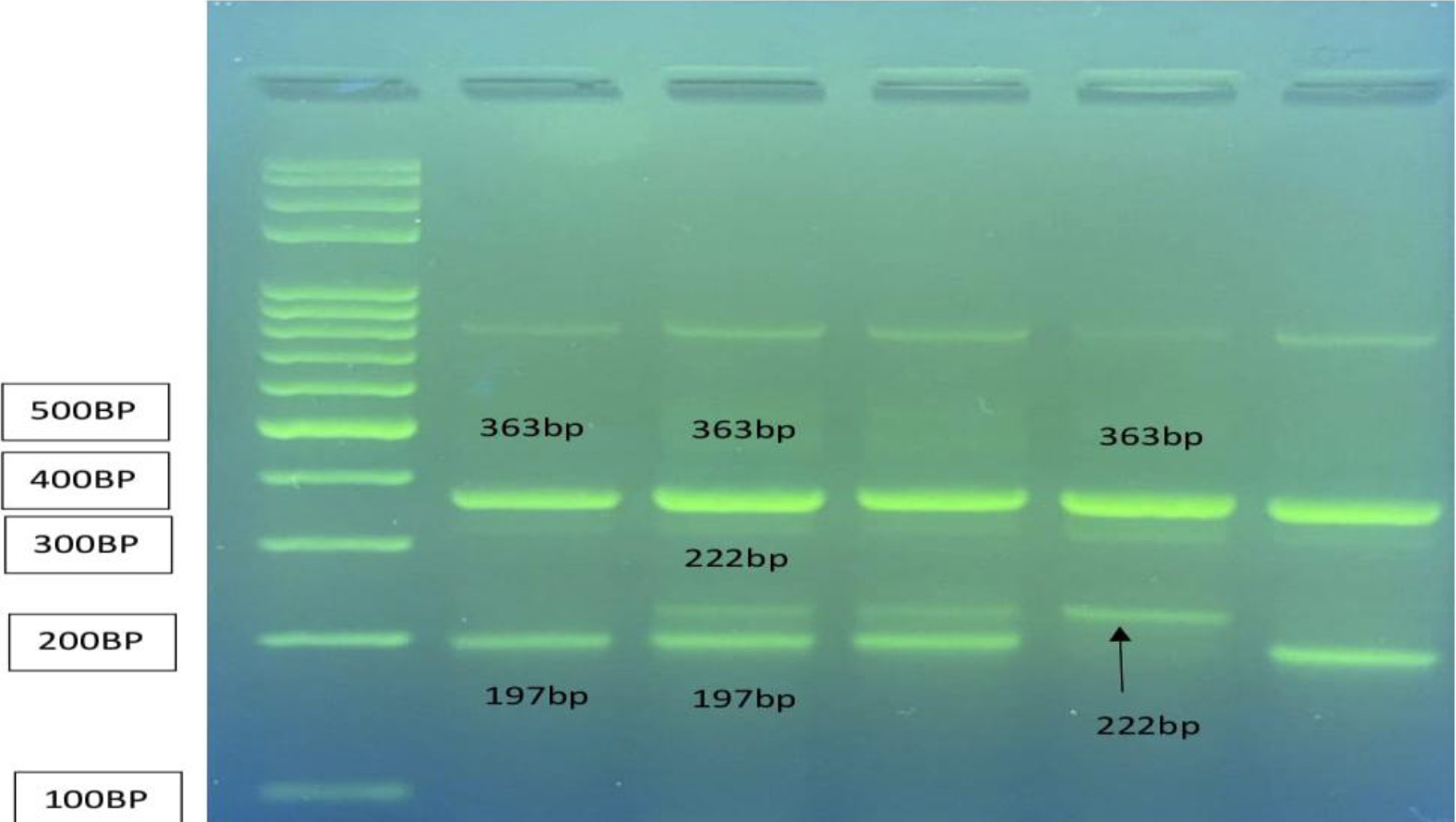
The result of T-ARMS PCR for e VDR gene SNP (FOK1: rs2228570) showed that the T-ARMS-PCR product was divided into three bands: 363 bp represented outer PCR which served as a DNA template for the inner allele T (197 bp) and the allele C (222 bp). The wild-type genotype (TT) had only two bands 363and 197 bp. The heterozygous -mutant genotype (TC) would have three bands of 363, 197and 222 bp, and homogenotybe “mutant” (CC) had two bands 363 and 122 bp as shown in (Fig. 1).
Genotype distribution and allele frequency in the patient and control groups for the VDR SNP (FOKI rs2228570)
**(
The Genotype TT which represented as wild type of the patients group found in only 8 samples which represented at percentage 10.6%, when compared to the control group 49 samples which represented at percentage 65.3%, with highly significant (
Comparison of the expression of the genes GADPH and IL18 in the MS patient and control
*(
The results of comparing the expression of the IL18 gene in the patient and control groups showed that the patient group had a considerable increase in IL18 average folding (2.59
Gene expression of GADPH and IL18 in patients and control groups.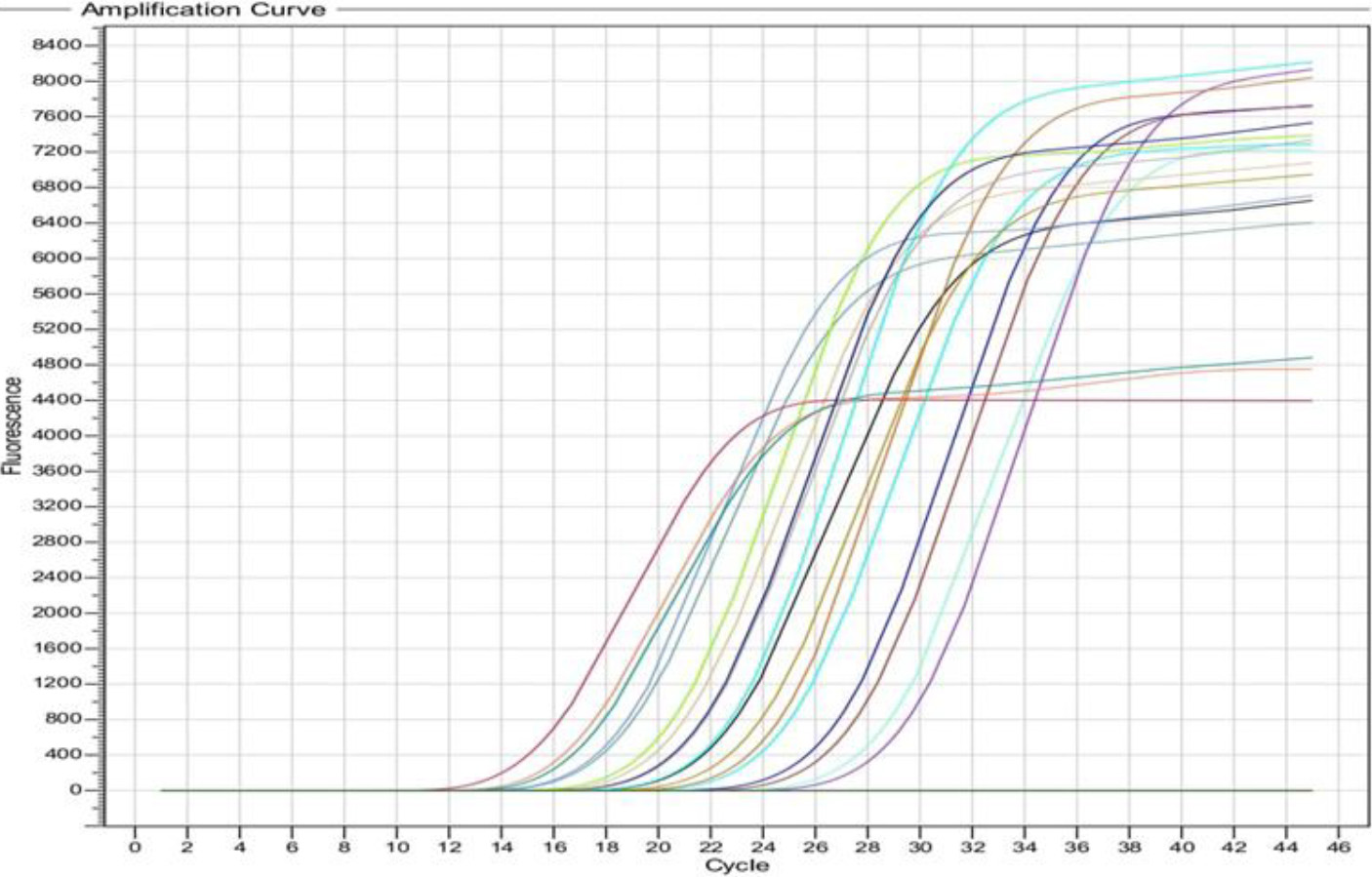
Relationship between FOK1 genotype and IL18 gene expression
**(
The investigation into the association between IL18 gene expression and VDR genotype among multiple sclerosis (MS) patients elucidated a considerable upregulation, measured at 2.9
The results of the current study reveal that the susceptibility to MS among females was higher than in males. Numerous physiological and biological factors, including menstruation, pregnancy, and breast-feeding affected the performance of the immune system in females. These factors also altered the hormone status, which in turn affected the immune system. Some studies suggest that the two X chromosomes in females are the key to myelin proteo-lipid protein (PLP). The X chromosome may affect the gene expression and inactivation of specific genes that protect against autoimmunity or the overexpression of a susceptibility gene, thereby increasing the risk of autoimmune disease. Myelin, the most abundant protein in the central nervous system, is encoded by genes located on the X chromosome and is likely to be the target of immune attack in MS [16, 17, 18].
The present findings are consistent with the study conducted by Al-Hamadai [19]who reported a higher incidence of MS onset during the teenage years in females compared with males. The study findings are also in agreement with those reported by Hammood et al. [20], who showed significant gender-based differences in the incidence of MS (40% male and 60% female), as well as variations in disease severity.
The result of the absence of a family history of the disease may be due to the epigenetic, which have recently proven their relationship to the occurrence of many diseases, especially autoimmune diseases, so it was found that the lifestyle of nutrition, sports, smoking, drinking alcohol, drugs, instability of the sympathetic state and poor mental health may have the greatest impact on susceptibility to disease [21, 22].
Results of genotypes, VDR allele frequency, and distribution of SNP (FOKI rs2228570) in patients and control groups, showed that patients carrying the (C) allele at least once had a greater probability of developing MS. Among the various genetic variations associated with disease susceptibility, SNPs are the most extensively investigated. Fok-I polymorphism is of particular functional significance. It is defined by an exon 2 and translation start site of the VDR gene T/C allele variant. Additionally, a fascinating interplay between the effect of the VDR Fok-I polymorphism on MS risk and the dietary intake of vitamin D was observed. Vitamin D carrying the T allele in females had a substantially robust protective effect against MS [23, 24, 25].
Our findings echoed earlier studies, which revealed an important correlation between Fok-I T/C polymorphism and MS in both the allele model (TC) and the dominant model (CC) among the Turkish population. This correlation was particularly significant when compared with Caucasian populations. Further, the C allele in the Fok-I polymorphism was linked to reduced levels of 25(OH)D. Notable associations were also established between VDR gene polymorphisms and MS severity and progression [26, 27].
The results of comparing the expression of the IL18 gene in the patient and control groups showed that the average folding was much higher in the patient group in opposition to control group. The expression of cytokines is exhibited by immune cells under the influence of various factors, including hormonal conditions, inflammation, infections, and genetic variations in cytokines [28].
The advancement of multiple autoimmune and inflammatory illnesses has been linked to the increased expression of IL18 and/or gene polymorphisms related to IL18. As a result, a pivotal role is played by IL18 in connecting innate immune responses to adaptive immune responses, thereby significantly conducting to the initiation of autoimmune diseases. Due to these connections, a direct impact on the progression of MS is made by IL18 [29].
This outcome is consistent with previous studies that demonstrated markedly higher levels of IL18 in patients with MS during the acute stage of the disease compared with those in the stable phase. Further, the studies revealed elevated levels of IL18 in patients with relapsing-remitting MS (RRMS). Thus, IL18 is particularly elevated in patients diagnosed with MS showing active lesions on MRI when compared with individuals without such lesions [30, 31].
The findings relating to the association between IL18 gene expression and VDR genotype in MS patients revealed a higher prevalence of MS in individuals harboring at least one copy of the (C) allele. Additionally, the presence of the mutant (C) allele in heterozygous (TC) and homozygous (CC) individuals with the IL18 status was noted in MS patients. The correlation between the severity of MS and vitamin D levels can be explained by the potent immune-modulating properties of vitamin D. This vitamin suppresses the activity of proinflammatory cells while concurrently promoting the activity of anti-inflammatory cells and cytokines. Based on our result we emphasize the need for future studies to include samples from multiple cities or regions to enhance the generalizability of the findings.
Conclusion
VDR(FOK1rs2228570) genotype has a significant impact on immunological responses and, hence, MS susceptibility. The presence of the mutant (C) allele, whether in heterozygous (TC) or homozygous (TT) genotypes, was associated with IL18 gene expression in Iraqi MS patients, and there was a greater risk of MS shown in individuals who have at least one copy of the (C) allele.
Author contributions
Each of the below authors made a significant contribution to the research and writing of this publication. Conceptualization Z. K.L.; interpretation or analysis of data Z. K.L, B. J.M., Z. K.L; soft-ware, Z. K.L; validation, Z. K.L, B. J.M.; formal analysis, Z. K.L, investigation, Z. K.L; resources, Z. K.L; data curation, Z. K.L; preparation of the manuscript, Z. K.L; writing-review and editing Z. K.L, B. J.M.; Revision for important intellectual content, Z. K.L; supervision, B. J.M. All authors have read and agreed to the published version of the manuscript.
Availability of data and materials
It is possible to obtain the data that supported the findings of this study from the Institute of Genetic Engineering and Biotechnology for Post Graduate Studies, University of Baghdad in Iraq Requests regarding the data may be made to the corresponding author.
Ethical considerations
Institute of Genetic Engineering and Biotechnology for Post Graduate Studies, University of Baghdad approved the study and of informed consent (Reference number: IGEBGS.H.2.1303, at 15-5-2022).
Footnotes
Acknowledgments
The Institute of Genetic Engineering and Biotechnology for Post Graduate Studies team is acknowledged by the authors for their assistance. We also like to express our gratitude to the referees for their careful review of the article and their illuminating comments.
Conflict of interest
The authors affirm that they have no competing interests.