




Abstract
BACKGROUND:
To investigate the influences of HOX transcript antisense ribonucleic acid (HOTAIR) on the proliferation and apoptosis of glioblastoma cells by targeting micro RNA (miR)-219.
OBJECTIVE:
With glioblastoma cell line U87 as the object, the changes in expression levels of HOTAIR and miR-219 in each group were detected via quantitative real-time polymerase chain reaction (qRT-PCR) after HOTAIR in U87 cell lines was knocked down using small interfering RNA (siRNA). Then the cell proliferation in each group was determined using Cell Counting Kit-8 (CCK-8) and colony formation assays. Flow cytometry was applied to detect the cell apoptosis, and Western blotting assay was adopted to measure the changes in protein levels of Cyclin D1 and Bcl-2-associated X protein (Bax). After miR-219 knockdown with siRNA, the changes in expression levels of HOTAIR and miR-219 in each group were examined through qRT-PCR, and the cell proliferation was tested by CCK-8 assay.
RESULTS:
After interference inHOTAIR using siRNA, compared with those in control group, the RNA expression level of HOTAIR was decreased remarkably (
CONCLUSION:
HOTAIR can repress the proliferation and promote the apoptosis of glioblastoma cells by targeting miR-219.
Introduction
Brain glioma, derived from the deterioration and progression of neuroepithelial cells, is the most common malignant tumor in the central nervous system of adults, with an extremely high fatality rate. The 5-year survival rate of the patients with malignant brain glioma is merely 5%, and the disease is characterized by infiltrative growth, easy recurrence, poor prognosis, etc. [1]. According to the WHO morphological classification criteria, brain glioma is classified into four grades and many types, and the prognosis of conventional chemoradiotherapy varies greatly from case to case due to different malignancies. In addition, the molecular mechanisms of the occurrence and development of various types of glioma, primary glioma and recurrent glioma differ from one to another. Therefore, it is urgent to develop new typing standards for molecular pathology to guide clinical treatment and personalized medicine and improve patient’s survival time and quality of life [2].
There are increasingly more reports about long non-coding ribonucleic acids (lncRNAs), a category of RNAs without protein coding capacity and with diversified physiological functions [3]. Currently, more attention has been paid to the role of lncRNAs in tumors [4, 5]. LncRNAs are found to play important regulatory roles in modulating transcriptionally and post transcriptionally the coding transcriptome, which are involved in pathological conditions such as cancer [6, 7]. Studies have discovered that lncRNA HOX transcript antisense RNA (HOTAIR) is highly expressed in different tumor tissues [8], but the role and regulatory mechanism of HOTAIR in gliomas remain unclear. In addition, a growing number of research reports have manifested that many micro RNAs (miRNAs) exert vital effects in the occurrence and development of tumors [9]. Among them, a study reported that miR-219 acts as an anti-oncogene in the progression of small cell lung cancer [10]. However, the function of HOTAIR in gliomas and the regulatory relationship between HOTAIR and miR-219 have not been clarified.
In this study, the expression level of HOTAIR in glioma cell line U87 was interfered, and the related mechanism of HOTAIR in the proliferation and apoptosis of glioblastoma cells by targeting miR-219 was explored, so as to investigate whether it possesses research prospect and important significance for the clinical diagnosis and treatment of glioma.
Materials and methods
Reagents and instruments
Cell Counting Kit-8 (CCK-8) (MSU, Sigma, USA), RNA extraction kit (Invitrogen Life Technologies, Car-lsbad, CA, USA), quantitative real-time polymerase chain reaction (qRT-PCR) kit and TUNEL assay kit (Nanjing Jiancheng Bioengineering Institute, Nanjing, China), primer synthesis kit (Hanbio Biotechnology Co., Ltd., Shanghai, China), Annexin V/propidium iodide (AV/PI), bicinchoninic acid (BCA) protein assay kit and lysis buffer (Hanbio Biotechnology Co., Ltd., Shanghai, China), and Cyclin D1, Bcl-2-associated X protein (Bax) and glyceraldehyde-3-phosphate dehydrogenase (GAPDH) primary antibodies (Cell Signaling Technology Inc, Shanghai, China).
Cell culture and transfection
Glioblastoma cell line U87 was cultured in an incubator with 5% CO
Detection of U87 cell proliferation activity via CCK-8
At 48 h after cell transfection, CCK-8 was applied to detect the activity of cell proliferation. The cells (1
Detection of apoptosis rate of U87 cells via flow cytometry
At 60–70% confluence in a 6-well plate, the U87 cells were transfected for 48 h, and the cells were digested with trypsin and then harvested. Later, 300
Colony formation assay
When the U87 cell fusion in the 6-well plate reached 60–70%, the cells were transfected with siRNA, followed by trypsin digestion and collection. The cells were then seeded in 6-well plates at 200 per well and incubated for 2 weeks at 5% CO
Primer sequences for RT-PCR
Primer sequences for RT-PCR
A total of 500
Western blotting assay
Each well of the treated 6-well plate was added with 100
Statistical analysis
The data were presented as mean
Results
Impact of HOTAIR on miR-219 after interference with siRNA
According to Fig. 1, after interference in HOTAIR, the RNA level of HOTAIR was decreased obviously (
The expressions of HOTAIR and miR-219 in U87 cells detected via qRT-PCR after si-HOTAIR was transfected for 24, 48, 72 hs. A, the relative expression of HOTAIR. B, the relative expression of miR-219. * 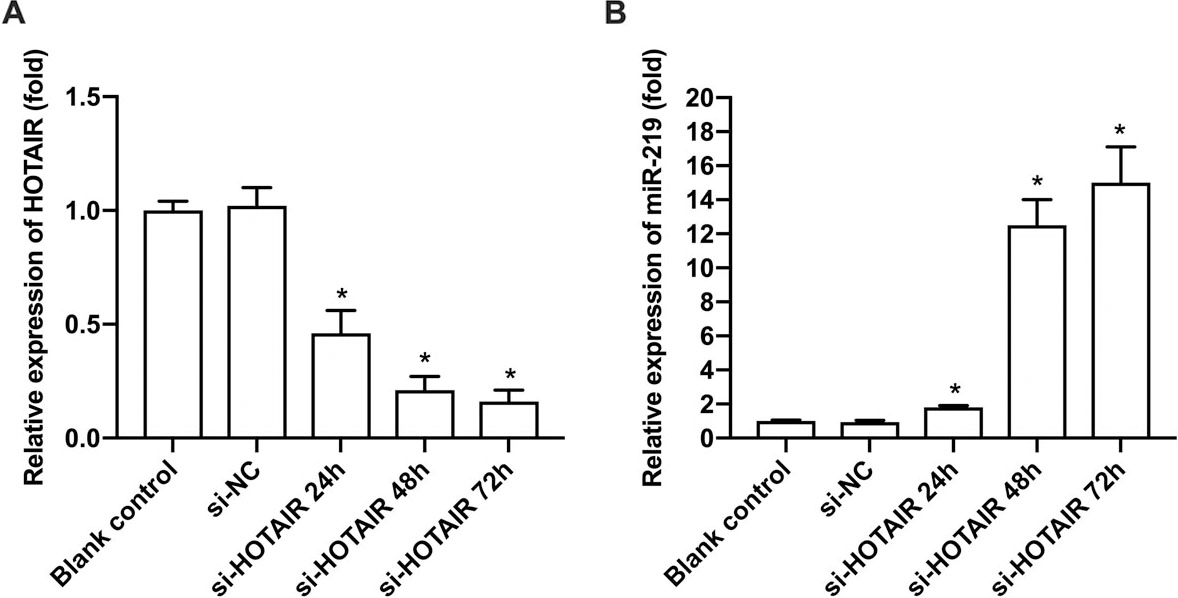
The results of CCK-8 assay manifested that the cell proliferation activity was weakened remarkably after the interference in HOTAIR in comparison with that in control group (
Cell proliferation activity after interference in HOTAIR detected via CCK-8, ** 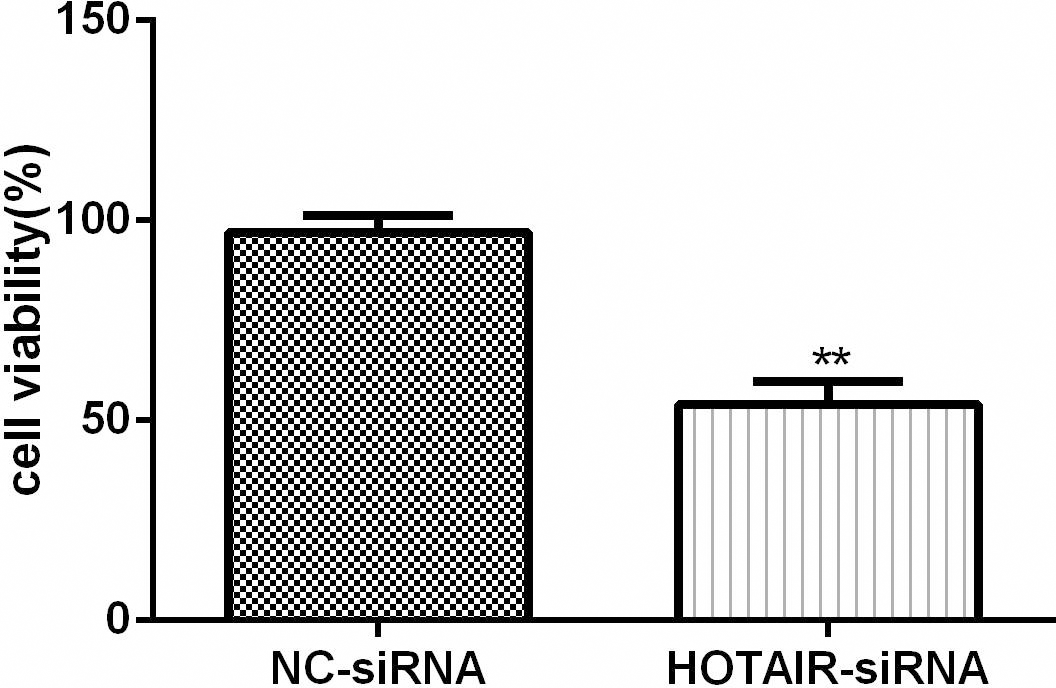
After the interference in HOTAIR in U87 cells, HOTAIR-siRNA group had evidently fewer macroscopic colonies formed in the culture dishes than NC-siRNA group (Fig. 3).
Impact of interference in HOTAIR on proliferation activity in U87 cells detected via colony formation assay. Photomicrographs of Giemsa-stained colonies of U87 cells growing in 6-well plates for 14 days after infection. The number of cells in each colony was counted. Cell number in HOTAIR-siRNA group was significantly reduced, as compared with the NC-siRNA group. *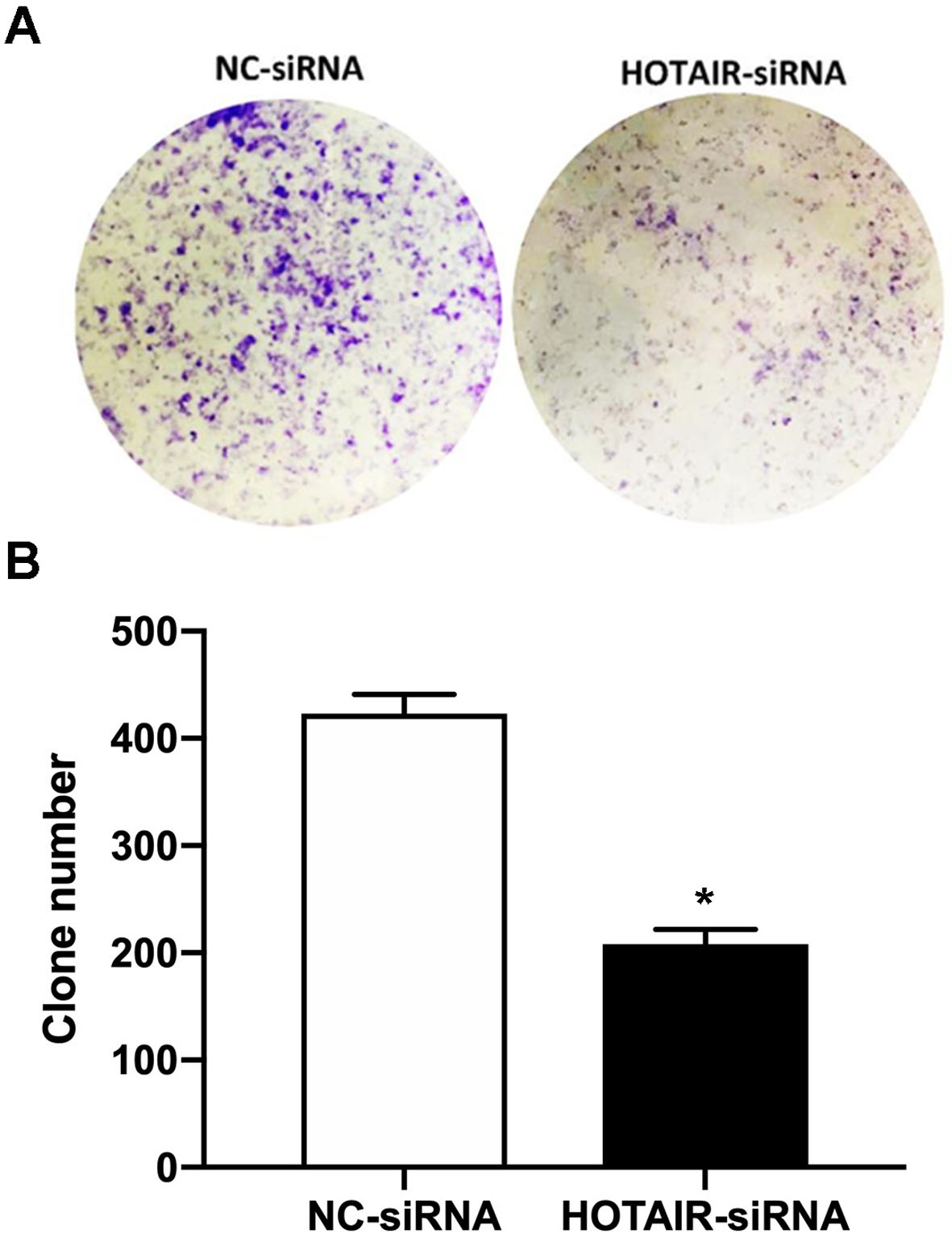
The number of apoptotic U87 cells was increased notably after the interference in HOTAIR compared with that in control group (
Impact of HOTAIR on cell apoptosis after interference with siRNA detected via flow cytometry, ** 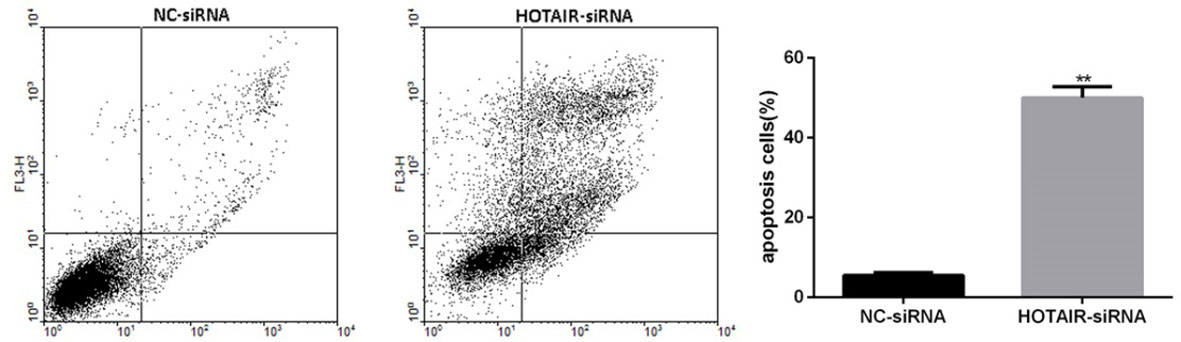
Impacts of HOTAIR on Cyclin D1 and Bax proteins after interference with siRNA detected via Western blotting, ** 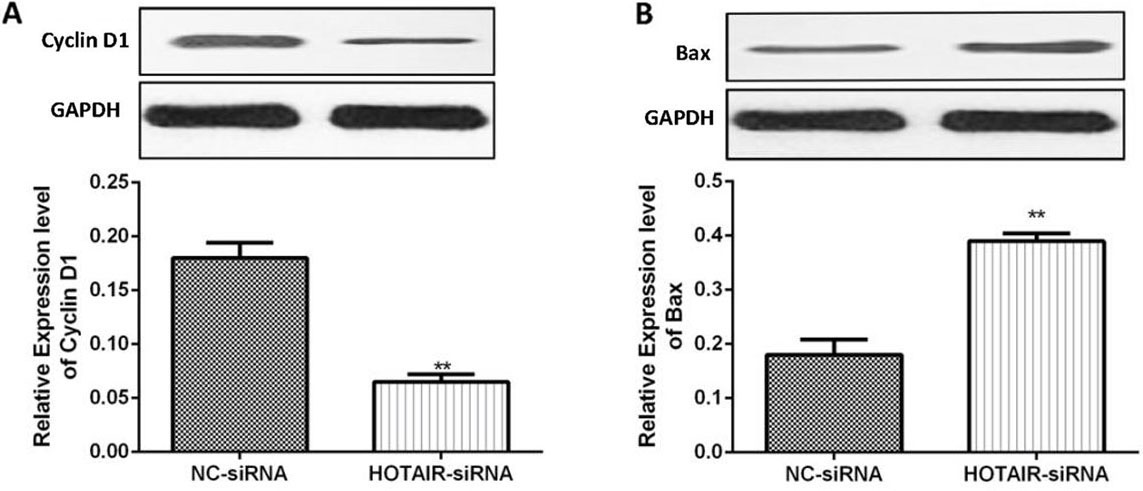
According to the results of Western blotting assay (Fig. 5), in comparison with those in control group, the protein expression level of Cyclin D1 declined markedly (
Impact of miR-219 on RNA expression of HOTAIR after interference with siRNA
The RNA expression of miR-219 was lowered prominently after the interference in miR-219 with inhibitor at different time points, suggesting that the interference was successful. However, there was no significant difference in the RNA expression level of HOTAIR between control group and miR-219 inhibitor group (
The expressions of HOTAIR and miR-219 in U87 cells detected via qRT-PCR after miR-219 inhibitor was treated for 24, 48, 72 hs.A, the relative expression ofmiR-219. B, the relative expression of HOTAIR. * 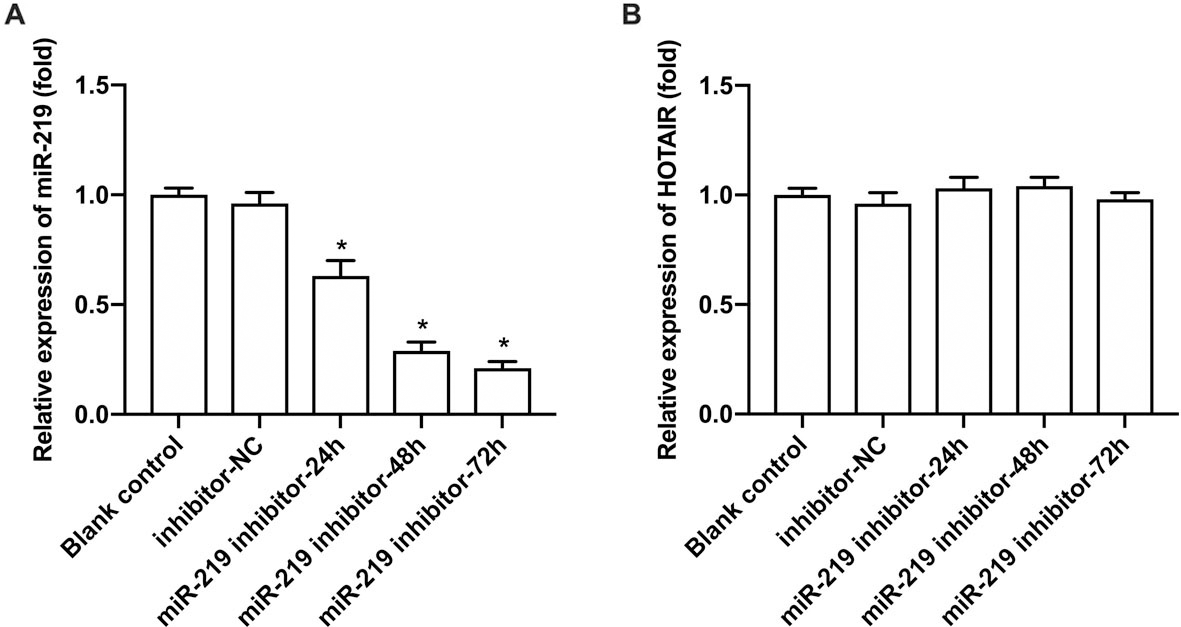
The results of CCK-8 assay showed that the proliferation rate of glioma U87 cells in miR-219 inhibitor group after interference with siRNA was markedly higher than that in control group (
Impact of miR-219 on cell proliferation rate after interference with siRNA, ** 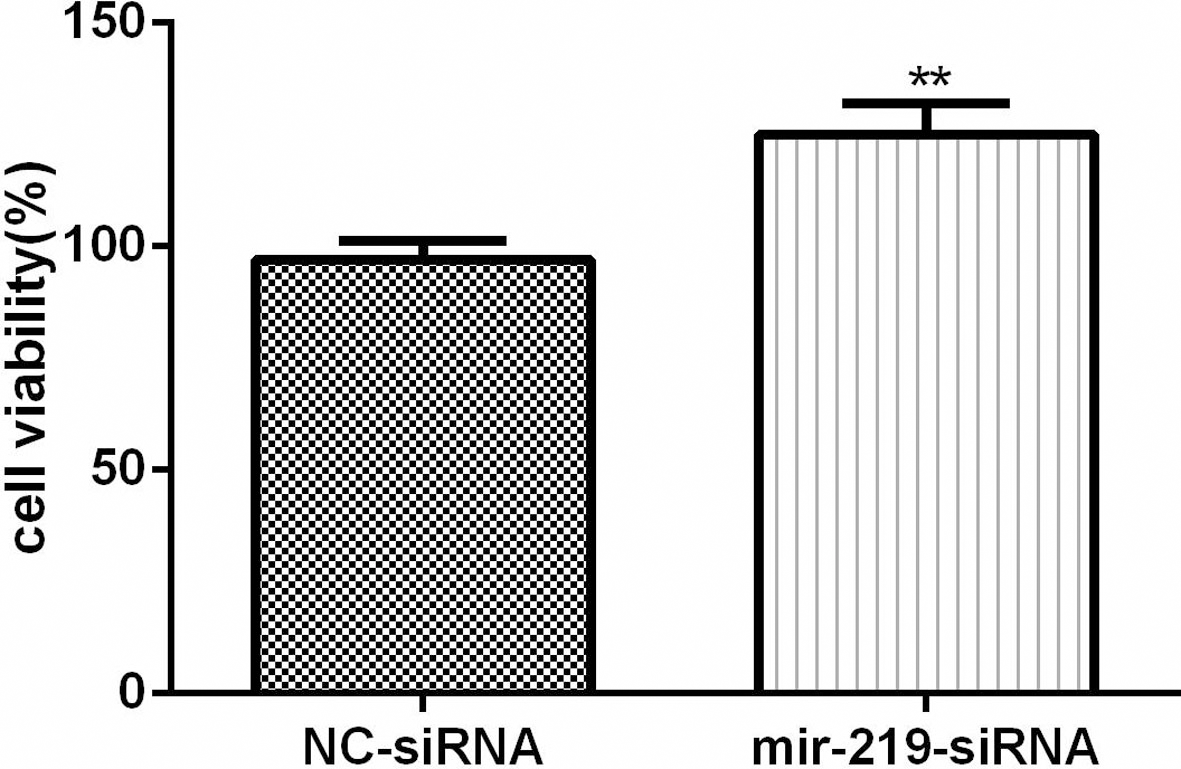
Glioblastoma mostly occurs in adults and has the highest incidence rate among the primary intracranialmalignancies [11]. The treatment effect on glioblastoma is not optimistic in present clinical practices, and even today’s most standard treatment methods, including surgical procedure, radiotherapy and chemical drugs, for such tumor patients still cannot realize objective survival time. Hence, actively exploring the targeted therapeutic drugs or methods with conspicuous efficacy is of important significance.
HOTAIR is first discovered in HOX gene in human fibroblasts [12]. The highly conserved HOX gene not only participates in cell growth and development but also receives signals to regulate the cell differentiation and apoptosis [13]. It has been reported that HOTAIR is involved in the lining of some chromosomes, which is closely associated with tumor metastasis. Moreover, it has been proven that HOTAIR promotes the further exacerbation and distant metastasis of tumors [14]. For example, the expression of HOTAIR is increased obviously in the tissue specimens of breast cancer, and it is hundreds of times higher in metastatic tumors than that in normal tissues, manifesting an apparent overexpression trend [15]. Similar results are also obtained in liver cancer. According to the PCR assay results, the expression of HOTAIR is raised evidently in a majority of liver cancer tissues compared with that in normal tissues, and it is obviously positively correlated with the prognosis of patients [16]. Besides, the expression level of HOTAIR in epithelial ovarian cancer is also distinctly higher than that in normal tissues, and HOTAIR can control the development of tumor cells by regulating matrix metalloproteinase (MMP) and epithelial-mesenchymal transition (EMT) and affect cell proliferation and apoptosis through regulating the proteins related to cell cycle and apoptosis, such as Cyclin D1 and Bax [17]. Furthermore, a growing number of studies on various life-regulating processes have revealed that miRNAs play extremely important roles in individual growth and development, cell proliferation and differentiation and metabolism [18]. For instance, it is reported in a study that miR-219-5p is specifically highly expressed in brain tissues and down-regulated notably in astrocytoma in comparison with that in other normal human tissues, indicating that the down-regulated miR-219-5p in human brain probably has a certain relation with the occurrence of glioma [19]. Nevertheless, can HOTAIR influence the occurrence and development of glioma through the targeted regulation on miR-219? Such a hypothesis was confirmed in the present study.
Recent evidence revealed that lncRNA HOTAIR could specifically bind to miR-204 as a competing endogenous RNA and promote the progression of oesophageal cancer [20]. HOTAIR was also found to function as miR-217 sponge and contribute to gastric cancer [21]. Similar to the pervious results of HOTAIR on the carcinogenesis, by using glioblastoma cell line U87 as the object of this study, we found HOTAIR can significantly elevate the proliferation activity of glioblastoma cells. The results of detection with AV/PI showed that after the interference in HOTAIR, the cell apoptosis rate was increased obviously, the expression level of cycle-related protein Cyclin D1 was lowered markedly, while the protein expression level of Bax was elevated distinctly. Of note, the RNA expression level of HOTAIR declined remarkably, while the RNA expression level of miR-219 rose notably after knockdown of HOTAIR using siRNA in HOTAIR-siRNA group compared with those in control group. After miR-219 knockdown with siRNA, the cell proliferation rate was raised remarkably, but no significant change in the RNA expression level of HOTAIR in cells was observed, demonstrating that HOTAIR is located in the upstream of miR-219 and can targetedly regulate the expression level of miR-219. As previous study illustrated the sponge function of HOTAIR to miR-217 and miR-211 to exert certain effects [21, 22], we propose that HOTAIR may serve similar sponge function to miR-219. However, in silico analysis has so far not yet identify any potential binding site between HOTAIR and miR-219, and the exact regulatory mechanism of HOTAIR to miR-219 remains to be investigated. Similarly, an in-vitro experiment of colorectal carcinoma also verified that the up-regulated HOTAIR is capable of stimulating PCR2 to target some genes and promoting tumor metastasis [23]. In addition, HOTAIR is able to induce further deterioration of gastrointestinal stromal tumor by targeting specific genes [24]. The above findings illustrate that HOTAIR can target specific genes in various tumors and have close correlations with the occurrence and development of tumors.
Conclusion
In conclusion, HOTAIR can repress the proliferation and promote the apoptosis of glioblastoma cells by targeting miR-219, which possesses research prospect and important significance for the clinical diagnosis and treatment of gliomas.